





Retirement & Private Wealth
In a time of transformation, retirement plans will become even more fundamentally linked to financial wellbeing and private wealth management will focus on fundamentals.
Download Report

What to Expect in 2025
As employers embrace financial wellbeing, they are optimizing retirement plans, leveraging SECURE Act 2.0 (Secure 2.0) to ensure compliance and best practices while smaller businesses will consider offering a startup plan. Meanwhile, affluent individuals will need to update estate planning in light of upcoming estate tax changes, and possibly reevaluate their investment strategies — such as considering alternative investments — as interest rates fall and markets stabilize.
Download Report

1
Plan viability
With improved engagement and additional features, retirement plans in 2025 can do more for employees and employers.

2
Vitality
Financial wellbeing will become embedded in forward-thinking employers’ retirement plans and overall strategy.

3
Resiliency
Employers will focus on nuts-and-bolts issues in 2025 to keep their retirement plans healthy for the long term.

4
Private Wealth
Staying current with estate plans and investment strategies will help make 2025 a success.

With improved engagement and additional features, retirement plans in 2025 can do more for employees and employers.
1 | Plan viability
94%
of U.S. employers offer a retirement plan, but 19% of employees are not enrolled.

Financial wellbeing will become embedded in forward-thinking employers’ retirement plans and overall strategy.
2 | Vitality

Plan sponsors must manage administrative complexity, litigation and other risks to ensure compliance and maintain the organization’s financial health.
Employers will focus on nuts-and-bolts issues in 2025 to keep their retirement plans healthy for the long term.
3 | Resiliency
The past two years have largely seen employers try to digest the changes from the landmark SECURE 2.0 Act. The legislation has transformed retirement plans with operational changes and added features such as start-up tax credits that are increasing the ability for employers to offer plans.
In 2025, plan sponsors will have the opportunity to take some of Secure 2.0’s lesser-promoted features and help cement financial wellbeing in a diverse workforce. For example, employers can match their employees’ student loan repayments within their 401(k) plan, and they can create emergency savings accounts linked to their defined contribution plan.
Providing employees with access to retirement income solutions within the workplace plan can facilitate retirement readiness, mirroring the guaranteed income that traditional defined benefit pension plans offer.
But although about 94% of employers offer a retirement plan, not all employees (81%) are enrolled. More than half of employers offer a company match for employee contributions to a retirement plan, but almost three in 10 workers with access to the match don’t take advantage of it.1 And fewer than 40% of low-wage group employees have access to a retirement plan.2
According to the HUB International 2025 Outlook Executive Survey,3 37% of employers identify needing additional support from third-party plan sponsors to increase participation with the plan, and 36% say they are emphasizing internal communications to increase enrollment. Similarly, 36% are leveraging auto enrollment and 35% are using counseling4 to boost participation.
A knowledgeable plan advisor can help identify employees’ financial situations and provide solutions that will result in higher participation and viability. For example, knowing what Millennials want versus Generation X employees want can help identify what changes to the retirement plan will boost participation.
Case Study
School districts across the U.S. are using retirement plan matches to incentivize teacher recruitment and retention. In one instance, a local school district worked with HUB and implemented an employer match and auto enrollment — and saw a massive jump in participation from 35% of the workforce to 95%. Higher engagement with the retirement plan can help cement employee relationships and ensure improved retention.
Download Report

As part of an overall competitive benefits package, financial wellbeing programs are becoming will become far more common in 2025, reflecting employers’ desire to improve the workforce’s vitality and help them prepare for retirement.
Too many workers are spending valuable time worrying about their finances while on the job, resulting in decreased productivity and diminished retirement readiness across the workforce. A large majority (77%) of Americans worry about finances, with 58% saying that finances “ruled their lives.”5 Meanwhile, 57% of employees at mid-sized and large organizations are not confident that they’ll be able to retire between the ages of 65 and 67.6
Only half of employees who are financially stressed say they’re energized at work. More concerning, 36% of the same group expects to look for a new job — twice as many as non-stressed employees. And employees are asking for help, as nearly three-quarters of them want assistance on financial matters.7
Employers have noticed — one estimate posits that by 2026, nearly half of employers will offer a comprehensive financial planning program for their employees, with about 60% of employers offering housing assistance, credit improvement programs or both.8 Such programs have become almost table stakes in competition and retention for talent.
Larger employers with ample resources can provide financial wellbeing programs that provide everything from an online portal to personalized counseling. But even then, often financial wellbeing is not part of a holistic, comprehensive strategy that integrates the retirement plan and other offerings.
What is essential is that different generations in the workforce are at different points in regard to their finances. Reaching them with personalized solutions can mean the difference between a workforce that’s stressed out financially and one confident in its financial future, allowing them to be more focused on the job.
Programs like HUB FinPath help employees manage their finances, adding an additional layer to existing financial wellbeing initiatives that can solidify workforce engagement. Such programs, which combine digital offerings with real-world advice, can deliver solutions grounded in employees’ needs for employers of any size.
Case Study
A HUB client with more than 8,000 employees wanted to improve its employees’ financial wellbeing. The client offered its employees HUB FinPath. The client was able to pinpoint individuals’ specific financial struggles and developed programs that included monthly in-person events and provided access to financial coaching and online tools. The result: improved financial wellbeing and higher productivity.
Download Report

Compliance and performing due diligence aren’t exciting topics, but adopting or maintaining best practices to both areas will be key to avoid litigation, regulatory action and cybercrime in 2025, helping ensure a retirement plan’s long-term future.
To start, there’s the trend of keeping former employees on the retirement plan, even if they’re still working at another organization. It’s a small step to lower costs through economies of scale and stay resilient. However, there are risks such as administrative complexity and litigation that plan sponsors should carefully consider and manage to ensure compliance and maintain the organization’s financial health.
Another trend is the increase in the use of an “active/passive mirror” approach to plan investments in which both active and passive investing options are represented in all asset classes. About 45% of defined contribution plans reported a mirror approach in 2023, the highest ever.
Critical fiduciary actions that most defined contribution plans are taking in 2024 include reviews of plan fees (74%) and a review, update or implementation of the plan’s investment policy statement (IPS) (66%). Also noteworthy is the increased use of open architecture for greater transparency and flexibility.9
Cybersecurity presents another challenge to plan resiliency, which can affect individual accounts but attract possible litigation or government action.
The risk involved makes compliance essential. Any retirement plan needs to be run in accordance with the plan document and to keep within the U.S. Department of Labor’s fiduciary governance standards. ERISA also requires that fiduciaries monitor, or review, their plan’s investments, services and costs on a regular basis. Pay ongoing attention to the plan’s IPS. Steer clear of potential litigation risks related to high fees or inadvisable investment options and maintain standards for plan participation levels as well as competitive investment performance.
In addition, retirement plans - in concert with their plan advisors - should review any service provider’s track record on cybersecurity, including their standard practices and audit results and ensure they have risk management measures that will help keep the plan sponsor safe.
Case Study
A private equity operation needed to consolidate retirement programs for its different portfolio companies — otherwise, the PE firm would have to complete expensive annual non-discrimination testing for each retirement plan. HUB was able to untangle the thicket of regulatory requirements, merge the retirement programs and set the private equity firm up to leverage scale for the future.
Download Report

The estate tax exemption — currently $13.6 million per individual and double that for couples — will be halved starting on January 1, 2026, which has dominated discussions between high-net-worth individuals and their advisors for the past two years.
One way to avoid tax headaches is through trusts such as irrevocable life insurance trusts (ILITs) and spousal lifetime asset trusts (SLATs). Although the grantor of such trusts will lose control of the assets, the wealth is shielded from taxation for the benefit of loved ones or favored philanthropic organizations.
A downside to such a strategy is that individuals will need to have their assets appraised and the trusts set up in 2025. Not only will it be difficult to find last-minute resources to handle the paperwork and legal issues involved in starting a trust, but there’s also concerns that there will be long waiting periods for appraisals, especially toward the end of the year.
For investors, things may become more stable after several years of uncertainty.
Through October 2024, year-to-date returns for the S&P 500 stood at 19.62%,10 though bond yields are low and will likely fall further with interest rate reductions from the Federal Reserve.11
For many investors, the current environment may probably favor traditional portfolios of 60% stocks and 40% bonds, achieving diversification based on the negative correlation between stocks and bond returns.
But increasing numbers of high-net-worth individuals are also investing in alternative vehicles such as private credit, venture capital and private equity.
For other investors, alternative investments include “buffered” ETFs that cap gains but limit losses; and a covered call strategy that involves equity investments that produce income while still generating capped equity gains and a floor for losses. Investment companies have noticed the trend and are offering mutual funds that mimic a covered call strategy.
Download Report

Staying current with estate plans and investment strategies will help make 2025 a success.
4 | Private Wealth

Navigating Your Next Steps
HUB retirement and private wealth advisors will work help you develop a tailored strategy for 2025.
1
Rethink the retirement plan with a trusted advisor.
Provisions in Secure 2.0 and other developments will give employers the opportunity to increase participation and improve employee engagement. Plans need to be re-evaluated to meet compliance standards and achieve organizational goals, while organizations without a plan must consider one to stay competitive. A trusted advisor can help you make sense of the new environment.
Integrate financial wellness with retirement readiness.
2
Retirement readiness doesn’t just mean having a 401(k) plan. Often, employees need guidance on saving, managing debt and having realistic financial goals. A holistic financial wellness program will not only help your employees reduce financial stress but improve retirement readiness. Tools such as HUB FinPath give employees individualized ways to help achieve financial wellness.
Talk to your plan advisor about how to cope with a changing regulatory environment, meet fiduciary responsibilities and avoid costly litigation. Acting now to make your plan more resilient will pay dividends over the long haul.
Reinforce retirement plan resiliency.
3
Individuals need to plan for the new estate tax exemption, and in the face of unstable stock and bond markets, they’ll need to adjust their portfolio strategies. HUB’s Private Wealth advisors can help you avoid the estate and investment pitfalls you’ll face in 2025.
Prepare for changes in estate planning and investment strategies.
4

Be Prepared
Download our 2025 Retirement and Private Wealth Outlook and Insurance Market Rate Report to see what to expect in the coming year.
Download Report
Meet the Experts
Practice Leader
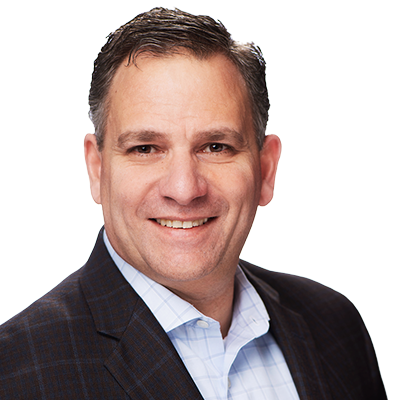
Retirement & Private Wealth
Joe DeNoyior

Linkedin Profile
Chief Operating Officer
Adam Sokolic
Retirement & Private Wealth
Linkedin Profile

Chief Strategy Officer
Greg Koleno
Retirement & Private Wealth
Linkedin Profile

Chief Sales Officer
Jimmy Owen
Retirement & Private Wealth
Linkedin Profile
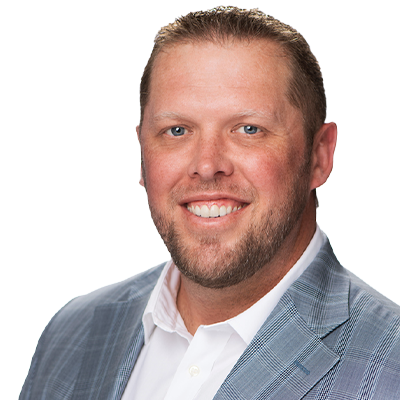

Job Title Here
Firstname Lastname
Practice Name Here
Linkedin Profile
Job Title Here
Firstname Lastname
Practice Name Here
Linkedin Profile
Job Title Here
Firstname Lastname
Practice Name Here
Linkedin Profile
Senior Advisor
Jim O'Shaughnessy
Retirement & Private Wealth
Linkedin Profile

Job Title Here
Firstname Lastname
Practice Name Here
Linkedin Profile
Job Title Here
Firstname Lastname
Practice Name Here
Linkedin Profile
Job Title Here
Firstname Lastname
Practice Name Here
Linkedin Profile
Job Title Here
Firstname Lastname
Practice Name Here
Linkedin Profile
HUB Retirement & Private Wealth
When you partner with us, you’re at the center of a vast network of experts who will help you reach your goals. For more information on how to approach your finances with confidence and optimize your retirement plan offerings, talk to a HUB retirement and private wealth specialist.
About Us
$143B
In qualified and non-qualified plans
10,000+
Employer sponsored plan clients
$29B
Private wealth assets under advisement


Spring Cleaning: How To Tidy Up Your Retirement Plan and Ensure You’re Covering All the Bases
Article
Read now


4 Gifting Strategies to Help Cope With the 2026 Estate Tax Changes
Article
Read now


Build Retirement Plans for Different Generations
Article
Read now


Related Resources
US | EN


CA | FR
CA | EN
US | EN

Transportation
Real Estate
Nonprofit
Hospitality
Healthcare
Financial Institutions
Entertainment & Sports
Education
Construction
Cannabis
Agribusiness
Industry Outlooks
Industry Outlooks
Retirement
Private Client
Personal Insurance Marketplace
Employee Benefits
Product Outlooks
Product Outlooks
North American Outlook



3. HUB’s Outlook Executive Survey polled 900 C-Suite and VP-level executives on the issues facing them on profitability, employee vitality and organizational resilience.
4. Numbers do not add up to 100% because survey respondents could choose multiple options.
5. CNBC, “77% of Americans are anxious about their financial situation — here’s how to take control,” May 20, 2024.
6. SHRM, “Most Employees Don’t Think They’ll Retire by 65,” April 29, 2024.
7. PwC, “PwC's 2023 Employee Financial Wellness Survey,” accessed September 17, 2024.
8. Transamerica, Transamerica Prescience Report, accessed September 17, 2024.
9. Callan, “Focus on Plan Governance, and Continued Efforts to Rein in Fees,” April 24, 2024.
10. S&P Global, “U.S. Equities Market Attributes October 2024,” November 5, 2024.
11. J.P. Morgan, “A tale of two markets: Divergence amid the post–Labor Day sell-off,” September 6, 2024.
1. PNC, 2024 Financial Wellness in the Workplace Report: The Evolving Needs of the Multigenerational American Workforce, August 28, 2024.
2. U.S. Bureau of Labor Statistics, “1974 – 2024: Celebrating 50 Years of Protected Retirement Plans,” accessed September 23, 2024.
57%
of employees at mid- and large-sized organizations aren’t confident that they’ll be able to retire between the ages of 65 and 67.
The current estate tax exemption of $13.6 million per individual and double that for couples will be halved on January 1, 2026.
Sitemap
Terms & Conditions
Privacy Statement
© 2024 HUB International Limited. 150 N Riverside Plaza, 17th Floor, Chicago, IL 60606. All rights reserved.
Industry Outlooks
Retirement
Private Client
Personal Insurance Marketplace
Employee Benefits
Product Outlooks
Transportation
Real Estate
Nonprofit
Hospitality
Healthcare
Financial Institutions
Entertainment & Sports
Education
Construction
Cannabis
Agribusiness
North American Outlook
Keep pace with the latest trends.
Stay in the Know
Subscribe
Learn more about us.�Visit hubinternational.com
Senior Advisor
Jim O'Shaughnessy
Retirement & Private Wealth
Linkedin Profile