Unlock patient loyalty: New healthcare �consumer insights
�
Healthcare consumer market research
In today’s environment, the imperative is stronger than ever for health systems to improve quality of care, increase patient loyalty, and strategically integrate digital tools and technology to elevate the consumer experience. Huron’s longitudinal research tracks evolving consumer preferences and reveals the latest consumerism trends influencing healthcare.
�


What matters most to healthcare consumers?
�
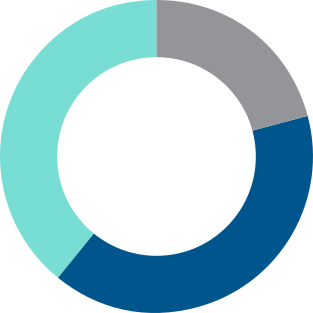
Consumers rate high-quality care as most important to their overall healthcare experience. �Convenience, communication, and affordability also play a prominent role in shaping consumer perceptions.
Roll over each to learn more
26% identify affordability, including reasonably priced services and transparent billing, as important, while 25% are willing to pay more for exceptional quality �of care and outcomes.
27% identify convenience and communication, including convenient location, minimal waiting times, and clear communication, as �most important.
50% identify high-quality care, including effective treatments, access to skilled professionals, and positive outcomes, as most important to their healthcare experience.
Why are patients willing to seek other healthcare providers?
�
�
Top reasons consumers switch providers:
Click to learn more
�
�
Access barriers
Patient attrition
29%
Long wait �times for appointments �
22%
Limited availability of appointments that fit my schedule
21%
High healthcare costs and �out-of-pocket expenses
15%
Difficulty �finding �high-quality healthcare providers
�
14%
Transportation issues
39%
More �convenient location
�
31%
Better appointment availability
�
29%
Reputation �for trustworthiness and reliability
24%
New/�innovative treatments
23%
Affordable/�transparent billing process
While some consumers actively seek better healthcare prices and value, the primary reasons they switch care providers stem from obstacles in accessing quality care. These barriers contribute to health inequities, hinder growth potential, and incentivize patients to seek care outside your organization’s network.
�
of consumers are considering changing healthcare providers in the next six months, even though 64% say they are satisfied with their recent care.
24%
How do consumers view digital health tools and services?
�
Healthcare consumers’ comfort with technology �varies, but overall adoption of digital health tools �and interest in AI and analytics continues to rise.
�
The interplay of in-person and virtual care remains complex. While 70% of consumers say they prefer to receive care in person, 82% cite virtual care offerings as important.
�
Click to learn more
Data and disease prediction
Artificial intelligence (AI)
Consumers are gaining comfortability with AI and express interest in AI-informed medical advice and recommendations, but hesitation remains for some.
�
How willing would you be to use AI for the following healthcare services?
Would you be comfortable with AI analyzing your health data to provide personalized advice?
Receiving daily/weekly health updates
Guiding you through your pre- or post-care journey
Recommending treatments
Very/somewhat comfortable
Very/somewhat uncomfortable
Neutral
35%
�
�
�
�
�
39%
46%
51%
39%
�
�
�
�
�
21%
�
�
�
�
�
40%
Nearly half (41%) of consumers report using apps at least once a week to manage their health and wellness.
Digital apps and devices
Top 5 digital apps and devices used:
Online portals or mobile apps for scheduling appointments and accessing medical records
Apps for tracking fitness and exercise
Wearable devices that track fitness �or excercise
Telehealth or virtual visit services
Text with physician offices to manage appointments
Consumers are open to sharing personal data to predict their risk level for health conditions, yet still have some apprehension to sharing behavioral, mental health, and genetic information. To improve �disease prediction accuracy, clear communication, data privacy, and security are essential to ease concerns.
Data and disease prediction
Consumer interest in using personal data to predict risk for:
Heart/cardiovascular conditions
Diabetes
Breathing/respiratory conditions
Brain/neurological conditions
Joint/orthopedic conditions
Behavioral health
Who is the modern healthcare consumer?
�
Personalizing healthcare experiences to meet consumer needs starts with understanding the nuances that influence their choices, perceptions, and loyalty.
Huron’s survey surfaces six distinct consumer segments, each with unique attitudes, preferences, and digital aptitude.
Click each box to explore consumer segments
Traditional and
affordable
Life-long relationships
Self-advocacy
Affordable access
Personalized options
High-tech and holistic
Self-advocacy
I’m seeking a healthcare experience where I’m actively involved in �care decisions and have open communication with my provider.
I engage with health services 1x/month.
Traditional and affordable
I’m seeking an in-person healthcare experience that is quick and easy with minimal use of technology.
I engage with health services 1x/year.
Slightly digital
Life-long relationships
I’m seeking a consistent healthcare experience built on relationships with providers whom I know and trust.
I engage with health services 2-3x/year.
Affordable access
I’m seeking an affordable and convenient healthcare experience with access to a diverse mix of providers and specialists.
I engage with health services 2-3x/month.
Personalized options
I’m seeking a personalized healthcare experience that allows me to choose my preferred care options.
I engage with health services 2-3x/month.
High-tech and holistic
I’m seeking a digital-first healthcare experience where I can use digital apps to manage my health daily.
I engage with health services 1x/week.

3 targeted strategies to improve patient retention and growth
�
By maintaining awareness of consumer trends and using insights specific to the populations they serve, healthcare leaders can build personalized care pathways and strengthen connections that generate loyalty and attract new patients.
Three actions for organizations to implement today:
Click to explore
�
�

02
03
Create personalized, timely communications
�
Consumers considering changing healthcare providers are three times more likely (43% vs. 14%) to act on informative emails sent from their provider. Yet, 61% of consumers say they haven’t received this type of communication in the past 12 months. Understanding communication preferences and engaging with consumers on the channels they prefer can go a long way to boost patient engagement, reduce anxiety, and improve the patient-provider relationship.
Leaders are investing in customer relationship management (CRM) platforms and emerging technologies such as AI and automation to personalize communication, improve visibility of consumer touchpoints, and reduce manual effort.
Provide easier access to care
More than half (56%) of consumers would rather stay with their current provider. Yet, long wait times, availability, and affordability surface as the greatest barriers to care.
To retain patients and reduce care delays, healthcare organizations must provide a more seamless, digitally enabled experience. This includes strengthening provider networks and referral pathways, expanding flexible scheduling, providing cost transparency, and prioritizing self-service digital tools to guide consumers’ care decisions.
Balance digital investments
Virtual care and digital tools are becoming increasingly influential in consumers’ healthcare choices. Nearly two-thirds (62%) of consumers surveyed were classified as moderately or hyper-digital based on their usage of and preferences for digital tools and services. Digital investments should be analyzed to ensure they match the demands of an organization’s consumer base while keeping emerging preferences in mind.
Data management and security investments are also critical as consumers demand personalized healthcare interactions and treatment. Of the 17% of consumers who say they’ve experienced a healthcare data breach in the last year, 40% have reported increased anxiety and stress as a result. This raises risks for adverse health effects, elevates concerns about how patient information is being secured, and erodes trust and willingness to share personal information to advance care.
Talk to an expert
�Connect with a Huron expert today to evolve your healthcare consumer strategy and put what’s possible into practice.
Contact us


WHO WE SURVEYED�
55%
49%
47%
46%
45%
42%
1,500
U.S. healthcare consumers






Moderately digital
Hyper digital
Moderately digital
Moderately digital
Slightly digital
01
Artificial intelligence (AI)
Digital apps�and devices
57%
Cancer
Artificial intelligence �(AI)
Data and disease prediction
Slightly digital
Moderately digital
Hyper digital
Explore the insights below ↓


Top barriers to receiving care:
Referrals from care providers are the top factor influencing where consumers go next for care, emphasizing the value of strong physician relationships and referral programs for patient retention.
What information do consumers consider when choosing a new healthcare provider?
�





Referrals from primary care provider/other healthcare professional
Recommendations from friends �and family
�
Online reviews and ratings �from patients
Healthcare provider’s website or
online presence
Insurance or payor website
47%
33%
25%
24%
19%


49%
39%
35%
30%
28%
34%
�
�
�
�
�
35%
�
�
�
�
�
Managing chronic conditions
Rehabilitation services/physical therapy
Personalized/tailored medication

of consumers experience anxiety when visiting a healthcare provider, primarily driven by fear of bad news and financial concerns.
63%


