B
K
e
l
l
y
e
n
Ben
Kelly
Lorem ipsum dolor sit amet, consectetur adipiscing elit, sed do eiusmod tempor incididunt
Ben
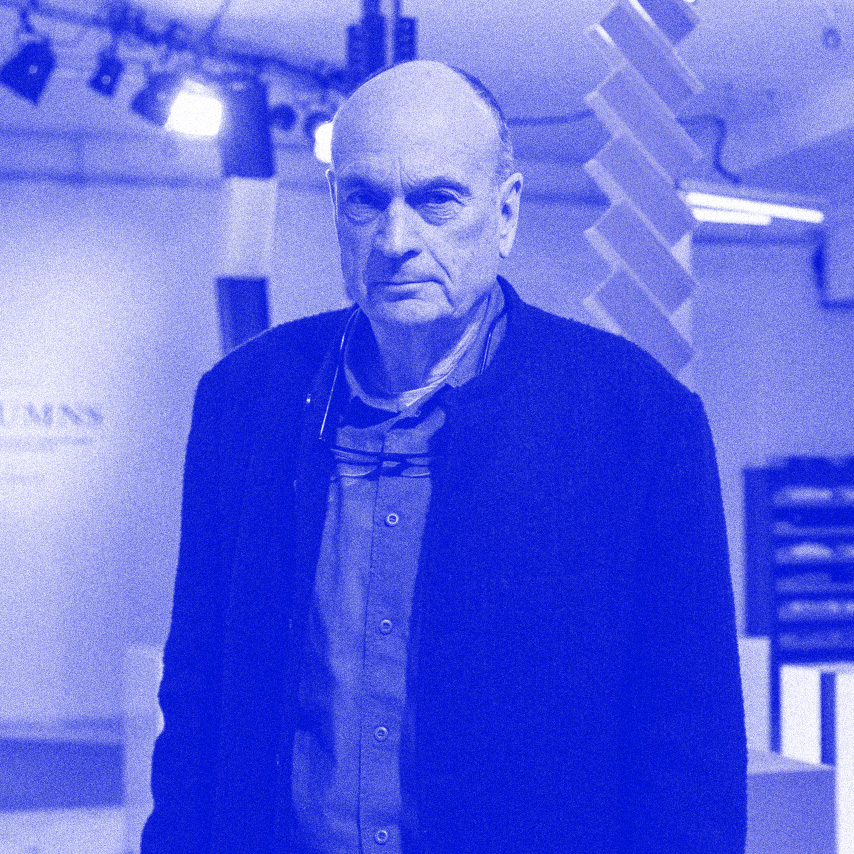
Ben Kelly on the Hacienda, working with Virgil Abloh
and “Columns.”
Kelly


Few nightclubs can boast the legacy of the Hacienda. Founded in Manchester in 1982 by New Order and the team behind Factory Records, the Hacienda became a legendary space, now listed as one of the UK’s best historic sites and referenced by Raf Simons, Virgil Abloh and Y-3. “It changed a lot of people’s lives,” recalls Ben Kelly, who designed the space, “I think it touched a lot of people’s souls, it resonated big time. It was run by a collective of people who were beholden to nobody but themselves. There was no corporate thing going on there, It was about free space.”
35 years on, the Hacienda is still the project that Kelly is best known for. “I used to regard it as the monkey on my back and I got pissed off with it,” Kelly says of being so intimately linked to the building, “However, it’s a privilege.” On a personal level for Kelly, one of the legacies of the Hacienda has been an introduction to Virgil Abloh. Their friendship didn’t get off to the best start, when Virgil used the interior’s signature stripes on Off-White pieces (“It pissed me off,” says Kelly of when Virgil began referencing his work, “it was just a shock to me”). Eventually, though, Kelly came round to the idea of working together: “he said he was a big fan of my work and he was a big of the Hacienda… Ultimately, I was flattered.” The first joint project was a touring set for Virgil, which made its debut at Art Basel Miami before appearing in the exhibition NORTH in Liverpool and London.


After the touring set, Virgil Abloh and Kelly collaborated again on “Ruin,” an installation at London’s 180 The Strand space, the same space which now houses Kelly’s latest exhibition, “Columns.” All of the projects from Kelly and Abloh have referenced the Hacienda, leading Kelly to describe his collaborator as “the roaming Hacienda ambassador.” For Kelly, Virgil can carry the message of the Hacienda to a new generation. “It [the Hacienda] influenced Virgil and Virgil is influencing young people,” Kelly explains, “Virgil’s whole thing is about telling a story to young people of where things came from, what’s the source of things.”
“There aren’t spaces for young people to go to in the same way that the Hacienda allowed that flexibility and affordability,” Kelly continues, “So it’s a beacon that people refer back to. I’m just waiting for someone to do a version now, but it’s almost impossible, there’s no such thing as free space.” This is where Virgil comes in: “Virgil has created this groundswell of interest, and I hope the influence coming off him inspires people to get on and do things themselves.” As Kelly adds, “the Hacienda never dies.”
“[The Hacienda] touched a lot of people’s souls, it resonated big time. It was run by a collective of people who were beholden to nobody but themselves.”
Along with Virgil’s favorite stripes, Kelly’s design for the Hacienda was known for other unexpected touches. The club, in a building that once housed a yacht showroom, featured pillars in the middle of the dancefloor, which was slightly raised from the rest of the space. The stripes were taken from workplace hazard signs and chosen by Kelly to make the pillars clear, while the change in step was signified by roadside bollards around the edge of the dancefloor. “It's the idea of using materials out of context, developing a new language” Kelly explains. “There’s nothing new is there? It’s all been done before in one way or another. You take one thing from over there and and another thing from over there that have never been in the same place before. Out of that relationship is something new.”


“At first, Virgil referenc-
ing me pissed me off. It was just a shock to me.”


The idea of mixing elements from distinct worlds is also key to “Columns.” As well as nods to the Hacienda — most noticeably the use of stripes — the installation takes inspiration from earlier architectural periods, including a metal column that emerges from a traditional Doric-style base. Elsewhere, Kelly subtly pays tribute to those who have influenced his own work. “If you look closely at these pieces, the columns,” he explains, “you will see references to artists’ work that has also influenced me over the years with the design work.” Kelly goes on to explain that artists including Ellsworth Kelly, Sol le Witt and Donald Judd are all “referenced in an abstract way, done as a homage to each artist.”
By combining these references and, hopefully, creating something new, Kelly is aiming to inspire the next generation to build on this work and push out on their own. “There’s a joy, there’s a statement about making your mark, there’s an investigation of materials, of process, color, light,” he explains of the exhibition, “so I hope people can take something away from that and feel inspired to do stuff themselves.”
“There’s nothing new is there? It’s all been done before in one way or another.”