PLANTA INDUSTRIAL
DUENDITA
FIFI ZHANG
DREAMCASTMOE
54 ultra
presented by corona extra
PLANTA INDUSTRIAL
Chasing Ethereality With FiFi Zhang
WORDS BY SHAUN HARRIS�
PHOTOS BY Nayquan Shuler�
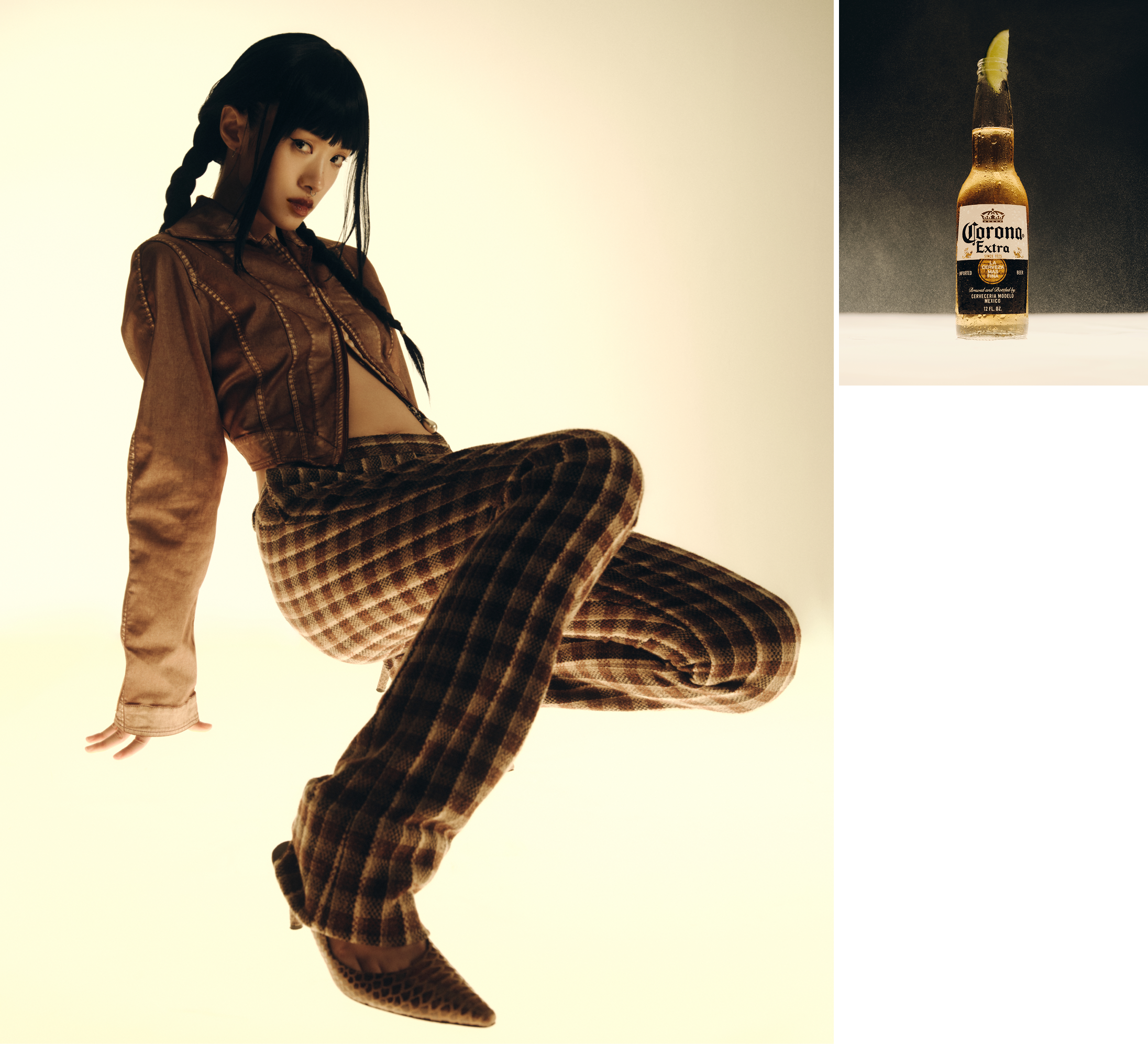
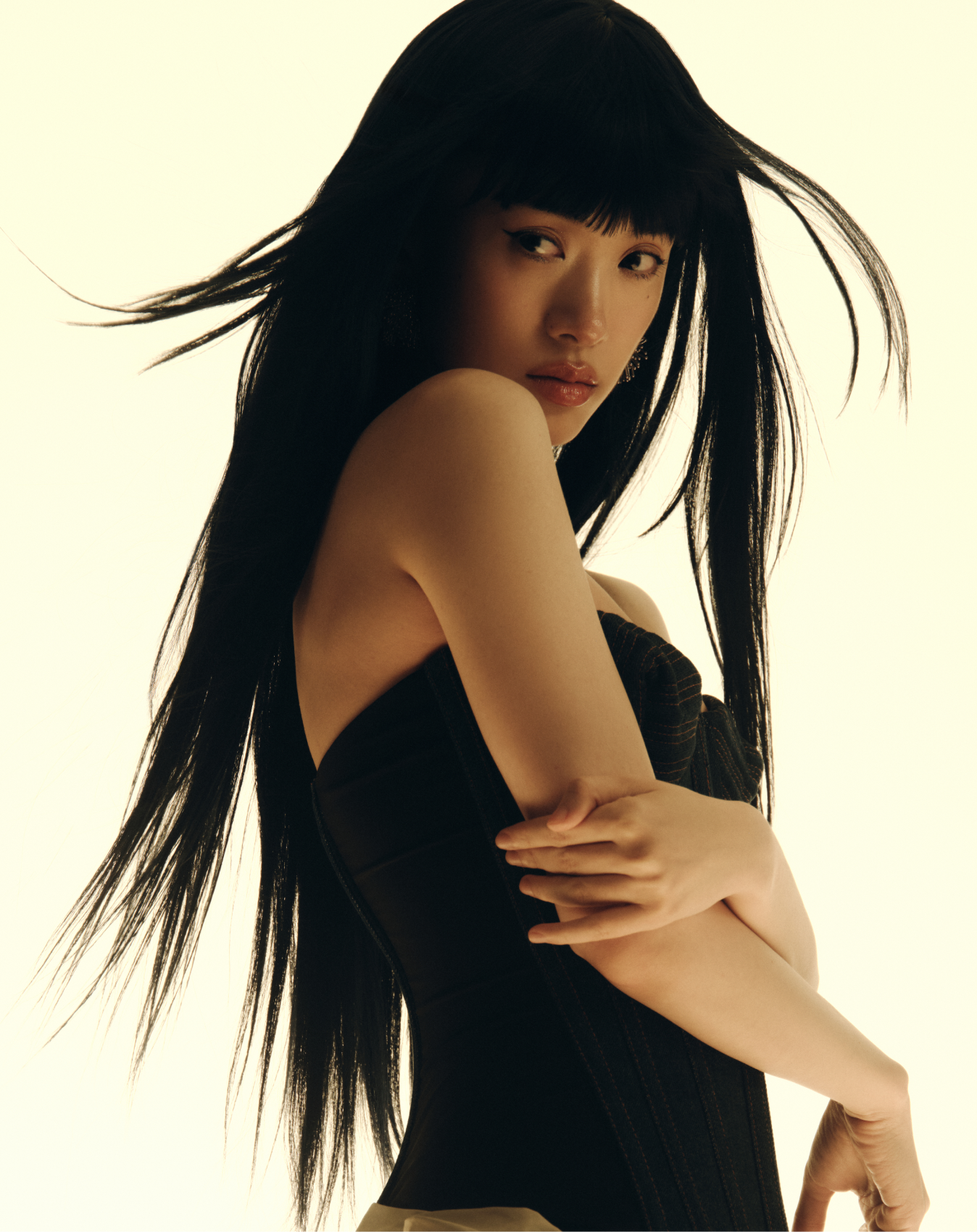
The sublime is something many artists have sought to capture, a hypnotic, intangible quality — even more serene when it’s fleeting and just as dangerous as it is inviting. Love has always existed as a facet of the sublime, terrifying in its initial rush and its absence even more apocalyptic in scope. Those who chase it are silent warriors wearing glitter and wings on the dance floor. What a pleasure, then, to party with FiFi Zhang.
Born and raised in Shanghai, the electro-pop polymath relocated to New York City to study Creative Coding and Design at Parsons, where assignments-turned-passion-projects shaped the contours of her musical world-building. First came the single “Butterfly,” then the Moonshine EP and the formative "So Beautiful So Lonely,” cementing the artist’s penchant for silky, dreamlike soundscapes. Last year, she platformed the transcendental nature of her artistry while performing live vocals and DJing at 88rising’s Head In The Clouds festival. And she secured a feature verse on Malaysian artist Shelhiel’s dreamy “Love, Repeat,” exploring influences in Mandopop. Described best as celestial-princess-meets-pop-enchantress — her enviable persona is yet another example of her design background at work.
As a singer-songwriter, producer, DJ, visual designer and creative director, Zhang understands that all creation is calamity. Life is a series of spells cast. Her preferred sonic alchemy is soft and delicate. Vulnerable lyrics, pondering the pangs of desire, the scalable nature of loneliness in the concrete jungle, and an insatiable need to tether the stars as if by kismet, ground her pillowy melodies. A testament to her multidisciplinary arsenal, every piece of Zhang’s artistic output is meticulously honed from inception to completion, from her album typography to the metallic tear-like glitter painted below her eyes on set.
On her upcoming album, Fleeting Hearts, slated to release in early October, she studies the nature of apocalypse as a symptom of overwhelming love, juxtaposing spiritual motifs of light and darkness. Packaging these themes in celestial gossamer, Zhang surveys her musical influences across UK Garage, hyperpop, Jersey Club, and house, enlisting producers tomcbumpz, age, Swami Sound, and Dazegxd to sweeten her sonic textures. The album is arriving alongside visual components rife with references to popular gaming franchises, like Final Fantasy and iconic shōjo manga. Since inspiration is as precarious as WiFi, plugging into the source requires a constant search for signal. “Is this the number to your heart and soul,” she coos on “To the Moon and Back,” waiting for a dial-up tone to resuscitate an unrequited love. It’s her dance with fate — or maybe an escapist fantasy — but, luckily for Zhang, not all fallen angels are damned.
In honor of Hypetrak Magazine’s grand return, she is among five artists spotlighted by a new music initiative, powered by Corona® Extra. Nueva Generaciones celebrates global artistry and moments of connection and revelry through music. It’s a declarative statement that embodies Hypetrak’s ethos to support underground artists and Corona Extra’s long-standing commitment to champion the voices shaping culture. In the interview below, Nueva Generaciones toasts to Zhang’s ability to blend visual and sonic textures into gorgeous continuums that ignite the dance floor.
Beauty is fleeting, but for the visionary Brooklyn-based singer-songwriter, shimmering BPMs reverberate eternally.
It’s me styling these four looks and trying to tell a story, asking the question: “If I become [healthier], prettier, more successful in my career, do I deserve more love?” That's what the music video is about, and fashion definitely helped me achieve that visual goal.
I really love this song by Solange called “Cranes in the Sky.” She’s talking about this feeling, this ultimate emotion of sadness, where no matter how much shopping, drinking, sex — you can’t escape loneliness as a feeling.
I believe that the purity of emotions can be understood regardless of language or background. I think that means being unafraid to blend cultures, genres, and sounds.
This year, I toast to Fleeting Hearts, my debut album — a body of work I wrote, produced, mixed, and sometimes even mastered myself. It’s the dream album I’ve wanted to make since I was a kid.
Photographer: Nayquan Shuler
Writer: Shaun Harris
Executive Producer: Elana Staroselsky
Senior Producer: Sarah Schecker
Production Coordinator: Gina Lee
Executive Creative Director: Paul Heavener
Associate Creative Director: Jamier Boatman-Harrell
WEB DESIGN: YENNA CHANG
Stylist: Sachiko Clyde
Set Designer: Maisie Sattler, Lucas Ryan Bond
Makeup Artist: Shoko Sawatari
Hair Stylist: Takao Hayashi
Photo Assistants: Shen Williams-Cohen, John Manuel Gomez
Stylist Assistant: Amber Rana
DATE: OCT 15 2025�
For 21+. Relax responsibly®. Corona Extra® Beer. Imported by Crown Imports, Chicago, IL
BACK TO TOP
Why were you so drawn to the motifs of angels and the moon on Fleeting Hearts?�
For me, the angel is an apocalyptic symbol — like it's still 1999, and the world is ending. My favorite manga and anime, like X by Clamp, Neon Genesis Evangelion, all have angels as antagonists to end the human world because humans are evil by nature … according to the anime [laughs]. But for me, the angel is a symbol of beauty and purity against the violent world. The moon is a really big theme in Asian and Chinese culture, and there's a saying in Chinese, “鏡花水月,” which means “flowers in the mirror, moon in water.” It kind of represents the ultimate goal: You’re chasing something that is seemingly really close, but forever out of reach. That’s really what “Chasing the Moon” is about.
FIFI:
“Fallen Angel” feels like the centerpiece of this album. It’s beautifully produced. What was it like working with Dazegxd to complete this track?�
It was actually an effortless process. Dazegxd is a friend and an amazing artist [whom] I love. Most of us are bedroom producers. And he did a remix version — a Jersey Club version — of my song called “Nobody.” So we decided to make a song together, and he sent me this instrumental demo that I instantly fell in love with. I literally said to him, “It feels like a JoJo's Bizarre Adventure theme song.” It was just so glittery and fantastic. I wrote the melodies and lyrics super fast. I did rearrangements of the stems he sent to me, and I finished the song. Dazegxd is fully supportive of whatever I do with his instrumental parts, which I really appreciate, but it took me forever to finish, mixing and mastering it.
FIFI:
How do you approach creative direction, especially with your music videos, as an extension of your sound and persona?�
I actually come from a visual design background, so I'm very used to the process of developing design ideas. When I write a song or I’m thinking about what the visuals look like, I usually have a pretty clear idea in my head. I give specific directions and references about the color palettes, makeup, storyboards, typography, lighting, anything related to my music videos. And luckily, I have friends who are like-minded and have worked with me for a long time, like Danni Huang and Xiao Han, to help me realize my dreams.
FIFI:
Do you tend to work with stylists, or is this a process that you enjoy as an extension of creative direction?
Sometimes I work by myself, but with my last album, I worked closely with a stylist friend of mine, Jingjing Jia. It’s a part of the storytelling. I had very detail-oriented references on colors, materials, or the look we were aiming for. In Fleeting Hearts, there's a song called “You Ain’t in Love” where I play four versions of myself. One is the mysterious FiFi, another is a sporty, going-to-the-gym FiFi. There's the office lady, boss girl FiFi, and then FiFi FiFi. It’s me styling these four looks and trying to tell a story, asking the question: “If I become [healthier], prettier, more successful in my career, do I deserve more love?” That's what the music video is about, and fashion definitely helped me achieve that visual goal.
FIFI:
How would you describe your visual identity?
Giving words to it may limit my own styling [laughs]. I think currently my favorite trends are the late-nineties minimalist style. But my style is very diverse. It could be something ethereal or goddess-like. Sometimes it’s a bit more urban streetwear. It’s hard to describe which exact direction I'm heading toward, but if I’m dressing myself or channeling parts of myself, I just see it.
FIFI:
Considering that so much of your world-building is tied to your visuals, can you speak to your relationship to film?
I really love Wong Kar-wai — I’m a big fan of his work. “Fallen Angel” was also influenced by his film of the same name [Fallen Angels]. I really love [Stanley] Kubrick and anime filmmakers like Satoshi Kon, sci-fi films like Blade Runner or Solaris. These are inspirations to my music as well, and also a lot of fashion photography or other artists’ music videos. I really love Nick Knight and his collaborations with Björk in the nineties. They have this music video called “Pagan Poetry” that’s always in my head — like these dreamy images of cruelty, beauty, and purity.
FIFI:
You often explore themes of loneliness, longing, and facing the mundane with a sense of reserved glamour. Why do you find yourself revisiting these topics in your music?
I think that’s definitely related to the city I grew up in and where I live right now, from Shanghai to New York. That's deep down how I feel, and maybe it's how everyone feels — this loneliness in the crowd. Ultimately, we’re born and die alone. I really love this song by Solange called “Cranes in the Sky.” She’s talking about this feeling, this ultimate emotion of sadness, where no matter how much shopping, drinking, sex — you can’t escape loneliness as a feeling.
I have a song called “So Beautiful, So Lonely,” which is about New York, and a song called “Oriental Pearl ’19,” which is about Shanghai. They both describe the city being fast-paced and populated with beautiful people, but still, you feel this urban loneliness in such a crowded environment.
FIFI:
In terms of songwriting, are there differences in sentimentality or emotion that you experience when penning something in Mandarin or English?
I am a native speaker of Chinese, and English is my second language, but somehow, maybe because growing up with the style of music I like and make, I usually listen to more English songs. I write melodies first, the instrumental parts, and then the lyrics. Sometimes I feel like lyrics in English come more naturally to me as a songwriter, but I'm definitely more precise and have a deeper understanding of Chinese. In my music, I blend different languages. You can hear a little bit of Japanese or Chinese in my songs. You never know. Maybe I’ll use other languages in the future.
FIFI:
All creatives sometimes hit a mental block. How do you recharge your ability to create?
I have this rule that if you're writing a song and at the very initial stage, you don't feel like it's going anywhere, you probably should just drop the song and start a new one. But if you feel it, you can just write something really good instantly. I definitely sometimes feel blocked, but I don’t force myself to write music. I’ll just take a bubble bath [laughs], play some video games, watch some movies, or listen to music that’s different from the music I'm making, and still with my energy. Then it’s like my HP is fully restored and I start to make music [again].
FIFI:
Nueva Generaciones captures the reverie of summer and music’s ability to bridge cultures. How do you embody Corona Extra’s mission to connect people through music?
I think music is undoubtedly a universal language that can break cultural barriers. In my music, I use English, Chinese, and sometimes even Japanese, choosing the language that fits the groove best. It’s not about translating, but about playing with sound, rhythm, and feeling. I believe that the purity of emotions can be understood regardless of language or background. I think that means being unafraid to blend cultures, genres, and sounds. As someone who grew up in Shanghai and now lives in NYC, I believe my unique experience can help shape a sound that's truly my own.
FIFI:
Corona Extra toasts to underground artists shaping pop culture within their respective communities. This year, what personal achievements or career highlights do you toast to?
It means a lot to emerging artists like me to have a platform to share our worlds. I'm truly excited that new audiences will get to see me perform and hear me talk about my favorite music for the first time. This year, I toast to Fleeting Hearts, my debut album — a body of work I wrote, produced, mixed, and sometimes even mastered myself. It’s the dream album I’ve wanted to make since I was a kid.
FIFI:
What overarching sonic influences are at play in Fleeting Hearts' soundscape?
I am very influenced by ‘90s Chinese divas and early 2000 UK Garage artists. My artist friends and their music really remind me of those video game and anime theme songs. Those are all inspirations to me. I feel like this album is kind of an evolved version of my last EP, like the full-length version. It's continuing the same themes, but more colorful.
FIFI: