


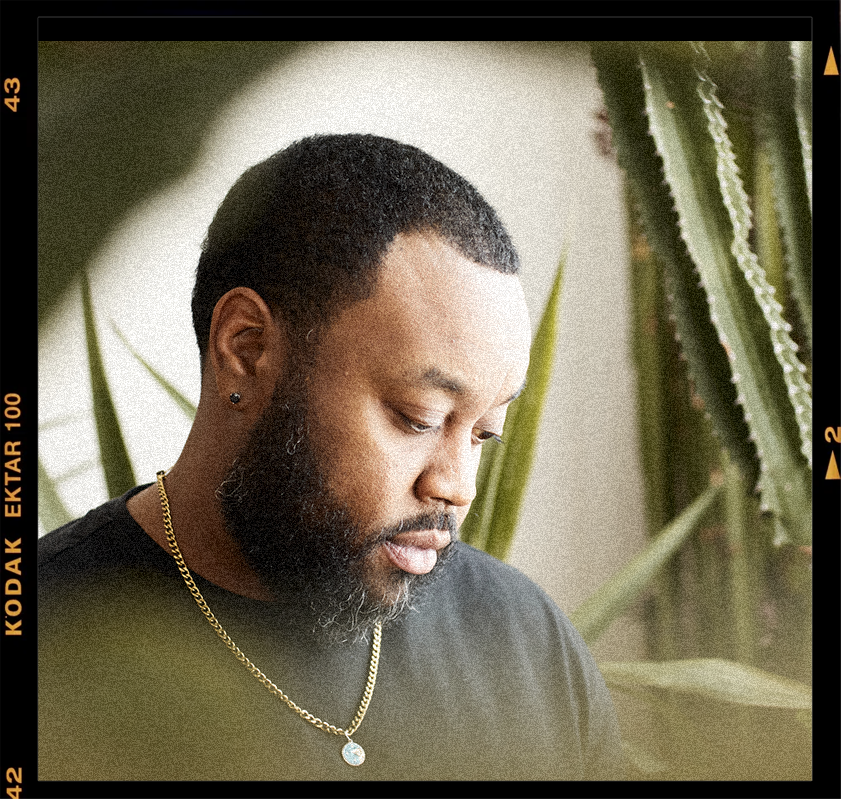


to Apply his Thoughtful Creativity to ‘The Chi’ Season 5 Artwork


Drawing inspiration from the richness of
Black history
and heritage to facilitate dynamic compositions for the Showtime series.
Born and raised in the DMV — which stands for District of Columbia, Maryland and Virginia — graphic artist Broadie is known for his unparalleled creative capabilities, drawing inspiration from the trials and triumphs of his rich culture to create awe-inspiring works of art that pay homage to the past, live in the present and shape the future.


His memories of the invigorating fine arts courses at BSU stuck with him and his admiration for boundary-breaking creatives such as painters like Kehinde Wiley and Aaron Douglas, and contemporary artist Deborah Roberts inspired him. However, it was only near the start of the COVID-19 pandemic in 2020 that the Maryland-based talent felt compelled to return to his craft. After seeing “80 Days,” a tear-jerking mixed media piece by Roberts on the subject of the wrongfully convicted 14-year-old African American George Stinney Jr., Broadie once again felt impassioned to create profound pieces of art that speak to the mind, body and spirit of anyone who interacts with it.

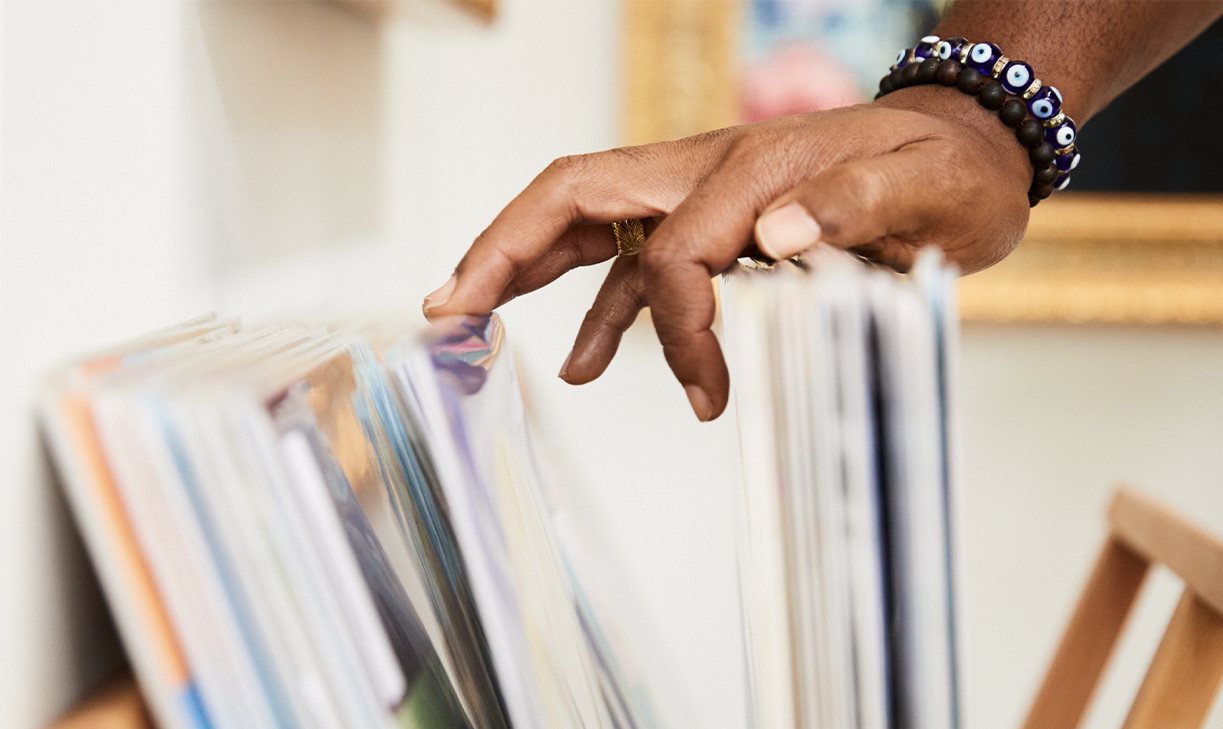


Reunited with his passion, Broadie dove head first into the digital art world, invoking both painful and pleasant moments from his upbringing in the DMV. Through his work, he addresses his sexuality, family and lifestyle as well as elements of Black history and heritage to design conversation-sparking compositions enhanced by bright bursts of color and unconventional textures. Since his return, he has piqued the interest of many, inviting each and every individual into his carefully curated universe that’s inspired by and empowering of Black people, particularly Black women. Now, Broadie has merged his universe with that of the Showtime original series The Chi, tapped by showrunner Lena Waithe to create the storytelling artwork for season of the show, premiering on June 24.
The digital graphic artist fused his aesthetic with the season’s theme of Black love and stories in order to facilitate cover art that will forever represent an unforgettable moment in the show’s history. In speaking with Broadie, the artist delves into the creative process of designing the composition for The Chi as well as his unique background and career trajectory as a whole.
for the
Read below
full scoop on Broadie.

When you were first contacted by The Chi, what was your initial reaction and what does it mean to now have your artwork as part of the show’s history?
I literally thought it was a
dream
I literally thought it was a dream. I never thought a TV show like that would hit me up, especially a show that I'd been watching since the first season. I feel like I had a personal connection [to the show] just because I’ve been watching it forever. This was probably one of the biggest collabs I’ve been on so far and I’m grateful.
It's monumental to me because I feel like TV shows like [The Chi] bridge so many gaps between different Black communities all over the US. It gives you an opportunity to see within a Black community somewhere else that still has the same troubles, same triumphs and trauma, but also has so much Black love that actually helped everybody get through it. If you grew up in a Black family or in that environment like I did, it just resonates. In a way, I feel like putting my vision into this piece of art is like telling my story from the DMV and how I see the world.
What was it like creating this artwork? Did you ever feel challenged when you were making it?
I feel like with any artist — and I don’t care if you’re a musician or painter — when it’s time to perform you get a bit nervous, like, can I actually deliver? And then after I deliver, will they actually like it?
In my head I was like, this is a masterpiece, but I had to realize and separate myself from “Broadie the artist” versus “Broadie that’s doing the editorial piece for Showtime who is 10 times or 20 times bigger than me.” It was a realization for me to bring down my ego a little bit.
It was a
realization for me
to bring down my ego a little bit


Your main subjects are typically women. Why do you gravitate towards centering women in your creations and what message are you trying to deliver with that?
The most disrespected person in America is the
Black woman
Without the female Black race I wouldn’t be here. No Black person would be here, and to be honest with you, when you look at history, studying the mitochondria and the DNA we all come from the very first Black women in Africa. I don’t know how it feels to be a Black woman, but I have multiple sisters, a step-mom and my biological mother, and I feel like Black women need to be celebrated more than they have in this country. Just listening to Malcolm X’s quote, “the most disrespected person in America is the Black woman,” pushes me to highlight the creators of my community.




Do you ever struggle with critiques on your pieces of art and the different reactions you may receive?
Yeah, I actually do. Not as much as when I first started, but I still do, and I think a lot of it was centered around me struggling with the actual message I wanted to put out because certain people could feel that some of my pieces were controversial. I had to learn to get over it and realize why I was doing it and it’s because I want to give people the same feeling that I had when I saw the piece on George Stinney Jr. [by Deborah Roberts].
Just recently, in New York, I had a piece called “Plucked Flowers” that highlights the amount of African Americans who were killed by the police on a yearly basis. I was telling this Black guy the actual numbers and statistics from the Washington Post and he started crying in front of my booth. I didn’t expect that to happen, it’s pretty new to me. I respect it, although I was speechless because I didn’t want to make [him] cry.
How did growing up in DMV, specifically D.C. and Prince George’s County in Maryland, influence the way you approach your creativity?
Helped me showcase more
I had the privilege of growing up around all Black people in P.G. County and a lot of Black people in this country don’t have that opportunity. I saw the hoods of the DMV in D.C., but I also saw the middle to upper-class of Black people who were thriving and had a little more education in P.G. County. For a long time, P.G. County was the richest Black county in the country. When we moved there it was a wake up call for me because I didn’t really have to deal with racism but instead classism.
That being said, with my art I feel like I’m paying homage to the people I grew up around and the fact that I was able to see that every Black person doesn’t come from the hood or from the ghetto, every Black person isn’t uneducated or illiterate and doesn’t know the meaning of financial literacy. Me being able to see that in my day-to-day life in the P.G. County area helped me showcase more beauty, fashion and style in my artwork that’s centered around Black people.
in my artwork

back to top
previous
//


It’s clear from his work that he dedicates countless hours to honing his craft and distinct vision, but his path has not always been linear. The artist, whose creative output is a mix of glamorous collages and dynamic imagery pivoted from his passion following undergrad at the HBCU Bowie State University. He moved into the more traditional career field of Information Technology in an effort to survive the economic crisis that affected the U.S. in 2008.Although he was in the throes of IT Security, Broadie’s inherent love for art and its various forms never escaped him.