The talented animator discusses his viral creations.
By: Keith Estiler
That’s just what came out of my brain. Growing up in a small town in Mississippi there was a great divide between arts and athletics, like you had to choose one or the other. I always wanted to bridge that gap. After high school I went to film school in LA and stayed in the industry. When I started creating the animations the loving response was almost immediate. I think it’s an incredibly unexplored and inspiring topic in the arts.
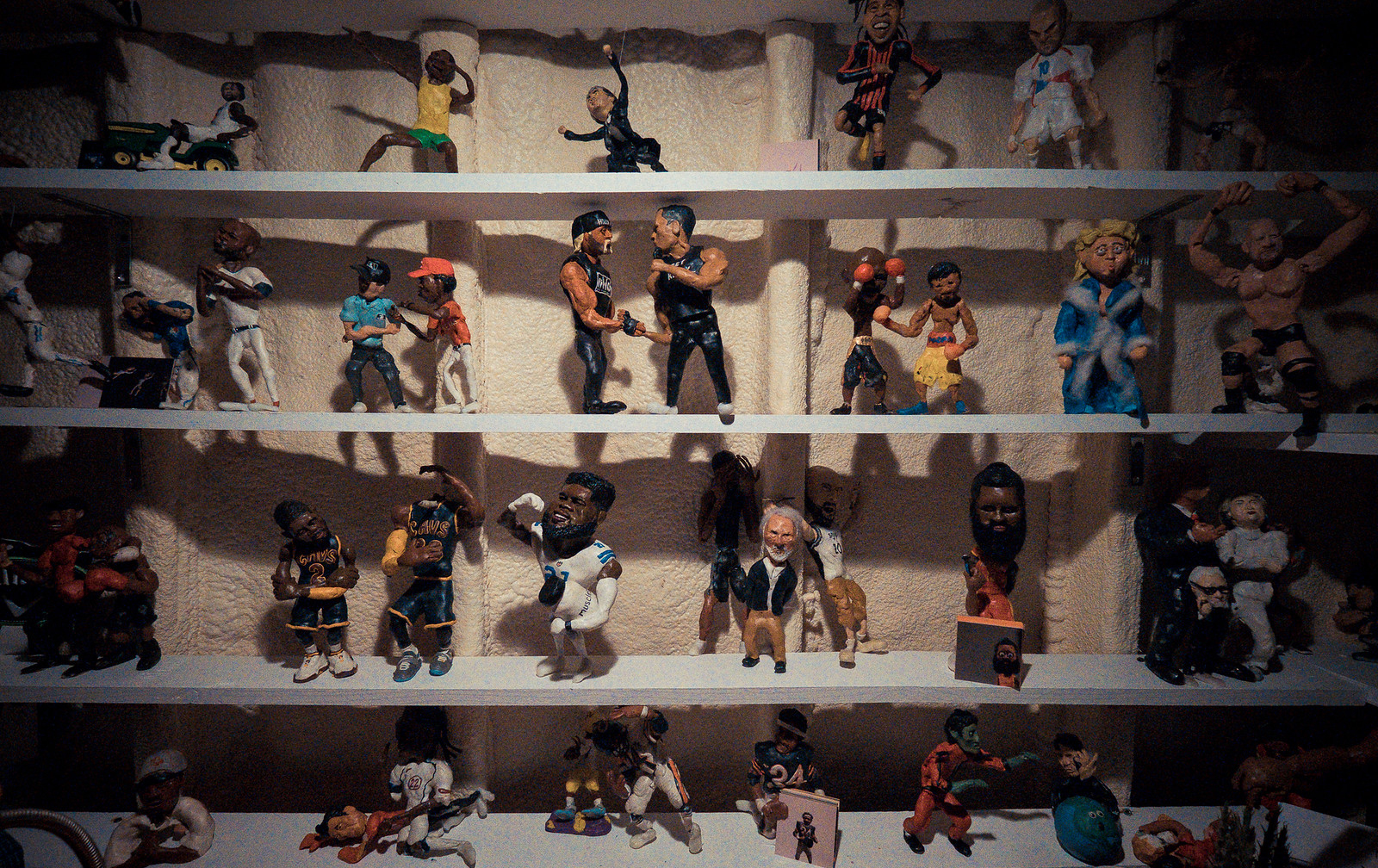
Azod Abedikichi is the elusive creator behind the popular sports claymation account on Instagram called @azxd. From a claymation of Lebron James making a fiery slam dunk to James Harden riding a motorcycle with his beard majestically flowing in the wind, Azod has carved out a reputation for creating engaging animations that offer hilarious respite.
His affinity for sports goes back to his childhood years. He was raised in a single-parent home in the small Mississippi town of Magee with his siblings. His Iranian immigrant father was an olympian who stressed the importance of sports. During high school, however, Azod felt that he had to choose between being an artist or an athlete. “There was a great divide between arts and athletics, like you had to choose one or the other. I always wanted to bridge that gap,” he said.
After high school, he decided to attend the New York Film Academy in Los Angeles where he was praised for his well-edited videos. Over the years, he began to explore his fascination with stop-motion animation which has turned into “an all consuming obsession of creating sports claymations,” he said.
Read on to learn more about Azod’s beginnings, claymation process and upcoming projects.

In 2015 I set a personal goal to create 10 completely different styles of animation of iconic moments in sports. The first animation was a reaction after watching Klay Thompson score 37 points in a quarter. I thought it would be a great pun to make Klay’s animation a claymation. That was the first time I’d ever sculpted anything and it turned out incredibly poor, but that motivated me to keep sculpting. I got sucked in and never looked back. Except for a few times.
Yes it is technically, physically, and mentally demanding. Timing is key in sports, so sometimes I had to be willing to work 30 hours straight in order to create something relevant for the moment. Fortunately, I didn’t overthink it in the beginning because it would have been too overwhelming. I suppose I was naive cause I didn’t waste time worrying about my shortcomings like my sculpting, animating, lighting, rigging, building skills etc instead I just did it. I only thought about what I wanted to make and not whether I could actually make it. I credit some of that ingenuity to growing up as a kid in the country where there wasn’t much to do. You just had to be resourceful and use your imagination.
When did you start getting into claymation?
Is it your professional career or hobby?
Both. I’ve been making a living off of it for the last two years, but for the first year I didn’t take any paid offers. I was getting contacted by teams and networks and that was nice but I just didn’t feel ready to settle. I stopped taking projects as an editor and lived off my savings. This allowed me the freedom to hone my craft and voice. I finally took a job when my account overdrafted, thanks to LeBron James. Shout out to LeBron.


A majority of the claymation featured on your Instagram account is sports-related. What made you want to choose this subject to focus on?
Describe your creative process in creating these claymation artworks.
It usually starts with a specific person or moment of inspiration. Then I write a story that’s funny or compelling to me. After that I essentially have an animatic, which is an edit that’s used as an animation reference. Then the production phase begins with building the puppets, sets, props, etc. These assets are then glued, screwed, rigged and ready to be animated. Most of the animations are 12 photographs per second. The average 15 second animation is about 30 hours of work. If it’s a reactionary piece then most of the work is done consecutively so it can be posted the next morning.


What are some of the biggest challenges you’ve faced in the creative process? Is it technically demanding?
Tell us about the state of claymation today, is it a dying art form? Is there a big community surrounding claymation?
Definitely not dying, but claymation is a tiny tiny sliver of the stop motion animation world, which is a very tiny tiny sliver of the animation world. Computer animation is the main slice. Its popularity increases the value and uniqueness of all stop motions. There are some phenomenal minds in the stop motion community. I think its a medium that will always be available and magical and when the right idea strikes the right creator(s) who knows what can and will be done.
What projects are you currently working on?
I just finished remaking Beastmode’s Beast Quake, as an homage to one of my favorite moments in sports and also as an homage to my journey as an artist. It was the second claymation that I ever made. It’s really the one where I realized I was on a unique path into the weird world of sports. And now I just accepted a position on a very talented team as a writer for Wieden and Kennedy on the Nike account. It’s like when Rodman joined the bulls in ‘95. I’m really grateful for all the risks I took along the way, and the opportunities that people gave me. I’m excited about this new chapter in my career. Change always brings creativity and new discoveries, so while I’ll have less purely animating time I expect to be challenged and grow into a better storyteller.
Photographer: Britton Orrange