Commissioned by
Created BY
Created BY
+
11-10-25 | BY FAST COMPANY CUSTOM STUDIO
For the Brenda Strafford Foundation, putting people first is part and parcel of its mission. In fact, it is its mission. The Calgary-based charitable organization is dedicated to improving lives through compassionate senior care, international healthcare, domestic violence prevention and support, and innovation and research. In recent years, however, the organization’s ability to help people was being compromised by the limitations of its technology.
Outdated and fragmented technology infrastructure was creating extra work for employees who routinely had to collect and organize data from many different sources, keeping them from focusing on tasks more directly tied to the foundation’s mission. That lost time represented lost money—a red flag for any organization, but especially for charities working on limited budgets. “For mission-driven organizations, every hour and every dollar counts,” says Brendan Park, the foundation’s director of information management and information technology. “We’re constantly trying to optimize our services to enrich people’s lives.”
The foundation’s leaders faced a critical choice: continue plugging away with its vulnerable legacy systems or transform their systems to streamline operations and build resiliency—a vital requirement during an era when businesses and organizations are facing increasing uncertainty. The foundation decided to partner with SAP to completely reimagine its technology infrastructure, combining disparate systems into a unified cloud platform that provides not only financial resilience but also cybersecurity protection.
“For mission-driven organizations, resiliency is a matter of survival,” says Jan Gilg, SAP’s co-chief revenue officer, Americas, and member of SAP’s extended board. “That’s why it’s so important to be extremely streamlined and efficient when it comes to their operational processes.”
— Brendan Park, director of information management and information technology, the Brenda Strafford Foundation
“Tools should always be in service of what you’re trying to achieve. For us, resiliency is stewardship.”


The story of how the Brenda Strafford Foundation’s data infrastructure became so fragmented will be familiar to many organizations who have enjoyed growth and success as technology has evolved. When the foundation was founded in 1975, it consisted of a single nursing home. During the ensuing decades, it established four other senior care communities in Alberta, and it expanded internationally to introduce eyecare centers for underserved patients in Jamaica, Haiti, and Dominica. It also began providing shelter and other support to women and children who had endured abuse and violence, as well as a space that provides emergency shelter for temporarily homeless families.
As the foundation grew, its technology infrastructure became more complex, but not necessarily more efficient. “We had a lot of legacy tools dealing with our finances, our procurement, our supply chain, and human resources,” Park says. “There was a lot of duplication of data, and we really struggled with getting everything in order for our month-end closes. Our tools hadn’t grown with the organization to accommodate all the changes we’d undergone.”
When foundation leaders turned to SAP to help transfer to a unified cloud platform last year, they did so with a number of goals in mind. First, they wanted a single repository for all its data, reducing the back-office workload and virtually eliminating accounting errors. Second, they wanted real-time data visibility so teams could make decisions without the one- or two-month lag they had grown accustomed to. Third, they wanted to strengthen cybersecurity, both to protect against threats and to offload some of the burden from their IT team.
All of those goals were met within a year and a half of implementation. “We’re seeing enhancements to our availability of data, faster reconciliations, better security, and faster decision-making,” Park says.
UNIFYING A RIOT OF FRAGMENTED DATA
Another benefit of the updated technology infrastructure could be its most important: the ability to quickly change direction and stay resilient in response to a constantly shifting environment. While organizations of all kinds are on high alert amid today’s political, economic, and technological uncertainty, nonprofits may feel particularly vulnerable. Many are facing declining funding coupled with rising costs, along with increased demand for their services. And all this is happening as major policy decisions threaten to affect their supply chains.
A SOLUTION FOR NAVIGATING UNCERTAINTY


+

+


+

Commissioned by

How cloud technology helped a charitable healthcare foundation double down on its mission
After the Brenda Strafford Foundation completely reimagined its data infrastructure, it freed the healthcare organization to do what it does best: helping people in need
HOW CLOUD TECHNOLOGY HELPED A CHARITABLE GROUP FOCUS ON ITS MISSION


Jan Gilg’s resiliency playbook
SAP’s co-chief revenue officer, Americas, and member of SAP’s extended board explains why digital transformation is essential to managing uncertainty
01.
Uncertainty is everywhere.
“In today’s fast-changing business and political environment, companies are forced to react and adjust. Resiliency has become a business imperative.”
02.
A cloud-based data platform can help you react quickly to change.
“If you want to be agile, you need an IT infrastructure that allows you to create end-to-end business processes that all speak the same language.”
03.
Advanced technology has arrived.
“The technology for cloud-based digital transformation has reached a level of maturity where it will reliably deliver measurable outcomes.”
A modern, cloud-supported technology platform gives the Brenda Strafford Foundation’s leaders the confidence to move forward amid such uncertainty. “We want to make sure that every dollar donated to us is used wisely,” Park says. “The operational resiliency afforded by our new infrastructure enables our teams to maintain consistent services independent of workforce pressures, regulatory changes, and funding variability.”
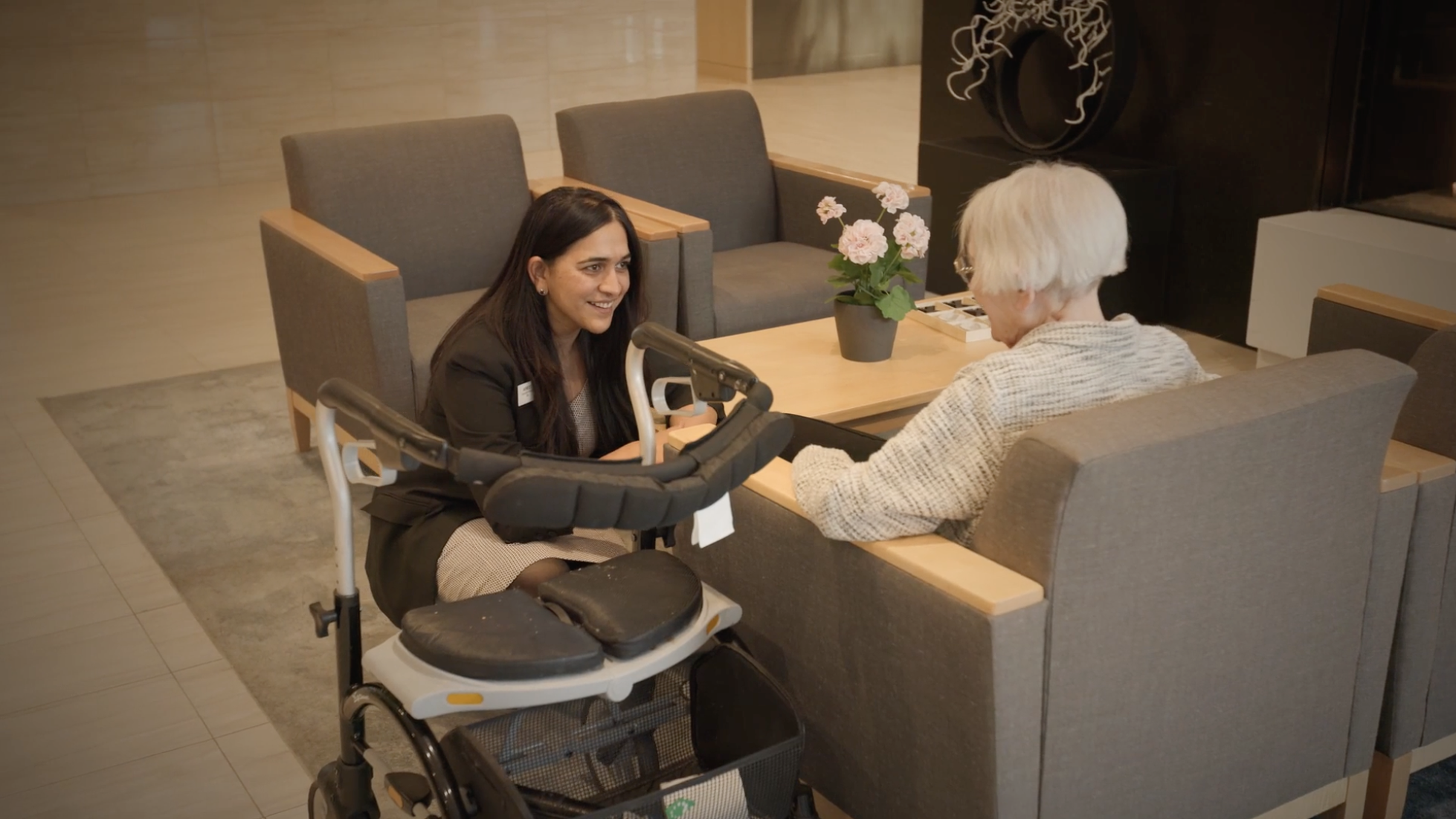
Ultimately, Park says, this resiliency comes back to the foundation’s ability to help people seeking care. With an integrated data landscape and applications that support fast decisions and end-to-end processes, foundation employees can funnel more of their energy into providing life-changing healthcare and essential services.
“Tools should always be in service of what you’re trying to achieve,” Park says. “For us, resiliency is stewardship.”
Image placeholder –
Brenda Strafford building
Image placeholder –
Brendan Park headshot


More Resiliency Playbook content:
How innovation empowers good care
By transforming its digital core, the Brenda Strafford Foundation is amplifying the human side of care
Watch the video here →

Safeguarding essential medicines in an uncertain world
How a pharmaceutical company is using cloud-based infrastructure to make health systems more resilient
Read More →