The Creative AI
Playbook
This report explores how creative leaders re using AI to expand what is possible without sacrificing disctinctiveness, control or commercial value.
Generative and multimodal AI are moving from experimentation into everyday creative workflows. Production costs are falling; output is multiplying and the old constraints on ideation and iteration are disappearing. But faster and cheaper is not the same as better, especially when every brand has access to similar tools.
The advantage is shifting from access to application. Taste turns technical capability into distinctive work. Trust gives teams the rules and evidence to scale it responsibly. Transformation converts speed into new audience experiences and sources of value. Used together, AI can enhance creative judgment rather than flatten it.
Strategy and Economics: Turn Speed into Distinctiveness

Generative AI has dramatically reduced the time and cost of creating concepts, prototypes and variations. Work that once took weeks can now be explored in days or hours. Yet the same efficiency creates a new risk: if teams use the same tools in the same way, output quickly becomes interchangeable. �
The strongest teams do not treat AI as a shortcut around craft. They build their brand into the process, using clear prompts, visual and verbal codes, approved examples and explicit do-and-don't guidance. AI expands the option set; human judgment decides which ideas are worth refining, producing and putting into the world.
Creative Operations is the system that carries work from brief to approval and publication. As AI accelerates production, that system becomes more important: teams face more tools, more versions of every asset, less visible handoffs and harder questions about ownership, consent and acceptable use. �
IP and rights cannot be left until a campaign is ready to ship. Ownership of AI-assisted output, licenses attached to training and reference material, and the use of a person's likeness, voice or style all need clear answers before work begins. The organizations ahead are writing those terms into contracts, tracking provenance alongside each asset and making consent and attribution part of the workflow. �
Governance works best when it is embedded rather than added as a final check. Approved tools, data and brand assets are defined upfront. Human review happens at the moments of highest creative, legal or reputational consequence. Every output has an audit trail and a clear owner. �
Creative AI now extends far beyond text and static images. Video generation, computer vision and 3D design tools are making it possible to create, edit and publish high-quality work faster, while real-time and personalized experiences are bringing production closer to the audience.
�That shift is changing who can create and how creative businesses grow. Tasks that once required a full production team can increasingly be handled by one creator or a small group. Creators are using that leverage to launch memberships, build niche brands, expand their intellectual property and collaborate with brands and agencies in new ways.


Conclusion

Creative AI creates lasting advantage when human judgment, responsible systems and new creative possibilities work together, protecting originality, enabling innovation to scale with confidence, and opening new ways to connect with audiences and capture value.�
Taste keeps work recognizable when everyone has access to the same tools.
Trust lets creative systems scale without leaving quality, rights and accountability to chance.
Transformation turns faster production into new audience experiences, intellectual property and revenue models. �
Creative work is still judged by the response it creates, not the technology used to make it. The leaders will be the organizations and creators who pair automation with authenticity, speed with strategy and new capability with deliberate human judgment.
How taste, trust and transformation turn faster production into distinctive growth
The global generative AI applications market is forecast to reach $58.5 billion by 2028, up from $6.2 billion in 2023.
Register your interest and secure your place today.
THE AI SUMMIT NEW YORK — MINI REPORT SERIES

INTRODUCTION
1
When every team can make more, the scarce advantage is knowing what deserves to exist. �
Creative Operations: Scale Output Without Scaling Risk
2
Faster production increases the value of clear rules, it does not remove the need for them.
New Models and Frontiers:
Build for AI-Native Audiences
3
AI is compressing the distance between idea, production, distribution and monetization.

Register to attend
December 9-10, 2026 | Javits Center, New York

Does it still feel like you?
Taste, brand codes and human judgement.
Can you scale it responsibly?
Workflow, rights, provenance and review.
What becomes possible next?
New formats, audiences and business models.
DATA SIGNAL
Source: Omdia generative AI applications market forecast. The forecast represents a 56% annual growth rate, with media and entertainment among the fastest-growing industries.
Brands can use AI to explore concepts before a shoot; tailor approved creative for different audiences and generate variations that teams refine. The value is not the number of assets produced; it is learning faster without diluting the brand.
INDUSTRY LENS

The Distinctive Creative Test
Encode the brand
Translate tone, visual codes, references and boundaries into reusable guidance for people and tools.
Direct with taste
Use AI to widen the creative field, then apply human selection, editing and craft.
Measure memory
Track recognition, recall and business response. Not just volume, speed or low-cost engagement.
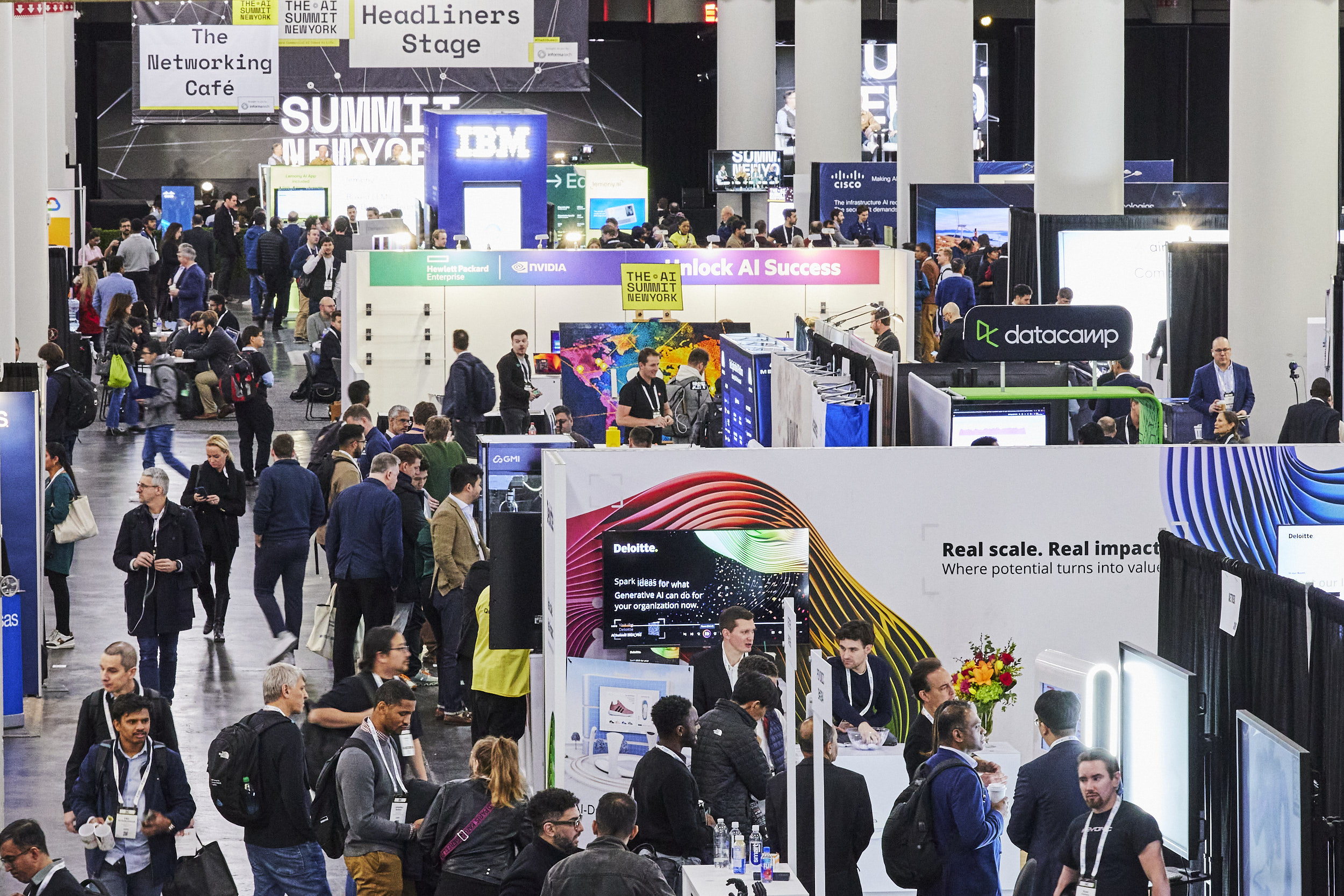
Continue the conversation at The AI Summit New York
Building The AI Native Brand | Creative AI Stage
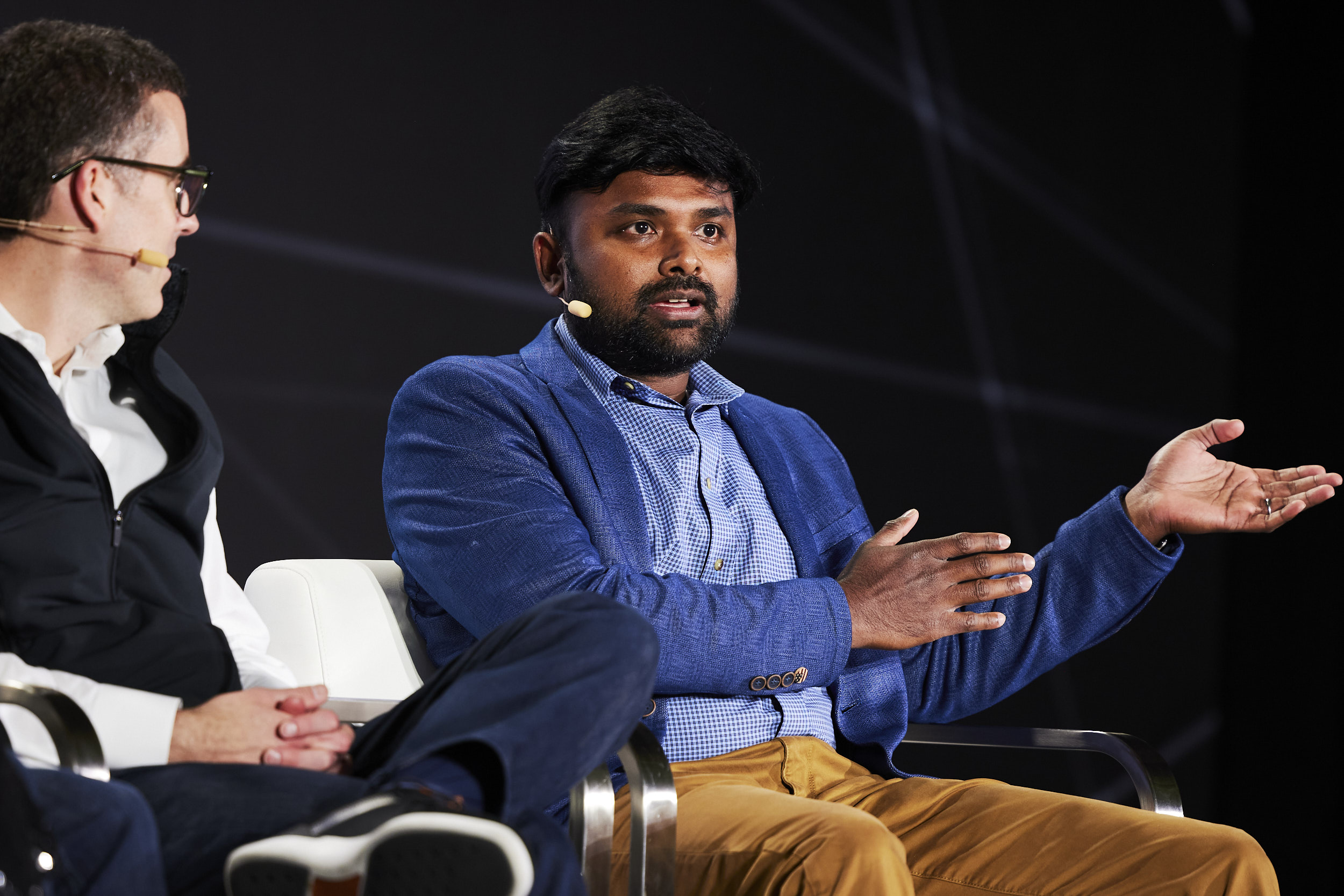
Why attend: Hear how brands, creators and creative leaders are accelerating ideation and production while protecting originality, brand value and human judgment.
A retailer deploying a shopping assistant has to manage traffic spikes, incomplete inventory data and brand tone in full view of the customer. A telecoms provider automating network operations has to prove that an agent will not degrade service while it encounters the edges of a live network.
INDUSTRY LENS

The Creative Operating System
Approved inputs
Define which tools, models, datasets, references and brand assets teams may use.
Visible workflow
Record prompts, versions, approvals and disclosures alongside the asset itself.
Human gates
Place creative, legal and brand review where judgment or risk is highest.
Accountable output
Make ownership clear from the brief through to publication and reuse.
The teams shipping AI that lasts tend to start narrow and specific, keeping a human meaningfully in the loop while they prove reliability and value. They then scale one validated use case into the next, building depth before breadth.
Data quality is both the top governance priority and the most commonly cited challenge in managing data for AI.
Source: Omdia research on data governance. 60% name data quality a key governance priority; 17% cited quality and consistency as the leading challenge, ahead of data security at 14%.

DATA SIGNAL
A Practical Creative ROI Scorecard:
Source: This Omdia report frames governance as moving from a compliance exercise toward a competitive capability.
Continue the conversation at
The AI Summit New York
Creativity at Scale: How AI is rewriting the creative economy | Creative AI Stage
Why attend: Explore how studios, agencies, brands, and creators are adapting their business models for an AI-native future, and learn where new value is being created as content generation becomes faster, cheaper, and more scalable.
The practical takeaway: Governance is not separate from creative value. It is the operating system that protects distinctiveness, secures rights and makes faster production safe to scale.
IP AND RIGHTS: SETTLE THE TERMS BEFORE WORK BEGINS
Licensing
Confirm the rights attached to training data, reference material and model output.
Consent
Agree acceptable use of likeness, voice and style, including attribution.
Provenance
Track tools, inputs and approvals from the brief through to the published asset.
The AI-Native Value Loop:
Compress production
Move from idea to publishable asset faster by combining writing, image, video and design workflows.
Own the audience
Compound the IP
Build direct relationships and portable communities rather than relying on one platform or algorithm.
Extend strong ideas into new formats, partnerships, products and recurring revenue models.
Omdia identifies microdramas (short, mobile-first video series built around fast, lower-cost production) as one of the fastest-growing entertainment formats. They show how a new production model can quickly create a new viewing habit.
INDUSTRY LENS

Global microdrama revenue is forecast to grow from $11 billion in 2025 to $14 billion by the end of 2026.
Source: Omdia global microdrama forecast. Omdia also reports that U.S. audiences now spend more mobile viewing time with microdramas than with Netflix, Disney+ or Amazon Prime Video.

INFRASTRUCTURE SIGNAL
CREATE WHAT CAN'T BE COPIED
See how brands, creatirs and technology leaders are turning Creative AI into distinctive work, responsible operations and new sources of value.
10
At The AI Summit New York, go beyond the tools and explore the creative strategies, operating models and emerging formats shaping the next era of creative work.
1. Protect distinctiveness
Learn how creative leaders encode brand, apply human judgment and measure what audiences remember.
Explore practical approaches to rights, provenance, governance and Creative AI measurement.
3. Build what comes next
Discover the formats, creatir models and multimodal experiences opening new routes to growth.


Time and cost saved against the pre-AI baseline.
Efficiency
Brand recall, recognition and share of voice.
Disctinctiveness
Conversion, engagement or revenue driven by each variant.
Risk
Conversion, engagement or revenue driven by each variant.
Performance
79% of organizations have implemented or are piloting a formal responsible AI framework.
Ownership
Define who owns AI-assisted output across creator, agency, platform and brand.
2. Scale responsibly