Where Failed Recognition Programs Go to Rest... Delve into the epitaphs and witness the consequences of what happens to recognition strategies that don't quite make the cut.
KILLED BY LACK OF PERSONALIZATION
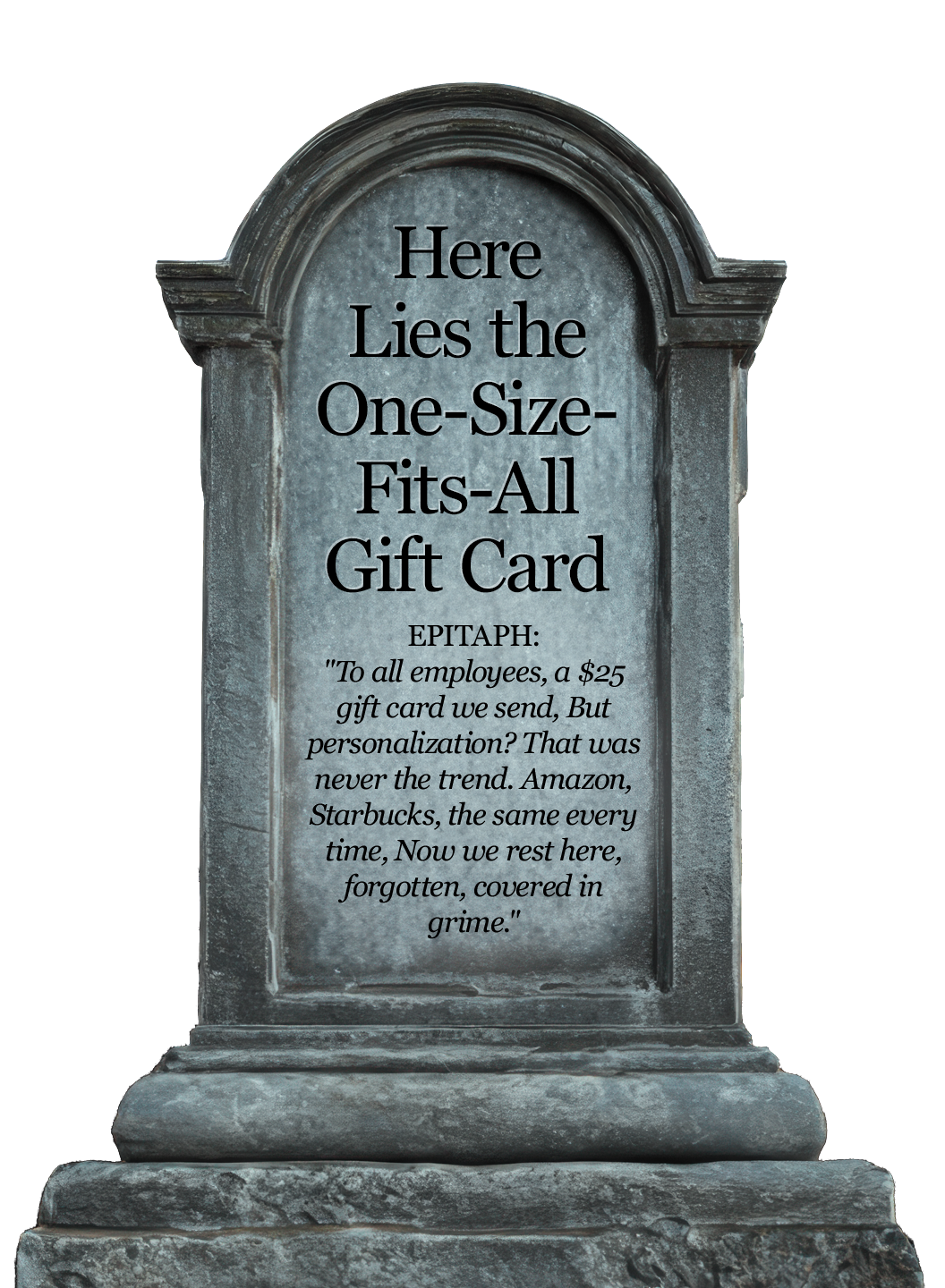
Death Certificate: The Generic Gift Card Program
Born: 2010
Died: 2023
68% of gift cards went unused or re-gifted Employees felt like interchangeable cogs Zero emotional connection to the reward One gluten-free employee received bakery gift cards for 3 years straight
Cause of Death:
I received a gift card to a steakhouse... I've been vegetarian for 10 years and my manager knows this.”
“
Victim Testimony:
Implement recognition platforms with diverse reward catalogs Let employees choose from experiences, merchandise, charity donations, or gift cards Track individual preferences in recognition profiles Offer points-based systems that give autonomy Include options for every lifestyle, dietary need, and interest
The Personalized Choice Revolution
95%+ redemption rates Increased employee satisfaction scores Higher perceived value of recognition Stronger emotional connection to rewards
Success Metrics:
DEATH BY INDIFFERENCE
Born: 2005
Died: 2024
Treated team achievements as group lunch opportunities No individual acknowledgment of specific contributions Forced socializing during lunch hours Ignored dietary restrictions (again) Felt like a cheap substitute for real appreciation
We hit our biggest revenue target ever, and they celebrated with a $6 per person pizza party. The CEO then left in his new Porsche.”
Replace generic parties with milestone-specific celebrations Recognize individual contributions publicly before group celebrations Offer celebration choices: team lunch, extra PTO, team experience, or donation Make celebrations opt-in, not mandatory Budget appropriately relative to achievement magnitude Include remote employees equally
The Meaningful Moments Approach
Employees feel individually valued within team success Increased participation and enthusiasm Recognition that scales with achievement impact Inclusive celebration options
POISONED BY POLITICS
Born: 1998
Became predictable rotation rather than merit-based Created resentment among non-winners Managers played favorites Criteria were vague or non-existent Once-a-month meant constant good work went unnoticed The same names kept appearing
I was voted Employee of the Month by my coworkers, but since there are 500 ways to spell Katie, management went with the other Catie. When everyone spoke up, management said 'eh, it's already done.'”
Replace monthly awards with real-time, ongoing recognition Implement peer-to-peer recognition systems Create multiple recognition categories based on clear values Make recognition frequent, specific, and timely Remove artificial limitations (anyone can be recognized anytime) Track recognition patterns to ensure equity
The Continuous Recognition Culture
Recognition frequency increases 10x All employees receive recognition, not just "winners" Reduced perception of favoritism Stronger connection between behavior and appreciation
FORGOTTEN AND UNFUNDED
Born: 1985
Automated systems that failed spectacularly Generic catalogs with outdated, unwanted items Awards arriving 6+ months late (or never) Tax implications reducing perceived value Public recognition that embarrassed introverts Vendor billing issues preventing redemptions
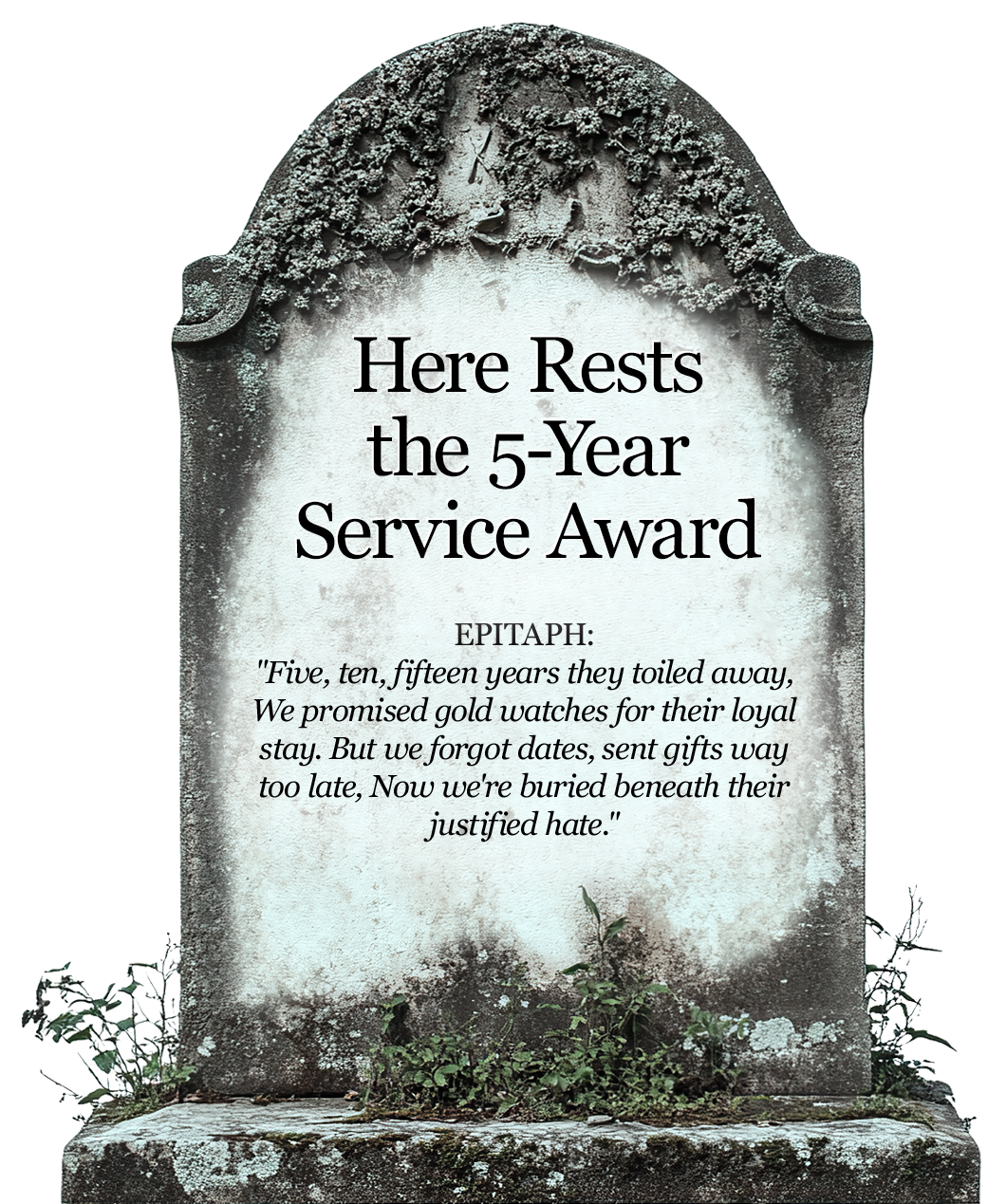
They forgot my 5-year anniversary. When I mentioned it, they did nothing. Now they celebrate new people hitting 5 years and I'm devastated.”
Automate anniversary tracking with multi-layer reminders Offer experiential rewards Let employees choose between merchandise, experiences, or donations Recognize privately or publicly based on individual preference Include handwritten notes from leadership Gross-up awards to cover taxes
The Milestone Celebration Experience
100% on-time anniversary recognition Higher emotional resonance with milestone moments Increased retention at critical tenure points Employees feel truly valued for longevity
EXPIRED FROM INCONSISTENCY
Born: 2012
Wildly inconsistent criteria and amounts Managers played favorites No transparency in selection process Cash felt transactional, not appreciative Tax withholding reduced impact Some employees never eligible while others received multiple Created more resentment than motivation
My coworker got $500 for finishing a project on time. I saved the company $2M and got a 'thanks' email. When I asked about a bonus, they said the budget was used up.”
Establish clear criteria for spot recognition Create point-based system with published values tied to behaviors Make recognition visible and trackable across organization Empower all managers with equal budgets Publish recognition patterns to ensure equity Allow peer-to-peer recognition with smaller point values
The Transparent Recognition Economy
Reduced perception of favoritism Increased trust in recognition system Equal distribution across teams and departments Recognition frequency increases dramatically
SUFFOCATED BY LOGO OVERLOAD
Born: 2000
Assumed employees wanted to be walking billboards Low-quality merchandise that fell apart quickly Limited sizes and style options Environmental waste from unused items Felt like company benefited more than employees Rewards that collected dust in closets
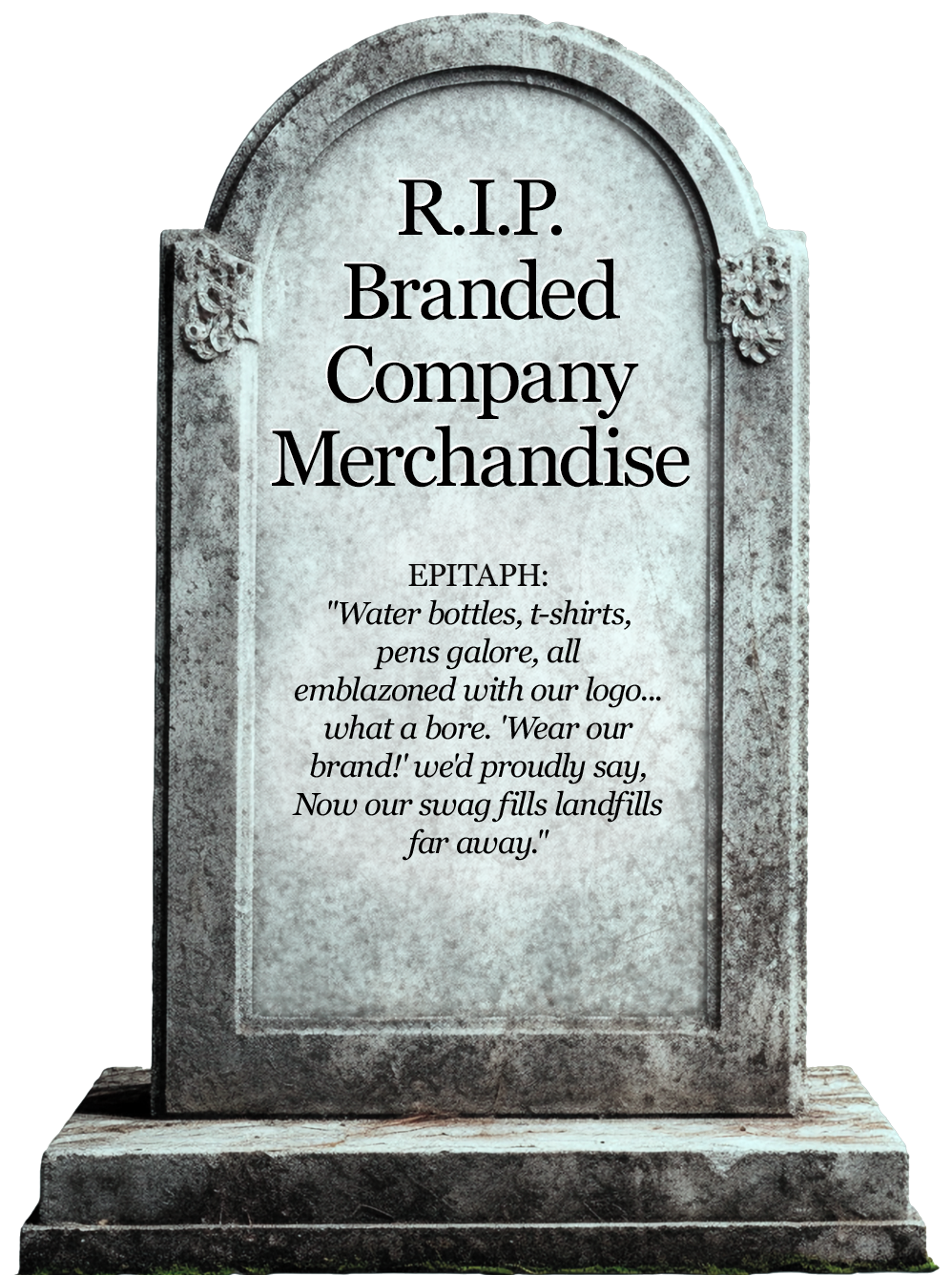
"Plastic travel cups, polyester T-shirts, crappy gadgets... It's so wasteful. Now even most metropolitan thrift stores are filled with unused swag."
Offer high-quality, discretely branded (or unbranded) items Include diverse product categories beyond apparel Let employees choose items that fit their lifestyle Consider experiences over objects Ensure inclusive sizing and style options Offer items employees would actually purchase themselves
The Meaningful Merchandise Movement
Increased usage and appreciation of merchandise Reduced waste and unused inventory Higher perceived value of recognition Positive environmental impact
KILLED BY COPY-PASTE SYNDROME
Born: 2008
Generic, templated language that could apply to anyone Forced extroverts to appreciate introverts publicly (and vice versa) Lost in overflowing inboxes No specific details about what was being recognized Same format used for everyone Felt performative rather than genuine
My boss recognized me for my service anniversary in front of the entire company. I'm painfully shy and hate public attention. It reminded me they don't know me at all.”
Survey employees on recognition preferences (public vs. private) Create recognition profiles in HRIS systems Train managers to give detailed feedback Offer multiple recognition channels (email, Slack, video, handwritten notes, in-person) Make recognition about the person, not the recognizer's comfort Use storytelling that highlights specific actions and impact
The Preference-Based Recognition Framework
Recognition matches individual preferences Increased detail and specificity in praise Higher emotional impact reported by recipients Reduced anxiety around recognition moments
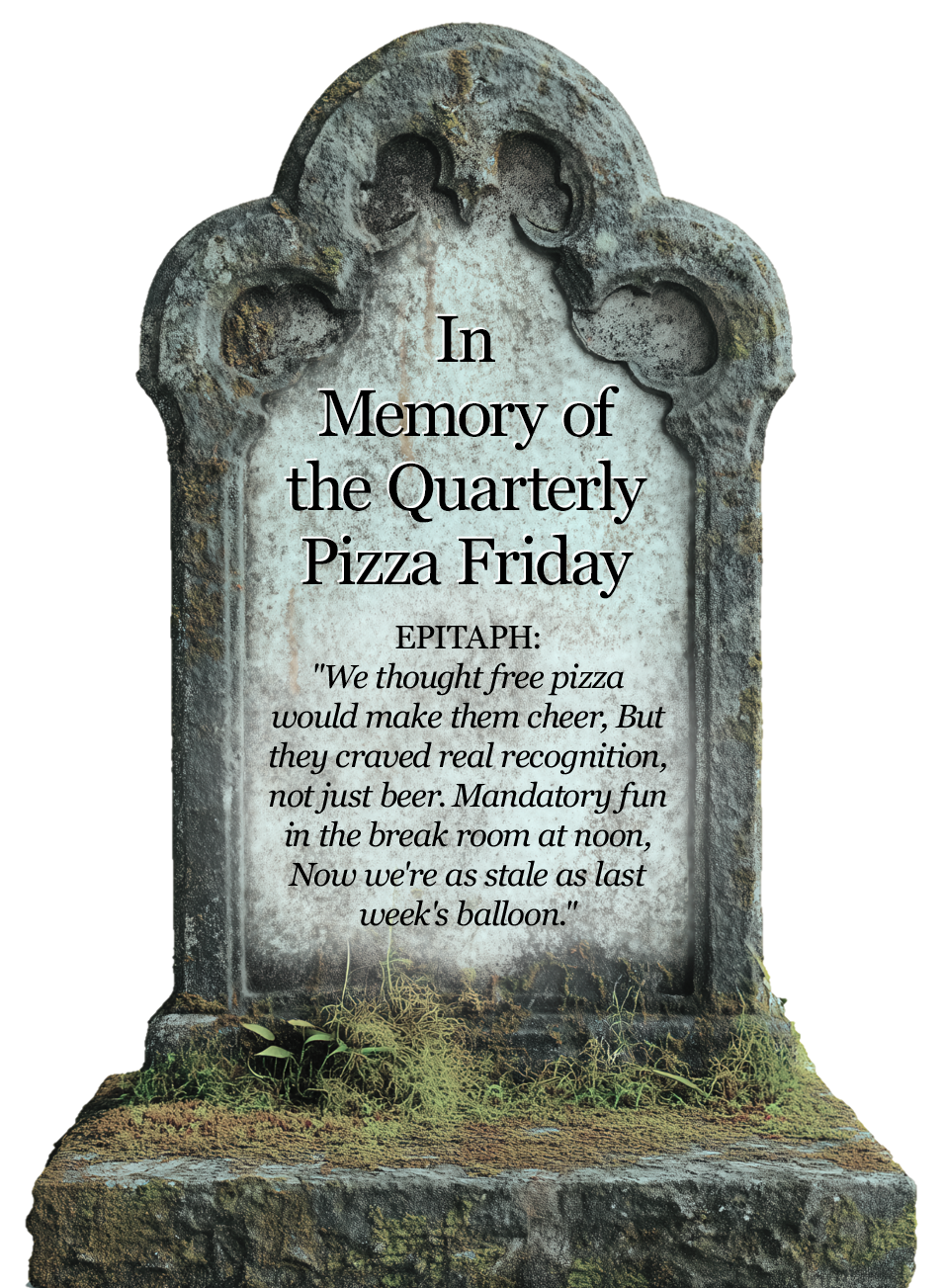
Death Certificate: the Quarterly Pizza Friday
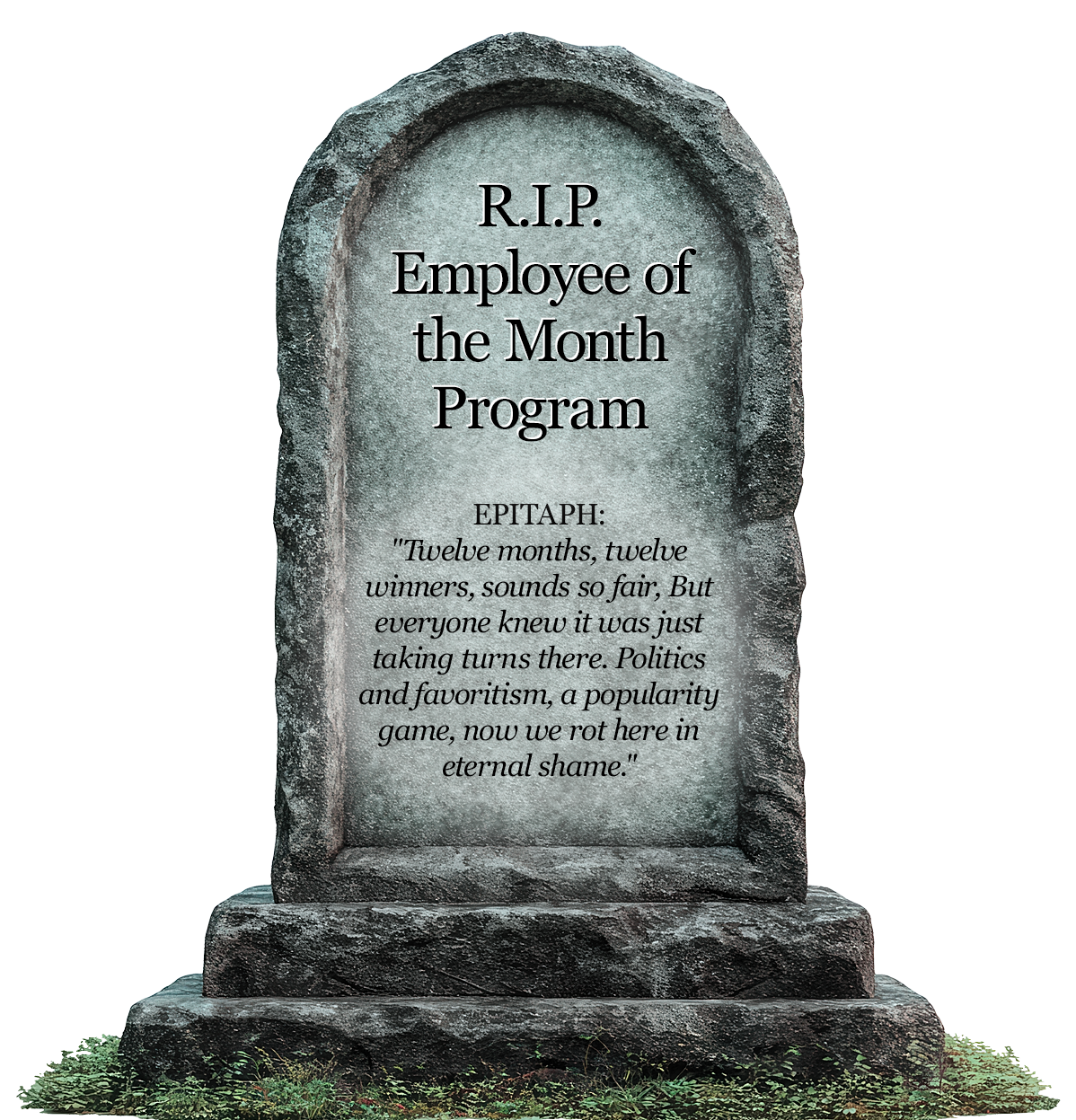
Death Certificate: The Employee of the Month Program
Death Certificate: The Service Anniversary Program
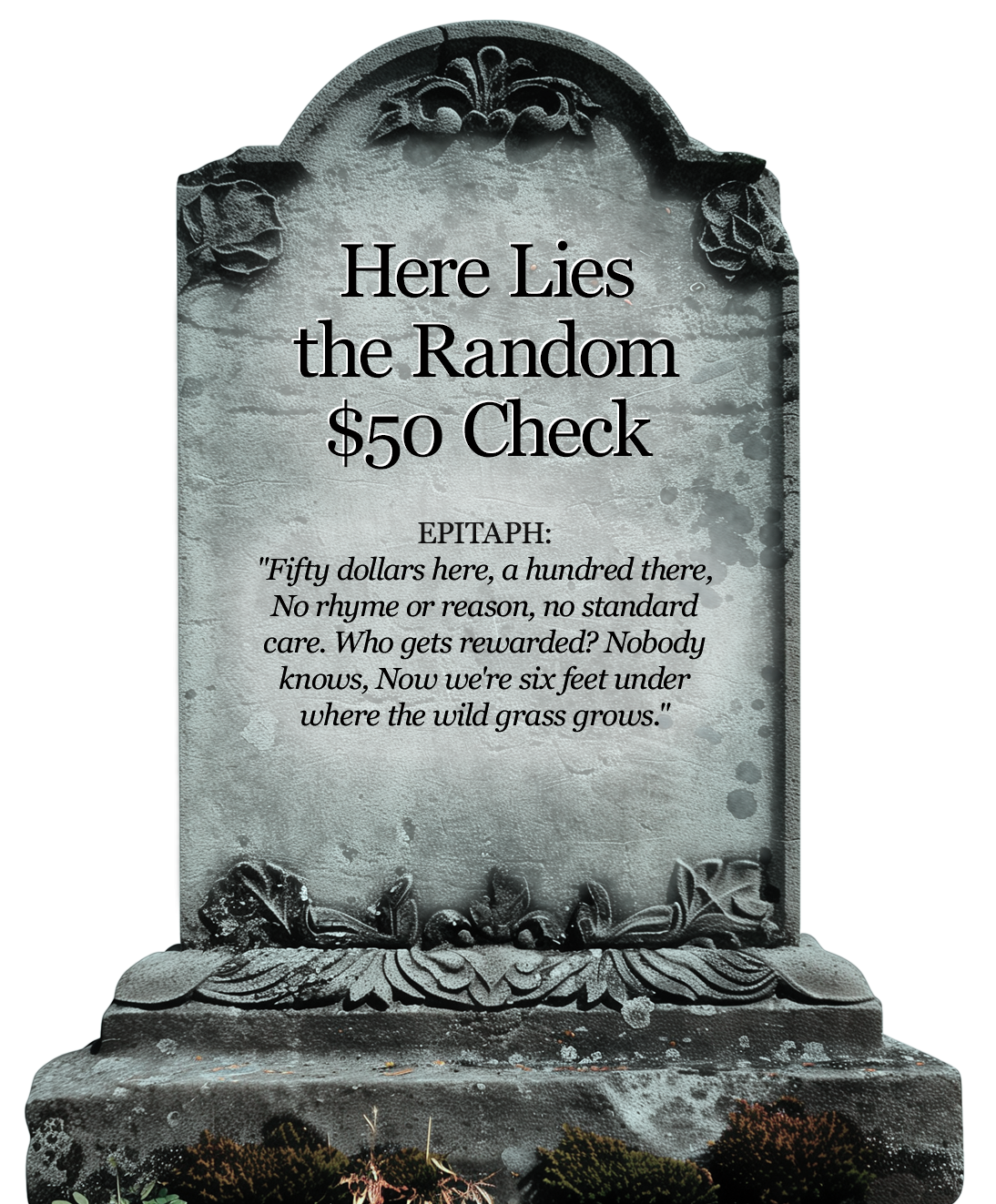
Death Certificate: The Spot Bonus Cash Award
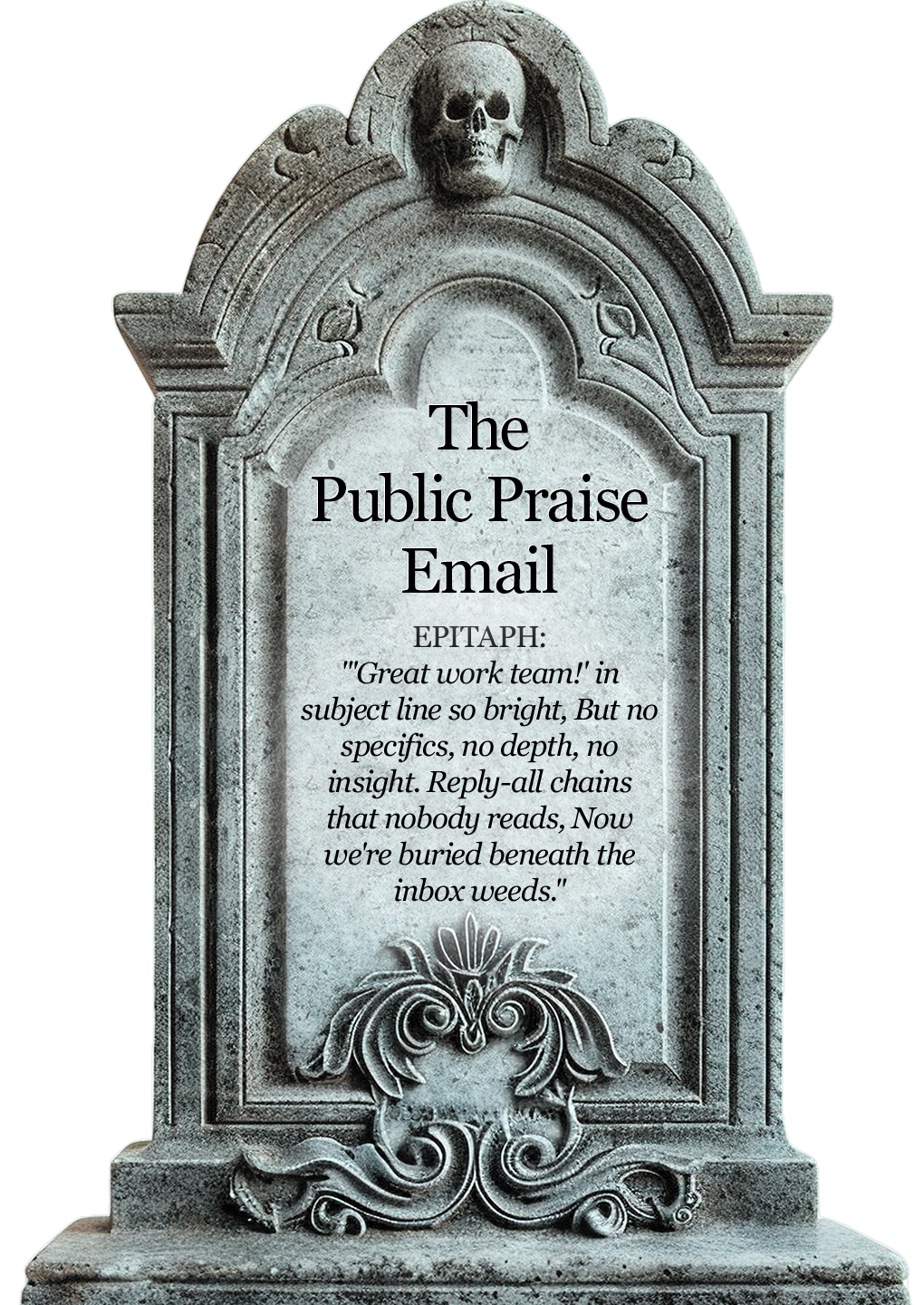
Death Certificate: The Public Praise Email
Death Certificate: The Swag Store Reward
Bring your recognition strategy back from the dead?” Click Here to Start the Resurrection
Take the Recognition Monster Archetypes Quiz
Bring your recognition strategy back from the dead! Click Here to Start the Resurrection
In Memory of the Quarterly Pizza Friday
The Generic Gift Card Program
The Employee of the Month Program
The Service Anniversary Program
The Spot Bonus Cash Award
The Public Praise Email
The Swag Store Reward
Neither of the quotes here had anything to do with swag overload. Can we get a new one? I will come up with artwork to go with it once we have quote.”
Result 2
Result3
Result4
retake
The workplace can be a terrifying place when recognition goes wrong. Ancient recognition monsters lurk in the shadows of offices everywhere, feeding on poor management practices and crushing employee morale. Take this spine-chilling quiz to discover which monster is haunting YOUR workplace... if you dare.
What Recognition Monster is Haunting Your Workplace?
ENTER
A) What's recognition? I just expect people to do their jobs.
B) I meant to recognize _________'s project, but I've been putting it off for weeks.
C) I give the same generic praise to everyone regularly.
D) Yesterday - I always find reasons to celebrate my team.
When was the last time you recognized an employee's good work?
Question 1: Recognition Frequency
D) Personalized recognition that matches each person's preferences.
C) The same gift card or company swag for everyone.
B) A quick "thanks" in passing, if I remember.
A) I don't. Paychecks should be enough motivation.
Question 2: Recognition Style
How do you typically recognize employee achievements?
D) Highlight specific achievements and explain their impact.
C) Give everyone equal praise regardless of actual performance.
B) Mention accomplishments briefly before moving to business.
A) Focus only on what went wrong and what needs improvement.
Question 3: Team Meeting Approach
During team meetings, you usually:
D) Understand what motivated them and recognize accordingly.
C) Send them the standard "employee of the month" email template.
B) I'll get around to acknowledging it eventually .
A) They're just doing what they're paid for .
Question 4: Employee Feedback Response
When an employee does exceptional work, your first instinct is:
D) Invested thoughtfully based on individual preferences and impact .
C) The same amount for everyone to be "fair."
B) Whatever's cheapest and easiest to order in bulk.
A) Recognition costs money we don't have.
Question 5: Recognition Budget
Your approach to recognition spending is:
D) Take time to learn what motivates each team member.
C) Use company-wide recognition programs exclusively.
B) Assume what worked for one person works for all.
A) Everyone should appreciate recognition the same way.
Question 6: Individual Differences
When it comes to employee preferences, you:
D) As close to the achievement as possible.
C) On schedule according to company policy, regardless of timing .
B) Weeks or months after the achievement occurred.
A) ) I don't track achievements worth recognizing.
Question 7: Recognition Timing
Your recognition timing is typically:
The Recognition Vampire
Drains the life out of achievements
You suck the motivation right out of your employees by treating exceptional work as merely expected. Like a vampire, you drain energy rather than giving it, leaving your team feeling lifeless and unappreciated.
How to Slay This Monster Start small: acknowledge one achievement per week. Remember that recognition is an investment, not a cost. Track the correlation between recognition and performance. Ask departing employees about recognition in exit interviews.
It’s time to move from spooky to strategic Click here to partner with Inspirus to make recognition meaningful.
Go home
Gives brain-dead recognition
You shamble through recognition opportunities with little thought or energy. Your praise is generic, delayed, and feels lifeless - like it came from someone whose recognition brain has died.
How to Slay This Monster Set calendar reminders for recognition moments Keep notes about individual employee achievements Practice specific, detailed feedback Ask employees what recognition means to them
Identical recognition for everyone!
You create an eerie uniformity in recognition, treating all employees as identical copies rather than unique individuals. Your "fairness" becomes frightening when everyone receives exactly the same generic appreciation.
How to Slay This Monster Learn individual employee preferences and motivations Vary recognition methods based on the person and achievement Ask "How do you like to be appreciated?" Track what recognition resonates with each team member
The holy grail of recognition
You're not a monster at all! You're the recognition angel that other managers aspire to become. You understand that thoughtful, personalized recognition is a powerful force for good in the workplace.
Keep Up the Good Work: Share your recognition practices with other managers Document successful recognition strategies Mentor others struggling with appreciation Continue evolving your recognition approach