Let's Talk About Life Insurance

Have you had a conversation with your family about life insurance?
It might not feel like the most natural discussion to have around your dinner table, yet it’s one of the most important. While the topic can feel a little heavy, it doesn’t have to be. Talking about life insurance and the steps you’re taking to protect your family can be reassuring and empowering to everyone in your family.
September is Life Insurance Awareness Month, an ideal time for families to start or continue conversations about money management, financial planning and life insurance. Some of the latest research helps us understand why it's critical to have these conversations in the first place.
In fact, in January 2024, 51% of consumers reported owning life insurance, which is down significantly from 63% in 2011, according to LIMRA’s annual Insurance Barometer Study. In addition, 22% of people who own life insurance say they do not have enough coverage.
Another study, commissioned by Prudential, showed that while people with higher household incomes are more likely to have life insurance than those with lower incomes, 15% of those with household incomes of $100,000 or more do not have any life insurance coverage.
The main reason to have life insurance is because you want your loved ones to receive money after you die to help them financially. But there are many other reasons, too. Let’s start by understanding the opportunities to include life insurance as part of your overall financial plans.
Getty Images
Here's why it's so important to have a family conversation about life insurance and financial planning. It may be easier than you think.
This Grocery Method Can Save You Time and Money
If you’re tired of spending a fortune every time you go to the grocery store, this viral budgeting method could help. The 6-to-1 grocery method, popularized on TikTok by Chef Will Coleman, can help make grocery shopping easier and put more money in your pocket.
Even though inflation is cooling, grocery prices remain elevated, putting a strain on many household’s budgets, and the last inflation report actually showed a jump in food prices. The food at home index rose 0.4% in September, with a 2.3% increase for all food items over the previous year. Meats, poultry, fish and eggs rose 3.9% over the previous year.
High prices have led many individuals to try alternative budgeting methods, like the 60/30/10 method, to more effectively manage their money. The 6-to-1 grocery method tackles one particular aspect of your spending — grocery shopping.
Learning Center Home
Getty Images
The 6-to-1 grocery method can help you save money, reduce waste, and eat healthier.

Your Kid Is a New Driver:
Will Your Car Insurance Take a Hit?

Learning Center Home
Preservation Retirement Services
The most exciting day of your life may in fact be when you first became a parent. Gone are the days when the father-to-be paces in the waiting room smoking a cigar while the mother-to-be promises bloody murder. Fast-forward 15 or so years into the future, when you took your little bundle of joy out for their first time to practice driving. Remember how great that felt, the wind in your hair, the freedom of having a personal chauffeur in your future, images of the second job as a taxi driver to your child slowly fading away?
No? You mean you were petrified, holding on to the inside of the car for dear life and questioning every choice you’ve made in your life? Yeah, join the club. Teaching your kid to drive is not for the faint of heart, and that includes your insurance company.
Most likely, but you can try to lessen the blow by asking about discounts and teaching your child as much as you can before they get their license.
How to Buy Homeowners Insurance

Learning Center Home
Getty Images
Are you buying a home? Congratulations. That's a huge milestone. With it comes the need to protect this new asset for the years ahead. How to protect it? You'll need homeowners insurance.
Unfortunately, home insurance rates are high. Rates have increased 11.5% since 2022 and now cost $2,728 per year, or $227 per month on average, according to MarketWatch. So you'll want to shop around to ensure you get the best price.
But before you can start comparing quotes, you’ll need to decide how much and what type of coverage to get. A home’s insurance value is based on the cost to rebuild the house, not the market value.
You can get an estimate of the home’s rebuilding cost at AccuCoverage.com, which asks many questions about the house's size, building materials and additional details. It then uses the same building-cost database that insurers use. Or you can work with an agent or the insurer to come up with an estimate.
Here's what you need to know about buying homeowners insurance.
Planning to buy homeowners insurance for the first time? Here's what you need to know and how to get started.

Learning Center Home
Getty Images
Quit putting it off, because it's vital for you and your heirs. From wills and trusts to executors and taxes, here are some essential points to keep in mind.
Learning Center Home
NYSUT NOTE: Life insurance is absolutely vital, from covering daily basics to taking outstanding debts off your family members' plates. Metropolitan Life Insurance Company's Term Life Insurance Plan, endorsed by the NYSUT Member Benefits Trust, offers term life insurance coverage for you or your spouse/certified domestic partner. At premiums negotiated especially for NYSUT members, qualified applicants can get coverage up to $1 million.

The 10 Cheapest Countries to Visit

Learning Center Home
Getty Images
If you're planning your next solo or family vacation and have to stick to a strict budget, no problem. We've found the cheapest countries to visit around the world. Despite the effects of inflation on everything from eggs to electric cars, there are many places where the dollar will work in your favor, getting you an exotic trip for less than you might expect.
Our ranking is based on the average estimated daily cost you'll pay once you reach your destination, considering daily prices for accommodation and food for one person. The missing element is the cost of airfare, but flight costs vary so much depending on the time of year you're traveling, and where you're flying from, and to, that it's not helpful to factor those into our selections. If you want to know how to find and save money on flights to Europe, we've got some strategies for doing just that.
To inspire your flight hunting, here are 10 of the cheapest countries to travel to in 2024.
Data sources include TheGlobalEconomy.com, Numbeo's cost of living database, and Budget Your Trip.
Despite inflation, there are still great places to visit in the world where you can have an amazing experience without breaking the bank.
529 Plans Hit a New Milestone: Why They're So Popular

Getty Images
More families have been taking advantage of 529 plans than ever, with the number of new accounts opened rising each year. And thanks to this surge in popularity, 529s have just hit a new milestone.
Savings in 529 plans across the country have surpassed half a trillion dollars for the first time, according to the College Savings Plans Network (CSPN), a network of the National Association of State Treasurers. Over $508 billion has been invested across 16.8 million open 529 accounts nationally, with the average size of each account increasing from $13,188 in 2009 to $30,295 in 2024.
529 plans are powerful tools that can help you tackle rising education costs. So if you’re looking to save for your child or grandchild’s future college expenses, opening a 529 plan could be the best way to do so, given the plan's favorable tax treatment and the rising cost of a college education.
Mary Morris, Chair of the College Savings Plans Network and CEO of Invest529 says she finds it “encouraging” to see families increasingly recognize “the importance of postsecondary education and that 529 plans exist to help them make that a reality.”
Here’s what you need to know about 529 savings plans and why they’re more popular now than ever.
Recently, 529 plans hit a new milestone with over half a trillion dollars being saved in plans across the country. Why are 529 plans so popular?
I'm a Financial Professional: It's Time to Stop Planning Your Retirement Like It's 1995

Learning Center Home
Getty Images
When you hear the word "retirement," what picture comes to mind? For many, it's still some version of the classic image: Clock out at 65, cash in your pension or Social Security and settle into 20 golden years of golf and grandkids.
That version may have worked in 1995. But today? It's as outdated as floppy disks.
In my work helping clients prepare for retirement, I see a very different picture emerging. One that's longer, more fluid and far more personal. If you're still planning your retirement based on old rules, it's likely time to rethink your strategy.
Today's retirement isn't the same as in your parents' day. You need to be prepared for a much longer time frame and make a plan with purpose in mind.
Can Both Spouses Collect Social Security Benefits? Quick Facts You Need

Learning Center Home
Getty Images
If you’re 62 years of age or older, Social Security can provide you with a source of income when you retire or when you can no longer work due to a disability. When it comes to benefits, both spouses can receive Social Security, which is based on their individual earnings records and at what age they claim benefits. In other words, one spousal payment does not offset or affect the others.
That aside, Social Security has a maximum family benefit, which is the maximum amount you can collect monthly based on your earnings record. Although there is a formula for determining a beneficiary's maximum benefit amount, right now, the maximum amount is between 150% to 180% of the primary beneficiary’s full retirement benefit, according to the SSA.
What Retirees Must Know About Telehealth

Learning Center Home

© 2020 The Kiplinger Washington Editors Inc.
Don't Make These Big Mistakes When Claiming Your Social Security Benefits

Getty Images
Although Social Security adds stability to many people's retirement plans, nearly half (49%) don’t know how to maximize their benefits, according to a recent survey by Nationwide Financial. Another 33% of adults said they don’t know at what age they are or were eligible for full retirement benefits.
It's not hard to understand why many Americans are unclear about how Social Security benefits work. The rules are extensive and can be confusing. According to the survey, many people aren’t sure what their full retirement age (FRA) is, at what age they are eligible for full benefits, and if they should take benefits early or delay benefits until later in life. With over 72 million Americans on track to collect benefits from Social Security this year, knowing when to retire and how to maximize benefits is crucial.
If you don’t know how Social Security works, when to claim your benefits or how to maximize your benefits, you could be missing out on reaching your retirement goals. Here's what you need to know.
New survey reveals that many people don't know their full retirement age, aren’t sure the age they are or were eligible for full retirement benefits or take benefits too early.
© 2020 The Kiplinger Washington Editors Inc.
Learning Center Home
Learning Center Home

Getty Images
There’s Medicare Part A, Part B, Part D, Medigap plans, Medicare Advantage plans and so on. We sort out the confusion about signing up for Medicare—and much more.
Learning Center Home
Are Credit Cards an Alternative Source of Income?

Why would a bank take $15,000 out of a client’s account with no explanation or any chance for the client to stop the action?
That’s the question my friend asked herself after receiving a distressed call from her son, an accomplished entrepreneur. What happened next highlights the danger of relying too heavily on credit.
Getty Images
Thinking that having credit available means you have another source of income is misguided.
Learning Center Home
New Rules, New Opportunities for Student Loans: An Expert Guide to Preparing for What's Next
Getty Images
Financial Learning Center
Powered by Kiplinger
Thinking that having credit available means you have another source of income is misguided.
CREDIT
Are Credit Cards an Alternative Source of Income?
Finance Fundamentals
The 6-to-1 grocery method can help you save money, reduce waste, and eat healthier.
This Grocery Method Can Save You Time and Money
Most likely, but you can try to lessen the blow by asking about discounts and teaching your child as much as you can before they get their license.
Your Kid Is a New Driver: Will Your Car Insurance Take a Hit?
Quit putting it off, because it's vital for you and your heirs. From wills and trusts to executors and taxes, here are some essential points to keep in mind.
Are You an Estate Planning Procrastinator? Where to Start
SHOPPING
car insurance
retirement
COLLEGE SAVINGS
RETIREMENT
When you're married but only one spouse works, leaving retirement planning to the working partner puts financial security at risk. A joint effort is vital.
How to Plan for Retirement When Only One Spouse Works
Recently, 529 plans hit a new milestone with over half a trillion dollars being saved in plans across the country. Why are 529 plans so popular?
529 Plans Hit a New Milestone: Why They're So Popular
SAVINGS
Experts say the Federal Reserve will cut interest rates again at the next Fed meeting. Here's what that means for savings rates.
What a Fed Rate Cut Means for Savings
Here's why it's so important to have a family conversation about life insurance and financial planning. It may be easier than you think.
INSURANCE
Let's Talk About Life Insurance
TRAVEL
Despite inflation, there are still great places to visit in the world where you can have an amazing experience without breaking the bank.
The 10 Cheapest Countries to Visit
RETIREMENT
Many people don't know their full retirement age, aren’t sure the age they are or were eligible for full retirement benefits or take benefits too early.
Don't Make These Big Mistakes When Claiming Your Social Security Benefits
RETIREMENT PLANNING
The Great Wealth Transfer is well underway, yet too many families aren't ready. Here's how to bridge the generation gap that could threaten your legacy.
SOCIAL SECURITY
Both spouses can collect Social Security based on their individual earnings records and at what age they claim benefits
Can Both Spouses Collect Social Security Benefits? Quick Facts You Need
I'm a Financial Adviser: You've Built Your Wealth, Now Make Sure Your Family Keeps It
MODERN RETIREMENT
Today's retirement isn't the same as in your parents' day. You need to be prepared for a much longer time frame and make a plan with purpose in mind.
I'm a Financial Professional: It's Time to Stop Planning Your Retirement Like It's 1995
Retirement Living


Rates are high this year, but you can still score a low mortgage rate with these tips.
real estate
Five Ways to Shop for a Low Mortgage Rate
Read More
Read More
Planning to buy homeowners insurance for the first time? Here's what you need to know and how to get started.
INSURANCE
How to Buy Homeowners Insurance
Financial Learning Center Resources
Need a Financial Planner?
Both spouses can collect Social Security based on their individual earnings records and at what age they claim benefits
Financial Learning Center
Powered by Kiplinger
There’s Medicare Part A, Part B, Part D, Medigap plans, Medicare Advantage plans and so on. We sort out the confusion about signing up for Medicare—and much more.
There’s no one-size-fits-all formula for how much you’ll need.
Emergency Funds: How to Get Started
You worked hard to build your retirement nest egg. But do you know how to minimize taxes on your savings?
RETIREMENT
10 Questions Retirees Often Get Wrong About Taxes in Retirement
It’s often smart to borrow to boost your income and your assets.
Good Debt, Bad Debt: Knowing the Difference
CREDIT & DEBT
MEDICARE
Medicare Basics: 11 Things You Need to Know
SOCIAL SECURITY
Why visit a government office to get your Social Security business done? You can do much of that online.
14 Social Security Tasks You Can Do Online
Finding the lowest rate to protect you and your vehicle can be a challenge.
Reshop Your Car Insurance
INSURANCE
Parents may now use money from their 529 college-savings plans to help their children pay off student loans.
A New Way to Pay College Loans
STUDENT LOANS
Kiplinger Today

People have lots of questions about the new $3,000 or $3,600 child tax credit and the advance payments that the IRS will send to most families in 2021. Here are answers to some of those questions.
CORONAVIRUS AND YOUR MONEY
MOBILE VERSION TO BE COMPLETED AFTER DESKTOP APPROVAL
There are limits on what debt collectors can do to recoup what you owe. If you have medical debts, you have even more rights.
ESTATE PLANNING
How to Keep Tabs on Your Credit Reports
Free weekly access is ending, but several services let you view your credit files more than once a year.
CORONAVIRUS AND YOUR MONEY
RETIREMENT
You might be surprised to see some of the things you'll find yourself spending less or more on in your golden years.
10 Things You'll Spend Less and More on in Retirement
Retirement Living
CORONAVIRUS AND YOUR MONEY
The pandemic has created significant challenges for all types of senior living communities.
A COVID Storm Hits Senior Living
TRAVEL
Retirees wanting to take a cruise should plan for additional safety measures, such as temperature checks and wearing a mask in public areas.
How Cruise Ships Are Setting Sail During COVID
Use our road map to find an advisor who will truly look out for your best interests.
Financial Planning
How to Find a Financial Planner You Trust

Financial Learning Center Resources
Need a Financial Planner?
Long-Term Care Insurance
Auto and Home Insurance
Mortgage Discount Program
Synchrony Bank
Savings Program
403(b) Field Guide
What Is the Magic Number to Retire Comfortably?
New Rules, New Opportunities for Student Loans: An Expert Guide to Preparing for What's Next
The dream of retiring comfortably has just become a bit less expensive for most Americans, a recent study shows. Do you have enough socked away?
Major changes are coming to federal student loan rules, so it's a good time for borrowers to understand how these shifts will impact their financial planning.
Read More

Finish the year strong with smart money moves that can boost savings, trim taxes and set you up for a better 2026.
COLLEGE
RETIREMENT
PERSONAL FINANCE
6 Quick Money Moves to Make Before the Year Ends
Kiplinger Today

I'm a Financial Adviser: You've Built Your Wealth, Now Make Sure Your Family Keeps It
Getty Images
The most significant wealth transfer in history, an estimated $84 trillion, is underway as Baby Boomers pass on their fortunes to their Gen X and Millennial heirs.
But most families aren't ready, and the cultural divide between generations may make it more complicated than ever to preserve that legacy.
Until recently, Baby Boomers enjoyed unprecedented generational dominance, not only as the wealthiest generation but also the largest generation by population.
While Millennials have since come to outnumber the Boomers, the postwar generation still represents the wealthiest generation in U.S. history, holding more than 50% of the nation's household wealth.
As Baby Boomers continue to exit the workforce, the wealth they've built — fueled by decades of substantial salaries and asset growth — is beginning to move to their children and grandchildren, with ripple effects across family dynamics, the economy and the wealth management industry.
The Great Wealth Transfer is well underway, yet too many families aren't ready. Here's how to bridge the generation gap that could threaten your legacy.
Learning Center Home
Learning Center Home
Learning Center Home
Learning Center Home
Getty Images
Inflation tops health care costs as the biggest concern, and many preretirees are boosting their saving rate.
Living a Life of Purpose after Retirement: 3 Action Steps to Take

Getty Images
When someone asks about what you do, the answer shouldn’t be, “I’m retired.” There is more to the second half of your life … a lot more.
Learning Center Home
3 Strategies to Avoid Running
Out of Money in Retirement

Getty Images
For a financially sustainable retirement that could last 30 years or more, here are three ways to help manage your risks and avoid financial roadblocks in your golden years.
The trend of increasing life expectancy means that Americans are much more likely to live 25, 30 or even 35 years in retirement. The benefits of this trend include spending more time with your family and a higher chance of meeting your great-grandchildren. The downsides include the increased potential for running out of money close to the end of this retirement.
Today’s retirees can expect to live 40% longer than those who retired 70 years ago. Recent research reveals that affluent Americans are likely to live longer. This means that if you’ve had consistent access to health care and high income, you are more likely to enjoy a longer lifespan. Men in the top quintile of income born in 1960 will live on average 12.7 years longer than men who are in the lowest quintile of income; for women the equivalent is 13.6 years.
These raw numbers can be headache-inducing. However, the implications are profound. What they mean basically is that those who have recently retired or who are getting ready to retire, one out of three women and one in five men can expect to live to 90 years or beyond.
As retirements lengthen, they require more financial resources to support not only day-to-day expenses, but also the increased health care expenses that can crop up due to aging. It’s no surprise then, that 60% of pre-retirees surveyed by Allianz fear running out of money in retirement.
Fortunately, holistic retirement planning built around three strategies — minimizing taxes, managing savings and reducing market downside risks — can mitigate the risk of running out of money in retirement.
My friend’s son has started several successful businesses and worked in various fields, but as an entrepreneur, his income can be cyclical, sporadic and, at times, volatile. He’d called in a rare panic, blurting out information he usually wouldn’t share so freely and confessing that $15,000 had been stolen from one of his accounts.
My friend is nothing else if not a very protective mother bear; she doesn’t necessarily become involved in her son’s escapades, but because he seldom shared this type of information with her, she became concerned. She wanted to know what was going on, and eventually, he shared the story in painstaking detail.
As it turned out, even though he had maxed out all his credit cards while in between business ventures, he’d put together a plan to go to Europe and said he kept an account with $15,000 that was now gone.
When my friend asked how this money had been stolen, he told her it had been taken directly from his account without any warning or explanation.
She asked if the bank was applying it to his credit card debt.
He said that wasn’t possible because the credit card debt had been through a different bank.
She wondered if there was a paper trail proving the bank took the money without his authorization. If so, he could request it be returned to his account.
She kept asking questions until he specified which account and bank the money had disappeared from. The answer took her by surprise because she didn’t even know he had accounts with that bank.
She dug deeper and soon discovered that no, in fact, he did not have a checking or savings account with that bank.
But he did have a credit card. And that card had $15,000 of available credit — the money he’d been “saving” for his trip.
What had happened was not that the bank had stolen his money. When all his other cards were maxed out, his credit score had gone down, so the bank lowered his credit limit. That wasn’t his money, and it hadn’t been stolen; it had never been his to begin with.
No, he insisted. That was his money. He was saving that credit as his only source of income.
But what is income?
A cautionary tale

Getty Images
You’ve scrimped and saved, but are you really ready to retire? Here are some helpful calculations that could help you decide whether you can actually take the plunge.
See if you can relate to this … You have contributed to a 401(k), 403(b) or other employer-sponsored account at work, maybe you’re paying extra on the mortgage or have already paid it off, you keep cash on hand for those unexpected expenses or upcoming big-ticket purchases and you often wish there was a way to pay less in taxes.
You have worked for 30 or 40 years and are at or approaching Social Security eligibility and are now looking at when to take Social Security to maximize your benefits.
Sound familiar? Now, here’s what often comes next … You look at the account statements and begin to wonder whether the investments you have are the right ones to own for where you are in life. You begin weighing your options for making withdrawals from your retirement accounts. You aren’t sure exactly how this is done, and you’re nervous about the risk of a stock market pullback and the possibility of running out of money. And then it happens, you begin searching the internet for answers. (That may even be how you ended up here!) After a lot of searching and reading you realize that there are just too many opinions to choose from, and you resort to simply eliminating options that you’re not as familiar with or have heard negative things about. Then you take what’s left and try to put together a coherent strategy while continuing a search to find information that supports what you have contrived.
This is an all-too-common situation. Maybe this is exactly where you are or perhaps it describes something similar, but either way, you wouldn’t be reading this far into the article without some truth to what I am describing.
Regardless of the details, what you do next is critical to your long-term success. The decisions you make will determine the trajectory of your financial future, and it’s imperative to have a good plan to follow.
How to Know When You Can Retire
Getty Images
You’ve scrimped and saved, but are you really ready to retire? Here are some helpful calculations that could help you decide whether you can actually take the plunge.
See if you can relate to this … You have contributed to a 401(k), 403(b) or other employer-sponsored account at work, maybe you’re paying extra on the mortgage or have already paid it off, you keep cash on hand for those unexpected expenses or upcoming big-ticket purchases and you often wish there was a way to pay less in taxes.
You have worked for 30 or 40 years and are at or approaching Social Security eligibility and are now looking at when to take Social Security to maximize your benefits.
Sound familiar? Now, here’s what often comes next … You look at the account statements and begin to wonder whether the investments you have are the right ones to own for where you are in life. You begin weighing your options for making withdrawals from your retirement accounts. You aren’t sure exactly how this is done, and you’re nervous about the risk of a stock market pullback and the possibility of running out of money. And then it happens, you begin searching the internet for answers. (That may even be how you ended up here!) After a lot of searching and reading you realize that there are just too many opinions to choose from, and you resort to simply eliminating options that you’re not as familiar with or have heard negative things about. Then you take what’s left and try to put together a coherent strategy while continuing a search to find information that supports what you have contrived.
This is an all-too-common situation. Maybe this is exactly where you are or perhaps it describes something similar, but either way, you wouldn’t be reading this far into the article without some truth to what I am describing.
Regardless of the details, what you do next is critical to your long-term success. The decisions you make will determine the trajectory of your financial future, and it’s imperative to have a good plan to follow.
Learning Center Home
How to Know When You Can Retire
Getty Images
You’ve scrimped and saved, but are you really ready to retire? Here are some helpful calculations that could help you decide whether you can actually take the plunge.
See if you can relate to this … You have contributed to a 401(k), 403(b) or other employer-sponsored account at work, maybe you’re paying extra on the mortgage or have already paid it off, you keep cash on hand for those unexpected expenses or upcoming big-ticket purchases and you often wish there was a way to pay less in taxes.
You have worked for 30 or 40 years and are at or approaching Social Security eligibility and are now looking at when to take Social Security to maximize your benefits.
Sound familiar? Now, here’s what often comes next … You look at the account statements and begin to wonder whether the investments you have are the right ones to own for where you are in life. You begin weighing your options for making withdrawals from your retirement accounts. You aren’t sure exactly how this is done, and you’re nervous about the risk of a stock market pullback and the possibility of running out of money. And then it happens, you begin searching the internet for answers. (That may even be how you ended up here!) After a lot of searching and reading you realize that there are just too many opinions to choose from, and you resort to simply eliminating options that you’re not as familiar with or have heard negative things about. Then you take what’s left and try to put together a coherent strategy while continuing a search to find information that supports what you have contrived.
This is an all-too-common situation. Maybe this is exactly where you are or perhaps it describes something similar, but either way, you wouldn’t be reading this far into the article without some truth to what I am describing.
Regardless of the details, what you do next is critical to your long-term success. The decisions you make will determine the trajectory of your financial future, and it’s imperative to have a good plan to follow.
Learning Center Home
How to Know When You Can Retire
Getty Images
You’ve scrimped and saved, but are you really ready to retire? Here are some helpful calculations that could help you decide whether you can actually take the plunge.
See if you can relate to this … You have contributed to a 401(k), 403(b) or other employer-sponsored account at work, maybe you’re paying extra on the mortgage or have already paid it off, you keep cash on hand for those unexpected expenses or upcoming big-ticket purchases and you often wish there was a way to pay less in taxes.
You have worked for 30 or 40 years and are at or approaching Social Security eligibility and are now looking at when to take Social Security to maximize your benefits.
Sound familiar? Now, here’s what often comes next … You look at the account statements and begin to wonder whether the investments you have are the right ones to own for where you are in life. You begin weighing your options for making withdrawals from your retirement accounts. You aren’t sure exactly how this is done, and you’re nervous about the risk of a stock market pullback and the possibility of running out of money. And then it happens, you begin searching the internet for answers. (That may even be how you ended up here!) After a lot of searching and reading you realize that there are just too many opinions to choose from, and you resort to simply eliminating options that you’re not as familiar with or have heard negative things about. Then you take what’s left and try to put together a coherent strategy while continuing a search to find information that supports what you have contrived.
This is an all-too-common situation. Maybe this is exactly where you are or perhaps it describes something similar, but either way, you wouldn’t be reading this far into the article without some truth to what I am describing.
Regardless of the details, what you do next is critical to your long-term success. The decisions you make will determine the trajectory of your financial future, and it’s imperative to have a good plan to follow.
Learning Center Home
How to Know When You Can Retire
Getty Images
You’ve scrimped and saved, but are you really ready to retire? Here are some helpful calculations that could help you decide whether you can actually take the plunge.
See if you can relate to this … You have contributed to a 401(k), 403(b) or other employer-sponsored account at work, maybe you’re paying extra on the mortgage or have already paid it off, you keep cash on hand for those unexpected expenses or upcoming big-ticket purchases and you often wish there was a way to pay less in taxes.
You have worked for 30 or 40 years and are at or approaching Social Security eligibility and are now looking at when to take Social Security to maximize your benefits.
Sound familiar? Now, here’s what often comes next … You look at the account statements and begin to wonder whether the investments you have are the right ones to own for where you are in life. You begin weighing your options for making withdrawals from your retirement accounts. You aren’t sure exactly how this is done, and you’re nervous about the risk of a stock market pullback and the possibility of running out of money. And then it happens, you begin searching the internet for answers. (That may even be how you ended up here!) After a lot of searching and reading you realize that there are just too many opinions to choose from, and you resort to simply eliminating options that you’re not as familiar with or have heard negative things about. Then you take what’s left and try to put together a coherent strategy while continuing a search to find information that supports what you have contrived.
This is an all-too-common situation. Maybe this is exactly where you are or perhaps it describes something similar, but either way, you wouldn’t be reading this far into the article without some truth to what I am describing.
Regardless of the details, what you do next is critical to your long-term success. The decisions you make will determine the trajectory of your financial future, and it’s imperative to have a good plan to follow.
Learning Center Home
How to Know When You Can Retire
Getty Images
You’ve scrimped and saved, but are you really ready to retire? Here are some helpful calculations that could help you decide whether you can actually take the plunge.
See if you can relate to this … You have contributed to a 401(k), 403(b) or other employer-sponsored account at work, maybe you’re paying extra on the mortgage or have already paid it off, you keep cash on hand for those unexpected expenses or upcoming big-ticket purchases and you often wish there was a way to pay less in taxes.
You have worked for 30 or 40 years and are at or approaching Social Security eligibility and are now looking at when to take Social Security to maximize your benefits.
Sound familiar? Now, here’s what often comes next … You look at the account statements and begin to wonder whether the investments you have are the right ones to own for where you are in life. You begin weighing your options for making withdrawals from your retirement accounts. You aren’t sure exactly how this is done, and you’re nervous about the risk of a stock market pullback and the possibility of running out of money. And then it happens, you begin searching the internet for answers. (That may even be how you ended up here!) After a lot of searching and reading you realize that there are just too many opinions to choose from, and you resort to simply eliminating options that you’re not as familiar with or have heard negative things about. Then you take what’s left and try to put together a coherent strategy while continuing a search to find information that supports what you have contrived.
This is an all-too-common situation. Maybe this is exactly where you are or perhaps it describes something similar, but either way, you wouldn’t be reading this far into the article without some truth to what I am describing.
Regardless of the details, what you do next is critical to your long-term success. The decisions you make will determine the trajectory of your financial future, and it’s imperative to have a good plan to follow.
Learning Center Home
Find Income-Producing Assets
When you’re looking to fill your income gap, the obvious solution is to generate more income to fill it. How this is done can vary from person to person, but the primary outcome you’re looking for is income regardless of how you go about it.
If you’re wanting to remain active, you can consider taking on a part-time job, start or buy a business, acquire some rental properties or work another full-time job that you enjoy.
If you prefer not to work and want passive income, then you’re going to have to rely on income-oriented investments. This would be through specific types of income annuities or select alternative investments that are designed specifically for income.
When doing this, be sure you are working with a qualified professional who is properly licensed and who can education you on your options.
Get A Checklist
It is always a good idea to work off of a checklist, and regardless of where you are in this process, there are likely a few tweaks that can help increase your probability for a successful retirement. I encourage you to formulate a plan that articulates where you are, where you’re going and what needs to be done to start receiving the income you need.
You can download a retirement checklist for free and use it as a guide as you prepare for your retirement. In addition, taking a retirement readiness quiz can be a good idea, too. A quiz is a useful tool to measure your level of understanding about a topic or your readiness for progressing toward something.
This article was written by and presents the views of our contributing adviser(s), not the Kiplinger editorial staff. You can check adviser records with the SEC or with FINRA.
About The Author
Brian Skrobonja, Investment Adviser Representative
Founder & President, Skrobonja Financial Group LLC
Brian Skrobonja is an author, blogger, podcaster and speaker. He is the founder of St. Louis Mo.-based wealth management firm Skrobonja Financial Group LLC. His goal is to help his audience discover the root of their beliefs about money and challenge them to think differently. Brian is the author of three books, and his Common Sense podcast was named one of the Top 10 by Forbes. In 2017, 2019 and 2020 Brian was awarded Best Wealth Manager and the Future 50 in 2018 from St. Louis Small Business.
1 2
Learning Center Home
1 2
NYSUT NOTE: Are you considering professional financial planning guidance? The NYSUT Member Benefits Corporation-endorsed Financial Counseling Program offers access to a team of Certified Financial Planners® and Registered Investment Advisors that provide members with fee-based financial counseling services. Get unbiased advice that is customized specifically for you and your financial situation. Visit the website for more information or to enroll.
© 2022 The Kiplinger Washington Editors Inc.
How to Know When You Can Retire
Getty Images
You’ve scrimped and saved, but are you really ready to retire? Here are some helpful calculations that could help you decide whether you can actually take the plunge.
See if you can relate to this … You have contributed to a 401(k), 403(b) or other employer-sponsored account at work, maybe you’re paying extra on the mortgage or have already paid it off, you keep cash on hand for those unexpected expenses or upcoming big-ticket purchases and you often wish there was a way to pay less in taxes.
You have worked for 30 or 40 years and are at or approaching Social Security eligibility and are now looking at when to take Social Security to maximize your benefits.
Sound familiar? Now, here’s what often comes next … You look at the account statements and begin to wonder whether the investments you have are the right ones to own for where you are in life. You begin weighing your options for making withdrawals from your retirement accounts. You aren’t sure exactly how this is done, and you’re nervous about the risk of a stock market pullback and the possibility of running out of money. And then it happens, you begin searching the internet for answers. (That may even be how you ended up here!) After a lot of searching and reading you realize that there are just too many opinions to choose from, and you resort to simply eliminating options that you’re not as familiar with or have heard negative things about. Then you take what’s left and try to put together a coherent strategy while continuing a search to find information that supports what you have contrived.
This is an all-too-common situation. Maybe this is exactly where you are or perhaps it describes something similar, but either way, you wouldn’t be reading this far into the article without some truth to what I am describing.
Regardless of the details, what you do next is critical to your long-term success. The decisions you make will determine the trajectory of your financial future, and it’s imperative to have a good plan to follow.
Learning Center Home
How to Know When You Can Retire
Getty Images
You’ve scrimped and saved, but are you really ready to retire? Here are some helpful calculations that could help you decide whether you can actually take the plunge.
Learning Center Home
How to Know When You Can Retire
Getty Images
You’ve scrimped and saved, but are you really ready to retire? Here are some helpful calculations that could help you decide whether you can actually take the plunge.
See if you can relate to this … You have contributed to a 401(k), 403(b) or other employer-sponsored account at work, maybe you’re paying extra on the mortgage or have already paid it off, you keep cash on hand for those unexpected expenses or upcoming big-ticket purchases and you often wish there was a way to pay less in taxes.
You have worked for 30 or 40 years and are at or approaching Social Security eligibility and are now looking at when to take Social Security to maximize your benefits.
Sound familiar? Now, here’s what often comes next … You look at the account statements and begin to wonder whether the investments you have are the right ones to own for where you are in life. You begin weighing your options for making withdrawals from your retirement accounts. You aren’t sure exactly how this is done, and you’re nervous about the risk of a stock market pullback and the possibility of running out of money. And then it happens, you begin searching the internet for answers. (That may even be how you ended up here!) After a lot of searching and reading you realize that there are just too many opinions to choose from, and you resort to simply eliminating options that you’re not as familiar with or have heard negative things about. Then you take what’s left and try to put together a coherent strategy while continuing a search to find information that supports what you have contrived.
This is an all-too-common situation. Maybe this is exactly where you are or perhaps it describes something similar, but either way, you wouldn’t be reading this far into the article without some truth to what I am describing.
Regardless of the details, what you do next is critical to your long-term success. The decisions you make will determine the trajectory of your financial future, and it’s imperative to have a good plan to follow.
Learning Center Home
How to Know When You Can Retire
Getty Images
You’ve scrimped and saved, but are you really ready to retire? Here are some helpful calculations that could help you decide whether you can actually take the plunge.
See if you can relate to this … You have contributed to a 401(k), 403(b) or other employer-sponsored account at work, maybe you’re paying extra on the mortgage or have already paid it off, you keep cash on hand for those unexpected expenses or upcoming big-ticket purchases and you often wish there was a way to pay less in taxes.
You have worked for 30 or 40 years and are at or approaching Social Security eligibility and are now looking at when to take Social Security to maximize your benefits.
Sound familiar? Now, here’s what often comes next … You look at the account statements and begin to wonder whether the investments you have are the right ones to own for where you are in life. You begin weighing your options for making withdrawals from your retirement accounts. You aren’t sure exactly how this is done, and you’re nervous about the risk of a stock market pullback and the possibility of running out of money. And then it happens, you begin searching the internet for answers. (That may even be how you ended up here!) After a lot of searching and reading you realize that there are just too many opinions to choose from, and you resort to simply eliminating options that you’re not as familiar with or have heard negative things about. Then you take what’s left and try to put together a coherent strategy while continuing a search to find information that supports what you have contrived.
This is an all-too-common situation. Maybe this is exactly where you are or perhaps it describes something similar, but either way, you wouldn’t be reading this far into the article without some truth to what I am describing.
Regardless of the details, what you do next is critical to your long-term success. The decisions you make will determine the trajectory of your financial future, and it’s imperative to have a good plan to follow.
Learning Center Home
How to Know When You Can Retire
Getty Images
You’ve scrimped and saved, but are you really ready to retire? Here are some helpful calculations that could help you decide whether you can actually take the plunge.
See if you can relate to this … You have contributed to a 401(k), 403(b) or other employer-sponsored account at work, maybe you’re paying extra on the mortgage or have already paid it off, you keep cash on hand for those unexpected expenses or upcoming big-ticket purchases and you often wish there was a way to pay less in taxes.
You have worked for 30 or 40 years and are at or approaching Social Security eligibility and are now looking at when to take Social Security to maximize your benefits.
Sound familiar? Now, here’s what often comes next … You look at the account statements and begin to wonder whether the investments you have are the right ones to own for where you are in life. You begin weighing your options for making withdrawals from your retirement accounts. You aren’t sure exactly how this is done, and you’re nervous about the risk of a stock market pullback and the possibility of running out of money. And then it happens, you begin searching the internet for answers. (That may even be how you ended up here!) After a lot of searching and reading you realize that there are just too many opinions to choose from, and you resort to simply eliminating options that you’re not as familiar with or have heard negative things about. Then you take what’s left and try to put together a coherent strategy while continuing a search to find information that supports what you have contrived.
This is an all-too-common situation. Maybe this is exactly where you are or perhaps it describes something similar, but either way, you wouldn’t be reading this far into the article without some truth to what I am describing.
Regardless of the details, what you do next is critical to your long-term success. The decisions you make will determine the trajectory of your financial future, and it’s imperative to have a good plan to follow.
Learning Center Home
Important Planning Considerations: Insurance & Long-Term Care
LONG TERM CARE INSURANCE
Your retirement plan isn’t complete until you’ve looked into getting the insurance you need, including a plan for long-term care.
LIFE INSURANCE
Millennials are feeling the need for life insurance due to COVID-19, and the way they’re shopping for it is different than in the past.
How Millennials Are Changing the Life Insurance Game
ESTATE PLANNING
The COVID-19 pandemic isn’t going away soon. This health crisis is dangerous for older Americans. Here is an overview of what you need to cover.
Saving for a rainy day can be a tall order, especially if you have recently experienced a financial setback. Taking even small steps can help you work toward the larger goal of building up your emergency savings.
SAVINGS
Rebuilding Emergency Savings: Take a Realistic Approach
HAPPY RETIREMENT
Finance Fundamentals
Conversation Starter 1: Money talks pay off
Fidelity Investment's 2021 Couples & Money Survey highlights that couples who make decisions about their finances together experience positive benefits. These are heartening statistics in contrast to the 2014 American Psychological Association's survey revealing that 31% of adults with partners cite money as a major source of conflict in a relationship.
In light of these findings, consider these talking points:
Heading into retirement brings a slew of new topics to grapple with, and one of the most maddening may be Medicare. Figuring out when to enroll in Medicare and which parts to enroll in can be daunting even for the savviest retirees. There's Part A, Part B, Part D, Medigap plans, Medicare Advantage plans and so on.
And what is a doughnut hole, anyway? To help you wade into the waters of this complicated federal health insurance program for retirement-age Americans, here are 11 essential things you must know about Medicare.
Medicare Basics: 11 Things You Need to Know
Rebuilding Emergency Savings: Take a Realistic Approach
What if I need money fast but don’t have enough in my emergency fund?
If you find yourself in the midst of an emergency and haven’t built up sufficient savings, the guidance above may feel like too little, too late. Fortunately, there are short-term sources of funding and relief available, from temporary loan forbearance and debt relief, to lines of credit and new credit cards with zero-interest promotional periods, to employer assistance and unemployment.
Major changes are coming to federal student loan rules, so it's a good time for borrowers to understand how these shifts will impact their financial planning.
Student Loan Counseling
Credit/Debt Counseling
Need an Attorney?
Level Term Life Insurance
Term Life Insurance
Disability Insurance
Long-Term Care Insurance
Auto and Home Insurance
Mortgage Discount Program
Synchrony Bank Savings Program
Learning Center Archives
Student Loan Counseling
Credit/Debt Counseling
Need an Attorney?
Level Term Life Insurance
Term Life Insurance
Disability Insurance
Getting a bill for a medical procedure or an appointment you thought your insurance would cover can throw you for a loop. But if you think the bill was sent to you in error or you believe the amount listed is wrong, you can—and should—fight back. First, though, you need to know common mistakes to look for, as well as what your insurance plan does and does not cover.
Start by reviewing your insurer’s explanation of benefits. Was the service in network—that is, from providers that have typically agreed to reduced reimbursement from your insurance company? Next, call your insurer and ask the insurance representative to explain why the claim was denied (in part or in full), why certain services weren’t covered and what you need to do to fix it.
Denials of claims for in-network procedures are usually the easiest to resolve, says Katalin Goencz, a medical insurance and reimbursement specialist in Stamford, Conn. (Goencz also serves as the president of the nonprofit group Alliance of Claims Assistance Professionals.) If a provider sends incorrect information, it is required to resubmit corrected info directly to the insurance company once the provider has been alerted, she says. For example, an error in how a procedure was coded could lead to a denial, as could an outdated insurance card.
In some cases, you could simply be billed erroneously. For example, the Coronavirus Aid, Relief and Economic Security (CARES) Act mandated that providers offer COVID-19 vaccines and boosters at no charge. Providers are prohibited from charging co-payments or administrative fees. However, you could receive a bill for a COVID-19 vaccination if the provider bills you directly instead of your insurer or due to human error in medical billing systems. If you’re charged for a vaccine, call your provider and dispute the charges. Your insurer may also be willing to help you get the bill waived.
Likewise, the Affordable Care Act requires your insurance to cover all of the costs of annual physical exams and other preventive care. However, if your doctor decides to order extra tests, such as an electro-cardiogram to track heart issues, your insurance company may conclude that the service isn’t a necessary part of your physical exam and send you a bill.
How to Get Your Grown Children to Move Out
Wedding season is in full swing, and along with all the beauty and joy that it can bring, it’s also important to keep in mind that with marriage comes a fair amount of financial decisions and plans to be made. To be sure these are not always the first things we think about, but given my career in finance, I can’t help but bring them front and center.
Whether you are already part of a “we” or are forging a new connection, you’ll need a strong financial foundation for a meaningful and sustainable future. It may not sound romantic at first, but if you’re on the verge of moving your relationship forward in a big way, these three steps can help you deepen one of the most important bonds a couple can share: your finances.
Learning Center Home
Now Is the Time to Protect Your
Health Care Decision-Making Rights
How to Plan for Retirement When Only One Spouse Works

Getty Images
Learning Center Home
In a traditional pension plan, a worker is typically entitled to a normal benefit, payable for their lifetime and equal to a percentage of their final pay, assuming they meet certain work and retirement age requirements. For instance, a plan might stipulate that a participant will receive 50% of their final pay for life, provided they work for 30 years and retire at age 65.
However, when the participant is married, federal law generally requires that the pension be paid as a qualified joint and survivor annuity (QJSA), unless the non-working spouse agrees to a different arrangement. A QJSA ensures that the pension continues to be paid to the surviving spouse after the participant's death, typically at a reduced rate.
For example, Joe, who retires at age 65 with a final pay of $100,000, may be entitled to a $50,000 annual benefit for his lifetime. If he chooses a QJSA with a 50% survivor benefit, he might receive $45,000 annually during his lifetime, with $22,500 continuing to his spouse, Mary, if he predeceases her. The couple may also opt for a larger survivor benefit, though this will further reduce the initial pension amount.
It's essential for both spouses to understand the implications of these choices. Selecting a QJSA may mean receiving a lower benefit during their joint lives, but it may help provide financial protection for the surviving spouse.
Pension decisions for married couples
Spousal IRAs: An important tool for non-working spouses
These days, it’s not uncommon for the spouse with the highest income potential to provide for the family financially while the other spouse stays home to manage the household.
Although this arrangement can work well for child-rearing or eldercare responsibilities in the short term, it can present long-term retirement income planning risk for the non-working spouse. To mitigate this risk, it’s crucial for both spouses to be informed and actively involved in retirement planning decisions.
Understanding spousal rights related to retirement planning is a key step in ensuring financial security for the non-working spouse.
When you're married but only one spouse works, leaving retirement planning to the working partner puts financial security at risk. A joint effort is vital.
NYSUT NOTE: Keeping a close eye on your finances is even more important when only one spouse is in the workforce. The NYSUT Member Benefits Corporation–endorsed Financial Counseling Program can advise on a wide range of topics from estate planning to basic budgeting. It's only $260 annually for a full-service plan with unbiased, objective insight.
The 6-to-1 grocery method provides structure to your grocery list, making shopping easier and more cost-effective. Next time you go to the supermarket, you’ll buy six vegetables, five fruits, four proteins, three starches, two sauces/spreads and one "fun" item as a treat.
“This makes grocery shopping way easier, way cheaper and you get in and out, so you’re not there all day long,” Chef Coleman says in a TikTok explaining the method.
Before you go to the store, you may want to have an idea of some meal concepts you plan on cooking in order to narrow down your choices, but the method itself is meant to provide flexibility.
You might choose to buy what’s on sale (even if it’s not the vegetables or meat you initially planned on purchasing) to further increase your savings. Maybe you need to opt for frozen veggies instead of fresh ones. Or maybe you have a large family and need to increase the quantity of food you buy. Overall, the method is supposed to be adapted to your personal preferences and needs.
Tom Jauncey, CEO at Nautilus Marketing told Kiplinger he saves $50 a week by using this method and recommends it for individuals who want to streamline grocery shopping while saving money.
Health.com provides a great example of what a 6-to-1 grocery list looks like and what meals you can make with those ingredients.
The 6-to-1 grocery method
Before your lovely offspring first sits behind the wheel of a car, you need to be certain they are covered on your auto insurance policy. Check with your insurance agent or broker, and be sure that is done properly. Most of the time, there will not be an additional cost to add a person who has a learner’s permit to an auto insurance policy — but check to be sure. Do a good job as the driving coach, and you’ll be rewarded handsomely when it comes time for your dude or dudette to drive off on their own. Or will you?
When the day comes that your little (but getting bigger) one has a driver’s license, you must make that call to your insurance company to let them know that, as Rafiki says in The Lion King, “It is time.” The reaction from your insurance company will be not much different from the initial reaction you had when you first started teaching your child the rules of the road — sheer terror. Can you blame them?
Before you hit the road
Wills and trusts are legal instruments tailored to pass your assets to your heirs in the ways that you wish. A will takes effect after you die, whereas a trust, with someone designated to oversee it, can manage your assets while you’re still living.
A will is often used as a cost-effective option for those with smaller estates. A trust is often implemented when one has a large estate, wants more control over asset distribution and values privacy. Trusts help to bypass probate — the court-supervised process for distributing your property. Probate is a public process that is costly and time-intensive due to professional and administrative expenses. Depending on the type of assets or items that you own, the court requires professionals to assess an accurate value and ensure that they’re being distributed properly to the rightful heirs.
Often, people choose family members to administer the estate, but that can be challenging, especially if they don’t understand tax laws and have the expertise to manage certain types of complex assets, real estate and retirement accounts. In some cases, the process often becomes more expensive and time-intensive.
Then there are the family dynamics to consider when you choose an executor. If family members don’t get along or disagree on how the estate is being handled, that may also add more time and expense — in addition to mental anguish. If you do go the professional route to administer the estate, you want to balance the cost of paying an estate expert versus having a family member navigate the different pieces.
Selecting the right person to administer the estate
Are You an Estate Planning Procrastinator? Where to Start
Getty Images
Scoring a low mortgage rate is a top priority for many potential homebuyers, as owning a home has become increasingly more expensive over the last several years. Unfortunately, although mortgage rates fell significantly earlier this year — hitting their lowest level since February 2023 (6.09%) after the Fed's September rate cut — they've since crept back towards 7%. And according to Freddie Mac, they could still remain volatile following the Fed's anticipated rate cut this week.
High mortgage rates and home prices have long been pushing buyers out of the market and leading others to back out of deals. In June, as home prices hit an all-time high, 56,000 home purchases were canceled, equal to 15% of homes that went under contract, reports Redfin.
“I’m seeing some buyers pull out of the market because they can no longer afford a home loan,” Ralph DiBugnara, a senior vice president at Cardinal Financial, a national mortgage lender headquartered in Scottsdale, Ariz. said. “I’m also seeing a rise in the number of people who are getting cosigners, and I’m seeing a lot of buyers lowering their price range.”
According to Zillow, nearly one-quarter of listings (24.5%) received a price cut in June of this year as competition cooled and sellers looked to entice buyers. But a large swath of buyers are reassessing whether it's the right time for them to purchase a home. Many homebuyers are holding off on entering the market in case lower rates do materialise.
This makes sense because even a small change in mortgage rates can have a significant impact on how much homebuyers pay. To test that theory out, you can compare current mortgage rates with our tool, in partnership with Bankrate, below, or use our mortgage calculator to find your monthly payment.
Rates are high this year, but you can still score a low mortgage rate with these tips.
Five Ways to Shop for a Low Mortgage Rate
If you're looking to purchase a home in this market, taking these steps can help you score a low mortgage rate:
How to score a low mortgage rate
This article was written by and presents the views of our contributing adviser, not the Kiplinger editorial staff. You can check adviser records with the SEC or with FINRA.
About the Author
Daniel Bortz
Contributing Writer, Kiplinger Personal Finance
Daniel Bortz is a freelance writer based in Arlington, Va. His work has been published by The New York Times, The Washington Post, Consumer Reports, Newsweek, and Money magazine, among others.
NYSUT NOTE: If you're trying to save even more money on your mortgage, the NYSUT Member Benefits Corporation-endorsed UnionDirect Mortgage Discount Program from Mid-Island Mortgage can save members up to $2,700. Whether you're looking for a new home or trying to lower your existing mortgage, this program may suit your needs.
Divorce is not easy, but you do not have to do it on your own. The divorce industry has stepped up to the plate with numerous legal, financial and emotional support structures to help empower those moving from coupledom to single life with the right legal advice and financial security.
Be sure to reach out to a divorce attorney who is highly recommended in your state as well as a Certified Divorce Financial Analyst™ to ensure that you understand all the legal and financial issues of your divorce.
This article was written by and presents the views of our contributing adviser, not the Kiplinger editorial staff. You can check adviser records with the SEC or with FINRA.
Hands down, the 529 plan is a great way to save for college. The tax benefits are key. With a 529 plan, you pay no annual taxes on the investment gains inside the account, plus distributions for qualified expenses like tuition, certain fees and qualified room-and-board expenses are tax-free.
A relatively new provision allows account owners to withdraw $10,000 a year per student for private primary or secondary education.
Each state administers its own plan, and you are free to use any state’s plan. However, some states offer a state-tax deduction if you are a resident and use its in-state plan. That’s the basics, there is much more to know, but today I want to focus on five ways parents can maximize their 529 plan.
The Time Horizon Is Not Freshman Year
Parents of teenagers often ask me if they should open a 529. They wonder if it makes sense given how close the child may be to needing the money for college. While there are a variety of factors to consider, I remind parents the time horizon for needing the money for college is not freshman year, but by senior year. So, for instance, a parent with a 13-year-old may think they have only four years till they’ll need the 529 money, when in reality the time horizon could be eight years, since not all the money is withdrawn in the freshman year. If that is the case, then yes, eight years may still be enough time to invest in a 529. (There may be some financial aid considerations.)
Having said that, I probably wouldn’t invest all the 529 money in equity mutual funds, given the time horizon is only eight years — that is too risky. But perhaps the tuition payment earmarked for the eighth year, or senior year, could be invested in a dividend-paying mutual fund or a balanced mutual fund, since that has the longest time horizon. I suggest consulting with a qualified financial adviser who can help ensure your investment mix is aligned properly with your risk tolerance and time horizon.
Make a List
NYSUT NOTE: Divorce can be complicated, but when you have the right team in place it can help simplify the process. The NYSUT Member Benefits Trust-endorsed Legal Service Plan is available to help provide legal assistance for many of the issues that may be affected by divorce. Provided by the law firm of Feldman, Kramer & Monaco, P.C., NYSUT members can get unlimited access to toll-free legal advice from a national network of lawyers. For more information or to enroll, click here.
2. Gross up the monthly amount to account for taxes
It’s likely that the majority of your retirement savings will be taxed in some shape or form. Roth IRAs and municipal bonds are notable exceptions.
If your monthly expenses are $10,000 and your effective tax rate (how many cents you lose on the dollar to taxes) is 20%, divide $10,000/0.8, to arrive at $12,500 per month. That’s the gross amount you’ll need every month to end up with $10,000 in your bank account to cover your expenses.
NYSUT NOTE: Getting a plan in place to manage your debt isn’t always easy. But with the help of the NYSUT Member Benefits Corporation-endorsed Cambridge Credit Counseling program, NYSUT members have the opportunity to work with a certified counselor on possible debt elimination options. With over 20 years of experience assisting consumers with debt, Cambridge can work with you to determine the most appropriate course of action for your specific debt situation. Get a better understanding of debt consolidation, student loan repayment options and more by visiting the website today.
NYSUT NOTE: Divorce can be complicated, but when you have the right team in place it can help simplify the process. The NYSUT Member Benefits Trust-endorsed Legal Service Plan is available to help provide legal assistance for many of the issues that may be affected by divorce. Provided by the law firm of Feldman, Kramer & Monaco, P.C., NYSUT members can get unlimited access to toll-free legal advice from a national network of lawyers. For more information or to enroll, click here.

When the Fed raises interest rates, rates on savings accounts usually rise in tandem. For this reason, when the Fed started its rate-hiking campaign in March 2022 to reduce high inflation, savings rates rapidly rose. However, when the Fed cuts rates, which it's expected to do again this week, this means savings rates will also take a cut.
But don't expect your savings rate to drop off right away. As of right now, some of the top-earning high-yield savings accounts and CD accounts still offer rates of well over 4% and 5%, and after a rate cut, these accounts should still offer competitive rates — just not as good as they once were.
For example, at the start of September, a Marcus by Goldman Sachs savings account had an APY of 4.40%. After the September 18 Fed meeting, where they announced a 50 bps (0.50%) cut, Marcus dropped its savings rate to 4.25%, and in mid-October, it dropped to 4.10%, per a Kiplinger staffer with the account. So while the Fed cut 0.50%, Marcus over that month period cut 0.30%.
But the Fed isn't expected to stop after two rate cuts — and your savings rates will continue dropping throughout the next couple of years. Most central bankers expect one quarter-point cut to the federal funds rate this week, four more in 2025 and another four in 2026.
Still, if you don't already have one, it's worth opening a high-yield savings account despite the next Fed meeting, so you can take advantage of high rates before they significantly fall. Even though rates are lower, there are still higher returns for your cash in high-yield savings accounts than sitting in an average checking or savings account.
Another option, which can help you avoid falling rates completely, is to open a CD account. Since the APY on a CD account is fixed, if you lock up your cash in one now, you won't have to worry about your APY going down until the CD matures. Just make sure you're comfortable with not being able to access your cash until the account matures.
Getty Images
Experts say the Federal Reserve will cut interest rates again at the next Fed meeting. Here's what that means for savings rates.
Learning Center Home
What a Fed Rate Cut Means for Savings
NYSUT NOTE: No matter your age, you can get valuable financial advice from the NYSUT Member Benefits Corporation–endorsed Financial Counseling Program. All NYSUT members are eligible to enroll and, with a full-service plan costing only $260 annually, unbiased advice is only a phone call or virtual consultation away.
NYSUT NOTE: Whether you want to take our advice on one of these international trips or opt for a domestic vacation, the NYSUT Member Benefits Corporation–endorsed Grand Circle Travel & Overseas Adventure Travel program offers special pricing on group tours for American travelers over 50 years old. You can save $150 per person on published tours simply by being an NYSUT member!
Learning Center Home
1 2
How the Life Insurance Game Is Changing
Millennial consumers love customization. With so much information readily available, there is quite a bit you can do on your own if you choose to. And when you are ready and have questions or want a more guided experience, there is a financial professional who will be able to help. Whether by phone, by video, online or the good old-fashioned face-to-face meeting, a financial professional is always a great stop on this journey to be sure you have considered your needs and options. There are nuances to the features and benefits of life insurance, and an experienced professional can help you sort it all out. Among millennials who purchased life insurance in the pandemic, more than half used a live adviser, and 30% used both a live adviser and online elements in their purchase, according to Boston Consulting Group.
In addition to helping provide financial security for your loved ones in case you pass away, many life insurance policies now also offer optional riders (sometimes at additional cost) that can help address other concerns, like chronic illness or longevity risk.
Your move, millennials: Choose the method that works best for you. That may be an online-only purchase, using a live adviser, or some combination of the two. If you’re not sure where to turn for help, your employer may provide access to an adviser. It is also likely that friends or family members may have a referral for you. This is one of the most common ways advisers acquire new clients. Finally, many states have registration requirements and often have online directories of licensed financial professionals. Without a referral from someone you trust, it is a good rule of thumb to select two to three people to interview so that you can find the best person for you.
As millennials become more likely to purchase life insurance, insurers have evolved their offerings to create new products and innovations to meet their needs. That’s great news for first-time applicants who may find a much more painless process than expected.
This article was written by and presents the views of our contributing adviser, not the Kiplinger editorial staff. You can check adviser records with the SEC or with FINRA.
About The Author
Salene Hitchcock-Gear, President of Prudential Individual Life Insurance
President of Prudential Individual Life Insurance, Prudential Financial
Salene Hitchcock-Gear represents Prudential as a director on the Women Presidents’ Organization Advisory Board and also serves on the board of trustees of the American College of Financial Services. In addition, Hitchcock-Gear has a bachelor’s degree from the University of Michigan, a Juris Doctor degree from New York University School of Law, as well as FINRA Series 7 and 24 securities licenses. She is a member of the New York State Bar Association.
Good news: You can have it your way!
NYSUT NOTE: The NYSUT Member Benefits Trust-endorsed WrapPlan® II Universal Life Insurance Plan underwritten by Transamerica Financial Life Insurance Company allows you to purchase life insurance coverage that increases as your term life coverage decreases or terminates. For more information on requirements and how it works, visit the NYSUT Member Benefits website today.
Kiplinger is part of Future plc, an international media group and leading digital publisher
© 2023 Future US LLC
Learning Center Home
1 2
Heading into retirement brings a slew of new topics to grapple with, and one of the most maddening may be Medicare. Figuring out when to enroll in Medicare and which parts to enroll in can be daunting even for the savviest retirees. There's Part A, Part B, Part D, Medigap plans, Medicare Advantage plans and so on.
And what is a doughnut hole, anyway? To help you wade into the waters of this complicated federal health insurance program for retirement-age Americans, here are 11 essential things you must know about Medicare.
Getty Images
There’s Medicare Part A, Part B, Part D, Medigap plans, Medicare Advantage plans and so on. We sort out the confusion about signing up for Medicare—and much more.
Learning Center Home
Medicare Basics: 11 Things You Need to Know
NYSUT NOTE: As interest rates continue to increase, there is no better time to address outstanding credit card debt. The NYSUT Member Benefits Corporation-endorsed Cam-bridge Credit Counseling program can help members get a better understanding of their debt consolidation and repayment options. NYSUT members are eligible for a free, no-obligation, debt and student loan consultation with one of Cambridge's certified counselors, who will help determine the most appropriate course of action for your spe-cific debt situation. To find out how to speak to a counselor, visit the website for more information.
NYSUT NOTE: As interest rates continue to increase, there is no better time to address outstanding credit card debt. The NYSUT Member Benefits Corporation-endorsed Cam-bridge Credit Counseling program can help members get a better understanding of their debt consolidation and repayment options. NYSUT members are eligible for a free, no-obligation, debt and student loan consultation with one of Cambridge's certified counselors, who will help determine the most appropriate course of action for your spe-cific debt situation. To find out how to speak to a counselor, visit the website for more information.
NYSUT NOTE: The NYSUT Member Benefits Trust-endorsed Level Term Life Insurance Plan — provided by Metropolitan Life Insurance Company — offers level term life insurance coverage for you or your spouse/certified domestic partner. Terms are available for 10-year, 15-year and 20-year periods. For more information on requirements and term details, visit the NYSUT Member Benefits website today.
NYSUT NOTE: As a NYSUT member, you have access to a national network of attorneys that deal with personal legal matters through the NYSUT Member Benefits Trust-endorsed Legal Service Plan. Provided by the law firm of Feldman, Kramer & Monaco, P.C., these experts offer legal assistance with everything from preparing crucial estate planning documents to dealing with traffic violations. For more information or to enroll click here.
What Is the Magic Number to Retire Comfortably?

Getty Images
For many people, retiring with enough cash to live comfortably seems like a tougher goal to hit these days. The good news is that the magic number to retire comfortably is lower in 2025 than in 2024, when it hit $1.46 million. The 2025 Planning & Progress Study by Northwestern Mutual puts that figure at $1.26 million — still completely out of reach for some people, but moving in the right direction.
Nowadays, retirement planning poses some unwelcome challenges, such as the funding shortfall for Social Security and Medicare, an aging population, rising prices on many essentials and inflation. For those reasons (and more), how much Americans believe they will need to retire comfortably is all over the place. But the 'magic number' is usually just north of $1 million, according to industry studies.
In California, you need about $1.41 million. In Hawaii, the number to retire comfortably crosses the $2 million mark, according to a May 2025 GoBankingRates study.
Fidelity says that to retire comfortably, you should aim to save at least 10 times your annual income by age 67. On top of that, consider saving 15% of your income annually, while also factoring in your desired lifestyle and other income sources like Social Security.
Still, it seems the $1 million mark falls far short of the average amount that most U.S. adults have saved for retirement. About 20% of Gen Zers and 26% of millennials feel they are behind in saving for retirement, while only 45% of Gen Xers and 30% of baby boomers have confidence in retiring when and how they want, per the 2025 State of Retirement Planning study by Fidelity.
Given that 11,000 Americans will turn 65 every day through 2027, only around half of all boomers and Gen Xers believe they’ll be financially ready for retirement when the time comes.
Whether you are a 403(b) millionaire or a young person just beginning to save for retirement, knowing how your savings compare to your generation's expectations can be helpful. The Northwestern Mutual study also provides insight into how much high-net-worth individuals think they need to save.
The dream of retiring comfortably has just become a bit less expensive for most Americans, a recent study shows. Do you have enough socked away?
Retirees claiming Social Security have options. Married couples may have more options than a single person because each person in the marriage can claim benefits at different dates and may also be eligible for spousal benefits.
After age 62, for every year you delay taking Social Security up to age 70, you could receive up to 8% more in future monthly payments, according to Fidelity. However, once you turn 70, the increases stop.
Each spouse can claim benefits. However, the amount they receive is based on their work record. Or, they can choose to claim up to 50% of their spouse's benefit at full retirement age. This strategy, known as the 62/70 split, works this way: the spouse earning the lower wage starts receiving benefits at age 62, while the higher-earning spouse delays receiving benefits until age 70.
With this approach, the higher earner receives a spousal benefit while waiting, which increases both their benefit and the survivor benefits for the surviving spouse. Ultimately, it's a win-win for everyone. However, before choosing this option, find out how much your estimated benefits will be at full retirement age.
How does social security work for married people?
6 Quick Money Moves to Make Before the Year Ends
Getty Images
Learning Center Home
Finish the year strong with smart money moves that can boost savings, trim taxes and set you up for a better 2026.
Learning Center Home
Learning Center Home

Kiplinger is part of Future plc, an international media group and leading digital publisher
© 2025 Future US LLC
Kiplinger is part of Future plc, an international media group and leading digital publisher
© 2025 Future US LLC
As the holidays approach and the year begins to wind down, it’s tempting to shift into cruise control. Between family gatherings, end-of-year deadlines and gift shopping, financial check-ins often fall to the bottom of the list. But before you officially switch into vacation mode, carving out just a little time to take care of a few smart money moves can make a big difference.
Think of this as a quick financial reset (not a full overhaul). The goal isn’t perfection; it’s progress. By reviewing where your money went this year and making some intentional decisions before December 31, you can lower your tax bill, boost your savings and walk into 2026 with a clear plan and a little more peace of mind.
Here are six practical things you can do before the end of the year to set yourself up for a stronger financial future.
Kiplinger is part of Future plc, an international media group and leading digital publisher
© 2025 Future US LLC
Kiplinger is part of Future plc, an international media group and leading digital publisher
© 2025 Future US LLC
Kiplinger is part of Future plc, an international media group and leading digital publisher
© 2025 Future US LLC
Kiplinger is part of Future plc, an international media group and leading digital publisher
© 2025 Future US LLC
Kiplinger is part of Future plc, an international media group and leading digital publisher
© 2025 Future US LLC
Kiplinger is part of Future plc, an international media group and leading digital publisher
© 2025 Future US LLC
Learning Center Home
Kiplinger is part of Future plc, an international media group and leading digital publisher
© 2024 Future US LLC
This article was written by and presents the views of our contributing adviser, not the Kiplinger editorial staff. You can check adviser records with the SEC or with FINRA.
About the Author
Erin Bendig
Personal Finance Writer
Erin pairs personal experience with research and is passionate about sharing personal finance advice with others. Previously, she was a freelancer focusing on the credit card side of finance, but has branched out since then to cover other aspects of personal finance. Erin is well-versed in traditional media with reporting, interviewing and research, as well as using graphic design and video and audio storytelling to share with her readers.
Vegetables
Frozen fajita veggie mix, spaghetti squash, frozen stir-fry veggies, sliced carrots, salad kit, cherry tomatoes
Fruits
Avocado, strawberries, blueberries, mandarin oranges, bananas
Proteins
Chicken breast, lean ground turkey, frozen shrimp, eggs
Starches
Whole grain tortillas, whole grain bread, rolled oats
Sauces
Pasta sauce, stir-fry sauce
Fun item
Ice cream
Using the above ingredients, you can make the following five meals.
Of course, you likely have other essentials on your list that aren't included in the method. For example, I burn through coffee beans so quickly that I usually grab a bag every other time I grocery shop. In cases like this, you don't have to sacrifice or eliminate these purchases entirely but rather incorporate them into the overall 6-to-1 plan. Think about what is essential and what you can get by without.
Not only can the method help you save money and eliminate impulse purchases, but it also reduces food waste, saves time, and makes it easier to eat healthy.
NYSUT NOTE: NYSUT members can receive special discounts on their car insurance through the Farmers Insurance Choice platform offered by Farmers GroupSelect. Whether you're trying to find coverage for your teen's new car or bundle your auto and home insurance, Farmers GroupSelect is endorsed by the NYSUT Member Benefits Corporation and offers a variety of insurance policies that could meet your needs.
Kiplinger is part of Future plc, an international media group and leading digital publisher
© 2024 Future US LLC
NYSUT NOTE: Already accumulate too much debt on your credit cards? Cambridge Credit Counseling (endorsed by the NYSUT Member Benefits Corporation) might be able to help. Typically, Cambridge's debt management clients have their credit card debt eliminated in an average of only 48 months. Sign up for a free consultation today.
This article was written by and presents the views of our contributing adviser, not the Kiplinger editorial staff. You can check adviser records with the SEC or with FINRA.
About the Author
Deborah W. Ellis
President, Ellis Wealth Planning
Deborah W. Ellis, CFP | Ellis Wealth Planning
Kiplinger is part of Future plc, an international media group and leading digital publisher
© 2024 Future US LLC
NYSUT NOTE: Long-tem care isn't exactly a fun topic, but it's a necessary one to have a working knowledge of. The NYSUT Members Benefits Trust-endorsed New York Long-Term Care Brokers provides access to long-term care planning specialists who can help you navigate these concerns and build a plan with your personal needs in mind.
This article was written by and presents the views of our contributing adviser, not the Kiplinger editorial staff. You can check adviser records with the SEC or with FINRA.
About the Author
Alex Diaz, MBA, CFP®
Financial Adviser, Harlow Wealth Management Inc.
Alex Diaz is a Financial Adviser at Harlow Wealth Management Inc., a federally registered investment adviser with the SEC. Registration with the SEC or any state does not imply that the adviser possesses a certain level of skill or training, or their approval or endorsement of any service provided by Harlow. He is a CERTIFIED FINANCIAL PLANNER™ with 14 years of experience in estate administration and financial planning. At Harlow, Diaz helps his clients identify and achieve their retirement goals, leveraging his diverse background in banking and financial services to create personalized, effective financial strategies.
Kiplinger is part of Future plc, an international media group and leading digital publisher
© 2024 Future US LLC
To qualify for the lowest rates on a conventional loan backed by Fannie Mae or Freddie Mac — the nation’s two largest mortgage buyers — you’ll need a 20% down payment, said Melissa Cohn, a regional vice president at William Raveis Mortgage, a national lender headquartered in Shelton, Conn. “The bigger your down payment, the better the rate,” Cohn said.
Need a little help piecing together a bigger down payment? DiBugnara recommended looking into national and local down payment assistance programs. You can research eligibility requirements for thousands of down payment assistance programs at DownPaymentResource.com.
1. Increase your down payment
Fannie Mae found that 36% of homebuyers in 2021 received only one mortgage quote. But you’re more likely to find a lower rate if you shop around.
Get quotes from at least three lenders. Local lenders and credit unions tend to offer lower mortgage rates than big banks. You can also shop at online lenders such as Rocket Mortgage. Because underwriting requirements can vary, different lenders can give varying quotes.
Borrowers who received two rate quotes during the high-interest months of October and November 2022 could have saved $600 annually, according to a 2023 study by Freddie Mac. Borrowers who received at least four rate quotes could have saved more than $1,200 annually, the study showed.
3. Shop around
ARMs — short for adjustable-rate mortgages — developed a bad reputation after the housing market crashed in 2008 because so many underqualified borrowers couldn’t keep up with their ARM payment increases. But today’s ARMs have more protections built in than pre-2008 ARMs and can be a good option for some buyers.
An adjustable-rate mortgage starts out at a lower interest rate than you would get with a fixed-rate mortgage. Then, after a specified period of time — usually three, five, seven or 10 years — the rate adjusts based on market indexes, though there are caps on how high-interest rates on ARMs can go.
“I like adjustable-rate mortgages when borrowers understand them,” DiBugnara says. “If you have an exit strategy, an ARM can be a great product.” For example, if you know that you’re going to sell your home in the next four years, getting a five-year ARM can save you thousands of dollars in interest.
The typical home buyer would save an average of $15,582 over five years — or about $260 per month — by taking out a five-year ARM rather than a 30-year-fixed-rate mortgage, according to a May 2022 Redfin report.
4. Consider an adjustable-rate mortgage
Qualified for a great interest rate? A mortgage rate lock allows you to lock it in for a set period — typically 30, 45 or 60 days — from the time you receive a conditional loan offer from a lender to when you close on a home.
Many lenders offer a free 60-day rate lock, but you usually have to request it, said Jacob Channel, senior economist at LendingTree. And there are a couple of caveats.
“If something about your financial status, like your income or credit score, changes before you close on a home, your rate can still change,” Channel said. “A lender can also change the terms of your loan if it finds that you’ve failed to disclose something, like additional debts.”
In today’s market, with 30-year mortgage rates fluctuating from week to week, Channel suggested buyers get a “float-down” rate lock. With this kind of lock, you can potentially get a lower rate than you initially locked in if interest rates fall, he said. Lenders often charge a fee of 0.5% to 1% of the total mortgage amount for a float-down lock
Keep in mind that the future is uncertain. “Nobody — not even financial experts or your lender — knows where rates will end up 30 to 60 days from now,” said Channel. “As a result, there will always be some risk in getting a rate lock.” But, he said, a rate lock can also pay for itself, especially in an environment where rates are rapidly rising.
5. Lock in the best rate
Kiplinger is part of Future plc, an international media group and leading digital publisher
© 2024 Future US LLC
Kiplinger is part of Future plc, an international media group and leading digital publisher
© 2024 Future US LLC
Starting in March 2022, the Fed raised interest rates 11 times in an attempt to combat high inflation, which peaked at 9.1%. This brought the Federal Funds to a target range of 5.25% to 5.5%, the highest it had been in 23 years. When the Fed began holding rates steady, savings rates started to inch downward.
As inflation cools, the Fed will cut rates, and savings rates will drop even more.
The Fed's impact on savings rates
Kiplinger is part of Future plc, an international media group and leading digital publisher
© 2024 Future US LLC
Your Social Security ‘full retirement age’ (FRA), also known as normal retirement age, is the age you’re entitled to 100% of your earned Social Security benefits. FRA is 66 for beneficiaries born between 1943 and 1954. It gradually increases to 67 for beneficiaries born in 1960 or later. In terms of strategy, claiming Social Security before your FRA reduces your monthly benefit, while delaying benefits until age 70 increases your monthly benefit.
The Social Security Administration (SSA) defines your FRA based on your birth year and your lifetime earnings history. The SSA adjusts your actual earnings based on the 35 years when you earned the most money. If you worked fewer than 35 years, Social Security credits you with zero earnings for each year up to 35. Although you can start collecting Social Security at age 62, if you sign up before your full retirement age, you won't receive the full benefit you have earned.
Oddly enough, if you were born on the first day of a month, the SSA uses the previous month to figure your FRA. So, if you were born on March 1, the SSA considers you to have been born in the previous month (Feb). If you were born on January 1, the SSA bases your FRA on the previous year.
This is your FRA by birth year.
What is Full Retirement Age (FRA)?
If you hold off claiming your Social Security benefits beyond your FRA, your retirement benefit will continue to increase up until age 70. There is no incentive to delay claiming after age 70. All things considered, it pays to delay claiming your benefits, sometimes even beyond your FRA.
Delayed retirement age
Kiplinger is part of Future plc, an international media group and leading digital publisher
© 2024 Future US LLC
Kiplinger is part of Future plc, an international media group and leading digital publisher
© 2024 Future US LLC
Average daily cost: $178
Average accommodation cost for one person: $64
Average daily meals cost: $73
Portugal is one of the best-value destinations in Europe. It's known for its seafood, wine, views, delicious custard tarts (pastéis de nata) and 300+ days of sunshine. Whether you head for vibrant Lisbon, to the sandy beaches of the south or for a wine and port tour in Porto, you’ll get a reasonably-priced vacation while enjoying the sights and sounds that this friendly southern European country has to offer.
Portugal is also on our list of the 10 Safest Countries to Visit and Best Countries to Retire 2024.
10. Portugal
About the Author
Quincy Williamson
Editor, Newsletters, Kiplinger.com
Quincy is the digital producer at Kiplinger. He joined Kiplinger in May 2021. Before, he worked at Agora Financial - Paradigm Press and was a contributing writer for several other online media publications. In his current role at Kiplinger, Quincy produces several newsletters, including Kiplinger Today, Investing Weekly, Tax Tips, Kiplinger’s Special Report, and Closing Bell. At the same time, he writes numerous articles every month. When he’s not working, he’s taking his dogs for a walk or fishing.
NYSUT NOTE: Curious about a 529 plan? The Financial Counseling Program, endorsed by the NYSUT Member Benefits Corporation, can help you determine if it's right for you or if there's an even better plan you could be taking advantage of. With assistance on debt management, retirement planning and asset allocation, this program is valuable, no matter where you are in your financial journey.
Kiplinger is part of Future plc, an international media group and leading digital publisher
© 2024 Future US LLC
The LIMRA study showed about 3 of 4 Americans overestimate the true cost of a basic term life insurance policy.
The cost of life insurance for a healthy 30-year-old male is around $158 per year for a term policy. Term life insurance is a cost-effective way to have the death benefit protection you need for a period of time and can be a perfect starting point.
The truth is you can get more from your life insurance policy than what you pay for it. The value in these types of policies goes beyond what your heirs receive when you die. In addition to the death benefit, permanent life insurance can have the ability to grow cash value, an optional chronic illness benefit and more.
Opportunity #1: Life insurance is more affordable than you think.
You can buy policies that have potential to grow tax-deferred cash value, and you may be able to take tax-free loans and withdrawals* and use the money any way you choose. You could pay for things like a wedding, a down payment on a home or supplement your retirement income using cash value in the policy.
There are times when you might choose to use cash value from a life insurance policy as income. The advantage is that you will generally pay no income taxes or penalties on what you withdraw, there are no age requirements, and there are no required minimum distributions (RMDs). You can also use the death benefit for yourself if you’re chronically or terminally ill.
Opportunity #3: You can access some life insurance benefits while you’re still alive.
Life insurance can help maintain your family’s lifestyle and dreams. If you were to die unexpectedly, the livelihood of your family could be at risk. There are expenses related to housing, food, clothing, college, etc., that will not die with you.
Life insurance can also help reduce estate taxes for you and your beneficiaries. Your estate tax burden may not seem problematic today, but if your assets are positioned well, they will grow, and your future estate could be affected by tax laws.
Another important factor to consider: Life insurance can be a great way to protect and potentially enhance your legacy. It can give your surviving spouse or other dependents income when you’re gone. When you die, your surviving spouse or other dependents will likely still need income, and a generally tax-free death benefit** could provide that.
Opportunity #4: Life insurance offers financial protection for your loved ones.
I’d encourage you to use your conversations about life insurance as a springboard to talk to your family about the broader topic of financial planning, as well.
Here are a few steps to consider when starting these conversations with family members at any age:
Make it personal. Ask your family members what they think about saving for a big purchase or how they feel about money and spending. If you have a family vacation or event coming up, consider using that as the focus. Encourage open-ended questions that prompt thoughtful discussions.
You might also share your own experiences with money, including mistakes and successes. How did you learn about the importance of saving? This can help demystify financial topics and show that it’s OK to talk about money openly.
Keep it fun. There’s no reason you can’t have a little fun during these conversations. You can use games, apps and books to make learning about finances enjoyable and engaging. For example, some online platforms like SplashLearn offer interactive money games, and financial literacy apps can be helpful.
Stick with it. Money doesn’t need to be a taboo topic. By starting these conversations early and continuing them throughout life, you can ensure that every family member is informed, prepared and confident about their financial decisions.
When your family members understand what it takes to manage money, they can make more informed decisions. These decisions span everything from what to buy or not to buy all the way through whether they’re financially ready to retire. One of the gifts you can give them is the confidence to make these decisions.
I hope Life Insurance Awareness Month encourages you to break the silence and make talking about life insurance, and finances, a normal part of our family members’ lives. They’ll be better off as a result.
Expanding the conversation
Kiplinger is part of Future plc, an international media group and leading digital publisher
© 2024 Future US LLC
Homeowners insurance provides coverage for your possessions based on a certain percentage of your home’s insurance value — 75% is typical. So if your home is insured for $200,000, you’ll also likely have up to $150,000 of coverage for your possessions.
It's important to note, homeowners insurance policies usually have lower limits for certain kinds of items — such as $2,000 or $3,000 for all of your jewelry, for example. If you have any particularly valuable possessions — such as jewelry, artwork or special collections — you may want to get extra coverage for those items.
What is covered when you buy homeowners insurance?
You’ll also need to choose the deductible amount. One good way to lower premium costs is to choose a deductible of at least $1,000. That will reduce your premium and discourage you from filing small claims that could get you dropped by the insurer or cost you a claims-free discount. Just be sure to keep enough money in your emergency fund to cover the deductible, in case you need to file a claim.
How do you choose a deductible?
It may make sense to use the same accounting firm to prepare your personal tax returns and the fiduciary tax returns for any trust related to your personal tax liability. Many trust companies have an arrangement with a CPA firm that will result in faster and cheaper preparation fees.
Tip 14
NYSUT NOTE: Building your estate plan can be complicated but it is a vital step in your retirement planning. Which is why enlisting help from a legal expert may be a good idea. NYSUT members are eligible to enroll in the NYSUT Member Benefits Trust-endorsed Legal Service Plan. This plan — provided by the law firm of Feldman, Kramer & Monaco, P.C. — offers expert advice on personal legal issues, including preparation of crucial estate planning documents. Visit the member website to ensure you and your loved ones are covered.
This article was written by and presents the views of our contributing adviser, not the Kiplinger editorial staff. You can check adviser records with the SEC or with FINRA.
About the Author
Timothy Barrett, Trust Counsel
Timothy Barrett is a senior vice president and trust counsel with Argent Trust Company. Timothy is a graduate of the Louis D. Brandeis School of Law, 2016 Bingham Fellow, a board member of the Metro Louisville Estate Planning Council, and is a member of the Louisville, Kentucky and Indiana Bar Associations, and the University of Kentucky Estate Planning Institute Program Planning Committee.
Kiplinger is part of Future plc, an international media group and leading digital publisher
© 2024 Future US LLC
Many people procrastinate about estate planning. It’s easy to understand why; after all, it’s difficult facing our mortality, and deciding and documenting what we’re leaving behind to our loved ones can get complicated.
But without a suitable estate plan in place, sorting out your financial picture after you pass could create complications for your beneficiaries. There are numerous pitfalls with insufficient estate planning. To help avoid them, here are some key aspects you should address to ensure your plan is solid.
Choosing between a will and a trust
What to Do and How to Know When You Can Retire
There is a lot to this if done correctly, and at some point you’re probably going to want some professional help, but there are a few things you can do to get moving in the right direction.
Kiplinger is part of Future plc, an international media group and leading digital publisher
© 2024 Future US LLC
Kiplinger is part of Future plc, an international media group and leading digital publisher
© 2024 Future US LLC
NYSUT NOTE: Do you have personal debt or money concerns that you need help managing? NYSUT members are able to enroll in the NYSUT Member Benefits Corporation-endorsed Cambridge Credit Counseling program. This program has been assisting consumers with eliminating debt for more than 20 years, and NYSUT members are eligible to receive a free, no-obligation, debt consultation with one of Cambridge's certified counselors. These counselors can help you better understand your situation, help you set financial goals, determine your budget and more, to help you get out of debt in a fraction of the time. Visit the member website for more information.
Deciding what kind of fence to build around your retirement home is a personal decision. There are benefits and drawbacks to every LTC option, and what’s right for one person may not work for another.
While it’s important to be proactive, buying LTC insurance or life insurance at a young age could get very expensive after years of paying premiums. On the other hand, waiting to purchase a policy could put you at risk of paying high premiums because of any health problems you may have developed in your 50s and 60s.
It’s important to meet with a trusted financial adviser who can help you determine the right time to buy and what type of protection your family needs. No two situations are alike, but an adviser can help you weigh the pros and cons specific to your assets, family history, medical history, tax plan and beneficiary needs. I recommend working with a professional who has the experience and industry knowledge needed to keep you and your loved ones safe from the potential burden of LTC.
Emergency cash on hand is important, too
“While building an emergency fund or savings account is always an important step in being prepared for financial emergencies, it’s equally important to have emergency cash on hand. Consider keeping a small amount of cash locked in a safe at home where it is protected. Another important step is being proactive. Do you have a high amount of debt that is holding you back? Build a strategy to pay it off and commit to putting any extra funds into your savings account. For example, let’s say you commit 10% of your paycheck toward paying down your debt, and as it starts to decrease, you can start to put more money toward saving for an unexpected emergency.”
— Tony Drake, a Building Wealth contributor
“It always pays to be prepared, and daresay even a little paranoid about unexpected changes that life may bring. I would advocate running through some hypothetical scenarios in your head to bring some peace of mind that you can adjust to major unexpected events in life. If you have to deal with a job loss, it’s good to have an inventory of your best professional contacts that you can network with and may be able to provide introductions to new employers. You might want to research and keep track of top employers in your area that would be your first targets should you need to look for new work. Similarly, in addition to having an emergency fund, preparing for unexpected financial issues might mean keeping separate assets earmarked for paying off large bills like a home repair or medical bill. It might not warrant keeping extra cash on hand, but alternatively you might set up a lending facility like a HELOC (home equity line of credit) or credit line at your bank that is available should you need to borrow at a reasonable interest rate vs scrambling with high interest rate loans. In short, going through the thought exercises ahead of time for issues you may encounter and being prepared with solutions beforehand will save a lot of heartburn and money down the road.”
— Shane W. Cummings, a Building Wealth contributor
Kiplinger is part of Future plc, an international media group and leading digital publisher
© 2024 Future US LLC
The benefits of financial fasting
Financial fasting can be a reset button — not only for your finances, but for your values, sense of purpose and even your relationships. Here are a few ways that limiting your spending can change your financial well-being for the better.
1. Pay down debt faster.
The most obvious benefit of financial fasting is that it frees up cash flow fairly quickly. But that doesn’t mean that you should simply spend all that money once you break your financial fast. Consider using that moment as an opportunity to pay down debt at an accelerated rate — especially high-interest obligations like credit card debt and car loans.
2. Break the cycle of senseless spending.
We spend for different reasons. Some people lavish their grandkids with expensive gifts, while others continually chase the latest fashion trends, no matter the cost. The problem is, many people don’t recognize why they’re purchasing certain things — and that the reasons for buying them may fall apart under scrutiny.
Buying possessions, for instance, tends to provide happiness for only a short period time, but a meaningful experience can be more rewarding over the long term.
Because financial fasting pushes the pause button on spending, it can make you think longer about why you wanted to buy something in the first place.
In time, you’ll become more adept at fulfilling those needs without spending, or realize when those impulses are not needs at all. For example, if you want to spend time with your significant other, a walk along the beach or in a park may be a better, expense-free way to do that, vs going to the movies.
3. Align your purchase decisions with your values.
Financial fasting is also an opportunity to bring your spending in line with your own personal values. Growing up, many Baby Boomers like me just went to work. We put our heads down. Spending wasn’t necessarily connected to purpose or passion but providing for ourselves or others.
This can be a time to take a page from younger generations and think about the impact of your purchase decisions. If you are passionate about social awareness and responsibility, consider the many items you purchase from large companies. Should you redirect those dollars to other businesses that may have a greater impact on your local community?
As you come out of a financial fast, you’ll find yourself at a crossroads, asking: Do I continue spending the way I have in the past, or try to be the change I want to see in the world?
4. Create a space to reconnect in our relationships.
Some instinctually feel that in order to do something, you need to spend something. But when it comes to our relationships, quality time is what matters most. Some types of spending can disconnect you from those important connections, instead of creating space for you to engage with your loved ones in a meaningful way.
For example, some leisure activities — like attending plays, visiting theme parks or going to concerts — don’t actually require people to talk to each other. And costly gifts are hardly a substitute for personal connection. Unfortunately, many of our spending habits, while well-meaning and born out of kindness, fail to deepen our relationships.
Planning free activities, on the other hand, requires you to creatively collaborate with your family members and friends, fostering a sense of spontaneity and adventure. And many of the activities that don’t involve spending require us to remain in the moment, listen to others respectfully and appreciate their presence.
NYSUT NOTE: Planning and managing your finances can be a lengthy, complicated process, which can often require professional help. That’s where the NYSUT Member Benefits Corporation-endorsed Financial Counseling Program comes in. NYSUT members have access to a team of Certified Financial Planners® that can offer unbiased advice for your specific financial situation. And it’s all fee-based, which means no commissions from mutual funds, brokerage firms, insurance companies or any other third party, just unbiased advice from a financial expert. Enroll today by visiting the member website.
Once you’ve incorporated financial fasting into your daily life, you’ll realize how much the world has to offer outside of indiscriminate spending. It can help refocus your financial priorities, reel in addictive spending habits and even inspire you to financially support causes you believe in.
The difficulties associated with financial fasting are not unsubstantial — but the joys it can bring to your life, and those around you, are well worth the effort.
Kiplinger is part of Future plc, an international media group and leading digital publisher
© 2024 Future US LLC
Kiplinger is part of Future plc, an international media group and leading digital publisher
© 2024 Future US LLC
3. Assess your income sources and expenses.
Creating a budget for a multidecade retirement is not practical. Prices change, unforeseen expenses arise, and life takes unpredictable turns. However, there needs to be a general calculation to determine if you can afford a particular lifestyle.
This computation doesn’t need to involve anything fancy. Start by listing all your income sources such as Social Security, pension and portfolio or rental income. Next, tally your living expenses, like food, rent, taxes and transportation costs.
Make sure to also factor in any other costs associated with living the retirement you envision, including travel or hobbies. Finally, ask yourself two questions:
• Does my income exceed my expenses?
• Can I afford to live this lifestyle for the rest of my life?
If the answer to either of these questions is “no,” then changes must be made. You can consider working longer, even part time, moving to a cheaper locale or adjusting your retirement lifestyle.
As I have repeatedly pointed out, this is just a back-of-the-envelope framework. Here are a few of the major things that could throw it off:
5. Consider Medicare and Medigap deadlines.
A safe withdrawal rate is the percentage that retirees can withdraw from their accounts each year without running out of money before reaching the end of their lives. This is a key aspect in determining how long you can maintain your lifestyle. A popular guideline is the 4% rule, which suggests that an individual can withdraw 4% of their total portfolio value annually to sustain their lifestyle without running out of money.
One important factor when determining your safe withdrawal rate is your legacy goal and how it impacts your retirement goals. Your legacy goal involves estate planning and how much money you’d like to leave to your children or charity. This objective will directly impact how much money you can withdraw each year from your nest egg.
6. Plan for long-term care needs.
Long-term care involves needing assistance with the "activities of daily living," which include bathing, dressing, grooming, using the toilet, eating and moving around. These services are not covered by Medicare and can be prohibitively expensive. It is difficult to predict how much or what type of long-term care a person might need, but the best time to think about long-term care is well before you need it so you can consider all your options.
The main strategies for paying for long-term care are self-funding, insurance or Medicaid planning. Each one of these approaches has myriad considerations and should be discussed with a professional who can help assess which option is the most suitable for your needs.
8. Plan to retire TO something, not FROM something.
Being frustrated at work or trying to get away from a difficult boss are not good reasons to retire. Situations at work change daily, and bosses come and go. Making an emotionally charged decision to stop working can be devastating if not thought through fully.
The reason to retire is because one has the burning desire to pursue other interests, goals and lifestyle choices. These new pursuits should be clearly defined and laid out. Not knowing what activities and challenges you’d like to engage in when you retire may lead to boredom and more rapid mental deterioration.
Kiplinger is part of Future plc, an international media group and leading digital publisher
© 2024 Future US LLC
Liability
Liability coverage, required by law in most states, is the foundation of car insurance policies. It’s designed to protect you financially if you’re found at fault in an accident and cause injury or property damage to others. Liability coverage encompasses two components: bodily injury liability coverage and property damage liability coverage.
Bodily injury (BI) liability covers injuries that you cause to someone else. Generally, it pays for the other person’s medical bills, recovery costs, and lost wages.
Property damage (PD) liability covers the cost of repairing or replacing another person’s property that you damaged. Typically, this covers damage to another driver’s vehicle, but it can also cover damage to fences, lamp posts, telephone poles, buildings, or other structures your car hits.
Medical payments
If you or your passengers are injured in an accident, medical payments (MedPay) coverage helps pay for healthcare costs associated with injuries, such as hospital visits, surgery, X-rays, and more. MedPay coverage is required in some states.
Part C is commonly called Medicare Advantage. Beneficiaries are covered for Parts A and B through private insurers instead of traditional government-administered Medicare. Most Advantage plans include prescription drug coverage. For 2024, the average monthly premium is $18.50.
Medicare Part C
Kiplinger is part of Future plc, an international media group and leading digital publisher
© 2024 Future US LLC
Kiplinger is part of Future plc, an international media group and leading digital publisher
© 2024 Future US LLC
How Do 529 Plans Work?
As you may know, a 529 plan is a state-sponsored, tax-advantaged college savings investment plan. When you enroll in a 529 plan, the money you invest grows on a tax deferred basis. When you withdraw from the 529 plan and use the money to pay for qualified education expenses, those withdrawals are tax free.
529 plans are designed to encourage saving for college and typically cover qualified education-related expenses like tuition, fees, books, computers, and other supplies. Certain room and board expenses are usually considered to be “qualified expenses.” But sometimes, whether 529 college savings can be used to pay for the cost of room and board will depend on whether those costs exceed certain amounts.
Additionally, 529 plan funds can generally be used to pay tuition for professional and trade schools and up to $10,000 per student, per year, can be used to pay for K-12 private school tuition. In any case, keep in mind that each 529 plans may have its own specific rules regarding what particular expenses are considered to be "qualified expenses."
How Late Can I Contribute to a 529 Plan?
How Much Can I Contribute to a College 529 Plan in 2023?
529 college savings plans do not have set individual annual contribution limits like 401(k) plans do. Instead, annual, and aggregate, contribution limits for 529 plans vary by state.
It’s also important to keep in mind that contributions to your 529 plan are treated as gifts for federal income tax purposes. In 2023, under the gift tax exclusion rules, you can contribute up to $17,000 tax free per donor. However, gifts over $17,000 must be reported on a federal gift tax return. That doesn’t necessarily mean that you will be subject to tax on your gift though, because the lifetime federal gift tax exemption amount is quite high.
Kiplinger is part of Future plc, an international media group and leading digital publisher
© 2024 Future US LLC
Do You Get a Tax Break for Contributing to a 529 Plan?
A 529 plan doesn’t offer a federal income tax benefit because 529 plans are sponsored by states. As a result, the contributions to your 529 plan are not tax deductible on your federal tax return. But some states offer a state tax credit or state tax deduction for 529 college savings plan contributions that are made in your home state.
And, as previously mentioned, your 529 plan funds grow tax free and withdrawals of 529 college savings account funds that are spent on qualified expenses, are also tax free.
But remember: if you withdraw 529 plan funds and don’t use that money for qualified education-related expenses, you could face a 10% federal income tax penalty.
Property Damage and Loss
As you know, homeowners insurance will cover the expenses (minus deductibles) to replace, repair or even rebuild your home, exterior structures and belongings in the event of a natural or man-made disaster. For example, if a hailstorm destroys your roof, homeowners insurance should cover the costs to replace or repair your roof. Similarly, homeowners insurance will help you rebuild if fire engulfs your house, detached garage or shed.
When you experience this type of catastrophe, you still need a place to stay while your home is being repaired or rebuilt. Homeowners insurance will cover the costs of your alternative living arrangements during that time. Additionally, homeowners insurance is there if your home is burglarized. Your homeowners policy helps to replace any valuables that are stolen.
It’s important to thoroughly examine which events your policy will cover and look for any gaps that might exist within your coverage. This is especially true in our current market. With recent price increases in real estate, it’s possible that the property replacement value on your homeowners policy won’t cover the increase to your property’s current value.
Personal Liability
As a homeowner, you’re responsible for what takes place on your property. Unfortunately, that means you could be held liable if someone tripped and fell on your porch steps, causing personal injury. The good news is homeowners insurance provides you with liability coverage for such unfortunate occasions. The personal liability portion of your homeowners policy helps to cover their medical and legal expenses. Therefore, you want to understand exactly how much of those expenses your policy covers. If the neighbor breaks their ankle in some fantastical way and requires multiple surgeries to repair it, the expenses could add up very quickly. In such a scenario, you’re not just looking at medical expenses. More than likely, you’re going to be faced with legal expenses for a litigation that, at bare minimum, seeks to replace lost earnings.
These fees could very easily get out of control. So, you must know exactly how much your policy will pay in an event like this. Being proactive with your review could help you identify where you need to supplement your personal liability coverage.
Finally, you must make sure you have enough liability protection to cover medical and/or legal expenses that could arise due to accidents in your home. You don’t want to owe anything out of your own pocket. Therefore, if your policy provides $100,000 to $300,000 in liability coverage, it may be wise to purchase $300,000 to $500,000 of protection. These expenses compound and can quickly get out of control. It’s much better to pay a little more on your insurance premiums than to find yourself footing the bulk of someone’s medical and legal bills because they exceeded your policy’s personal liability coverage.
Additionally, if you’re operating your business within your home, you may need to add a rider to your homeowners policy that will protect you if there’s an accident that happens while someone’s at your home for business purposes.
I know that life is busy. Conducting an annual review of your homeowners insurance policy might not be high on your list of priorities right now, but it should be. Oftentimes, it’s very easy to develop a sense of comfortability in doing things the way we’ve always done them. However, just because you bought a good policy from a decent insurance agent doesn’t mean it’s still the best one for you.
I review my own homeowners policy annually. Specifically, I look at my home's current value compared to the replacement value coverage I have on it. Likewise, I look at the value of my personal belongings compared to the replacement value coverage I have on them. As the value of my home and my belongings increases, I want to make sure my homeowners policy increases to cover it.
Kiplinger is part of Future plc, an international media group and leading digital publisher
© 2024 Future US LLC
2. Age matters in deciding when to retire
Retirement isn’t solely about savings; age matters, too. For penalty-free withdrawals from traditional retirement accounts, you need to be at least 59 ½. However, the rule of 55 allows those leaving their job at 55 or older to withdraw from their current employer’s plan without penalties.
Given most retirees describe Social Security as a major income source, it's vital to plan this aspect of your retirement thoughtfully. The full retirement age is 67 for those born after 1960. By delaying until 70, you boost your benefit, though you’ll have to lean on other funds in the meantime. Starting claims early at 62 reduces your benefit, but you’ll get more checks over time.
If you’re lucky enough to receive a pension, keep in mind it might also be curtailed if age and service requirements aren't met.
Kiplinger is part of Future plc, an international media group and leading digital publisher
© 2024 Future US LLC
About the Author
Chad Rixse
Chad Rixse, CRPS®, is the Director of Financial Planning and a Wealth Advisor at Forefront, a privately-owned financial services firm.
NYSUT NOTE: Do you have personal debt or money concerns that you need help managing? NYSUT members are able to enroll in the NYSUT Member Benefits Corporation-endorsed Cambridge Credit Counseling program. This program has been assisting consumers with eliminating debt for more than 20 years, and NYSUT members are eligible to receive a free, no-obligation, debt consultation with one of Cambridge's certified counselors. These counselors can help you better understand your situation, help you set financial goals, determine your budget and more, to help you get out of debt in a fraction of the time. Visit the member website for more information.
Kiplinger is part of Future plc, an international media group and leading digital publisher
© 2024 Future US LLC
Big changes are coming to the federal student loan program, and if you're a current borrower, a parent planning for college or someone considering graduate school, it's important to know what's ahead.
The One Big Beautiful Bill (OBBB), which became law in July, represents one of the most significant shifts in student lending in recent memory.
The sweeping budget reconciliation law reshapes how families borrow and repay for higher education. The new rules take effect on July 1, 2026, though some programs will phase out gradually.
Kiplinger's Adviser Intel, formerly known as Building Wealth, is a curated network of trusted financial professionals who share expert insights on wealth building and preservation. Contributors, including fiduciary financial planners, wealth managers, CEOs and attorneys, provide actionable advice about retirement planning, estate planning, tax strategies and more. Experts are invited to contribute and do not pay to be included, so you can trust their advice is honest and valuable.
While the updates are significant, there's no reason to panic. With the right information and a clear plan, borrowers can make smart choices that minimize costs and protect their financial well-being.
Kiplinger is part of Future plc, an international media group and leading digital publisher
© 2025 Future US LLC
Somewhere along the way, 65 became the unofficial finish line. But that age has more to do with Social Security benchmarks than modern longevity. People are living well into their 80s and 90s, meaning retirement might span 30 or even 40 years.
That kind of timeline changes everything.
Retirement can no longer be treated as a brief reward at the end of a career. It needs to be a sustainable, purpose-driven phase of life. And that takes planning beyond the numbers.
Why the old retirement age doesn't work anymore
Federal withholding tax from Social Security
As mentioned, one way to avoid tax surprises is to have federal income taxes withheld from your Social Security payments.
Getting a handle on the basics of Medicare can help protect your health — and your nest egg — in retirement, so making the right choices during Medicare open enrollment is arguably one of the most important financial decisions you can make.
Open enrollment runs from Oct. 15 to Dec. 7 each year. You can tell by the advertisements that inundate the airwaves and your mailbox. You’re likely even already getting unsolicited calls and emails. All kinds of health insurance brokers and companies want to dazzle you with their offerings.
First, let’s review the basics. As most retirees know, Medicare has several parts. Part A, which is offered at no cost, generally covers hospitalizations. Part B covers outpatient medical care. Part D is prescription drug coverage provided by private insurers.
Medicare Advantage is the umbrella term for plans offered by private insurers regulated by Medicare to replace parts B and D. Medigap plans, also offered by private companies, are supplemental plans that cover copays and coinsurance charges imposed under Medicare Part B. While some people assume that Medicare will cover all their healthcare costs, experts warn there are things Medicare won't cover.
A 65-year-old retiring in 2024 could expect to spend an average of $165,000 in healthcare and medical expenses throughout retirement, according to data from Fidelity Investments. This highlights the importance of reviewing your Medicare plan choices during open enrollment each year to ensure you have the best coverage to meet your needs.
3. Limits on Medigap changes
People who choose to keep traditional Medicare may also enroll in a supplemental Medigap plan from a private insurer to cover costs like copays. Traditional Medicare, when not paired with Medigap, does not have a limit on out-of-pocket expenses in a year.
Medigap policies, which cannot be paired with Medicare Advantage plans, have standardized benefits. Most states offer 10 types of Medigap policies, but premiums vary by insurer. You can compare costs, benefits and availability on Medicare’s website.
If you have a Medicare Advantage plan, you may switch to traditional Medicare, but you may have trouble getting a Medigap policy. Some states offer more protections than others, but, in general, your first time enrolling in Medicare is your best opportunity to get a Medigap policy.
How to Qualify for Social Security Spousal Benefits
Whether you’re currently married or divorced determines how you can qualify for spousal benefits.
Married
You can qualify for spousal benefits if you meet all these requirements:
Kiplinger is part of Future plc, an international media group and leading digital publisher
© 2025 Future US LLC
Meal 1:
Whole grain chicken tacos with frozen bell peppers seasoned with taco seasoning from your pantry
Meal 2:
Spaghetti squash Bolognese with lean ground turkey and pasta sauce
Meal 3:
Shrimp stir-fry with shrimp, frozen stir-fry veggies, and stir-fry sauce
Meal 4:
Avocado toast on whole grain bread with over easy eggs and blueberries on the side
Meal 5:
Protein oatmeal made with rolled oats cooked with egg whites for additional protein and topped with strawberries and bananas
If you’ve been driving long enough, you will be able to relate to the fact that a great deal of driving is muscle memory. How many times have you gotten to your destination only to realize you don’t even remember the drive there? Where did the time go? Who was actually driving the car — you know, using the turn signal, checking to be certain you (mostly) obey the speed limit, driving defensively, all that good stuff? It just happened on — sorry for the pun — autopilot. The more you drive, the more it tends to occur without your conscious thought. You don’t have to think about how much pressure to apply to the gas pedal, when to put your foot on the brake, how much distance to keep between you and the car in front of you and the like.
That kind of muscle memory developed over a long period of time and a lot of hours behind the wheel. And that experience, my friend, is something that, putting it frankly, your kid ain’t got.
One of the major factors used to establish the cost of auto insurance is the level of experience you have propelling your two to three tons of machine at 70 miles per hour. That lack of experience means the risk of something going wrong is higher for a new driver than it will likely ever be again in the future. The most inexperienced a driver will be is the first day they wave ta-ta to you and drive away. Let that sink in.
Your insurance company knows this all too well, and they have the data to prove that new drivers have more accidents than experienced drivers do, all other things remaining the same. New drivers get more speeding tickets and more stop-sign violations, and that makes total sense. The DMV granting them the right to drive does not also give them decades of driving experience. There are no shortcuts. So here is what you can do.
Driving experience is all about muscle memory
Spend as much time instructing your new driver as you can before they get a license. Don’t assume they will learn at school or through osmosis. Teach them. As my father told me when I was 15, “I’m going to make you drive every time we’re in the car, because I know once you get your license, I won’t have any ability to teach you.” He knew that the time to learn is with the permit and to let those hours add up. They are like dog-year hours. They really make a difference.
And yes, you’re going to have to pay a higher premium with your insurance company. As you should. A new driver has a higher chance of causing damage, so the price to insure them will reflect that. But check for discounts for new drivers, such as a good student discount and a defensive driving discount. And don’t put them in an expensive car. The insurance company will calculate its exposure financially, so a new Tesla will require a higher premium than a decade-old Toyota.
So do what you can and remember to always ask your agent or broker specifically what discounts or options are available for a new driver. Many insurers have creative ways and options they have found to lower the risk of the typical new driver, and the premium will reflect that — you just have to ask.
What you can do to soften the blow
This article was written by and presents the views of our contributing adviser, not the Kiplinger editorial staff. You can check adviser records with the SEC or with FINRA.
About the Author
Karl Susman, CPCU, LUTCF, CIC, CSFP, CFS, CPIA, AAI-M, PLCS
President, Susman Insurance Agency; President, Expert Witness Professionals; Radio Talk Show Host, Insurance Hour
Karl Susman is an insurance agency owner, insurance expert witness in state, federal and criminal courts, and radio talk show host. For more than 30 years, Karl has helped consumers understand the complex world of insurance. He provides actionable advice and distills complex insurance concepts into understandable options. He appears regularly in the media, offering commentary and analysis of insurance industry news, and advises lawmakers on legislation, programs and policies. He contributes to the American Bar Association Insurance Regulation quarterly newsletter, helping its readers better utilize insurance products and services.
NYSUT NOTE: Want to better understand the differences between a will and a trust? Get expert legal advice and access to a national network of attorneys with the NYSUT Member Benefits Trust–endorsed Legal Service Plan. With this plan, NYSUT members can get help on everything from estate planning to dealing with traffic violations.
You want to create the smallest possible tax burden for your heirs. Without an estate plan for tax considerations, your heirs could get hit hard.
Wills do not avoid estate taxes. Also known as the “death tax,” the federal estate tax is a tax that’s levied on a person’s inherited assets. The federal estate tax ranges from rates of 18% to 40% but generally only applied to assets over $13.61 million in 2024 (for 2025 the estate tax exemption rises to $13.99 million for individuals and $27.98 million for married couples). Some states also levy an estate tax. An estate’s value may determine whether it’s exempt from the state tax or not, and those thresholds vary from state to state.
Here are some ways to lower your heirs’ tax burden:
Understanding tax considerations and reducing the burden on heirs
A life insurance plan may remove tax consequences for your heirs. The death benefit, whether it’s with a term or whole life policy, is generally not subject to income taxes unless the beneficiaries receive payouts in installments.
A living trust typically will include language that may maximize the estate tax exemptions available in the state they reside in. Most states have estate tax thresholds that are much lower than the federal threshold — Oregon’s exemption, for example, is just $1 million. A properly designed trust may be an important tool in helping ensure that the allowable exemptions are fully maximized, potentially saving heirs a substantial sum.
Gifting your heirs annually while you’re still alive may be the most direct way to minimize inheritance tax. For 2024, the annual gift tax exclusion is $18,000, which generally means a person can give up to $18,000 to as many people as he or she wants without having to pay any taxes on the gifts. For example, a grandparent could give $18,000 to each of their 10 grandchildren this year with no gift tax implications. In 2025, the exclusion rises to $19,000, with married couples effectively being able to double this amount to $38,000 per recipient.
Converting retirement accounts to Roth accounts could make sense. Heirs may pay tax on any inherited retirement benefits if they are in a 401(k) or individual retirement account (IRA). But if they inherit a Roth 401(k) or Roth IRA, they will not have to pay taxes on them. If you have retirement funds that you won’t need, you may want to consider a Roth conversion to help reduce the tax burden on the assets your heirs inherit.
•
•
•
•
Statistics show that well over half of seniors will at some point need long-term care. Planning for that possibility with long-term care insurance may be important in terms of preserving assets for your heirs. Even if you believe you have enough retirement assets to pay for your long-term care, consider the scenario if you, your spouse or both of you develop a long-term care need. What if you don’t have some type of LTC insurance? Imagine working all your life to accumulate assets, then falling ill and spending everything you’ve earned on care, leaving significantly less or nothing to your heirs.
Think of all the time people spend planning for a vacation or buying a house or car. But ultimately estate planning is more important than all of those. Take the time to get your affairs in order and shield your loved ones from undue stress. Having a solid, comprehensive estate plan in place may give you peace of mind and could make the passing of your wealth, property and other assets to your loved ones smoother.
Long-term care
Generally, consumers need a FICO score of 760 or higher to be eligible for the lowest mortgage rates on a conforming loan, said John Ulzheimer, a credit expert and author of "The Smart Consumer’s Guide to Good Credit". Raising your credit score by 20 points can potentially save you thousands on your mortgage, as shown in this data from MyFICO.
You may be able to get a free credit score estimate through your bank or credit card issuer, or from a website such as Credit Sesame or Credit Karma — or use MyFICO’s credit score estimator tool. If your credit score needs a boost, there are steps you can take to give it a quick lift. However, your best strategy will depend on why your score is lagging.
“Paying down some of your credit card debts can yield a higher FICO score in as little as two weeks,” said Ulzheimer, pointing out that your credit utilization ratio — the amount you owe on your credit cards, divided by your card limits — makes up a significant percentage of your FICO score.
A good rule of thumb: Keep your credit utilization ratio below 30%.
It’s also a good idea to check for errors on your credit report. With identity theft at an all-time high, “make sure all the information on your report actually belongs to you,” said Ulzheimer. “Someone could have opened a credit card in your name and run up a significant amount of debt.”
2. Raise your credit score
A spousal IRA is another valuable tool for a non-working spouse. Even without their own earned income, the non-working spouse can contribute to an IRA, provided the couple files a joint tax return. Over time, consistent contributions to a spousal IRA can grow into a significant source of retirement income, helping to ensure financial independence.
For example, in 2024, Mary (age 45) and Mike (age 50) file a joint federal income tax return. Mary earns $100,000, while Mike stays home to care for ill parents. Mary can contribute $7,000 to her IRA (or Roth IRA), and Mike can also contribute up to $8,000 to his IRA, thanks to the spousal IRA rules. Since Mike is at least 50 years old, he is allowed the catch-up provision above the traditional IRA contribution limit.
If you file a joint federal income tax return, your contribution eligibility is based on your combined modified adjusted gross income (MAGI), allowing a non-working spouse to contribute to a traditional IRA or Roth IRA even without personal earnings, if the combined MAGI falls within the allowable income thresholds. In 2024, for married couples filing jointly, you can contribute the full $7,000 if your MAGI is below $230,000. If your MAGI is between $230,000 and $240,000, your ability to contribute or deduct is gradually reduced. If either spouse is over 50, they can contribute an additional $1,000 as a catch-up contribution, bringing the total to $8,000.
While everyone hopes for a lasting marriage, it's essential for both parties to consider how retirement assets will be divided in the event of divorce, especially for a spouse with little or no retirement savings. Under federal law, retirement plan benefits generally cannot be assigned to someone other than the participant, except through a qualified domestic relations order (QDRO). This legal document allows a non-working spouse to claim a portion of the participant's retirement benefits in the event of divorce.
For instance, a QDRO could allocate a portion of a 401(k) or pension plan to the non-working spouse. Given the complexities of dividing retirement benefits in divorce, particularly with defined benefit plans, it’s crucial to consult with an experienced attorney who can draft a QDRO that addresses important aspects like survivor benefits and plan subsidies during or after divorce proceedings.
Qualified domestic relations orders (QDROs)
To help ensure that your non-working spouse is financially secure in retirement, consider taking the following steps:
Review pension plan options together. Sit down as a couple and thoroughly review the pension plan options, particularly the Qualified Joint and Survivor Annuity (QJSA). Ensure both spouses understand the implications of each option and choose the one that best secures the non-working spouse’s financial future.
Establish a spousal IRA. If you’re a non-working spouse, make sure to establish and contribute to a spousal IRA (traditional or Roth, if you qualify). Even small, regular contributions can grow over time and provide an important source of retirement income, enhancing your financial independence.
Create a QDRO in the event of divorce. If divorce is a possibility, ensure that you work with an experienced attorney to draft a QDRO. This legal document will protect your rights to your spouse’s retirement benefits and ensure you receive your fair share.
Consult a financial adviser. Engage a financial adviser who will provide personalized advice and navigate complex decisions, such as pension selections, spousal IRAs and retirement income strategies.
Stay informed and involved. Regularly review your family’s financial situation, retirement accounts and plans. Attend meetings with financial advisers together to ensure both spouses are equally informed about the decisions being made. Being proactive and involved will help everyone feel secure and prepared for the future.
This could be one of the most important financial decisions you will make as a couple, and ensuring that both spouses are informed is essential for a comfortable and stress-free retirement.
How to ensure retirement income for a non-working spouse
This article was written by and presents the views of our contributing adviser, not the Kiplinger editorial staff. You can check adviser records with the SEC or with FINRA.
About the Author
MaryJane LeCroy, CFP®
Managing Director, Senior Wealth Advisor, Linscomb Wealth
With over 23 years of experience in the wealth management industry, MaryJane’s areas of expertise include financial planning, investment strategy, portfolio management, retirement planning, tax planning and estate planning. MaryJane serves as a member of the Linscomb Wealth Executive Team and Chairwoman of LW’s Wealth Management Committee. She is also a member of Financial Planning Association of Georgia and Houston. MaryJane resides in the Atlanta metro area with her husband and son. She enjoys traveling and beach time with her family and friends.
This article was written by and presents the views of our contributing adviser, not the Kiplinger editorial staff. You can check adviser records with the SEC or with FINRA.
About the Author
Erin Bendig
Personal Finance Writer
Erin pairs personal experience with research and is passionate about sharing personal finance advice with others. Previously, she was a freelancer focusing on the credit card side of finance, but has branched out since then to cover other aspects of personal finance. Erin is well-versed in traditional media with reporting, interviewing and research, as well as using graphic design and video and audio storytelling to share with her readers.
NYSUT NOTE: Increasing your savings is vital to securing your future. The NYSUT Member Benefits Corporation–endorsed Synchrony Bank offers extremely competitive interest rates through its savings program. It's convenient, easy to use and offers you a path to building your balances in higher-earning accounts.
Full retirement age based on birth year
You can claim Social Security as early as age 62. But if you claim benefits early, you will see a reduction in your benefit amount.
Reduction in your benefit for early retirement
How much you receive in monthly benefits depends on the age you begin receiving Social Security. Putting off filing for benefits as long as possible will maximize your monthly payments. However, when you start claiming benefits is up to you and will depend on any number of circumstances, such as if you decide to continue working past the age of 62.
If you experience an unexpected health emergency or you don't expect to live a long life, you may decide to claim benefits early. On the other hand, if you have resources like a pension, investment portfolio, or other sources of income, you might feel you can be flexible about when to take Social Security benefits. However, if you need your benefits to make ends meet, you may have fewer options.
At what age should you start receiving benefits?
FRA is the age you can start receiving your full retirement benefit amount. If you were born from 1943 to 1954, your FRA is age 66. The FRA gradually increases if you were born from 1955 to 1960, until it reaches 67. If you were born in 1960 or later, your full retirement benefits are payable to you at age 67. Use our Social Security Full Retirement Age calculator to sort it out.
Full Retirement Age (FRA)
You can begin taking Social Security retirement benefits as early as age 62. However, taking benefits before your full retirement age will mean a permanent reduction in your payments — as much as 25% to 30%, depending on your full retirement age. And, despite what you may think, your payment will not automatically increase to 100% of your full retirement benefit when you reach full retirement age.
However, Social Security gives you 12 months from the date you applied for retirement benefits to cancel your initial claim if you change your mind. That way, you can refile when you reach full retirement age and get your full benefit amount. However, you will have to repay any money Social Security has paid you. Also, if you continue working but claim benefits early, your monthly payment might be cut further, depending on your income. However, the reduction is not permanent.
Early retirement age
The survey by Nationwide Financial also revealed that few people know all of the details of how Social Security works, with almost half of Americans having an incorrect view about how claiming benefits early (or late) will impact their monthly benefit.
Other key insights from the survey
Of those not currently receiving Social Security benefits, two in five are unsure how much their future monthly payment will be.
Many of those surveyed aren’t sure at what age to expect their retirement savings to run out.
Less than half of those surveyed agree that they expect their Social Security benefits will be enough to cover their basic needs in retirement.
When thinking about retirement, nearly two-thirds plan to use or are using their full Social Security benefit for their monthly expenses.
A third (34%) of adults not currently receiving Social Security benefits (but who plan to) intend on filing for benefits early and continuing to work.
More than three in five who pay to work with a financial professional report that they receive advice about how and when to file for benefits.
Those age 60-65 expect to draw Social Security at an average age of 65.
•
•
•
•
•
•
•


This article was written by and presents the views of our contributing adviser, not the Kiplinger editorial staff. You can check adviser records with the SEC or with FINRA.
About the Author
Kathryn Pomroy
Contributor
For the past 18+ years, Kathryn has highlighted the humanity in personal finance by shaping stories that identify the opportunities and obstacles in managing a person's finances. All the same, she’ll jump on other equally important topics if needed. Kathryn graduated with a degree in Journalism and lives in Duluth, Minnesota. She joined Kiplinger in 2023 as a contributor.
Average daily cost: $144
Average accommodation cost for one person: $88
Average daily meals cost: $38
Only a two-hour flight from Miami and less than four hours from New York City, Americans are frequent visitors to this sunny, year-round Caribbean destination.
Spanish-speaking Dominican Republic makes up half of the second-largest island in the Caribbean (Hispaniola), and French-speaking Haiti makes up the western half. With white sand beaches, lagoons, and rainforests, there’s plenty to explore while enjoying the natural beauty of the country.
9. Dominican Republic
Average daily cost: $133
Average accommodation cost for one person: $59
Average daily meals cost: $41
Despite being the size of West Virginia, Costa Rica is a land of abundance and adventure. The quiet Central American country has miles of coastline on both the Pacific and Caribbean oceans, and with jungle lodges, rainforest treks, volcanoes and cloud forests, it boasts some of the most diverse ecosystems on the planet. With fresh food and fruit in abundance, you can truly enjoy the “pura vida.”
One study even named Costa Rica as the best country to retire in 2024.
8. Costa Rica
Average daily cost: $126
Average accommodation cost for one person: $43
Average daily meals cost: $42
America’s neighbor Mexico is home to Mexico City, the fifth largest city in the world. Not only does Mexico have several urban oases, but the North American country is also known for its beautiful beaches that are regularly listed as some of the best in the world. From ancient jungle ruins to iconic buildings, you’ll find pretty much everything you could want on a vacation — and for a good price.
7. Mexico
Average daily cost: $124
Average accommodation cost for one person: $50
Average daily meals cost: $31
Turkey is one of the most visited countries in the world but remains an underrated tourist destination. Straddling Europe and Asia, Turkey is a fabulous melting pot of cultures that can be seen in everything from architecture to cuisine.
There's an assortment of choices for visitors — from mountain ranges to beach-littered coasts, to the sprawling colorful metropolis of Istanbul, Turkey has everything. Despite the devastating earthquakes that hit the country in 2023, many tourist destinations in the west (hundreds of miles from the affected areas) are open and actively welcoming visitors.
6. Turkey
Average daily cost: $108
Average accommodation cost for one person: $50
Average daily meals cost: $36
One of the best reasons to visit South Africa, of course, is to go on a safari. The country is one of the world's best places to see the Big Five (elephant, buffalo, rhino, lion and leopard) and has several national parks and game reserves to explore. But that's not all the country has to offer. While in South Africa, make sure to walk among the wildflowers of Namaqua, hike up Table Mountain, go whale-watching or spend a day relaxing on the beach.
5. South Africa
Average daily cost: $102
Average accommodation cost for one person: $39
Average daily meals cost: $30
Flights to this South Asian country can be expensive, but other costs make up for it. Known for its tropical beaches, jungle temples, Buddha statues and delicious restaurants and street markets in the bustling city of Bangkok, it's no wonder Thailand is the second most visited country in Southeast Asia.
4. Thailand
Average daily cost: $72
Average accommodation cost for one person: $32
Average daily meals cost: $27
Indonesia is home to Bali — often at the top of the rankings when it comes to the best place to visit in the world. But there’s more to this paradise of a country than Instagram-worthy views. With over 17,000 islands, Indonesia is the world’s largest island country boasting stunning beaches, volcanoes, jungles, orangutan colonies, giant Komodo dragons and vast mountain ranges. The best of all? Your money goes very far here.
3. Indonesia
Average daily cost: $61
Average accommodation cost for one person: $29
Average daily meals cost: $14
Vietnam is a beautiful country with culturally rich cities and diverse landscapes to explore. There's a never-ending list of things to do while in this Southeast Asian country, like eating the best banh mi in Ho Chi Minh City, exploring the bustling streets of Hanoi's Old Quarter, visiting the world's largest cave at Phong Nha-Ke Bang National Park or taking a tour of Ha Long Bay. In Vietnam, you'll have the experience of a lifetime without going broke.
2. Vietnam
Average daily cost: $18
Average accommodation cost for one person: $5.68
Average daily meals cost: $9.10
Laos is a landlocked country in Southeast Asia, but it still manages to have over 4,000 islands. From the islands of the Mekong Delta to the stunning waterfalls of the interior, Laos is one of the few countries in the world that hasn’t lost its natural beauty to sprawling development. And yet, there's more than enough to tempt the most jaded traveler — from cookery schools for food lovers to climbing, caving and jungle treks for thrill-seekers and temples galore for those more culturally inclined.
1. Laos
529 plans allow a contributor to prepay a beneficiary's qualified higher education expenses at an eligible educational institution or to contribute to an account for paying those expenses. The main benefit? While 529 contributions have to be made with after-federal-tax money, the contributions grow free from federal or state tax.
But there are two additional benefits that 529s have gained fairly recently that make them increasingly attractive savings vehicles.
The first benefit is the ability to roll over unused funds from your 529 plan to a Roth IRA, thanks to changes made to the Internal Revenue Code by the SECURE 2.0 Act. By rolling over unused funds from a 529 account into a Roth IRA, individuals will now be able to avoid income tax and tax penalties that occur when withdrawing funds for non-education expenses. But there are limitations.
The other benefit? It’s what’s referred to as the “grandparent loophole.” The new streamlined FAFSA (which starts with the 2024–25 award year) recently made changes to how distributions are treated, giving grandparents a positive advantage. On the 2024-25 FAFSA, students are no longer required to report cash gifts from a grandparent or contributions from a grandparent-owned 529 savings plan. Because of this, grandparents can now use a 529 plan to fund a grandchild’s education without impacting their grandchild's financial aid eligibility.
529 plans and why they’re so popular
The main reason to invest in a 529 plan is because of its advantageous tax deferral and growth strategies. But additional benefits, like the ability to superfund a 529 (avoid paying gift taxes on large, one-time contributions to a 529 plan through 5-year gift tax averaging), tax-free rollovers to Roth IRAs and contributions from grandparents no longer counting against financial aid eligibility, have made 529 plans even more appealing in recent years.
Bottom line
This article was written by and presents the views of our contributing adviser, not the Kiplinger editorial staff. You can check adviser records with the SEC or with FINRA.
About the Author
Erin Bendig
Personal Finance Writer
Erin pairs personal experience with research and is passionate about sharing personal finance advice with others. Previously, she was a freelancer focusing on the credit card side of finance, but has branched out since then to cover other aspects of personal finance. Erin is well-versed in traditional media with reporting, interviewing and research, as well as using graphic design and video and audio storytelling to share with her readers.
.
Today’s life insurance applications are digital and easy to fill out on your own, or with the help of your financial professional. The underwriting interview is typically simple and quick. Many times, a link to the interview can be sent to you when your application is received. You can complete the interview at your own pace on a laptop, tablet or smartphone.
And if you’re healthy, detailed medical questions or screenings may not be necessary. If additional medical information is needed, it can often be obtained electronically. If you’ve ever been turned down for life insurance for a health condition, it’s worth trying again, as more people are insurable than ever before.
Opportunity #2: It’s simple to buy life insurance.
*Outstanding loans and withdrawals will reduce policy cash values and the death benefit and may have tax consequences.
**IRC $101(1)(a) for death benefit proceeds typically received income tax free and IRC $101(g).
This article was written by and presents the views of our contributing adviser, not the Kiplinger editorial staff. You can check adviser records with the SEC or with FINRA.
About the Author
Kevin Brayton, MBA
Head of Business Growth & Market Expansion, Prudential Individual Life Insurance, Prudential Financial, Inc.
Kevin Brayton is the head of Business Growth & Market Expansion for Prudential Individual Life Insurance. Kevin is responsible for the overall strategic vision for the company’s distribution, sales and business development efforts. In this role, he is accountable for the firm’s distribution model, maximizing sales by expanding reach and creating synergies across channels. Kevin has nearly 30 years of experience in the insurance and financial services industry. He began his career with Merrill Lynch and later moved to Phoenix Life, where he managed life marketing and national accounts. Kevin then joined NFP to lead the firm’s business development efforts and recruiting. Upon joining Prudential, Kevin served as Vice President, Independent Sales & Distribution, and helped to create and grow the independent distribution platform.
Homeowners insurance offers a wide range of protection, but it’s a good idea to get familiar with what it generally doesn’t cover. Damage resulting from neglect, mold, pest infestations, or lack of regular maintenance is commonly excluded.
For example, if you live in a flood-prone area, adding flood insurance may be wise, as standard policies rarely cover flood-related damage. Similarly, in regions prone to earthquakes, consider purchasing earthquake coverage, either as a rider to your policy or as a separate stand alone plan.
Being aware of exclusions allows you to plan for any additional coverage you may need, giving you greater peace of mind.
What is not covered when you buy homeowners insurance?
Once you have an estimate on how much coverage you'll need, you should then begin comparing quotes. Start by getting a price quote from the company that handles your auto insurance — some providers give a discount on your auto and home insurance if you have both policies with the same company.
Also, if you have an auto insurance agent, find out whether they work for one company or are an independent agent who works with several companies. An independent agent can give you price quotes from several insurers. On the other hand, you may also want to contact a few big insurers separately, such as State Farm, which doesn’t sell through independent agents.
And if you have any military connection in your family, it’s worthwhile to contact USAA, too (see USAA’s page for a list of who is eligible). If you don’t have an independent agent, you can find one in your area through the Independent Agents and Brokers of America agent search.
However, before you settle on an insurance company, check out the insurer’s complaint record through the National Association of Insurance Commissioners Consumer Information Source. Saving a few dollars in premiums can backfire if your insurer ends up hassling you about claims.
How do you get a quote on homeowners insurance?
NYSUT NOTE: Need a quote on homeowner's insurance? Endorsed by the NYSUT Member Benefits Corporation, members can get competitive prices for stand-alone coverage from the Farmers Insurance Choice platform offered by Farmers GroupSelect. Even better, you can get multi-policy discounts. Bundle home and auto or get specialty insurance for your boat, snowmobile or recreational vehicle!
When you move into your new home, it’s the perfect time to conduct an inventory, which will streamline the claims process if you have to file a claim in the future. Take photos or a video of every room, keep receipts for valuable items, and keep a copy of the file somewhere away from home so it’s easy to access if needed.
Should you conduct an inventory when you first move in?
If you’re concerned about flooding, which isn’t covered by homeowners insurance, go to www.floodsmart.gov to see the home’s risk of flooding and get prices for flood coverage through the National Flood Insurance Program.
You can buy flood insurance through most homeowners insurance agents. Your mortgage company may require flood coverage if you live in a high-risk area, but it can be worthwhile to get the coverage even if it’s not required in some areas of the country.
Should you get flood insurance?
This article was written by and presents the views of our contributing adviser, not the Kiplinger editorial staff. You can check adviser records with the SEC or with FINRA.
About the Author
Kimberly Lankford
Contributing Editor, Kiplinger Personal Finance
As the "Ask Kim" columnist for Kiplinger Personal Finance, Lankford receives hundreds of personal finance questions from readers every month. She is the author of Rescue Your Financial Life (McGraw-Hill, 2003), The Insurance Maze: How You Can Save Money on Insurance -- and Still Get the Coverage You Need (Kaplan, 2006), Kiplinger's Ask Kim for Money Smart Solutions (Kaplan, 2007) and The Kiplinger/BBB Personal Finance Guide for Military Families. She is frequently featured as a financial expert on television and radio, including NBC's Today Show, CNN, CNBC and National Public Radio.
Income is generally defined by its function: providing consumption and saving opportunities.
I’ve always maintained that credit cards are not an alternative source of income.
While having credit available on a credit card does offer a way to provide ourselves with consumption, it does not offer us a saving opportunity. Much the opposite, in fact, most of the time.
Under certain conditions, credit can offer us a way to leverage our money. If we use our credit cards to make purchases, we will have a clean and easy paper trail of what we’ve purchased and when. Credit cards also offer many perks as incentives compared to other payment methods.
Credit doesn't provide an opportunity to save
That said, there are only two ways to use credit cards to your advantage:
If you pay your card off in full before the end of the billing cycle each month, you will receive your rewards and incentives. It can be easier to pay one monthly bill than to account for each expense.
Often, credit cards provide promotional offers of no interest or fees on purchases within a specific time if you pay the monthly minimum payments.
Both options are available, but you must understand the specific terms and conditions precisely. Once you exceed these parameters, the interest, fees and penalties are costly because interest is calculated continuously and compounded. Paying the total amount doesn’t eliminate the average daily balance calculations, so it can take several months, with no additional charges, to clear your account.
How to use credit cards to your advantage
Thinking that having credit available means you have another source of income, as my friend’s son had done, is misguided. Income is earned a) in exchange for labor or services, b) from selling goods or property or c) as profit from investing.
Credit is not income.
Just because you have the credit available doesn’t mean you have the income to pay the debt, and the bank lowering your limit doesn’t mean they are stealing from you.
Credit cards are not an alternative source of income.
Credit is not income
Estate Planning During a Pandemic
The 6-to-1 grocery method provides structure to your grocery list, making shopping easier and more cost-effective. Next time you go to the supermarket, you’ll buy six vegetables, five fruits, four proteins, three starches, two sauces/spreads and one "fun" item as a treat.
“This makes grocery shopping way easier, way cheaper and you get in and out, so you’re not there all day long,” Chef Coleman says in a TikTok explaining the method.
Before you go to the store, you may want to have an idea of some meal concepts you plan on cooking in order to narrow down your choices, but the method itself is meant to provide flexibility.
You might choose to buy what’s on sale (even if it’s not the vegetables or meat you initially planned on purchasing) to further increase your savings. Maybe you need to opt for frozen veggies instead of fresh ones. Or maybe you have a large family and need to increase the quantity of food you buy. Overall, the method is supposed to be adapted to your personal preferences and needs.
Tom Jauncey, CEO at Nautilus Marketing told Kiplinger he saves $50 a week by using this method and recommends it for individuals who want to streamline grocery shopping while saving money.
Health.com provides a great example of what a 6-to-1 grocery list looks like and what meals you can make with those ingredients.
What Is a 529 Plan?
Driving experience is all about muscle memory
If you’ve been driving long enough, you will be able to relate to the fact that a great deal of driving is muscle memory. How many times have you gotten to your destination only to realize you don’t even remember the drive there? Where did the time go? Who was actually driving the car — you know, using the turn signal, checking to be certain you (mostly) obey the speed limit, driving defensively, all that good stuff? It just happened on — sorry for the pun — autopilot. The more you drive, the more it tends to occur without your conscious thought. You don’t have to think about how much pressure to apply to the gas pedal, when to put your foot on the brake, how much distance to keep between you and the car in front of you and the like.
That kind of muscle memory developed over a long period of time and a lot of hours behind the wheel. And that experience, my friend, is something that, putting it frankly, your kid ain’t got.
One of the major factors used to establish the cost of auto insurance is the level of experience you have propelling your two to three tons of machine at 70 miles per hour. That lack of experience means the risk of something going wrong is higher for a new driver than it will likely ever be again in the future. The most inexperienced a driver will be is the first day they wave ta-ta to you and drive away. Let that sink in.
Your insurance company knows this all too well, and they have the data to prove that new drivers have more accidents than experienced drivers do, all other things remaining the same. New drivers get more speeding tickets and more stop-sign violations, and that makes total sense. The DMV granting them the right to drive does not also give them decades of driving experience. There are no shortcuts. So here is what you can do.
My friend’s son has started several successful businesses and worked in various fields, but as an entrepreneur, his income can be cyclical, sporadic and, at times, volatile. He’d called in a rare panic, blurting out information he usually wouldn’t share so freely and confessing that $15,000 had been stolen from one of his accounts.
My friend is nothing else if not a very protective mother bear; she doesn’t necessarily become involved in her son’s escapades, but because he seldom shared this type of information with her, she became concerned. She wanted to know what was going on, and eventually, he shared the story in painstaking detail.
As it turned out, even though he had maxed out all his credit cards while in between business ventures, he’d put together a plan to go to Europe and said he kept an account with $15,000 that was now gone.
When my friend asked how this money had been stolen, he told her it had been taken directly from his account without any warning or explanation.
She asked if the bank was applying it to his credit card debt.
He said that wasn’t possible because the credit card debt had been through a different bank.
She wondered if there was a paper trail proving the bank took the money without his authorization. If so, he could request it be returned to his account.
She kept asking questions until he specified which account and bank the money had disappeared from. The answer took her by surprise because she didn’t even know he had accounts with that bank.
She dug deeper and soon discovered that no, in fact, he did not have a checking or savings account with that bank.
But he did have a credit card. And that card had $15,000 of available credit — the money he’d been “saving” for his trip.
What had happened was not that the bank had stolen his money. When all his other cards were maxed out, his credit score had gone down, so the bank lowered his credit limit. That wasn’t his money, and it hadn’t been stolen; it had never been his to begin with.
No, he insisted. That was his money. He was saving that credit as his only source of income.
But what is income?
Credit doesn't provide an opportunity to save
Income is generally defined by its function: providing consumption and saving opportunities.
I’ve always maintained that credit cards are not an alternative source of income.
While having credit available on a credit card does offer a way to provide ourselves with consumption, it does not offer us a saving opportunity. Much the opposite, in fact, most of the time.
Under certain conditions, credit can offer us a way to leverage our money. If we use our credit cards to make purchases, we will have a clean and easy paper trail of what we’ve purchased and when. Credit cards also offer many perks as incentives compared to other payment methods.
How to use credit cards to your advantage
That said, there are only two ways to use credit cards to your advantage:
If you pay your card off in full before the end of the billing cycle each month, you will receive your rewards and incentives. It can be easier to pay one monthly bill than to account for each expense.
Often, credit cards provide promotional offers of no interest or fees on purchases within a specific time if you pay the monthly minimum payments.
Both options are available, but you must understand the specific terms and conditions precisely. Once you exceed these parameters, the interest, fees and penalties are costly because interest is calculated continuously and compounded. Paying the total amount doesn’t eliminate the average daily balance calculations, so it can take several months, with no additional charges, to clear your account.
NYSUT NOTE: Getting your finances in order is not always a simple task, which is why establishing a strategy to manage and eliminate your debt is an important first step. NYSUT members have help from the NYSUT Member Benefits Corporation-endorsed Cambridge Credit Counseling program. Whether it’s paying off student loans, learning tips for creating and sticking to a budget, or paying down personal debt, Cambridge certified counselors can help you set financial goals to help you get out of debt in a fraction of the time. Visit the member website to get your free, no-obligation, debt consultation today.
Selecting the right person to administer the estate
Often, people choose family members to administer the estate, but that can be challenging, especially if they don’t understand tax laws and have the expertise to manage certain types of complex assets, real estate and retirement accounts. In some cases, the process often becomes more expensive and time-intensive.
Then there are the family dynamics to consider when you choose an executor. If family members don’t get along or disagree on how the estate is being handled, that may also add more time and expense — in addition to mental anguish. If you do go the professional route to administer the estate, you want to balance the cost of paying an estate expert versus having a family member navigate the different pieces.
You want to create the smallest possible tax burden for your heirs. Without an estate plan for tax considerations, your heirs could get hit hard.
Wills do not avoid estate taxes. Also known as the “death tax,” the federal estate tax is a tax that’s levied on a person’s inherited assets. The federal estate tax ranges from rates of 18% to 40% but generally only applied to assets over $13.61 million in 2024 (for 2025 the estate tax exemption rises to $13.99 million for individuals and $27.98 million for married couples). Some states also levy an estate tax. An estate’s value may determine whether it’s exempt from the state tax or not, and those thresholds vary from state to state.
Here are some ways to lower your heirs’ tax burden:
A life insurance plan may remove tax consequences for your heirs. The death benefit, whether it’s with a term or whole life policy, is generally not subject to income taxes unless the beneficiaries receive payouts in installments.
A living trust typically will include language that may maximize the estate tax exemptions available in the state they reside in. Most states have estate tax thresholds that are much lower than the federal threshold — Oregon’s exemption, for example, is just $1 million. A properly designed trust may be an important tool in helping ensure that the allowable exemptions are fully maximized, potentially saving heirs a substantial sum.
Gifting your heirs annually while you’re still alive may be the most direct way to minimize inheritance tax. For 2024, the annual gift tax exclusion is $18,000, which generally means a person can give up to $18,000 to as many people as he or she wants without having to pay any taxes on the gifts. For example, a grandparent could give $18,000 to each of their 10 grandchildren this year with no gift tax implications. In 2025, the exclusion rises to $19,000, with married couples effectively being able to double this amount to $38,000 per recipient.
Converting retirement accounts to Roth accounts could make sense. Heirs may pay tax on any inherited retirement benefits if they are in a 401(k) or individual retirement account (IRA). But if they inherit a Roth 401(k) or Roth IRA, they will not have to pay taxes on them. If you have retirement funds that you won’t need, you may want to consider a Roth conversion to help reduce the tax burden on the assets your heirs inherit.
Understanding tax considerations and reducing the burden on heirs
You want to create the smallest possible tax burden for your heirs. Without an estate plan for tax considerations, your heirs could get hit hard.
Wills do not avoid estate taxes. Also known as the “death tax,” the federal estate tax is a tax that’s levied on a person’s inherited assets. The federal estate tax ranges from rates of 18% to 40% but generally only applied to assets over $13.61 million in 2024 (for 2025 the estate tax exemption rises to $13.99 million for individuals and $27.98 million for married couples). Some states also levy an estate tax. An estate’s value may determine whether it’s exempt from the state tax or not, and those thresholds vary from state to state.
Here are some ways to lower your heirs’ tax burden:
How to score a low mortgage rate
If you're looking to purchase a home in this market, taking these steps can help you score a low mortgage rate:
1. Increase your down payment
To qualify for the lowest rates on a conventional loan backed by Fannie Mae or Freddie Mac — the nation’s two largest mortgage buyers — you’ll need a 20% down payment, said Melissa Cohn, a regional vice president at William Raveis Mortgage, a national lender headquartered in Shelton, Conn. “The bigger your down payment, the better the rate,” Cohn said.
Need a little help piecing together a bigger down payment? DiBugnara recommended looking into national and local down payment assistance programs. You can research eligibility requirements for thousands of down payment assistance programs at DownPaymentResource.com.
Spousal IRAs: An important tool for non-working spouses
A spousal IRA is another valuable tool for a non-working spouse. Even without their own earned income, the non-working spouse can contribute to an IRA, provided the couple files a joint tax return. Over time, consistent contributions to a spousal IRA can grow into a significant source of retirement income, helping to ensure financial independence.
For example, in 2024, Mary (age 45) and Mike (age 50) file a joint federal income tax return. Mary earns $100,000, while Mike stays home to care for ill parents. Mary can contribute $7,000 to her IRA (or Roth IRA), and Mike can also contribute up to $8,000 to his IRA, thanks to the spousal IRA rules. Since Mike is at least 50 years old, he is allowed the catch-up provision above the traditional IRA contribution limit.
If you file a joint federal income tax return, your contribution eligibility is based on your combined modified adjusted gross income (MAGI), allowing a non-working spouse to contribute to a traditional IRA or Roth IRA even without personal earnings, if the combined MAGI falls within the allowable income thresholds. In 2024, for married couples filing jointly, you can contribute the full $7,000 if your MAGI is below $230,000. If your MAGI is between $230,000 and $240,000, your ability to contribute or deduct is gradually reduced. If either spouse is over 50, they can contribute an additional $1,000 as a catch-up contribution, bringing the total to $8,000.
Qualified domestic relations orders (QDROs)
While everyone hopes for a lasting marriage, it's essential for both parties to consider how retirement assets will be divided in the event of divorce, especially for a spouse with little or no retirement savings. Under federal law, retirement plan benefits generally cannot be assigned to someone other than the participant, except through a qualified domestic relations order (QDRO). This legal document allows a non-working spouse to claim a portion of the participant's retirement benefits in the event of divorce.
For instance, a QDRO could allocate a portion of a 401(k) or pension plan to the non-working spouse. Given the complexities of dividing retirement benefits in divorce, particularly with defined benefit plans, it’s crucial to consult with an experienced attorney who can draft a QDRO that addresses important aspects like survivor benefits and plan subsidies during or after divorce proceedings.
This article was written by and presents the views of our contributing adviser, not the Kiplinger editorial staff. You can check adviser records with the SEC or with FINRA.
About the Author
Daniel Bortz
Contributing Writer, Kiplinger Personal Finance
Daniel Bortz is a freelance writer based in Arlington, Va. His work has been published by The New York Times, The Washington Post, Consumer Reports, Newsweek, and Money magazine, among others.
NYSUT NOTE: Keeping a close eye on your finances is even more important when only one spouse is in the workforce. The NYSUT Member Benefits Corporation–endorsed Financial Counseling Program can advise on a wide range of topics from estate planning to basic budgeting. It's only $260 annually for a full-service plan with unbiased, objective insight.
This article was written by and presents the views of our contributing adviser, not the Kiplinger editorial staff. You can check adviser records with the SEC or with FINRA.
About the Author
MaryJane LeCroy, CFP®
Managing Director, Senior Wealth Advisor, Linscomb Wealth
With over 23 years of experience in the wealth management industry, MaryJane’s areas of expertise include financial planning, investment strategy, portfolio management, retirement planning, tax planning and estate planning. MaryJane serves as a member of the Linscomb Wealth Executive Team and Chairwoman of LW’s Wealth Management Committee. She is also a member of Financial Planning Association of Georgia and Houston. MaryJane resides in the Atlanta metro area with her husband and son. She enjoys traveling and beach time with her family and friends.

Reduction in your benefit for early retirement
You can claim Social Security as early as age 62. But if you claim benefits early, you will see a reduction in your benefit amount.
At what age should you start receiving benefits?
How much you receive in monthly benefits depends on the age you begin receiving Social Security. Putting off filing for benefits as long as possible will maximize your monthly payments. However, when you start claiming benefits is up to you and will depend on any number of circumstances, such as if you decide to continue working past the age of 62.
If you experience an unexpected health emergency or you don't expect to live a long life, you may decide to claim benefits early. On the other hand, if you have resources like a pension, investment portfolio, or other sources of income, you might feel you can be flexible about when to take Social Security benefits. However, if you need your benefits to make ends meet, you may have fewer options.
Full Retirement Age (FRA)
FRA is the age you can start receiving your full retirement benefit amount. If you were born from 1943 to 1954, your FRA is age 66. The FRA gradually increases if you were born from 1955 to 1960, until it reaches 67. If you were born in 1960 or later, your full retirement benefits are payable to you at age 67. Use our Social Security Full Retirement Age calculator to sort it out.
Early retirement age
You can begin taking Social Security retirement benefits as early as age 62. However, taking benefits before your full retirement age will mean a permanent reduction in your payments — as much as 25% to 30%, depending on your full retirement age. And, despite what you may think, your payment will not automatically increase to 100% of your full retirement benefit when you reach full retirement age.
However, Social Security gives you 12 months from the date you applied for retirement benefits to cancel your initial claim if you change your mind. That way, you can refile when you reach full retirement age and get your full benefit amount. However, you will have to repay any money Social Security has paid you. Also, if you continue working but claim benefits early, your monthly payment might be cut further, depending on your income. However, the reduction is not permanent.
Delayed retirement age
If you hold off claiming your Social Security benefits beyond your FRA, your retirement benefit will continue to increase up until age 70. There is no incentive to delay claiming after age 70. All things considered, it pays to delay claiming your benefits, sometimes even beyond your FRA.
The survey by Nationwide Financial also revealed that few people know all of the details of how Social Security works, with almost half of Americans having an incorrect view about how claiming benefits early (or late) will impact their monthly benefit.
Of those not currently receiving Social Security benefits, two in five are unsure how much their future monthly payment will be.
Many of those surveyed aren’t sure at what age to expect their retirement savings to run out.
Less than half of those surveyed agree that they expect their Social Security benefits will be enough to cover their basic needs in retirement.
When thinking about retirement, nearly two-thirds plan to use or are using their full Social Security benefit for their monthly expenses.
A third (34%) of adults not currently receiving Social Security benefits (but who plan to) intend on filing for benefits early and continuing to work.
More than three in five who pay to work with a financial professional report that they receive advice about how and when to file for benefits.
Those age 60-65 expect to draw Social Security at an average age of 65.
This article was written by and presents the views of our contributing adviser, not the Kiplinger editorial staff. You can check adviser records with the SEC or with FINRA.
About the Author
Daniel Bortz
Contributing Writer, Kiplinger Personal Finance
Daniel Bortz is a freelance writer based in Arlington, Va. His work has been published by The New York Times, The Washington Post, Consumer Reports, Newsweek, and Money magazine, among others.
8. Costa Rica
Average daily cost: $133
Average accommodation cost for one person: $59
Average daily meals cost: $41
Despite being the size of West Virginia, Costa Rica is a land of abundance and adventure. The quiet Central American country has miles of coastline on both the Pacific and Caribbean oceans, and with jungle lodges, rainforest treks, volcanoes and cloud forests, it boasts some of the most diverse ecosystems on the planet. With fresh food and fruit in abundance, you can truly enjoy the “pura vida.”
One study even named Costa Rica as the best country to retire in 2024.
7. Mexico
Average daily cost: $126
Average accommodation cost for one person: $43
Average daily meals cost: $42
America’s neighbor Mexico is home to Mexico City, the fifth largest city in the world. Not only does Mexico have several urban oases, but the North American country is also known for its beautiful beaches that are regularly listed as some of the best in the world. From ancient jungle ruins to iconic buildings, you’ll find pretty much everything you could want on a vacation — and for a good price.
6. Turkey
Average daily cost: $124
Average accommodation cost for one person: $50
Average daily meals cost: $31
Turkey is one of the most visited countries in the world but remains an underrated tourist destination. Straddling Europe and Asia, Turkey is a fabulous melting pot of cultures that can be seen in everything from architecture to cuisine.
There's an assortment of choices for visitors — from mountain ranges to beach-littered coasts, to the sprawling colorful metropolis of Istanbul, Turkey has everything. Despite the devastating earthquakes that hit the country in 2023, many tourist destinations in the west (hundreds of miles from the affected areas) are open and actively welcoming visitors.
5. South Africa
Average daily cost: $108
Average accommodation cost for one person: $50
Average daily meals cost: $36
One of the best reasons to visit South Africa, of course, is to go on a safari. The country is one of the world's best places to see the Big Five (elephant, buffalo, rhino, lion and leopard) and has several national parks and game reserves to explore. But that's not all the country has to offer. While in South Africa, make sure to walk among the wildflowers of Namaqua, hike up Table Mountain, go whale-watching or spend a day relaxing on the beach.
4. Thailand
Average daily cost: $102
Average accommodation cost for one person: $39
Average daily meals cost: $30
Flights to this South Asian country can be expensive, but other costs make up for it. Known for its tropical beaches, jungle temples, Buddha statues and delicious restaurants and street markets in the bustling city of Bangkok, it's no wonder Thailand is the second most visited country in Southeast Asia.
3. Indonesia
Average daily cost: $72
Average accommodation cost for one person: $32
Average daily meals cost: $27
Indonesia is home to Bali — often at the top of the rankings when it comes to the best place to visit in the world. But there’s more to this paradise of a country than Instagram-worthy views. With over 17,000 islands, Indonesia is the world’s largest island country boasting stunning beaches, volcanoes, jungles, orangutan colonies, giant Komodo dragons and vast mountain ranges. The best of all? Your money goes very far here.
2. Vietnam
Average daily cost: $61
Average accommodation cost for one person: $29
Average daily meals cost: $14
Vietnam is a beautiful country with culturally rich cities and diverse landscapes to explore. There's a never-ending list of things to do while in this Southeast Asian country, like eating the best banh mi in Ho Chi Minh City, exploring the bustling streets of Hanoi's Old Quarter, visiting the world's largest cave at Phong Nha-Ke Bang National Park or taking a tour of Ha Long Bay. In Vietnam, you'll have the experience of a lifetime without going broke.
Recently, 529 plans hit a new milestone with over half a trillion dollars being saved in plans across the country. Why are 529 plans so popular?
More families have been taking advantage of 529 plans than ever, with the number of new accounts opened rising each year. And thanks to this surge in popularity, 529s have just hit a new milestone.
Savings in 529 plans across the country have surpassed half a trillion dollars for the first time, according to the College Savings Plans Network (CSPN), a network of the National Association of State Treasurers. Over $508 billion has been invested across 16.8 million open 529 accounts nationally, with the average size of each account increasing from $13,188 in 2009 to $30,295 in 2024.
529 plans are powerful tools that can help you tackle rising education costs. So if you’re looking to save for your child or grandchild’s future college expenses, opening a 529 plan could be the best way to do so, given the plan's favorable tax treatment and the rising cost of a college education.
Mary Morris, Chair of the College Savings Plans Network and CEO of Invest529 says she finds it “encouraging” to see families increasingly recognize “the importance of postsecondary education and that 529 plans exist to help them make that a reality.”
Here’s what you need to know about 529 savings plans and why they’re more popular now than ever.
529 plans and why they’re so popular
529 plans allow a contributor to prepay a beneficiary's qualified higher education expenses at an eligible educational institution or to contribute to an account for paying those expenses. The main benefit? While 529 contributions have to be made with after-federal-tax money, the contributions grow free from federal or state tax.
But there are two additional benefits that 529s have gained fairly recently that make them increasingly attractive savings vehicles.
The first benefit is the ability to roll over unused funds from your 529 plan to a Roth IRA, thanks to changes made to the Internal Revenue Code by the SECURE 2.0 Act. By rolling over unused funds from a 529 account into a Roth IRA, individuals will now be able to avoid income tax and tax penalties that occur when withdrawing funds for non-education expenses. But there are limitations.
The other benefit? It’s what’s referred to as the “grandparent loophole.” The new streamlined FAFSA (which starts with the 2024–25 award year) recently made changes to how distributions are treated, giving grandparents a positive advantage. On the 2024-25 FAFSA, students are no longer required to report cash gifts from a grandparent or contributions from a grandparent-owned 529 savings plan. Because of this, grandparents can now use a 529 plan to fund a grandchild’s education without impacting their grandchild's financial aid eligibility.
This article was written by and presents the views of our contributing adviser, not the Kiplinger editorial staff. You can check adviser records with the SEC or with FINRA.
About the Author
Erin Bendig
Personal Finance Writer
Erin pairs personal experience with research and is passionate about sharing personal finance advice with others. Previously, she was a freelancer focusing on the credit card side of finance, but has branched out since then to cover other aspects of personal finance. Erin is well-versed in traditional media with reporting, interviewing and research, as well as using graphic design and video and audio storytelling to share with her readers.
See if you can relate to this … You have contributed to a 401(k), 403(b) or other employer-sponsored account at work, maybe you’re paying extra on the mortgage or have already paid it off, you keep cash on hand for those unexpected expenses or upcoming big-ticket purchases and you often wish there was a way to pay less in taxes.
You have worked for 30 or 40 years and are at or approaching Social Security eligibility and are now looking at when to take Social Security to maximize your benefits.
Sound familiar? Now, here’s what often comes next … You look at the account statements and begin to wonder whether the investments you have are the right ones to own for where you are in life. You begin weighing your options for making withdrawals from your retirement accounts. You aren’t sure exactly how this is done, and you’re nervous about the risk of a stock market pullback and the possibility of running out of money. And then it happens, you begin searching the internet for answers. (That may even be how you ended up here!) After a lot of searching and reading you realize that there are just too many opinions to choose from, and you resort to simply eliminating options that you’re not as familiar with or have heard negative things about. Then you take what’s left and try to put together a coherent strategy while continuing a search to find information that supports what you have contrived.
This is an all-too-common situation. Maybe this is exactly where you are or perhaps it describes something similar, but either way, you wouldn’t be reading this far into the article without some truth to what I am describing.
Regardless of the details, what you do next is critical to your long-term success. The decisions you make will determine the trajectory of your financial future, and it’s imperative to have a good plan to follow.
Opportunity #1: Life insurance is more affordable than you think.
The LIMRA study showed about 3 of 4 Americans overestimate the true cost of a basic term life insurance policy.
The cost of life insurance for a healthy 30-year-old male is around $158 per year for a term policy. Term life insurance is a cost-effective way to have the death benefit protection you need for a period of time and can be a perfect starting point.
The truth is you can get more from your life insurance policy than what you pay for it. The value in these types of policies goes beyond what your heirs receive when you die. In addition to the death benefit, permanent life insurance can have the ability to grow cash value, an optional chronic illness benefit and more.
Opportunity #2: It’s simple to buy life insurance.
Today’s life insurance applications are digital and easy to fill out on your own, or with the help of your financial professional. The underwriting interview is typically simple and quick. Many times, a link to the interview can be sent to you when your application is received. You can complete the interview at your own pace on a laptop, tablet or smartphone.
And if you’re healthy, detailed medical questions or screenings may not be necessary. If additional medical information is needed, it can often be obtained electronically. If you’ve ever been turned down for life insurance for a health condition, it’s worth trying again, as more people are insurable than ever before.
Opportunity #3: You can access some life insurance benefits while you’re still alive.
You can buy policies that have potential to grow tax-deferred cash value, and you may be able to take tax-free loans and withdrawals* and use the money any way you choose. You could pay for things like a wedding, a down payment on a home or supplement your retirement income using cash value in the policy.
There are times when you might choose to use cash value from a life insurance policy as income. The advantage is that you will generally pay no income taxes or penalties on what you withdraw, there are no age requirements, and there are no required minimum distributions (RMDs). You can also use the death benefit for yourself if you’re chronically or terminally ill.
Opportunity #4: Life insurance offers financial protection for your loved ones.
Life insurance can help maintain your family’s lifestyle and dreams. If you were to die unexpectedly, the livelihood of your family could be at risk. There are expenses related to housing, food, clothing, college, etc., that will not die with you.
Life insurance can also help reduce estate taxes for you and your beneficiaries. Your estate tax burden may not seem problematic today, but if your assets are positioned well, they will grow, and your future estate could be affected by tax laws.
Another important factor to consider: Life insurance can be a great way to protect and potentially enhance your legacy. It can give your surviving spouse or other dependents income when you’re gone. When you die, your surviving spouse or other dependents will likely still need income, and a generally tax-free death benefit** could provide that.
This article was written by and presents the views of our contributing adviser, not the Kiplinger editorial staff. You can check adviser records with the SEC or with FINRA.
About the Author
Erin Bendig
Personal Finance Writer
Erin pairs personal experience with research and is passionate about sharing personal finance advice with others. Previously, she was a freelancer focusing on the credit card side of finance, but has branched out since then to cover other aspects of personal finance. Erin is well-versed in traditional media with reporting, interviewing and research, as well as using graphic design and video and audio storytelling to share with her readers.
Planning to buy homeowners insurance for the first time? Here's what you need to know and how to get started.
Are you buying a home? Congratulations. That's a huge milestone. With it comes the need to protect this new asset for the years ahead. How to protect it? You'll need homeowners insurance.
Unfortunately, home insurance rates are high. Rates have increased 11.5% since 2022 and now cost $2,728 per year, or $227 per month on average, according to MarketWatch. So you'll want to shop around to ensure you get the best price.
But before you can start comparing quotes, you’ll need to decide how much and what type of coverage to get. A home’s insurance value is based on the cost to rebuild the house, not the market value.
You can get an estimate of the home’s rebuilding cost at AccuCoverage.com, which asks many questions about the house's size, building materials and additional details. It then uses the same building-cost database that insurers use. Or you can work with an agent or the insurer to come up with an estimate.
Here's what you need to know about buying homeowners insurance.
What is covered when you buy homeowners insurance?
Homeowners insurance provides coverage for your possessions based on a certain percentage of your home’s insurance value — 75% is typical. So if your home is insured for $200,000, you’ll also likely have up to $150,000 of coverage for your possessions.
It's important to note, homeowners insurance policies usually have lower limits for certain kinds of items — such as $2,000 or $3,000 for all of your jewelry, for example. If you have any particularly valuable possessions — such as jewelry, artwork or special collections — you may want to get extra coverage for those items.
What is not covered when you buy homeowners insurance?
Homeowners insurance offers a wide range of protection, but it’s a good idea to get familiar with what it generally doesn’t cover. Damage resulting from neglect, mold, pest infestations, or lack of regular maintenance is commonly excluded.
For example, if you live in a flood-prone area, adding flood insurance may be wise, as standard policies rarely cover flood-related damage. Similarly, in regions prone to earthquakes, consider purchasing earthquake coverage, either as a rider to your policy or as a separate stand alone plan.
Being aware of exclusions allows you to plan for any additional coverage you may need, giving you greater peace of mind.
How do you get a quote on homeowners insurance?
Once you have an estimate on how much coverage you'll need, you should then begin comparing quotes. Start by getting a price quote from the company that handles your auto insurance — some providers give a discount on your auto and home insurance if you have both policies with the same company.
Also, if you have an auto insurance agent, find out whether they work for one company or are an independent agent who works with several companies. An independent agent can give you price quotes from several insurers. On the other hand, you may also want to contact a few big insurers separately, such as State Farm, which doesn’t sell through independent agents.
And if you have any military connection in your family, it’s worthwhile to contact USAA, too (see USAA’s page for a list of who is eligible). If you don’t have an independent agent, you can find one in your area through the Independent Agents and Brokers of America agent search.
However, before you settle on an insurance company, check out the insurer’s complaint record through the National Association of Insurance Commissioners Consumer Information Source. Saving a few dollars in premiums can backfire if your insurer ends up hassling you about claims.
How do you choose a deductible?
Once you have an estimate on how much coverage you'll need, you should then begin comparing quotes. Start by getting a price quote from the company that handles your auto insurance — some providers give a discount on your auto and home insurance if you have both policies with the same company.
Also, if you have an auto insurance agent, find out whether they work for one company or are an independent agent who works with several companies. An independent agent can give you price quotes from several insurers. On the other hand, you may also want to contact a few big insurers separately, such as State Farm, which doesn’t sell through independent agents.
And if you have any military connection in your family, it’s worthwhile to contact USAA, too (see USAA’s page for a list of who is eligible). If you don’t have an independent agent, you can find one in your area through the Independent Agents and Brokers of America agent search.
However, before you settle on an insurance company, check out the insurer’s complaint record through the National Association of Insurance Commissioners Consumer Information Source. Saving a few dollars in premiums can backfire if your insurer ends up hassling you about claims.
Should you get flood insurance?
If you’re concerned about flooding, which isn’t covered by homeowners insurance, go to www.floodsmart.gov to see the home’s risk of flooding and get prices for flood coverage through the National Flood Insurance Program.
You can buy flood insurance through most homeowners insurance agents. Your mortgage company may require flood coverage if you live in a high-risk area, but it can be worthwhile to get the coverage even if it’s not required in some areas of the country.
This article was written by and presents the views of our contributing adviser, not the Kiplinger editorial staff. You can check adviser records with the SEC or with FINRA.
About the Author
Chris Ebeling
EVP, Head of Student Lending, Citizens Financial Group
Chris Ebeling is EVP, Head of Student Lending at Citizens. He started his career as a management consultant at Bain & Company and then Fidelity Investments. In 2017, Chris joined Citizens as the Head of Corporate Strategy and Development working on enterprise strategy and leading deal teams for acquisitions. In 2021, he transitioned to leading the Student Lending team at Citizens and has been fascinated by the higher education finance industry ever since.
NYSUT NOTE: Planning for retirement doesn't have to be complicated with the right help. The NYSUT Member Benefits Corporation–endorsed Financial Counseling Program provides access to a team of financial planners who can offer insight on pension options, 403(b) plan advice, and smart budgeting. Make your life easier with help from experts.
NYSUT NOTE: Looking for budgeting and counseling resources to make sure every contingency is planned for? Members are eligible to receive a free, no-obligation consultation from the NYSUT Member Benefit Corporation–endorsed Cambridge Credit Counseling. They'll help you find a plan that works for you.
NYSUT NOTE: You still need financial advice after you retire. In fact, it becomes even more vital. The NYSUT Member Benefits–endorsed Financial Counseling Program can give you the guidance you need to get your financial life in order, no matter which phase of life you're in.
This article was written by and presents the views of our contributing adviser, not the Kiplinger editorial staff. You can check adviser records with the SEC or with FINRA.
About the Author
Kathryn Pomroy
Contributor
For the past 18+ years, Kathryn has highlighted the humanity in personal finance by shaping stories that identify the opportunities and obstacles in managing a person's finances. All the same, she’ll jump on other equally important topics if needed. Kathryn graduated with a degree in Journalism and lives in Duluth, Minnesota. She joined Kiplinger in 2023 as a contributor.
From business succession plans to charitable giving, the impact of this "silver tsunami" will create economic waves that will reverberate for years. Boomers want their success to become a legacy. But turning wealth into lasting prosperity is easier said than done.
Studies have shown that 70% of families will lose inherited wealth by the second generation, and more than 90% of families will have lost their wealth by the third generation, a conundrum known as the "third-generation curse." The odds are stacked against them.
If Boomers want to beat the odds to become a part of the elite 30% — so that not only their children, but their children's children may benefit from a lifetime of accrued wealth — they need to understand that it's more than meticulous planning that will get them there. Building multigenerational wealth requires multigenerational engagement.
And that starts by understanding multigenerational differences.
Odds are stacked against families
NYSUT NOTE: If you clearly remember 1995, it's time to start taking your retirement seriously. Whether you're a millennial, Gen Xer or even a baby boomer in the midst of your retirement, you could stand to get some advice. The NYSUT Member Benefits–endorsed Financial Counseling Program will help you get your financial life in order, no matter where you are on your journey.
This article was written by and presents the views of our contributing adviser, not the Kiplinger editorial staff. You can check adviser records with the SEC or with FINRA.
About the Author
Frank J. Legan
Financial Adviser, SEIA
Frank Legan is a Cleveland-based author and a Financial Adviser with SEIA. Frank spends his days designing and implementing personalized financial planning strategies for corporate executives, business owners, artists, families and retirees. He focuses on lifetime income planning strategies, investment advice and estate planning services. He also works with businesses to develop strategic and succession planning strategies.
NYSUT NOTE: Life insurance is absolutely vital, from covering daily basics to taking outstanding debts off your family members' plates. Metropolitan Life Insurance Company's Term Life Insurance Plan, endorsed by the NYSUT Member Benefits Trust, offers term life insurance coverage for you or your spouse/certified domestic partner. At premiums negotiated especially for NYSUT members, qualified applicants can get coverage up to $1 million.
This article was written by and presents the views of our contributing adviser, not the Kiplinger editorial staff. You can check adviser records with the SEC or with FINRA.
About the Author
Kimberly Lankford
Contributing Editor, Kiplinger Personal Finance
As the "Ask Kim" columnist for Kiplinger Personal Finance, Lankford receives hundreds of personal finance questions from readers every month. She is the author of Rescue Your Financial Life (McGraw-Hill, 2003), The Insurance Maze: How You Can Save Money on Insurance -- and Still Get the Coverage You Need (Kaplan, 2006), Kiplinger's Ask Kim for Money Smart Solutions (Kaplan, 2007) and The Kiplinger/BBB Personal Finance Guide for Military Families. She is frequently featured as a financial expert on television and radio, including NBC's Today Show, CNN, CNBC and National Public Radio.
1. Medicare Part A
Part A covers inpatient care at hospitals and skilled nursing facilities as well as hospice and some home health care. If you paid Medicare payroll taxes for at least 40 quarters, the Part A premium is free. For 2025, there is a deductible of $1,676. You also must pay coinsurance for hospital stays longer than 60 days.
2. Inflation could outpace earnings
The core inflation rate sits at 3.26% currently. It means if you're able to lock in a longer-term CD at a rate above this, you're outpacing inflation.
The problem is inflation doesn't show signs of slowing down. In fact, it's increasing, thanks to rising food, energy and goods prices.
There are many factors contributing to increased prices. The bird flu has raised egg prices significantly, while president Donald Trump's tariffs could increase grocery and housing prices. Therefore, if inflation continues to rise, it can diminish or eliminate the returns you have on a longer-term CD.
NYSUT NOTE: NYSUT members can get a variety of insurance policies through the Member Benefits–endorsed Farmers GroupSelect program using the Farmers Insurance Choice platform. Choose from multiple competitively priced policies, and save on stand-alone or bundled auto and home policies.
This article was written by and presents the views of our contributing adviser, not the Kiplinger editorial staff. You can check adviser records with the SEC or with FINRA.
About the Author
Erin Bendig, Personal Finance Writer
Erin pairs personal experience with research and is passionate about sharing personal finance advice with others. Previously, she was a freelancer focusing on the credit card side of finance, but has branched out since then to cover other aspects of personal finance. Erin is well-versed in traditional media with reporting, interviewing and research, as well as using graphic design and video and audio storytelling to share with her readers.
NYSUT NOTE: Getting a student loan is stressful, and the wrong one can follow you around your whole life. Make sure you make the right call with student loan counseling from NYSUT Member Benefits Corporation–endorsed Cambridge Credit Counseling. Start the process with a free, no obligation conversation about debt and student loan consultations with one of Cambridge's certified counselors. A few minutes of your time can set you up for success.
Learning Center Home
1. Perform a year-end budget checkup
Before setting any new goals, take a moment to assess how well your current budget has worked this year. Look through your spending over the past few months and see if there are areas where costs crept up or categories where you consistently underspent.
Are you overspending on takeout or subscription services? Is your grocery bill ballooning? Adjust your budget now so you’re not carrying bad spending habits into the new year. If you’ve had a lifestyle change like a new job, a move or a growing family, update your categories accordingly.
A quick budget tune-up now can help you redirect funds more intentionally in the new year.
The Six Estate Planning Steps Every Blended Family Must Take

Getty Images
Whether your blended family is newly formed or fully fledged, use these six steps to review your estate plans now and lower the risk of conflict in the future.
You’re thinking about buying some life insurance (or, as some affectionately call it, death insurance, since it typically pays on death, not life). Maybe you already have a policy in place and are wondering if it makes sense to keep it.
Here is a list of the top five reasons why you should have life insurance, even if your kids are grown and you’re lucky enough to have paid off your mortgage.
Kiplinger is part of Future plc, an international media group and leading digital publisher
© 2025 Future US LLC
NYSUT NOTE: There's no one right way to prepare for the unexpected, but the NYSUT Member Benefits Trust endorses several options that might suit your needs. Whether it's term life insurance, level term life insurance, universal life insurance or long-term care insurance, there's something on offer that can help you look after your family.
This article was written by and presents the views of our contributing adviser, not the Kiplinger editorial staff. You can check adviser records with the SEC or with FINRA.
About the Author
Karl Susman, CPCU, LUTCF, CIC, CSFP, CFS, CPIA, AAI-M, PLCS
President, Susman Insurance Agency; President, Expert Witness Professionals; Radio Talk Show Host, Insurance Hour
Karl Susman is an insurance agency owner, insurance expert witness in state, federal and criminal courts, and radio talk show host. For more than 30 years, Karl has helped consumers understand the complex world of insurance. He provides actionable advice and distills complex insurance concepts into understandable options. He appears regularly in the media, offering commentary and analysis of insurance industry news, and advises lawmakers on legislation, programs and policies.
I'm an Insurance Expert: Yes, You Need Life Insurance Even if the Kids Are Grown and the House Is Paid Off

Getty Images
Life insurance isn't about you. It's about providing for loved ones and covering expenses after you're gone. Here are five key reasons to have it.
The first step in preparing for the college journey is getting a clear view of how much a program will actually cost, also known as the “net price.” The net price is the total cost of attendance minus scholarships and grants a student may receive.
Start by filling out a Free Application for Federal Student Aid (FAFSA), which will generate a financial profile that includes the Student Aid Index (SAI) — this is the number used by financial aid professionals to determine your eligibility for aid.
However, completing the FAFSA is only one part of the puzzle. Without a financial aid offer letter in hand, it can be difficult to determine other elements of net price, as it may be difficult to discern what financial support is automatically offered based on family income and other eligibility factors.
The college application system can trap families in a costly paradox. You need to apply to learn the true price, but most families can't afford to apply blindly. With application fees soaring, not to mention the time and effort it takes to apply to college, the desire for upfront net price transparency is more than reasonable — it's essential.
The stress of hidden college costs can be overwhelming, but thankfully, solutions exist. Tools like College Raptor's College Match, provide much-needed relief.
In addition to helping identify the right academic fit for college, the tool uses machine learning to offer accurate estimates of attendance costs and potential aid packages.
These tools compile extensive data, giving families a realistic financial preview, eliminating the need to apply blindly and offering clarity before any official forms are submitted.
Other sites, such as the U.S. Department of Education’s Net Price Calculator and The College Board's Net Price Calculator, can also help you determine costs for individual schools.
Net price evaluating tools may also open new horizons into what is financially possible. That dream private college that costs $90,000 and seems out of reach — don’t rule it out. With the right tools, you might discover unexpected financial aid opportunities that bridge the gap.
And the net price evaluating tools should be used at the beginning of the college search process to narrow your application list by providing perspective on both academic and financial fit.
Determining your net price
2. Shore up your emergency fund
An emergency fund is your first line of defense against financial curveballs like unexpected car repairs, medical bills or temporary job loss. If you’ve dipped into yours recently or haven’t prioritized building one, now is a great time to play catch-up.
Aim to have three to six months' worth of living expenses saved in a separate, easily accessible account.
Even adding an extra $100 or $200 before year’s end can make a difference. Consider using year-end bonuses, tax refunds, or any extra cash from canceled subscriptions (more on that below) to pad your emergency savings.
A high-yield savings account is a great option for an emergency fund because it offers easy access to your money, is usually FDIC or NCUA-insured, and earns more interest than a standard savings account. This helps your safety net grow while still staying fully accessible.
3. Use up your Flexible Spending Account (FSA)
If you have a healthcare FSA through your employer, remember: most of these accounts follow a "use it or lose it" rule. That means any funds left unspent by December 31 could vanish unless your plan includes a rollover or grace period.
Now is the time to schedule any last-minute doctor visits, dental cleanings, eye exams, or even stock up on eligible over-the-counter supplies. Use your provider’s FSA store or IRS guidance to see what’s covered.
NYSUT NOTE: Ready to make money moves? Make sure you've got a game plan in place. The NYSUT Member Benefits Corporation–endorsed Financial Counseling Program can provide you with a detailed, customized plan to ensure your moves are the right ones.
The OBBB brings the most substantial changes to federal student lending in more than a decade. There are material changes across undergraduate borrowing, graduate borrowing and repayment options.
For undergraduates, federal Direct Subsidized and Unsubsidized Loans, formerly known as Stafford Loans, remain unchanged.
However, Parent PLUS Loans now come with new limits for the first time: a cap of $20,000 per year and $65,000 in total per student.
Historically, Parent PLUS loans have represented roughly one-third of total federal undergraduate borrowing annually, so these new limits represent a significant shift.
While the caps are relatively generous, the average Parent PLUS loan size was about $21,000 in 2024, meaning families who borrow for all four years of a bachelor's degree, particularly those with multiple children or higher-cost programs, could hit the ceiling and might need to explore additional funding options.
Graduate students face the most notable changes, as the Grad PLUS Loan program will be phased out starting July 1, 2026.
Students who have already taken out a Grad PLUS loan for a specific course of study before that date will be exempt and can continue borrowing under current rules to complete their degree or for up to three years (whichever comes first).
This will impact a decent number of borrowers, as Grad PLUS loans have historically also accounted for roughly one-third of total federal graduate borrowing annually.
To help offset the gap, borrowing limits for federal Direct Subsidized and Direct Unsubsidized Loans will increase by roughly 14% to 23%, depending on the type of graduate loan.
However, even with these increases, many graduate borrowers might need to turn to the private lending market to cover the gap between their cost of attendance and available savings, aid or federal loans.
Finally, repayment options will be simplified starting July 1, 2028. Instead of navigating a complex menu of plans, borrowers will choose between just two:
How federal student loan rules are about to change
Can Gen Xers retire comfortably?
Like boomers, almost half (46%) of Gen Xers believe they are financially prepared for retirement. However, a whopping 54% worry they could outlive their savings, per the Northwestern Mutual study. Gen X, the group most likely to be sandwiched between taking care of children and aging parents, struggles the most with balancing living expenses, saving and estimating for retirement.
Gen Xers, those born between 1965 and 1980, are quickly approaching their retirement years. Just over half, or 52%, have 3x their current annual income or less saved, and the majority (54%) believe they will not be financially prepared for retirement when the time comes. Gen X retirement is in trouble.
Although nearly all Americans have some kind of debt, high-interest credit card debt continues to be a main source of debt for every generation. However, Gen X has the highest debt, with those entering midlife owing money on mortgages, auto loans, and some student debt, according to Experian.
Gen Xers are also the least likely generation to map out a plan to fund a comfortable lifestyle once they retire. But, overall, they are relatively confident (47%) that Social Security will be there when they need it. That compares to 26% of Gen Zers and only 30% of all boomers.
Both you and your spouse claim Social Security benefits at FRA: By waiting to claim Social Security until full retirement age (FRA), you are guaranteed 100% of your benefits.
Both you and your spouse claim Social Security benefits before FRA: This option works if you need the income immediately, like if you've experienced an unexpected health issue. Or, if you think you may have a shorter life expectancy, you may want to claim your benefits earlier.
The higher-earning spouse waits to claim Social Security benefits: This works if you want to optimize the highest survivor benefits possible, or if your spouse has never held a job that paid Social Security taxes. Consider claiming the spousal benefit if there are large differences in earnings, which can sometimes work out better than claiming your benefits.
Both you and your spouse wait to claim Social Security benefits: The strategy to delay benefits is a good option if you and your spouse want to continue working for a few more years, you expect to live a long life, have similar incomes or you don't need the money now, but want to receive more money throughout your retirement.
How Social Security benefits can be optimized for married couples
•
•
•
•
According to the Social Security Administration, you and your spouse must be married for at least one year before qualifying for spousal benefits. If you parent your spouse’s child, the one-year rule does not apply. If you are or were entitled to benefits under Social Security or the Railroad Retirement Act in the month before you got married, you are also entitled to your spouse’s benefits. However, a divorced spouse must have been married for ten years to get the spousal benefits.
What you need to know:
Can you claim both retirement and spousal benefits?
You must be at least 62 years of age to claim spousal benefits, and you and your spouse have to have been married for at least one year, in most cases.
You can’t collect spousal benefits unless your spouse already receives Social Security. If your spouse claims their benefit, you are dually entitled. This means you apply for both retirement and spousal benefits simultaneously, and you’ll get the higher of the two amounts.
At age 62, you can receive spousal benefits equal to 32.5% of your spouse’s full retirement age benefit amount. The amount you receive increases each month until you reach full retirement age. You can collect 50% of your partner’s benefit at that time.
Waiting to claim your Social Security benefits enables the benefit amount to grow. Plus, if your spouse draws spousal benefits on your account, it will not affect what you get from Social Security.
•
•
•
•
Remarriage can have an impact on Social Security benefits. But the result will likely depend on your work record, your age, and if you're receiving benefits based on your previous spouse's work record.
Here are a few ways remarriage might affect Social Security benefits:
If you’re receiving spousal benefits based on your ex-spouse’s work record, remarriage can change things:
How does remarriage affect Social Security benefits?
If you remarry, you can no longer collect your ex-spouse's benefits. That said, you may be able to claim your new spouse's Social Security benefits.
If you don't remarry, you can continue to receive benefits based on your ex-spouse's record, but you must be over 62 and meet the other requirements for divorced spouse benefits.
If your new spouse's benefits are higher, you could receive a higher spousal benefit based on your new spouse's earnings history.
•
•
•
If you are receiving survivor benefits from your deceased spouse, remarriage can also impact benefits:
If you remarry after age 60 (or age 50 if you're disabled), you remarry and continue to receive survivor benefits. If you remarry before age 60, you lose eligibility for those benefits.
If your new spouse's earnings record is higher, you might be able to switch to their Social Security benefits in the future, depending on what works out to be best for you.
•
•
If you are receiving Social Security benefits based on your work record, then remarriage should not affect your benefits. Your benefits are determined by your work history and how much you've paid into the system over the years.
The term deemed filing means that if you apply for one type of benefit, say your retirement benefit or a spousal benefit, when you're eligible for both, you’re automatically considered by the SSA to be applying for both. But here’s the catch. You don’t get to pick and choose one to maximize your payout. You’ll get the higher of the two benefit amounts, not both combined. This rule kicks in to prevent people from working the system, like collecting spousal benefits while letting their retirement benefits grow.
Before the Bipartisan Budget Act of 2015, some spouses received spousal benefits at FRA, while letting their retirement benefits grow by delaying filing. After the new Act went into effect, it was no longer possible to receive one type of benefit while at the same time earning a bonus for delaying the other benefit.
For more information on deemed filing, check out: Filing Rules for Retirement and Spouses' Benefits.
What is deemed filing?
Sometimes it pays to wait until your full retirement age or later to claim Social Security. Other times, in the case of poor health or a short life expectancy, it can pay to claim benefits early, at age 62.
For example, let's say that George and Frances are both 62 years old. Their full retirement age (FRA) is 66 and 8 months. At FRA, their estimated monthly benefit will be $2,000. If they take Social Security early at age 62, their estimated monthly benefit will be $1,500, a 25% reduction. Both spouses expect to live to age 72 due to health issues.
Claiming at 62:
Both George and Frances claim benefits at age 62 and begin receiving $1,500 per month. The annual benefits for each spouse will be $18,000 for the year ($1,500 x 12). The total benefits they will receive over 10 years (age 62 to 72) will be $180,000 (for each spouse) or $360,000 total for both spouses.
Claiming at Full Retirement Age (66 and 8 months)
If George and Frances wait until full retirement age (66 and 8 months) to start claiming benefits, their monthly benefit will be $2,000. However, they will only receive payments for 5 years (from age 66 and 8 months to age 72) since their life expectancy is 72. That means that the benefits for each spouse at FRA will be $2,000 per month or $24,000 for the year. Their total benefits over 5 years (age 66 and 8 months to 72) will be $120,000 for each spouse or $240,000 for both spouses.
What does this mean? By claiming Social Security at age 62, both spouses would receive a total of $180,000 in benefits over the next 10 years. That would result in a combined total of $360,000 for the couple. However, if they waited until their FRA (66 and 8 months), they would receive $240,000 in benefits over 5 years.
Since George and Frances have a life expectancy of only 72, they receive more total lifetime benefits by claiming early at age 62 ($360,000) compared to waiting until FRA ($240,000).
Delay, claim early or claim later?
Before claiming benefits, you must pay Social Security taxes for at least ten years. You can start receiving benefits as early as 62, and the amount you receive is based on your earnings each year. If your spouse has a lower earning record or no record at all, they can collect on your earnings record when they turn 62, and vice versa.
There are several reasons to take Social Security early, at age 62. If you decide to retire at this age, the benefit payment may be a necessary source of income each month. Or, you may be concerned you won’t live long enough to collect your full benefits due to a serious health condition. On the other hand, the earlier you start to collect Social Security, the less you’ll receive each month.
When is the best time to collect benefits?
Although many people don’t start planning for retirement until they reach their 60s, it’s always a good idea to plan when you're young and to start putting money away in a savings account, IRA, or 403(b). That’s because most financial planners recommend replacing about 80% of your pre-retirement income to maintain the same lifestyle after you retire.
Planning ahead for retirement
While across the generational divide finances are a top concern for Americans, how each generation approaches money is shaped by their collective experiences.
Gen X (born from 1965 to 1980) and Millennials (born from 1981 to 1996) have been shaped by the economic trauma of coming of age during the 2008 financial crash.
Gen Z and the upcoming Gen Alpha (those born from 2013-2024), meanwhile, appear to be increasingly skeptical about financial planning, given their experiences shaped by COVID-19 and natural disasters.
It's not easy to get a hypercautious Millennial on the same page as a "why save?" Gen Zer, neither of whom may have the same sort of economic values or plans as their Baby Boomer relative.
But building lasting wealth depends on it.
While wealth planning is a deeply personal decision for families — one in which individual family values and norms can weigh just as much, if not more, than fundamental economic factors — there is growing awareness that lasting wealth requires preparing family members early.
Basics, such as teaching financial literacy, can be introduced early in children's lives, while more specific wealth planning information can be shared as they grow into young adults.
Lasting wealth starts with early preparation
However, truly bridging the generational gap requires bringing younger generations along in the wealth planning process and mindset, a shift in the traditional wealth planning process that wealth managers have been more than happy to accommodate.
Both wealthy individuals and their wealth managers have become increasingly invested in creating a comprehensive wealth management plan. A plan that covers all three bases:
• A financial plan for their entire life
• A break-the-glass plan for life's emergencies
• And a legacy plan for future generations
From an individual's perspective, it's a way to build peace of mind, ensuring that their family members have all the necessary information and access in the event of an emergency.
Seventy percent of individuals who inherit wealth switch wealth advisers after the inheritance — a significant drop-off for managers overseeing and managing these assets.
While some of this drop-off comes from younger generations wanting to "do it their way," a bigger factor is that many wealth firms have failed to build relationships with these future clients.
Historically, the industry hasn't been set up to serve younger generations — and too often, their needs have not been prioritized.
This generational drop-off is a significant factor in why the industry is now evolving to focus on the sort of holistic, personalized services that younger generations are seeking.
More firms are pushing to become certified fiduciaries, changing the decades-old wealth management practice of product-based sales.
While the generations may have different approaches to money and wealth more broadly, it's becoming increasingly apparent that more want a holistic approach to their wealth; 52% of high-net-worth individuals are now looking for holistic services — a stark increase from 29% in just 2018.
It's all good news for families, who can use this newfound focus on this part of the wealth management industry to their advantage, connecting their children and grandchildren with wealth managers early on to help bridge the gap between generations.
A three-part plan is your path to success
However, truly bridging the generational gap requires bringing younger generations along in the wealth planning process and mindset, a shift in the traditional wealth planning process that wealth managers have been more than happy to accommodate.
Both wealthy individuals and their wealth managers have become increasingly invested in creating a comprehensive wealth management plan. A plan that covers all three bases:
• A financial plan for their entire life
• A break-the-glass plan for life's emergencies
• And a legacy plan for future generations
From an individual's perspective, it's a way to build peace of mind, ensuring that their family members have all the necessary information and access in the event of an emergency.
Seventy percent of individuals who inherit wealth switch wealth advisers after the inheritance — a significant drop-off for managers overseeing and managing these assets.
While some of this drop-off comes from younger generations wanting to "do it their way," a bigger factor is that many wealth firms have failed to build relationships with these future clients.
Historically, the industry hasn't been set up to serve younger generations — and too often, their needs have not been prioritized.
This generational drop-off is a significant factor in why the industry is now evolving to focus on the sort of holistic, personalized services that younger generations are seeking.
More firms are pushing to become certified fiduciaries, changing the decades-old wealth management practice of product-based sales.
While the generations may have different approaches to money and wealth more broadly, it's becoming increasingly apparent that more want a holistic approach to their wealth; 52% of high-net-worth individuals are now looking for holistic services — a stark increase from 29% in just 2018.
It's all good news for families, who can use this newfound focus on this part of the wealth management industry to their advantage, connecting their children and grandchildren with wealth managers early on to help bridge the gap between generations.
A three-part plan is your path to success
Here are nine steps you can take to get ready for your wealth transfer:
Summing it all up
Start early and define your family's goals and values
Communicate openly with family members about your plans
Take inventory of assets and organize essential documents
Create a solid estate plan with wills, trusts and powers of attorney
Minimize taxes through strategic gifting and trusts
Choose the right people and advisers to carry out your plan (executors, trustees)
Educate and prepare your heirs
Plan for special assets or circumstances (like a family business or international issues)
Review and update your plan regularly
•
•
•
•
•
•
•
•
•
Helping young people to see the value of wealth management, with a personalized, tangible plan, benefits not only future generations but their wealth manager as well, who is incentivized to help a Gen Zer understand the value of saving for a car or a house, or create a low-risk investment portfolio for a market-cautious Millennial.
This massive wealth transfer is occurring as the wealth management industry begins to recognize its business potential. Families should lean into that shift — because the industry already is.
This article was written by and presents the views of our contributing adviser, not the Kiplinger editorial staff. You can check adviser records with the SEC or with FINRA.
About the Author
Brandon Summers
Executive Director of Wealth Planning, First Western Trust
Brandon Summers serves as Executive Director of Wealth Planning at First Western Trust, bringing over two decades of experience helping clients navigate complex financial landscapes. With a background that includes leadership roles at Goldman Sachs and Charles Schwab, Brandon specializes in comprehensive financial planning, investment management and tailored strategies for high-net-worth individuals and families. His approach blends deep industry insight with a commitment to personalized service, ensuring each client's goals are met with precision and care.
NYSUT NOTE: Wealth transfer can get complicated. That's why it's worth getting an expert's assistance. The NYSUT Member Benefits–endorsed Legal Service Plan gives you legal guidance on everything from estate planning to dealing with traffic violations. Help is just a toll-free phone call away.
The old model assumed retirement meant stopping work altogether. That's not what I'm seeing. Many of my clients are choosing a phased retirement — stepping away from high-stress roles but still working in some capacity.
One client, a retired engineer, now cuts grass at the local arboretum. He doesn't need the paycheck; he just enjoys being outdoors and having something to do. His purpose of staying active, engaged and connected is as vital as income.
Others are rethinking where and how they live. I work with a couple who split their time between Cleveland and Cincinnati to be closer to their grandkids.
It started as two weeks in each place, but it has evolved as their lifestyle and health needs have changed. That kind of flexibility is the new norm.
Retirement on your own terms
A long retirement horizon introduces new financial challenges. One of the biggest is the sequence of return risk, the risk of retiring into a down market while withdrawing from your portfolio. If you're pulling out money while your investments are losing value, it becomes much harder to recover.
I use a bucketing strategy with clients, separating short-term income needs from long-term growth investments. This helps insulate early retirement years from market volatility.
Yes, we still use the 4% rule as a guideline, but we also adjust based on inflation, market conditions and client-specific goals. Retirement income planning is no longer a set-it-and-forget-it exercise.
Why 4% isn't a golden rule anymore
I've found that there are three crucial steps that those nearing retirement should take to modernize their plan.
First, you need to redefine retirement for yourself. Ask: What does retirement look like for me? Is it travel? Time with family? Starting a new chapter of work or giving back? Defining your "why" leads to more intentional planning.
Next, this is where the numbers come in. You need to stress-test your portfolio with the help of your adviser. This will show you if you're prepared for a 30-year retirement with market ups and downs.
Run a scenario: How would you respond if the market dropped 15% the day after you retire?
Finally, the ultimate plan must be done purposefully, not just considering numbers and percentages. Financial independence isn't just about having "enough." It's about having a life that reflects your values. Use that as the foundation for decisions — from when to retire to how much to spend.
Three moves that matter in the modern retirement playbook
Too many people reach retirement and find themselves lost, not because they didn't save enough, but because they didn't plan for what comes next.
One of my clients saw this firsthand. His father spent his life building a family business, retired at 62, and passed away just a couple of years later. That experience stuck with him.
Determined to enjoy life on his terms, he bought out his siblings' shares of the family's Florida vacation home and retired early. He's now living his best life, sooner than most would expect, because he recognized that the old script didn't fit.
Retirement today is more than a financial milestone. It's a deeply personal phase of life that deserves planning grounded in values, not just spreadsheets.
So forget the retirement playbook from 30 years ago. Today's plan is to be flexible, purpose-filled and built to evolve with you, so you can truly enjoy where your hard work has taken you.
Retirement is just the beginning
Lifestyle creep has been around for ages and occurs when your spending habits rise along with your income. It can hurt your ability to save and lead to costly debt.
“A lot of people fall victim to lifestyle creep. Now that they have more cash flow, they spend more,” says Tyler End, CFP and CEO/Co-Founder of Retirable.
To avoid lifestyle creep, create a budget and stick to it. Any excess money goes to your savings. Making it automatic can be a way to ensure you aren’t overspending.
1. Resist the lifestyle creep
The power of compounding can not be overstated. It's what fortunes are made of and occurs when the interest in your retirement savings account earns interest. Let’s say you have a $1,000 investment earning 7% return each year. After a decade, that investment will have almost doubled to $1,967.15 thanks to compounding. Without compounding, the return would be $700. The larger the balance and the longer it's invested, the greater the compounding effect.
An easy way to increase the amount of money that benefits from compounding is to take advantage of 403(b) and IRA catch-up contributions. For people 50 and older, catch-up contributions let you contribute more to your retirement savings accounts.
For 2025, you can contribute an extra $7,500 to a 403(b) or 401(K) and an additional $1,000 to a traditional or Roth IRA. If you are between the ages of 60 and 63, there are also super catch-ups, which let you contribute an additional $11,250 to your 403(b).
“I’d say maxing out of your retirement accounts — and taking advantage of catch-up contributions — is one of the most effective ways to accelerate savings in your 50s,” says Vargas. “These contributions may seem modest year to year, but they add up quickly — and with compounding, they can significantly boost your retirement readiness.”
2. Take advantage of catch-up contributions
Health care in retirement can cost you as much as $172,500 during your lifetime, according to Fidelity Investments’ latest estimate. That’s a lot of out-of-pocket dollars you have to save for. One way is via a Health Savings Account or HSA.
With an HSA, the money you invest can roll over year after year. There is no use-it–or-lose-it rule. Plus, HSAs are triple tax-free. You get a deduction when you contribute, they grow tax-free, and you don’t pay taxes when you withdraw them for qualifying medical expenses. An HSA is only available with a high deductible plan, but if you are healthy and don’t foresee many out-of-pocket medical expenses, HSAs can be a way to amp up your savings.
There are limitations you need to be aware of. For 2025, the limit is $4,300 for self-only coverage and $8,550 for family coverage. If you are 55 or older, you can contribute an additional $1,000.
3. Take advantage of a Health Savings Account
NYSUT NOTE: It's always best to try to prepare for the unexpected ahead of time. Getting a divorce isn't in anyone's playbook, but you can make sure that you're prepared if it does happen. The NYSUT Member Benefits endorsed Legal Service Plan and Financial Counseling Program can help get your financial life in order so that the unexpected won't take you by surprise.
Regulatory environment
Tax laws and estate regulations shift more often than many realize and changes can have a material impact on your estate plan.
Having an attorney review your documents through a current legal lens ensures your plan remains not just valid, but optimal.
2. Dual income couples with no children
Married couples with no children may need little or no life insurance, especially if both spouses contribute equally to the household income. The death of either spouse would not be financially catastrophic; the other could presumably survive on his or her own income.
Still, it could be a strain. Perhaps the surviving spouse couldn't afford the mortgage or rent payments on a single income, or maybe the couple has big credit card debt. Also, there would be funeral costs. Under these circumstances, each of you should probably buy a modest amount of life insurance to protect the other.
It’s possible there are other reasons to consider buying more coverage. Maybe the survivor has limitations that restrict or reduce their ability to work. Or as a couple, you may have decided to plan for a future family and have engaged in embryo cryopreservation. Paying for future fertility procedures and child rearing are expensive. In this case, you need to plan as if a child is already there and provide for their future.
How does social security work for married people?
Retirees claiming Social Security have options. Married couples may have more options than a single person because each person in the marriage can claim benefits at different dates and may also be eligible for spousal benefits.
After age 62, for every year you delay taking Social Security up to age 70, you could receive up to 8% more in future monthly payments, according to Fidelity. However, once you turn 70, the increases stop.
Each spouse can claim benefits. However, the amount they receive is based on their work record. Or, they can choose to claim up to 50% of their spouse's benefit at full retirement age. This strategy, known as the 62/70 split, works this way: the spouse earning the lower wage starts receiving benefits at age 62, while the higher-earning spouse delays receiving benefits until age 70.
With this approach, the higher earner receives a spousal benefit while waiting, which increases both their benefit and the survivor benefits for the surviving spouse. Ultimately, it's a win-win for everyone. However, before choosing this option, find out how much your estimated benefits will be at full retirement age.
Both you and your spouse claim Social Security benefits at FRA: By waiting to claim Social Security until full retirement age (FRA), you are guaranteed 100% of your benefits.
Both you and your spouse claim Social Security benefits before FRA: This option works if you need the income immediately, like if you've experienced an unexpected health issue. Or, if you think you may have a shorter life expectancy, you may want to claim your benefits earlier.
The higher-earning spouse waits to claim Social Security benefits: This works if you want to optimize the highest survivor benefits possible, or if your spouse has never held a job that paid Social Security taxes. Consider claiming the spousal benefit if there are large differences in earnings, which can sometimes work out better than claiming your benefits.
Both you and your spouse wait to claim Social Security benefits: The strategy to delay benefits is a good option if you and your spouse want to continue working for a few more years, you expect to live a long life, have similar incomes or you don't need the money now, but want to receive more money throughout your retirement.
How does social security work for married people?
Retirees claiming Social Security have options. Married couples may have more options than a single person because each person in the marriage can claim benefits at different dates and may also be eligible for spousal benefits.
After age 62, for every year you delay taking Social Security up to age 70, you could receive up to 8% more in future monthly payments, according to Fidelity. However, once you turn 70, the increases stop.
Each spouse can claim benefits. However, the amount they receive is based on their work record. Or, they can choose to claim up to 50% of their spouse's benefit at full retirement age. This strategy, known as the 62/70 split, works this way: the spouse earning the lower wage starts receiving benefits at age 62, while the higher-earning spouse delays receiving benefits until age 70.
With this approach, the higher earner receives a spousal benefit while waiting, which increases both their benefit and the survivor benefits for the surviving spouse. Ultimately, it's a win-win for everyone. However, before choosing this option, find out how much your estimated benefits will be at full retirement age.
Both you and your spouse claim Social Security benefits at FRA: By waiting to claim Social Security until full retirement age (FRA), you are guaranteed 100% of your benefits.
Both you and your spouse claim Social Security benefits before FRA: This option works if you need the income immediately, like if you've experienced an unexpected health issue. Or, if you think you may have a shorter life expectancy, you may want to claim your benefits earlier.
The higher-earning spouse waits to claim Social Security benefits: This works if you want to optimize the highest survivor benefits possible, or if your spouse has never held a job that paid Social Security taxes. Consider claiming the spousal benefit if there are large differences in earnings, which can sometimes work out better than claiming your benefits.
Both you and your spouse wait to claim Social Security benefits: The strategy to delay benefits is a good option if you and your spouse want to continue working for a few more years, you expect to live a long life, have similar incomes or you don't need the money now, but want to receive more money throughout your retirement.
•
•
•
•
Can you claim both retirement and spousal benefits?
According to the Social Security Administration, you and your spouse must be married for at least one year before qualifying for spousal benefits. If you parent your spouse’s child, the one-year rule does not apply. If you are or were entitled to benefits under Social Security or the Railroad Retirement Act in the month before you got married, you are also entitled to your spouse’s benefits. However, a divorced spouse must have been married for ten years to get the spousal benefits.
What you need to know:
You must be at least 62 years of age to claim spousal benefits, and you and your spouse have to have been married for at least one year, in most cases.
You can’t collect spousal benefits unless your spouse already receives Social Security. If your spouse claims their benefit, you are dually entitled. This means you apply for both retirement and spousal benefits simultaneously, and you’ll get the higher of the two amounts.
At age 62, you can receive spousal benefits equal to 32.5% of your spouse’s full retirement age benefit amount. The amount you receive increases each month until you reach full retirement age. You can collect 50% of your partner’s benefit at that time.
Waiting to claim your Social Security benefits enables the benefit amount to grow. Plus, if your spouse draws spousal benefits on your account, it will not affect what you get from Social Security.
•
•
•
Remarriage can have an impact on Social Security benefits. But the result will likely depend on your work record, your age, and if you're receiving benefits based on your previous spouse's work record.
Here are a few ways remarriage might affect Social Security benefits:
If you’re receiving spousal benefits based on your ex-spouse’s work record, remarriage can change things:
If you remarry, you can no longer collect your ex-spouse's benefits. That said, you may be able to claim your new spouse's Social Security benefits.
If you don't remarry, you can continue to receive benefits based on your ex-spouse's record, but you must be over 62 and meet the other requirements for divorced spouse benefits.
If your new spouse's benefits are higher, you could receive a higher spousal benefit based on your new spouse's earnings history.
•
•
•
If you are receiving survivor benefits from your deceased spouse, remarriage can also impact benefits:
How does remarriage affect Social Security benefits?
Remarriage can have an impact on Social Security benefits. But the result will likely depend on your work record, your age, and if you're receiving benefits based on your previous spouse's work record.
Here are a few ways remarriage might affect Social Security benefits:
If you’re receiving spousal benefits based on your ex-spouse’s work record, remarriage can change things:
What is deemed filing?
The term deemed filing means that if you apply for one type of benefit, say your retirement benefit or a spousal benefit, when you're eligible for both, you’re automatically considered by the SSA to be applying for both. But here’s the catch. You don’t get to pick and choose one to maximize your payout. You’ll get the higher of the two benefit amounts, not both combined. This rule kicks in to prevent people from working the system, like collecting spousal benefits while letting their retirement benefits grow.
Before the Bipartisan Budget Act of 2015, some spouses received spousal benefits at FRA, while letting their retirement benefits grow by delaying filing. After the new Act went into effect, it was no longer possible to receive one type of benefit while at the same time earning a bonus for delaying the other benefit.
For more information on deemed filing, check out: Filing Rules for Retirement and Spouses' Benefits.
Delay, claim early or claim later?
Sometimes it pays to wait until your full retirement age or later to claim Social Security. Other times, in the case of poor health or a short life expectancy, it can pay to claim benefits early, at age 62.
For example, let's say that George and Frances are both 62 years old. Their full retirement age (FRA) is 66 and 8 months. At FRA, their estimated monthly benefit will be $2,000. If they take Social Security early at age 62, their estimated monthly benefit will be $1,500, a 25% reduction. Both spouses expect to live to age 72 due to health issues.
Claiming at 62:
Both George and Frances claim benefits at age 62 and begin receiving $1,500 per month. The annual benefits for each spouse will be $18,000 for the year ($1,500 x 12). The total benefits they will receive over 10 years (age 62 to 72) will be $180,000 (for each spouse) or $360,000 total for both spouses.
Claiming at Full Retirement Age (66 and 8 months)
If George and Frances wait until full retirement age (66 and 8 months) to start claiming benefits, their monthly benefit will be $2,000. However, they will only receive payments for 5 years (from age 66 and 8 months to age 72) since their life expectancy is 72. That means that the benefits for each spouse at FRA will be $2,000 per month or $24,000 for the year. Their total benefits over 5 years (age 66 and 8 months to 72) will be $120,000 for each spouse or $240,000 for both spouses.
What does this mean? By claiming Social Security at age 62, both spouses would receive a total of $180,000 in benefits over the next 10 years. That would result in a combined total of $360,000 for the couple. However, if they waited until their FRA (66 and 8 months), they would receive $240,000 in benefits over 5 years.
Since George and Frances have a life expectancy of only 72, they receive more total lifetime benefits by claiming early at age 62 ($360,000) compared to waiting until FRA ($240,000).
When is the best time to collect benefits?
Before claiming benefits, you must pay Social Security taxes for at least ten years. You can start receiving benefits as early as 62, and the amount you receive is based on your earnings each year. If your spouse has a lower earning record or no record at all, they can collect on your earnings record when they turn 62, and vice versa.
There are several reasons to take Social Security early, at age 62. If you decide to retire at this age, the benefit payment may be a necessary source of income each month. Or, you may be concerned you won’t live long enough to collect your full benefits due to a serious health condition. On the other hand, the earlier you start to collect Social Security, the less you’ll receive each month.
Odds are stacked against families
From business succession plans to charitable giving, the impact of this "silver tsunami" will create economic waves that will reverberate for years. Boomers want their success to become a legacy. But turning wealth into lasting prosperity is easier said than done.
Studies have shown that 70% of families will lose inherited wealth by the second generation, and more than 90% of families will have lost their wealth by the third generation, a conundrum known as the "third-generation curse." The odds are stacked against them.
If Boomers want to beat the odds to become a part of the elite 30% — so that not only their children, but their children's children may benefit from a lifetime of accrued wealth — they need to understand that it's more than meticulous planning that will get them there. Building multigenerational wealth requires multigenerational engagement.
And that starts by understanding multigenerational differences.
Lasting wealth starts with early preparation
While across the generational divide finances are a top concern for Americans, how each generation approaches money is shaped by their collective experiences.
Gen X (born from 1965 to 1980) and Millennials (born from 1981 to 1996) have been shaped by the economic trauma of coming of age during the 2008 financial crash.
Gen Z and the upcoming Gen Alpha (those born from 2013-2024), meanwhile, appear to be increasingly skeptical about financial planning, given their experiences shaped by COVID-19 and natural disasters.
It's not easy to get a hypercautious Millennial on the same page as a "why save?" Gen Zer, neither of whom may have the same sort of economic values or plans as their Baby Boomer relative.
But building lasting wealth depends on it.
While wealth planning is a deeply personal decision for families — one in which individual family values and norms can weigh just as much, if not more, than fundamental economic factors — there is growing awareness that lasting wealth requires preparing family members early.
Basics, such as teaching financial literacy, can be introduced early in children's lives, while more specific wealth planning information can be shared as they grow into young adults.
A three-part plan is your path to success
However, truly bridging the generational gap requires bringing younger generations along in the wealth planning process and mindset, a shift in the traditional wealth planning process that wealth managers have been more than happy to accommodate.
Both wealthy individuals and their wealth managers have become increasingly invested in creating a comprehensive wealth management plan. A plan that covers all three bases:
• A financial plan for their entire life
• A break-the-glass plan for life's emergencies
• And a legacy plan for future generations
From an individual's perspective, it's a way to build peace of mind, ensuring that their family members have all the necessary information and access in the event of an emergency.
Seventy percent of individuals who inherit wealth switch wealth advisers after the inheritance — a significant drop-off for managers overseeing and managing these assets.
While some of this drop-off comes from younger generations wanting to "do it their way," a bigger factor is that many wealth firms have failed to build relationships with these future clients.
Historically, the industry hasn't been set up to serve younger generations — and too often, their needs have not been prioritized.
This generational drop-off is a significant factor in why the industry is now evolving to focus on the sort of holistic, personalized services that younger generations are seeking.
More firms are pushing to become certified fiduciaries, changing the decades-old wealth management practice of product-based sales.
While the generations may have different approaches to money and wealth more broadly, it's becoming increasingly apparent that more want a holistic approach to their wealth; 52% of high-net-worth individuals are now looking for holistic services — a stark increase from 29% in just 2018.
It's all good news for families, who can use this newfound focus on this part of the wealth management industry to their advantage, connecting their children and grandchildren with wealth managers early on to help bridge the gap between generations.
Here are nine steps you can take to get ready for your wealth transfer:
Start early and define your family's goals and values
Communicate openly with family members about your plans
Take inventory of assets and organize essential documents
Create a solid estate plan with wills, trusts and powers of attorney
Minimize taxes through strategic gifting and trusts
Choose the right people and advisers to carry out your plan (executors, trustees)
Educate and prepare your heirs
Plan for special assets or circumstances (like a family business or international issues)
Review and update your plan regularly
Here are nine steps you can take to get ready for your wealth transfer:
NYSUT NOTE: Life insurance is absolutely vital, from covering daily basics to taking outstanding debts off your family members' plates. Metropolitan Life Insurance Company's Term Life Insurance Plan, endorsed by the NYSUT Member Benefits Trust, offers term life insurance coverage for you or your spouse/certified domestic partner. At premiums negotiated especially for NYSUT members, qualified applicants can get coverage up to $1 million.
This article was written by and presents the views of our contributing adviser, not the Kiplinger editorial staff. You can check adviser records with the SEC or with FINRA.
About the Author
Erin Bendig
Personal Finance Writer
Erin pairs personal experience with research and is passionate about sharing personal finance advice with others. Previously, she was a freelancer focusing on the credit card side of finance, but has branched out since then to cover other aspects of personal finance. Erin is well-versed in traditional media with reporting, interviewing and research, as well as using graphic design and video and audio storytelling to share with her readers.
Why 4% isn't a golden rule anymore
A long retirement horizon introduces new financial challenges. One of the biggest is the sequence of return risk, the risk of retiring into a down market while withdrawing from your portfolio. If you're pulling out money while your investments are losing value, it becomes much harder to recover.
I use a bucketing strategy with clients, separating short-term income needs from long-term growth investments. This helps insulate early retirement years from market volatility.
Yes, we still use the 4% rule as a guideline, but we also adjust based on inflation, market conditions and client-specific goals. Retirement income planning is no longer a set-it-and-forget-it exercise.
Three moves that matter in the modern retirement playbook
I've found that there are three crucial steps that those nearing retirement should take to modernize their plan.
First, you need to redefine retirement for yourself. Ask: What does retirement look like for me? Is it travel? Time with family? Starting a new chapter of work or giving back? Defining your "why" leads to more intentional planning.
Next, this is where the numbers come in. You need to stress-test your portfolio with the help of your adviser. This will show you if you're prepared for a 30-year retirement with market ups and downs.
Run a scenario: How would you respond if the market dropped 15% the day after you retire?
Finally, the ultimate plan must be done purposefully, not just considering numbers and percentages. Financial independence isn't just about having "enough." It's about having a life that reflects your values. Use that as the foundation for decisions — from when to retire to how much to spend.
4. Audit and cancel unused subscriptions
Subscription creep is real, and it’s one of the easiest ways to leak money each month. Between streaming services, meal kits, mobile apps and fitness memberships, you could be spending far more than you realize.
Pull up your bank or credit card statements and scan for any recurring charges. If you haven’t used a service in the last month or two, cancel it or set a reminder to reassess later. Redirecting those funds toward savings or debt payments could make a meaningful impact in 2026.
5. Schedule health appointments before your deductible resets
If you’ve already met your health insurance deductible for the year, now is the time to squeeze in any final medical, dental or vision appointments. Since your out-of-pocket costs may be significantly lower, it’s financially wise to get procedures or checkups done before the calendar flips to 2026 and your deductible resets.
This is especially important for more expensive care such as physical therapy, mental health counseling, dermatology or preventive screenings. Even routine follow-ups are worth scheduling now to lock in savings.
6. Max out tax-advantaged accounts
One of the most powerful moves you can make before December 31 is to max out contributions to tax-advantaged accounts. That includes:
403(b) contributions: For 2025, the limit is $23,500 for those under 50 and $30,500 for those 50 and older.
Traditional IRA contributions: You can contribute up to $7,000 ($8,000 if you’re 50 or older) until the tax filing deadline, but contributing now gives your money more time to grow.
Health Savings Accounts (HSAs): If you’re enrolled in a high-deductible health plan, you can contribute up to $4,300 for individuals or $8,550 for families in 2025.
These contributions can reduce your taxable income, help you grow retirement savings faster and give you a head start on next year’s goals.
This article was written by and presents the views of our contributing adviser, not the Kiplinger editorial staff. You can check adviser records with the SEC or with FINRA.
About the Author
Choncé Maddox
Personal finance writer
Choncé is a personal finance freelance writer who enjoys writing about eCommerce, savings, banking, credit cards, and insurance. Having a background in journalism, she decided to dive deep into the world of content writing in 2013 after noticing many publications transitioning to digital formats. She has more than 10 years of experience writing content and graduated from Northern Illinois University.
Can boomers retire comfortably?
Per the study, only about half of boomers (44%) believe they will be financially prepared for retirement. At the same time, 40% of boomers think they may outlive their savings. In 2024, 48% of boomers surveyed expected the United States to enter a recession. That's down from 60% in 2023. Are we still headed for a recession in the second half of 2025? That's anyone's guess. But with the uncertainty of various economic indicators, such as rising tariffs and declining consumer sentiment, anything is possible.
Although Americans overall feel they need more than $1 million to retire comfortably, in 2025, boomers surveyed said that they expected to need $990K. That's a far cry from the $200,000 they currently have saved. Almost half of boomers said they plan to keep working in 2025, per a study by Indeed Flex, and 35% were unsure if they will retire this year due to the high cost of living, as reported by PR Newswire.
Due to high levels of financial insecurity, close to 60% of retirees — including more women than men (63% vs. 54%) — have decreased spending on discretionary items like restaurants, vacations, and entertainment. However, 30% of boomers say they will spend about the same this year as last year.
The Fidelity survey also sheds light on the fact that health care costs are more expensive for 57% of boomers than they anticipated and 43% say Medicare covers less than they thought. With the growing uncertainty about the future of Medicare, those concerns are likely to become even greater.
This article was written by and presents the views of our contributing adviser, not the Kiplinger editorial staff. You can check adviser records with the SEC or with FINRA.
About the Author
Kathryn Pomroy
Contributor
For the past 18+ years, Kathryn has highlighted the humanity in personal finance by shaping stories that identify the opportunities and obstacles in managing a person's finances. All the same, she’ll jump on other equally important topics if needed. Kathryn graduated with a degree in Journalism and lives in Duluth, Minnesota. She joined Kiplinger in 2023 as a contributor.
When you’re about to close on a mortgage refi, you have the option to buy down your rate via discount points.
Points paid during a traditional or cash-out refinance aren’t deductible in full the year you pay them. Some exceptions may allow you to deduct points fully in the year paid, like if you use part of the refinanced proceeds to substantially improve your main home.
However, discount points paid during a mortgage refi are generally deducted over the life of the loan, so you’ll have to plan accordingly.
So, what are mortgage points?
Tax breaks for buying down your rate
This article was written by and presents the views of our contributing adviser, not the Kiplinger editorial staff. You can check adviser records with the SEC or with FINRA.
About the Author
Alex Diaz, MBA, CFP®
Financial Adviser, Harlow Wealth Management Inc.
Alex Diaz is a Financial Adviser at Harlow Wealth Management Inc., a federally registered investment adviser with the SEC. Registration with the SEC or any state does not imply that the adviser possesses a certain level of skill or training, or their approval or endorsement of any service provided by Harlow. He is a CERTIFIED FINANCIAL PLANNER™ with 14 years of experience in estate administration and financial planning. At Harlow, Diaz helps his clients identify and achieve their retirement goals, leveraging his diverse background in banking and financial services to create personalized, effective financial strategies.
Cost of umbrella insurance
Umbrella policies are usually sold in increments of $1 million of coverage, up to $5 million. Premiums range from $150 to $1,000 per year depending on the amount of coverage, Sangameshwar says.
To figure out how much coverage you need, start by estimating how much you additional liability coverage you might need. Add up the value of all your assets, including the amount of equity in your home and the value of your investment and retirement accounts. Kiplinger provides a calculator you can use to estimate the amount of coverage you need.
As is the case with other types of insurance, rising labor costs and an increase in catastrophic weather events have led insurers to raise umbrella insurance premiums. The number of umbrella insurance claims more than doubled between 2010 and 2020, and the size of payouts increased by 67%, according to Safeco Insurance, a division of Liberty Mutual.
Kiplinger is part of Future plc, an international media group and leading digital publisher
© 2025 Future US LLC
This article was written by and presents the views of our contributing adviser, not the Kiplinger editorial staff. You can check adviser records with the SEC or with FINRA.
About the Author
Ella Vincent
Ella Vincent is a personal finance writer who has written about credit, retirement, and employment issues. She has previously written for Motley Fool and Yahoo Finance. She enjoys going to concerts in her native Chicago and watching basketball.
Start the new year with financial momentum
A few hours of intentional planning in November and December can set the stage for a financially stronger 2026. By tightening your budget, reducing waste, maximizing benefits and investing in your future, you’re not just closing out the year. Instead, you’ll be building momentum for the one ahead.
Don't let the calendar turn without taking advantage of these smart moves. Your future self will thank you.
A standard repayment plan, with repayment periods of 10, 15, 20 or 25 years based on total debt
The new Repayment Assistance Plan, an income-driven repayment option in which monthly payments are tied to household income, starting as low as 1% and capped at 10%.
The phasing out of some of the current repayment plans will likely mean higher payments for some borrowers.
•
•
If you've taken out a Parent PLUS or Grad PLUS loan, or plan to do so before July 1, 2026, you're in a good position.
You'll be exempt from the new rules and can continue borrowing under the current program structure for up to three academic years or until your degree is complete, whichever comes first.
Even so, this is an ideal time to reassess your borrowing approach. PLUS loans are priced annually, and rates reset each May, so comparing PLUS costs with private loan options could uncover opportunities to save.
Many private lenders allow you to check potential rates using a soft credit pull, which won't impact your credit score.
Before considering PLUS or private loans, make sure you've maxed out federal Direct Subsidized and Unsubsidized Loans, which generally offer the most competitive rates and the most borrower-friendly repayment protections.
All borrowers should explore free funding options such as scholarships, grants and institutional aid — tools such as the Citizens Scholarship Search can help you identify opportunities that reduce the need for additional borrowing.
Already borrowing with PLUS Loans? Here's what you need to know
For families just beginning the college planning process, these changes make it more important than ever to understand the net price — what you'll actually pay after scholarships and grants — before committing to a school.
Sticker prices can be misleading, and with new borrowing caps on Parent PLUS loans and the elimination of Grad PLUS loans, it's critical to identify programs that are a good fit both academically and financially.
Tools such as Citizens' College Match can help you compare schools by cost, potential aid and overall affordability (the "net price"), giving you a clearer picture of what's realistic before you apply.
If you anticipate needing to borrow beyond Federal Direct Loans, start rate-shopping early. A soft-pull rate quote from private lenders can show you whether you qualify and at what rate, without impacting your credit.
If your credit profile needs work, this gives you time to improve it or line up a qualified co-signer who could help you secure better terms.
Planning for college? How to borrow smarter under the new rules
While the changes might feel overwhelming, they also create an opportunity for families to take a more strategic, informed approach to borrowing.
The most important steps you can take right now are to understand your options, compare rates and repayment plans and use available tools to chart the best possible path forward.
With proactive planning, you can navigate these changes with confidence and make choices that support both your educational goals and long-term financial health.
Plan ahead, borrow smarter
What does work currently look like during your retirement years?
It seems that no matter your age, most Americans believe they will have to work in some capacity during their retirement years. Some will phase into retirement slowly rather than quit cold turkey, while others see no end in sight. The Pew Research Center estimates 19% of adults aged 65 or older are working or will continue to work during their retirement years — nearly double the percentage in 1987.
Among Americans who are currently working or are planning to work in retirement, 59% say that they would work either part-time or full-time at a different job, while 20% expect to pick up a “side gig” with flexible hours, per the Northwestern Mutual study. Slightly fewer (18%) say that they would work part-time at the same job.
What do you imagine work will look like/what does work currently look like during your retirement years?
Are millennials prepared? (or not so much)
Millennials favor protecting their retirement the most out of all generations, but only 43% feel fully prepared. What's troubling is that nearly 47% (46.51%) have savings balances of less than $500, according to the Go BankingRates study, with only 29% having balances over $2,000. That's a long way from the magic number of $1.26 million. It's no wonder nearly 35% of all millennials are extremely stressed about their lack of savings.
According to Millennial Money, millennials have unique buying habits and preferences — they statistically spend less on major purchases like homes, cars and retirement. But they tend to spend big on travel, dining out and technology. To pay for those luxuries, 34% of millennials plan to keep a full-time job in retirement. Even so, on average, millennials spend an average of $52,000 per year, which is less than both Gen X and boomers.
Close to 60% of millennials say they place too much emphasis on building wealth and growing their assets, and admit to not dedicating enough time to protecting their assets and managing against risks with life insurance or disability insurance.
Gen Z are not slackers
On average, American adults say they are saving sooner, planning to retire earlier, and expecting to live longer. Gen Z started saving at age 24 and plans to retire at 61, and more than a third (34%) think it’s likely they’ll live to 100. Yet. 51% of all Gen Zers feel they will outlive their savings, and 40% (the highest percentage of any generation) expect to work a full-time job during their retirement years.
Even so, it's Gen Zers who think they’ll be financially prepared for retirement when the time comes — 63%. Meanwhile, Gen X is the only generation with a majority of respondents (54%) saying that they do not think that they will be ready to retire, per the Northwestern Mutual study.
But, as with all the generations surveyed, the biggest question is: will Social Security be there when I need it? That question outweighs most people's concerns about whether or not they will have enough money saved, or if they will have to work during their retirement years.
How prepared are high-net-worth individuals?
High-net-worth individuals (HNW) — those with more than $1 million in investable assets — are more likely to have a positive outlook on their retirement years. Even so, they may still ask themselves the nagging question: 'Am I really ready for retirement?' A 2024 Harvard Business Review study revealed that 28% of investors surveyed experience depression and significant anxiety about their retirement readiness, with worries about their health, leaving a legacy, investment choices and taxes all playing a part.
Nearly 16% of Americans think they need $5,000,000 or more to retire comfortably, according to GoBankingRates. And while HNW individuals are far more likely to exhibit feelings of financial preparedness than the general population, nearly half of American millionaires believe their financial plans need improvement.

One key factor contributing to the confidence of high-net-worth individuals in achieving a comfortable retirement is that more than half work with a financial adviser, more than double the rate of the general population. Overall, HNW individuals also typically save more, spend less, invest wisely and grow in their career over time to invest more money in their 403(b) retirement account as a path to becoming a 403(b) millionaire or multi-millionaire.
How does inflation impact retirement expectations?
"Americans' 'magic number' to retire comfortably has come down – but remains high, far beyond what many people have actually saved," said John Roberts, chief field officer at Northwestern Mutual, in a press release. "One explanation for the new, lower number could be inflation, while still people's #1 concern, it isn't as elevated as it was in recent years."
Even so, Americans are adjusting their perceptions about their future financial needs. At the same time, the level of concern about their current savings has ratcheted up.
How do you compare?
Are you rich? There are a few ways to know how you compare to peers in your generation. For example, the average net worth by age can give you a snapshot of how you measure up. However, to join the top wealthiest people in America, you’ll need a minimum net worth of $3.3 billion.
The average net worth for U.S. families is about $1.06 million, according to this article by GoBankingRates. If that seems out of reach, that's because extremely wealthy outliers skew the data upward. According to Schwab’s 2024 Modern Wealth Survey (the latest data available), Americans said that it takes an average net worth of $2.5 million to qualify a person as being wealthy.
A more reliable measure is the median net worth, which was $192,900 in 2022. This is the most recent number, which is released every three years and was last updated in October 2023 by the Federal Reserve Board Survey of Consumer Finances. However, if adjusted for inflation and economic trends, estimates for 2025 suggest the median net worth remains around $193,000.
It's not surprising that older Americans tend to have higher net worth. After all, they have spent their entire lives accumulating assets, such as 403(b)s, IRAs, real estate, and equity in their businesses.
As shown by Kiplinger's Net Worth Calculator, your net worth is comprised of various financial assets, including investments, your home, retirement accounts and cash, versus liabilities, such as money owed on mortgages, home equity loans, credit cards, installment loans, and similar costs.
What about retirement savings? Your 403(b), IRA or other retirement savings are distinct from your net worth. Take a look at the average IRA balance by age, the average 403(b) balance by age and the average retirement savings by age.
A good rule of thumb for saving for retirement
The amount you need to save for retirement can rise and fall over the years, but is typically based on factors such as lifestyle choices, spending habits and the cost of living. However, Fidelity suggests people save for retirement using the following rules of thumb based on their annual income:
30 years old: 1x your annual income
40 years old: 3x your annual income
50 years old: 6x your annual income
60 years old: 8x your annual income
70 years old: 10x your annual income
While these numbers vary from one financial advisor to another, it is apparent that many individuals and families are falling short. According to the most recent (2024) data by the Bureau of Labor Statistics, the average American annual wage across all occupations was just $67,920, or about $1,193,000 less than the magic number to retire comfortably.
Investing in a future you
Unfortunately, putting money into a 403(b) or another retirement plan may no longer be enough to retire comfortably. This is especially true if you don't consider the impact of taxes or fees on your retirement income or if you begin contributing later in life.
If these stressors keep you up at night, sleep better by slaying those retirement fears. Enlisting the help of a financial adviser early on in your career may also help you have a happy retirement (and relieve some of that pent-up stress). After all, retirement is a long game that, sooner or later, you’ll be forced to play.
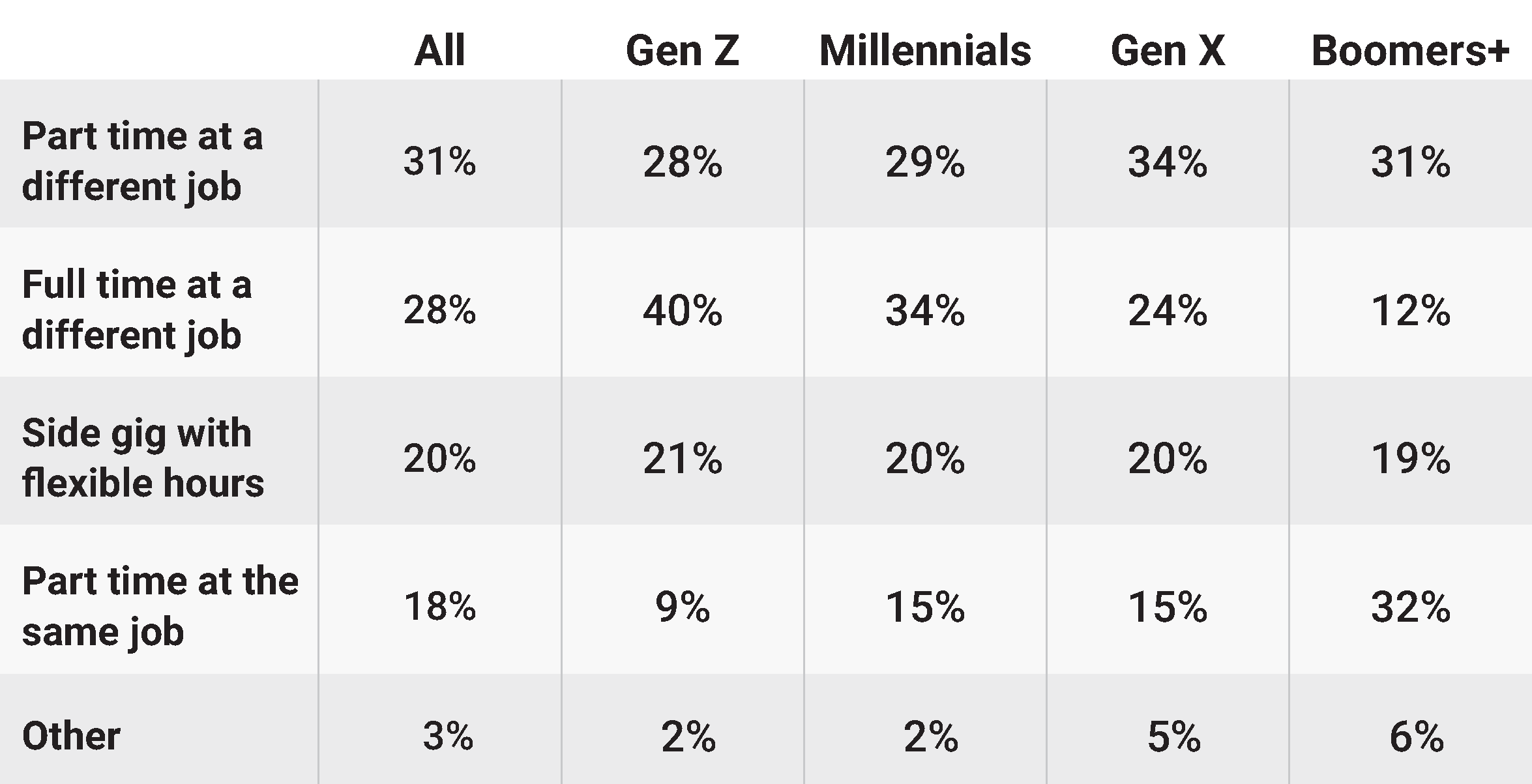
Subscription creep is real, and it’s one of the easiest ways to leak money each month. Between streaming services, meal kits, mobile apps and fitness memberships, you could be spending far more than you realize.
Pull up your bank or credit card statements and scan for any recurring charges. If you haven’t used a service in the last month or two, cancel it or set a reminder to reassess later. Redirecting those funds toward savings or debt payments could make a meaningful impact in 2026.
4. Audit and cancel unused subscriptions
One of the most powerful moves you can make before December 31 is to max out contributions to tax-advantaged accounts. That includes:
403(b) contributions: For 2025, the limit is $23,500 for those under 50 and $30,500 for those 50 and older.
Traditional IRA contributions: You can contribute up to $7,000 ($8,000 if you’re 50 or older) until the tax filing deadline, but contributing now gives your money more time to grow.
Health Savings Accounts (HSAs): If you’re enrolled in a high-deductible health plan, you can contribute up to $4,300 for individuals or $8,550 for families in 2025.
These contributions can reduce your taxable income, help you grow retirement savings faster and give you a head start on next year’s goals.
6. Max out tax-advantaged accounts
The OBBB brings the most substantial changes to federal student lending in more than a decade. There are material changes across undergraduate borrowing, graduate borrowing and repayment options.
For undergraduates, federal Direct Subsidized and Unsubsidized Loans, formerly known as Stafford Loans, remain unchanged.
However, Parent PLUS Loans now come with new limits for the first time: a cap of $20,000 per year and $65,000 in total per student.
Historically, Parent PLUS loans have represented roughly one-third of total federal undergraduate borrowing annually, so these new limits represent a significant shift.
While the caps are relatively generous, the average Parent PLUS loan size was about $21,000 in 2024, meaning families who borrow for all four years of a bachelor's degree, particularly those with multiple children or higher-cost programs, could hit the ceiling and might need to explore additional funding options.
Graduate students face the most notable changes, as the Grad PLUS Loan program will be phased out starting July 1, 2026.
Students who have already taken out a Grad PLUS loan for a specific course of study before that date will be exempt and can continue borrowing under current rules to complete their degree or for up to three years (whichever comes first).
This will impact a decent number of borrowers, as Grad PLUS loans have historically also accounted for roughly one-third of total federal graduate borrowing annually.
To help offset the gap, borrowing limits for federal Direct Subsidized and Direct Unsubsidized Loans will increase by roughly 14% to 23%, depending on the type of graduate loan.
However, even with these increases, many graduate borrowers might need to turn to the private lending market to cover the gap between their cost of attendance and available savings, aid or federal loans.
Finally, repayment options will be simplified starting July 1, 2028. Instead of navigating a complex menu of plans, borrowers will choose between just two:
A standard repayment plan, with repayment periods of 10, 15, 20 or 25 years based on total debt
The new Repayment Assistance Plan, an income-driven repayment option in which monthly payments are tied to household income, starting as low as 1% and capped at 10%.
The OBBB brings the most substantial changes to federal student lending in more than a decade. There are material changes across undergraduate borrowing, graduate borrowing and repayment options.
For undergraduates, federal Direct Subsidized and Unsubsidized Loans, formerly known as Stafford Loans, remain unchanged.
However, Parent PLUS Loans now come with new limits for the first time: a cap of $20,000 per year and $65,000 in total per student.
Historically, Parent PLUS loans have represented roughly one-third of total federal undergraduate borrowing annually, so these new limits represent a significant shift.
While the caps are relatively generous, the average Parent PLUS loan size was about $21,000 in 2024, meaning families who borrow for all four years of a bachelor's degree, particularly those with multiple children or higher-cost programs, could hit the ceiling and might need to explore additional funding options.
Graduate students face the most notable changes, as the Grad PLUS Loan program will be phased out starting July 1, 2026.
Students who have already taken out a Grad PLUS loan for a specific course of study before that date will be exempt and can continue borrowing under current rules to complete their degree or for up to three years (whichever comes first).
This will impact a decent number of borrowers, as Grad PLUS loans have historically also accounted for roughly one-third of total federal graduate borrowing annually.
To help offset the gap, borrowing limits for federal Direct Subsidized and Direct Unsubsidized Loans will increase by roughly 14% to 23%, depending on the type of graduate loan.
However, even with these increases, many graduate borrowers might need to turn to the private lending market to cover the gap between their cost of attendance and available savings, aid or federal loans.
Finally, repayment options will be simplified starting July 1, 2028. Instead of navigating a complex menu of plans, borrowers will choose between just two:
Already borrowing with PLUS Loans? Here's what you need to know
If you've taken out a Parent PLUS or Grad PLUS loan, or plan to do so before July 1, 2026, you're in a good position.
You'll be exempt from the new rules and can continue borrowing under the current program structure for up to three academic years or until your degree is complete, whichever comes first.
Even so, this is an ideal time to reassess your borrowing approach. PLUS loans are priced annually, and rates reset each May, so comparing PLUS costs with private loan options could uncover opportunities to save.
Many private lenders allow you to check potential rates using a soft credit pull, which won't impact your credit score.
Before considering PLUS or private loans, make sure you've maxed out federal Direct Subsidized and Unsubsidized Loans, which generally offer the most competitive rates and the most borrower-friendly repayment protections.
All borrowers should explore free funding options such as scholarships, grants and institutional aid — tools such as the Citizens Scholarship Search can help you identify opportunities that reduce the need for additional borrowing.
Planning for college? How to borrow smarter under the new rules
For families just beginning the college planning process, these changes make it more important than ever to understand the net price — what you'll actually pay after scholarships and grants — before committing to a school.
Sticker prices can be misleading, and with new borrowing caps on Parent PLUS loans and the elimination of Grad PLUS loans, it's critical to identify programs that are a good fit both academically and financially.
Tools such as Citizens' College Match can help you compare schools by cost, potential aid and overall affordability (the "net price"), giving you a clearer picture of what's realistic before you apply.
If you anticipate needing to borrow beyond Federal Direct Loans, start rate-shopping early. A soft-pull rate quote from private lenders can show you whether you qualify and at what rate, without impacting your credit.
If your credit profile needs work, this gives you time to improve it or line up a qualified co-signer who could help you secure better terms.
Can boomers retire comfortably?
Per the study, only about half of boomers (44%) believe they will be financially prepared for retirement. At the same time, 40% of boomers think they may outlive their savings. In 2024, 48% of boomers surveyed expected the United States to enter a recession. That's down from 60% in 2023. Are we still headed for a recession in the second half of 2025? That's anyone's guess. But with the uncertainty of various economic indicators, such as rising tariffs and declining consumer sentiment, anything is possible.
Although Americans overall feel they need more than $1 million to retire comfortably, in 2025, boomers surveyed said that they expected to need $990K. That's a far cry from the $200,000 they currently have saved. Almost half of boomers said they plan to keep working in 2025, per a study by Indeed Flex, and 35% were unsure if they will retire this year due to the high cost of living, as reported by PR Newswire.
Due to high levels of financial insecurity, close to 60% of retirees — including more women than men (63% vs. 54%) — have decreased spending on discretionary items like restaurants, vacations, and entertainment. However, 30% of boomers say they will spend about the same this year as last year.
The Fidelity survey also sheds light on the fact that health care costs are more expensive for 57% of boomers than they anticipated and 43% say Medicare covers less than they thought. With the growing uncertainty about the future of Medicare, those concerns are likely to become even greater.
Can Gen Xers retire comfortably?
Like boomers, almost half (46%) of Gen Xers believe they are financially prepared for retirement. However, a whopping 54% worry they could outlive their savings, per the Northwestern Mutual study. Gen X, the group most likely to be sandwiched between taking care of children and aging parents, struggles the most with balancing living expenses, saving and estimating for retirement.
Gen Xers, those born between 1965 and 1980, are quickly approaching their retirement years. Just over half, or 52%, have 3x their current annual income or less saved, and the majority (54%) believe they will not be financially prepared for retirement when the time comes. Gen X retirement is in trouble.
Although nearly all Americans have some kind of debt, high-interest credit card debt continues to be a main source of debt for every generation. However, Gen X has the highest debt, with those entering midlife owing money on mortgages, auto loans, and some student debt, according to Experian.
Gen Xers are also the least likely generation to map out a plan to fund a comfortable lifestyle once they retire. But, overall, they are relatively confident (47%) that Social Security will be there when they need it. That compares to 26% of Gen Zers and only 30% of all boomers.
What does work currently look like during your retirement years?
It seems that no matter your age, most Americans believe they will have to work in some capacity during their retirement years. Some will phase into retirement slowly rather than quit cold turkey, while others see no end in sight. The Pew Research Center estimates 19% of adults aged 65 or older are working or will continue to work during their retirement years — nearly double the percentage in 1987.
Among Americans who are currently working or are planning to work in retirement, 59% say that they would work either part-time or full-time at a different job, while 20% expect to pick up a “side gig” with flexible hours, per the Northwestern Mutual study. Slightly fewer (18%) say that they would work part-time at the same job.
What do you imagine work will look like/what does work currently look like during your retirement years?
Are millennials prepared? (or not so much)
Millennials favor protecting their retirement the most out of all generations, but only 43% feel fully prepared. What's troubling is that nearly 47% (46.51%) have savings balances of less than $500, according to the Go BankingRates study, with only 29% having balances over $2,000. That's a long way from the magic number of $1.26 million. It's no wonder nearly 35% of all millennials are extremely stressed about their lack of savings.
According to Millennial Money, millennials have unique buying habits and preferences — they statistically spend less on major purchases like homes, cars and retirement. But they tend to spend big on travel, dining out and technology. To pay for those luxuries, 34% of millennials plan to keep a full-time job in retirement. Even so, on average, millennials spend an average of $52,000 per year, which is less than both Gen X and boomers.
Close to 60% of millennials say they place too much emphasis on building wealth and growing their assets, and admit to not dedicating enough time to protecting their assets and managing against risks with life insurance or disability insurance.
Gen Z are not slackers
On average, American adults say they are saving sooner, planning to retire earlier, and expecting to live longer. Gen Z started saving at age 24 and plans to retire at 61, and more than a third (34%) think it’s likely they’ll live to 100. Yet. 51% of all Gen Zers feel they will outlive their savings, and 40% (the highest percentage of any generation) expect to work a full-time job during their retirement years.
Even so, it's Gen Zers who think they’ll be financially prepared for retirement when the time comes — 63%. Meanwhile, Gen X is the only generation with a majority of respondents (54%) saying that they do not think that they will be ready to retire, per the Northwestern Mutual study.
But, as with all the generations surveyed, the biggest question is: will Social Security be there when I need it? That question outweighs most people's concerns about whether or not they will have enough money saved, or if they will have to work during their retirement years.
On average, American adults say they are saving sooner, planning to retire earlier, and expecting to live longer. Gen Z started saving at age 24 and plans to retire at 61, and more than a third (34%) think it’s likely they’ll live to 100. Yet. 51% of all Gen Zers feel they will outlive their savings, and 40% (the highest percentage of any generation) expect to work a full-time job during their retirement years.
Even so, it's Gen Zers who think they’ll be financially prepared for retirement when the time comes — 63%. Meanwhile, Gen X is the only generation with a majority of respondents (54%) saying that they do not think that they will be ready to retire, per the Northwestern Mutual study.
But, as with all the generations surveyed, the biggest question is: will Social Security be there when I need it? That question outweighs most people's concerns about whether or not they will have enough money saved, or if they will have to work during their retirement years.
How prepared are high-net-worth individuals?
On average, American adults say they are saving sooner, planning to retire earlier, and expecting to live longer. Gen Z started saving at age 24 and plans to retire at 61, and more than a third (34%) think it’s likely they’ll live to 100. Yet. 51% of all Gen Zers feel they will outlive their savings, and 40% (the highest percentage of any generation) expect to work a full-time job during their retirement years.
Even so, it's Gen Zers who think they’ll be financially prepared for retirement when the time comes — 63%. Meanwhile, Gen X is the only generation with a majority of respondents (54%) saying that they do not think that they will be ready to retire, per the Northwestern Mutual study.
But, as with all the generations surveyed, the biggest question is: will Social Security be there when I need it? That question outweighs most people's concerns about whether or not they will have enough money saved, or if they will have to work during their retirement years.
How do you compare?
Are you rich? There are a few ways to know how you compare to peers in your generation. For example, the average net worth by age can give you a snapshot of how you measure up. However, to join the top wealthiest people in America, you’ll need a minimum net worth of $3.3 billion.
The average net worth for U.S. families is about $1.06 million, according to this article by GoBankingRates. If that seems out of reach, that's because extremely wealthy outliers skew the data upward. According to Schwab’s 2024 Modern Wealth Survey (the latest data available), Americans said that it takes an average net worth of $2.5 million to qualify a person as being wealthy.
A more reliable measure is the median net worth, which was $192,900 in 2022. This is the most recent number, which is released every three years and was last updated in October 2023 by the Federal Reserve Board Survey of Consumer Finances. However, if adjusted for inflation and economic trends, estimates for 2025 suggest the median net worth remains around $193,000.
It's not surprising that older Americans tend to have higher net worth. After all, they have spent their entire lives accumulating assets, such as 403(b)s, IRAs, real estate, and equity in their businesses.
As shown by Kiplinger's Net Worth Calculator, your net worth is comprised of various financial assets, including investments, your home, retirement accounts and cash, versus liabilities, such as money owed on mortgages, home equity loans, credit cards, installment loans, and similar costs.
What about retirement savings? Your 403(b), IRA or other retirement savings are distinct from your net worth. Take a look at the average IRA balance by age, the average 403(b) balance by age and the average retirement savings by age.
How do you compare?
Are you rich? There are a few ways to know how you compare to peers in your generation. For example, the average net worth by age can give you a snapshot of how you measure up. However, to join the top wealthiest people in America, you’ll need a minimum net worth of $3.3 billion.
The average net worth for U.S. families is about $1.06 million, according to this article by GoBankingRates. If that seems out of reach, that's because extremely wealthy outliers skew the data upward. According to Schwab’s 2024 Modern Wealth Survey (the latest data available), Americans said that it takes an average net worth of $2.5 million to qualify a person as being wealthy.
A more reliable measure is the median net worth, which was $192,900 in 2022. This is the most recent number, which is released every three years and was last updated in October 2023 by the Federal Reserve Board Survey of Consumer Finances. However, if adjusted for inflation and economic trends, estimates for 2025 suggest the median net worth remains around $193,000.
It's not surprising that older Americans tend to have higher net worth. After all, they have spent their entire lives accumulating assets, such as 403(b)s, IRAs, real estate, and equity in their businesses.
As shown by Kiplinger's Net Worth Calculator, your net worth is comprised of various financial assets, including investments, your home, retirement accounts and cash, versus liabilities, such as money owed on mortgages, home equity loans, credit cards, installment loans, and similar costs.
What about retirement savings? Your 403(b), IRA or other retirement savings are distinct from your net worth. Take a look at the average IRA balance by age, the average 403(b) balance by age and the average retirement savings by age.
A good rule of thumb for saving for retirement
The amount you need to save for retirement can rise and fall over the years, but is typically based on factors such as lifestyle choices, spending habits and the cost of living. However, Fidelity suggests people save for retirement using the following rules of thumb based on their annual income:
30 years old: 1x your annual income
40 years old: 3x your annual income
50 years old: 6x your annual income
60 years old: 8x your annual income
70 years old: 10x your annual income
While these numbers vary from one financial advisor to another, it is apparent that many individuals and families are falling short. According to the most recent (2024) data by the Bureau of Labor Statistics, the average American annual wage across all occupations was just $67,920, or about $1,193,000 less than the magic number to retire comfortably.