Reading the List of Ingredients
The list of Ingredients is typically found below the Nutrition Facts Panel. Ingredients are listed in descending order by weight—what appears first is the largest proportion of the product, and what appears last is the smallest. �
Each ingredient is called by its common or usual name. Some ingredients are made of two or more ingredients, and you’ll find those with parentheses around them. �
For example, Chocolate Chips in our Chocolate Chip Flapjack and Waffle Mix are made of Cane Sugar, Unsweetened Chocolate, Cocoa Butter, Dextrose, and Sunflower Lecithin. It looks like this on our ingredient list: Chocolate Chips (cane sugar, unsweetened chocolate, cocoa butter, dextrose, sunflower lecithin)


Did you know the order in which companies list ingredients is just as important as what’s in it? Discover what the terms mean on the Nutrition Fact Panel and how to read an ingredient list below.
how to navigate the labels

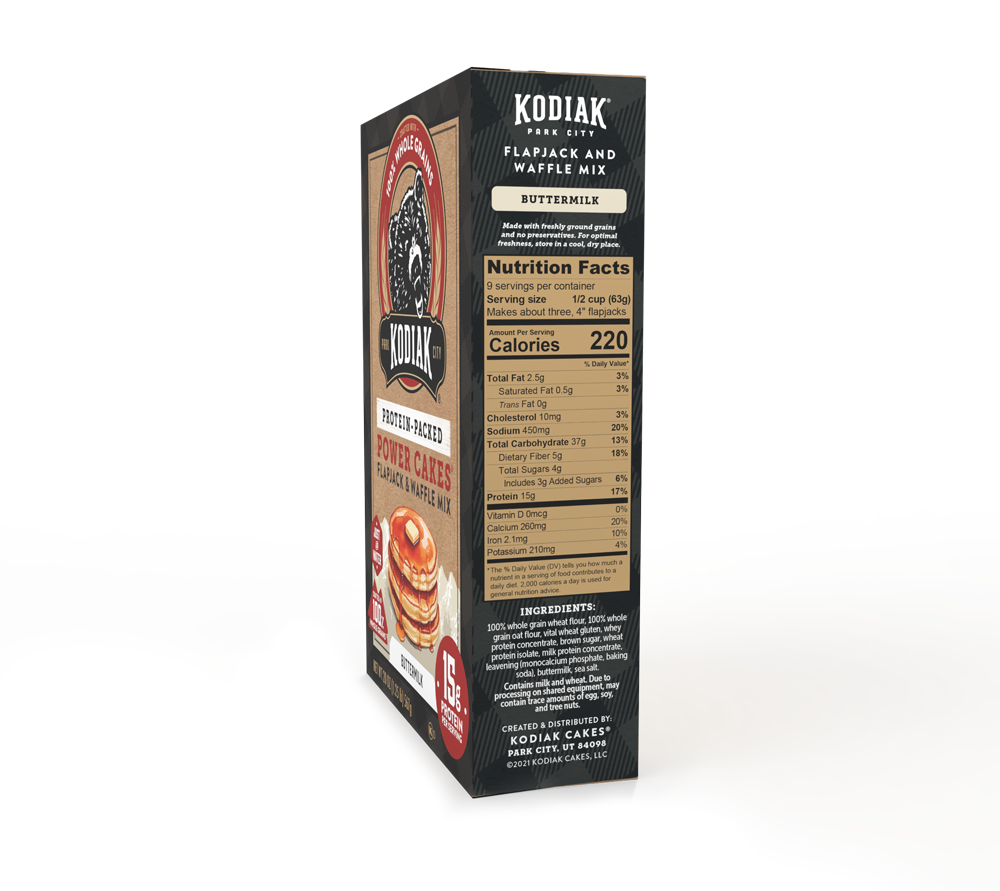

For allergen information, refer to the “Contains” statement usually found after the ingredients list. This statement identifies which of the nine major allergens, if any, are present in the product.
CONTAINS STATEMENT

Indicates the amount typically consumed in one sitting as outlined by the FDA, expressed in familiar units (e.g., cups, pieces) followed by metric units (grams). When comparing multiple products, make sure the serving size is the same or similar so you’re comparing “apples to apples” (or granola to granola!).
SERVING SIZE


Shows the total number of servings in the entire package.
Note: All nutrient information on the label pertains to one serving unless otherwise stated in an “as prepared” or “per container” secondary/dual column nutrition label. If you consume more or less of the food, adjust the values accordingly.
Servings Per Container


This number reflects the total calories per serving. Monitoring calorie intake can be important for your health goals.
CALORIES

This section lists key nutrients and the amount found in each serving of the product.�
Nutrients to Limit: saturated fat, cholesterol, sodium, total sugars, and added sugars. �
Nutrients to Get Enough Of: protein, dietary fiber, vitamin D, calcium, iron, and potassium. Additional nutrients may be listed if the company wants to add them to the nutrition facts panel. This is optional.
Tip: Choose foods that are higher in protein, dietary fiber, vitamin D, calcium, iron, and potassium and lower in saturated fat, sodium, and added sugars.
NUTRIENTS



The %DV indicates how much of a nutrient in a serving contributes to a daily diet, based on a 2,000-calorie daily intake. �
Use %DV to compare products and choose those higher in nutrients you want more of and lower in nutrients you want less of.
% Daily Value (%DV)


Provides context for the %DV, stating that the percentages are based on a 2,000-calorie daily diet, which is a general guideline. Individual calorie needs may vary based on your personal goals.
THE FOOTNOTE