New York City | September 22-24 2025
KPMG New York
Climate Week Hub
© 2025 KPMG LLP, a Delaware limited liability partnership and a member firm of the KPMG global organization of independent member firms affiliated with KPMG International Limited, a private English company limited by guarantee. All rights reserved
The KPMG name and logo are trademarks used under license by the independent member firms of the KPMG global organization.
The information contained herein is of a general nature and is not intended to address the circumstances of any particular individual or entity. Although we endeavor to provide accurate and timely information, there can be no guarantee that such information is accurate as of the date it is received or that it will continue to be accurate in the future. No one should act upon such information without appropriate professional advice after a thorough examination of the particular situation.
BACK TO TOP
visit.kpmg.us
learn about us
Share
Associate Director
Global Clients & Markets
KPMG US
Sarah
Nelson
See event highlights
in this video
Global Head of Renewable Energy and Climate Change & Decarbonization Lead, KPMG International
Mike
Hayes
Advisory Managing Director
C&O Commercial
KPMG US
Blythe
Chorn
US Sustainability Leader
KPMG LLP
Maura
Hodge
Disruption is exponential. We’re navigating the most disruptive period in any of our lifetimes. As Salim Ismail shared in his opening keynote, multiple “Gutenberg Moments” are occurring at once—creating significant uncertainty, volatility, and opportunity.
Innovation should be exponential, too.
This is a time for breakthrough ideas, not incremental improvements. To power positive disruption, innovate at the edge of your organization. Otherwise, you risk attack by the legacy “immune system.”
AI will impact everything. AI will change every product, service, and job. While no one can pinpoint when these impacts will happen, now is the time to invest in the human side of innovation.
Focus on the frontiers. The time is NOW for bold thinking and active planning about innovation frontiers like spatial computing and immersive experiences, decentralized technologies, quantum computing, and the space economy.
Sincere thanks to everyone who joined us for various events in New York City during Climate Week!
Sincere thanks to everyone who joined us for various events in New York City during Climate Week.
Maura Hodge US Sustainability Leader, KPMG LLP MHodge@kpmg.com
Take fiscally responsible and environmentally sustainable action today
With the impending energy and natural resource demand from AI and the ever changing geopolitical landscape, we must take action that makes good financial sense and can be executed on in the next 12 months.
Good data is a must for compliance and strategy
Nonfinancial data must be on par with financial data not only to comply with regulation, but to use AI and make decisions that can reduce costs and increase efficiency.
Turn transparency into value
If you already have to report for regulatory purposes, leverage the information you are collecting to improve, enhance or move forward on the actions you’ve committed to take.
Leveraging Transparency for Transformation
Emerging regulations are enhancing transparency and accountability, empowering organizations to transform through improved climate risk reporting and also drive value.
1
2
3
4
Advisory Managing Director
Climate, Data & Tech
KPMG US
Pravin
Chandrin
We explored some of today’s most pressing climate and nature challenges and opportunities. Across the formal and informal discussions, four themes emerged:
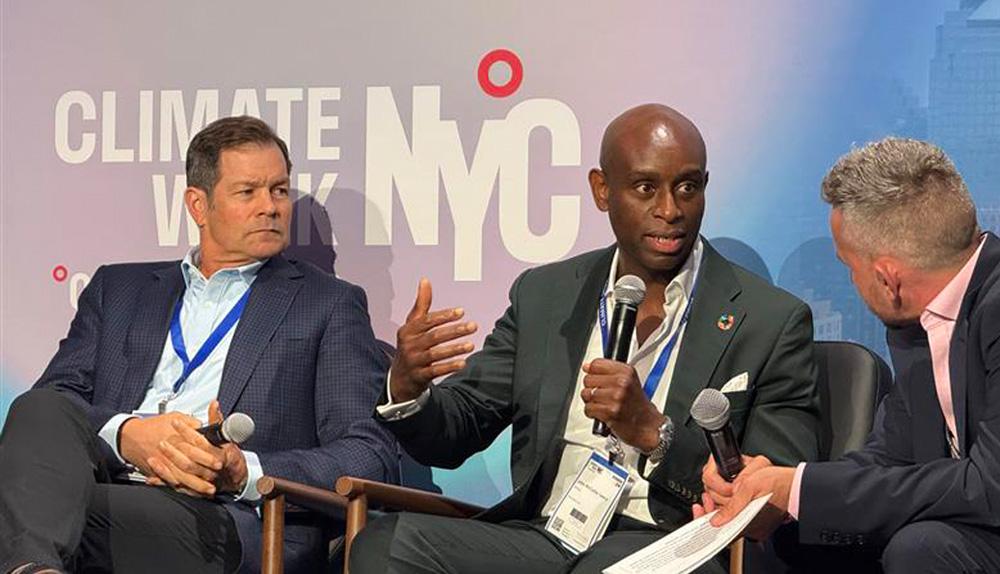
What an incredible week in New York! KPMG acted as a Silver Sponsor of Climate Week NYC, with our Head of Global ESG, John McCalla-Leacy, speaking on the panel "Communicating Climate Change: How Can we Craft a Narrative which Drives Action Now?"
Our KPMG New York Climate Week Hub enabled us to connect with current and potential clients across sectors, functions and countries. KPMG also hosted sessions at 345 Park Avenue, the Chrysler Building, the Bronze Owl, and attended hundreds of sessions around the city. It was a mind-blowing turnout. As proof, in 2024, there were about 600 official events on record associated with NYCW. For NYCW 2025, there were over 1,000.
I invite you to revisit key moments from this year’s event, and we hope to see you again in 2025. Until then, let’s keep shaping the future of sustainability–together!
X
X
X
X
X
X
X
X
X
X
X
Continuing the Journey
Trust in the AI Era
AI risks, regulations, and best practices to address
aIQ – The KPMG AI Story
How KPMG is augmenting human intelligence with artificial intelligence to transform the way we work
Tax Implications for Sustainability from the One Big Beautiful Bill
Continuing the JourneyThe conversation revolves around the role and impact of artificial intelligence (AI) in various industries, with a focus on its adoption, governance, and potential risks. The speakers also discuss the emergence of Chief AI Officers and their responsibilities, the importance of integrating AI into business strategy, and the challenges of user adoption.
Key speakers- Steve Chase, Vice Chair, Artificial Intelligence & Digital Innovation, KPMG
- Per Edin, Principal Advisory, KPMG
Takeaways
Takeaway 1: Governance and regulation of AI technology is crucial The speakers highlighted the importance of governance in AI technology, particularly in the context of the rapidly emerging role of Chief AI Officers in Fortune 1000 companies. They identified that the understanding and implementation of governance in AI technology is a crucial issue for such roles.
Steve stated, "There are more CAIO's today, chief AI officers, than, well, than there ever has been. And that number is growing substantially in the Fortune 1000." He went on to mention the challenges these officers face, such as, "the board saying, hey, you're not going fast enough, and another part of the board saying, you're going too fast?"
This indicates a clear shift towards incorporating AI strategy into overall business strategy, underlining the importance of guidance and leadership in navigating the complexities of AI implementation.
He also mentioned the lack of tooling and auto discovery as key difficulties in this area, emphasizing how business partners like Microsoft and Google have been instrumental in addressing these challenges.
Takeaway 2: Uncertainty and complexity in AI adoption shouldn’t hinder actionThe speakers emphasized that despite the uncertainty and complexity that surrounds AI, it's crucial for businesses to take action. They argued that the risk of not acting outweighs the challenges posed by the rapidly evolving AI landscape.
Per advised, "It's all about taking action. Sometimes it's hard to go back after all of these presentations we had or everything we learned. What's the one or two, three things I'm going to do tomorrow or next week in my company...it's evolving very, very quickly. So it’s okay to try things, but there's also a big risk of not trying things and not doing things given the speed of development."
This sentiment was echoed by Steve who encourages our partners to use AI, asserting that those who do will outperform those who don't. The implications are clear: adapting to and integrating AI into business practices is no longer optional but essential for maintaining a competitive edge.
Takeaway 3: Overcoming barriers to AI adoption
The speakers highlighted that despite the clear opportunities AI presents, user adoption remains a significant challenge within organizations.
One speaker shared, "One of the things that we'd love to accelerate is user adoption, we have launched it to 8000, 9000 around the globe and we have had about close to 1000 users who have actually used it." "It's more education, in my opinion. Many of them were part of the training. It's more the value part and explaining how it can be really their work companion."
From this, it's clear that successful AI adoption necessitates extensive training, robust support from organization leaders, and a clear demonstration of the tool's value as a 'work companion'. Takeaway 4: Dealing with the risks and benefits of AI
The speakers also discussed the potential risks and benefits of AI. They highlighted the need for businesses to be prepared for the potential misuse of AI technology by malicious actors, and the need to address these challenges proactively.
They also stressed the importance of embracing, understanding, and planning for AI usage, "Hiding from it is not going to block others from using it against you. Yet. Learning how to use it, learning how to understand it, and perhaps most importantly, learning how to respond when it's challenged, questioned, or you need to address it, I think is going to be a key part to giving people confidence to be able to use this, but also to be able to plan for when it's used against them."
The message was clear: embracing AI technology is not only about leveraging its benefits but also about preparing for possible threats. This perspective offers a more holistic approach to AI integration.
Trust in the AI EraThe session was about Trusted AI. Dr. Sreekar Krishna, US National Leader Artificial Intelligence at KPMG explained the importance of Trusted AI in today’s world, where AI is increasingly becoming more complex and sophisticated. He highlighted the need for rules and regulations to govern AI and compared the evolution of AI to the shift from horse-drawn carriages to automobiles. He also discussed the challenges of scaling AI and stressed the importance of trust, compliance, security, privacy, value and speed and KPMG's Trusted AI initiative and its ten pillars.
Key speakers- Dr. Sreekar Krishna, US National Leader Artificial Intelligence, KPMG
Takeaways
Takeaway 1: The field of AI is undergoing rapid transformation and regulation needs to evolve to keep up.During the session, Sreekar highlighted the unprecedented rate of change in AI, comparing it to the shift from horse-drawn carriages to automobiles in the early 20th century. He noted that while AI's potential is immense, there’s a lack of regulations and guidelines to help ensure its responsible and ethical use.
"We are at the early innings of generative AI. We are the early innings of what I would call as foundational models," he said. "Trust is a big challenge that we have with this technology, compliance… security and privacy... The value, how do we measure the value that AI is generating and how do we assess it for the whole organization? And last but not least is the speed, the growing number of models that are going out there."
Sreekar emphasized the need for "road signs" in the AI landscape to help navigate these challenges and to help ensure the safety, fairness, transparency, explainability, accountability, security, privacy, sustainability, data integrity and reliability of AI systems.
Takeaway 2: AI solutions are facing challenges in scaling due to issues with trust, compliance, security, privacy, value and speed.Sreekar outlined the key challenges hindering the scaling of AI, including trust, compliance, security, privacy, value and speed. Trust involves making sure AI models are accurate and reliable, while compliance regards adhering to global regulations and data standards.
"Trust is a big challenge that we have with this technology, compliance ... security and privacy. And I think Microsoft was just talking about how within teams, they had to put these new guardrails where data gets deleted so that you can follow some of the privacy standards that are there," he explained.
Concerning value, Sreekar emphasized the importance of measuring the value AI generates for an organization. Speed, on the other hand, deals with the rapid growth of AI models and their global presence.
Takeaway 3: The need for a Trusted AI framework to help ensure responsible AI application and governance.
Sreekar stressed the importance of a trusted AI framework to help ensure responsible AI usage and governance. The 10 pillars of the framework include fairness, transparency, explainability, accountability, security, privacy, sustainability, data integrity, reliability and safety.
Organizations should consider incorporating these principles at all stages of AI system development and deployment. This includes ensuring the explainability of AI systems, protecting privacy and security and continually monitoring AI systems after deployment.
“You have to apply [these principles] on all the stages that you are thinking about the engagement strategy and design of the thing, the data that it drives, the model that it works on,” he said. "And then when you deploy… you have to evaluate that it is going to work correctly every time I use it, when I give it out into the market. But also I need to keep monitoring it.”
He asserted that this approach is crucial for maximizing the value derived from AI and managing the associated risks, particularly as AI technologies evolve and become more complex. Takeaway 4: Organizations need to be prepared to adapt their AI strategies as the technology and regulatory landscapes evolve.
Sreekar stressed the importance of organizations being adaptable in their AI strategies. He noted that while certain measures can and should be taken immediately, long-term planning should also be a focus to prepare for future developments in AI technology and regulations.
“We are still in the early innings of AI. So, which means that what we have adopted here is what is helping us drive the market right now…but sooner or later, this will evolve,” He said. “We are now moving from that horse drawn carriage into the self driven automobile world. I need to think about all of this. I need to think about safety. How do I make sure that I don't go crash my car into somebody else? And what happens when I crash my car?”
He concluded by encouraging organizations to adopt a forward-thinking mindset, emphasizing that the journey of integrating and leveraging AI in business is ongoing and requires continuous learning and adaptation.
KPMG Leaders 2050 September 26 CallThis session aimed to share insights from senior leaders who are on the ground in New York at key Climate Week decarbonization and nature events with Leaders 2050, a KPMG group aimed at bringing young leaders into sustainability conversations. The speakers discussed the importance of Climate Week and the various sustainability initiatives and challenges they are currently tackling.
Hosts: Avery Johnstone, Manager, Global Decarbonization Hub at KPMG International and Maya Elia, Corporate Sustainability, KPMG LLP
Takeaway 1: Regulatory requirements and reporting standards are creating both challenges and opportunities.While regulatory standards around sustainability reporting are creating difficulties for many companies, they also offer significant opportunities. Speakers noted that the move towards regulatory standardization as a generally a positive development, as it establishes clearer expectations for companies and creates a foundation for decision-making and action. However, the complex reporting requirements can be a major challenge for companies, often requiring significant resources and cross-functional collaboration.
Mark Golovcsenko, US Climate and Sustainability Advisory Leader at KPMG, noted many are experiencing reporting fatigue, as complying with regulations can be time intensive but is also a huge opportunity to help clients navigate that effectively.
Maura Hodge, US Sustainability Leader at KPMG, echoed this sentiment, acknowledging that reporting was a necessary evil to create transparency and accountability. "Reporting is the basis for decision-making. And if you don't have good information to make decisions on, it's really hard to get buy-in from leadership to move forward."
Takeaway 2: The private sector is becoming increasingly central to sustainability solutions.The private sector was a key focus during Climate Week, with discussions around how it can help address various sustainability challenges. Business models that integrate sustainability from their inception and leverage public-private partnerships to address climate and social issues were highlighted as particularly promising. The importance of attracting and retaining top talent to drive sustainability initiatives was also emphasized. Ozan Cakmak, International Development Assistance Services Institute at KPMG, highlighted the role of private sector innovation in addressing social and environmental sustainability challenges.
Takeaway 3: The intersection of climate, health, and social issues is gaining attention.Throughout the discussion, there was a clear emphasis on the interconnectedness of climate, health, and social issues. While these topics have historically been addressed separately, it is increasingly recognized that an integrated approach is necessary to effectively address the complex challenges they present. Cakmak noted how this intersectionality is increasingly being acknowledged by global organizations, leading to more comprehensive and coordinated efforts to address sustainability challenges.
Hodge noted, "I think real action is coming in the next 12 months, whereas I used to say it was in the next three to five years."
1: Sustainability Is Shifting from Morality to Materiality
Boards are increasingly focused on sustainability as a business driver—moving beyond compliance to quantifying cost avoidance, resilience, and long-term value creation.
2: Environmental Policy Volatility Requires Sophisticated Planning
Short-term policy cycles and frequent reversals across regions demand deeper scenario modeling and more agile strategic responses.
3: Greenhushing and Strategic Reframing Are Becoming the New Normal
Companies are continuing sustainability work but avoiding public labeling due to political and legal risks. ESG funds and disclosures are increasingly being renamed or reworded to reduce exposure.
4: Integration Across Business Functions Is Critical
Sustainability must be embedded in finance, supply chain, infrastructure, and AI—not just siloed in communications or standalone departments. Cross-functional collaboration is essential to unlock strategic value.
5: Bilateral Climate Finance Is Increasingly Replacing Multilateralism
With weakened global climate agreements, countries are increasingly pursuing bilateral deals. Success at future COPs may be measured by deal volume rather than global targets and initiatives.
6: Trade-Offs Within Sustainability Topics Will Intensify
Climate, biodiversity, and water objectives may increasingly conflict. Organizations must prepare to navigate difficult trade-offs rather than assume alignment across environmental goals.
7: AI’s Dual Role: Resource Strain and Innovation Catalyst
AI data centers pose energy and water challenges but are also leading in efficiency regarding resource use. Their rapid progress may pressure slower-moving sectors to catch up over the longer term, which may seem counterintuitive today.
8: Environmental Litigation Is Expanding Globally
Litigation is no longer just about winning cases—it’s a tool for influence. NGOs use lawsuits to generate media attention and shape policy. Cross-border cases and rights-of-nature claims are rising, especially in Latin America, Africa, and East Asia.
9: Transparency vs. Security in Disclosures
Companies face growing pressure to disclose cybersecurity and sustainability data. A collective industry voice is needed to balance transparency with business and security risks.
10: Sustainability Headcount Will Grow Again
Despite current headcount pressures, we predict a long-term expansion and transformation of sustainability roles, driven by increasing regulatory complexity and growing yet fragmented economic opportunities.
Some or all of the services described herein may not be permissible for KPMG audit clients and their affiliates or related entities.
At the event, our team used artificial intelligence (AI) to capture and generate recaps of all the sessions. After the event, we applied human intelligence to quickly validate and refine what AI produced. The result? Better insights at greater speed and lower cost.
Session recaps
Continuing the Journey
Trust in the AI Era
AI risks, regulations, and best practices to address
Fireside Chat: Geopolitical Factors Shaping Sustainability
Cracking the Code:
Decarbonizing the Built Environment
Data and AI:
Transforming Buildings to Accelerate the Climate Action
KPMG Leaders 2050
September 26 Call
Lorem ipsum dolor
sit amet
Lorem ipsum dolor sit amet, consectetur adipiscing elit
Lorem ipsum dolor
sit amet
Lorem ipsum dolor sit amet, consectetur adipiscing elit
Lorem ipsum dolor
sit amet
Lorem ipsum dolor sit amet, consectetur adipiscing elit
Lorem ipsum dolor
sit amet
Lorem ipsum dolor sit amet, consectetur adipiscing elit
Continuing the JourneyThe conversation revolves around the role and impact of artificial intelligence (AI) in various industries, with a focus on its adoption, governance, and potential risks. The speakers also discuss the emergence of Chief AI Officers and their responsibilities, the importance of integrating AI into business strategy, and the challenges of user adoption.
Key speakers- Steve Chase, Vice Chair, Artificial Intelligence & Digital Innovation, KPMG
- Per Edin, Principal Advisory, KPMG
Takeaways
Takeaway 1: Governance and regulation of AI technology is crucial The speakers highlighted the importance of governance in AI technology, particularly in the context of the rapidly emerging role of Chief AI Officers in Fortune 1000 companies. They identified that the understanding and implementation of governance in AI technology is a crucial issue for such roles.
Steve stated, "There are more CAIO's today, chief AI officers, than, well, than there ever has been. And that number is growing substantially in the Fortune 1000." He went on to mention the challenges these officers face, such as, "the board saying, hey, you're not going fast enough, and another part of the board saying, you're going too fast?"
This indicates a clear shift towards incorporating AI strategy into overall business strategy, underlining the importance of guidance and leadership in navigating the complexities of AI implementation.
He also mentioned the lack of tooling and auto discovery as key difficulties in this area, emphasizing how business partners like Microsoft and Google have been instrumental in addressing these challenges.
Takeaway 2: Uncertainty and complexity in AI adoption shouldn’t hinder actionThe speakers emphasized that despite the uncertainty and complexity that surrounds AI, it's crucial for businesses to take action. They argued that the risk of not acting outweighs the challenges posed by the rapidly evolving AI landscape.
Per advised, "It's all about taking action. Sometimes it's hard to go back after all of these presentations we had or everything we learned. What's the one or two, three things I'm going to do tomorrow or next week in my company...it's evolving very, very quickly. So it’s okay to try things, but there's also a big risk of not trying things and not doing things given the speed of development."
This sentiment was echoed by Steve who encourages our partners to use AI, asserting that those who do will outperform those who don't. The implications are clear: adapting to and integrating AI into business practices is no longer optional but essential for maintaining a competitive edge.
Takeaway 3: Overcoming barriers to AI adoption
The speakers highlighted that despite the clear opportunities AI presents, user adoption remains a significant challenge within organizations.
One speaker shared, "One of the things that we'd love to accelerate is user adoption, we have launched it to 8000, 9000 around the globe and we have had about close to 1000 users who have actually used it." "It's more education, in my opinion. Many of them were part of the training. It's more the value part and explaining how it can be really their work companion."
From this, it's clear that successful AI adoption necessitates extensive training, robust support from organization leaders, and a clear demonstration of the tool's value as a 'work companion'. Takeaway 4: Dealing with the risks and benefits of AI
The speakers also discussed the potential risks and benefits of AI. They highlighted the need for businesses to be prepared for the potential misuse of AI technology by malicious actors, and the need to address these challenges proactively.
They also stressed the importance of embracing, understanding, and planning for AI usage, "Hiding from it is not going to block others from using it against you. Yet. Learning how to use it, learning how to understand it, and perhaps most importantly, learning how to respond when it's challenged, questioned, or you need to address it, I think is going to be a key part to giving people confidence to be able to use this, but also to be able to plan for when it's used against them."
The message was clear: embracing AI technology is not only about leveraging its benefits but also about preparing for possible threats. This perspective offers a more holistic approach to AI integration.
Continuing the JourneyThe conversation revolves around the role and impact of artificial intelligence (AI) in various industries, with a focus on its adoption, governance, and potential risks. The speakers also discuss the emergence of Chief AI Officers and their responsibilities, the importance of integrating AI into business strategy, and the challenges of user adoption.
Key speakers- Steve Chase, Vice Chair, Artificial Intelligence & Digital Innovation, KPMG
- Per Edin, Principal Advisory, KPMG
Takeaways
Takeaway 1: Governance and regulation of AI technology is crucial The speakers highlighted the importance of governance in AI technology, particularly in the context of the rapidly emerging role of Chief AI Officers in Fortune 1000 companies. They identified that the understanding and implementation of governance in AI technology is a crucial issue for such roles.
Steve stated, "There are more CAIO's today, chief AI officers, than, well, than there ever has been. And that number is growing substantially in the Fortune 1000." He went on to mention the challenges these officers face, such as, "the board saying, hey, you're not going fast enough, and another part of the board saying, you're going too fast?"
This indicates a clear shift towards incorporating AI strategy into overall business strategy, underlining the importance of guidance and leadership in navigating the complexities of AI implementation.
He also mentioned the lack of tooling and auto discovery as key difficulties in this area, emphasizing how business partners like Microsoft and Google have been instrumental in addressing these challenges.
Takeaway 2: Uncertainty and complexity in AI adoption shouldn’t hinder actionThe speakers emphasized that despite the uncertainty and complexity that surrounds AI, it's crucial for businesses to take action. They argued that the risk of not acting outweighs the challenges posed by the rapidly evolving AI landscape.
Per advised, "It's all about taking action. Sometimes it's hard to go back after all of these presentations we had or everything we learned. What's the one or two, three things I'm going to do tomorrow or next week in my company...it's evolving very, very quickly. So it’s okay to try things, but there's also a big risk of not trying things and not doing things given the speed of development."
This sentiment was echoed by Steve who encourages our partners to use AI, asserting that those who do will outperform those who don't. The implications are clear: adapting to and integrating AI into business practices is no longer optional but essential for maintaining a competitive edge.
Takeaway 3: Overcoming barriers to AI adoption
The speakers highlighted that despite the clear opportunities AI presents, user adoption remains a significant challenge within organizations.
One speaker shared, "One of the things that we'd love to accelerate is user adoption, we have launched it to 8000, 9000 around the globe and we have had about close to 1000 users who have actually used it." "It's more education, in my opinion. Many of them were part of the training. It's more the value part and explaining how it can be really their work companion."
From this, it's clear that successful AI adoption necessitates extensive training, robust support from organization leaders, and a clear demonstration of the tool's value as a 'work companion'. Takeaway 4: Dealing with the risks and benefits of AI
The speakers also discussed the potential risks and benefits of AI. They highlighted the need for businesses to be prepared for the potential misuse of AI technology by malicious actors, and the need to address these challenges proactively.
They also stressed the importance of embracing, understanding, and planning for AI usage, "Hiding from it is not going to block others from using it against you. Yet. Learning how to use it, learning how to understand it, and perhaps most importantly, learning how to respond when it's challenged, questioned, or you need to address it, I think is going to be a key part to giving people confidence to be able to use this, but also to be able to plan for when it's used against them."
The message was clear: embracing AI technology is not only about leveraging its benefits but also about preparing for possible threats. This perspective offers a more holistic approach to AI integration.
Article
Lorem ipsum dolo
Lorem ipsum dolor sit amet, consectetur adipiscing elit
Read more
Article
Lorem ipsum dolor sit amet
Lorem ipsum dolor sit amet, consectetur adipiscing elit
Read more
Article
Lorem ipsum dolor sit amet
Lorem ipsum dolor sit amet, consectetur adipiscing elit
Read more
Insights
Turning the Tide in Scaling Renewables
Lorem ipsum dolor sit amet, consectetur adipiscing elit
Read more
Industry insights
Insights
Insights
Insights
What’s Next?
In November 2025, KPMG professionals will be present in São Paulo and at COP30 in Belém, Brazil, which brings together world leaders, policymakers, industry innovators, and environmental activists to exchange ideas and formulate strategies to tackle climate change.
X
X
X
X
X
X
X
X
X
X
X
On the ground
Highlights
Blythe Chorn
Supply Chain Sustainability Lead, KPMG LLP
Darren McGann
Head of Corporate Sustainablity KPMG US
Kirk Caron
Director, Sustainability Advisory Services, KPMG US
Marcus Leach
Managing Director, Deal Advisory & Strategy, KPMG LLP
Lorem ipsum...
Lorem ipsum dolor sit amet
Lorem ipsum...
Lorem ipsum dolor sit amet
Lorem ipsum...
Lorem ipsum dolor sit amet
Lorem ipsum...
Lorem ipsum dolor sit amet
Lorem ipsum...
Lorem ipsum dolor sit amet
Lorem ipsum...
Lorem ipsum dolor sit amet
Lorem ipsum...
Lorem ipsum dolor sit amet
Lorem ipsum...
Lorem ipsum dolor sit amet
Lorem ipsum...
Lorem ipsum dolor sit amet
Lorem ipsum...
Lorem ipsum dolor sit amet
Lorem ipsum...
Lorem ipsum dolor sit amet
Lorem ipsum...
Lorem ipsum dolor sit amet
Lorem ipsum...
Lorem ipsum dolor sit amet
Lorem ipsum...
Lorem ipsum dolor sit amet
Lorem ipsum...
Lorem ipsum dolor sit amet
Lorem ipsum...
Lorem ipsum dolor sit amet
Lorem ipsum...
Lorem ipsum dolor sit amet
Lorem ipsum...
Lorem ipsum dolor sit amet
Lorem ipsum...
Lorem ipsum dolor sit amet
Lorem ipsum...
Lorem ipsum dolor sit amet
new name Johnstone
CDN Associate, Global Decarb Hub, KPMG US
Marcus Leach
Managing Director TMT Sustainability Lead KPMG US
Kirk Caron
Director, Sustainability Advisory Services, KPMG US
Blythe Chorn
Managing Director Supply Chain Sustainability, KPMG US
Blythe Chorn
Managing Director Supply Chain Sustainability, KPMG US
Avery Johnstone
CDN Associate, Global Decarb Hub, KPMG US
On the ground
X
X
X
X
X
X
X
X
X
X
X
Kirk Caron
Director, Sustainability Advisory Services, KPMG US
Avery Johnstone
Manager, Global Decarbonization Hub KPMG International
Pravin Chandran
Managing Director, Climate Data and Technology KPMG US
Darren McGann
Head of Corporate Sustainablity KPMG US
Blythe Chorn
Supply Chain Sustainability Lead, KPMG LLP
Darren McGann
Head of Corporate Sustainablity KPMG US
Jan-Hendrik Gnandiger
Global ESG Reporting Advisory Lead, KPMG
Maya Elia
Sr Associate Advisory, Corporate Sustainability, KPMG LLP
Maura Hodge
U.S. Sustainability Leader, KPMG US
Maura Hodge
US Sustainability Leader, KPMG LLP
Maura Hodge
U.S. Sustainability Leader, KPMG US
Katherine Blue
Climate Risk and Energy Transition Advisory
Kirk Caron
Director, Sustainability Advisory Services, KPMG US
Pravin Chandran
Managing Director, Climate Data and Technology KPMG US
Maya Elia
Sr Associate Advisory, Corporate Sustainability, KPMG LLP
Pravin Chandran - Tyler Feigenbaum
Managing Director, Climate Data and Technology KPMG US
Maura Hodge
US Sustainability Leader, KPMG LLP
Mike Hayes
Global Head of Renewable Energy and Climate Change & Decarbonization Lead, KPMG International
Katherine Blue
Climate Risk and Energy Transition Advisory
Marcus Leach
Managing Director, Deal Advisory & Strategy, KPMG LLP
Avery Johnstone
Manager, Global Decarbonization Hub KPMG International
Maya Elia
Sr Associate Advisory, Corporate Sustainability, KPMG LLP
Pavin-Tyler
Head of Corporate Sustainablity KPMG US
Maura Hodge
US Sustainability Leader, KPMG LLP
Mike Hayes
Global Head of Renewable Energy and Climate Change & Decarbonization Lead, KPMG International
Katherine Blue
Climate Risk and Energy Transition Advisory
Simon Weaver
Global ESG Advisory Lead, KPMG
Kirk Caron
Director, Sustainability Advisory Services, KPMG US
Blythe Chorn
Supply Chain Sustainability Lead, KPMG LLP
Blythe Chorn
Supply Chain Sustainability Lead, KPMG LLP
Sarah Nelson
Nature & Biodiversity Global Lead, KPMG
Maura Hodge
U.S. Sustainability Leader, KPMG US
Maura Hodge
U.S. Sustainability Leader, KPMG US
Pravin Chandran - Tyler Feigenbaum
Managing Director, Climate Data and Technology KPMG US
John McCalla-Leacy
Global Head of ESG, KPMG
Marcus Leach
Managing Director, Deal Advisory & Strategy, KPMG LLP
Avery Johnstone
Manager, Global Decarbonization Hub KPMG International
Blythe Chorn
Supply Chain Sustainability Lead, KPMG LLP
Darren McGann
Head of Corporate Sustainablity KPMG US
Pravin Chandran
Managing Director, Climate Data and Technology KPMG US
Maya Elia
Sr Associate Advisory, Corporate Sustainability, KPMG LLP
Maura Hodge
US Sustainability Leader, KPMG LLP
Katherine Blue
Climate Risk and Energy Transition Advisory
Remove: Pravin/Tyler
Order for videos
Mike Hayes (new)
Maura (new)
Katherine (new)
Blythe
Avery
Darren
Pravin
Maya
Marcus
Kirk
Six key insights finance leaders can use to shape their
action plans.
Download PDF
Click here to view
Click here to view
Global ESG Due
Diligence Study 2024
Turning the Tide in Scaling Renewables
Make 3 items
Move two links and copy from section below
Content for 3rd to come
Reimagining global food system resilience
At KPMG, we believe that the time for empowering a step-change in our global food system is now.
Read more
Industry insights
Optimizing output, minimizing footprint
An integrated AI and sustainability strategy offers complementary rather than competing outcomes
Read more
KPMG ESG Assurance Maturity Index 2025
Read more
Insights
Insights
Insights
Mike Hayes
Global Head of Renewable Energy and Climate Change & Decarbonization Lead, KPMG International
a. In order of how they should be shown, and please use the title in the documents for the titles of the sessions: i. General Takeaways- Aniket (the top four at the top of the page) ii. Time To Triple: What Will Hold Back the Renewables Vow (Mike Hayes session) – Sana; APPROVED / attached iii. JCI Embodied Carbon session -Sanaiv. JCI Data and AI – Aniketv. Blythe’s Supplier session -Aniketvi. Leaders 2050 Session 1 – almost ready for submission vii. Leaders 2050 Session 2 – Aniketviii. Industry Discussion Points/ Challenges – Almost ready for submission
Sarah Nelson
Nature & Biodiversity Global Lead, KPMG
Jan-Hendrik Gnandiger
Global ESG Reporting Advisory Lead, KPMG
John McCalla-Leacy
Global Head of ESG, KPMG
Simon Weaver
Global ESG Advisory Lead, KPMG
Nadia Montoto
Global co-lead of Decarbonization and Transition Planning, KPMG
Maura Hodge
U.S. Sustainability Leader, KPMG US
Sarah Nelson
Nature & Biodiversity Global Lead, KPMG
Simon Weaver
Global ESG Advisory Lead, KPMG
Nadia Montoto
Global co-lead of Decarbonization and Transition Planning, KPMG
Jan-Hendrik Gnandiger
Global ESG Reporting Advisory Lead, KPMG
John McCalla-Leacy
Global Head of ESG, KPMG
Maura Hodge
U.S. Sustainability Leader, KPMG US
Nadia Montoto
Global co-lead of Decarbonization and Transition Planning, KPMG
Jan-Hendrik Gnandiger
Global ESG Reporting Advisory Lead, KPMG
Sarah Nelson
Nature & Biodiversity Global Lead, KPMG
Simon Weaver
Global ESG Advisory Lead, KPMG
John McCalla-Leacy
Global Head of ESG, KPMG
Maura Hodge
U.S. Sustainability Leader, KPMG US
Nadia Montoto
Global co-lead of Decarbonization and Transition Planning, KPMG
Katherine Blue
Climate Risk and Energy Transition Advisory
Sarah Nelson
Nature & Biodiversity Global Lead, KPMG
John McCalla-Leacy
Global Head of ESG, KPMG
Jan-Hendrik Gnandiger
Global ESG Reporting Advisory Lead, KPMG
Nadia Montoto
Global co-lead of Decarbonization and Transition Planning, KPMG
John McCalla-Leacy
Global Head of ESG, KPMG
Sarah Nelson
Nature & Biodiversity Global Lead, KPMG
Jan-Hendrik Gnandiger
Global ESG Reporting Advisory Lead, KPMG
Maya Elia
Sr Associate Advisory, Corporate Sustainability, KPMG LLP
Marcus Leach
Managing Director, Deal Advisory & Strategy, KPMG LLP
Kirk Caron
Director, Sustainability Advisory Services, KPMG US
Pravin Chandran
Managing Director, Climate Data and Technology, KPMG US
Darren McGann
Head of Corporate Sustainablity KPMG US
Marcus Leach
Managing Director, Deal Advisory & Strategy, KPMG LLP
Kirk Caron
Director, Sustainability Advisory Services, KPMG US
Mike Hayes
Global Head of Renewable Energy and Climate Change & Decarbonization Lead, KPMG International
Maya Elia
Sr Associate Advisory, Corporate Sustainability, KPMG LLP
Pravin Chandran
Managing Director, Climate Data and Technology KPMG US
Mike Hayes
Global Head of Renewable Energy and Climate Change & Decarbonization Lead, KPMG International
Maura Hodge
US Sustainability Leader, KPMG LLP
Maya Elia
Sr Associate Advisory, Corporate Sustainability, KPMG LLP
Pravin Chandran
Managing Director, Climate Data and Technology KPMG US
Looking ahead, we’d love to see you at COP29, the UN Climate Change Conference, from 11-22 November 2024 in Baku, Azerbaijan. KPMG will be at the center of the action, monitoring developments and generating regular insights and status updates. Keep an eye on our COP29 Resource Center for more information.
What’s Next?
1: OB3 (One Big Beautiful Bill) Bill and Credit Adjustments The bill’s rules affect wind, solar, and EV credits, imposing early termination dates and introducing Foreign Entity of Concern restrictions. Wind and solar projects must begin construction by July 2026 or be in service by end of 2027. Transferability and direct pay options remain, aiding monetization.
2: Shift Towards Battery and Other TechnologiesIncentives are increasingly focused on batteries, biomass, geothermal, nuclear, and hydro, with extended credits for batteries and federal support for domestic manufacturing.
3: Broader Eligibility for Credits
Credits now extend to fusion, waste energy recovery, and other zero-emission technologies, with stacking of state and federal credits offering optimization opportunities still available.
4: Strategic Tax Integration
Tax analysis should be embedded in sustainability and corporate strategy to maximize cost efficiency, risk management, and ROI, potentially also impacting decisions applicable to VPPAs (Virtual Power Purchase Agreements) and RECs (Renewable Energy Certificates) investments.
5: Leadership and Planning Recommendations
Early engagement of tax teams, monitoring state credit changes, evaluating credit stacking, and updating leadership on OB3 impacts are crucial for effective planning and maximizing strategic benefits.
Some or all of the services described herein may not be permissible for KPMG audit clients and their affiliates or related entities.
September 25 at Microsoft Times Square
Cracking the Code: Decarbonizing the Built Environment
Hosted by Johnson Controls, Microsoft, KPMG, and Prologis
Data and AI: Transforming Buildings to Accelerate the Climate Action
Speaker: Pravin Chandran, Sustainability Data and Technology Leader, KPMG LLP
Takeaway 1: Real estate needs a more diversified approach to sustainability and decarbonization and better integration of data and AI.
Panelists agreed that sustainability and decarbonization in real estate shouldn't be approached as a homogeneous task but should instead consider different factors. Speakers noted that as an industry, we need to think more about different asset classes, different regions, and different areas of the country. The biggest challenge is the disparate regulations and beliefs around climate change in different regions, and ownership structures that cause more fragmentation.
According to the panelists, it is easier to underwrite decarbonization efforts for new development projects. The challenge lies in existing buildings that need attention. They emphasized the importance of having power users who are comfortable with tech to make information actionable ensuring successful sustainability efforts.
Looking forward, Pravin Chandran predicted that data and AI would serve as a potential differentiator in the real estate industry. He mentioned the possibility of using AI to design, construct, and monitor energy-efficient buildings faster and cheaper, integrating with big tech companies, and even automating tasks. "Data and AI are at the core of decarbonizing, but there needs to alignment between building type, customer preferences, and regulations—not every building can be the next Shanghai AI Tower or Edge." Chandran expressed.
Panelists further emphasized the role of data and AI in decarbonization efforts. They mentioned how they have moved from proxies to performance, which enables real estate investors to reduce their capital cost. Questions to ask yourself from the start are “What are your objectives? What is the real goal that you're setting, whether it's short term or long term? And it really depends, again, on where you are on that journey."
Takeaway 2: Data quality is a critical foundation for sustainability transformation.
Data quality is the foundational element for any successful sustainability transformation. However, the process of collecting, curating, and ensuring high-quality data is one of the most challenging aspects.
Data is the foundation of most tasks, but also one of the most difficult. You need good, reliable data and to have the team looking at the same data and key performance indicators to make management decisions that drive decarbonization.
Panelists also highlighted the importance of looking at all data points available. They emphasized the importance of good quality data in making AI decisions and pointed out that some companies have collected over a billion operating hours of data to help customers find opportunities within their buildings.
Takeaway 3: Data and AI are potential differentiators in sustainability efforts.
The panelists agreed that data and AI can serve as differentiators in sustainability efforts. While data is key, aligning it with organizational objectives is critical. The use of data in the future could extend to areas such as green bond issuance, green lending, and reducing the cost of capital for real estate investors.
Chandran stressed that while getting and managing clean data is critical, that in his mind they are solvable problems, "Yes, data is messy, yes, it takes a lot of hard work, but the platforms and tools, including those offered by my fellow panelists, are getting better every day, and these are challenges that can be overcome with focus and resourcing," Chandran said. "The harder things are, the people and the incentives—modernizing your data platforms and improving data access is something, in our view, that has to be done, bottoms up, right, side by side, across the portfolio of assets."
Chandran also provided a future perspective, stating that over a longer time horizon data and AI could significantly transform the occupant experience. He envisioned a world in which property managers would become highly integrated with big tech companies; as an example, some buildings could start to offer augmented delivery services and operate airport-style conveyor belts that directly deliver consumer products and housing materials to residential units with limited human intervention.
Global ESG Advisory Leader
KPMG LLP
Simon
Weaver
Tax Implications for Sustainability from the One Big Beautiful Bill
Speakers: Julie Chapel, Managing Director, Washington National Tax at KPMG LLP; Adam Broders, Tax Partner - National Renewable Energy Group, Power and Utilities Practice at KPMG LLP, Shel Shi, Senior Manager, Credits, Grants & Incentives Services at KPMG LLP; Moderated by: Maura Hodge, US Sustainability Leader KPMG LLP
Monday Sept 22
Fireside Chat: Geopolitical Factors Shaping Sustainability
Speakers: Franck Gbaguidi, Practice Head, Global Sustainability, Biodiversity & Water at Eurasia Group. Moderated by Maura Hodge, US Sustainability Leader at KPMG LLP
Top margin 50px
leading: 25
Date: 16
Head 23
Para space 10
Speakers 16
Margin 40
Main body 16/25
para space 10
space between takaways 25 + full return
Transition Plan Bootcamp
1: Importance of Transition PlansDeveloping resilient transition plans is crucial for evolving business models in a low-carbon future, requiring systemic market changes and practical implementation strategies.
2: Sector Insights on SustainabilityPanelists shared strategies for sustainability, emphasizing collaboration across value chains, strategic investments, and the use of data-driven decision-making.
3: Addressing ChallengesCompanies face obstacles such as regulatory gaps and inconsistent data, with solutions involving aligned incentives, sustainable finance like green bonds, and enhanced supplier engagement.
4: Value Creation StrategiesEmphasizing innovation and transitioning business practices to capitalize on climate-related financial risks and opportunities can align with sustainable trends and consumer preferences.
5: Need for Systemic ChangeAchieving lasting sustainability requires active systemic engagement, stakeholder alignment, and embedding sustainability into everyday decision-making processes.
Overall, the session underscored the need to transition from commitments to action, focus on systemic market change, and develop comprehensive strategies that embed sustainability into all facets of business governance and operations. Attendees were then divided into the following breakout groups and shared the following insights:
1: Key Components of Transition Plans and Market TrendsThe group discussed the merits of both a bottoms-up and top-down approach to decarbonization, emphasizing the need for detailed actionable plans that marry climate-related transition risks with mitigation actions, understanding control over decarbonization levers across the value chain, and the balance between public disclosure and maintaining detailed internal plans.
2: Value Protection & Value CreationThe discussion emphasized simplifying communications around "value creation" and "value protection" to engage non-climate stakeholders more effectively, leveraging compliance requirements to secure resources for climate initiatives, and the need to improve methodologies for quantifying climate-related value.
3: Financing Mitigation and Adaptation StrategiesThis group focused on the need to embed sustainability into change management by aligning stakeholder incentives, leveraging long-term commitments and collaborations with external partners, and integrating climate considerations into digital and financial planning.
4: Operationalizing and Governing Transition PlansThis group stressed the importance of aligning assumptions across functions, utilizing partnerships and technology, effective change management within the organization, and maintaining governance structures through leadership and budgetary changes
5: How Corporates can Enable Systemic ChangeThis group highlighted the need for collaboration with external partners to drive systemic change, emphasized the importance of internal alignment with sustainability goals and actions among employees and acknowledged that as both the system and internal company knowledge continue to evolve, transition planning strategies must also adapt, making transition plans inherently iterative.
These breakout sessions were designed to facilitate sharing of practical ideas and challenges that participants face in their endeavors, with a focus on collaboration and interactive problem-solving. The discussions were aimed at building actionable and comprehensive transition planning to achieve sustainability goals.
Some or all of the services described herein may not be permissible for KPMG audit clients and their affiliates or related entities.
Tuesday Sept 23
Transition Plan Bootcamp
Speakers: Ann Tracy, Chief Sustainability Officer at Colgate-Palmolive; Ben Saunders, Principal, Climate & Sustainability at Apollo, and Dr Andrew Coburn, CEO at Risislience, Henry Fovargue, VP Sustainability at Sysco, Anna Palazij, Vice President at PepsiCo (Sustainability, ESG); moderated by David Ross, Managing Director, Sustainability Advisory at KPMG LLP
Unlocking the Full Value of Climate Risk Assessments
1: Beyond Compliance
While compliance with California's upcoming climate disclosure rule (SB261) is top of mind, companies should focus on using climate risk assessments to generate value within their organizations. At PG&E, the integration of climate risk assessments with strategic planning is crucial for long-term infrastructure investments. Resilience focuses on helping clients quantify financial risk related to climate change, emphasizing the importance of identifying optimal timing for asset replacement due to physical and transition risks, thereby facilitating strategic decision-making and investment in lower-carbon solutions.
2: Linking Risk and Decarbonization
Companies often manage climate risks and decarbonization separately, but connecting them can drive strategic value. For example, WM uses methane capture for renewable energy, turning a risk into a profitable opportunity.
3: Capital Planning
Climate risk assessments inform long-term capital planning, helping companies make smarter infrastructure investments that are resilient to future climate impacts. Risilience’s Scott Kelly spoke to the importance of not just identifying potential stranded assets – assets that become uneconomic due to climate change or the energy transition – but also best practices in planning for those risks.
4: Enterprise Risk Management
Integrating climate risk assessments into enterprise risk management programs, as each of Regeneron, WM and PG&E do, is important. Speaking the same language as financial and risk teams and involving them in the process can enhance credibility and decision-making.
5: Supply Chain Resiliency
Climate risk assessments should include supply chain considerations. Companies like Regeneron are using these assessments to enhance visibility and manage risks in their supply chains, such as sourcing critical materials like soy.
6: Community and Stakeholder Impact
Effective climate risk assessments also consider the implications for communities and other stakeholders. For instance, WM plays a critical role in community resilience and recovery efforts after natural disasters.
Some or all of the services described herein may not be permissible for KPMG audit clients and their affiliates or related entities.
Tuesday Sept 23
Unlocking the Full Value of Climate Risk Assessments
Introduction from Maura Hodge, US Sustainability Leader at KPMG LLP
Speakers: Heather Rock, Senior Director of Strategy at Pacific Gas and Electric Company, Dr Scott Kelly, Senior Vice President at Risilience, Linnea Texin, Global Head of Corporate Responsibility | ESG | Philanthropy at Regeneron Pharmaceuticals, Inc, Kristine Richmond, Senior Director Sustainability Impact at WM, and Mark Golovcsenko, Climate and Sustainability Advisory Leader at KPMG LLP
This panel emphasized the importance of using climate risk assessments not just for compliance but to drive broader strategic, operational, and community benefits.
From Risk to Resilience: How Data, AI & Leadership Are Powering Climate Strategy
1: Sustainability's Core Role
Sustainability remains a critical part of business strategy . It's not only about compliance but is deeply integrated into risk management, corporate resilience, and achieving long-term business viability..
2: Integration into Business Strategy
Sustainability is no longer a standalone initiative but integrated with broader corporate strategies, including IT and finance. Companies are encouraged to manage sustainability data with the same rigor as financial data to support strategic decision-making and business performance.
3: Impact of Global Regulations
Businesses are facing varying paces and approaches to sustainability compliance globally, with European companies often moving faster than those in the US. Companies dealing internationally are advised to prepare for the highest regulatory standards to remain competitive globally.
4: Role of Technology and AI
AI and technology play a crucial role in improving the accuracy and efficiency of sustainability reporting. While there is some trepidation around using AI for auditable data, companies like SAP and Workiva emphasize the importance of automation and intelligent data management in reducing risks and errors.
5: Enabling a Sustainability Technology Ecosystem
The panel discussed the value of integrating enterprise technologies like SAP and Workiva to develop a cohesive data management and reporting ecosystem, addressing both sustainability and financial metrics and controls while promoting transparency and informed decision-making.
6: Evolving Conversations
The way sustainability is being discussed is evolving, focusing more on business outcomes and less on regulatory compliance alone. This shift includes concepts like "green hushing," where companies may reduce public sustainability discourse but continue to focus on concrete, material efforts internally.
7: Future Trends
The panel anticipates more companies in regions like the Middle East and Asia-Pacific taking on prominent roles in sustainability. The discussion around sustainability is expected to further elevate, focusing on strategic integration, risk management, and business growth.
Some or all of the services described herein may not be permissible for KPMG audit clients and their affiliates or related entities.
Tuesday Sept 23
From Risk to Resilience: How Data, AI & Leadership Are Powering Climate Strategy
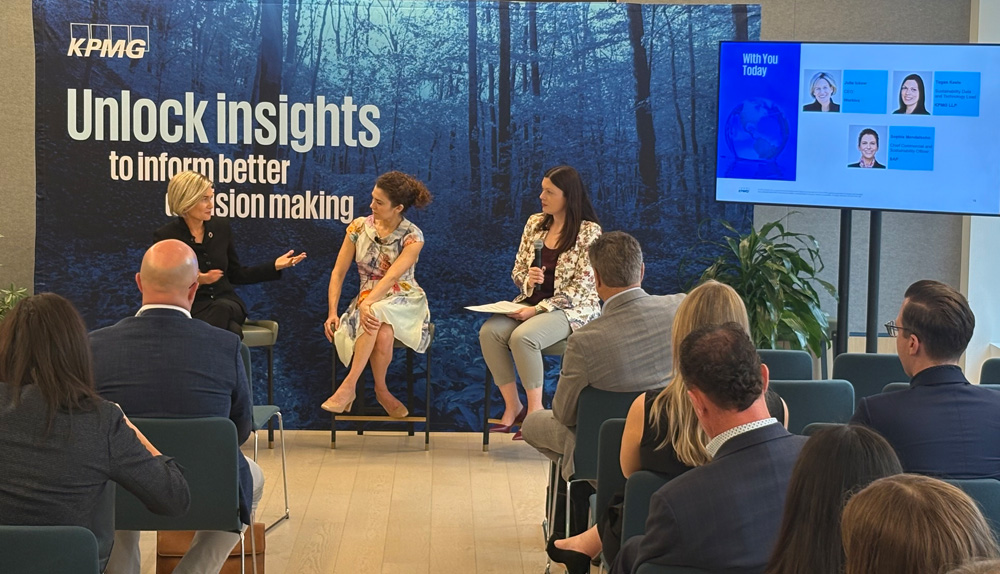
Speakers: Sophia Mendelsohn, Chief Sustainability and Commercial Officer for SAP; Julie Iskow CEO at Workiva, Moderated by Tegan Keele, Climate Data and Technology Lead, KPMG)
This session highlighted the necessity for businesses to view sustainability as a key driver of resilience and performance, leveraging technology to support complex data management and reporting.
Global Perspectives on Sustainability Reporting
While there has been a marked shift in focus on sustainability reporting standards due to delays in regulations, companies continue to move ahead on building their reporting programs and finding ways to move from Transparency to Transformation. Here are the 5 key themes that came out of our panel on Global Perspectives on Sustainability Reporting.
1: Importance of Sustainability Reporting
Despite sustainability reporting regulations changing daily, the purpose is to bring consistency, comparability, and transparency on issues that impact a business’ long-term license to operate. Current discussions involve simplifying requirements and possibly adjusting thresholds. However, CSRD reporting will remain based on Double Material Assessment and a broad ESG understanding which is not limited to climate only.
2: Data and Technology
Companies are leveraging technology to improve data integrity and aggregation for sustainability reporting. Some have implemented AI-enhanced materiality assessments to map and prioritize information from key stakeholders. This approach helps these companies strategically set and pursue their sustainability goals, such as net zero targets for scope 1 and 2 emissions, while simultaneously addressing regulatory and voluntary reporting requirements.
3: Strategic Engagement
Organizations are using reporting not just for compliance but to inform strategic decisions, engage stakeholders, and maintain competitive advantages by actively managing and setting ambitious sustainability goals. Companies can look at their long term and our short term strategies, identifying what components of environmental, social and governance play a role in that growth and highlight the return on investment.
4: Corporate Structure and Governance
The location of sustainability reporting within corporate structures remains varied and continues to change, with some teams integrated into finance, legal, or strategic departments. The key is strong cross-department collaboration.
5: Assurance and Materiality
Leveraging assurance processes to validate sustainability data on par with financial reporting adds credibility and can enhance relationships with stakeholders, including investors and customers. Moving sustainability discussions from morality to materiality highlights the business relevance and risks associated with sustainability factors. For further information on how assurance brings value, check out KPMG’s ESG Assurance Maturity Index.
Some or all of the services described herein may not be permissible for KPMG audit clients and their affiliates or related entities.
Wednesday September 24
Global Perspectives on Sustainability Reporting
Panelists: Tyler Feigenbaum, Head, Non-Financial Reporting at Meta, Marie Caekebeke, Sustainability Strategic Engagement and Empowerment Executive at Baker Hughes, Jan Hendrik Gnändiger, Global ESG Reporting Advisory Leader, KPMG in Germanyon the climate agenda. Despite the complexities of geopolitics on climate policy, there was more energy, passion, and collaboration at NYCW this year than ever before
Moderated by Maura Hodge, US Sustainability Leader, KPMG in the US
Global Perspectives on Sustainability Reporting
Unlocking AI's Potential in Sustainability
1: Diverse Applications of AI
AI is not just for productivity tools. It can enhance efficiency, reduce risk, drive growth through new products and services, and future-proof businesses.
2: AI Use Cases
Real-world examples of AI include energy efficiency agents reducing energy use and costs, digital twins for rapid disaster response, and materials innovation reducing lithium in batteries.
3: Business Value and Sustainability
AI can deliver both business and sustainability value, such as optimizing grid capacity or detecting municipal water leaks, which reduces resource loss.
4: Getting Started with AI
Companies should focus on data quality and integration, and encourage experimentation among team members to develop innovative uses for AI.
5: Future Trends
There will be an increase in agentic solutions interacting within AI systems, leading to more automated processes and innovation.
6: Governance and Ethics
AI governance requires a top-down and bottom-up approach, with companies integrating Trusted AI principles into design and delivery of AI solutions and ensuring compliance with emerging AI regulations.
Wednesday September 24
Unlocking AI's Potential in Sustainability
Speakers: Sean Waters, Senior Product Marketing Manager AI & Sustainability at Microsoft, Gavin Bartlett, Managing Director, Transformation AI & Sustainability at KPMG in the US, Jeffrey Burrell, Global Head Sustainability & Social Impact at Riot Games, and Christine Weydig, Strategic Advisor at Schneider Electric
This session illustrated the growing importance of AI in driving sustainable business practices, highlighting tangible examples, strategic insights, and emerging trends in AI use for sustainability.
Content for section not ready to format
5
AI's Role in Energy Management
AI, while energy-intensive, offers substantial potential in strategic energy management, providing tools to optimize energy use, monitor reductions, and mitigate environmental impact.
Despite the narrative against the climate agenda, there was more energy, passion, and collaboration at NYCW this year than ever before. Across the formal and informal discussions, five themes emerged:
The Ultimate Asset
KPMG Sustainability Reimagined
X
X
Insights
Real-time ESRS
We analysed the sustainability statements of 270 companies that reported under ESRS in the first half of 2025.
Read more
Insights
California climate laws – the draft regulations
10.21.2025 | 2:00 PM - 3:00 PM
Read more
Insights
Turning the Tide in Scaling Renewables
Discover the barriers to scaling renewable energy in KPMG International's latest report.
Read more
View KPMG at COP30
What an incredible week in New York! KPMG acted as a Silver Sponsor of Climate Week NYC, with our Head of Global ESG, John McCalla-Leacy, speaking on the panel "Communicating Climate Change: How Can we Craft a Narrative which Drives Action Now?"
Our KPMG New York Climate Week Hub welcomed hundreds of individuals to learn, collaborate, and envision how we keep moving forward on the climate agenda. Despite the complexities of geopolitics on climate policy, there was more energy, passion, and collaboration at NYCW this year than ever before.
Across the formal and informal discussions, three key messages emerged:
5
AI's Role in Energy Management
AI, while energy-intensive, offers substantial potential in strategic energy management, providing tools to optimize energy use, monitor reductions, and mitigate environmental impact.
4
Leveraging Transparency for Transformation
Emerging regulations are enhancing transparency and accountability, empowering organizations to transform through improved climate risk reporting and also drive value.
3
Focused Transition Plans
Effective sustainability requires targeted strategies, shifting from broad approaches to addressing specific areas with clear value and ROI. Identify where you can actually move the needle.
2
Tax Credits and Renewable Energy
While most think of wind and solar, don't forget about tax incentives for clean technologies, including batteries, to drive efficiency and innovation in renewable energy.
1
Growth in Sustainability
Despite current headcount pressures, demand is rising. We could see a long-term expansion of sustainability roles, driven by increasing complexity and strategic importance.