YOUR GATEWAY TO THE WORLD
No matter where you choose to travel, Turkish Airlines probably lists it as a destination.

Written by Joe Yogerst
Published September 2, 2026
Like many great things in travel, I first came across Turkish Airlines purely by chance.
Having already planned a road trip across Croatia, I began researching the best way to get there and back from LAX. It would have been a lot simpler flying in and out of a single city. But I wanted to arrive in Zagreb, cruise through a couple of national parks and down the Dalmatian Coast, before departing from Dubrovnik.
Turkish Airlines had the perfect solution: an overnight flight to Istanbul, a brief airport layover and then a short onward flight to Croatia – the same (in reverse) flying home.
A few years later, Turkish Airlines solved another logistical problem. Starting an overland journey through the “5 Stans” of Central Asia, my task was flying from LAX to Ashgabat, the capital of Turkmenistan and a city served by but a very few airlines.


Updated July XX, 2026
But, to imagine? Turkish Airlines got me there in two beautiful hops with another short layover in Istanbul. Coming back, I wanted to fly from Almaty, Kazakhstan to home in Los Angeles – with a brief stopover on Türkiye's Black Sea Coast – and “TK” (as it’s known in the aviation industry) made that easy too.
Both of those trips demonstrated what many (including myself) consider to be the airline’s primary calling card – it flies to more countries than any other carrier. At last count, 133 nations on six continents. Or to phrase it another way, unmatched global connectivity that connects cultures, people and destinations across the planet.
Best of all (if you’re like me, a person who simply wants to travel everywhere), Turkish Airlines flies to some of the world’s most exotic destinations – Ulaanbaatar in Mongolia, Mahé in the Seychelles islands, Kilimanjaro International Airport in East Africa, Yerevan in Armenia and Phuket in Thailand.
“One could almost say it was inevitable that an airline based in Istanbul would build a network of this scale,” says Turkish Airlines chief commercial officer Harun Baştürk. “Istanbul sits at the literal and cultural crossroads where East meets West, a natural geographic bridge spanning continents that has connected the world for millennia.”
“While our location gave us the perfect canvas, this network would not have been fully realized without our operational excellence, bold vision for success, and passion for connecting the world. We actively built the infrastructure, managed a rapidly growing and modern fleet, and intentionally cultivated our world-famous Turkish hospitality to transform a geographical advantage into a global reality.”


Istanbul sits at the literal and cultural crossroads where East meets West, a natural geographic bridge spanning continents that has connected the world for millennia.


Harun Baştürk
Turkish Airlines chief commercial officer
Travel Beyond the Route Map
In addition to creating the world’s most extensive route map, Turkish Airlines also strives to provide passengers in every class with excellent service – with premium extras that used to be free on every carrier, but remain so on Turkish Airlines.
On all my flights, I’ve encountered friendly staff (both in the air and on the ground), tasty meals, comfortable seats and more legroom than on most domestic flights back home. In other words, a refined, comfortable and trustworthy travel experience with a strong cultural narrative rooted in traditional Turkish hospitality.

I am not the only person saying this: Turkish Airlines garnered four top awards last year (2025). It rose to the top of the SkyTrax charts as the Best Airline In Europe and Best Business Class Catering, while APEX said it has Europe’s Best In-flight Entertainment and Europe’s Best Wi-Fi. The airline was also recently awarded with Best Food & Beverage in Europe by APEX for the fifth time.
“Incredible” is the first word that comes to mind when describing Turkish Airlines Business Class. What is there not to love about fully reclining seats so you get a great night’s sleep on that long haul leg – with a massage feature no less for maximum relaxation before or after a journey. Seats also feature adjustable privacy screens, a lockable storage area, 18-inch adjustable entertainment screen, and even a mirror to make sure you look shipshape before landing.
Yet the best part of the airline’s Business Class might be the food. Menus change weekly, but often include lavish Mediterranean delights like lamb kebabs, sea bass in a pesto sauce, white bean stew, and handmade Italian pasta, as well as – and this is singular to any carrier – amazing fresh bread based on a 12,000-year-old Anatolian recipe. As your meal is served, the onboard chefs in their tall white hats emerge from the aircraft galley to explain the dishes to every passenger.

After dinner there’s a range of treats to choose from like sherbet pastries, warm tahini halva and Maraş ice cream. And of course there’s a full bar that includes innovative mocktails, detox drinks, herbal teas, and the coffee that’s such a passion for the Turkish.
“When it comes to our premium services, we take immense pride in delivering an experience that seamlessly blends world-class luxury with our world-famous Turkish hospitality, both on the ground and in the skies,” says Baştürk. “As Türkiye’s flag carrier and primary cultural ambassador, we reflect our hospitality culture and cultural code in our vision to enhance passenger experience at each and every level.”


In the Air, and on the Ground
Even at the lowest tier of the “Miles & Smiles” frequent flyers program, free inflight Wi-Fi and unlimited messaging, meal preference, and standby priority is included.
And higher tiers entitle passengers to business-class check-in (even when they’re not flying up front), priority passport control at select airports, priority boarding, a bigger baggage allowance and a 50% reduction on a second business class ticket for the same flight.
Upper tier Miles & Smiles members and anyone flying Business Class can access the fabulous Turkish Airlines lounges at Istanbul International Airport (IST).

Baştürk calls the airport’s 9,600-square-meter Turkish Airlines Lounge Business the “crown jewel” of the airline’s ground services. One of the world’s largest and most immersive airport lounges, it features private suites, daybeds, spa services and even interactive experiences like the Hezarfen Flight Simulator. There’s also a rich variety of chef-prepared live cooking stations that showcase authentic Turkish flavors like mantı and gözleme.
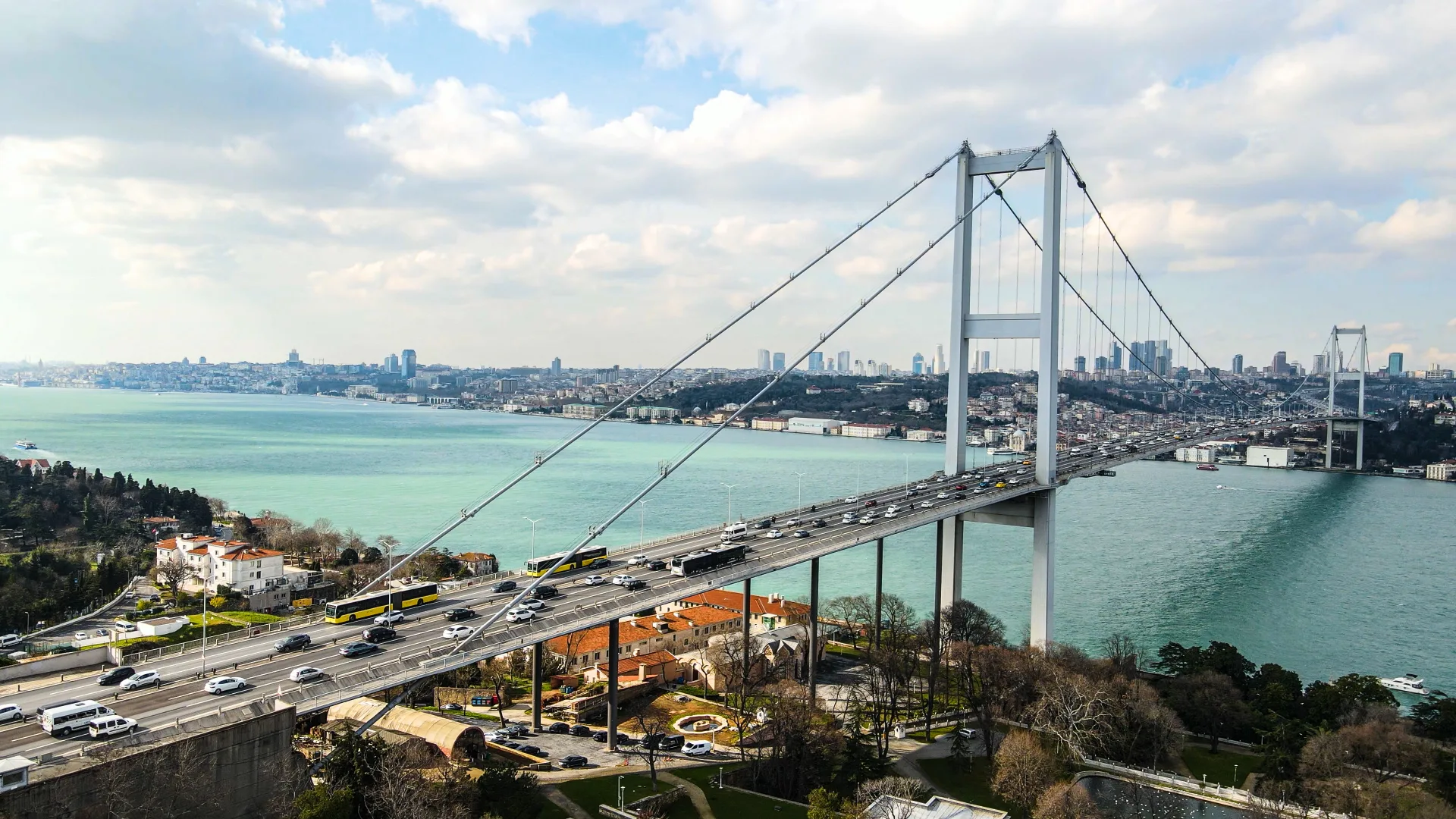
There was also the option of a stopover in Istanbul, the cultural hub of Türkiye, one of the world’s great cities, and an urban area that spans two continents (Europe and Asia) on either side of the fabled Bosphorus waterway. The Stopover in Istanbul program spans layovers of anywhere from 20 hours to a full week, while passengers who take advantage of the program are eligible for complimentary accommodation for at least part of their stay in the city.


Turkish Airlines is also pet friendly. Assuming your “best friend” meets the entry requirements of the country you are flying to, Turkish Airlines allows small cats, dogs, and songbirds (canaries, parakeets, etc.) in the aircraft cabin with you. Larger pets can ride in the hold.
TK also carries all types of sports equipment. Not just golf bags, skis and tennis rackets, but even larger items like kayaks for paddling Alpine lakes, scuba gear for diving the Maldives, mountaineering equipment for conquering the Himalayas and, yes, cycles for bikers who want to trace the latest Tour de France route.
Last but not least, Turkish Airlines is a member of the global Star Alliance that includes other major carriers like United Airlines, Lufthansa, Singapore Airlines, Air Canada, Ethiopian Airlines, Air Portugal and many others.


Almost a Century of Aviation
Like so many carriers that were fledgling a century ago, Turkish Airlines has come a long way since it was founded in May of 1933 as Devlet Hava Yolları (Turkish State Airlines). Heading the new airline was famed Turkish aviation pioneer Mehmet Evrensev, who earned his wings as an Ottoman military pilot just eight years after the Wright Bros. first flight.
With just 30 employees and only five aircraft, the airline began serving domestic routes. Among the early aircraft were a 10-seat Tupolev ANT-9 from the Soviet Union and a four-seat Junkers F 13s made in Germany.
The airline finally launched its first international service (Istanbul-Athens) in the late 1940s, and during the decade that followed branched out to Cyprus, Lebanon and Egypt. The first passenger jets and the airline’s famous “flying goose” logo came along in the late 1950s. Another milestone came in 1961 with the airline’s first transatlantic flight in a Dutch Fokker F27 Friendship aircraft between Istanbul and New York City.
Since then, the fleet has grown to more than 560 aircraft. They range from Boeing 737 Max and Airbus A320 aircraft that cover the domestic and regional routes, to long-range planes like the Boeing 787 Dreamliner and Airbus A350-900.


Over the horizon
“At Turkish Airlines, our long-haul strategy is not only about network and fleet expansion but also about maintaining comfort and quality at our inflight experience,” says Baştürk.
With that in mind, the airline is about to launch Crystal Business Class Suites. Designed around passenger privacy, space and comfort, the suites will feature full-closure doors and electronically controlled privacy panels, 100% direct aisle access, extended legroom, and wireless charging on a marble-look service tables alongside a 22-inch entertainment screens.


Simultaneously, the route map will continue to grow. “Network expansion is a critical part of our 2033 Strategy, which marks our centennial journey in aviation,” says Baştürk.
Turkish Airlines aims to increase its roster of international destinations from 305 to 345 cities – and double passenger numbers to more than 170 million per year – by its centennial celebration in 2033 by continuing to add new routes to what is already the world’s most extensive flight network.


As Türkiye’s flag carrier and primary cultural ambassador, we reflect our hospitality culture and cultural code in our vision to enhance passenger experience at each and every level.
Harun Baştürk
Turkish Airlines chief commercial officer
Learn more