Remembering
the Bedford Boys
D-DAY ANNIVERSARY
80 years after D-Day, legacy of 19 men lives on


Under the cover of darkness, paratroopers dropped into Normandy from more than 1,200 aircraft. Sunrise brought wave after wave of landing vessels carrying American, British, French and Canadian ground troops who stormed 50 miles of coastline in Northern France that German troops fiercely defended.
The Allied invasion of Normandy would become a pivotal moment of World War II and the largest seaborne invasion in history. It was June 6, 1944. D-Day.
Thousands would be left dead, including 19 men from tiny Bedford, Virginia.
The story of the Bedford Boys would become international news and inspire books, a movie and a memorial in Bedford County. Eighty years after that horrific battle, their legacy lives on.

Enlarge photo


Enlarge map
See Gen. Eisenhower’s annotated speech

U.S. Coast Guard
VIDEO: Watch pre-invasion newsreel


A landing barge, tightly packed with helmeted soldiers, approaches the shore at Normandy, France, during initial Allied landing operations, June 6, 1944.
U.S. Coast Guard via AP
See more photos

THE BATTLE

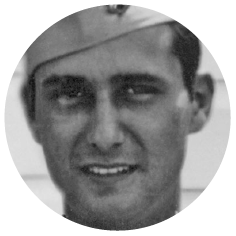
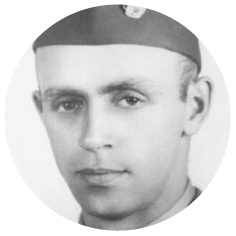
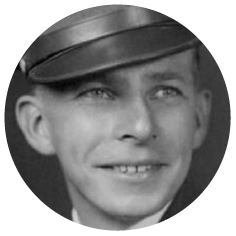
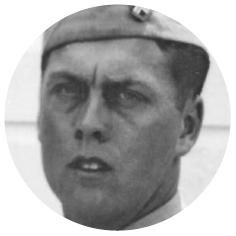
The men known as the Bedford Boys were soldiers from the town of Bedford, Virginia, serving in Company A, 1st Battalion, 116th Infantry Regiment of the 29th Infantry Division.
At 6:36 a.m. June 6, 1944, the company stormed the beaches of Normandy in the D-Day invasion. By the time the day was through, 19 of Bedford’s sons died on Omaha Beach, and a final Bedford native from Company F died that day.
This little Virginia town of 3,200 people sustained what is believed to be the nation’s highest per capita loss.�
THE MEN
VIDEO: President Clinton speech

“They were the fathers we never knew, the uncles we never met, the friends who never returned, the heroes we can never repay. They gave us our world. And those simple sounds of freedom we hear today are their voices speaking to us across the years.”
— President Bill Clinton,�at the 50th Anniversary of D-Day in Normandy, France,�June 6, 1944
D-DAY: BY THE NUMBERS
Months of preparation before invasion, known as Operation Overlord
14
4,415
Troops killed
during invasion
2,502
Americans
killed
12
Allied nations involved, including
156,000
troops
5,000
ships
11,000
airplanes


= 10

VIDEO: Watch post-invasion film reel

THE AFTERMATH
“Bedford has a special place in our history. But there were neighborhoods like these all over America, from the smallest villages to the greatest cities. Somehow they all produced a generation of young men and women who, on a date certain, gathered and advanced as one, and changed the course of history.”
— President George W. Bush,�at the dedication of the National D-Day Memorial,�June 6, 2001


A telegram to the family of one of the Bedford soldiers killed during the D-Day invasion that is on display inside the former Green's Drug Store which is now the Company A Bedford Boys Tribute Center in Bedford.
Bob Brown, Richmond Times-Dispatch

A Bible belonging to Raymond Hoback and his brother Bedford, who were killed during the D-Day invasion of France, is shown. It was donated to the National D-Day Memorial Foundation in Bedford.
Paige Dingler, Lynchburg News & Advance


Blackened area on the Normandy beachhead indicates approximate area captured by the allies at the end of four days battle after D-Day, as continued Allied aerial bombings struck at objectives in the shaded belt.
Associated Press
Gen. Dwight D. Eisenhower speaks to paratroopers of the 101st Airborne Division in England before they boarded airplanes to participate in the first assault of occupied France on D-Day.
National Archives


The scene along a section of Omaha Beach in June 1944, during Operation Overlord, the code name for the Allied invasion at the Normandy coast in France during World War II.
Associated Press file photo

Carrying full equipment, American assault troops move onto a beachhead code-named Omaha Beach, on the northern coast of France on June 6, 1944, during the Allied invasion of the Normandy coast.
Associated Press file photo

In this June 10, 1944, file photo, U.S. troops move inland from an established beachhead at Omaha Beach in the Normandy region of France.
Associated Press/ Jack Rice

Wrecked assault craft half buried in the sand on Omaha beach, reminders of the D-Day invasion, in France, on May 28, 1945.
Associated Press file photo

In preparation for the D-Day invasion, artillery equipment is loaded aboard at a port in Brixham, England.
National Archives

The monument at the Pointe du Hoc overlooking Omaha Beach is shown in 2019.
AP Photo/David Vincent


President George W. Bush describes the sacrifice of the “Bedford Boys” and others who gave their lives in the invasion of Normandy, during dedication ceremonies for the National D-Day Memorial in Bedford on June 6, 2001.�
Bruce Parker, Richmond Times-Dispatch

Traffic drives by the old Green's drugstore that is the site of the Bedford Boys Tribute Center in Bedford in May 2019.
Steve Helber, Associated Press

A watch and a Bible belonging to Bedford Boy John F. Reynolds are shown in a display case at Green's Drug Store in Bedford on May 30, 2019.
Taylor Irby, The News & Advance

Actor Tom Hanks, left, and director Steven Spielberg speak to guests at the Colleville U.S. Cemetery in Normandy, France, on June 6, 2004. Hanks and Spielberg are treated as heroes by the veteran community for their landmark film “Saving Private Ryan.”
Library of Congress, Motion Picture, Broadcasting and Recorded Sound Division
William Jefferson Presidential Library
LISTEN: President Roosevelt's D-Day Prayer from June 6, 1944

Sources: National D-Day Memorial, History.com, Library of Congress, and the Daily Mail and The News & Advance archives�
John “Jack” Reynolds, 22, grew up on a farm in a family of eight children, the last of whom was born a year after he died in Normandy.
He had a close relationship with his mother, who let him join the National Guard at the age of 18 with his friends after he begged for her permission.
His sister Marguerite Cottrell, was only 4 when her brother died. She told The News & Advance her mother, Willie Reynolds, never got over the loss of her second oldest son.
John Reynolds
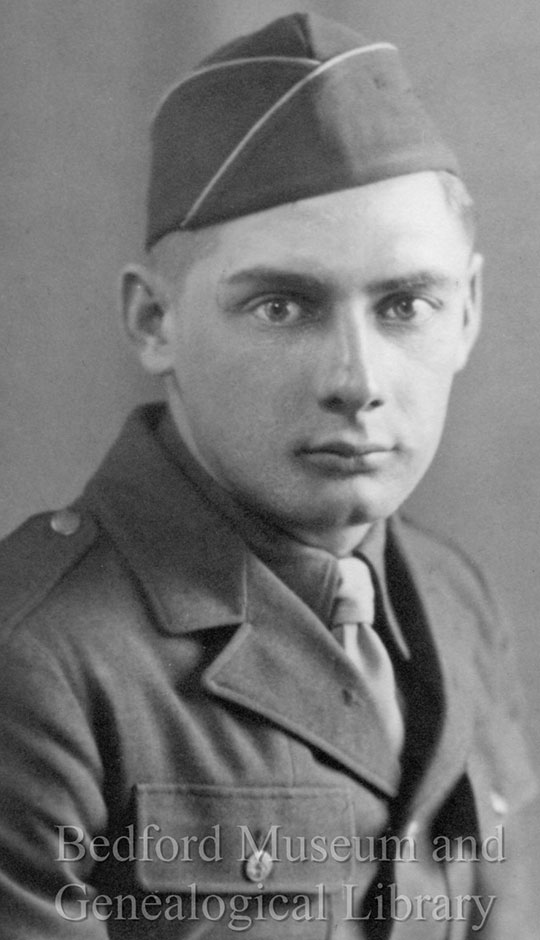
A lie on “Dickie” Abbott Jr. enlistment application turned a 17-year-old-boy into an 18-year-old man.
�His youth showed in the letters he wrote home. He missed riding horses, working in the fields, rolling his own cigarettes and his favorite foods.�Abbott, 22, originally was listed as missing in action after the invasion. His family found that out in July by telegram.
�His status was changed to killed in action 11 days later.
Leslie Cecil 'Dickie' Abbott Jr.

Wallace Carter, 21, barely was 18 when he entered the war. The young man shot pool and played dice, the latter of which led to the christening of his nickname, "Snake Junior," by friends who knew his older brother Allen, called "Snake Eyes," also a regular at dice games.
�He worked at Bedford Pool Hall and was remembered as a "good time" type of guy.
�Carter was killed before reaching Omaha Beach. He was shot to death just after the landing craft's gangplank lowered.
Wallace Carter
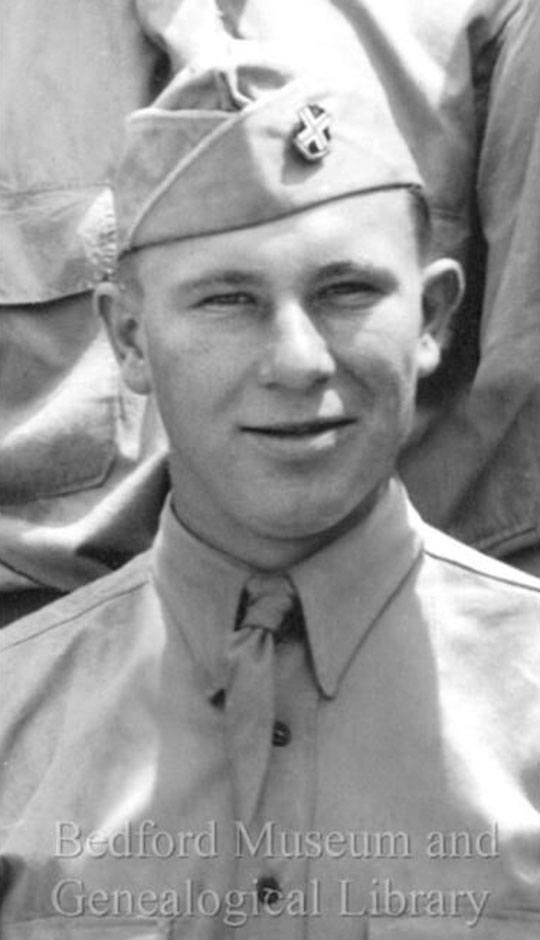
John Clifton, 21, attended Bedford High School and had a childhood job delivering newspapers.
�On D-Day, the Company A radio operator rode with Lt. Ray Nance in a lead assault boat. As the boat ramp went down, Clifton was hit with a spray of German gunfire.
�Clifton's schoolmates described him as nice, quiet and handsome. He was engaged to an English girl while he was training in England.
John Clifton
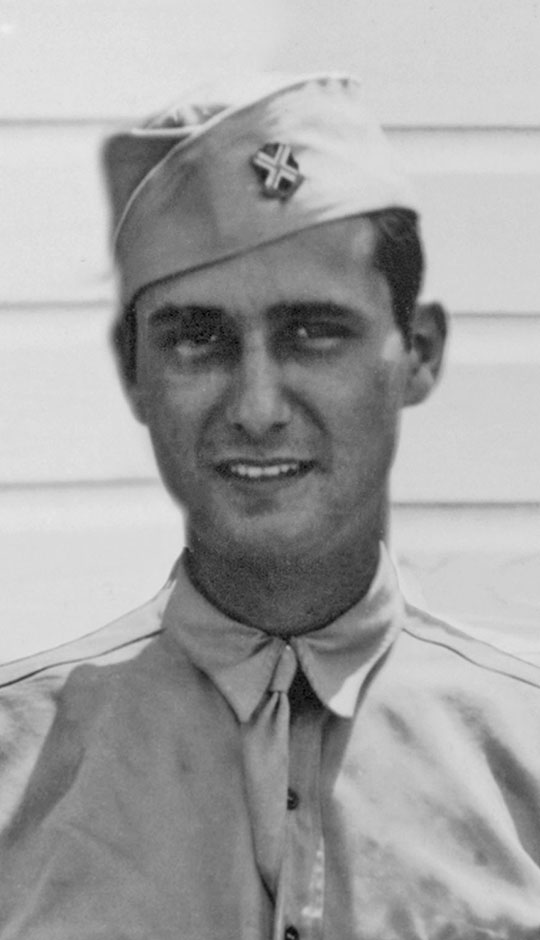
When Frank Draper Jr. was a child, he collected coal that fell from railroad cars running near his home to keep his family warm.
�He was a star athlete in baseball, basketball, football and track at Bedford High School. He worked in the spinning department at Hampton Looms, where he was a center fielder and lead-off batter for the company team.
�After making a few last notes about the invasion on the early morning of June 6, 1944, Draper, a sergeant, was killed by enemy fire while still on his landing craft. He was 25.
Frank Draper
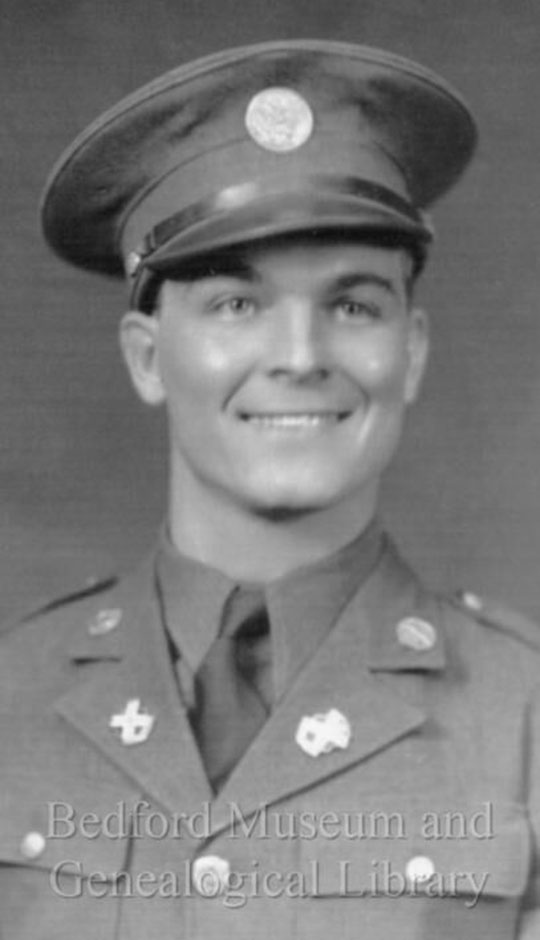
Taylor Fellers, 29, worked as a highway bridge construction foreman for the Virginia Highway Department and was a role model for his siblings.
�He took on a similar role as a captain in Company A. On D-Day, Fellers led about 30 men ashore, aiming to gain control of the gap in the cliffs on Omaha Beach. Fellers and his troops were fired on and killed.
Taylor Fellers

During World War II, Nicholas Gillaspie wrote home frequently. He sent letters and postcards to his family and neighbors.
�When news of the invasion hit and the letters stopped, his family began to worry.
�Lt. Ray Nance, who died in 2009, said Gillaspie got his job done quietly with no complaints, describing him as a good soldier.
Nicholas N. Gillaspie

Bedford Hoback, 30, was the oldest boy in a family that included his younger brother, Raymond, who also died on D-Day.
�After finishing eighth grade, he went to work with the highway department, earning enough money to buy a $750 two-door Chevrolet and loan his sister the money to go to beauty school.
�But when his mother had the opportunity to bring his body home after he died on the beach on D-Day, she decided to leave it in Normandy to be with his brother, whose body was never found.
Bedford Hoback
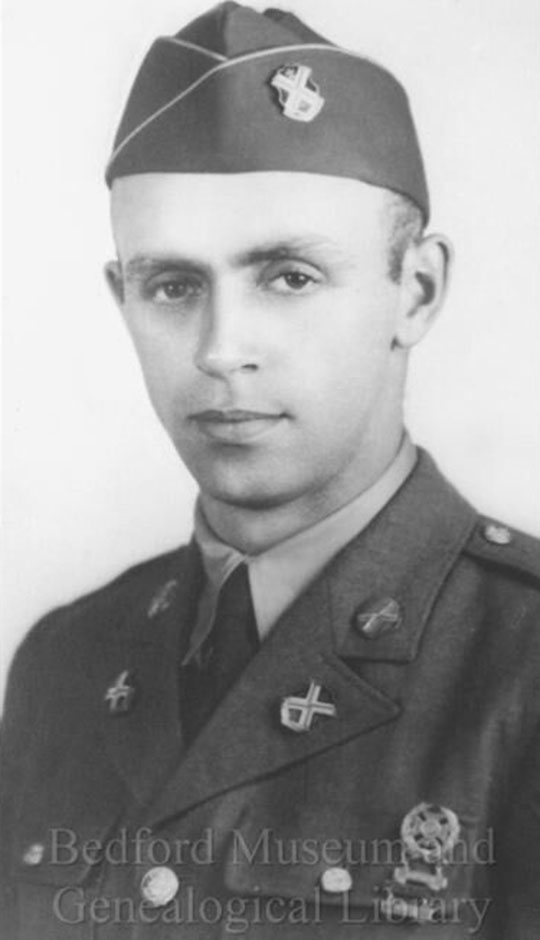
Raymond Hoback, 24, was offered a discharge because of severe nosebleeds, his sister Lucille Boggess said.
�But Hoback was close with his brother Bedford, 30, who also died on D-Day. Boggess said he refused to leave his brother.
�Raymond Hoback is believed to have been left wounded on the beach, and he drowned at high tide. The only remnant of Hoback after D-Day was his Bible.
Raymond Hoback

Clifton Lee, 26, went to work at Hampton Mills after graduating from Bedford High School. Fellow Company A soldier Roy Stevens remembered him as gentle and shy, friendly and well-liked.
�He loved his family, and spoke of them often. A private, Lee was killed in the opening chaos of D-Day, shot while trying to swim to shore.
�News of his death devastated his close-knit family; relatives avoided mentioning his name, even years later.
Clifton Lee

After being shipped out for training Earl Parker did everything he could to get home to see his wife.
�When the 30-year-old left for England, his wife Viola was five months pregnant. In the landing boat on the way to invading Normandy, Parker told a fellow officer he wished to see his 18-month-old daughter, Mary Daniel. He died that day without ever getting to hold her.
�Parker was one of three brothers who fought in the war. Joseph Parker was killed in France in 1944. William Parker, held prisoner by the Germans from September 1944 to April 1945, survived.
Earl Parker

Family of Jack Powers, 24, said he loved playing his guitar, singing and dancing.
�Overseas, he and his brothers, also in the service, wrote to their little sister often. She collected their postcards.
�On D-Day, he died on a boat when it sank on the way to the beach in Normandy. His parents received the telegram notifying him of his death weeks later.
Jack Powers
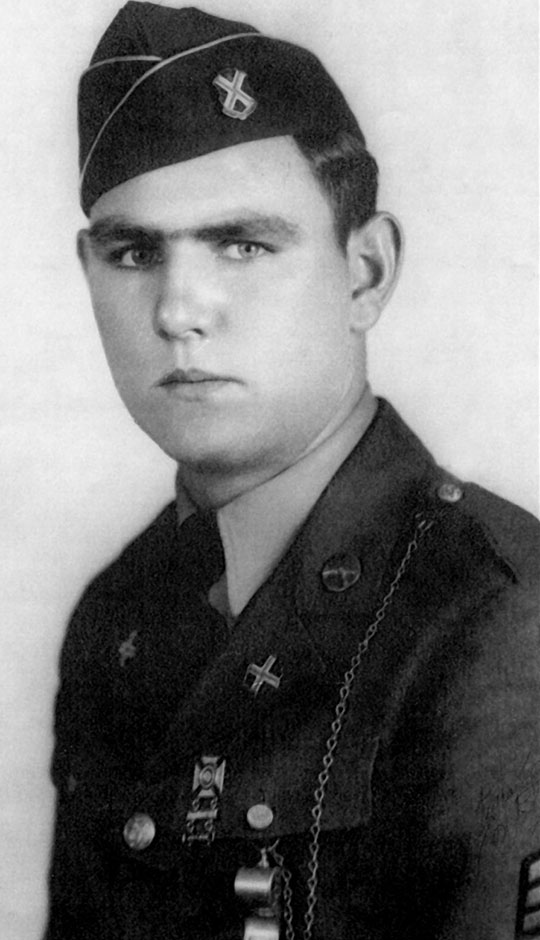
One of Weldon Anthony “Tony” Rosazza’s favorite hobbies growing up in Bedford was to hitchhike with his buddy Morris Scott.
�Rosazza left his 16-year-old friend behind when Bedford’s National Guard unit was sent to train for war. The 23-year-old died with many other members of Company A during the Normandy invasion on June 6.
Weldon Anthony 'Tony' Rosazza

When John Schenk, 27, left for the Army, he and his new wife, Ivylyn, agreed to think of each other at the same time each day.
�The couple met in 1941, set up by a friend on a blind date that carried on into the night. They were married when he was on leave from Camp Blanding, Florida, and wrote letters to each other every day when Schenk was in England.
�Schenk died before the couple’s second wedding anniversary.
John Schenk

The last time Ray Stevens saw his twin brother, Roy, the two were parting for separate landing boats. Ray reached out to shake Roy’s hand but Roy declined the handshake. Roy expected to see his brother again but Ray didn’t expect to make it home.
�Ray Stevens, 25, was found on the beach in Normandy, killed by machine gun fire.
�Roy Stevens said his brother excelled at farming and later at being a soldier who was good at making decisions.
Ray Stevens

Gordon “Henry” White, 23, returned every day from classes at New London, changed clothes and stuffed apples in his pockets to snack on during an afternoon working on the family’s dairy farm.
�White’s family didn’t know whether he made it to the beach on D-Day, but they believe he died in the water because many of the articles returned to them had been wet.
�His siblings remembered him as the leader of the family; he took his brothers hunting, fishing, trapping and taught them baseball.
Henry White
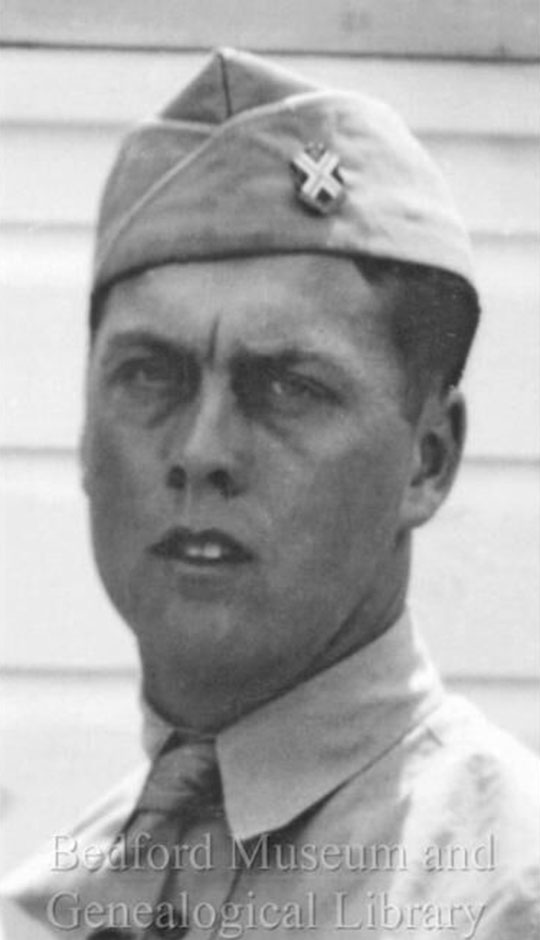
John Wilkes, 24, met his wife, Bettie, at a football game at New London Academy where she went to school.
�He was in service the entirety of their marriage. She received a telegram in 1944 that he died on D-Day.
�Apparently, he was a hard sergeant, which Bettie found out after meeting a medic who survived the war. Bettie said she never thought of him as tough, but as a strong man who could take care of himself.
John Wilkes

Elmere Wright, 28, was a standout pitcher at Bedford High School and a tackle on the football team.
�Between school and joining the Army in 1941, Wright bounced around minor league baseball, traveling to Texas, Indiana, Kentucky and Mississippi.
�Wright originally was reported missing in action from the Normandy invasion. On July 28, 1944, his parents got a telegram that he was killed in action in France.
Elmere Wright

Grant Yopp, 21, had joined the Virginia National Guard with Roy and Ray Stevens. He had gone to live with the Stevens family when he was 13 after his family split up.
�He and the Stevens brothers — Ray also died on D-Day — were like triplets growing up.
�Yopp, the leader of a mortar squad, took fire upon landing on Omaha Beach and was killed by German machine gun fire. He left behind a young wife and family he adored.
Grant Yopp


BACK
NEXT
12:15 a.m.
Allied pathfinders dropped into France to mark landing sites, followed by British soldiers who worked to secure the bridges near Bénouville.
TIMELINE: D-DAY INVASION
1 to 2 a.m.
British paratroopers secured glider landing areas, taking a battery, bridges and reinforced the advancing party to the east. Some 13,000 U.S. paratroopers jumped into western Normandy, but many drowned in areas that were deliberately flooded.









2 to 3 a.m.
Ranville was captured. Every German battalion, battery and regimental headquarters was placed on alert.
3 a.m.
Some 5,000 ships started to arrive at lowering positions 15 miles off the coast.
3:35 a.m. to 4 a.m.
The aerial attack began, with parachutists and gliders landing north of Ranville.
4:45 a.m.
British paratroopers captured the German battery at Merville.
5 to 6 a.m.
1,136 aircraft drop 6,000 tons of bombs on the coastal defenses.
5:30 a.m.
Three German torpedo boats fired 18 torpedoes at the Allied ships, sinking the Norwegian destroyer Svenner.
5:30 a.m.
125 warships opened fire on the German defenses at Utah Beach, while American bombers targeted Utah and Omaha beaches.
6 to 7 a.m.
38,000 rockets were fired onto the five beaches.
6:30 a.m.
On Utah Beach, the U.S. troops missed the beach by 1,500 yards, but commanders ordered the convoys to continue to land there as there were fewer German defenses. At Omaha Beach, the troops come under heavy fire, but the U.S. soldiers continue onto the beach, taking heavy casualties.
6:58 a.m.
Aerial bombings started at Gold, Juno and Sword beaches.
7:25 to 7:45 a.m.
At Gold Beach, the British troops took Bayeux. At Sword Beach, the troops faced strong defenses. At Juno Beach, the Canadian troops landed in two waves to confront strong resistance.
8 to 9 a.m.
Gold, Juno and Sword beaches were cleared and British and Canadian troops made their way inland. At Utah Beach, the U.S. troops joined with paratroopers, but the soldiers at Omaha Beach remained under heavy fire.
Noon
Utah Beach's exits were under the control of U.S. paratroopers and an hour later, Germans surrendered strategic fortifications at Omaha Beach.
1:30 and 4:30 p.m.
The city of Caen was bombed twice.
6 p.m.
British troops took out a German garrison at Ouistreham.
8 to 9 p.m.
German tanks broke through the British lines to reach Lion-sur-mer. At Ranville, 249 gliders came to reinforce the British troops.
9:30 p.m.
Caen was bombed a third time. It took until July 20 for the city to come under Allied control.
10:30 p.m.
Arromanches was liberated and the Allies made their way to the outskirts of Bayeux.
Midnight
At day's end, 170,000 men were fighting in Normandy.
Bénouville
Saint-Lo
English Channel
10 MILES
Saint-Lo
Bayeux
10 MILES
Caen
English Channel
Saint-Lo
10 MILES
English Channel
Ranville
Saint-Lo
Bayeux
10 MILES
English Channel
Saint-Lo
Bayeux
10 MILES
Merville
Saint-Lo
Bayeux
10 MILES
Saint-Lo
Bayeux
10 MILES
Saint-Lo
Bayeux
10 MILES
Carentan
Carentan
Carentan
Carentan
Carentan
Carentan
Carentan
Carentan
Saint-Lo
Carentan
Bayeux
10 MILES
Saint-Lo
Carentan
Bayeux
10 MILES
Utah
Omaha
GOLD
JUNO
SWORD
Saint-Lo
Carentan
Bayeux
10 MILES
Saint-Lo
Carentan
Bayeux
10 MILES
Saint-Lo
Carentan
Bayeux
10 MILES
Saint-Lo
Carentan
Bayeux
10 MILES
Caen
Saint-Lo
Carentan
Bayeux
10 MILES
Saint-Lo
Carentan
Bayeux
10 MILES
Caen
Saint-Lo
Carentan
Bayeux
10 MILES
Ouistreham
Saint-Lo
Carentan
Bayeux
10 MILES
Lion-sur-mer
Ranville
Saint-Lo
Carentan
Bayeux
10 MILES
Caen
Saint-Lo
Carentan
Bayeux
10 MILES
Arromanches
Saint-Lo
Carentan
10 MILES
Bayeux
Bayeux
FRANCE
GERMANY
U.K.
Le Havre
Saint-Lo
London
Paris
NORMANDY
Evreux


12:11 a.m.
Two parachuted teams landed in France. The U.S. team landed west of Saint-Lo carrying 200 dummies that fired flares and played recordings of gunfire. The British team landed on the eastern flank, from Le Havre to Evreux. Radio operators broadcast fake chatter, and even fake newspapers were printed to create the illusion the invasion would take place some 150 miles away
English Channel
English Channel
English Channel
English Channel
English Channel
English Channel
Utah
Omaha
Utah
Omaha
GOLD
JUNO
SWORD
Utah
Omaha
GOLD
JUNO
SWORD
English Channel
Utah
Omaha
GOLD
JUNO
SWORD
English Channel
Utah
Omaha
GOLD
JUNO
SWORD
Utah
Omaha
GOLD
JUNO
SWORD
Utah
Omaha
GOLD
JUNO
SWORD
English Channel
Utah
Omaha
GOLD
JUNO
SWORD
English Channel
Utah
Omaha
GOLD
JUNO
SWORD
English Channel
Utah
Omaha
GOLD
JUNO
SWORD
English Channel
Utah
Omaha
GOLD
JUNO
SWORD
English Channel
Utah
Omaha
GOLD
JUNO
SWORD
English Channel

Ranville
Bayeux
Caen
Valognes
Valognes
Valognes
Valognes
Valognes
Valognes
Valognes
Valognes
Valognes
Valognes
Valognes
Valognes
Valognes
Valognes
Valognes
Valognes
Valognes
Valognes
Valognes
Valognes
Valognes
Caen
Caen
Caen
Caen
Caen
Caen
Caen
Caen
Caen
Caen
Caen
Caen
Caen
Caen
Caen
Caen