
Moms face a serious health crisis
Hear Olympic medalist and brand ambassador Allyson Felix tell her preeclampsia story.
Resources for professionals and their patients
With preeclampsia impacting 1 in 25 pregnancies, early identification and risk-based intervention are key. Clinical guidelines support the use of low dose aspirin to help reduce the risk of preeclampsia and preterm birth in eligible patients. This resource hub equips you with tools to support early conversations, assess risk factors, and confidently recommend low dose aspirin where appropriate—starting at the first prenatal visit.

Have more questions?
Download our full list of FAQs here.
?
Course: Low Dose, Big Benefits™: Raising Awareness of Low Dose Aspirin to Reduce the Negative Impacts of Preeclampsia.
We're excited to offer a new course designed to equip healthcare professionals and healthcare support professionals with the knowledge and resources needed to effectively screen and prescribe low dose aspirin (LDA) to mitigate the adverse effects of preeclampsia in at-risk pregnant individuals.

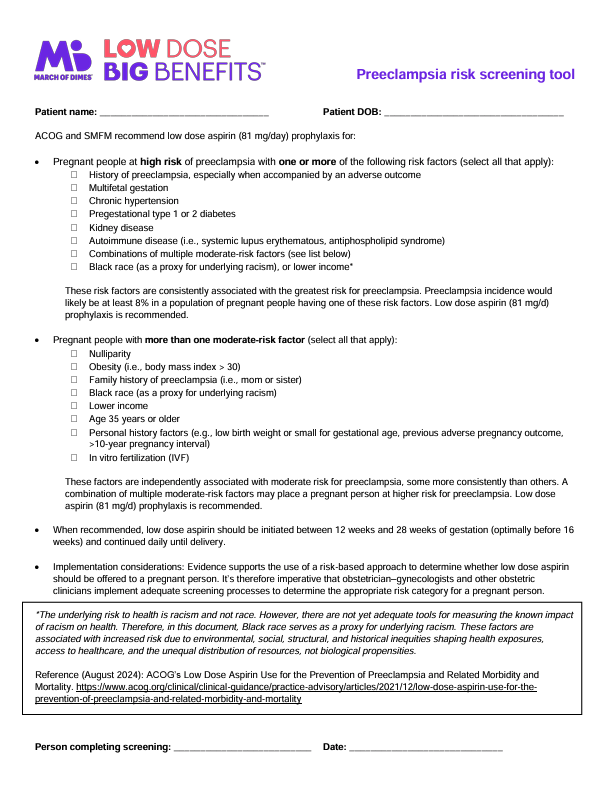
Preeclampsia risk screening tool
Helpful handout
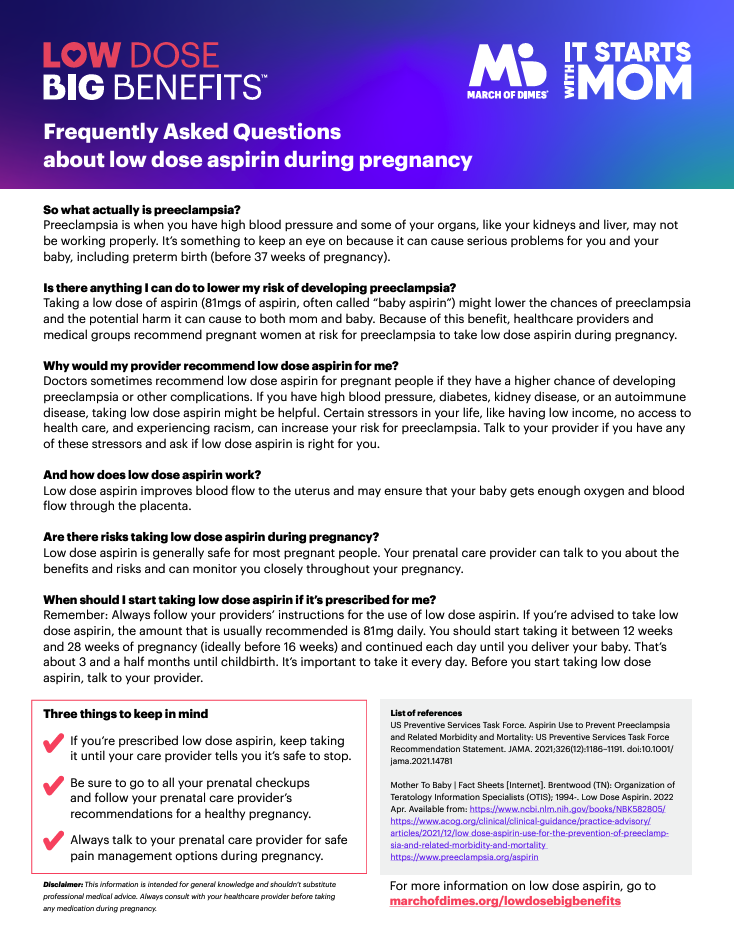
This is an overview for consumers on what they need to know about preeclampsia and low dose aspirin. It helps consumers identify the risk factors for preeclampsia and talk to their healthcare providers about being screened for preeclampsia.
English
Spanish

One pager
Haitian Creole
Chinese
Portuguese
English
Spanish
Haitian Creole
Chinese
Portuguese
English
Spanish
Portuguese
Haitian Creole
Chinese



Low-Dose Aspirin for Preeclampsia Prevention: Implementation Guide for Clinical Teams
Preeclampsia is a multi-system disorder of pregnancy characterized by abnormal placentation, vascular changes, and inflammation, often diagnosed based on new onset hypertension and proteinuria. Preventing and treating preeclampsia is a priority for maternal and child health. Low-dose aspirin (LDA) prescribed prenatally for patients at risk of preeclampsia is an underutilized preventive measure that can save lives, reduce morbidity, and lower healthcare costs. Despite recommendations, LDA remains underused in clinical practice, indicating an important quality improvement opportunity.