The next phase of virtual card growth is �about helping businesses stay in �control as they scale.
Where virtual cards become part of �the business
● INSIDE THE SMALL AND MIDDLE MARKET


As small and mid-sized businesses grow, �virtual cards often begin to play a much bigger role
What changes operationally as SMEs grow?
What growing businesses need more of
employees, payments become more than a transaction challenge. They become a systems challenge.

Small business �(<50 employees)


88
%
96
%


*Global Virtual Card Research, Kaiser Associates, commissioned by Mastercard, 2025. All data points cited are from this source unless otherwise noted.
© 1994-2026 Mastercard.


Catch up on the second article in the series: Virtual cards: from security to confidence at scale

Follow us on LinkedIn
Contact us

Designed by Creative Studio

Read the full article
Virtual cards become more essential as SME revenue grows
consider virtual cards essential to day-to-day operations

Show how virtual cards can support broader business needs beyond a single payment.


of higher-earning SMEs
of the top 5%
Manual processes may still be manageable
Informal controls can work
Payments remain task-oriented �

Middle market �(50-250 employees)
More employees and suppliers create complexity
Payments are harder to manage across teams
Governance becomes more important
Visibility and reconciliation are harder to maintain �
At
50+
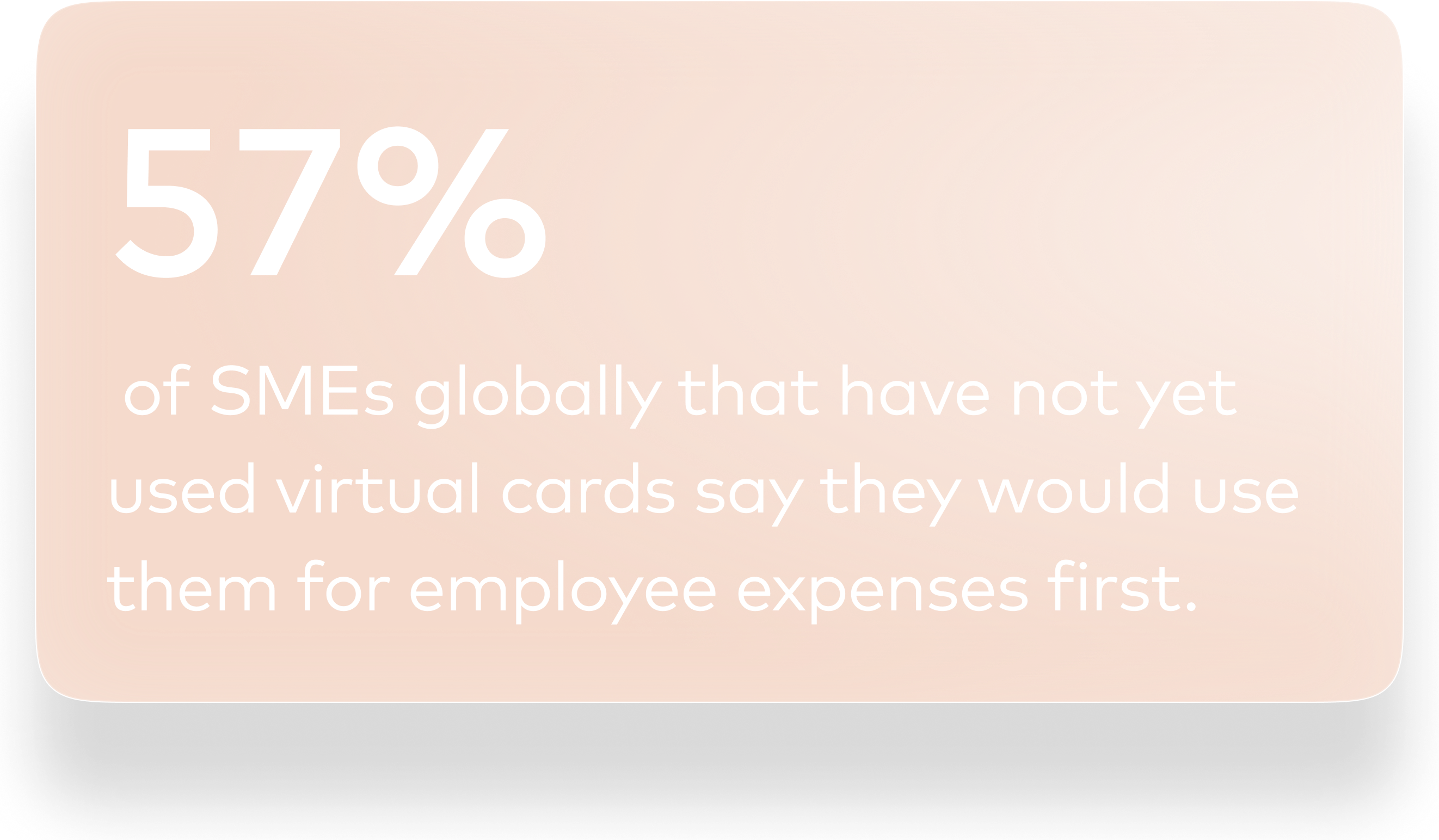
57%
of SMEs globally that have not yet used virtual cards say they would use them for employee expenses first.
That is when they become more than a way to pay. They become part of how a business runs and grows.
When virtual cards are built into everyday processes and connected to the systems businesses already use, they can support greater control, visibility and efficiency.
● From payment tool to everyday operations
That is when they become more than a way to pay. They become part of how a business runs and grows.
Employee expenses can be an entry point to virtual cards
● What this means for partners