CLICK BLUE ARROWS TO SEE
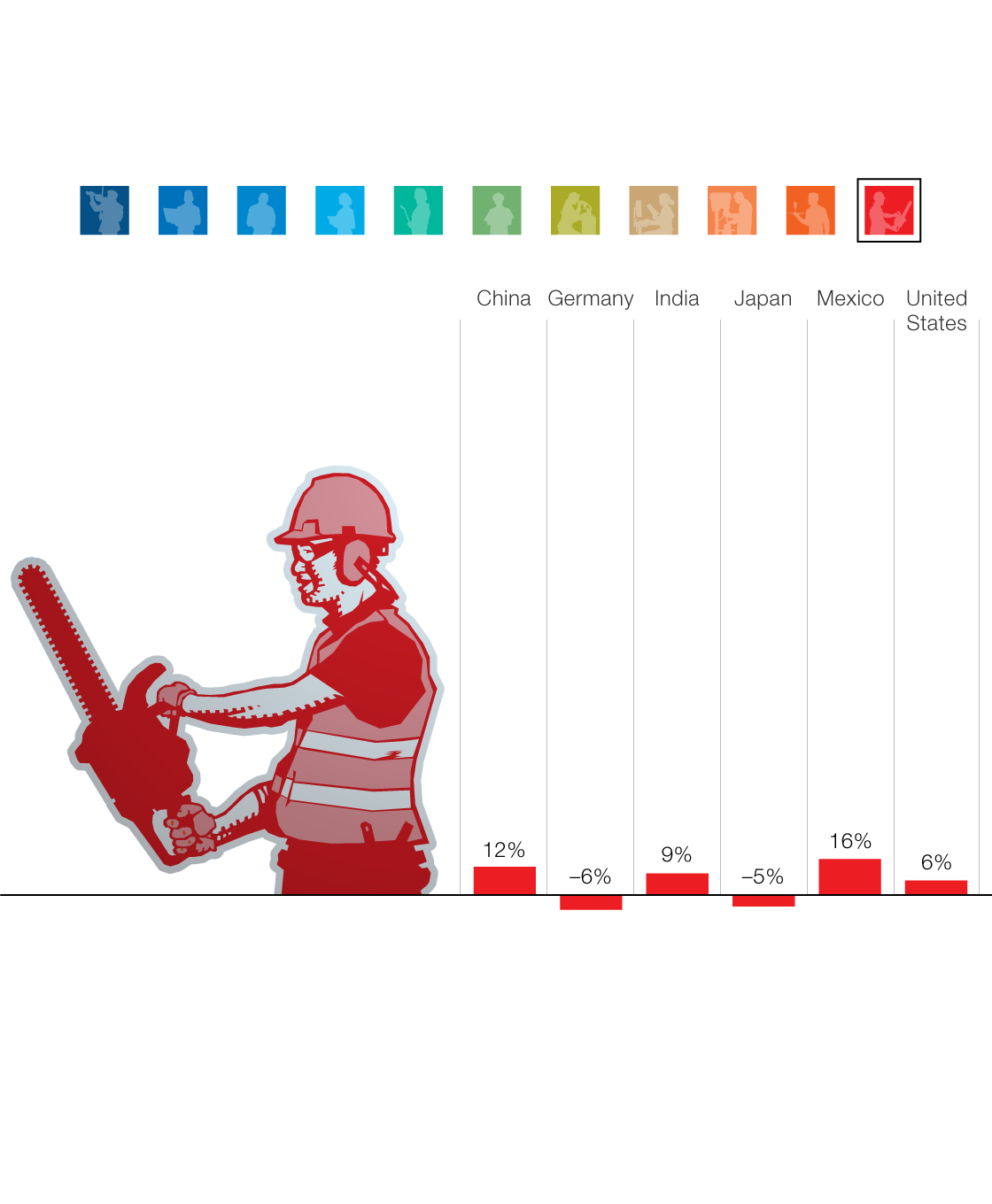
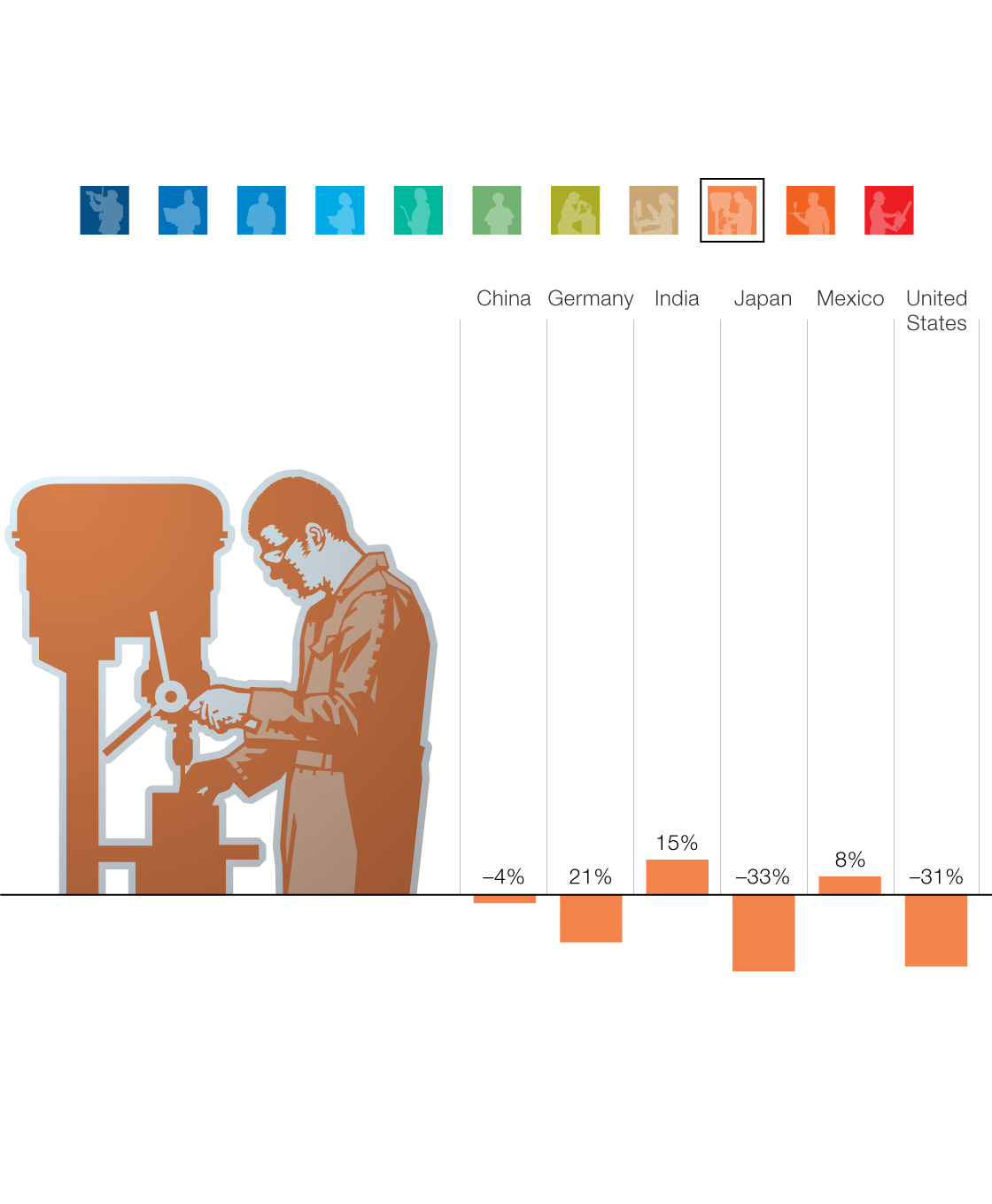
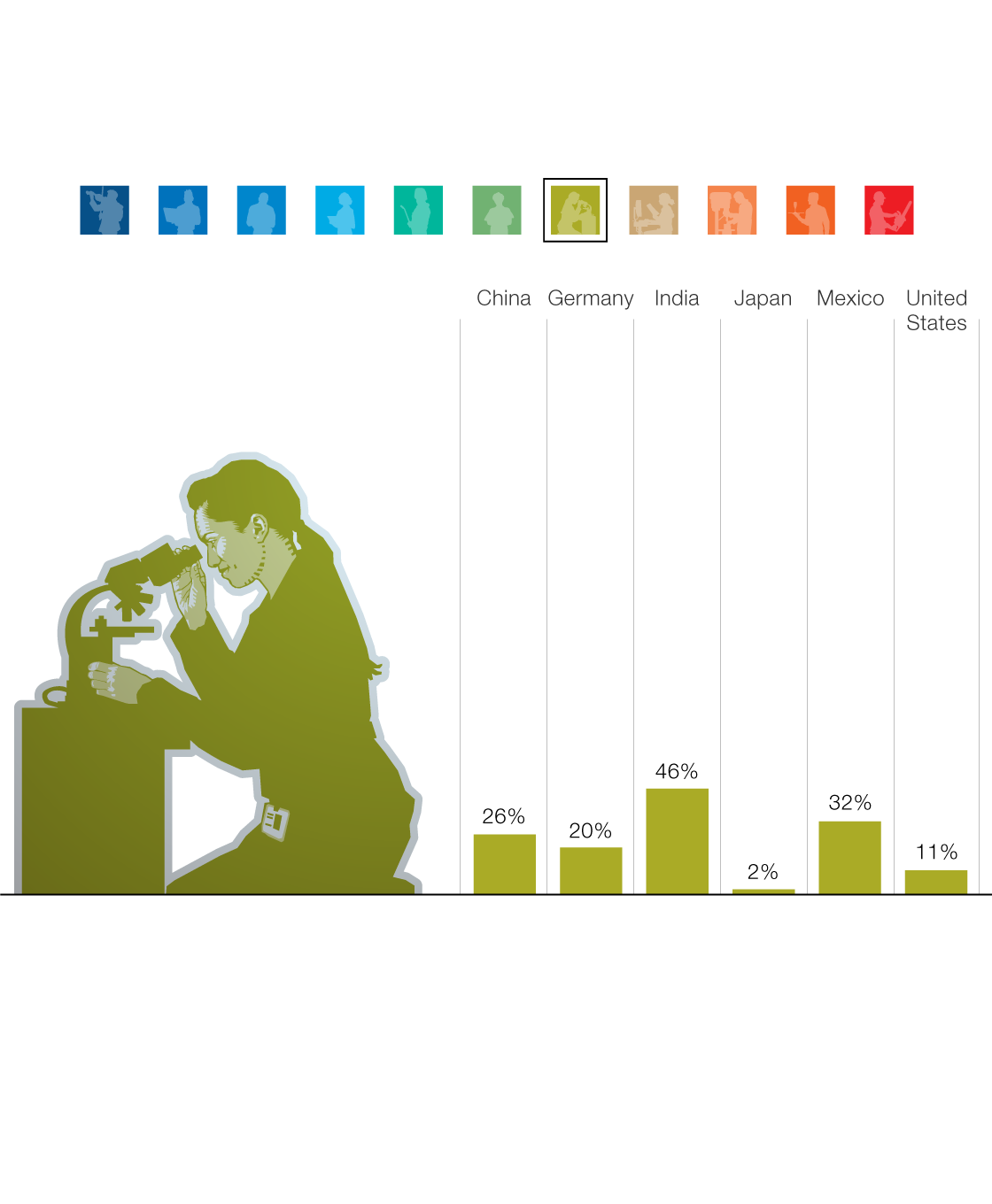
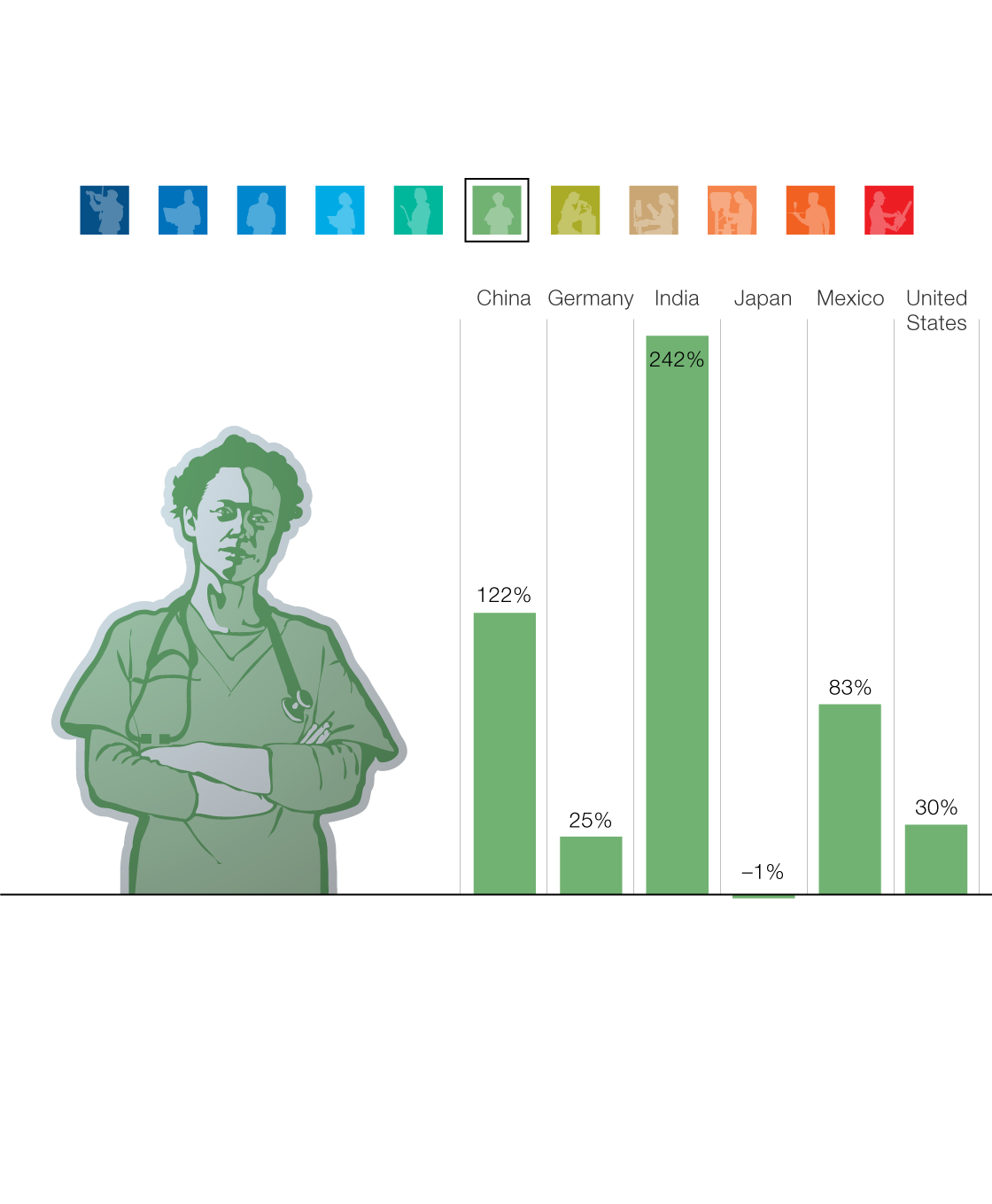
Employment growth and decline by occupation, % change labor demand, midpoint automation
Automation and AI will lift productivity and economic growth, but millions of people worldwide may need to switch occupations or upgrade skills.

NOTE: These estimates of occupational shifts are based on scenarios of work displaced by automation to 2030 and of labor demand created in the same period by selected global trends, including rising incomes; growing healthcare spending for aging populations; stepped-up investment in technology, infrastructure, buildings, and energy; and the marketization of mainly domestic work that is currently unpaid, such as childcare and cooking. The data in this graphic use the midpoint of our automation-adoption range and reflect a "step-up" scenario, under which governments and business leaders make explicit choices to boost job creation over the next 15 years. The data are not a prediction but rather indicative of some of our scenario findings.
Source: US Bureau of Labor Statistics; McKinsey Global Institute analysis


Unpredictable physical work
Includes: Specialized mechanics and repair, emergency first responders, material movers and loaders, machinery installation and repair workers, agricultural field workers, transportation maintenance,
building and grounds cleaners
Customer interaction
Includes: Food-service workers, sales workers (retail and online), therapeutic workers (personal trainers), entertainment attendants, personal-appearance workers, hotel and travel workers

Predictable physical work
Includes: Fine-equipment installation and repair workers, protective services, gaming- industry workers, dishwashers, cleaning- equipment operators, food-preparation workers, general mechanics
Office support
Includes: IT workers, information and record clerks, office-support workers, financial workers (procurement, payroll, etc), administrative assistants

Professionals
Includes: Account managers, engineers, business and financial specialists, lawyers and judges, legal-industry support staff, math specialists, scientists, and academics
Care providers
Includes: Doctors, nurses, physician assistants, pharmacists, therapists, health aides and health support, childcare workers, health technicians,
community and
social workers
Builders
Includes: Building
engineers, architects,
surveyors, construction
workers, installation and
repair workers (buildings
and infrastructure),
crane and tower operators

Managers and executives

Teachers
Includes: Schoolteachers, postsecondary teachers, other education professionals, education support workers

Technology professionals
Includes: Computer engineers, computer specialists

Creatives
Includes: Artists, designers, entertainers,
media workers
