
read it early!
Pick Your Perfect Day in Central Texas
SNEAK PREVIEW!
More Flavor. Less Planning.
Discover all-inclusive vacations designed for effortless and easy international travel. Say hello to endless drinks, fantastic flavors, and unmatched entertainment — all ready and waiting for you.
Terms & Conditions
These vacations are limited and subject to availability. Resort, amenity, and/or cleaning fees may apply. Additional fees for items specific to your stay or for optional services may apply (for example, cleaning fees, parking fees, pet fees, additional guest fees, etc). Refer to resort detail pages at RCI.com/Resort-Directory or call a travel guide for details.
Prior to travel, RCI recommends contacting your host resort as well as local, state, and federal websites for advisories that may impact your travel or vacation experience.


Sweet Parisian pastries, bright Caribbean bites, and aromatic Italian pastas — feeling hungry yet? Explore our top global destinations where flavors come alive through rich tastes, textures, and traditions.
Let Flavor Lead Your 2026 Travels
Canada
Cozy and coastal
Vibe
Maple syrup, poutine, local seafood
Try
Cod fishing
Experience
Italy
La dolce vita
Vibe
Pasta, espresso, gelato
Try
Wine and olive oil tasting
Experience
Greece
Mediterranean magic
Vibe
Souvlaki (meat skewers), gyros, tzatziki
Try
Sunset dinner cruise
Experience
Cancun, Mexico
Spice and sunshine
Vibe
Ceviche, tacos, mezcal
Try
Beachfront dining
Experience
Brazil
Bold and beautiful
Vibe
Feijoada (stew with black beans and pork), caipirinha (rum cocktail), picanha (rump steak)
Try
Brazilian steakhouse
Experience
Puerto
Rico
Caribbean chic
Vibe
Mofongo (mashed plantains with protein), arroz con gandules (rice with pigeon peas), quesitos (cream cheese pastries)
Try
Rum distillery tour
Experience
France
Rustic romance
Vibe
Crêpes and pastries, French cheese, escargots
Try
Pastry-making class
Experience
Caribbean
Island Ease
Vibe
Fried plantains, jerk chicken, rum
Try
Beach grill-out
Experience
Finland
Nature connection
Vibe
Cloudberries, reindeer dishes, salmon soup
Try
Mushroom and berry foraging
Experience
China
Energetic urbanism
Vibe
Soup dumplings, dim sum, Sichuan hot pot
Try
Street food tour
Experience

RCI
EXCHANGE
Las Vegas, Nevada
current city
Curitiba, Brazil
hometown
General Manager, WorldMark Tropicana Avenue & Club Wyndham Tropicana
profession
Rafaela Bortolameolli
name

A
Q
A portable battery charger — because I’m always taking pictures and videos, and you never know when you’ll find an outlet.
What’s the one item you always pack for a vacation?
10/10
Be flexible. I plan my days with a few options in case of weather or unexpected circumstances — vacation is about who you’re sharing it with and the experience, so embrace the unknown.
What’s your No. 1 travel tip?
09/10
I love the beach (I’m Brazilian!), but I also love a great city destination — New York is my favorite especially during the holiday season.
What’s your favorite vacation destination?
08/10
The Sphere — it's a one-of-a-kind Las Vegas experience you can’t replicate anywhere else.
What’s your top must-do activity for owners visiting Las Vegas for the first time?
07/10
Seven Magic Mountains is great for photos and a quick outing. If you’re up for a longer adventure, Zion National Park is about three hours away and makes an incredible day drive.
Do you have a favorite day-drive destination or nearby attraction/activity?
06/10
Red Rock Canyon tours are a must and downtown Las Vegas has some great surprises — like Container Park. Chinatown is another favorite, with some of the most highly rated restaurants in the city.
What are some hidden gems or off-the-beaten-path activities visitors should plan for on their next trip to Las Vegas?
05/10
With a 7-year-old, I love getting outdoors — bike rides and hikes at Red Rock are a favorite. We also enjoy exploring the museums and attractions around town; there are truly endless options in Las Vegas.
What’s your favorite activity or thing to do in Las Vegas?
04/10
Yes — our team plans a fun mix of on-property activities for all ages, including game nights and scavenger hunts. We’re also introducing movie nights by the pool, and we’ve been expanding our seasonal and family-friendly events with experiences like an Easter egg hunt with the Easter Bunny, Meet Santa, and Meet a Superhero Day and our annual Halloween party. These interactive activities give kids (and parents) more ways to connect and make memories beyond crafts.
Are there any regular activities or events held at the resort?
03/10
I love the barbecue areas within the buildings. It is such a nice little retreat to hang out with family and friends. You can hear the birds, cool off in the shade, and have some quality time.
What’s your favorite place on property?
02/10
The complementary shuttle to the Strip and the grocery store, the exceptional service from a friendly, welcoming staff, and the private balcony in every suite.
What are the top three features of the resort?
01/10


Q + A with GM, Rafaela Bortolameolli
INTERVIEW
sunday
saturday
friday


Logan Wannamaker Pottery
On your final day, head north to Black Rock Hot Springs for a relaxing soak in rustic, natural pools along the Rio Grande. Afterward, continue on to Arroyo Seco, a historic, colorful village near Taos known for its laid-back vibe. This 200-year-old community is home to artists, sculptors, and jewelers. Stop in Sol Food Market for farm-to-table breakfast tacos, smoothies, and organic espresso drinks. Visit Scott Carlson, Logan Wannamaker, and Rottenstone potteries for wood-fired ceramics, then browse Arroyo Seco Mercantile for vintage and artisan-made finds.
morning / Afternoon


Juliette (Photo Credit: Alexandra Cancro)
Keep dinner relaxed at Juliette in Hotel Willa. The restaurant highlights seasonal, locally sourced ingredients, including herbs from its own garden. The menu celebrates dishes that reflect the land, spirit, and lineage of Northern New Mexico. Afterward, explore the hotel’s on-site gallery. Rotating exhibitions showcase the rich contemporary art from the region.
Evening

Rio Grande Gorge
After lunch, drive to Rio Grande Gorge. The trailhead for the West Rim Trail, an easy-to-moderate hike that clocks in at just under 9 miles, is just 12 miles northwest of the city. Follow cliffs and rocky outcrops for striking views across the Rio Grande Gorge, a narrow chasm carved by the river over millions of years. A scenic bridge just steps from the parking area offers similarly breathtaking vistas—no hiking required.
Afternoon

Taos Pueblo
Start at Tiwa Kitchen for breakfast, sampling Native American and New Mexican dishes like blue corn pancakes and red chile stew. Hatch chiles are a must, grown exclusively in New Mexico. Then head to Taos Pueblo, a 1,000-year-old community known for multistory adobe homes. Join a half-day tour with Whitefeather Native Cultural Tours, where you’ll connect with the Red Willow people through storytelling, a light communal lunch, and sacred insights.
morning
morning

La Luna
Relax with happy hour cocktails and house-made chips and salsa at The Gorge Bar & Grill, watching the sun set over Taos Plaza from the outdoor patio. For dinner, stroll a block to La Luna, where an Indigenous-forward menu honors ancestral foods with dishes like Prairie Cassoulet (white bean and meat stew) and wild trout with indigenous wild rice.
Evening

Harwood Museum of Art
Linger over lunch at Legacy Cafe at Taos Plaza. Historic photographs, family keepsakes, and fine art—even in the restrooms—tell Taos’ story. Afterward, visit the Couse-Sharp Historic Site to uncover the origins of the Taos art colony inside preserved homes and studios. Finish at the Harwood Museum of Art with the Agnes Martin Gallery, featuring works by the influential 20th-century abstractionist who lived and worked in Taos.
Afternoon

Taos Plaza
Skip the urge to rush museums. Instead, acclimate to Taos’s altitude and unhurried rhythm. Start at Taos Plaza, the historic center of the city. Grab a to-go latte from World Cup, which got its start as a coffee cart in Taos Ski Valley. Wander boutiques, jewelry shops, and galleries featuring Southwestern and contemporary art, including the Michael Gorman Gallery, a Native American-owned space showcasing the creative works of three generations of Navajo artists.
morning
where to stay
Club Wyndham Taos
WRITER Erin Gifford
Taos is celebrated for its high-desert landscapes, artistic heritage, and rich cultural traditions, drawing travelers seeking a relaxed, restorative escape. Over three days, explore its galleries, Indigenous-inspired cuisine, centuries-old Native sites, and striking natural scenery. This itinerary lets you move at a leisurely pace, savoring the flavors, sights, and laid-back charm of Taos.
Find Your Spark in Taos, New Mexico
ITINERARY

Savor the Summit
Concerts on the Slopes
Deer Valley Music Festival
Park Silly Sunday Market
On June 27, Park City's Main Street transforms into a giant annual alfresco dinner party for Savor the Summit. Thousands of guests pull up a seat at the extra-long table, then tuck into gourmet food and craft cocktails from local restaurants.
Savor The Summit
Concerts on the Slopes brings energetic live performances to The Ampetheatre at Canyons Village at Park City Mountain. This outdoor venue has expanded to accommodate additional reserved seats, so bring the whole crew for a night of live rock, jazz, pop, country, or whichever genre gets you dancing.
Concerts on the Slopes
This summer during the Deer Valley Music Festival, the Utah Symphony performs at Snow Park Amphitheater and St. Mary’s Catholic Church.
Deer Valley Music Festival
Enjoy delicious bites while you peruse local wares and listen to live music at this summer street festival. The Park Silly Sunday Market takes place most Sundays through the end of September.
Park Silly Sunday Market
Select Tabs to explore!
Events + Festivals in Park City

where to stay
WorldMark Park City (Club Pass)
Club Wyndham Park City


Fly-fishing will have you feeling truly connected to your surroundings as you cast a line while ankle-deep in a babbling current. Local guides from Park City Fly Fishing and Park City on the Fly know the waters well and can teach beginners all the basics and provide you with necessary gear. Even if you’ve got plenty of experience under your belt, a local guide can help direct you to the best spots. Some popular fly-fishing destinations near Park City include the Lower Provo River, the Weber River, and the Strawberry Reservoir. If all goes well, you can expect to see a wide variety of fish, including rainbow trout, brown trout, and mountain whitefish. And even if you don’t catch precisely what you’re looking for, enjoying time in the sun in the gorgeous natural environment is still a pretty lovely way to spend a day.
Go Fly-Fishing


The long, sunny days and mild temperatures make Park City a world-class hiking destination in the summer months. There’s an abundance of trails for all hiking levels, from easy nature trails that showcase the area’s natural beauty to mountain climbs that will reward you with awe-inspiring views around every turn. Some popular hikes in the area include Armstrong, a 4-mile hike with gorgeous views of the surrounding scenery, and Dawn’s Trail, an easy 3.6-mile hike where you’ll be surrounded by wildflowers during the peak bloom between June and August. Gambel Oak Loop snakes above Old Town Park City for 4.1 miles, offering a multitude of shady spots for water breaks. If Fido wants to get in on the action, he’s welcome on these trails and many others in Park City (provided he’s on a leash).
Take a Hike


Zip through Park City’s lush mountain scenery on the Mountain Coaster, Utah’s longest guest-controlled coaster. Riders have the chance to wind through more than 1 mile of dips and turns at speeds up to 25 mph. Each rider manages their own speed via hand brakes, so you can opt for a gentle scenic glide through Park City’s green summer landscapes or a heart-pounding journey that will leave you feeling exhilarated (and ready to go again). It’s ideal for families, too. Kiddos 54 inches or taller can ride solo, while youngsters who are at least 38 inches tall can coast with an adult. When you’ve had enough fun on the Mountain Coaster, head to the nearby Alpine Slide — a four-track slide, with each route stretching for more than 3,000 feet as riders control their speed as they cruise down the mountainside.
Descend the Downhills


Visitors can still hop on Park City Mountain’s chairlifts and gondolas — just without the skis and snowboard. You’ll have plenty of time to take in the towering trees, bright wildflowers, and animals as you soar over the treetops and enjoy scenic views of the Wasatch Mountains. At the top of Red Pine Gondola, you’ll have easy access to plenty of hiking and biking trails where you can spend the rest of the afternoon before coming back down the mountain. From the lodge, you’ll have easy access to plenty of hiking and biking trails where you can spend the rest of the afternoon before coming back down the mountain. Lifts depart daily from Town Lift, Payday Lift, and Crescent Lift, or you can hop in the Red Pine Gondola departing from Canyons Village.
Descend the Downhills

WRITER Jamie Ballard
Thanks to its snow-capped peaks, Park City has a well-established reputation as a winter haven. But the fun doesn't end when the snow melts. Scenic gondola rides, energetic street festivals, and mountain coasters make Park City an ideal summer escape.
Summer on the Slopes in Park City, Utah
FEATURE
where to stay
WorldMark St. George (Club Pass)
WorldMark Estancia (Club Pass)
where to stay
WorldMark West Yellowstone (Club Pass)
where to stay
WorldMark Estes Park (Club Pass)
where to stay
Club Wyndham Moab
where to stay
Club Wyndham Moab
Check the weather conditions before you venture out. Postpone your hike if rain is in the forecast — it can cause flash flooding in the gorge.
TRIP TIP
The incredibly steep canyon walls throughout Utah’s Zion National Park are incredible to behold from the park’s free shuttle service, but a one-of-a-kind experience awaits on the canyon floor. The Narrows, a skinny gorge with 1,000-foot walls, is where the shallow Virgin River doubles as a hiking trail. If you’re feeling adventurous, pull on a pair of sturdy, closed-toe shoes and hike for as long as you want up the river, taking frequent stops to admire the contrast of the red gorge with the green vegetation surrounding the water. When you’re ready, turn around and trek back to the trailhead, where you can catch a scenic return ride on the shuttle.
Getting your feet wet
PERFECT FOR
Zion National Park

Always stay on the boardwalk when exploring areas that include geothermal features. The ground around the thermal features and their runoff is extremely hot and will cause burns.
TRIP TIP
The world’s first national park, founded in 1872, Yellowstone National Park in the northwest corner of Wyoming is home to more than 10,000 different hydrothermal features — fumaroles, hot springs, mud pots, and the iconic erupting geysers. Plan your day around witnessing Old Faithful fire steam and hot water more than 100 feet into the air, an event that tops the to-do list for many travelers. Named for its regularity, you can expect to see an eruption every 54 to 118 minutes. Castle Geyser doesn’t erupt as regularly (about every 14 hours), but its unique, medieval-esque construction is always worth a visit.
Geysers, baby!
PERFECT FOR
Yellowstone National Park

It can be tempting to get up close to wildlife, but leave plenty of space. Stay at least 100 yards away from predators like bears and mountain lions and at least 50 yards from nonpredators.
TRIP TIP
In north-central Colorado, Rocky Mountain National Park’s meadows, mountains, forests, and tundra form thriving ecosystems that support a multitude of creatures big and small. Bring a pair of binoculars to survey valley floors for multipronged elk near streams, and spy moose near lakes where they like to feast on aquatic plants. Bighorn sheep — named for the males’ large, curved horns — occupy the park’s areas of tundra, but they do descend to places like the Sheep Lakes in the spring and summer. Don’t forget to keep an eye on the sky for raptors like hawks and osprey, owls, and multiple species of bats.
Building your collection of wildlife photos
PERFECT FOR
Rocky Mountain National Park

Many visitors like to carve a path on Canyonlands’ hundreds of miles of unpaved roads. Before you leave the pavement, make sure your car has four-wheel drive and research whether you need a permit.
TRIP TIP
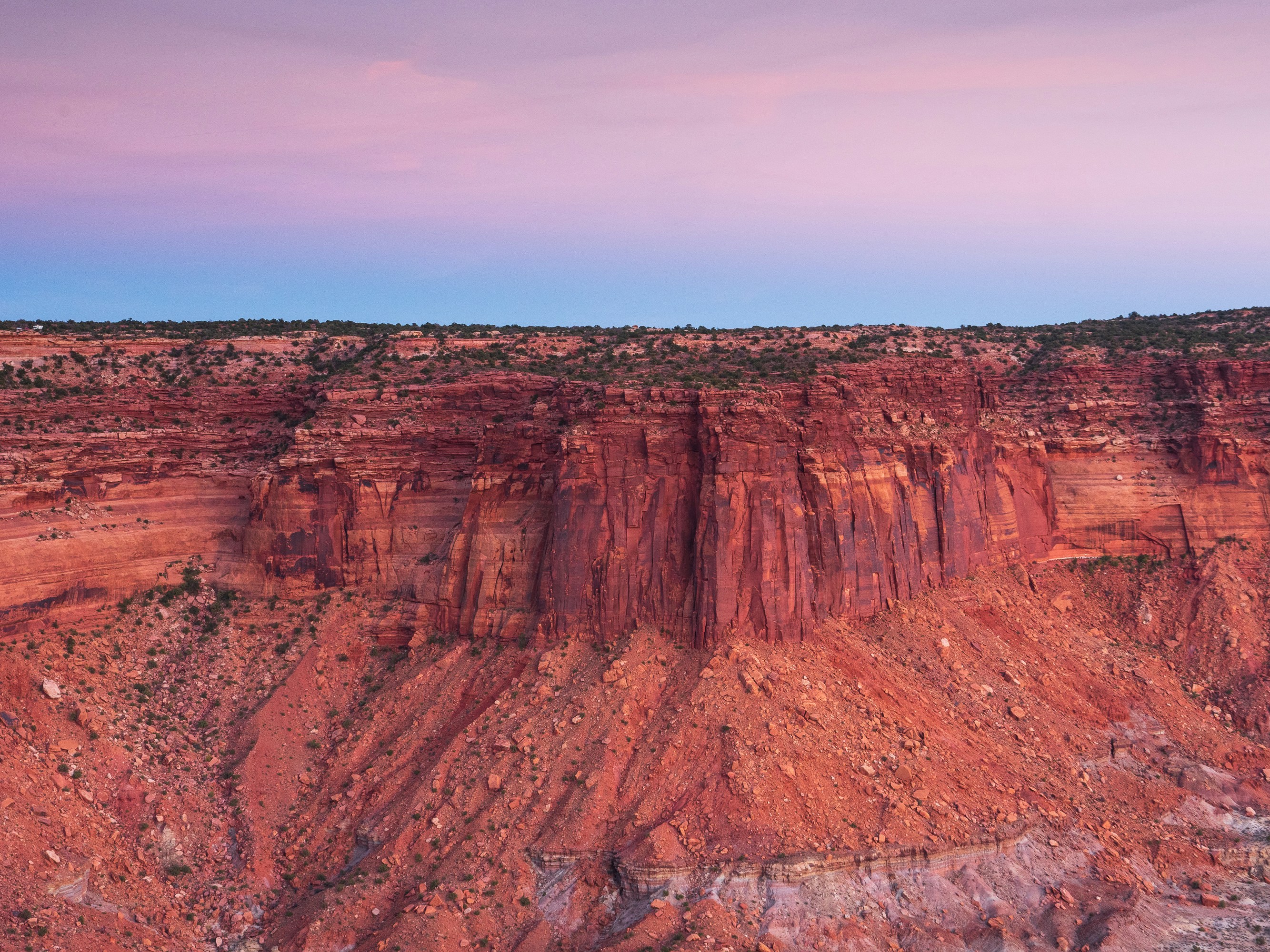
Explore the winding rivers, towering buttes, and red-rock canyons across Utah’s Canyonlands National Park from the comfort of an air-conditioned car (hopefully with some tasty snacks and a finely tuned playlist). Perched on a mesa more than 1,000 feet above the surrounding land, the park’s Island in the Sky district includes a 34-mile paved scenic drive and numerous overlooks for taking in the dramatic views. Afterward, drive a little farther to the scenic route that encircles The Needles, a backcountry collection of multihued sandstone spires. Hop out of the car for short hikes around these rocky towers situated above the grassland.
A desert grand tour
PERFECT FOR
Canyonlands National Park
Summer temperatures at Arches can soar into triple digits, so begin your journey early in the day and bring plenty of water.
TRIP TIP
Millions of years of shifting ground and erosion in eastern Utah formed the dramatic network of sandstone formations in Arches National Park. Start with a short, flat hike (only 0.6 of a mile) along the high desert terrain to the base of Double Arch. Together, these two spans form the tallest arch in the park. The Delicate Arch Trail is a more challenging 3-mile round-trip trek that passes Ute Indian petroglyphs en route to the base of the famous freestanding arch — known for its portrayal on Utah’s license plates.
Hikes through otherworldly landscapes
PERFECT FOR
Arches National Park

WRITER Austin Cannon
Our national parks were our country’s best idea — according to Ken Burns’ documentary, anyway — and America’s 250th birthday is the perfect time to visit these remarkable tracts of untouched canyons, valleys, and forests. If you’re ready for an adventure, here’s how to spend an ideal day in parks across our country’s mountain and desert regions.
The Best Days Ever in Our Western National Parks
highlight


Steamboat
Springs
you Selected...

Estes
Park
you Selected...

Avon
you Selected...

Pagosa Springs
you Selected...

Durango
you Selected...
where to stay
Club Wyndham Steamboat Springs
Make a two-hour pool reservation at Strawberry Park Hot Springs and feel your stress melt away in the natural mineral springs set against a vibrant backdrop of aspen groves. Unwind from your journeys in a series of warm stone pools, then hop in the adjacent cold-water creek to cool off. Day pass guests have access to restrooms and cabins for changing. At Yampa River Botanic Park, wander across 6 acres of ponds, pathways, and more than 60 separate gardens. See the striking, rocky design of the Crevice Garden and spot wildlife in the Hummingbird and Butterfly Gardens. During your visit, look for 19 sculpture pieces scattered throughout the park.
More art awaits at the Steamboat Art Museum, housed in a century-old former bank building downtown. View an impressive selection of regional art on display, and check out the museum gift store — it’s a great place to grab standout souvenirs, like modern prints and stained-glass art. At sunset, dine alfresco at Aurum Steamboat, a waterfront restaurant nestled alongside the Yampa River. Start with duck wings or crispy curried cauliflower before moving onto hearty entrees like coq au vin and grilled lamb chops.
Steamboat Springs

where to stay
Club Wyndham Pagosa
Take in the tranquility of the San Juan National Forest and witness ancient Native American history during a walking tour of Chimney Rock National Monument. The monument is home to the remains of one of the largest Pueblo settlements in southwestern Colorado, dating back to the first or second century. Experience another outdoor wonder at the world’s deepest geothermal hot spring aquifer. To see the famous Mother Spring yourself — and spend some time soaking — get a day pass to The Springs Resort & Spa.
Relish overhead views of Colorado’s sweeping natural beauty during a sunrise ride with Rocky Mountain Balloon Adventures, ascending above the San Juan Mountains for an unforgettable early-morning panorama. Back on the ground, enjoy celebratory champagne and snacks. At Meander Riverside Eatery, indulge in dishes from the seasonally inspired menu — think risotto primavera served with English peas and baby zucchini or braised Berkshire pork shank with Colorado blue corn grits. The restaurant made The New York Times list of top 50 restaurants in 2024.
Pagosa Springs

where to stay
Club Wyndham Resort at Avon
Head to Henry A. Nottingham Park to spend a summer day at Nottingham Lake pedal boating, stand-up paddle boarding, swimming, or just lounging beachside. Away from the water, walk or bike the paths, play tennis or pickleball, or enjoy lunch in the picnic area. Experience more of the outdoors on a nature walk at the Walking Mountains campus. Embark on a gentle guided hike through clusters of aspen trees and riparian ecosystems with a naturalist from the center.
After a long day of exploring, sit down at Vin48 Restaurant and Wine Bar for an incredible selection of pours and a seasonal menu that includes items like Colorado bison tartar or chanterelle and chestnut risotto.
Avon

where to stay
WorldMark Estes Park (Club Pass)
Experience the serenity and splendor of Rocky Mountain National Park’s rugged trails, majestic mountain vistas, and pristine alpine lakes. Take a drive along the dramatic Trail Ridge Road or stroll popular paths for wildlife watching. For a more curated experience, sign up for Green Jeep Tours’ Waterfall Hiking Tour. For more than 2 miles, this guided hiking tour traverses the park’s secluded tracts toward the cascades as hikers learn about the area’s wildlife, geology, and history.
Don’t leave town without taking a ride on the historic red tram at Estes Park Aerial Tram. The tram, which has been operating for 70 years, travels up Prospect Mountain, offering breathtaking views of the Rocky Mountains and the Continental Divide on the way to the summit. At the top, get off to explore hiking trails and grab a bite at the Hungry Chipmunk Cafe. For more eats, reserve a table at Bird & Jim, where favorite dishes include smoked pheasant chowder and elk strip loin.
Estes Park

where to stay
Club Wyndham Durango
Celebrate Durango’s rich rail history with a ride on the Durango & Silverton Narrow Gauge Railroad. Diesel and steam-powered locomotives take visitors through the San Juan National Forest and the Animas River Canyon on a track originally built in the late 1800s. Without cell service for sections of the trip, it’s easy to immerse yourself in the surrounding beauty. Or get a more close-up view of Colorado's natural scenery on horseback. Take the popular two-hour trail ride along the Hermosa Cliffs at Bears Ranch to enjoy the solitude of scenic forest trails and stunning views.
When you’ve worked up an appetite, saddle up at Diamond Belle Saloon, an Old West-inspired spot serving food and drinks inside the former Strater-Thorpe Drugstore. Order traditional American favorites like wings, burgers, or chicken pot pie while soaking up the sounds of nightly live music. Meanwhile, ski destination Purgatory Resort turns into a summer paradise: Zoom down the Inferno Mountain Coaster, feel the breeze while rushing down the winding alpine slide, or enjoy a leisurely ride on the chairlift.
Durango


select Icons
to see the destination
WRITER Hilary Abrahamson
Even without their famous snowfall, Colorado’s mountain towns are still primed for exploration in the summer months — by foot, horseback, or even locomotive. Take on outdoor adventure, immerse yourself in the history and culture, and taste the local flavors in these picturesque places.
Discover Your Next Colorado Destination
Editorial Feature

After Nevada legalized gambling in 1931 (to fight the Great Depression), casinos transformed Las Vegas. The post-World War II boom (1940s–1960s) saw the Flamingo, Sands, and Stardust open on The Strip, buoyed by highway travel and, in some cases, mob money. This put Vegas on the national map. The second wave (late 1980s–2000s) brought corporate investments and themed mega-resorts such as Bellagio Resort and Casino, MGM Grand Hotel and Casino, and The Venetian Resort Las Vegas, elevating Vegas to global destination status.

Las Vegas Casino Boom
Yellowstone — spread across Wyoming, Montana, and Idaho — became the first national park in 1872. The U.S. government continued to establish national park sites on federal lands in the Mountain West, creating the National Park Service in 1916. New Deal programs like the Civilian Conservation Corps made these remote places accessible to travelers. Utah became an NPS star with its Mighty Five iconic parks: Arches, Bryce Canyon, Canyonlands, Capitol Reef, and Zion.

National Parks Expansion
Completed in 1936, the massive Hoover Dam, built on the Nevada-Arizona border, corralled the wild Colorado River, preventing floods and providing water and electricity that powered the growth of cities like Los Angeles, Las Vegas, and Phoenix. Today, Lake Mead, the dam’s vast reservoir, irrigates 2 million acres of farmland, enabling large-scale agricultural production in the Mountain West. Lake Mead National Recreational Area, managed by the National Park Service, is a top site. It welcomed 6.1 million visitors in 2025.

Construction of Hoover Dam
In 1863, two companies combined to build the first coast-to-coast railroad: The Central Pacific laid track east from California, and the Union Pacific worked west from Nebraska. In 1869, the tracks met at Promontory Summit in Utah — joined by a golden spike. The 1,900-mile route made travel and shipping faster and easier, especially in the Mountain West, where settlement, trade, and industry moved full steam ahead. But the project also displaced Native peoples.

Building of the Transcontinental Railroad
There’s gold in them thar hills — er, mountains. A decade after 1848’s California gold rush began, the precious metal was discovered along the South Platte River in the Colorado Rockies. That set off the Pikes Peak gold rush, when thousands of prospectors blanketed the area. Mining camps and supply towns became cities such as Denver, Boulder, and Golden. The gold rush sped up settlement of Colorado, kick-started its infrastructure, and led to statehood in 1876.

Colorado Gold Rush
WRITER Gary Thompson
As the United States turns 250, turn your attention to these historical milestones that shaped the Mountain West: gold fever, marvels of engineering and nature, and casinos royale.
Regional Milestones
checking in

Club Wyndham Bali Hai Villas
Princeville, Hawaii
Resort
Terry T., Bellingham, Washington | Owner since 2017
Name
Spring
winner!
2026 Destinations Spring Photo Contest Winner
Results
CLUB WYNDHAM TRAVEL
BONUS TIME
MAINTENANCE FEES
START TRAVELING
Why choose between land or sea when you can have both? Pair your Club Wyndham resort stay with an unforgettable cruise and let Club Wyndham Travel handle the details. From booking the perfect itinerary to coordinating every step of your journey, these experts make planning your “surf and turf” getaway seamless.
This flexible approach unlocks the best of both worlds — relaxation on land and adventure at sea — whether you’re new to combining a resort stay with a cruise or already hooked on the experience. With insider knowledge of cruises and your ownership benefits, the travel team helps you maximize every moment, so all you have to do is pack your bags and get ready to explore.
Surf & Turf: Book a Land & Sea Package
CLUB WYNDHAM TRAVEL
BOOK BONUS TIME
Sometimes the best getaways aren’t planned — they’re sparked in the moment. With Bonus Time, you can turn spontaneity into a smart escape. Book within 14 days of arrival at a Club Wyndham resort and pay with a credit card at an owner-exclusive rate, saving your points for a future stay.
For everything from a last-minute flight to a quick road trip, Bonus Time makes it easier to say “yes” without hesitation. There’s no limit to time spent with the people who matter most, so don’t let your points balance hold you back. When the urge to explore hits, follow it. Bonus Time is ready when you are, online or by phone with a Vacation Guide.
Book Now & Go with Bonus Time
BONUS TIME
WATCH SERIES
Your maintenance fees are always working behind the scenes to ensure that every stay feels effortless from the moment you arrive. From daily operations like housekeeping, utilities, and landscaping to major projects like renovations and suite upgrades, these fees keep your resorts in peak condition year-round. They cover everything from pool upkeep and gym equipment to fresh interiors, exterior painting, and even parking lot improvements.
And now you can actually watch your maintenance fees at work with a new video series hosted by HGTV’s Ty Pennington. Come along and experience a resort renovation in Branson, Missouri –– from the project management to the interior design and the demolition to the finished product.
Watch Your Maintenance Fees at Work
MAINTENANCE FEES
CLUB WYNDHAM TRAVEL
BONUS TIME
MAINTENANCE FEES


Stay Connected with Your Club!
OWNER GROUP
Club News
owner info
Our America 250 journey heads east, into a landscape
shaped by rugged mountains and vast deserts. In this issue,
we explore the awe-inspiring Western National Parks and showcase the striking beauty of Colorado, Utah, and New Mexico. Along the way, we dive into the defining moments that helped shape the region. And when you're ready for a change of scenery, these prized destinations will reveal some of the nation's most storied and spectacular treasures.
About the Issue

Issue Features
Club News
Photo Contest Winner 2026
Regional Milestones
Discover Your Next Colorado Destination
Our Western National Parks
Summer on the Slopes in Park City, Utah
Find Your Spark in Taos, New Mexico
Q + A with Rafaela Bortolameolli
RCI Exchange
SNEAK PREVIEW! Fall Issue
MASTHEAD

EDITORIAL DIRECTOR Kylee Krizmanic
PROJECT EDITOR Allison Vancura
GRAPHIC DESIGNER Maddy Lickteig, Ruby Pierce
CONTRIBUTING WRITERS Hilary Abrahamson, Jamie Ballard, Austin Cannon, Erin Gifford, Gary Thompson
COPY EDITOR Diane Penningroth
WYNDHAM DESTINATIONS EDITORIAL TEAM Anna Reinert, Leslie Johansen, Jenny Rains, Karen Johnson
Destinations Editor
501 W. Church St.,
Orlando, FL 3280
WorldMarkbyWyndham.com
ClubWyndham.com
MargaritavilleVacationClub.com
ShellVacationsClub.com
Destinations is produced quarterly for WorldMark, Margaritaville Vacation Club, and Club Wyndham owners, and semiannually for Shell Vacations Club members.
©2026 Wyndham Resort Development Corporation; Wyndham Vacation Resorts, Inc; Shell Vacations Club, LP.
All rights reserved.
Email Us
MASTHEAD

Mountains & Deserts
scroll down for more!
Summer issue 2026

Na Pali Coast
Enter the 2026 Photo Contest
ENTER TODAY
Submit your favorite Club Wyndham vacation photo and you’ll be entered for a chance to win one of four quarterly prizes or a travel-inspired, grand-prize package.
Summer issue 2026
The Best Days Ever in Our Western National Parks
highlight
Our national parks were our country’s best idea — according to Ken Burns’ documentary, anyway — and America’s 250th birthday is the perfect time to visit these remarkable tracts of untouched canyons, valleys, and forests. If you’re ready for an adventure, here’s how to spend an ideal day in parks across our country’s mountain and desert regions.
Millions of years of shifting ground and erosion in eastern Utah formed the dramatic network of sandstone formations in Arches National Park. Start with a short, flat hike (only 0.6 of a mile) along the high desert terrain to the base of Double Arch. Together, these two spans form the tallest arch in the park. The Delicate Arch Trail is a more challenging 3-mile round-trip trek that passes Ute Indian petroglyphs en route to the base of the famous freestanding arch — known for its portrayal on Utah’s license plates.
Arches National Park
WRITER Austin Cannon
Explore the winding rivers, towering buttes, and red-rock canyons across Utah’s Canyonlands National Park from the comfort of an air-conditioned car (hopefully with some tasty snacks and a finely tuned playlist). Perched on a mesa more than 1,000 feet above the surrounding land, the park’s Island in the Sky district includes a 34-mile paved scenic drive and numerous overlooks for taking in the dramatic views. Afterward, drive a little farther to the scenic route that encircles The Needles, a backcountry collection of multihued sandstone spires. Hop out of the car for short hikes around these rocky towers situated above the grassland.
Canyonlands National Park
In north-central Colorado, Rocky Mountain National Park’s meadows, mountains, forests, and tundra form thriving ecosystems that support a multitude of creatures big and small. Bring a pair of binoculars to survey valley floors for multipronged elk near streams, and spy moose near lakes where they like to feast on aquatic plants. Bighorn sheep — named for the males’ large, curved horns — occupy the park’s areas of tundra, but they do descend to places like the Sheep Lakes in the spring and summer. Don’t forget to keep an eye on the sky for raptors like hawks and osprey, owls, and multiple species of bats.
Rocky Mountain National Park
where to stay
Club Wyndham Moab
where to stay
Club Wyndham Moab
where to stay
WorldMark Estes Park (Club Pass)
Mountains & Deserts
scroll down for more!
Hikes through otherworldly landscapes
PERFECT FOR
TRIP TIP
Summer temperatures at Arches can soar into triple digits, so begin your journey early in the day and bring plenty of water.
PERFECT FOR
A desert grand tour
Many visitors like to carve a path on Canyonlands’ hundreds of miles of unpaved roads. Before you leave the pavement, make sure your car has four-wheel drive and research whether you need a permit.
TRIP TIP
Building your collection of wildlife photos
PERFECT FOR
It can be tempting to get up close to wildlife, but leave plenty of space. Stay at least 100 yards away from predators like bears and mountain lions and at least 50 yards from nonpredators.
TRIP TIP
Always stay on the boardwalk when exploring areas that include geothermal features. The ground around the thermal features and their runoff is extremely hot and will cause burns.
TRIP TIP
The world’s first national park, founded in 1872, Yellowstone National Park in the northwest corner of Wyoming is home to more than 10,000 different hydrothermal features — fumaroles, hot springs, mud pots, and the iconic erupting geysers. Plan your day around witnessing Old Faithful fire steam and hot water more than 100 feet into the air, an event that tops the to-do list for many travelers. Named for its regularity, you can expect to see an eruption every 54 to 118 minutes. Castle Geyser doesn’t erupt as regularly (about every 14 hours), but its unique, medieval-esque construction is always worth a visit.
Geysers, baby!
PERFECT FOR
Yellowstone National Park
where to stay
WorldMark West Yellowstone (Club Pass)
Check the weather conditions before you venture out. Postpone your hike if rain is in the forecast — it can cause flash flooding in the gorge.
TRIP TIP
The incredibly steep canyon walls throughout Utah’s Zion National Park are incredible to behold from the park’s free shuttle service, but a one-of-a-kind experience awaits on the canyon floor. The Narrows, a skinny gorge with 1,000-foot walls, is where the shallow Virgin River doubles as a hiking trail. If you’re feeling adventurous, pull on a pair of sturdy, closed-toe shoes and hike for as long as you want up the river, taking frequent stops to admire the contrast of the red gorge with the green vegetation surrounding the water. When you’re ready, turn around and trek back to the trailhead, where you can catch a scenic return ride on the shuttle.
Getting your feet wet
PERFECT FOR
Zion National Park
where to stay
WorldMark St. George (Club Pass)

WorldMark Estancia (Club Pass)