Everyone’s obsessing over protein—and�for good reason.
As the building block for muscle, this macronutrient �is essential to your longevity. It’s the fuel that supports stronger bodies, a healthier metabolism, and robust immune system.* ��Still there are a lot of misconceptions around protein (and how to game plan more of it into your day). Build your winning strategy with The Protein Playbook. This team effort from The Vitamin Shoppe x mindbodygreen breaks down the basics to help you start building the ultimate protein routine.
The Intake: �How Much Protein
�Do You Need
Chapter 2
WTCP:�When To�Consume Protein
Chapter 3
shp plnt : �Finding A Quality Plant Protein
Chapter 4
The Essentials: �Why We �Need Protein
Chapter 1
®
Protein is the body’s MVP. This essential nutrient is the building block for muscles, bones, skin, hair, and more—and it’s vital to a variety of bodily functions.*
The Essentials:�Why We�Need Protein
Chapter 1
Muscle Repair & Growth: Your muscles break down after workouts. Protein supports muscle repair by providing the amino acids needed to build new muscle tissue.* Muscle Repair & Growth:
While your body creates protein using amino acids, it’s only able to create 11 of the 20 amino acids. The other nine “essential” amino acids must come from food.
Summary: Protein breaks down into amino acids2 to support muscle repair, immune health, hormonal balance, energy levels, and enzyme function.* Your body can create some amino acids, but the nine essential amino acids must come from food.
Immune Support: Select amino acids—including arginine, glutamine, and cysteine—which are the main component of protein, promote immune health.1*
Hormonal Balance: Not only are amino acids from protein needed by the body to build hormones, but the cell receptors that hormones bind to are also made with protein.
Energy Production: Protein can be used as energy when needed—though it’s not the body’s first choice—especially during long workouts or periods of calorie deficit.*
Enzyme Function: Many enzymes that speed up chemical reactions in the body are proteins. They help digest food, �build new tissue, and carry out other essential processes.
People over 65 may need to increase protein intake since the body uses protein less efficiently4 as we age.
Early research shows there’s a greater protein turnover5 during the luteal phase of the menstrual cycle that may cause protein needs to increase.
Perimenopause & menopause alters hormones and body composition to adjust protein needs.
Your optimal protein intake varies based on age, weight, activity �level, and goals. Expect protein needs to evolve throughout your �life depending on your body’s needs. ��Although the recommended dietary allowance (RDA) for the average sedentary adult is a conservative 0.8 grams per kilogram �of body weight per day (g/kg/d), research shows we can benefit �by consuming closer to 100g of protein to promote overall health.*��In fact, the Journal of the International Society of Sports Nutrition (ISSN) says active people looking to promote muscle growth or maintenance should eat 1.4 to 2.0 grams of protein per kilogram of body weight.3* ��A few instances where your protein needs will evolve:
Summary: Aim to consume 1.2 to 2.0 grams of protein per kilogram of body weight for optimal health—but always consult with your doctor on exact needs.
The Intake:�How Much�Protein Do
You Need
Chapter 2
Summary: Spread protein consumption throughout the day and aim to consume protein within two hours of starting (or finishing) your workout.
WTCP:�When To�Consume�Protein
Chapter 3
It’s time to bust a huge protein myth. Many fitness buffs and gymgoers claim you should consume protein within 60 minutes �of your workout—but there’s more flexibility6 than you think.��The 60-minute marker was believed to be the duration of the body’s anabolic window or a period of heightened muscle protein synthesis. However the latest research suggests the anabolic effect of exercise can last up to 24 hours.3��That’s why dietitian and fitness coach Holly Baxter previously told mindbodygreen6 that she recommends clients aim to consume protein within two hours of starting (or finishing) their workout. Her comments are backed by research showing eating protein in the hours leading up to a high-intensity resistance training workout helped enhance fat loss and increase training volume7 in a group of adult women.��Still if gains are your end goal, then you should also be mindful of distributing your protein intake8 throughout the day—and that includes breakfast. The first meal of the day is the most important for muscle protein synthesis9 (MPS) i.e. the metabolic process when new muscle proteins are formed.
Consuming enough protein isn’t just about quantity; it’s about quality, too. There’s a big misconception that plant proteins are
�not “complete” or don’t have all nine amino acids. ��While that’s not necessarily true, plant proteins will have varying levels of these amino acids—and that impacts how our body is able to utilize them. Paying close attention to the amino acid
profile of plant protein is essential to finding a high-quality
protein powder.��We also recommend keeping a close eye on leucine. This amino acid is most involved in muscle growth. It activates mTOR,
a signaling pathway that's responsible for stimulating protein synthesis10. Along with soy, pea and brown rice protein typically
have the highest amount of leucine of all plant-based proteins.
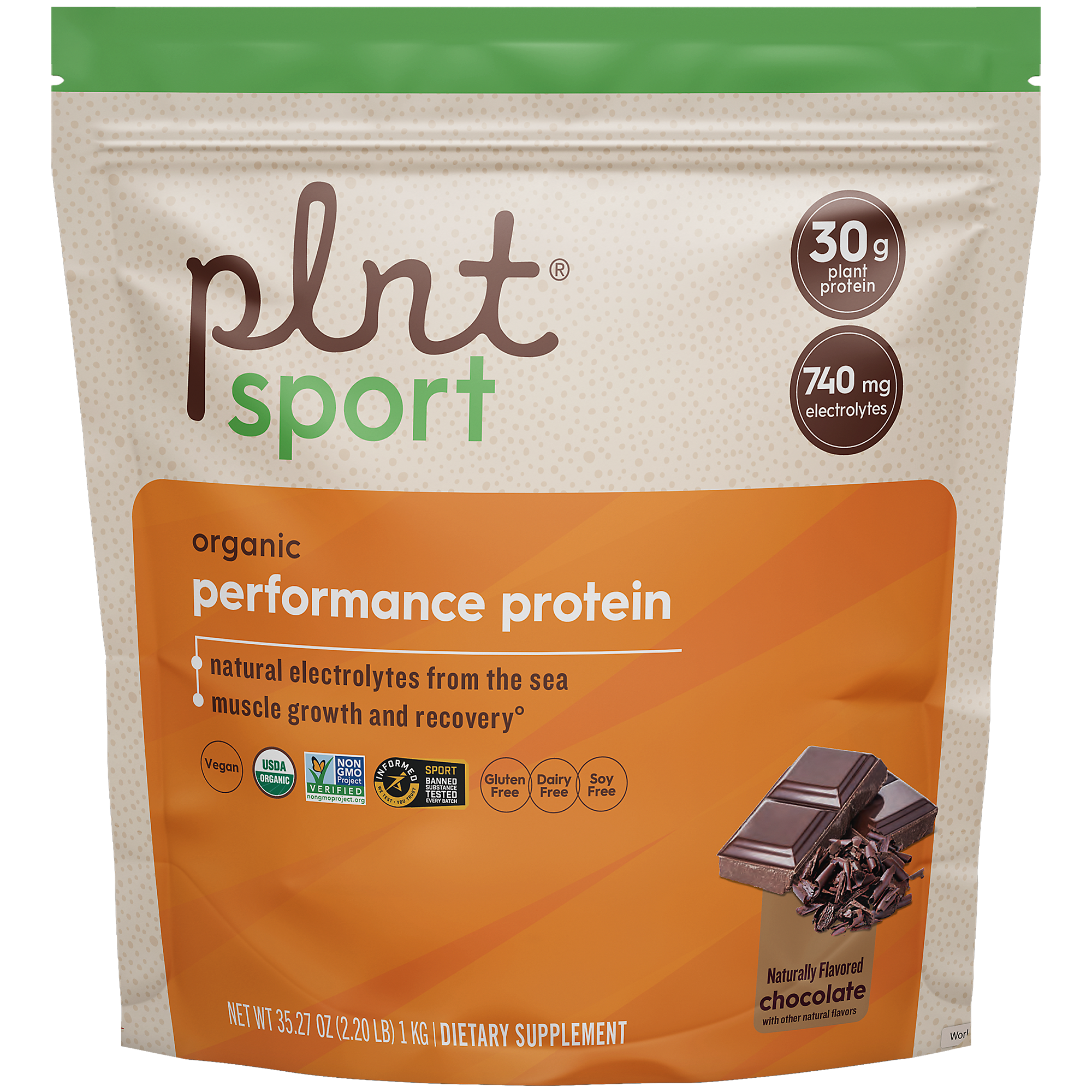
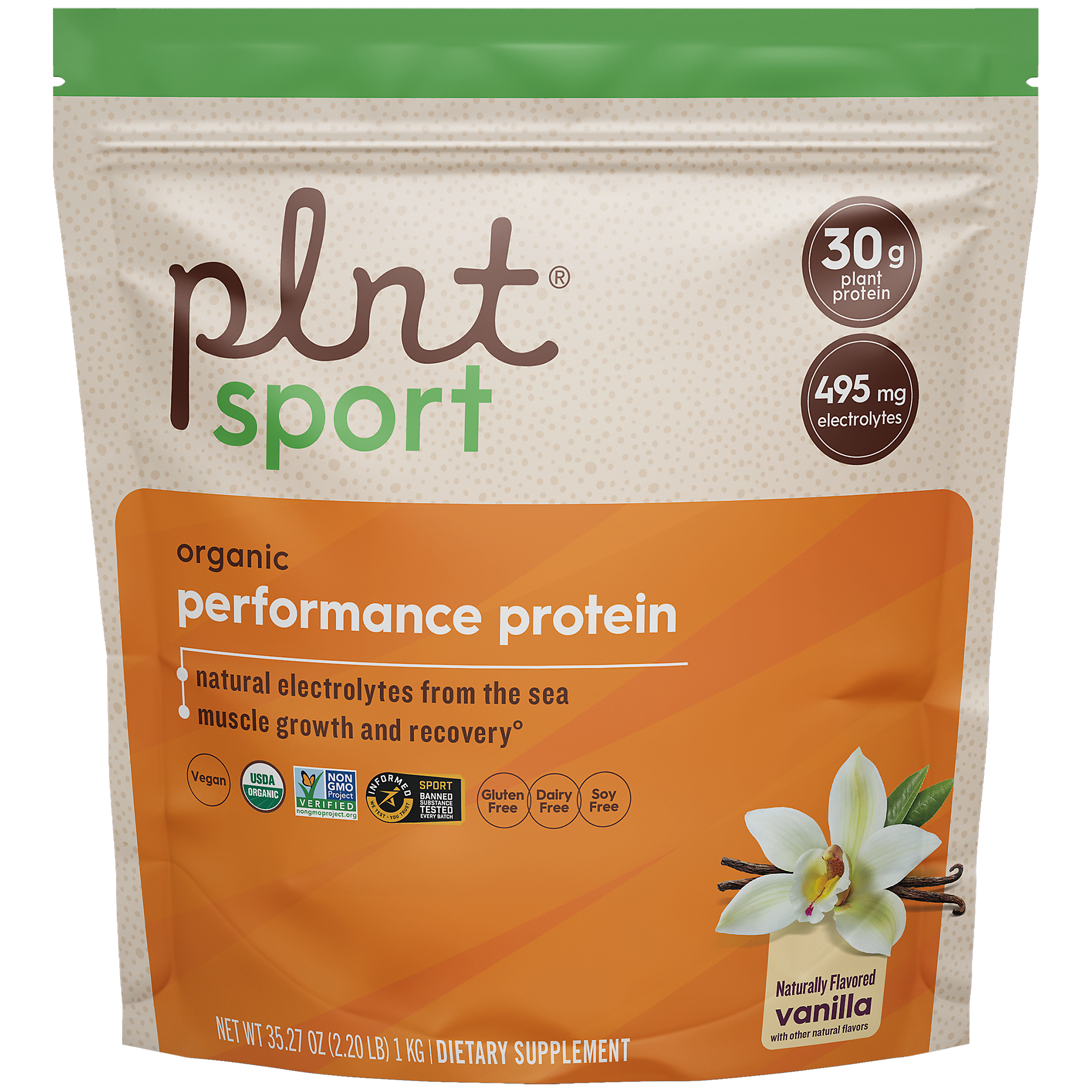
plnt® Sport Organic Performance Protein is a prime example of a quality plant-based protein. It combines a collection of different plant proteins—pea, brown rice, and pumpkin seed—to create a more robust amino acid profile. Each serving has about 2.3g of leucine on average (which is more than your typical plant protein). ��Plus, this supercharged formula is great for promoting muscle growth and recovery thanks to the additions of botanicals to support recovery and mineral blends to encourage electrolyte balance.*
shp plnt :�Finding A�Quality Plant�Protein
Chapter 4
®
The Protein Playbook

Building Your �Protein Routine
SHOP THE PLAYBOOK
Meeting your protein goals just got easier. plnt® Sport Organic combines 30g of plant protein with probiotics, enzymes, and minerals to promote muscle growth and recovery—all with the right amount of BCAAs.*
BACK TO TOP
Plnt Organic Performance Protein
Vanilla
$55

TRY NOW
Plnt Organic Performance Protein
Chocolate
$55
TRY NOW
*These statements have not been evaluated by the Food �and Drug Administration. These products are not intended �to diagnose, treat, cure, or prevent any disease.
references
British Journal of Nutrition
Mindbodygreen
Journal of the International Society of Sports Nutrition
Journal of Cachexia, Sarcopenia and Muscle
Springerplus
mindbodygreen
Journal of Science and Medicine in Sport
The Journal of Nutrition
The Journal of Physiology
Frontiers in Physiology
Energy Production: Protein can be used as energy when needed—though it’s not the body’s first choice—especially during long workouts or periods of calorie deficit.*
Enzyme Function: Many enzymes that speed up chemical reactions in the body are proteins. They help digest food, build new tissue, and carry out other essential processes.
While your body creates protein using amino acids, it’s only able to create 11 of the 20 amino acids. The other nine “essential” amino acids must come from food.
Summary: Protein breaks down into amino acids2 to support muscle repair, immune health, hormonal balance, energy levels, and enzyme function.* Your body can create some amino acids, but the nine essential amino acids must come from food.
The Essentials:�Why We�Need Protein
Chapter 1
Energy Production: Protein can be used as energy when needed—though it’s not the body’s first choice—especially during long workouts or periods of calorie deficit.*
Your optimal protein intake varies based on age, weight, activity level, and goals. Expect protein needs to evolve throughout your �life depending on your body’s needs. ��Although the recommended dietary allowance (RDA) for the average sedentary adult is a conservative 0.8 grams per kilogram of body weight per day (g/kg/d), research shows we can benefit �by consuming closer to 100g of protein �to promote overall health.*��In fact, the Journal of the International Society of Sports Nutrition (ISSN) says active people looking to promote muscle growth or maintenance should eat 1.4 to �2.0 grams of protein per kilogram of �body weight.3* ��A few instances where your protein �needs will evolve:
Summary: Spread protein consumption throughout the day and aim to consume protein within two hours of starting (or finishing) your workout.
The Intake:�How Much�Protein Do
You Need
Chapter 2
It’s time to bust a huge protein myth. Many fitness buffs and gymgoers claim you should consume protein within 60 minutes �of your workout—but there’s more flexibility6 than you think.��The 60-minute marker was believed to be the duration of the body’s anabolic window or a period of heightened muscle protein synthesis. However the latest research suggests the anabolic effect of exercise can last up to 24 hours.3��That’s why dietitian and fitness coach Holly Baxter previously told mindbodygreen6 that she recommends clients aim to consume protein within two hours of starting (or finishing) their workout. Her comments are backed by research showing eating protein in the hours leading up to a high-intensity resistance training workout helped enhance fat loss and increase training volume7 in a group of adult women.��Still if gains are your end goal, then you should also be mindful of distributing your protein intake8 throughout the day—and that includes breakfast. The first meal of the day is the most important for muscle protein synthesis9 (MPS) i.e. the metabolic process when new muscle proteins are formed.
Summary: Spread protein consumption throughout the day and aim to consume protein within two hours of starting (or finishing) your workout.
WTCP:�When To�Consume�Protein
Chapter 3
®
Plnt Organic Performance Protein
Vanilla
$55
TRY NOW