Exchange-traded funds, or ETFs, have become one of the most successful products in modern investing. Once regarded as specialist investment products, they are now a familiar part of pension portfolios, digital investment platforms and long-term savings plans. What still feels relatively new for many investors is already core for institutional investors.
The next phase of the evolution of ETFs could be even more significant. PwC’s latest research suggests that the market is entering a faster, broader phase of growth.
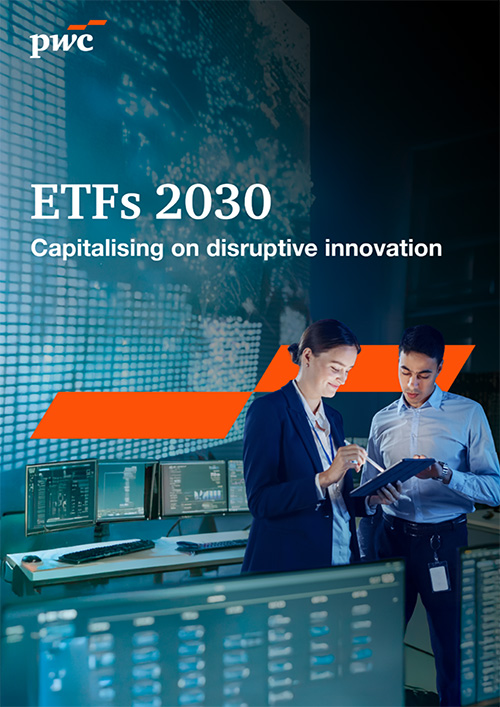
“ETFs are a type of fund that allow investors to access different assets, such as equities and bonds, at once,” says Marie Coady, partner and Global ETF Leader at PwC Ireland. PwC’s report, ETFs 2030: Capitalising on Disruptive Innovation, based on the views of 72 executives, found that more than a third expect global ETF assets under management to reach US$35 trillion or more by June 2030.
Exchange-traded funds are rapidly gaining mainstream traction, and Ireland is strongly positioned to benefit, says Marie Coady of PwC Ireland
SHARE


FROM GAA TO GLOBAL MARKETS

SPONSORED CONTENT
Marie Coady, partner and Global ETF Leader at PwC Ireland
Caption kicker
This is a caption, this is a caption, The film is Dune (1984)
Download
ETFs 2030:
Capitalising
on disruptive
innovation
Should run on the image...
Ireland’s ETF moment

Caption kicker
This is a caption, this is a caption, this is a caption.
Illustration or photography credit runs at bottom. 12pt Montserrat, normal, 10 kerning
Coady did not set out with any grand plan for a career in finance. While studying law and business at UCD, she was unsure what direction to take until friends persuaded her to apply for PwC’s graduate programme. At the time, she was also playing inter-county GAA and wanted an employer that would support that commitment.
“I landed on my feet in PwC,” she says. Coady believes that sport helped shape her approach to business, with its emphasis on teamwork, resilience and calmness under pressure.
That early period coincided with the rise of ETFs to become one of the strongest growth areas in asset management. As PwC teams travelled internationally to explain why Ireland was an attractive base for asset managers, Coady became more deeply involved.
“I loved meeting people, building relationships and winning work,” she says. It also took time, she says, to understand the bigger picture and the particular nuances of Ireland’s funds industry.
And if you have T&CS, same font size as the credit. Lorem ipsum dolor sit amet, consectetur adipiscing elit. Pellentesque at dui lorem. Nullam scelerisque libero arcu, pellentesque fermentum enim lacinia sit amet. Morbi auctor, est eget rutrum rutrum, urna diam ultricies orci, et ultricies mauris orci nec risus. Cras rhoncus tempus sem, in cursus eros. Donec eu massa eget dui ultrices gravida sit amet eget velit. Ut tincidunt aliquet tincidunt. Nulla facilisi.
LOGO
The appeal of ETFs is often reduced to three things: cost, access and diversification. Coady agrees, but says their growth reflects a wider shift in investor behaviour. Most ETFs track indices rather than relying on stock-picking managers, which helps keep fees down and makes the product easier to understand. They can also be bought and sold during market hours, like shares, through brokers and, increasingly, directly through digital platforms and, increasingly, neobanks. For long-term savers, that mix of simplicity, transparency and convenience is hard to ignore.
PwC expects the market to broaden further. If the first phase of ETF growth was driven by low-cost passive investing, the next looks more varied. Active ETFs and digital asset ETFs are both expected to grow. Tokenisation is another area to watch. In simple terms, this means representing ownership rights in an asset as digital tokens on blockchain infrastructure. PwC’s analysis suggests tokenised assets under management could rise sharply by 2030. Coady sees practical benefits: faster settlement, lower distribution costs, fractional ownership and easier cross-border access.
Artificial intelligence is also moving quickly up the agenda and is key to enabling much of the change. More than 80 per cent of respondents to PwC’s survey expect AI to have a moderate or significant effect on ETF operations over the next two to three years. Coady believes AI can help managers “enhance efficiency, reduce costs, optimise investment returns and manage risks”. But technology on its own is not enough. Talent, regulation and investor education will all help determine how far and how fast the market develops.
WHY ETF GROWTH CONTINUES
Ireland is well placed to benefit. It is the largest ETF domicile outside the US, with more than 70 per cent of European ETF assets serviced here. Ireland’s ETF industry finished 2025 at a record US$2.2 trillion, up from US$1.6 trillion a year earlier, with net inflows of US$261 billion. Coady argues that Ireland has the ecosystem, talent base and regulatory credibility to remain at the forefront of the sector’s next stage. To stay there, she says, the country must remain competitive and keep its frameworks fit for purpose.
There is also a domestic challenge. If Ireland wants to deepen its own investment culture, it must address tax rules that still discourage many Irish savers from using funds and ETFs. By 2030, ETFs may still look familiar on the surface: enabling a direct route into diversified investing. Underneath, however, the machinery may look very different. If the next leap is driven by tokenisation, AI and digital distribution, Ireland will not just benefit from it, but help to define it.
IRELAND’S OPPORTUNITY


Ireland is well placed to benefit. It is the largest ETF domicile outside the US, with more than 70 per cent of European ETF assets serviced here