


VAPING:
As rates rise rapidly, Annabelle Love speaks to experts about vaping and the associated dangers
THERE has been a sharp increase in the use of vapes in recent years - with the numbers of young people using them rising rapidly.
More than 40 per cent of children and teenagers say they've tried vapes by the time they reach S4.
Now the Scottish Government has launched a campaign to tackle the rocketing rates, highlight the health risks – and urge parents to talk to their kids now, before they try it.
It is vital to get the message about the possible dangers across to them early. The sooner you start this conversation, the better.
You’ll find all you need to know as a parent, including the health risks for children and young people – and how to help them – right here.
WHAT PARENTS NEED TO KNOW
“We have concerns about the possible future impact on the lungs of young people who are using vapes now.”
ONE of the main issues with vapes - which often look like everyday items such as pens or USB sticks - is that it's not yet known what the long-term health impacts are.
But what experts do know is that vapes - which are illegal for retailers to sell to under 18s and for adults to buy for under 18s - can contain nicotine and may quickly become harmfully addictive to children and young people, affecting their mood, mental health and sleep.
Nicotine addiction can affect their ability to concentrate and learn and, in the long term, it is possible that vaping could harm the health of their hearts and lungs.
Vapes can contain chemicals that may be harmful to health and they can also contain substances that irritate the lungs

PUBLIC health expert Professor Linda Bauld, from the University of Edinburgh, says that, while vapes are much less harmful than cigarettes, they still contain toxic chemicals and carcinogens – substances that can cause cancer – and many contain nicotine too.
She explained: “Many of these products contain nicotine, which is addictive, so children and young people who start using vapes are more likely to keep using them and become dependent.
“We know nicotine addiction can affect young people’s mental health, with nicotine withdrawal making them feel stressed and anxious and it can also affect their ability to study or disrupt their sleep.
“Vapes are significantly less harmful than smoking cigarettes or tobacco, but they still contain chemicals that can irritate the lungs.
“If the toxins and carcinogens in vapes build up in the body over a long time we may see a link with things like some types of cancer, but we do not have that evidence at the moment.
“There is simply not enough data to know what the long-term health risks of vaping are, because these products have not been on the market for long enough. It could be 10 years before that information is available, so we should be really cautious.
“We have concerns about the possible future impact on the lungs of young people who are using vapes now."
Another key point – especially relevant to young people who are increasingly concerned about climate change – is the environmental impact of disposal vapes.
IT'S GOOD TO TALK
The more openly you can discuss vaping, the more likely it is that your child or young person will feel able to come to you if their friends are pressuring them to try it – or if they’ve started vaping and want to stop.
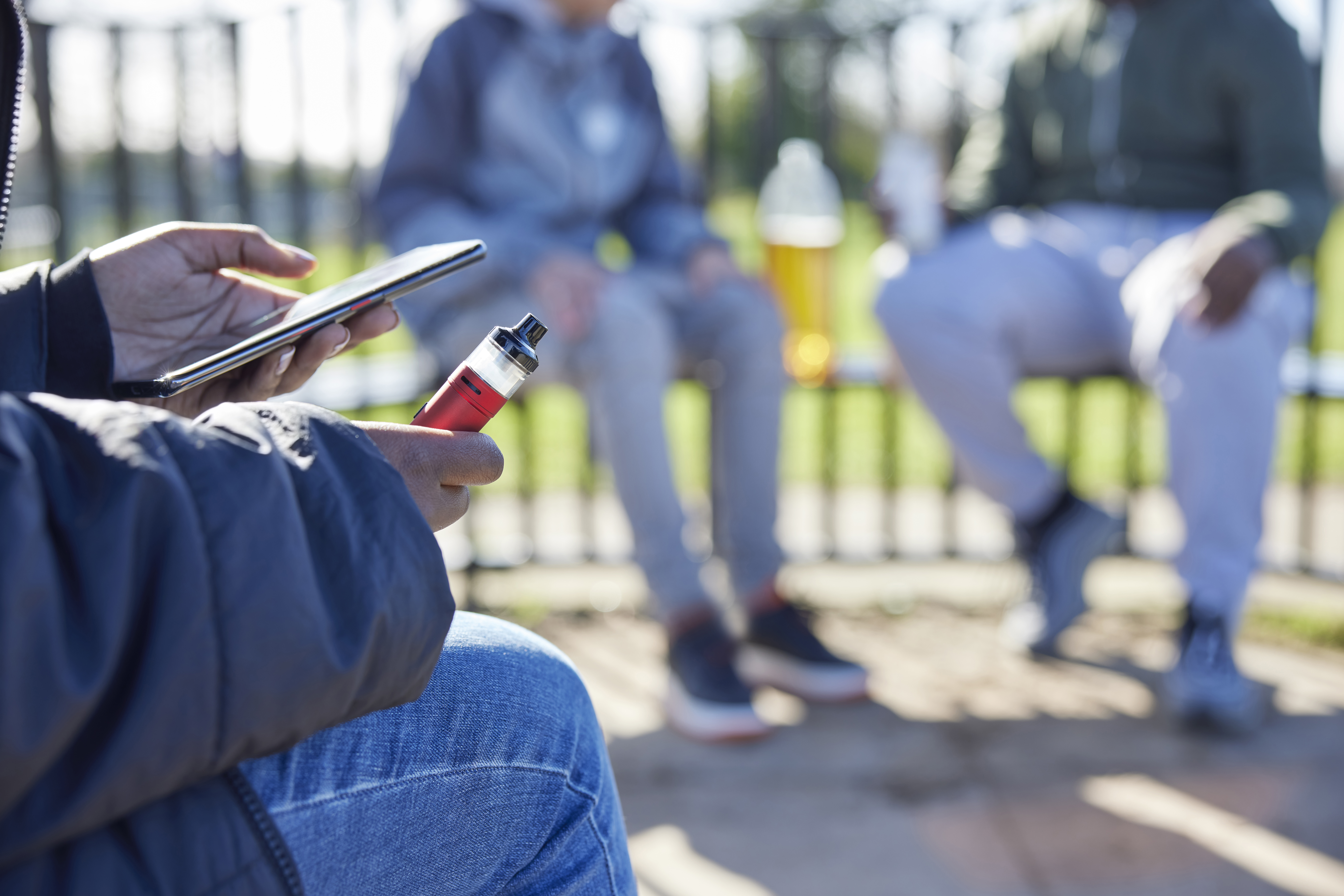
There has been a rapid rise in the numbers of children and young people using them.
“I’m looking around and taking videos, wondering how I’d scale the trains down”


role model
A pro Lego designer tells Jane Common how a
high-speed trip inspired his mini-masterpiece
LEGO lover Lewis Bird is rail-ly keen on train spotting – but he doesn’t visit stations across the UK to write down locos’ numbers in a notebook. He’s there to work out how he’d recreate them with the world-famous building bricks.
Lewis won the second series of Channel 4’s Lego Masters with dad Paul in 2018, but building with the world-famous bricks has been a hobby since he was given a Lego Star Wars kit aged just seven.
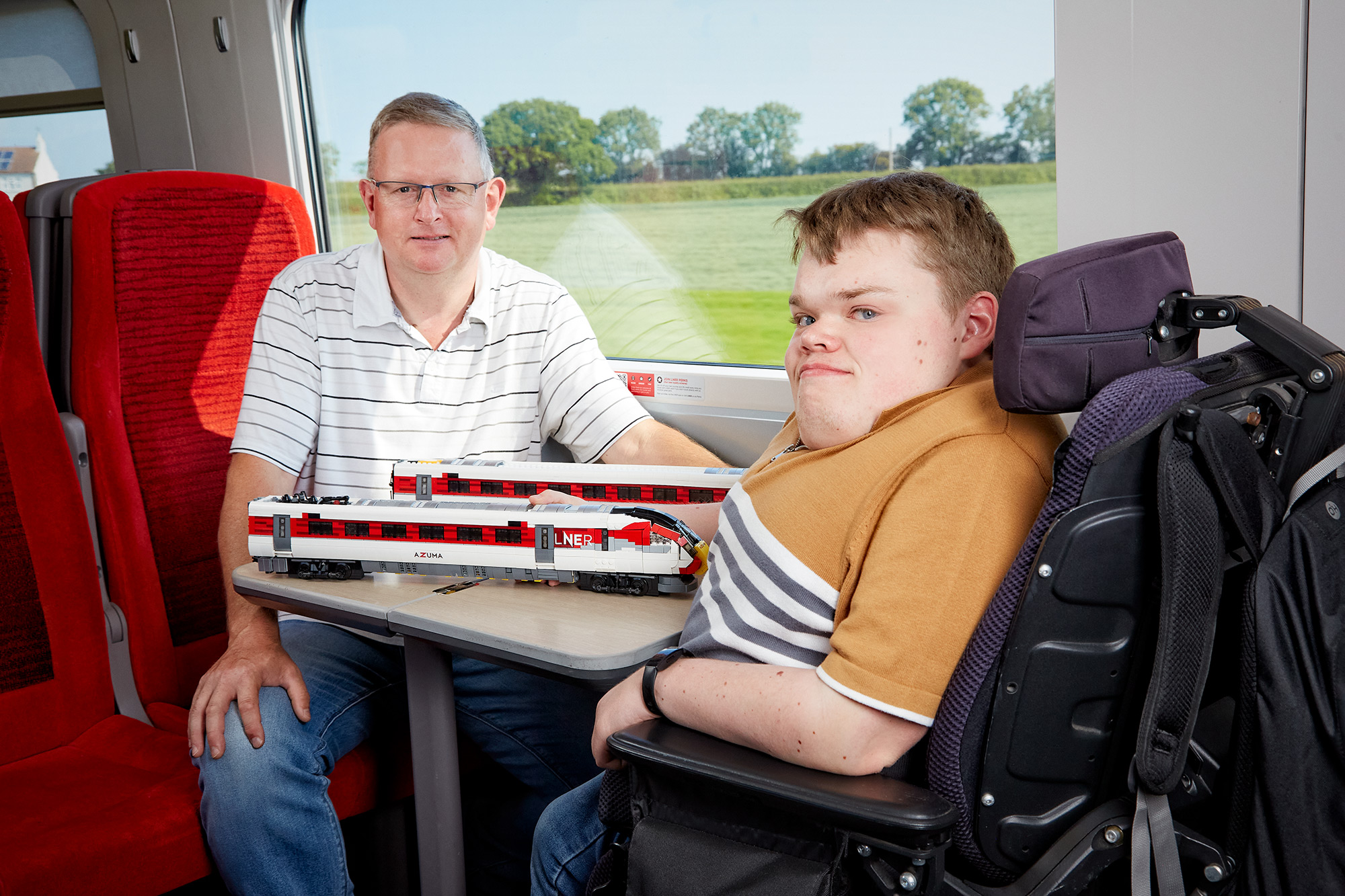
Trains make up the majority of his builds, from classic steam locos to the up-to-the-minute intercity express engines. His latest, a scale replica of the 125mph Azuma that plies LNER’s East Coast route between London and Scotland, was inspired by a journey from his home in Leeds to LNER’s King's Cross terminus.
“There’s something so visceral about trains,” explains freelance Lego designer Lewis, 22.
“It’s not just the physicality of them but the sound and the movement – with steam trains you can feel the heat as they charge past. And the smell – this is geeky but my brother bought me a candle that smells of coal for Christmas!”
By coincidence, among his 20-train Lego model collection is the Mallard, which in its 1930s heyday was the world’s fastest steam engine, speeding up and down the same route as the Azuma.
Today, passengers may have swapped the romance of steam for more eco-friendly reliability, but they can still marvel at the innovation that has gone into the Azumas – diesel-electric hybrids built using the technology of the Japanese bullet trains.
Plus, it’s easy to see why Lewis and fellow passengers would enjoy the Azuma experience, with all its mod cons.
There’s free wi-fi throughout, and you can get refreshments delivered directly to your seat with LNER’s Let’s Eat – At Your Seat service.
“There’s a beauty to modern trains,” explains Lewis. “The Azuma is so streamlined it has an elegance about it.”
Lewis’s imagination was set alight when he boarded his first Azuma last year on a trip to London to watch a table cricket final at Lord’s.
“I thought the Azuma – the speed and grace of it – was brilliant. Leaving Leeds early in the morning, I caught the sunrise. It was a beautiful journey.”
So delighted was Lewis with his trip that he was inspired to design and construct a 1:43 scale model of the Azuma, and recently took the replica down to London to present it to admirers at King’s Cross station. His father and Lego Master team mate Paul went along for the ride – the pair admit they love nothing more than a fun family day out by train.
But as a designer, there are special artistic reasons for Lewis taking the train, not least the fact that these journeys give him a valuable pocket of “me time”. For Lewis, it’s a chance to work on elements of his build – he takes a little Lego with him wherever he goes – or draw out plans for future projects. For others, it could be time to read, relax or just let the imagination soar.
“For me, trains are creative spaces because I’m looking around and taking videos, wondering how I’d scale them down to build them in miniature,” Lewis says.
“My imagination really takes flight on a train journey.”
And the Azuma is definitely the place to conjure up brilliant design in comfort, which perfectly suited Lewis’s circumstances. As a wheelchair user with the rare bone disorder Morquio syndrome, it’s important for him to have space to manoeuvre, as well as have access to the passenger assistance offered on the UK’s train routes.
He says of his first journey: “There was plenty of space for my electric wheelchair. The staff were brilliant. And I loved the Azuma’s striking red and grey design. Red is my favourite colour.”
LIKE FATHER, LIKE SON Lewis Bird and dad Paul won Channel 4’s Lego Masters in 2018
the train built
from bricks

LOOK FOR TEACHABLE MOMENTS
If vaping comes up in a news story, or in a TV programme you’re watching, or you walk past a vape shop, you could use this moment to ask your child what they think about it. Make sure you listen to what they say and talk about it calmly and openly. Try to avoid lecturing them.
KNOW YOUR FACTS
Read up about vaping so that you can talk to your child about the risks in a balanced, informed way. There’s no need to bombard them with information, just make sure that you know what you’re talking about.
You could start by taking a look at nhsinform.scot/vaping or parentclub.scot/vaping


WHY ARE YOUNG
PEOPLE VAPING?
Young people start vaping for a number of reasons including:
PEER PRESSURE OR INFLUENCE
SOCIAL IMAGE
THEY THINK THE HEALTH RISKS ARE LOWER COMPARED TO CIGARETTES
THEY WANT TO ‘JUST GIVE IT A TRY’
THEY LIKE THE FLAVOURS
Another common reason given includes to support mental health, reduce stress levels or help with low self-esteem.
But young people who vape for stress relief actually report significantly higher stress levels than young people who don’t vape.

41%
By S4, 41% of children and teenagers have tried vaping

25%
25% of teens who try vaping say they're addicted
Signs of nicotine dependence can appear within days

VAPING IN NUMBERS
START A CHAT WITH YOUR CHILD ABOUT VAPING
Two years ago just seven per cent of young people who said they were vaping were using disposable products – last year that number was almost ten times higher, up to 69 per cent.
Disposable vapes contain batteries, so they’re difficult to recycle, which makes them harmful for the environment.
Prof Bauld continued: “The most important message for parents to get across to their children and young people right now is that vaping will have a negative impact on their health and wellbeing.
“It will affect their concentration, mood, sleep and learning and we still don’t know what the long-term health impacts are, so it is better if they never smoke or vape to start with.”

Linda Bauld

TALKING to young people about vaping might seem difficult or even overwhelming.
But the experts at Fast Forward, a voluntary education organisation, say children like adults to be honest with them.
Chief Executive Allie Cherry-Byrnes said: “The young people we work with tell us that they’d like to be open and talk to their parents or caregivers about a range of risk-taking behaviours, including vaping, and that just because they want to talk about something, doesn’t necessarily mean that they’re doing it - they’re just keen to be informed and know the facts.”
It can be hard to know whether your child has started vaping – and some of the signs, like being more moody or irritable, are also textbook signs that they are growing up and their hormones are running wild.
Some of the more obvious signs include sweet smells, like vanilla or bubble-gum, being more moody, jittery or irritable than usual, being thirsty all the time and coughing more than usual.
Allie added: “We would encourage parents or caregivers to help young people understand the risks of vaping by sharing information with them calmly.
“Young people don’t expect them to have all the answers, but their parents or caregivers need to make valid points and deliver the facts, so they can inform young people of the consequences of taking part in vaping or other risk-taking behaviours.”
PUBLIC health expert Professor Linda Bauld, from the University of Edinburgh, says that, while vapes are much less harmful than cigarettes, they still contain toxic chemicals and carcinogens – substances that can cause cancer – and many contain nicotine too.
She explained: “Many of these products contain nicotine, which is addictive, so children and young people who start using vapes are more likely to keep using them and become dependent.
“We know nicotine addiction can affect young people’s mental health, making them feel stressed and anxious and it can also affect their ability to study or disrupt their sleep.
“Vapes are significantly less harmful than smoking cigarettes or tobacco, but they still contain chemicals that can cause cancer and they also contain substances that can irritate the lungs.
“If the toxins and carcinogens in vapes build up in the body over a long time we may see a link with things like some types of cancer, but we do not have that evidence at the moment.
“There is simply not enough data to know what the long-term health risks of vaping are, because these products have not been on the market for long enough. It could be 10 years before that information is available, so we should be really cautious.

PUBLIC health expert Professor Linda Bauld, from the University of Edinburgh, says that, while vapes are much less harmful than cigarettes, they still contain toxic chemicals and carcinogens – substances that can cause cancer – and many contain nicotine too.
She explained: “Many of these products contain nicotine, which is addictive, so children and young people who start using vapes are more likely to keep using them and become dependent.
“We know nicotine addiction can affect young people’s mental health, with nicotine withdrawal making them feel stressed and anxious and it can also affect their ability to study or disrupt their sleep.
“Vapes are significantly less harmful than smoking cigarettes or tobacco, but they still contain chemicals that can irritate the lungs.
“If the toxins and carcinogens in vapes build up in the body over a long time we may see a link with things like some types of cancer, but we do not have that evidence at the moment.
“There is simply not enough data to know what the long-term health risks of vaping are, because these products have not been on the market for long enough. It could be 10 years before that information is available, so we should be really cautious.

SPONSORED

