One man’s extraordinary survival story forms the inspiration for an unforgettable new Sky Original drama series: The Tattooist of Auschwitz. From the 2018 international bestselling novel by Heather Morris, this is the tale of Lali Sokolov, a Slovakian Jew, whose promising life and loving family are shattered during the rise of Germany’s Nazi regime. In 1942, Lali is deported to Auschwitz concentration camp. In spite of such horror, this is also a story of enduring love, as Lali meets and falls for another prisoner at the camp: the irrepressibly spirited Gita.
“Of the many times the Nazi Holocaust has been depicted throughout film and television, The Tattooist of Auschwitz is one of the most powerful,” says Virgin Radio’s resident TV critic, Stuart Elmore. “The very sinister train journey to Auschwitz, for example, and the early scenes in the sleeping quarters are really absorbing, but deeply disturbing. Yet, in the midst of these grim surroundings, this series tells of the hopefulness of the human spirit and the enduring power of love as the story of Lali and Gita is played out.”
In The Tattooist of Auschwitz, �a six-part drama inspired by one man’s real-life story, we witness Lali Sokolov’s harrowing struggle to survive the Holocaust
‘I was 26,
and I �wanted
to live’
SHARE


SPONSORED CONTENT
‘In spite of such horror, this is �also a story of enduring love’�
Available on Sky from May 2

This is clearly a deeply challenging story to tell; diligent care and sensitivity were employed in transferring the novel to the screen, whether evoking the horrifically bleak, vast yet stifling atmosphere of Auschwitz, or the nuanced dynamics between different characters. The talented cast took a heartfelt approach to their roles, with Lali portrayed both in his desperate youth (by Jonah Hauer-King) and his reflective elder years (by Harvey Keitel). Even as a retiree with an apparently tranquil life, Lali remains haunted by his past experiences and encounters: Gita, the love of his life (Polish-born actress and dancer Anna Próchniak), and also the brittle, sadistic young Nazi SS officer Stefan Baretzki (Jonas Nay, in a role that contrasts sharply with his heroic lead in the Deutschland 83/86/89 drama series).
This six-parter also highlights the chilling real-life significance of tattoos and numeric records within the Nazi regime. The policy of tattooing prisoners with identification numbers began at Auschwitz in 1941; these digits were crudely etched on to the skin of incoming prisoners upon arrival at the concentration camp, using ink-soaked needles. The numbers served to dehumanise the ordinary men, women and children who were deported to the camps; they stripped them of their family names as well as their belongings, and they could be demanded at any time of day or night. Historians have estimated that 1.1 million people were killed at Auschwitz during its operational years of 1940 to 1945.
In a further cruel twist, prisoners – as we see with Lali in this series – might even be coerced into becoming tattooists. This grim position would afford them improved rations and living conditions, though at a heavy cost. Lali becomes set on using the privileges associated with his role to steal time with Gita, and to share his rations with her and others – even as he knows their future seems impossible. As he mournfully admits: “I was 26, and I wanted to live.”
As part of his research for the role of young Lali, Hauer-King visited the Auschwitz-Birkenau Memorial, and describes how the experience evoked “an extreme feeling of weight and darkness… I think there’s no getting away from the fact that if you want to try and tell this story in a way that feels authentic and detailed and meticulous, it’s incredibly upsetting.” He adds: “Having read the book, it was hard not to feel daunted. I was honoured and excited, but extremely aware of the huge responsibility we all had to bring Lali’s story to the screen in a respectful and authentic way.”
�
“My initial reaction was to bear witness,” explains Keitel, about his response to being offered the part of 86-year-old Lali. “It’s our duty to condemn the barbarism and inhumanity inflicted on Jews, Roma and Sinti, political dissidents and any of the communities that were persecuted by the Nazis during the Holocaust.”
“Hauer-King’s main character is fascinating to watch,” enthuses Elmore. “It’s a very understated and endearing performance throughout, but he’s not just a basic 'beginning to end' protagonist.
“The relationship between young Lali and SS officer Baretzki is the most fascinating and unsettling part of the entire series. Harvey Keitel absolutely disappears into the part of the much older Lali, with the collapsing weight of guilt he carries in his recollections and hallucinations. Those moments where past characters appear in his present are the most compelling.”
The storyline is accompanied and heightened by a characteristically emotive score by film music maestro Hans Zimmer, together with co-composer Kara Talve. “It’s an extraordinary soundtrack: very ominous and almost severe at impactful moments, but also providing moments of comfort and reflection,” says Elmore. “It’s bleakly beautiful, if that makes sense.”
In The Tattooist of Auschwitz, Lali’s past and present experiences are sharply contrasted, and sometimes they even converge. The universal themes of humanity’s resilience and capacity for love in the face of brutal oppression also feel incredibly pertinent in contemporary times.
“I was impressed most of all with the way in which the timelines played into the story and the viewer’s own assumptions,” says Elmore. “Old Lali’s recollections versus the reality was a really effective and unconventional method of storytelling. While those present-day sequences did provide some reassurance, I found them just as unsettling as those scenes in the camps. Lali’s ghosts mean that, in a way, he’s still at Auschwitz and we’re there with him.”
�
�


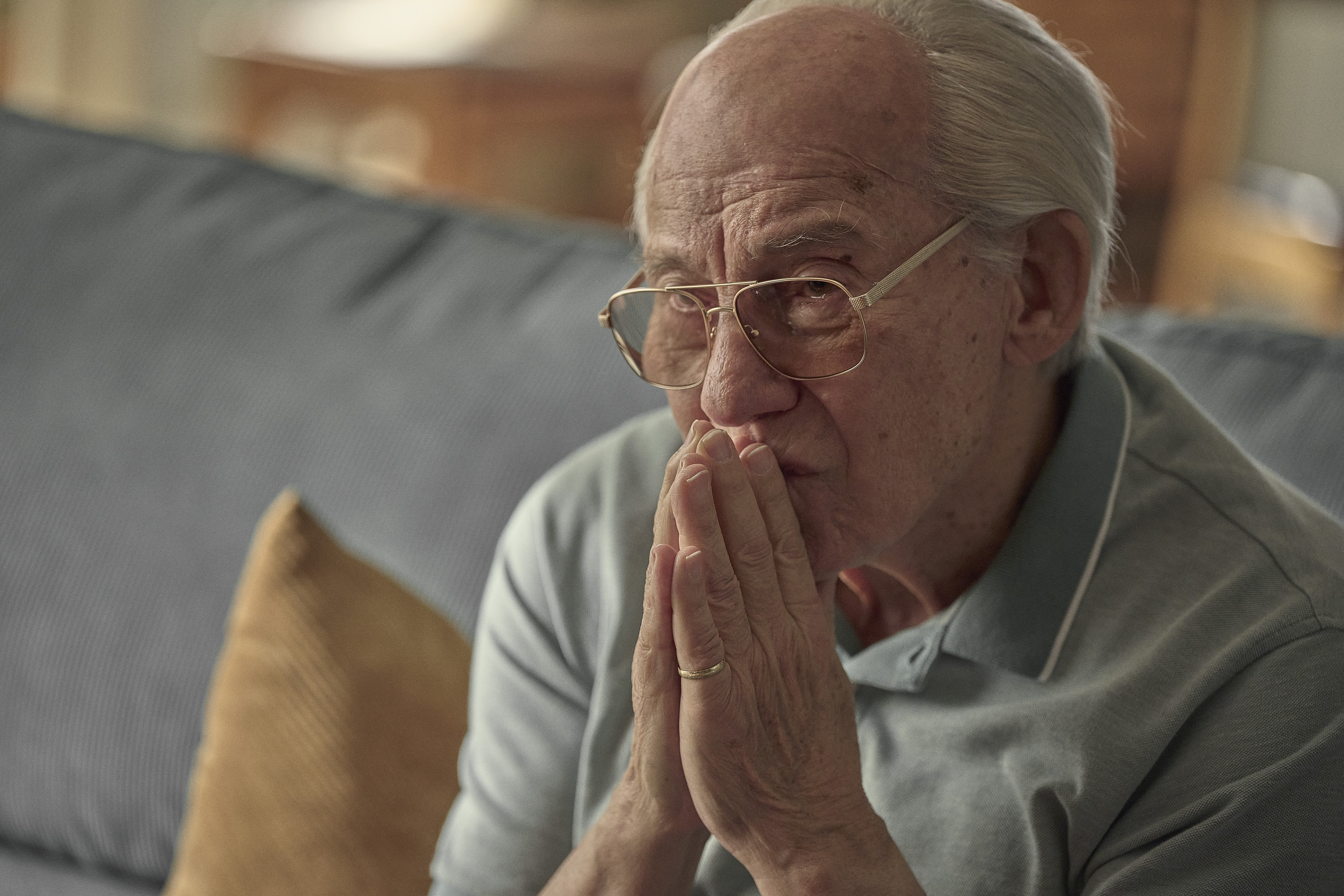

Harvey Keitel plays Lali recounting his experiences in the camp
Polish-born Anna Próchniak shines as the irrepressibly spirited Gita
�
Jonah Hauer-King (left) stars as the younger Lali, alongside Jonas Nay

The story speaks of resilience and love amid the brutality of oppression�