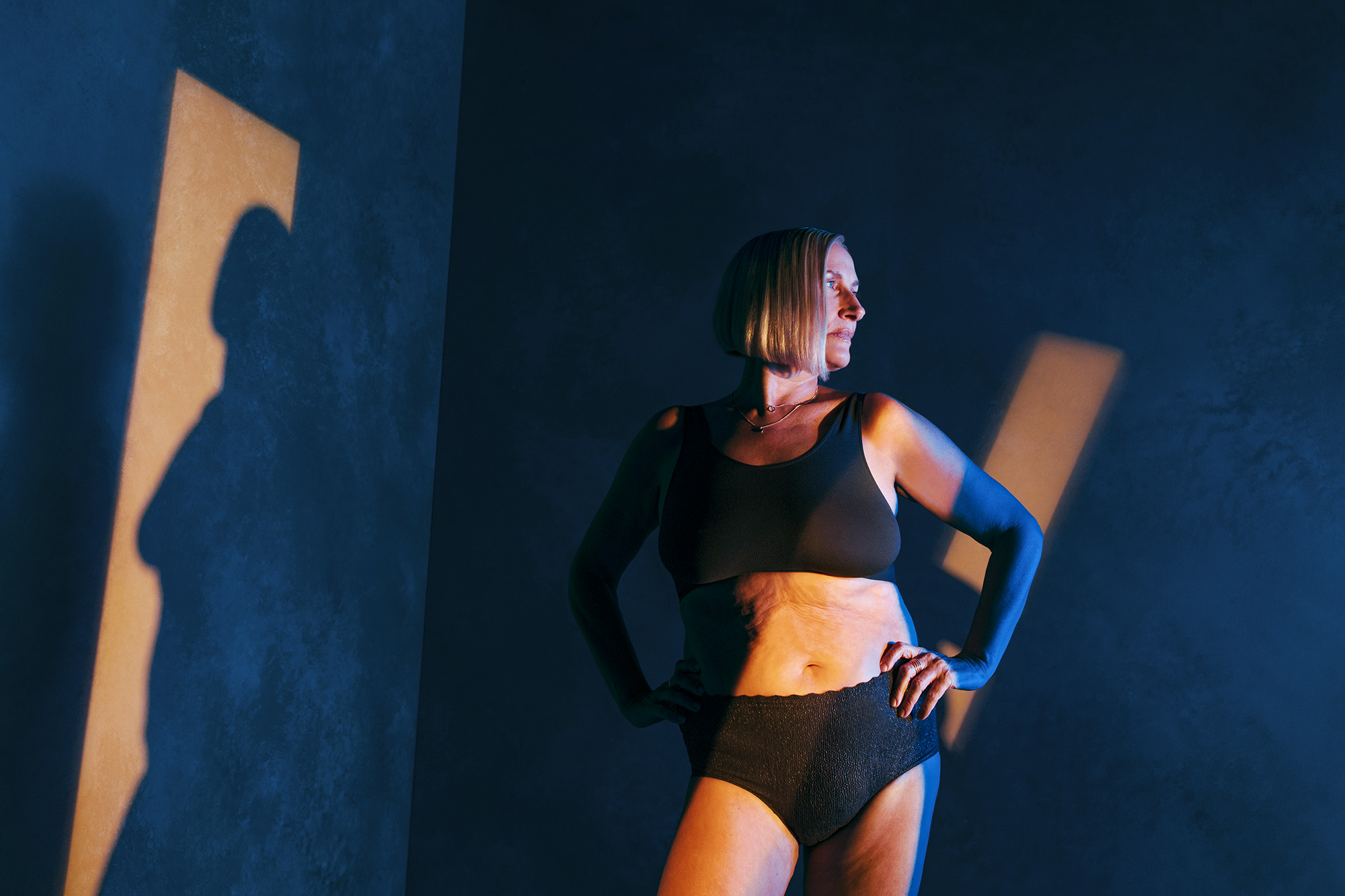
THERE’S a common health issue that affects more women than heart disease, breast cancer or diabetes — but barely anyone talks about it. And when they do, it’s usually in whispers or in code.
Bladder weakness affects nearly two thirds (61%) of women at some point, according to a survey by TENA.
�
“We hear so much about diet, exercise and skincare... why not pelvic health?”
things you should know
about bladder weakness
Drinking less water won’t help
More concentrated urine can make the problem worse. Maintain healthy, but not excessive, levels of hydration.
�
Hormones play an important role �Many women find symptoms fluctuate with their menstrual cycle. Declining levels of hormones at menopause can also affect bladder control.
�
Asthma, long Covid, heartburn and other conditions �that cause a chronic cough can increase the risk �Coughing puts pressure on the pelvic floor, making women more likely to suffer from urinary incontinence.
�
Women who have never had children �get bladder weakness too �A 2002 study found post-menopausal nuns had similar rates of incontinence to post-menopausal mothers.
�
It can be a red flag symptom �Stress incontinence could be the first sign of new or advancing neurological disease such as Parkinson’s or MS.�


LET’S GET TALKING
Bladder weakness affects over half of women – so why the code of silence?
But Alison Wileman, a specialist continence nurse and pelvic health advocate with Essity UK, wants women to know that while it is common, it’s not normal. It’s also not just an annoying part of life we have to put up with, like PMS or school WhatsApp groups. �
In fact, bladder weakness isn’t a condition in its own right: it’s “always a symptom of something else”, Alison says. A range of health issues can contribute to it, including constipation, diabetes, infections and even serious neurological problems. �
Symptoms vary from minor leaks when sneezing to a loss of control so severe that some women avoid leaving the house. And it’s not just an issue that comes with age — young and fit women can also be affected.
Like many aspects of women’s health, bladder weakness has been largely overlooked in research, but that’s starting to change.
One growing area of study focuses on the impact of intense exercise. A recent review of data found that female athletes are up to three times more likely to experience stress incontinence than women who don’t exercise much.
�

Lorem ipsum dolor sit amet, consectetur adipiscing elit, sed do eiusmod tempor incididunt ut labore et dolore magna aliqua.
Vel risus commodo viverra maecenas accumsan. Aenean et tortor at risus. Orci phasellus egestas tellus rutrum. Tellus molestie nunc non blandit massa enim nec.
Ac tincidunt vitae semper quis lectus nulla. Commodo elit at imperdiet dui accumsan. Velit aliquet sagittis id consectetur purus ut faucibus pulvinar. Est ullamcorper eget nulla facilisi etiam. Volutpat maecenas volutpat blandit aliquam etiam erat velit scelerisque in.
Integer eget aliquet nibh praesent. Nisl condimentum id venenatis a condimentum. Libero justo laoreet sit amet cursus. Adipiscing commodo elit at imperdiet dui accumsan sit.
Diam sit amet nisl suscipit adipiscing bibendum. Augue ut lectus arcu bibendum at varius vel pharetra. Neque egestas congue quisque egestas.
Fames ac turpis egestas sed tempus urna et pharetra. Enim praesent elementum facilisis leo vel fringilla est ullamcorper eget. Nunc sed augue lacus viverra vitae congue eu consequat ac.
Amet dictum sit amet justo donec enim. Nulla pharetra diam sit amet nisl suscipit adipiscing. Arcu dui vivamus arcu felis bibendum.
Turpis egestas integer eget aliquet nibh praesent tristique. Sed viverra tellus in hac habitasse platea dictumst. Libero id faucibus nisl tincidunt eget nullam non nisi est.
Eget mi proin sed libero enim. At auctor urna nunc id cursus metus. Massa ultricies mi quis hendrerit dolor magna eget est lorem.
TENA makes a range of products to manage �bladder weakness symptoms, including award-winning Silhouette Underwear. Visit tena.co.uk/women
VIDEO HEADLINE HERE
SPONSORED
This icon must
always be used at
the top of any article


ARTICLE INTROS
First two paragraphs must be bold and then ideally an image after those paragraphs

FONT SIZES
Not mandatory but roughly keep to The Sun Heavy Condensed 101/89 for main heading and 45 / 41 for the secondary

FONT SIZES
Body copy font size is 16pt / 22pt leading and the font is The Sun

BACKGROUND
Doesn't have to be red, can be any colour you want but keep the main body copy on black

PAGE WIDTH
These must be kept the same. The main content must sit inside a 980px box and then all copy must sit within a width of 940px, indicated by the guides

While awareness of bladder health is improving, there’s still a long way to go. The TENA survey found that 52% of women feel too embarrassed to talk about it. On average, they wait six years before seeking help.
Considering how much this issue can affect mental health and self-esteem, that’s a long time to suffer in silence. �
We hear so much about diet, exercise, heart health and skincare — so why isn’t pelvic health getting the same attention? �
Alison believes it should. A preventative approach can make a big difference. �
Simple steps such as doing pelvic floor exercises, cutting intake of caffeine and fizzy drinks and maintaining good digestion can all help.
Managing anxiety can also ease symptoms of an overactive bladder. �
And for those who need extra confidence, finding the right type of protection is a crucial part of feeling comfortable.
�
�
5
1
2
3
4
5

5
4
3
2