Big news on termination clauses in Ontario
The Court of Appeal for Ontario recently issued a short decision that is big news for the enforceability
Click on a jurisdiction below for a selection of compliance deadlines and legislative initiatives
Court and tribunal decisions
Canadian employment law is largely driven by the court and tribunal
Canadian employment and labour quarterly
September 2025 | Issue 02
The pace of change in Canadian employment and labour law is rapid as legislatures, courts and tribunals try to keep up with the evolving world of work. Across 10 provinces, three territories and the federal jurisdiction, the volume of news for employers to digest is significant. Our regular newsletter keeps employers up to date on Canadian E&L developments and best practices.
If you have any questions, contact a member of our team.

In a recent unreported wrongful dismissal decision, in which the Norton Rose Fulbright Canada Calgary office represented the defendant employer, the Alberta Court of King’s Bench dismissed the plaintiff CEO’s claim on the grounds that the employer had just cause for dismissal. The case turned on the CEO’s failure to disclose an ongoing debt he was accumulating to the employer. Unbeknownst to the employer’s board of directors, the CEO had arranged for the employer to pay his U.S. income tax for years, accumulating a debt of over $150,000.
As CEO, as a member of the employer’s board, and as a member of the board’s audit committee, the CEO had a constellation of duties that he breached. He failed to meet his duty to disclose the tax payment scheme and resulting loan. He failed to avoid a conflict of interest in using employer funds for his own benefit. The CEO could not avoid these responsibilities by claiming that lower-ranking executives or employees had failed to make material disclosures on his behalf, or to prod him toward repaying the loan. His conduct was fundamentally inconsistent with his role as CEO and board member and amounted to just cause for termination.
The employer in this case was represented by Joshua Sadovnick, Preston Brasch and Loveneet Khosa of Norton Rose Fulbright Canada’s Calgary office.
Alberta
British Columbia
Ontario
Canadian employment law is largely driven by court and tribunal decisions. The Norton Rose Fulbright employment and labour team tracks such decisions, updating our clients when impactful decisions arise.
These are a few recent decisions of interest for Canadian employers.

Subscribe to our newsletter to get the latest �insights sent directly to your inbox.


Andrew Schafer
Partner, Vancouver

Contact me
Read my bio

Sick leave and medical notes across Canada
With cold and flu season a few months away, and more workplaces reverting to in-office work, a refresher on sick leave and sick note laws is in order.
Sick leave laws and sick note restrictions have been evolving quickly in recent years. All Canadian jurisdictions except Nunavut now provide for a least some type of employee sick leave under minimum standards legislation. An increasing number of jurisdictions restrict an employer’s right to require an employee to provide a sick note to prove sick leave eligibility. The latest jurisdiction to make such changes is British Columbia, whose new restriction employee sick notes will likely come into effect late in 2025.
While sick leaves and sick note restrictions are common across Canada, the details of such legislation vary. Some jurisdictions provide for only a few unpaid days, while others provide for a mixture of many weeks of unpaid leave and additional, individual paid sick days. Sick note restrictions are similarly varied.
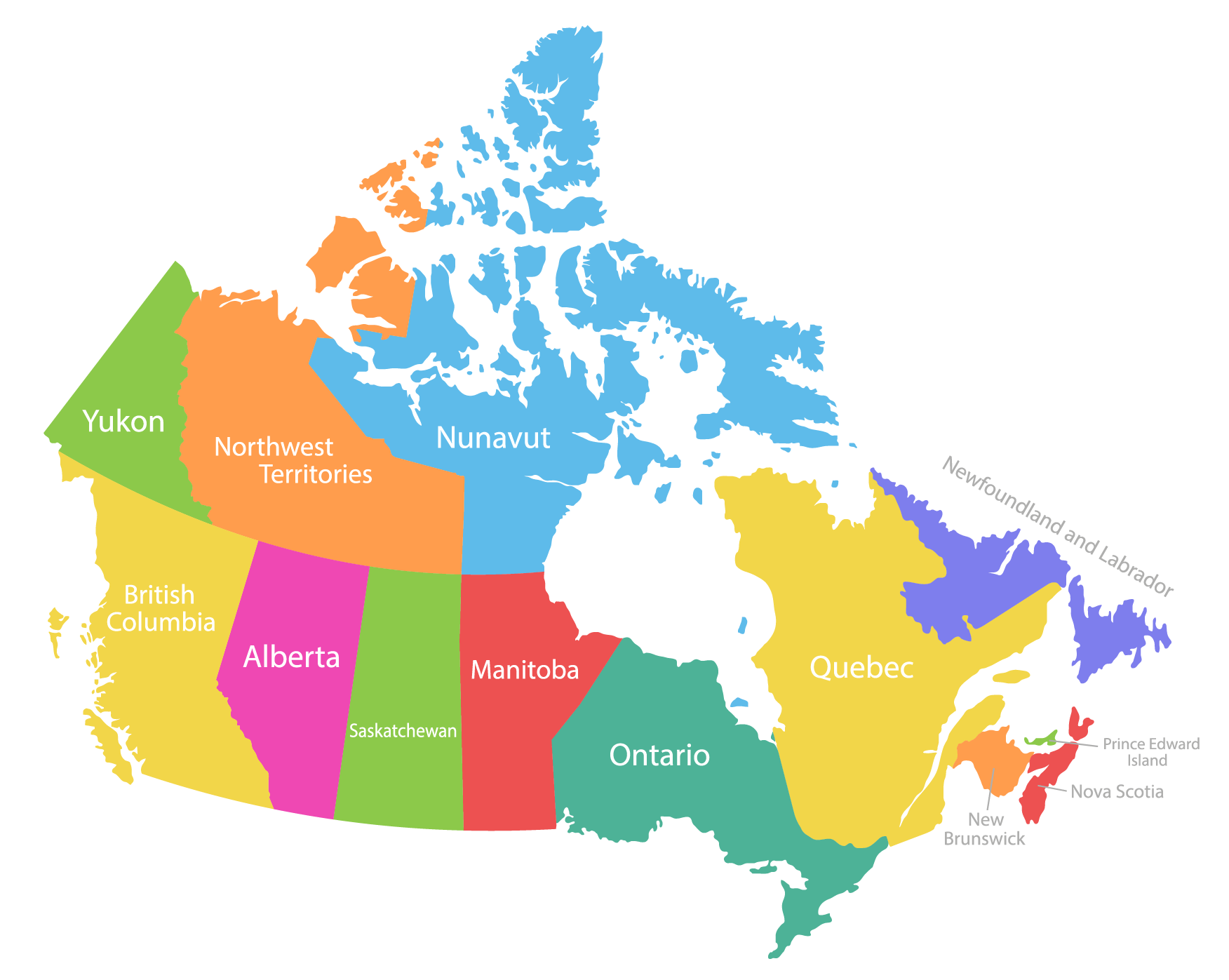
Click on a jurisdiction below for a summary of sick leave laws and sick note restrictions for each Canadian jurisdiction.


Alberta
Statutory Sick Leave
Personal and family responsibility leave: After 90 days of employment an employee is entitled to five unpaid days of leave per year, which may be used as sick days among other purposes.
Alberta
British Columbia
Federal
Manitoba
New Brunswick
Newfoundland
and Labrador
Nova Scotia
Ontario
Prince Edward Island
Yukon
Yukon
British Columbia
Alberta
Ontario
New Brunswick
Nova Scotia
Newfoundland �and Labrador
Québec
Manitoba


British Columbia
Statutory Sick Leave
Illness or injury leave: After 90 days of employment an employee is entitled to five paid days of leave each year and an additional three unpaid days of leave per year.

Federal
Statutory Sick Leave
Medical leave: An employee is entitled to 27 weeks of unpaid leave as a result of personal illness or injury; organ or tissue donation; medical appointments during working hours; or quarantine. This leave entitlement may be taken separately in period of not less than one day’s duration.��Included within this 27-week entitlement, an employee is entitled to up to 10 paid days of leave. After completing 30 days of continuous employment an employee is entitled to three paid days of leave. Thereafter, an employee accrues one paid day of leave per completed month of service, to an ongoing maximum of 10 days in a calendar year. Accrued, unused paid sick days carry forward into the following calendar year and count against the maximum paid sick days for that subsequent year.

Manitoba
Statutory Sick Leave
Family leave: After 30 days of employment an employee is entitled to three unpaid days of leave per year that may be used as sick leave among other purposes.
Long-term leave for serious injury or illness: After 90 days of employment an employee is entitled to 27 unpaid weeks of leave in any 52-week period for serious injury or illness.

New Brunswick
Statutory Sick Leave
Sick leave: After 90 days of employment an employee is entitled to five unpaid days of leave per 12 calendar months.

Newfoundland and Labrador
Statutory Sick Leave
Sick and family responsibility leave: After 30 days of continuous employment an employee is entitled to seven unpaid days of leave per year that may be used as sick leave, among other purposes.

Nova Scotia
Statutory Sick Leave
Sick leave: An employee is entitled to five unpaid days of leave per year. There is no service requirement for this leave.�
Serious illness leave: After three months of employment an employee is entitled to 27 weeks of leave within any 52-week period for a serious illness.

Ontario
Statutory Sick Leave
Sick leave: After two weeks of employment an employee is entitled to three unpaid days of leave per year.�
Long-term illness leave: After 13 consecutive weeks of employment an employee is entitled to 27 weeks in any �52- week period for long-term illness leave.

Quebec
Statutory Sick Leave
Absences owing to sickness. An employee is entitled to 26 unpaid weeks of leave in a 12-month period for short-term or long-term illnesses. There is no required service period to be eligible for the leave.

Yukon
Statutory Sick Leave
Sick leave: An employee is entitled to one unpaid day of leave per completed month of service, less previously taken sick leave days, to a maximum net entitlement of 12 days. Essentially, Yukon allows for an ongoing “bank” of sick leave days of up to 12 days, accruing at a rate of one day per month.
Sick leave and medical notes across Canada
Court and tribunal decisions
Québec
Court upholds just cause dismissal of CEO for dishonesty
For the second time, the British Columbia Labour Relations Board has held that an employer has engaged in an unfair labour practice by sending work out of province during a lawful work stoppage.
In Heidelberg Materials Canada Limited, 2025 BCLRB 121 an employer’s British Columbia cement plant was subject to a lawful lockout following unsuccessful collective bargaining. During the lockout, the employer sourced cement for its British Columbia operations from its cement plant in Alberta. The union for the locked-out employees applied for an unfair labour practice declaration on the basis of section 68 of the Labour Relations Code, which prohibits employers from using replacement workers to perform the work of bargaining unit employees who are engaged in a lawful work stoppage.
The Board granted the union’s application, finding the employer’s action in sourcing cement from another of its operations breached the section 68 prohibition, even though the new source was outside British Columbia. The Board held that the replacement worker ban can apply to protect bargaining unit work whether it is relocated in province or out of province.
The Heidelberg decision is the second time the Board has barred out-of-province work under the B.C. replacement worker ban with out-of-province effect. The first such order was recently confirmed by the British Columbia Court of Appeal in Gate Gourmet Canada Inc. v. Unite Here, Local 40, 2025 BCCA 246. For more information, see our update, Appellate Court Confirms Out-of-Province Effect of B.C. Replacement Worker Ban.
Another out-of-province application of B.C.’s replacement worker ban
In Metrolinx v. Amalgamated Transit Union, Local 1587, 2025 ONCA 415, the Court of Appeal for Ontario held that an employer had a duty to investigate possible workplace harassment related to a group chat among employees on the ”WhatsApp” platform. The group chat came to light when a screenshot of its contents was sent to an employee who was the subject of rumors in the chat.��Key takeaways from the Metrolinx decision include:
An employer’s duty to investigate does not depend on a complaint. Under Ontario’s Occupational Health and Safety Act, an employer’s duty to investigate an incident of harassment does not depend on a formal complaint. So long as the employer is aware of facts that suggest harassment may have occurred, it must investigate.
Off-duty conduct may properly be subject to discipline. The fact harassing conduct takes place away from the workplace (or online) does not shield an employee from investigation and discipline if that conduct impacts the workplace. Harassing a colleague through social media may properly trigger workplace discipline.��
Employee privacy is not absolute. While an employer generally does not have an interest in an employee’s private, off-duty conduct, where that that conduct finds its way into the workplace the employer’s obligation to protect the workplace is engaged. A group chat meant to be private may become the employer’s concern when it is revealed to co-workers, even inadvertently.
Employers may have a duty to investigate employee social media chats
The Quebec Court of Appeal recently clarified employer obligations to pregnant or breastfeeding employees under that province’s “For a Safe Maternity Experience Program” (SMEP). The SMEP is engaged where an employee’s work is physically dangerous for child or maternal health. In such scenarios the employee may request to be reassigned to safe duties. If the employee is reassigned, they must continue to receive their usual salary. If no safe work is available, the employee is placed on “preventative withdrawal” and their compensation is partly funded by the employer, and partly by Quebec’s Commission des normes, de l’équité, de la santé et de la sécurité du travail (CNESST).
In Ville de Québec c. Ouellet, 2025 QCCA 825, the Court of Appeal clarified that where an employee request under the SMEP is made, the employer must make every reasonable effort to find alternative duties. It is only where reassignment is impossible that preventative withdrawal is permitted. The employee’s right to reassignment cannot be waived by the employer in favour of placing the employee on a leave.
For a more detailed summary of the Ouellet decision, see our legal update “For a safe pregnancy: The Court of Appeal clarifies employers' obligations”.
Employer obligations to pregnant or breastfeeding employees
For many years, Ontario courts have issued decision after decision striking down employment contract termination clauses allowing terminated employees to claim significantly greater severance.
The Bertsch decision not only defies that trend, it also clarifies which Ontario termination clauses might be enforceable moving forward.
Why is this big news?
A quick summary
Looking ahead
Group Termination
Big news on termination clauses in Ontario
The Court of Appeal for Ontario recently issued a short decision that is big news for the enforceability of employment contract termination clauses in that province. In Bertsch v. Datastealth Inc., 2025 ONCA 379 the court declined to take the perspective of an “ordinary person” when reviewing a termination clause and instead asked how that clause might be “reasonably interpreted.”


Courts are wary of the imbalance of bargaining power between employers and employees, and termination clauses can be a significant limitation on employee rights. For that reason, courts will strike down such clauses if they are drafted in a way that is ambiguous or illegal for being contrary to the requirements of the Employment Standards Act, 2000 (ESA). Plaintiffs in wrongful dismissal claims frequently advance creative interpretations of termination clauses that result in ambiguity or illegality, as a means of escaping the limiting effects of a clause.
In Bertsch, the plaintiff argued the termination clause in issue should be unenforceable because an “ordinary person” might not understand it, with the result that such a person could be unknowingly deprived of their ESA entitlements. The Court of Appeal rejected this argument. The proper way for a court to review a termination clause is to ask how it can be “reasonably interpreted”. If the only “reasonable” interpretation is clear and lawful, the clause is enforceable. A court should not entertain an unreasonable interpretation simply because it might be the reading of an “ordinary person”.
This decision shows a high-water mark for plaintiff efforts to undermine termination clauses in Ontario. Those efforts have highlighted dozens of drafting mistakes that undermine enforceability. Bertsch reassures us that a well-drafted clause is not vulnerable to an unreasonable interpretation. An employee cannot argue against limits on their termination entitlements based on their subjective reading of their contracts.
Bertsch also bears out that a common contract drafting technique – “incorporation by reference” – is a reliable way to arrive at a single, reasonable and enforceable limit on termination entitlement. For more on that drafting technique, see our update "Incorporation by reference” is safe for now in Ontario.
We will see another termination clause decision from the Court of Appeal soon. Lower courts in Ontario are increasingly divided as to whether a termination clause can reserve the employer’s right to terminate “at any time.” See our update Ontario termination clause case law can change ‘at any time’.
The uncertainty around “at any time” language calls for appellate intervention – and that intervention is coming. A case centered on that language is currently before the Court of Appeal for Ontario.
We will continue to follow these termination clause developments closely for all of our employer clients across Canada. While the Bertsch decision is particularly welcome for Ontario employers, such decisions may be followed elsewhere, potentially informing contract interpretation in other provinces.
Each Canadian jurisdiction has an additional set of statutory termination rules triggered when an employer terminates a threshold number of employees in a defined period of time. ��For example, if an Ontario employer terminates the employment of 50 or more employees in any four-week period, that employer owes enhanced notice
obligations to employees, unions (if any) and the government.
Before engaging in layoff or termination of multiple employees in a brief period, employers should review the applicable group termination provisions for their jurisdiction.

Partner, Calgary
Jeff Landmann
Contact me
Read my bio

Partner, Toronto
Jennifer Hodgins
Contact me
Read my bio

Partner, Ottawa
Heather Cameron
Contact me
Read my bio

Partner, Montréal
Éric Lallier
Contact me
Read my bio

Partner, Québec
Jean-Sébastien Cloutier
Contact me
Read my bio
Québec
Prince Edward Island

Prince Edward Island
Statutory Sick Leave
Unpaid sick leave: After three continuous months of employment, an employee is entitled to three unpaid days of leave per 12 calendar months
Paid sick leave: After 12 months of employment an employee is entitled to one paid day of leave per year. After 24 months of employment an employee is entitled to two paid days of leave per year. After 36 months of employment an employee is entitled to three paid days of leave per year.
Sick Note Restrictions
Currently no restriction on requiring sick notes.
Sick Note Restrictions
Currently no restriction on requiring sick notes, but new regulations restricting sick notes are expected in late 2025, pursuant to Bill 11, Employment Standards Act, 2025 which received royal assent on May 29, 2025.
Sick Note Restrictions
An employer may, in writing and no later than 15 days after an employee returns to work after a medical leave, require a sick note if the employee’s leave was at least five consecutive days.
Sick Note Restrictions
Currently no restriction on requiring sick notes.
Sick Note Restrictions
Employers may require a sick note for statutory sick leave only where the leave is four or more consecutive calendar days in length. Once statutory sick leave days are exhausted, this limit no longer applies.
Sick Note Restrictions
Newfoundland and Labrador’s Labour Standards Act is silent on an employers right to require medical evidence of sick leave entitlement.
However, that legislation was recently amended to remove a provision entitling employers to require such evidence. It is unclear whether this change was intended to prohibit such sick note requirements.
Sick Note Restrictions
Employers cannot require sick notes for any employee absence due to illness or injury unless the absence continues for more than five consecutive working days, or if the employee has had at least two non-consecutive absences of five or fewer working days due to illness/injury in the preceding 12 months. This restriction is unique in Canada, in that it applies to all medical absences, not just to the use of statutory sick leave under minimum standards legislation.
Sick Note Restrictions
Employers cannot require sick notes for any of the three statutory sick leave days. Once statutory sick leave days are exhausted, this prohibition no longer applies.
Sick Note Restrictions
Employers cannot require sick notes for the first three periods of absence not exceeding three consecutive days taken over a period of 12 months.
Sick Note Restrictions
Currently no restrictions on requiring sick notes.
Sick Note Restrictions
Employers cannot request sick notes for statutory sick leave until the fourth consecutive day of an absence. Once statutory sick leave days are exhausted, this prohibition no longer applies.

Saskatchewan
Statutory Sick Leave
Injury or illness that is not serious: After 13 consecutive weeks of employment an employee is entitled to 12 unpaid days of leave per year for non-serious injury or illness.
Injury or illness that is serious: After 13 consecutive weeks of employment an employee is entitled to 27 unpaid weeks of leave in a period of 52 weeks for serious injury or illness.
Sick Note Restrictions
Currently no restriction on requiring sick notes.
As of January 1, 2026, employers will not be permitted to request a sick note unless an employee absence under one of the two leaves above continues for more than five consecutive working days, or the employee has non-consecutive absences of 2 or more working days due to sickness or injury in the preceding 12 months.

Northwest Territories
Statutory Sick Leave
Sick leave: After 30 days of employment an employee is entitled to five unpaid leave days during each 12-month period.
Sick Note Restrictions
An employer is permitted to require a sick note if the expected duration of the sick leave exceeds three consecutive days.

Nunavut
Statutory Sick Leave
No statutory sick leave.
Sick Note Restrictions
Currently no restrictions on requiring sick notes.
Nunavut
Northwest Territories
Saskatchewan
Nunavut
Northwest Territories
Saskatchewan
Subscribe

Septembre 2025 | Publication 02
Infolettre trimestrielle en droit de l’emploi et du travail au Canada
Pour une expérience complète, veuillez consulter notre rapport interactif sur votre bureau.