Nous Group: Your partner in energy and decarbonisation
As the world moves toward net zero emissions, we face a collective challenge to improve the quality of people’s lives and deliver nation-building change to our energy supply. From battery storage to hydrogen, ground-breaking new innovations are transforming the energy landscape.
We work with governments and businesses to make this transition a success. Our consultants have experience and expertise in strategy, policy and engagement to help organisations to plan and implement strategies to move toward net zero.
Our work on decarbonisation aligns with our own support for a global transition to net-zero emissions.
We help government, business and communities to create a clean, affordable and reliable energy future.
Nous at Australian Energy Week 2023
Join Richard Bolt’s keynote session
Join energy expert and Nous Principal Richard Bolt for his keynote session: Facing the realities of net zero and mapping out a strategic transition.
9:30am, Wednesday, 21 July 2023
Source
For every 1 per cent rise in the rate of ethnic diversity in a workforce there is a 3 to 9 per cent rise in sales revenue.

Find out about opportunities to join our growing energy team, email your CV through to:
careers@nousgroup.com.au
Net Zero Australia

OUR PEOPLE
Director
Lynette Kotze

Principal
Richard Bolt
Principal
Csaba Jancsovics

Principal
Stephen Petris

Principal
Tim Orton

Principal
Simon Guttmann


Director
Abigail Nduva
Abigail has extensive public and private sector experience across Australia, Europe and Asia delivering projects that focus on improved engagement, inclusion and service of a diversity of employees, customers and communities. This includes service and operating model design, regulatory review, evaluation, implementation planning and delivery, in addition to other work.
Manager
Minto is a trusted policy and strategy advisor who values pragmatic problem solving and has led large, multi-stakeholder projects from conception to implementation. With over seven years of experience in the higher education and not-for-profit sectors, he brings a warm, thoughtful and rigorous approach that allows him to deliver strong outcomes for clients.
Minto Felix


Principal
Peter has leadership and consulting experience across the public, private and voluntary sectors at executive and board level. He brings a breadth of perspective, challenge and insight that he deploys in consulting assignments. Peter has led multiple EDI engagements, ensuring leaders understand the reality of staff and consumer experience and develop a strategic response.
Peter Horne
Director
Mateja Hawley

Director
Mohamed Daif


Director
Antonia is an experienced leader and strategist specialising in not-for-profit organisations, having developed and delivered growth, change and people programmes for international organisations and UK charities. Clients value her stakeholder engagement and insights. She has improved gender and racial equity as an organisational leader and helped institutions with this as a consultant.
Antonia Instone

Manager
Steph brings experience in public policy and strategy fostered through roles across consulting, government and not-for-profit organisations. She has managed projects ranging from high-level strategy through to on-the-ground delivery, focusing on g overnment and challenges with international dimensions. She is a qualified Australian lawyer and is training to become a psychologist.
Steph Huang

Manager
Veevek is a versatile strategy consultant who has worked across the education, government, health, social services and financial services sectors. He keeps one eye on the strategic context and the other on the detail to produce impactful solutions. He has conducted an anti-racism review of a prominent UK institution, including consultations with staff across many countries.
Veevek Doolabh

Manager
Grace is an experienced consultant and public policy professional who holds a Master of Public Policy. She has significant experience in English higher education policy, specialising in access and student success. As a consultant, she has delivered projects in the UK and Australia. Grace has a strong research background with experience engaging with varied and hard-to-reach stakeholders.
Grace Simpson

Senior Consultant
Karl is a consultant specialising in digital and business strategy. His strong data analytics capabilities provide an evidence base for tailored solutions. He draws on his background in mechanical engineering to provide an evidence-based approach to solutions and approach challenging problems in a structured manner. Karl helps lead Nous’ internal multicultural network.
Karl De Menezes


Finding the right language to talk about ethnicity and other protected characteristics is challenging and differs across organisations, communities, and countries.
Individuals see their identity in distinct ways. However, language around ethnicity often aggregates experiences of people from diverse backgrounds into homogenous categories. Examples include BAME (which amalgamates individuals and communities who are Black, Asian or Minority Ethnic), Global Majority and people of diverse ethnicities.
This often creates an “othering” by defining one group of people by what they are not (say, “minority ethnic” as opposed to an undefined majority ethnicity). In addition, any definition of “minority” is context-specific, so the categorisation means different things in different places.
We understand this complexity so work sensitively with clients and consultees, and with respect to jurisdictional differences, to ensure we use the right language for your context and treat people compassionately. The project examples given here use the preferred language of the clients in each case.
A specialist university had committed to becoming an anti-racist institution following scrutiny over past efforts. The university recognised that students and staff had experienced racism.
With our support, senior leaders wanted to understand those experiences better in order to design a new Head of Equity and Inclusion position and to establish organisational change principles to reduce inequity.
A diverse Nous team conducted an institution-wide listening exercise to understand and improve the experiences of students and staff of colour. We used a trauma-informed approach, that emphasised safety (physical, psychological and emotional) and helped rebuild a sense of empowerment in those who had experienced trauma. At each stage we re-iterated the process’ confidentiality.
The exercise identified instances of racism and highlighted challenges for the institution to address. We used journey maps to visualise challenges students and staff of colour experience during their engagement with the university.
Our recommendations, which have been accepted, will help the university in its drive to be anti-racist.
Find out more about this project.
Anti-racism review

Helping a specialist university with a diverse community to combat racism

The University of Kent identified the need to address racial inequities for staff and students. Many members of Kent’s community actively advocate for change and there were pockets of grassroots good practice across the university.
However, the route to setting strategic direction had been unclear, and the university community felt little action had taken place. The university needed a strategy to support a culture shift that would tackle issues of structural racism.
As a first step, Nous reviewed outcomes data to better understand issues for racially minoritised staff and students. Following this, we worked with the reference group and other university staff through interviews to understand the underlying issues contributing to race inequalities. Finally, we facilitated workshops with a reference group to develop the strategy’s vision, objectives and detailed actions.
Kent is now one of the few universities in the UK with a strategy committed to advancing anti-racism. The executives are all committed to its success and have been assigned responsibility for delivering their relevant objectives.
Find out more about this project.
“Nous was the critical external eye we needed to surface our structures and practices that are embedding racial inequality. They provided a framework for the work needed to enable colleagues and students to unlock a shared vision appropriate for Kent.”
Georgina Randsley de Moura, Deputy Vice Chancellor Academic Strategy, Planning, and Performance, University of Kent
Anti-racism plan
Supporting the University of Kent to advance antiracism
The Integrated Care System for Devon (ICSD) is a partnership of health and social care organisations working together with local communities across Devon to improve people’s health, wellbeing and care.
The ICSD knew from previous consultations that Black, Asian and Minority Ethnic (BAME) communities were experiencing challenges with healthcare access, participation and outcomes. Nous worked with the ICSD to explore these issues and identify opportunities for improvement.
To understand the opportunities it was essential to tap into the lived experiences of BAME staff and communities in Devon.
Nous collaborated with BAME staff networks and community organisations, including the BAME staff network in hospital trusts and the Plymouth & Devon Race Equality Council. This partnership gave participants essential support, including translation, during the consultations.
In total we engaged 67 BAME participants from across Devon, using individual and group interviews, in person and online. These engagements were complemented by analysis of local and national data on BAME health inequalities.
We offered system-level recommendations for ICSD and local recommendations for individual partner organisations, all of which were accepted.
Find out more about this project.
“The review undertaken by Nous has been an invaluable step in understanding the issues in Devon and enabling us to develop a plan to tackle them. It has been a real pleasure working with Nous. The team were really focused on what we wanted to achieve and worked with this at every stage to ensure our goals were met.”
Andrew Millward, Director of Communications and Engagement, Integrated Care System Devon
Stakeholder listening
Helping a health and social care system connect with BAME communities
Contact Us
Contact Us
Contact Nous Group to discuss how we can help your organisation achieve better outcomes on energy.
Get in touch with a Nous expert
Great Northern Museum showcases Newcastle’s natural history, archaeology, geology and world cultures. The museum was seeking to more effectively incorporate the perspectives of people who had been impacted by colonisation.
We worked with the museum to develop a decolonisation strategy so it could understand and address colonial legacies. We interviewed individuals, community organisations and museum staff to understand the situation.
We then worked with the museum to plan the long-term work to create and enact the strategy. We identified key work areas, including alignment of purpose, objectives and scope; a conceptual framework to guide key questions; and a full strategy workplan.
We established ways to engage stakeholders and reviewed the current state to identify risks and mitigations. The museum is continuing to develop its decolonisation strategy.
Decolonisation strategy
Working with Great Northern Museum on a decolonisation strategy
A large university wanted to better understand the experiences of Black, Asian and Minority Ethnic (BAME) staff.
We helped the university run consultations with BAME staff to explore their experience of recruitment and progression to better understand themes that had emerged from a survey. We held workshops, group interviews and one-on-one consultations to explore recruitment and selection, career progression and promotion, and raising and reporting racism.
The work surfaced key insights, including that staff perceived a lack of equitable practices in the recruitment process, insufficient progression-related transparency, and barriers to reporting incidents. We then identified realistic actions to address pain points and barriers and improve equity, diversity and inclusion.
Employee engagement
Helping a university to understand BAME staff experience
A creative arts academy had undertaken significant work to advance racial equality but was facing challenges creating a shared, institution-wide approach.
We started by reviewing existing anti-racism documentation and synthesising leading practice in higher education and the performing arts. We then engaged about 50 teaching staff, professional services staff, students, trustees and alumni to shape the academy’s refreshed anti-racism action plan through interviews, workshops and a survey. We later tested and iterated the plan with key stakeholders.
The refreshed action plan identified six high-level goals, from supporting an equitable experience of Global Majority students and staff through to fostering partnerships that support racial diversity and inclusion. The academy’s executive and board have endorsed these goals.
The work took place in a highly sensitive and emotionally charged environment. Some students and staff felt the plan was not going far enough, while some senior leaders felt it was lacking nuance. Developing a plan that could unite all stakeholders was a big challenge.
We worked iteratively with cross-sectional groups of community members to define and prioritise the actions required and helped senior leaders and non-executive stakeholders to understand why these actions matter so much to the wider staff, student and alumni body. Establishing a governance process for the plan to be approved and communicated was crucial to its success.
“We were very happy with the project leadership and delivery. The Nous team were excellent colleagues to work with – highly professional, knowledgeable and efficient.”
Director at the arts academy
Anti-racism strategy
Developing an anti-racism strategy for an arts academy
A Russell Group university sought a university-wide strategy and implementation roadmap to enrol and support students from underrepresented groups. The strategy had to cover undergraduate and postgraduate students and enable staff teams to understand how they contribute.
We started by analysing student demographic data to understand key issues for access, continuation, attainment and progression. We then consulted with staff and students on strategic vision and priorities, bringing together different perspectives into one coherent narrative. We tested emerging findings with a taskforce of key senior staff through interactive online workshops. Finally, we developed an implementation roadmap that established delivery horizons, accountabilities for strategy elements and supporting governance structures.
The new strategy brings together broad work areas through an access and student success lens. The strategy has accelerated efforts to address unfair access and success for postgraduate students through the expansion of previously undergraduate-only initiatives and policies. It has also led the university to set targets for a more diverse workforce of professional and academic staff to support the agenda.
The university is implementing the strategy via our implementation roadmap and is adjusting governance processes in line with our recommendations.
Diversification roadmap
Helping a university to understand BAME staff experience
“Nous took the time to really understand the institutional context and the perspectives of stakeholders. They combined this with their expertise of the global higher education system and clarity of approach to work with us to develop our ambitious strategy.”
UK university executive
As trusted external partners, we are well-placed to listen and understand people’s experiences and reflect those back in safe, anonymised findings. We can review your organisational data to pinpoint where you can improve. We can also review your programs and services through an intersectional lens.
This work establishes the lived experiences of individuals in the organisation and creates a forum for positive and co-owned change. It is a crucial first step in the journey to improving racial equity.
Our co-design approach means that anti-racism actions are owned by internal stakeholders, the targets are meaningful and the timeframes are realistic. We bring rigour, experience and a human-centred approach to planning for change in these sensitive areas.
We work with employees and stakeholders at all levels to ensure these plans will deliver the right changes and will have support from the CEO and chair of the board to the new recruit and frontline worker or client.
We work with leaders to encourage and coach for change, helping prioritise actions, provide transparent updates and track progress.
Racial equity outcomes rely on cultural transformation as well as defined actions. This is hard and takes commitment over a long time. We will partner with you in that journey.
View Bio
View Bio
View Bio
View Bio
View Bio
View Bio
View Bio
View Bio
View Bio
View Bio
View Bio
View Bio
View Bio
View Bio
View Bio
View Bio


Why it matters
OUR APPROACH
OUR WORK
OUR PEOPLE
The organisation implements programs to source greater demographic diversity of talent. These efforts may be undertaken without preparing for the inclusion of the new talent.
Segmented
The organisation adapts to respond to underrepresented groups (such as through unconscious bias or cultural competency training). But without a more comprehensive approach to inclusion, the majority culture may overwhelm efforts to better respond to diversity.
Accommodating
The organisation works to include its diversity of talent in organisational processes. It leverages the experience across a diversity of groups, and diversity is seen to promote better outcomes. Inclusion is integrated into processes and moments that matter.
Inclusive
The organisation recognises the power of inclusive practices, which are reflected in systems, processes, data collection and organisational norms. The organisation leverages diversity of thought to respond to its strengths and challenges.
Equitable
The organisation integrates and leverages equity, diversity and inclusion at all levels – grass roots, management and leadership. The organisation is recognised for its culture, which results from equitable and inclusive practices and systems.
Belonging
Racial equity contributes to stronger organisational performance, including productivity and innovation.
Organisations with racial equity are better able meet the diverse needs of their clients and deliver better quality outcomes.
Racial equity is critical to attracting and retaining talent, and contributes to the experience, wellbeing and performance of individuals.
Source
Employees whose organisation has a supportive diversity climate report higher levels of job satisfaction and have less intent to quit.
Source
Companies with the most ethnically diverse executive teams are 33 per cent more likely to outperform their peers on profitability.

About Nous


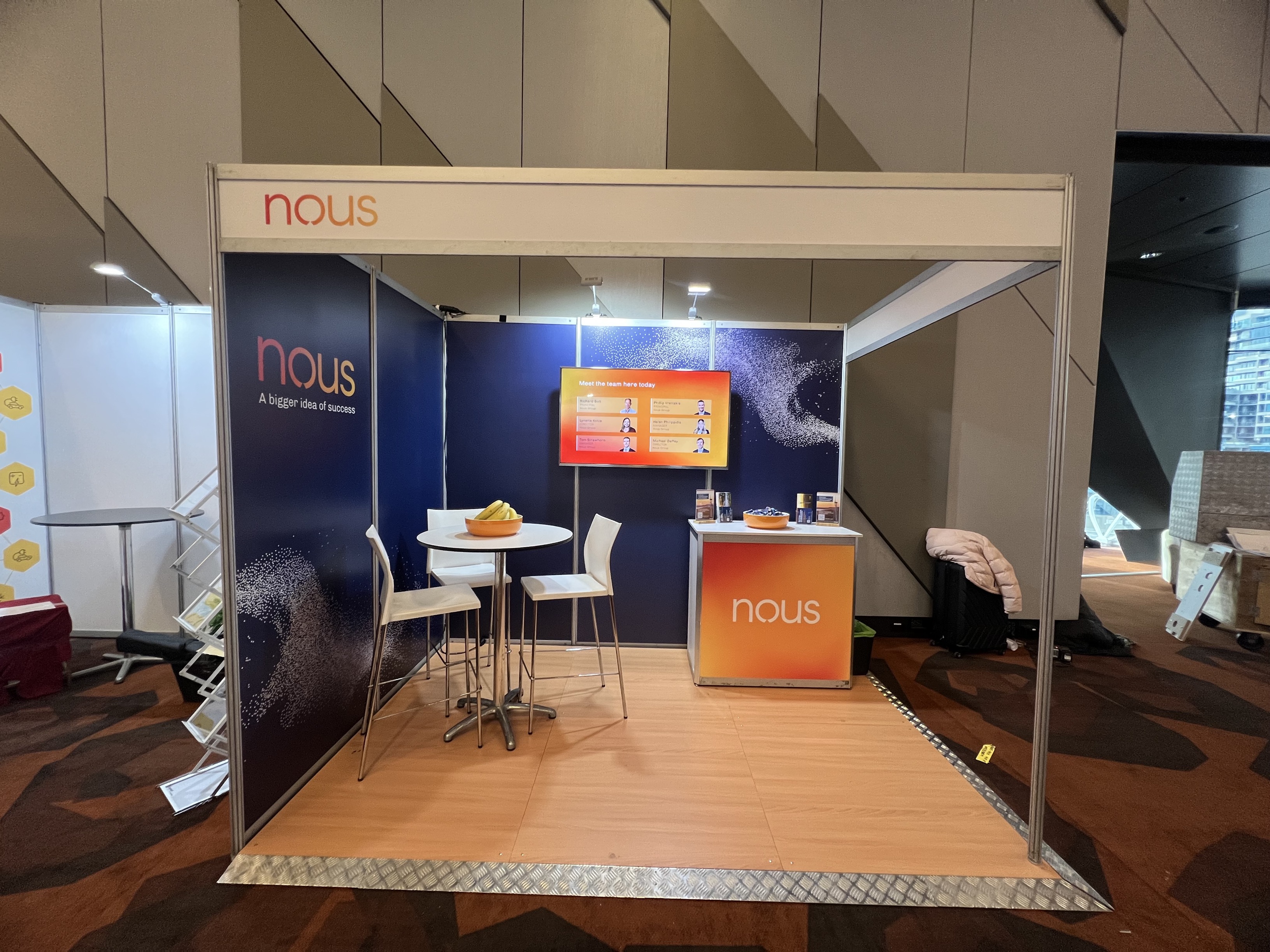
Come and meet the Nous team at our booth, located at A9 in the exhibition hall.
Drop by the Nous booth
Net zero will be a huge task – but it is also an achievable one
Greater disclosure on sustainability is coming. Here’s how your organisation can get ready
OUR INSIGHTS
OUR WORK
View Bio
View Bio
Managing climate change risk needs every part of an organisation to act
We developed an evidence base and strategy to inform Victoria’s offshore wind program
A climate action roadmap for the further education sector
A new organisational design for an energy provider
Director
Michael Daffey

Principal
Phillip Vrettakis

Principal
Craig Knox Lyttle

Principal
Claire Noone

Director
Tom Strawhorn

Director
Al McCall

Director
Hamish Stein

Subscribe

Richard Bolt
Wadzi Katsidzira
Simon Guttmann


JOIN US
Back to top

Legal & Governance


As part of the Nous team, you’ll be able to think big, elevate your ambitions and partner with leading experts to do interesting work with impact.
Great people
Great opportunity
Principal
Claire Noone
Principal
Craig Knox Lyttle
Director
Al McCall
Director
Tom Strawhorn
Director
Hamish Stein
Director
Michael Daffey
Principal
Phillip Vrettakis
nousgroup.com
Careers