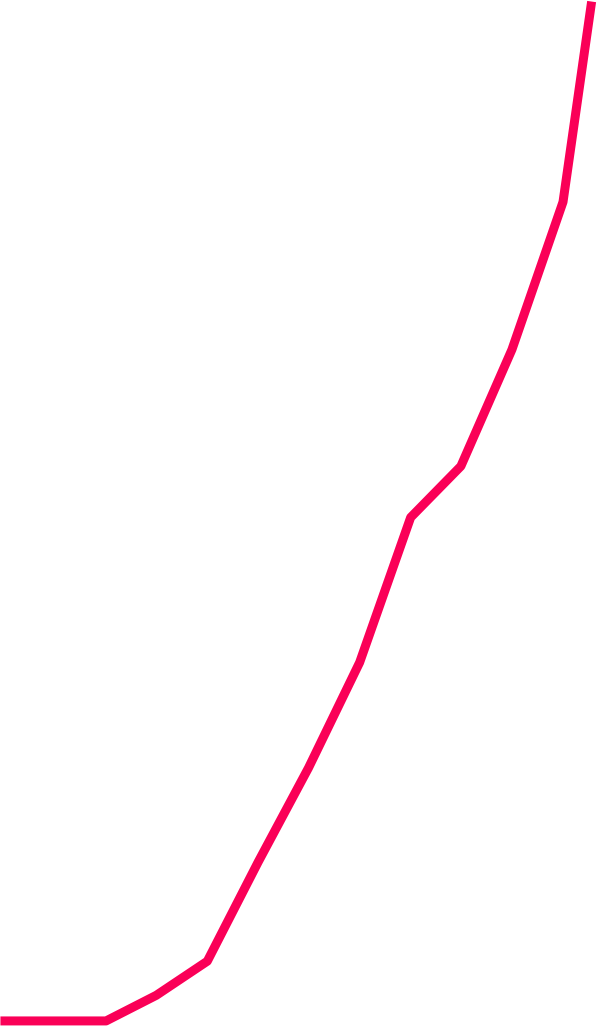
The OFR Financial Stress Index, a widely followed gauge of stress in financial markets, is rising although not to levels of previous crises.
A recent Reuters poll of economists predicts that the range will reach 4.75%-5% in early 2023 signaling further pressure to come.
4.75%-5%
Source: Reuters
Predicted hike range of fed funds rate in 2023
The UK’s gilt market crisis, triggered by the government’s “mini-budget” of September 23, signalled the fragility in markets.
They fell and their yields soared as investors sold, alarmed by the scale of unfunded tax cuts. The selling pressure was compounded as UK defined benefit pensions’ liability-driven investment (LDI) funds struggling with liquidity sold further gilts to meet margin calls. 30-year gilt yields rose from under 3.5% before the announcement to over 5%.
UK Gilts Crisis
Rising Rates With More To Come?

The U.S. Fed's Federal Open Market Committee is ratcheting up the pressure on markets as it raises the fed funds rate at the fastest rate since 1981. In December, the Fed implemented another increase of 0.5%, hoisting its target range to between 4.25% and 4.5%. The range was near zero as recently as March.
When stress in indebted financial systems rises, the risk of a liquidity crack-up mounts. At its root is usually a mismatch between the terms of lending or investing and the ability to repay. Financial crises can be triggered by large economic shocks or interest rate rises.
The index measures systemic financial stress – disruptions to the normal functioning of financial markets. When the index is zero it indicates that stress levels are normal. But a positive index including recent levels, indicates that stress is above average.
UK government bonds are not the only sign of fragility in financial markets.
At the end of November, the yen had lost more than 15% of its value against the dollar in 2022, as Japan’s zero interest rate policy radically contrasted with the U.S. Federal Reserve’s rapid tightening.
Extreme dislocations in markets such as this can put pressure on debt-funded positions and spark liquidity crises.
Japanese Yen Fragility

2015-19
1994-95


1987-89
2004-06
2022
Source: Federal Reserve Economic Data
Change in Effective Federal Funds Rate In Cycle (%)
2
4
0
10
5
0
40
45


30
25
20
15
35
The Fed is Hiking Further and Faster Than Any Time In Modern History


5
1
3
Months since hiking cycle began


Source: Reuters
In response, the Bank of England stepped in to buy gilts to avoid the funds collapsing.
The Bank also forced LDI funds to build up their liquidity defenses, stating publicly that more “stresses” could emerge as global financial markets adjust to the rapid rise in interest rates, with the “weak” points primarily in non-bank financial institutions like leveraged funds.
Weighted Average Level
OFR Financial Stress Index
Source: Refinitiv
Japanese Yen to USD
0.009
0.0085
0.008
0.0075
0.007
0.0065
Yen’s Decline vs Dollar Year-to-Date


Source: Refinitiv
Yield (%)
Liz Truss resignation
BoE ceases intervention
BoE widens intervention
BoE announces temporary targeted intervention
5
5.25
4.75
4.50
4.25
4
3.75
3.50
3.25
28
24
20
18
28
10
14
12
Oct 2022
Sept 2022
UK Long-Term Borrowing Costs Swing


30-year gilt yield (%)




Chapters Menu


CLOSE


Mar 2022
May 2022
Jul 2022
Sept 2022
Nov 2022
-10
-5
5
0
10
15
20
25
30


2022
2020
2018
2016
2014
2012
2010
2008
2006
2004
2002
2000
Credit

Equity valuation

Safe assets

Volatility

Funding


FSI


Source: Office of Financial Research







Explore


Explore
Explore
Explore
Explore





Select a Chapter to Continue:
Explore
Explore
Explore
Explore
Explore
Select a Chapter to Continue: