5G
Applications beyond mobile could be impacted by decoupling if fears about security implications override the desire for cooperation on innovative new ideas.
Initial investment in 5G
Pre-commercial 5G deployed
5G networks launched
Global 5G Deployment
$1.4 tn
China to invest in tech infrastructure to 2025.
costs for 5G will rise
As the U.S. leans on allies to cut out China from 5G infrastructure, and China de-Americanizes its own 5G ecosystem.
Both the U.S. and China are increasing investment in technology to mitigate the impact of decoupling. The trade war impedes the exchange of IP and expertise in technological research and development.
Estimated range of increased costs of restricting a key 5G infrastructure player in building networks in these countries over the next decade: Australia, Canada, France, Germany, Japan, India, United Kingdom, and the U.S.
+8-29%
Estimated cost of removing
Huawei 5G equipment in the U.K.
by 2027 in response to U.S. SANCTIONS.
$2.8 bn
5G will be transformative for our country, but only if we have confidence in the security and resilience of the infrastructure it is built upon.”
How the U.S. and China internally manage their respective spectrum policies, network deployment costs, and … 5G networks will ultimately determine who is better positioned for global leadership.”
Source: Oxford Economics
Source: Reuters
British Secretary of State for Digital, Oliver Dowden
“
“
5G has the potential to enable fundamentally new applications, industries and business models,…via unprecedented use cases… for mobile, eHealth, autonomous vehicles, smart cities, smart homes and IoT.”
Institute of Electrical and Electronics Engineers
Nicole Turner Lee, Brookings Institute
$250 BN
The U.S. Innovation and Competition Act (USICA) will invest heavily in domestic semiconductors, telecoms, lithium, rare earths and tech supply chains to counter China’s perceived threat.
+32%
Expected global 5G services compound annual growth rate 2020 to 2027.
“
“
5G is at the frontline of technological competition, and China appears to be the stronger competitor.
5G Generation Gap
Technology is a foremost issue in the U.S.-China relationship. China sees a critical need for technology-led productivity enhancements, while the U.S. is unwilling to relinquish its sizable technological edge to a strategic competitor.”
5G, who’s got the bandwidth?
Technology
Three Focal Points for the U.S.-China Relationship, PGIM Fixed Income, March 2021
Forecast 2026
2020
Sub-Saharan Africa
Middle East and North Africa
India, Nepal and Bhutan
Southeast Asia and Oceania
China
1250
1000
750
500
250
0
Northeast Asia, excl. China
Central and Eastern Europe
Western Europe
Latin America
North America
5G Subs
in Millions
Source: Ericsson
Source: GSA 5G Market Snapshot
Network slicing allows telcos to create multiple end-to-end networks on one infrastructure platform. Decoupling limits this potential because of national security concerns and the need for global standards and access.
Potential revenue per annum
of Network Slicing Market by 2025.
$300 bn
Source: Mordor Intelligence
Read More
of U.S. businesses in China want the U.S. government to refrain from aggressive rhetoric and actions.
of U.S. businesses in China say the Phase One trade deal mitigated the impact of bilateral trade frictions.
PRESSURE MAY MITIGATE ESCALATION OF TRADE TENSIONS. THE PHASE ONE TRADE DEAL HAS ALREADY MADE A POSITIVE IMPACT.
46%
53%
Source: AmCham China 2021 China Business Climate Survey

Potential losses to U.S. and Chinese economies by 2030 if all U.S.-China trade is subjected to a 25% tariff.
U.S. Chamber of Commerce, 2021
Trade decoupling means forgoing market access not only today, but ever more importantly, for years to come.”
“
China and the U.S. are at a pivotal moment in their trade relationship. Two polarized outcomes, and a spectrum between them are possible: a decoupled relationship with long-term tariffs and an adversarial attitude underpinned by protectionism and mistrust; or a thawing in the geopolitical environment, leading to open trade, reduced tariffs and newfound cooperation.
While decoupling represents a significant drag on many sectors, strategic coupling could increase overall trade to higher levels than before the trade war.
Even if the aggregate impact is one of lost growth, investment opportunities will appear along the way, not just in China and in the U.S. but from Europe to ASEAN to South Asia. Cutting-edge technologies are at the center of potential disruption by decoupling but they also present opportunities to be on the right side of a compelling investment theme. These sectors include 5G, semiconductors, solar, electric vehicles (EVs) and rare earth.
U.S. Chamber of Commerce, 2021
Institute of Electrical and Electronics Engineers
Trade decoupling means forgoing market access not only today, but ever more importantly, for years to come.”
How the U.S. and China internally manage their respective spectrum policies, network deployment costs, and expectations around the anticipated revenue models enabled over 5G networks will ultimately determine who is better positioned for global leadership.”
5G has the potential to enable fundamentally new applications, industries and business models, and dramatically improve quality of life around the world via unprecedented use cases… for mobile, eHealth, autonomous vehicles, smart cities, smart homes, and the IoT.”
“
“
“
Technology:
5G
Applications beyond mobile could be impacted by decoupling if fears about security implications override the desire for cooperation on innovative new ideas.
5G
5G Generation Gap
5G is at the frontline of technological competition, and China appears to be the stronger competitor.
Expected global 5G services compound annual growth rate 2020 to 2027.
+32%
Global 5G Deployment
5G networks launched
Pre-commercial 5G deployed
Source: GSA 5G Market Snapshot
Initial investment into 5G
Source: Ericsson
in Millions
5G Subs
North America
Latin America
Western Europe
Central and Eastern Europe
Northeast Asia exc. China
0
250
China
Southeast Asia and Oceania
India, Nepal and Bhutan
Middle East and North Africa
Sub-Saharan Africa
500
750
1000
1250
2020
Forecast 2026
Source: GSMA
US$300 bn
Potential revenue per annum of Network Slicing Market by 2025.
Network slicing allows telcos to create multiple end-to-end networks on one infrastructure platform. Decoupling limits this potential because of national security concerns and the need for global standards and access.
As the U.S. leans on allies to cut out China from 5G infrastructure, and China de-Americanizes its own 5G ecosystem.
costs for 5G will rise
Source: Oxford Economics
+8-29%
Estimated range of increased costs of restricting a key 5G infrastructure player in building networks in these countries over the next decade: Australia, Canada, France, Germany, Japan, India, United Kingdom, and the U.S.
Source: Reuters
$2.8 bn
Estimated cost of removing Huawei 5G equipment in the U.K. by 2027 in response to U.S. SANCTIONS.
U.S. Chamber of Commerce, 2021
Read More
5G will be transformative for our country, but only if we have confidence in the security and resilience of the infrastructure it is built upon.”
“
Both the U.S. and China are increasing investment in technology to mitigate the impact of decoupling. The trade war impedes the exchange of IP and of expertise in technological research and development.
Biden's American Jobs Plan to invest in wide-ranging infrastructure including tech over 10 years.
$2 tn
PRESSURE MAY MITIGATE ESCALATION OF TRADE TENSIONS. THE PHASE ONE TRADE DEAL HAS ALREADY MADE A POSITIVE IMPACT
53%
46%
of U.S. businesses in China say Phase One trade deal mitigated the impact of bilateral trade frictions.
Source: AmCham China 2021 China Business Climate Survey
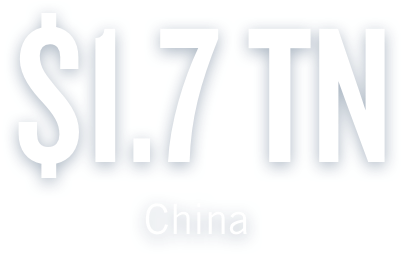
of U.S. businesses in China want the U.S. government to refrain from aggressive rhetoric and actions.
Source: Top 10 Semiconductor Vendors by Revenue, Worldwide, 2020 (Millions of U.S. Dollars) (January 2021), Gartner.
Semiconductors:
Who’s got the chips?
Semiconductors are central to consumer electronics. Today, China is the largest single country market for semiconductors, because it is a manufacturing and assembly hub for most of the world's smartphones and personal computers. But China doesn't have the semiconductor presence it wants. The leaders are Intel from the U.S. and Samsung Electronics from South Korea.
China semiconductor imports 2020
$350 bn
+14.6% over 2019
Top 10 Semiconductor Vendors by Revenue, Worldwide, 2020 ($US M)
Jordan Schneider
Senior Analyst, Rhodium
The most important change in respect to decoupling is getting China’s private sector on board with indigenization and making self-sufficient chips. The Huaweis and the Xiaomis are now very focused, in a way they were not five years ago, on helping to foster a domestic Chinese ecosystem.”
“
China’s IC Self-Sufficiency Goals from “Made in China 2025” Roadmap
China is ramping up self-sufficiency in semiconductors
Source: MIC 2025 Implementation Roadmap
Chinese chipmakers are boosting their R&D spending – but so are their more established rivals.
China still lags in chip innovation
R&D investment TSMC vs SMIC
For semiconductors, smaller is better. Taiwan Semiconductor Manufacturing Ltd's (TSMC) 2 nanometer chip is expected to hit the market in 2025. The smallest chip China's Semiconductor Manufacturing International Corporation (SMIC) can make is 14 nm and production is limited. The two firms’ R&D investments are also far apart.
Annual Standardized in $US M
If Full Decoupling Took Place and U.S. Semiconductor Sales to Chinese Customers Dropped to Zero:
TSMC
SMIC
Source: TSMC, SMIC company data
2019
2020
5,000.00
4,000.00
3,000.00
2,000.00
1,000.00
2016
2017
0.00
2018
-$12 BN R&D spending at U.S. semiconductor firms
0 bn
-25
-50
-75
-100
-US $83 BN annual sales revenue loss to U.S. makers
Source: BCG
-$13 BN capital spending
Manufacturer / Country
Intel
Samsung Electronics
70,244
56,197
3.7%
7.7%
15.6%
12.5%
2020 Revenue
2019-2020 Growth
2020
Market Share
SK hynix
Micron Technology
25,271
22,098
13.3%
9.1%
5.6%
4.9%
KIOXIA
Nvidia
10,208
10,095
30.4%
37.7%
2.3%
2.2%
Qualcomm
Broadcom
17,906
15,695
31.5%
2.4%
4.0%
3.5%
Texas Instruments
MediaTek
13,074
11,008
-2.2%
38.3%
2.9%
2.4%
Impact on U.S. GDP of Trade War De-escalation ($BN, 2020 Prices)
50
40
80
30
70
20
60
10
2022
2023
0
A de-escalation scenario is also possible
in which tariffs are gradually rolled back resulting in considerable impact on the U.S. economy.
2024
Source: Oxford Economics/Haver Analytics
2025
Yan Liang, Professor of Economics at Willamette University, Oregon.
The most practical approach to ‘being tough’ would be ‘competitive recoupling’, where the United States and China carefully manage their differences, coordinate and collaborate on areas of common interest, and compete on equal footing in areas such as technology and trade.”
“
China is vulnerable to disruption to supply of specialist goods that it cannot replicate – not just top-end chips for smartphones but exotic sensors and components, for which the U.S. is an important manufacturer.
Supply Chain
Truth and Hype about Rerouting
Semiconductors also illustrate a broader decoupling theme: the reorientation of supply chains throughout other parts of Asia that are not subject to tariffs or uncertainty, potentially mitigating the estimated $1 trillion or more losses to both sides.
Vietnam and South Asian countries like Bangladesh are frequently mentioned as nations that will benefit from this shift.
Shehriyar Antia, Head of Thematic Research at PGIM
Reshoring and reshaping supply chains does not mean abandoning China, but building more contingency.
Lessons learned from the pandemic had a profound impact on supply chain techniques, leading to a shift from a just-in-time approach to inventory to just-in-case, so as to mitigate uncertainties around supply.
The shifting of supply chains doesn’t happen instantly. Diversifying away from China was already underway in industries like auto components, tech and apparel.”
“
Tariffs encourage low-cost manufacturers to relocate from China to markets such as India, Indonesia, Bangladesh and Vietnam, improving the external balances of those economies.
While some supply chains reshore and reroute, U.S. companies remain committed to their foothold in China.
Strategic Coupling
of U.S. businesses are not considering relocating manufacturing outside China.
83%
Source: AmCham China 2021 China Business Climate Survey
Despite tariffs, bilateral U.S.–China trade is forecast to be strong following the Phase One agreement and if the pandemic abates.
Chinese Imports of Goods from the United States ($BN) in 2017-2019 and Estimated Under the China-U.S. Agreement in 2020-2021
Source: World Bank East Asia Pacific Economic Update April 2020
Agriculture
Textiles
Wearing
Apparel
Natural
Resources
Chemicals
Food
Metals
Transport
Equipment
Electronic
Equipment
Machinery
Other
Manufacturing
0
10
20
30
40
50
60
2017
2018
2019
2020
2021
No company represents the perils of geopolitical tensions more clearly than Huawei. The U.S. government's sanctions against the Chinese company have knock-on effects worldwide. For example, there is a lack of political clarity over whether European governments should accede to US demands to exclude equipment from Huawei.
“As with 4G, first-mover’s advantage is huge and countries rolling out 5G early will see most of the innovation,” an Ericsson spokeswoman said. So if European companies do observe US sanctions against China, they may be disadvantaged. Reuters’ analysis suggests 2021 could be a do-or-die year for Europe’s efforts to keep up in the race.
In addition, for 5G to reach its full potential beyond mobile applications, global standards and a degree of cross-border openness and trust are required.
Commodities:
Raw and Rare
Supply chains for manufactured goods start with raw commodities. These too are disrupted by decoupling’s ramifications.
THE U.S. WILL FIND ITS
DEPENDENCY ON CHINESE RARE EARTHS HARD TO BREAK
AS THEY ARE ESSENTIAL
IN MANY HIGH-TECH
PRODUCTS.
Global Rare Earth Minerals Production 2019
AirPods and electric vehicles.
For the rest of the world, there is no avoiding the need for China in some supply chains: China dominates refinement of Neodymium, used in
of U.S. businesses are not considering relocating manufacturing outside China.
83%
Source: AmCham China 2021 China Business Climate Survey
There is a ripple effect beyond the U.S. and China.
Read More
Source: WhiteHouse.gov
Source: DataCenter Knowledge
Source: GSA 5G Market Snapshot
Jordan Schneider
Senior Analyst, Rhodium
For semiconductors, smaller is better. Taiwan Semiconductor Manufacturing Limited’s (TSMC) 2 nanometer chip is expected to hit the market in 2025. The smallest chip China's Semiconductor Manufacturing International Corporation (SMIC) can make is 14nm and production is limited. The two firms’ R&D investments are also far apart.
Chinese chipmakers are boosting their R&D spending –
but so are their more established rivals.
China still lags in chip innovation
Read More
Top 10 Semiconductor Vendors by Revenue, Worldwide, 2020 ($M)
Intel
Samsung Electronics
SK hynix
Micron Technology
Qualcomm
Broadcom
Texas Instruments
MediaTek
KIOXIA
Nvidia
2020 Revenue
70,244
56,197
25,271
22,098
17,906
15,695
13,074
11,008
10,208
10,095
2020 Market Share
15.6 %
12.5 %
5.6 %
4.9 %
4.0 %
3.5 %
2.9 %
2.4 %
2.3 %
2.2 %
Country
Manufacturer
2019–2020 Growth
3.7 %
7.7 %
13.3 %
9.1 %
31.5 %
2.4 %
-2.2 %
38.3 %
30.4 %
37.7 %
USA
South Korea
South Korea
USA
USA
USA
USA
Taiwan
Japan
USA
The most important change in respect to decoupling is getting China’s private sector on board with indigenization and making self-sufficient chips. The Huaweis and the Xiaomis are now very focused…on helping to foster a domestic Chinese ecosystem.”
Semiconductors
2020
Size of China’s IC market reaches 60% of global market share
Size of China’s IC market reaches 70% of global market share
Domestic production reaches $140 BN (58% of domestic market demand)
Domestic production reaches $305.1 BN (80% of domestic market demand)
2030
R&D investment TSMC vs SMIC
Annual Standardized in $M
5,000
4,000
3,000
2,000
1,000
2016
2017
0
2018
2019
Source: TSMC, SMIC company data
2020
TSMC
SMIC
Who’s got the chips?
0
-25
-50
-75
-100
-U.S. $83 BN annual sales revenue loss to U.S. makers
-$12 BN R&D spending at U.S. semiconductor firms
-$13 BN capital spending
If Full Decoupling Took Place and U.S. Semiconductor Sales to Chinese Customers Dropped to Zero (in $BN):
Semiconductors are central to consumer electronics. Today; China is the largest single country market for semiconductors, because it is a manufacturing and assembly hub for most of the world's smartphones and personal computers. But China doesn't have the semiconductor presence it wants. The leaders are Intel from the U.S. and Samsung Electronics from South Korea.
China is ramping up self-sufficiency in semiconductors
China’s IC Self-Sufficiency Goals, from “Made in China 2025” Roadmap
“
China semiconductor imports 2020
$350 bn
+14.6% over 2019
China's semiconductor sector is growing at 16-20% p.a., according to the China Semiconductor Industry Association. A reliable Chinese semiconductor sector could extend to the creation of a new value chain not involving the U.S. The U.S. might then develop its own supply chain domestically, benefitting homegrown component makers there.
Decoupling could increase the likelihood of Chinese manufacturers trying to acquire technology and expertise.
This would be blocked if the U.S. CFIUS stopped Canyon Bridge Capital Partners from acquiring U.S. chipmaker Lattice Semiconductor Corporation in 2017 over concerns it was linked to the Chinese state, for example. So, chip specialists in other countries would become attractive.
But China is a long way behind at the very high end of chip technology. Without acquiring the capability, it will be playing catch-up at this elite level for a decade or more.
Eventually a bifurcated global semiconductor industry would develop.
China-Taiwan tensions are highly relevant to the semiconductor industry, as Taiwan creates 64% of all foundries, which supply chips to tech companies.
The Semiconductor Industry Association says that if Taiwan production was shut down for a year because of military or political circumstances, the cost to annual revenue for device makers worldwide would be $490 billion.
Source: South China Morning Post
Source: MIC 2025 Implementation Roadmap (from US Chamber of Commerce’s UNDERSTANDING DECOUPLING: Macro Trends and Industry Impacts)
Source: BCG
Source: Top 10 Semiconductor Vendors by Revenue, Worldwide, 2020 (January 2021), Gartner
Renewables
Going for green
Dr. Yew Wei Lit, Fellow in Social Sciences, Yale-NUS College
China-U.S. relations can... be a mix of bilateral climate cooperation and constructive competition… Who reaches net-zero emissions first and who becomes the largest renewable energy solution provider.”
SECTORS INCLUDING 5G, SEMICONDUCTORS AND RARE EARTHS WILL REMAIN TRADE BATTLEGROUNDS AND INVESTMENT THEMES WITH $1 TN TO $1.7 TN AT STAKE FOR THE ECONOMIES OF THE U.S. AND CHINA.
On the Horizon?
Three Focal Points for the U.S.-China Relationship,
PGIM Fixed Income,
March 2021
Three Focal Points for the U.S.-China Relationship,
PGIM Fixed Income,
March 2021
China’s threat to reunify with Taiwan is real and credible… the West’s largely rhetorical reaction to China’s accelerated integration of Hong Kong could embolden China to be more assertive towards Taiwan. It’s a risk the markets have essentially overlooked to this point.”
Beyond the fate of trade deal phases… We expect something of a technological arms race between the countries, likely resulting in competing platforms across a range of cutting-edge technologies.”
“
“
Sheena Chestnut Greitens, Associate Professor,
Lyndon B. Johnson School of Public Affairs at the University of Texas at Austin,
PGIM China Symposium February 2021
One potential area where I think there will be a push to get cooperation with both China and Europe is on climate.”
“
The Pursuit of Outperformance
0
175,018
62,200
55,500
45,930
26,869
20,120
13,108
11,300
9,483
7,862
50,000
100,000
150,000
200,000
Top 10 Solar Power Producers in 2019, in Megawatts
Megawatts Produced
China
U.S.
Japan
Germany
India
Italy
U.K.
Australia
France
South Korea
A battery shortage is on the horizon while innovation in the sector is gathering pace.
Demand
Supply
Balance
2019
2020
Shortage
2021
2022
2023
2024
2025
2026
2027
2028
2029
2030
Battery Supply Shortage Forecast to 2022
70%
8 of 14
SCARCE RAW MATERIALS ARE CENTRAL TO AN EMERGING ENERGY THEME: ELECTRIC VEHICLES (EVs).
China could use tactical decoupling to control supplies for batteries.
Growth of the EV sector is reliant upon the availability of cobalt and other components of batteries.
of the global supply of cobalt is from the Democratic Republic of Congo.
cobalt miners in DRC are Chinese-owned.
80%
of the world’s mined cobalt is refined by China.
THE COBALT CONUNDRUM
400
Estimated number of EV makers in China
2020
2025
2035
0%
20%
40%
60%
Growth for New Energy Vehicles in China
Seeking the next Tesla and Nio will be a preoccupation of investors.
Many decoupling themes impact lithium-ion batteries:
Resource scarcity, using soft power to gain supply, and potential gains for companies that maneuver around supply chain constraints.
The battle against climate change is an area where strategic recoupling is seen as a necessity.
China already makes more than
of the world’s solar cells.
70%
Supply chains and commodities also play into the global climate change challenge.
U.S. has set a target of net zero by 2050, while China has committed to carbon neutrality by 2060.
Source: World Population Review 2019
Source: OECD
Source: U.S. Geological Service
Source: OECD
Source: Center for Strategic and International Studies
Source: SNE Research
Read More
SO WHAT?
Investment themes -
The US Innovation and Competition Act (USICA)
Supply Chain
Truth and Hype about Rerouting
“
The most practical approach to ‘being tough’ would be ‘competitive recoupling’ where the U.S. and China carefully manage their differences, coordinate and collaborate on areas of common interest, and compete on equal footing in areas such as technology and trade.”
Yan Liang, Professor of Economics at Willamette University, Oregon
A de-escalation scenario
is also possible
in which tariffs are gradually rolled back, resulting in considerable impact on the U.S. economy.
Impact on U.S. GDP of Trade War De-escalation ($BN, 2020 Prices)
50
40
80
30
70
20
60
10
2022
2023
0
2024
2025
Chinese Imports of Goods from the United States ($BN) in 2017-2019 and Estimated Under the China-U.S. Agreement in 2020-2021.
Agriculture
Natural
Resources
Food
Textiles
Wearing
Apparel
Chemicals
Metals
Transport
Equipment
Electronic
Equipment
Machinery
Other
Manufacturing
2017
2018
2019
2020
2021
60
50
40
30
20
10
0
Despite tariffs, bilateral U.S.–China trade is forecast to be strong following the Phase One agreement and if the pandemic abates.
of U.S. businesses are not considering relocating manufacturing outside China.
83%
While some supply chains reshore and reroute, U.S. companies remain committed to their foothold in China.
Strategic Coupling
China is vulnerable to supply disruption of specialist goods that it cannot
replicate – not just top-end chips for smartphones but exotic sensors and components, for which the U.S. is an important manufacturer.
Reshoring and reshaping supply chains does not mean abandoning China but building more contingency.
Lessons learned from the pandemic have a profound impact on supply chain techniques, leading to a shift from a just-in-time approach to inventory to just-in-case, so as to mitigate uncertainties around supply.
Read More
TARIFFS ENCOURAGE LOW-COST MANUFACTURERS TO RELOCATE FROM CHINA TO MARKETS SUCH AS INDIA, INDONESIA, BANGLADESH AND VIETNAM.
Shehriyar Antia, Head of Thematic Research at PGIM
The shifting of supply chains doesn’t happen instantly. Diversifying away from China was already underway in industries like auto components, tech and apparel.”
“
Semiconductors also illustrate a broader decoupling theme: the reorientation of supply chains throughout other parts of Asia that are not subject to tariffs or uncertainty, potentially mitigating the estimated $1 trillion or more losses to both sides.
Vietnam and South Asian countries like Bangladesh are frequently mentioned as nations that will benefit from this shift.
When the COVID-19 pandemic broke out in early 2020, vulnerabilities around supplies of personal protective equipment (PPE) were thrown into stark relief as many countries had relied exclusively on China for items such as masks and ventilators.
Even if COVID-19 abates, countries want to make sure they have PPE available and possibly manufactured locally in case supply is disrupted. The UK, U.S., Canada and France are all examples of countries that brought PPE manufacturing onshore during COVID-19.
In the U.S., Ford and General Motors worked with medical device manufacturers to increase production of respirators, while in the UK, Airbus, Jaguar, Landrover and
Rolls-Royce were sent blueprints to manufacture ventilators.
This supports the reshoring theme, arguably making supply chains with China at the center less essential.
Source: AmCham China 2021 China Business Climate Survey
Source: World Bank East Asia Pacific Economic Update April 2020
Source: Oxford Economics/Haver Analytics
62,200
Top 10 Solar Power Producers in 2019, in Megawatts
0
55,500
45,930
26,869
20,120
13,108
11,300
9,483
7,862
50,000
100,000
Source: World Population Review 2019
China
U.S.
Japan
Germany
India
Italy
U.K.
Australia
France
South Korea
150,000
175,018
200,000
Megawatts Produced
Renewables:
Going for green
Supply chains and
commodities also play into
the global climate change challenge.
Both the U.S. and China have set ambitious decarbonization targets. The U.S. has set a target of net zero by 2050 while China has committed to carbon neutrality by 2060.
China already makes more than
of the world’s solar cells.
70%
Scarce Raw materials are central to an emerging energy theme: Electric Vehicles (EVs).
EVS are a priority for China.
Growth of the EV sector is reliant upon the availability of cobalt and other components of batteries.
THE COBALT CONUNDRUM
Source: OECD
80%
of the world’s mined cobalt is refined by China.
Source: U.S. Geological Service
70%
of the global supply of cobalt is from the Democratic Republic of Congo.
Source: OECD
8 of 14
cobalt miners in DRC are Chinese owned.
China could use tactical decoupling to control supplies for batteries.
Many decoupling themes impact lithium ion batteries.
Resource scarcity, using soft power to gain supply, a race for leadership in renewable technologies, and potential gains for companies that maneuver around supply chain constraints.
400
Estimated number of EV makers in China
Seeking the next Tesla and Nio will be a preoccupation of investors.
2020
Source: Center for Strategic and International Studies
2025
2035
0%
20%
40%
60%
Growth for New Energy Vehicles in China
The battle against climate change is an area where strategic recoupling is seen as a necessity.
Professor Sheena Chestnut Greitens, Associate Professor, Lyndon B. Johnson School of Public Affairs at the University of Texas at Austin
PGIM China Symposium February 2021
PGIM Perspectives,
Three Focal Points for the U.S.-China Relationship,
March 2021
PGIM Perspectives,
Three Focal Points for the U.S.-China Relationship,
March 2021
Dr. Yew Wei Lit, Fellow in Social Sciences, Yale-NUS College.
One potential area where I think there will be a push to get cooperation with both China and Europe is on climate.”
China’s threat to reunify with Taiwan is real and credible… In a scenario where the economic and military gap between the U.S. and China remains, the West’s largely rhetorical reaction to China’s accelerated integration of Hong Kong could embolden China to be more assertive towards Taiwan. It’s a risk the markets have essentially overlooked to this point.”
Beyond the fate of trade deal phases, China can exert significant economic leverage via the market access it provides to U.S. companies and affiliates. We expect something of a technological arms race between the countries, likely resulting in competing platforms across a range of cutting-edge technologies.”
China-U.S. relations can... be a mix of bilateral climate cooperation and constructive competition. The U.S. could challenge China to a showdown of climate supremacy: Who reaches net-zero emissions first and who becomes the largest renewable energy solution provider.”
“
“
“
“
Trade is the battleground upon which the decoupling war will take place with $1 TN to $1.7 TN at stake for either the U.S. or China.
On the Horizon?
The Pursuit of Outperformance
Source: SNE Research
Demand
Supply
Balance
Shortage
2019
2025
2030
A battery shortage is on the horizon while innovation in the sector is gathering pace.
Battery Supply Shortage Forecast to 2022
Total Production 213,000 tonnes, up from 190,000 tonnes in 2018.
China
62%
Australia
10%
U.S.
12%
Myanmar
10%
Russia
1%
India
1%
Madagascar
1%
Others
2%
China to invest in tech infrastructure to 2025
$1.4 tn
U.S. Chamber of Commerce, 2021
Trade decoupling means forgoing market access not only today, but ever more importantly, for years to come.”
“
Potential losses to U.S. and Chinese economies by 2030 if all U.S.-China trade is subjected to a 25% tariff.
China and the U.S. are at a pivotal moment in their trade relationship. Two polarized outcomes, and a spectrum between them, are possible: a decoupled relationship with long-term tariffs and an adversarial attitude underpinned by protectionism and mistrust; or a thawing in the geopolitical environment, leading to open trade, reduced tariffs and newfound cooperation.
While decoupling represents a significant drag on many sectors, strategic coupling could increase overall trade to higher levels than before the trade war. But recent legislation in the US, and rhetoric going in both directions, suggests suspicion and protectionism may be more powerful today than trade.
Even if the aggregate impact is one of lost growth, investment opportunities will appear along the way, not just in China and in the U.S. but from Europe to the ASEAN countries and South Asia. Cutting-edge technologies are at the center of potential disruption by decoupling but they also present opportunities to be on the right side of a compelling investment theme. These sectors include 5G, semiconductors, solar, electric vehicles (EVs) and rare earth.
STRATEGIC COUPLING, TACTICAL DECOUPLING
PRESENT
How to navigate the next decade of U.S.-China relations
+
Source: Oxford Economics/Haver Analytics
So What?
Investment Themes - 5G
So What?
Investment Themes -
The US INNOVATION AND COMPETITION ACT (USICA)
So What?
Investment Themes -
SEMICONDUCTORS
So What?
Investment Themes -
THE COVID EFFECT
2020
2030
Size of China’s IC market reaches 60% of global market share
Domestic production reaches $140 BN (58% of domestic market demand)
Size of China’s IC market reaches 70% of global market share
Domestic production reaches $305.1 BN (80% of domestic market demand)
SO WHAT?
INVESTMENT THEMES - COMMODITIES
KNOCK-ON EFFECT OF COMMODITY TENSIONS
The threat of a China ban on exports of rare earths to the US strengthens the valuation of anyone else who can supply these minerals. Several countries with alternative sources of rare earths, including Australia, Brazil and Canada may benefit. The 2020 pandemic aid and spending package also includes $800 mn to fund rare earth and strategic minerals research.
But new sources of rare earth won’t come cheap. The Perth US Asia Center estimates that rare earths not sourced from China will be 20-25% more expensive. The increased costs are due in part to stricter environmental standards that are not observed by Chinese producers. As an alternative, recycled materials are now in demand. Apple started using recycled rare earths in its iPhones to mitigate potential interruptions to the supply chain.
China’s dominance in the rare earth sector is entwined with its Belt and Road Initiative under which it has built in developing nations in exchange for security of commodities.
SO WHAT?
INVESTMENT THEMES -
THE COVID EFFECT
When the COVID-19 pandemic broke out in early 2020, vulnerabilities around supplies of personal protective equipment (PPE) were thrown into stark relief as many countries had relied exclusively on China for such items as masks and ventilators.
Even if COVID-19 abates, countries want to make sure they have PPE available and possibly manufactured locally in case supply is disrupted.The UK, US, Canada and France are all examples of countries that brought PPE manufacturing onshore during COVID-19.
In the US, Ford and General Motors worked with medical device manufacturers to increase production of respirators, while in the UK, Airbus, Jaguar, Landrover and Rolls Royce were sent blueprints to manufacture ventilators.
This supports the reshoring theme, arguably making supply chains with China at the center less essential.
SO WHAT?
INVESTMENT THEMES -
SEMICONDUCTORS
China's semiconductor sector is growing at 16-20% p.a. according to the China Semiconductor Industry Association. A reliable Chinese semiconductor sector could extend to the creation of a new value chain not involving the US. The US might then develop its own supply chain domestically, benefitting homegrown component makers there.
Decoupling could increase the likelihood of Chinese manufacturers trying to acquire technology and expertise.
This would be blocked in the US – CFIUS stopped Canyon Bridge Capital Partners from acquiring US chipmaker Lattice Semiconductor Corporation in 2017 over concerns it was linked to the Chinese state, for example. So chip specialists in other countries would become attractive.
But China is a long way behind at the very high end of chip technology. Without acquiring the capability, it will be playing catch-up at this elite level for a decade or more.
Eventually a bifurcated global semiconductor industry would develop.
China-Taiwan tensions are highly relevant to the semiconductor industry, as Taiwan creates 64% of all foundries, which supply chips to tech companies.
The Semiconductor Industry Association says that if Taiwan production was shut down for a year because of military or political circumstances, the cost to annual revenue for device makers world-wide would be US $490 BN.
SO WHAT?
INVESTMENT THEMES - THE US INNOVATION AND COMPETITION ACT (USICA)
The new act plans to commit $250 billion to bolster American technology and innovation, to counter China’s ambitions.
Read More
SO WHAT?
INVESTMENT THEMES - 5G
No company represents the perils of geopolitical tensions more clearly than Huawei. The US government's sanctions on the Chinese company have knock-on effects worldwide. For example, there is a lack of political clarity over whether European governments should accede to US demands to exclude equipment from Huawei.
“As with 4G, first-mover’s advantage is huge and countries rolling out 5G early will see most of the innovation,” an Ericsson spokeswoman said. So if European companies do observe US sanctions on China, they may be disadvantaged. Reuters’ analysis suggests 2021 could be a do-or-die year for Europe’s efforts to keep up in the race.
In addition, for 5G to reach its full potential beyond mobile applications, global standards and a degree of cross-border openness and trust are required.
Read More
Read More
Commodities
Supply Chain
Semiconductors
TECHNOLOGY
INTRO
Renewables
Renewables
Commodities
Supply Chain
Semiconductors
TECHNOLOGY
INTRO
Renewables
Commodities
Supply Chain
Semiconductors
TECHNOLOGY
INTRO

Renewables
Commodities
Supply Chain
Semiconductors
TECHNOLOGY
INTRO

Renewables
Commodities
Supply Chain
Semiconductors
TECHNOLOGY
INTRO

Renewables
Commodities
Supply Chain
Semiconductors
TECHNOLOGY
INTRO

Renewables
Commodities
Supply Chain
Semiconductors
TECHNOLOGY
INTRO
Renewables
Commodities
Supply Chain
Semiconductors
TECHNOLOGY
INTRO
Renewables
Commodities
Supply Chain
Semiconductors
TECHNOLOGY
INTRO
Geopolitical threats and rivalries may continue to impede a strengthening of trade ties.
On the Horizon?
“
SCARCE RAW MATERIALS ARE CENTRAL TO AN EMERGING ENERGY THEME: ELECTRIC VEHICLES (EVs).
EVS ARE A PRIORITY FOR CHINA.
Decoupling Advantage
U.S. (and European) 5G Suppliers
Decoupling Disadvantage
China – Loss of Business from U.S. and allies
Strategic Coupling
Decoupling Disadvantage: China
Decoupling Disadvantage: U.S. & China - Market Loss
Decoupling Disadvantage: China
Strategic Coupling
Decoupling Advantage: China
Strategic Coupling
Decoupling Disadvantage: China
Decoupling Disadvantage
U.S. & China – Market Loss
Decoupling Disadvantage: China
The new Act plans to commit $250 billion to bolster American technology and innovation, in order to counter China’s ambitions.
A total of $52 billion has been allocated to semiconductor research, design and manufacturing.
$49.5 billion for the “CHIPS for America Fund”, to encourage domestic chip production through incentives and R&D.
A total of $1.5 billion will go to developing open-architecture wireless technologies and ‘leap-ahead’ tech for U.S. mobile broadband.
The Act takes aim at Huawei, saying it “presents unacceptable
risks to our national security.”
The U.S. will also push for supply-chain transparency for semiconductors.
The Department of Energy will release a 10-year plan to develop a lithium battery supply chain, with EVs in mind.
The Department of Interior will lead a task force on rare earths, with the aim to produce, refine and recycle critical minerals in the US.
The Department of Commerce is considering an investigation into neodymium magnets under the related Trade Expansion Act.
Part of the Bill called Endless Frontier will overhaul the National Science Foundation and establish a Directorate for Technology and Innovation to address supply-chain resilience and technology innovation.
Generally, the Act is great news for any company able to assist the U.S. with these ambitions around domestic supply, security and self-sufficiency.
The Act will seek to advance an “Indo-Pacific strategy centered on strengthening U.S. alliances and partnerships,” in order to “confront China’s malign political influence and predatory economic practices.”
Some specific references to other countries within this strategy include Afghanistan and minerals, Pakistan and the Belt and Road Initiative, Indian economic and security challenges, and a broader mission to warn partners in the Middle East and North Africa about the risks of Chinese telecommunications infrastructure. This suggests the U.S. may step in as a source of funding, technology and infrastructure.
Overall, the Act’s tone is divisive and challenging, openly referring to China’s government as an “adversary.” It suggests more decoupling than recoupling.
China itself has reacted angrily to the Act and its wording. Foreign Ministry spokesman Wang Wenbin says the U.S. sees China as an “imaginary enemy” and that the legislation “distorts the facts.”
Overall, the Act’s tone is divisive and challenging, openly referring to China’s government as an “adversary.” It suggests more decoupling than recoupling.
The Act will seek to advance an “Indo-Pacific strategy centered on strengthening U.S. alliances and partnerships,” in order to “confront China’s malign political influence and predatory economic practices.”
Generally, the Act is great news for any company able to assist the U.S. with these ambitions around domestic supply, security and self-sufficiency.
Part of the Bill called Endless Frontier will overhaul the National Science Foundation and establish a Directorate for Technology and Innovation to address supply-chain resilience and technology innovation.
The Department of Commerce is considering an investigation into neodymium magnets under the related Trade Expansion Act.
The Department of Interior will lead a task force on rare earths, with the aim to produce, refine and recycle critical minerals in the US.
The Department of Energy will release a 10-year plan to develop a lithium battery supply chain, with EVs in mind.
The U.S. will also push for supply-chain transparency for semiconductors.
The Act takes aim at Huawei, saying it “presents unacceptable risks to our national security.”
A total of $1.5 billion will go to developing open-architecture wireless technologies and ‘leap-ahead’ tech for U.S. mobile broadband.
$49.5 billion for the “CHIPS for America Fund”, to encourage domestic chip production through incentives and R&D.
The new Act plans to commit $250 billion to bolster American technology and innovation, in order to counter China’s ambitions.
A total of $52 billion has been allocated to semiconductor research, design and manufacturing.
$49.5 billion for the “CHIPS for America Fund”, to encourage domestic chip production through incentives and R&D.
A total of $1.5 billion will go to developing open-architecture wireless technologies and ‘leap-ahead’ tech for U.S. mobile broadband.
The Act takes aim at Huawei, saying it “presents unacceptable
risks to our national security.”
The U.S. will also push for supply-chain transparency for semiconductors.
The Department of Energy will release a 10-year plan to develop a lithium battery supply chain, with EVs in mind.
The Department of Interior will lead a task force on rare earths, with the aim to produce, refine and recycle critical minerals in the US.
The Department of Commerce is considering an investigation into neodymium magnets under the related Trade Expansion Act.
Part of the Bill called Endless Frontier will overhaul the National Science Foundation and establish a Directorate for Technology and Innovation to address supply-chain resilience and technology innovation.
Generally, the Act is great news for any company able to assist the U.S. with these ambitions around domestic supply, security and self-sufficiency.
The Act will seek to advance an “Indo-Pacific strategy centered on strengthening U.S. alliances and partnerships,” in order to “confront China’s malign political influence and predatory economic practices.”
Some specific references to other countries within this strategy include Afghanistan and minerals, Pakistan and the Belt and Road Initiative, Indian economic and security challenges, and a broader mission to warn partners in the Middle East and North Africa about the risks of Chinese telecommunications infrastructure. This suggests the U.S. may step in as a source of funding, technology and infrastructure.
Overall, the Act’s tone is divisive and challenging, openly referring to China’s government as an “adversary.” It suggests more decoupling than recoupling.
China itself has reacted angrily to the Act and its wording. Foreign Ministry spokesman Wang Wenbin says the U.S. sees China as an “imaginary enemy” and that the legislation “distorts the facts.”
Figures and information provided are estimates subject to change.
Source: Ericsson
Figures and information provided are estimates subject to change.
Source: Center for Strategic and International Studies
Figures and information provided are estimates subject to change.
Source: BCG
Figures and information provided are estimates subject to change.
Source: U.S. Chamber of Commerce, 2021
Data as of 05/30/2021 unless otherwise noted.
Explore more insights on China’s rising role in the world economy
OUTFRONT

Global Rare Earth Minerals Production 2019
Total Production 213,000 tonnes, up from 190,000 tonnes in 2018.
China
62%
Australia
10%
U.S.
12%
Myanmar
10%
Russia
1%
India
1%
Madagascar
1%
Others
2%
THE U.S. WILL FIND ITS
DEPENDENCY ON CHINESE RARE EARTHS HARD TO BREAK,
AS THEY ARE ESSENTIAL
IN MANY HIGH-TECH
PRODUCTS.
COMMODITIES
RAW AND RARE
There is a ripple effect beyond the U.S. and China.
of global neodymium is in China.
90%
AirPods and electric vehicles.
Read More
For the rest of the world, there is no avoiding the need for China in some supply chains: China dominates refinement of Neodymium, used in
Supply chains for manufactured goods start with raw commodities.
These too are disrupted by decoupling’s ramifications.
Decoupling Advantage: China
Source: Reuters/USGS
Source: Reuters

Renewables
Commodities
Supply Chain
Semiconductors
TECHNOLOGY
INTRO

Renewables
Commodities
Supply Chain
Semiconductors
TECHNOLOGY
INTRO

So What?
Investment Themes -
COMMODITIES
KNOCK-ON EFFECT OF COMMODITY TENSIONS
The threat of a China ban on exports of rare earths to the U.S. strengthens the valuation of anyone else who can supply these minerals – such as Lynas Rare Earths, an Australian company that received a $30 million investment from the U.S. Department of Defense in January 2021. The 2020 pandemic aid and spending package also includes $800 million to fund rare earth and strategic minerals research.
But new sources of rare earth won’t come cheap. The Perth USAsia Center estimates that rare earths not sourced from China will be 20-25% more expensive. The increased costs are due in part to stricter environmental standards that are not observed by Chinese producers. As an alternative, recycled materials are now in demand. Apple started using recycled rare earths in its iPhones to mitigate potential interruptions to the supply chain.
China’s dominance in the rare earth sector is entwined with its Belt and Road Initiative, under which it has built in developing nations in exchange for security of commodities.