Managing Director and Co-Chief Investment Officer of PGIM Fixed Income
Gregory Peters
Markets are in a much more fragile place, with terrible liquidity. The way I think about fragile market function is that the odds of a financial market accident are just higher."

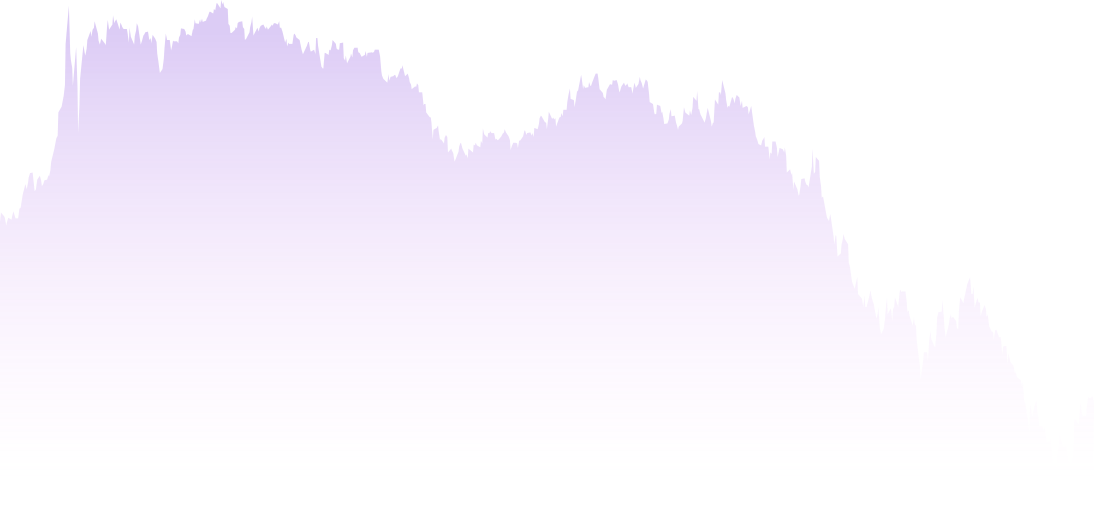
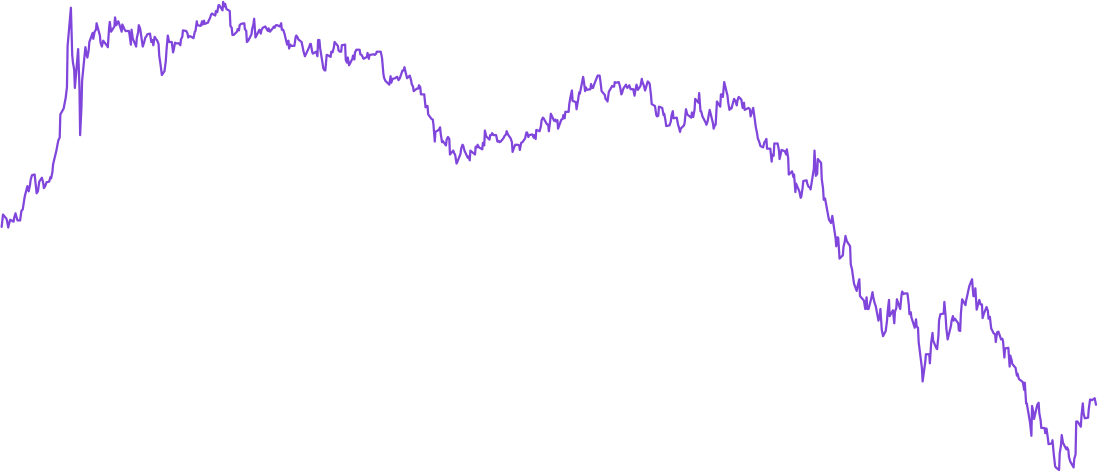
Government bond markets are finding that liquidity increasingly tends to evaporate at moments of stress.
USD
1850
1900
1800
1750









1700
1650
1600
1550
Source: Refinitiv
Nov 30 2022
Jan 2 2020
1500
ICE BofA U.S. Treasury Index
One reason is that big banks no longer act as market makers, due to tighter regulatory controls. Apart from 2022’s gilts crisis, this illiquidity sparked a near-disaster in Treasuries in March 2020 and some observers fear that a so-called “volatility vortex” in U.S. markets could happen again. An index of market liquidity recently descended to the lows not seen since March 2020.

Government Bond Markets
Here are five areas where liquidity could suddenly disappear:
In 2000, non-banks held $51 trillion of financial assets, compared with banks’ $58 trillion, according to the Financial Stability Board. Its latest data shows that non-banks held $227 trillion in financial assets at the end of 2020 – far greater than banks at $180 trillion. That means no one knows exactly where leverage is and where financial risks might be lurking.

An unintended consequence of the regulation of banks that followed the GFC is that leverage has shifted to non-bank financial institutions that are harder to monitor.

















Leveraged Finance
Source: European Central Bank: Banking Supervision
European Central Bank officials have reportedly been telling banks to cut down on extending debt to highly leveraged borrowers.
The ECB has warned of “significant deficiencies” in how banks evaluate and manage risks associated with this type of credit. Risks in leveraged lending have continued to increase, with global primary issuance reaching a new record of $4 trillion in 2021 while underwriting standards fell, according to the ECB.
Japan's Next Move
The possibility of a disorderly exit in Japan from its ultra-easy monetary policy is causing anxiety. Since 2016, Japan has capped its interest rates at close to zero by buying bonds in a policy called yield curve control.
With yields rising around the world, though, pressure is rising on the central bank to exit this policy early in 2023. Should it do so, there are fears that interest rates would swiftly move significantly higher, impacting investors in assets like Japanese government bonds who have taken comfort in the cap to leverage their holdings to increase returns. They could suffer large losses and margin calls, with reverberations throughout global markets.
Emerging Markets
Housing


Source: Refinitiv
The 10% Club – countries with yields exceeding or close to 10%

Once again, emerging markets are a source of worry as outflows from the countries’ stocks and bonds reach high levels.
Source: IMF
Many developing countries that are not commodities exporters and have dollar denominated debt, are suffering from depreciating currencies and rising borrowing costs, driven by the U.S. Fed’s rising rates, with the IMF recently estimating that 30% of emerging markets are at or near debt distress, with yields exceeding 10% (see 10% club chart).
Emerging market foreign currency bonds are now trading at high premiums to U.S. treasuries in signs of extreme stress. High reliance on short-term funding and foreign exchange borrowing leaves some emerging markets more exposed to changes in market sentiment and rising short-term dollar borrowing costs.
† The price to income ratio is the nominal house price index divided by the nominal disposable income per head and can be considered as a measure of affordability
Sources: Reuters Plus compiled statistics, Knight Frank Research Macrobond, OECD, Refinitiv, Hypostat
United Kingdom
United States
Sweden
Spain
Portugal
Norway
New Zealand
Netherlands
Luxembourg
Italy
Ireland
Germany
France
Finland
Denmark
Canada
Australia
†
Housing Risk Indicators,
Selected Countries
Housing Risk Indicators
A surge in mortgage rates across much of the rich world will almost certainly cause house prices to fall.
Much depends on how far house prices have risen or whether homeowners have borrowed with long-term fixed rate mortgages or floating rate mortgages that are highly sensitive to movements in interest rates. These could feed through into losses for non-bank financial institutions. Sweden and Norway are thought particularly vulnerable due to the high level of households with variable rate mortgages.


As central banks prioritize price stability over financial stability, the risks of a crack-up remain even though inflation appears to be easing from its highest levels. For now, it’s important to note that there’s no immediate indication that a major crisis will occur. But central banks have a delicate path to tread as they strive to quell inflation at a time of high debt and evident financial vulnerability.
Across financial markets, there are dangers of hidden risks accumulated in yesterday’s era of super-low interest rates.
These risks may lie in the public sector where governments have borrowed hugely through the pandemic and energy crisis.
Alternatively, they could be the result of investor leverage, as positions assumed to be low risk suddenly turn out to be far higher risk when interest rates rise. If sudden risks to financial stability crystallize, the Fed and other central banks might have to pause or even halt their monetary tightening.
Conclusion

1



3

4

5


14.6%
Nigeria


9.97%
Russia


11.3%
Turkey


12.9%
Pakistan


10.35%
South Africa


13.73%
Kenya


42.83%
Ghana

13.25%
Colombia

13.25%
Brazil


8.5%
Hungary


121.57
139.65
115.6
125.06
149.41
113.93
147.28
151.71
148.66
114.66
143.06
118.56
96.72
112.76
140.59
92.38
119.53
2015 = 0 - Q3 2022 or latest available
House Price to Income Ratio
3.5
4.5
1.75
2
2
4.25
2.5
2
2
2
4.25
1.25
2
2
2
2
3.1
Policy Rates
%-point increase
Jan 1 2021 - Dec 15 2022
23.6
45.3
32.2
5.3
29
26.4
38.1
39.7
34.7
21.8
41.7
18.8
14.1
17.2
28.1
9.7
26.7
% increase
2019-Q2 2022
House Prices
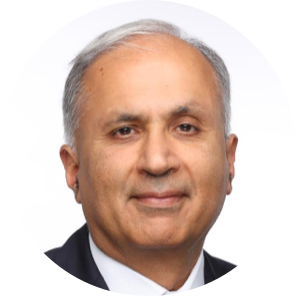
Chief Investment Officer, PGIM Wadhwani
Dr. Sushil Wadhwani
Macro conditions will be very difficult over the next two or three years. I strongly suspect that this is going to elicit significant political ructions and problems in the stability of our financial system. So, you're likely to see important unknown unknowns turn up. And our portfolios therefore have to be both defensive and diversified.”
The Pursuit of Outperformance
2






































Chapters Menu






Explore


Explore
Explore
Explore
Explore





Select a Chapter to Continue:

CLOSE


Learn More