EXPLORE the energy landscape
energy transition
Energy Security
Reliance on Fossil fuels
energy transition
Reliance on Fossil fuels
Energy Security
Wages
Dependable energy is not just critical for economic development, it is considered by most countries to be an essential aspect of national security.
Nuclear power peaked after the 1970s oil shock
Nuclear reactor construction starts between 1971 and 1983
Note: From 1984 to 2022 there were only five occasions with more than ten construction starts.
Source: World Nuclear Association. March 2024.
Tech and Demographics
There are multiple economic and political reasons for the continued significance of fossil fuels, but three factors are often underappreciated in discussions on the pace of the energy transition:
Fossil fuels power today’s world
Energy consumption by primary source, terawatt hours
Note: Zero-carbon includes solar, wind, biofuels, hydropower and nuclear.
Source: US Energy Information Administration, Global Energy Outlook 2023. March 2024.
Employment outlook of future leading and lagging industries in Europe
Labor Shortages
Electrification is a critical component of the energy transition for two reasons:
BY REGION

•
•
•
•
•
•
•
•
•
Governments including Japan, China, Germany, the US and India maintain strategic reserves of oil or natural gas.
With gas supply threatened by Russia’s invasion of Ukraine, Germany had to return to heavy carbon-emitting sources to ensure energy access.
Countries where fossil fuels are relatively abundant will likely have an extended transition to renewables.
Countries without sufficient domestic reserves have the option of seeking imports or alternative sources, such as nuclear in the 1970s.

There are many specific industrial uses where electricity and renewables may not offer a complete substitute for fossil fuels.
The elaborate global infrastructure network for fossil fuels provides a huge incumbency advantage over renewables.
Permitting issues and NIMBYism contribute to a lack of capital for critical grid infrastructure.

It can reduce the direct use of fossil fuels – like in automobiles and motorbikes.
Electricity is the one form of energy that can be affordably produced without significant carbon emissions through solar, wind, hydro or nuclear generation.
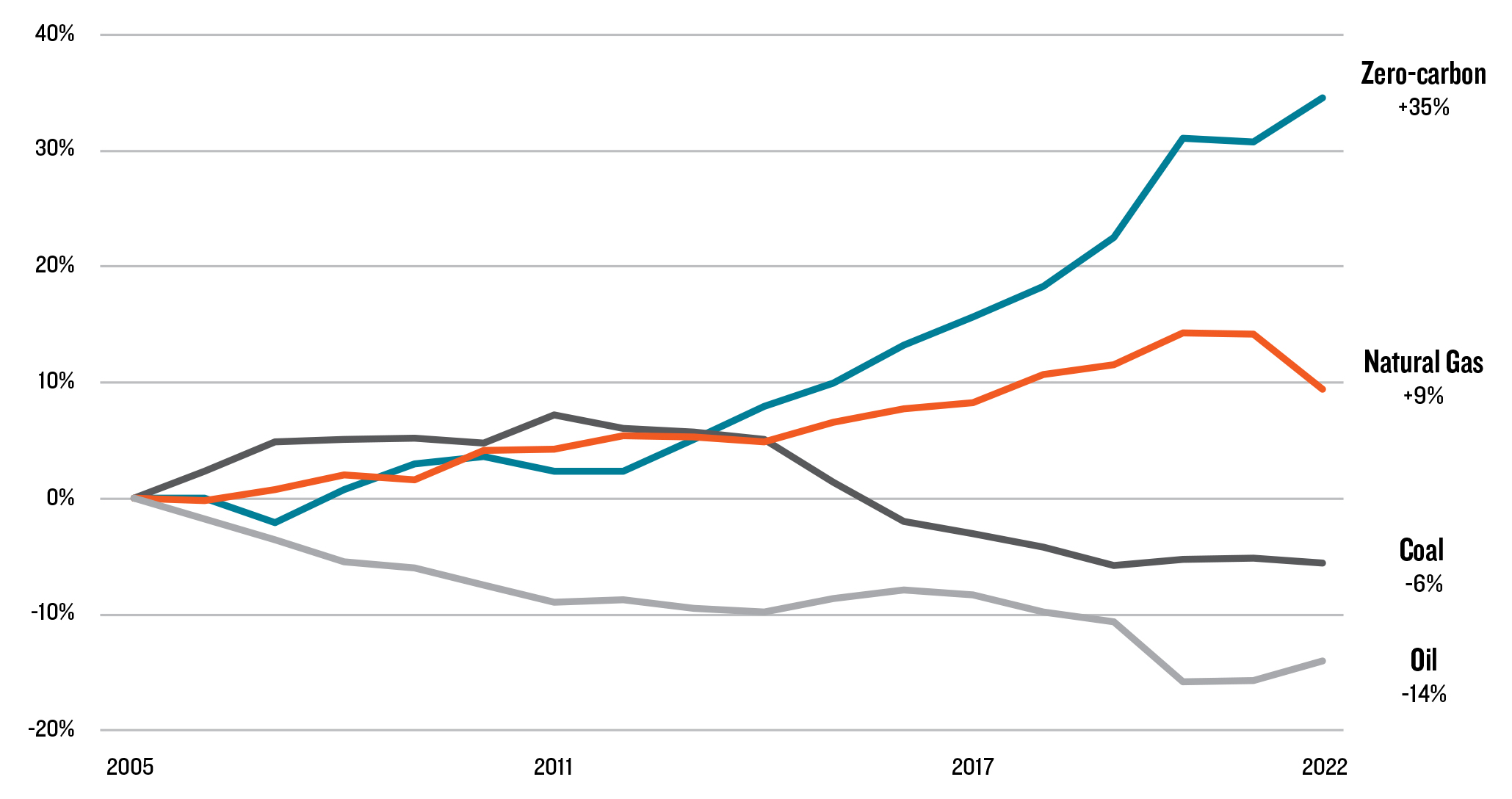
The current energy transition has been ongoing for two decades
Increase in primary sources’ share of global energy consumption
Source: Energy Institute, Statistical Review 2023. March 2024.