Feast
Water
out
of
— Nat Belkov and Jess Mayhugh
Why a crab feast is the ultimate late-summer flex
Presented by:


presented by:
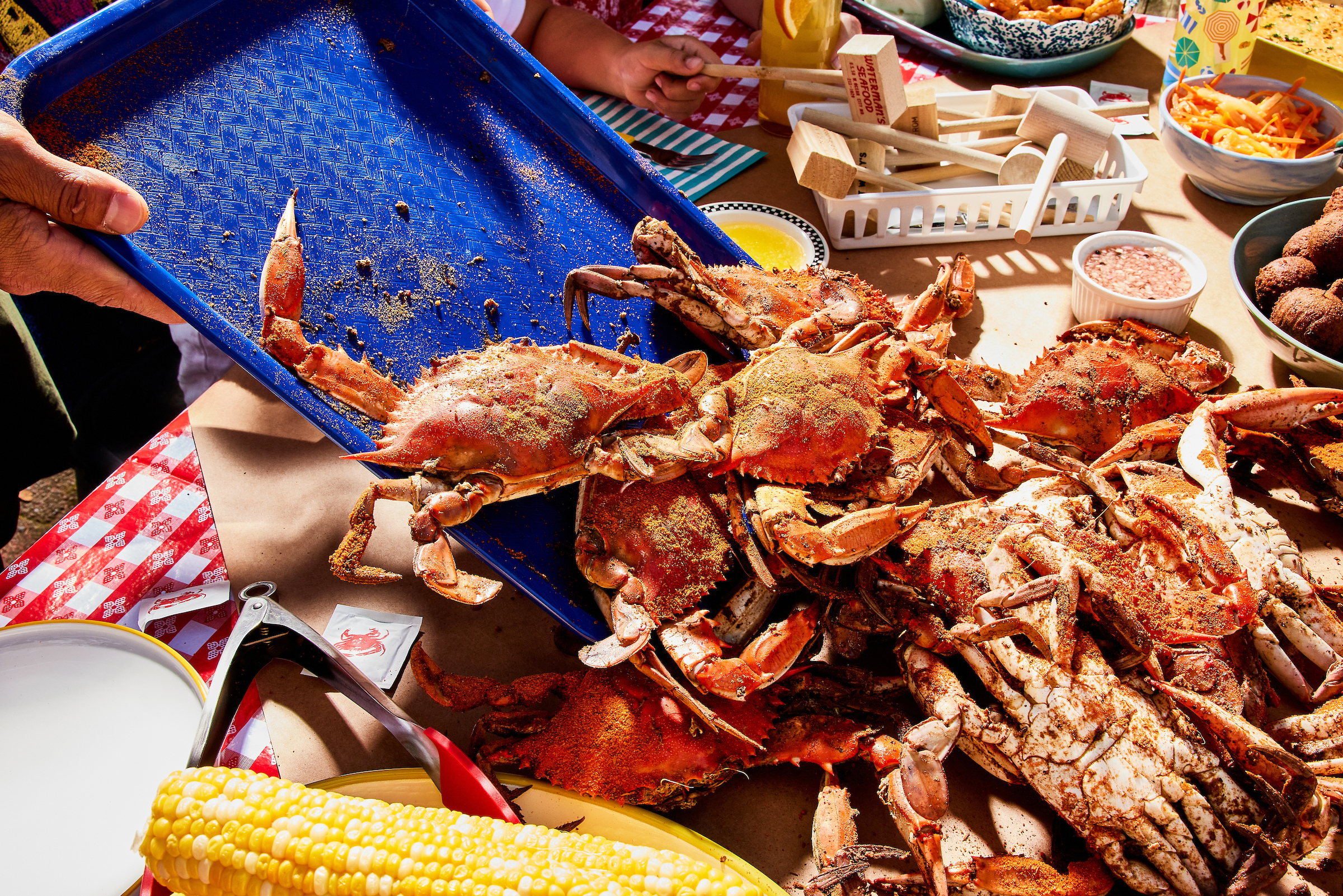
When temperatures reach a boiling point, the air is molasses-thick, and you can’t stomach the thought of standing next to a stove, there is only one solution: an outdoor crab feast. This mid-Atlantic tradition is where pretense goes to die — it’s best enjoyed in the backyard, perhaps barefoot in a bathing suit, surrounded by family and friends. Steamed blue crabs are dumped by the bushel onto tablecloths made of newsprint or butcher paper, and quickly pilfered by hands encrusted in seafood seasoning. Side dishes lean summery simple, and the drink menu consists of canned beer still dripping wet from the cooler. Generations sit around the picnic table, each passing along advice on their preferred way to pick a crab, and conversation never gets heavier than the current score of the ballgame.
As much as this summertime rite of passage has stayed the same, the crab feast is also evolving. Watermen are rethinking how they harvest in an effort to preserve local crab populations. Chefs are getting more creative, looking beyond the simple sliced tomatoes and corn on the cob and instead bringing Shirazi salad with Persian cucumbers and pomegranate seeds, or spicy sambal-marinated shrimp salad to the party. Inventive cocktails — like the regional Orange Crush and Spaghett — have entered the bar cart. Plus, with rising seafood prices, home cooks are finding new ways to use Old Bay and even making a case for canned crab. Even as the tides turn, the spirit of the humble crab feast remains unchanged. Blue crabs are hardworking food, a reflection of the place they come from, and there is no greater way to learn this lesson than by hunching over the dock to pull dinner up out of the water and sidling up to the picnic table to enjoy it. Every pound of the mallet, stinging cut on the hands, and treasure hunt inside a tiny claw makes the meat taste all the sweeter.