Rice Vermouth
Oka Kura Bermutto is Japan’s first foray into vermouth, which builds on the country’s tradition of infused sake. Its debut is part of a larger thirst for Japanese products at American bars, from whisky to bitters and even ice.

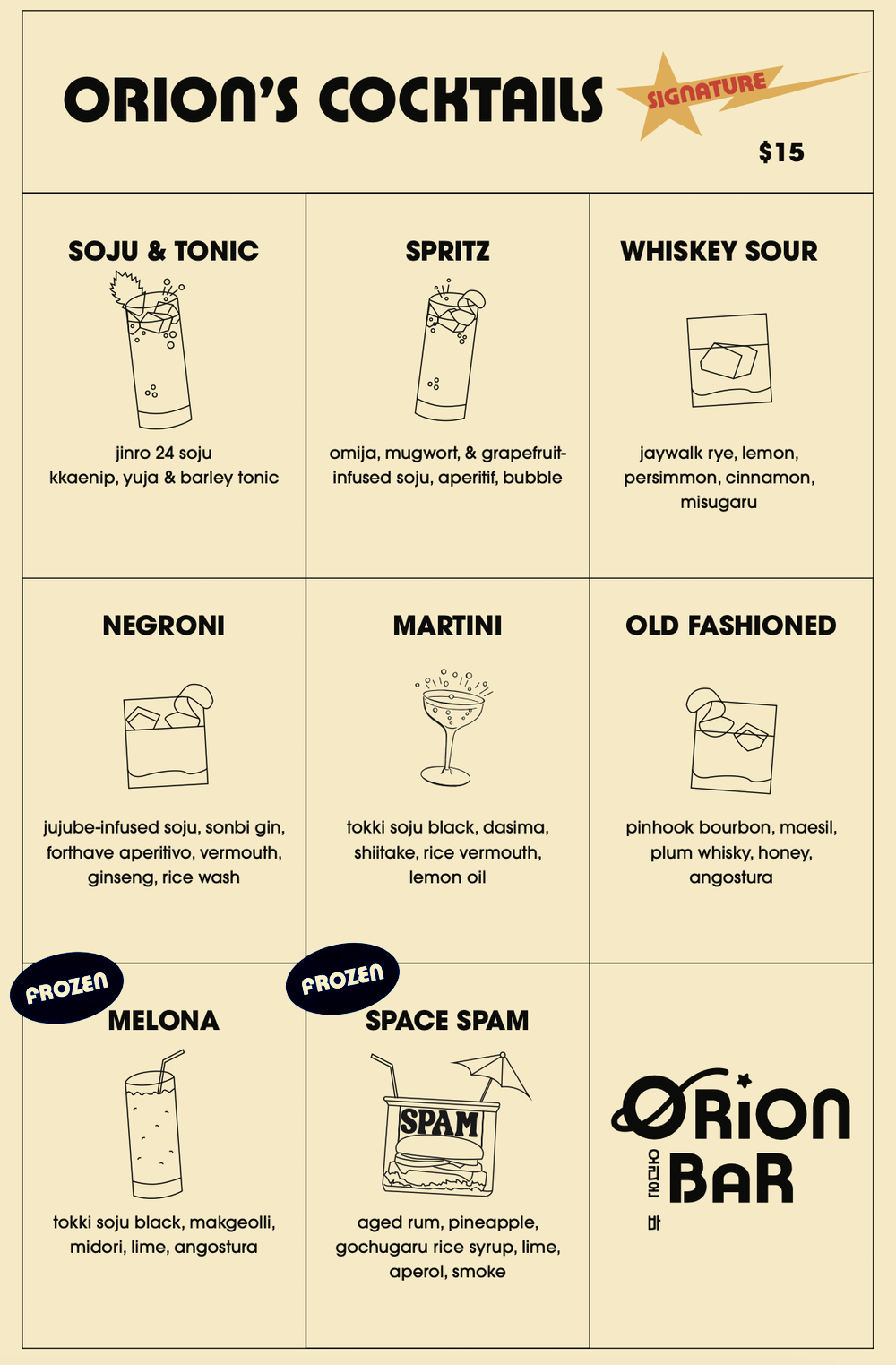
Also known as magnolia berries, omija—here infused into soju—expresses five flavors at once: sweet, sour, umami, spicy and bitter. Though they’re traditionally used to make hot or iced teas, Korean bars and restaurants are incorporating them into cocktails to add layers of flavor with just one ingredient.
Omija
Between Hot Dog Martinis and French Toast flips, cocktails are looking more and more like meals. This frozen drink similarly channels food, albeit in a less-literal way. The tiki-style presentation nods to Hawai‘i, where Spam is popular, while the drink itself leans bright and fruity, with a subtle savory edge.
Spam
Once seen as a vestige of the cocktail Dark Ages, Midori today is a celebrated ingredient in everything from its tried-and-true modern classics (like the Japanese Slipper) to other formats (like the Alaska) that benefit from its bright profile.
Midori
For the Negroni—which is shaken at Orion Bar—medium-grain Korean rice gets added to the tin for boosted texture; the move is similar to a popular technique that calls on the starchiness of sushi rice.
Rice Wash
Force-carbonating has become a staple at minimalist and high-volume bars to make service more seamless. It also offers more consistent and longer-lasting bubbles, and is used here for the bar’s on-tap Soju & Tonic.
Force Carbonation
Click the blue icons to learn more.