


How the Queers Stole Billiards
The C U Next Tuesdays were the sole queer and femme team in New Orleans’ pool league. Seeing an opportunity, their captain created a monthly tournament at the local dive, Big Daddy’s.
tables and chairs tipping unevenly against the brick façade. It is 7 p.m. on a Thursday and a group begins to gather, acknowledging one another on the sidewalk before making their way inside. Low ceilings, a long bar hugging the far wall and sparsely attended stools greet anyone walking through the door. The window dampens the last of the afternoon’s light, the strongest glow cast by a few azure gambling machines and the Yuengling lamp suspended over a single green-felted pool table.

June 21, 2024
PLACES
Caro Clark is a writer based in New Orleans and Southeast Alaska. She is a one-time winner of the Big Daddy’s pool tournament.

By Caro Clark
Photos by Annie Flanagan
ig Daddy’s sign glows dimly, the night sky having not yet settled into itself. The bar overlooks a nondescript New Orleans street corner with a couple
B

The bar could be anywhere in America, not exactly flaunting the gothic charms of Louisiana fame. One might also wonder what unites this particular crowd. Without the drinks, it would be reasonable to mistake the participants for an AA meeting or a grief support group. Which is to say, they seem mysteriously linked despite a contrast in identities, fashion and age. Only the leisurely assemblage of cue sticks reveals the evening for what it is: a pool tournament, with a notable absence of cis men.
For over a year, Sarah Brooks has organized the local women and trans pool tournament. She first joined a male-dominated league of over 50 teams by founding the one queer and femme team, aptly named the C U Next Tuesdays. From there, she had the idea to create a broader space for people to play pool who were not necessarily drawn to the macho dynamics of league night games. “I’ve had friends who say, ‘I just want to play and not get hit on for a night, or not have a dude explain to me how to hold a pool stick.’” As Sarah continued with the league, she observed a change. “I started noticing more and more women joining the league, and trans people.” Thus, the women and trans monthly pool tournament was born. “It’s less judgmental, you can make mistakes, it’s OK to lose and [you’re] not constantly getting hit on, harassed, or being told what to do.”
Born and raised in New Orleans, Sarah’s own love story with the game started at the warehouse of Lucky Coin Machine, the company that distributed billiards tables to local bars. Her dad was the manager there, and he would bring Sarah and her siblings with him on the weekends while he performed maintenance on the machines. “He said, ‘The only way you can play the arcade games is if you shoot pool for 30 minutes.’” That’s where her education began.
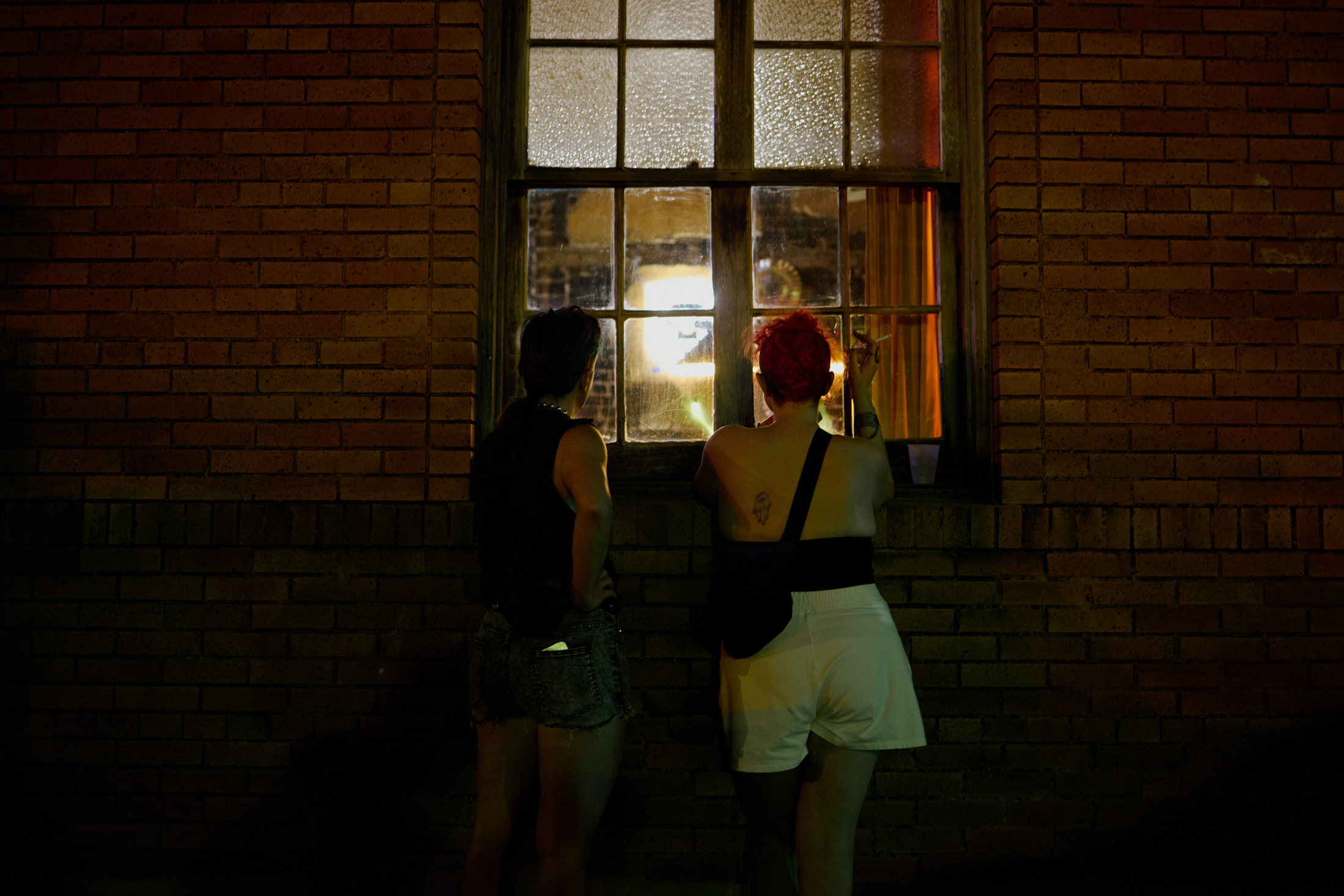

To accommodate the players, the first round of the tournament is divided between Big Daddy's (left) and its more fashionable neighbor, Anna's, located across the street.
Like Sarah, the other players offer their own origin stories for how pool became their monthly, weekly or even daily habit, and why they have been drawn to the tournament. Branwen, Sarah’s girlfriend, describes getting her start in the club where she worked. “In my free time, I started playing men, and as I started getting better, the more I wanted to beat them, and the more I wanted to beat them, the less I wanted to play them,” she says. “I saw how they weren’t focused on the camaraderie of it.”
As the night gets started, some stand outside, smoking cigarettes and trading stories. One player, Andrea, reminisces about her first few days in New Orleans, back in the ’90s, when she was thrown against the wall of a bar by a stranger. “He didn’t know if I was a gay man or butch. I said to him, ‘Are you really going to hit a woman?’” she recalls. When he let go of her, she says, “I beat his ass.”
Branwen calls people inside and begins the evening by introducing the contenders, all met with whoops and whistles. Players then pick cards from a deck to determine the bracket setup. There are 16 hopefuls and a long night ahead. Most have played in the tournament before, while a few are newer to the scene.
The first round is split between Big Daddy’s and its more fashionable neighbor, Anna’s. Once those initial eight matchups are complete, the rest of the tournament’s events unfold in the dimly lit comfort of Big Daddy’s.
Tucked in the Marigny neighborhood, the gay bar has been open since the early ’90s; many of its original regulars are still holding court 30 years later. It’s a haven for those seeking a queer space beyond the confines of the Quarter’s saturated bar scene. The laid-back dive, which often sports an undefinable crowd, hosts the occasional lesbian dance party and parade spillover, and is a spot for service industry workers to unwind from a busy night. Though it was once open 24 hours, since the pandemic began it’s kept an early 3 a.m. bedtime.
Bobby has been a bartender there for six years. When Sarah first approached him about holding the monthly tournament, he gladly supported her. “It’s a great group of people who clearly love and care for each other. I love anyone who truly enjoys playing on the Big Daddy’s table; it’s one of the nights that I really look forward to working,” he says.

Many players have their own origin stories for how pool became their monthly, weekly or even daily habit, and why they have been drawn to the tournament.
In the city’s bigger league, some cis male players get visibly annoyed that they are being put up against a woman or someone queer. Sometimes an infantilizing attitude of “OK kiddo, let’s see what you got” clouds the dynamic. This tournament is different. When the games begin, two things become clear: The talent is impressive, but so is the generosity. Players cheer for their opponents. “Nice shot,” is repeated often. Hugs? Abounding. Some even pass a cue back and forth between turns.
A celebrity guest of the night is Branwen’s mom, Linda, who planned her visit from Port Townsend, Washington, around the tournament schedule. She recalls her own journey to the sport, beginning in the ’80s. “The atmosphere I grew up playing in was really competitive, and you had to get a really tough skin to survive and continue to enjoy the game,” she says. “I’ve had men get angry at me and throw pool cues at me, just because they lost to a woman.”
Tara, one of the highest-ranked players in the room, loses in her first match and retreats to another bar to shoot more pool. Linda wins handily in her first round, and then loses in a heartbreaker to Andrea. Branwen and Sarah play each other, to the delight of observers, and after a tense race for the eight ball, Branwen beats her partner. The two share an unabashed kiss. “It’s a beautiful thing to create, from the ground up, spaces that are for gay, queer, trans people and women; it’s OK to have something just for us,” says Branwen.
In the city’s bigger league, some cis male players get visibly annoyed that they are being put up against a woman or someone queer.
This tournament is different.


Linda looks on proudly. “My daughter has improved immensely, and it’s all because she has this, I think. It just makes me feel good all over; it’s so inspiring, it makes me want to go home and start one.” She pauses and shrugs at the idea. “It’d be fun to try, and I hope it grows. I hope other people get inspired to join.”
The bracket thins and players retire their cues. At the end of the night, Andrea wins against Branwen. The energy is buoyant but also exhausted. It’s late, nearly midnight, and the crowd dwindles as people return to their separate corners of the city. Still, someone stays to rack another game, and they continue to play.

As a counter to the male-dominated leagues, Sarah Brooks organized a women and trans pool tournament held monthly at New Orleans' dive bar, Big Daddy's.
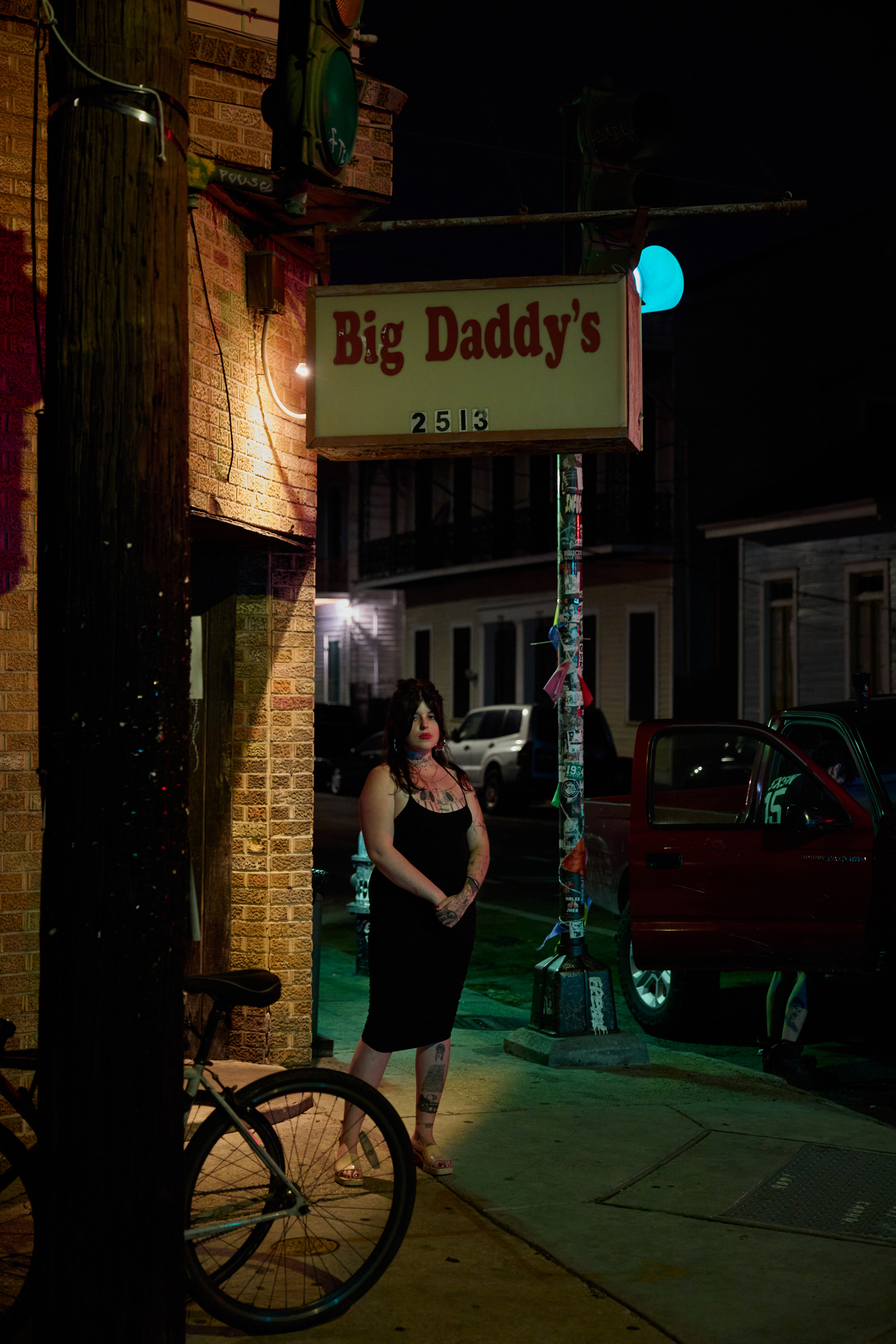
Branwen, Sarah's girlfriend, got her start playing pool at the club where she worked. “In my free time, I started playing men," she says. “I saw how they weren’t focused on the camaraderie of it.”