Learn more about PGE Wind Generation
Additional Resources:
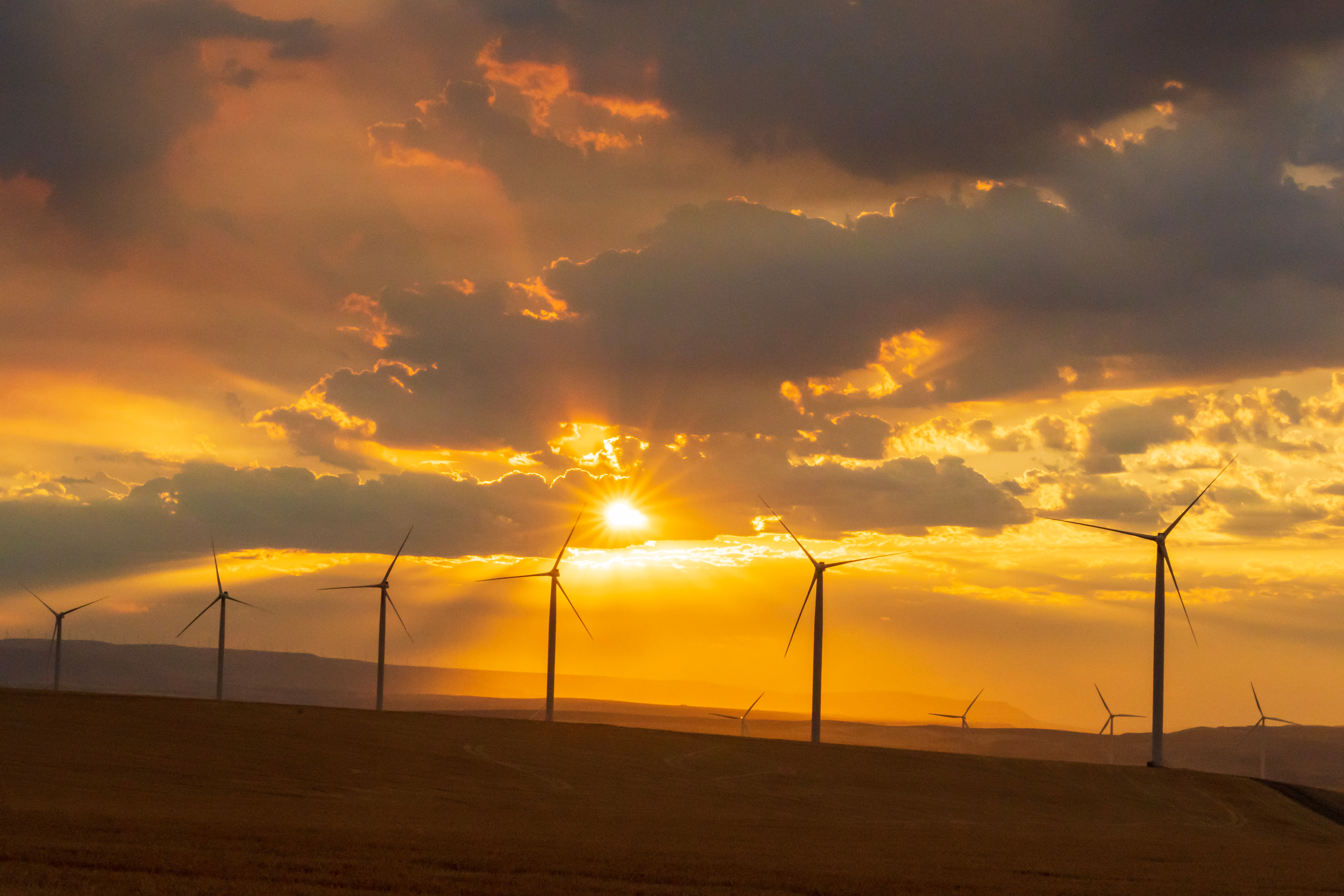
PGE broke ground on the project in February 2007, with the first 10 turbines being energized in October 2007, producing electricity at the location for the first time. The first phase of the development concluded in December 2007, with all 76 turbines becoming operational; each turbine is about 262 feet high.
Phases 2 and 3 erected 65 turbines and 76 turbines, respectively. Phase 2 was completed in August 2009, and Phase 3 was completed in September 2010. Overall, all three phases of the project included 217 total turbines.
Since 2007, PGE has been a regional leader in wind generation – one of Oregon’s newest forms of power production. Wind power, solar power and battery storage offer unique benefits, including affordable emissions-free energy.
Biglow Wind Farm was PGE’s first wind farm, completed in 2010. It has a total installed capacity of 450 MW. Given the variability of wind power, the plant produces an average of around 150 MW — enough to power the homes of about 125,000 average residential customers.
Biglow Canyon Wind Farm
Power of Wind Generation
2007 - Present
450 MW
Net Capacity
Oct. 15, 2007 - present
Commercial operation
Wasco County
Location
The Beaver Combustion Plant takes its name from the site on which it was built, the Beaver Army Ammunition Depot, a major army shipping point for the Pacific Theater of Operations.
In 1973 stream flows and reservoir levels hit record lows. The threat of a power shortage was enough to make PGE bring the Station L steam plant out of a nine-year retirement for 60 days of emergency service. To ensure there would be more emergency generation on hand in the future, work began on the Beaver Combustion Turbine Plant at Port Westward, 60 miles northwest of Portland on the Columbia River.
After investigating several sites, PGE selected the former Beaver Army Ammunition Depot on the Columbia River near Clatskanie. The Port of St. Helens, who owned the 800-acre site, leased it to PGE for a term of about 93 years. The Beaver Plant itself would take about 125 acres and include a large dock on a deep-water channel suitable for oil delivery by tanker ships, on-site rail facilities and a nearby state highway. These were important because the plant would burn fuel oil brought in by barge along the river and freight cars by the railroad spurs.
510 MW
Net capacity
Aug 1974 - present
Commercial operation
Columbia River, eight miles north of Clatskanie
Location
Beaver Combustion Plant
Bethel & Beaver Combustion Plants
1974 - Present
Additional Resources:
North Fork Fish Ladder
History of PGE
Electrifying Oregon
Powering Progress
A Thoughtful Transition
History of PGE
Electrifying Oregon
Powering Progress
A Thoughtful Transition
History of PGE
Electrifying Oregon
Powering Progress
A Thoughtful Transition
Forever Evolving
Powering the Future
A Thoughtful Transition
Clackamas Project Expansion
Building Reliable Power Plants
Powering Progress
Willamette Falls
Clackamas River Construction
Electrifying Oregon
History of PGE