Boardman Coal Power Plant
1980 - 2020


Boardman Coal Power Plant
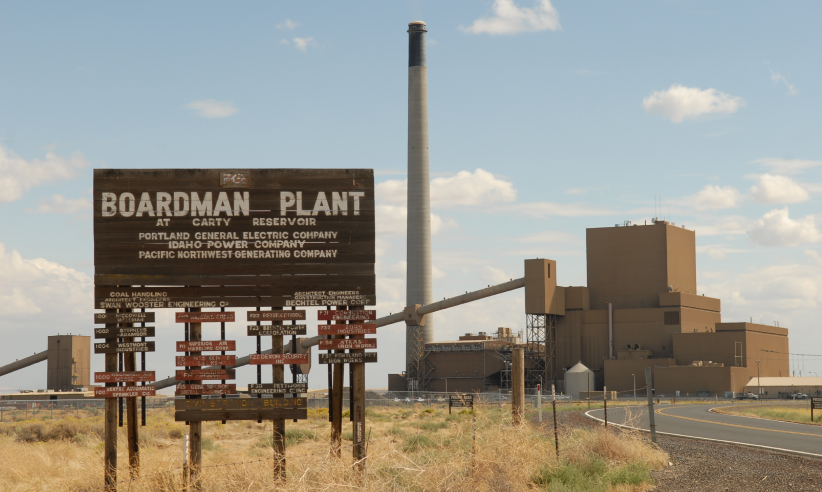
The plant is named after the city of Boardman, which itself was named in honor of Samuel H. Boardman, who founded the city of Boardman in 1903. Carty Reservoir, the water storage and cooling pond, was named for James Carty, one of the early pioneers of the area who envisioned pumping water from the Columbia River to irrigate the semi-arid land.
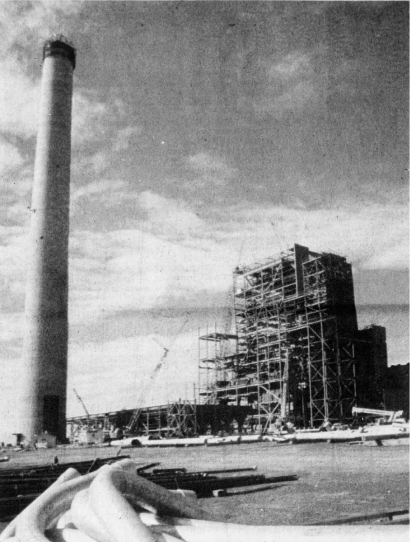
Located only a short distance north of the original Oregon Trail, archeologists surveyed on and near the site from 1973-1975. The site certificate was issued in 1975; construction began in February 1976 and was completed in 1980, amassing more than 7,000,000 people-hours to build.
Aug. 3, 1980 to Oct. 15, 2020
Commercial operation
Columbia River, about 10 miles south of Boardman
Location
Additional Resources:
PGE-Boardman Power Project


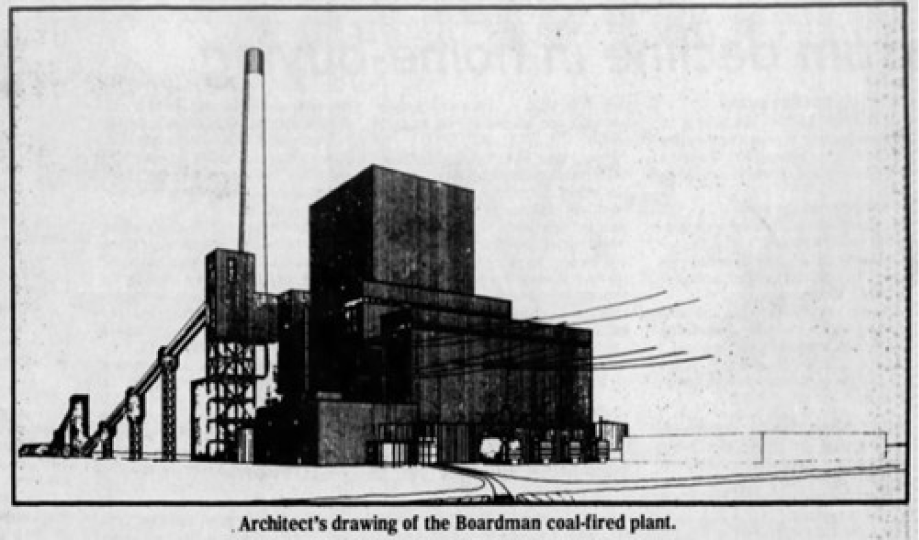


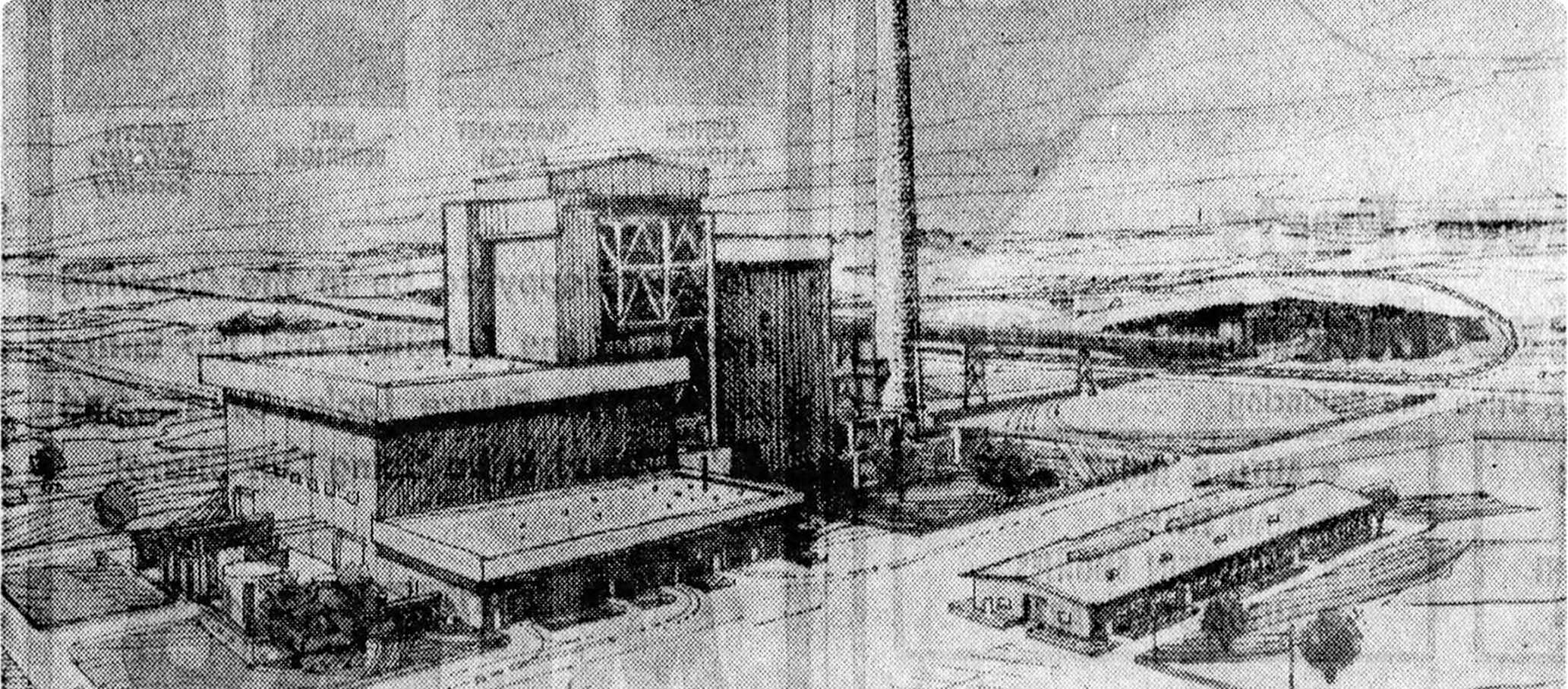
1980 artist's sketch of PGE's proposed coal-fired power plant near Boardman.
The project featured:
230 hi-side bathtub gondola cars built specifically to haul the low sulfur subbituminous coal the 1,200 miles from the mines in Wyoming to the plant. Beginning in January 1980, two 100-car trains arrived at the plant every two-and-a-half days, each carrying 10,000 tons of coal.
A coal-handling yard designed to store more than 2 million tons of coal.
A pipeline 60-inches in diameter to carry water 18 miles from the Willow Creek arm of the Columbia River to the reservoir.
A 656-foot-high concrete chimney with a free-standing steel liner 29-feet in diameter at the top and 51-feet at the bottom. As high as a 65-story building, it was the tallest concrete structure in Oregon.
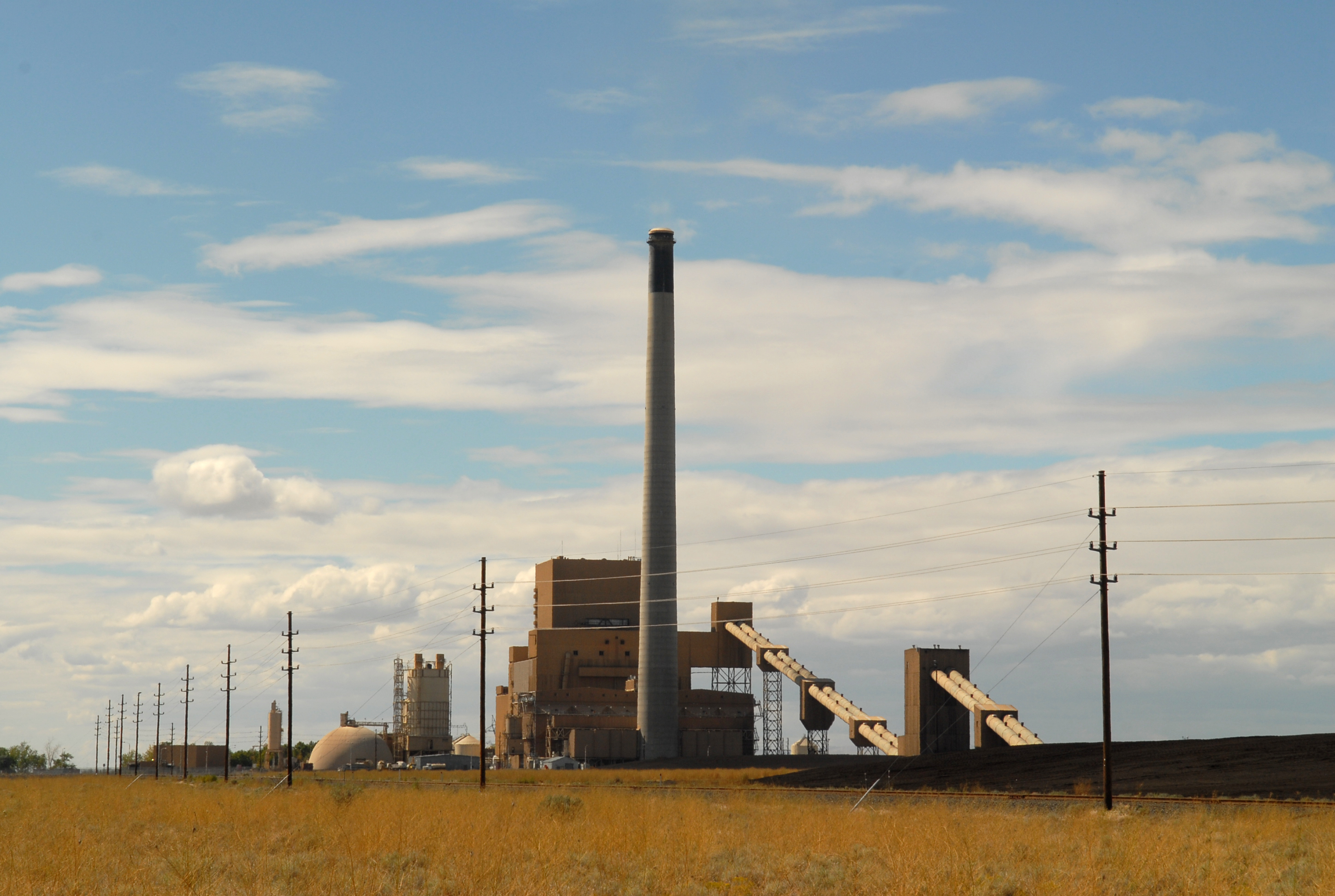
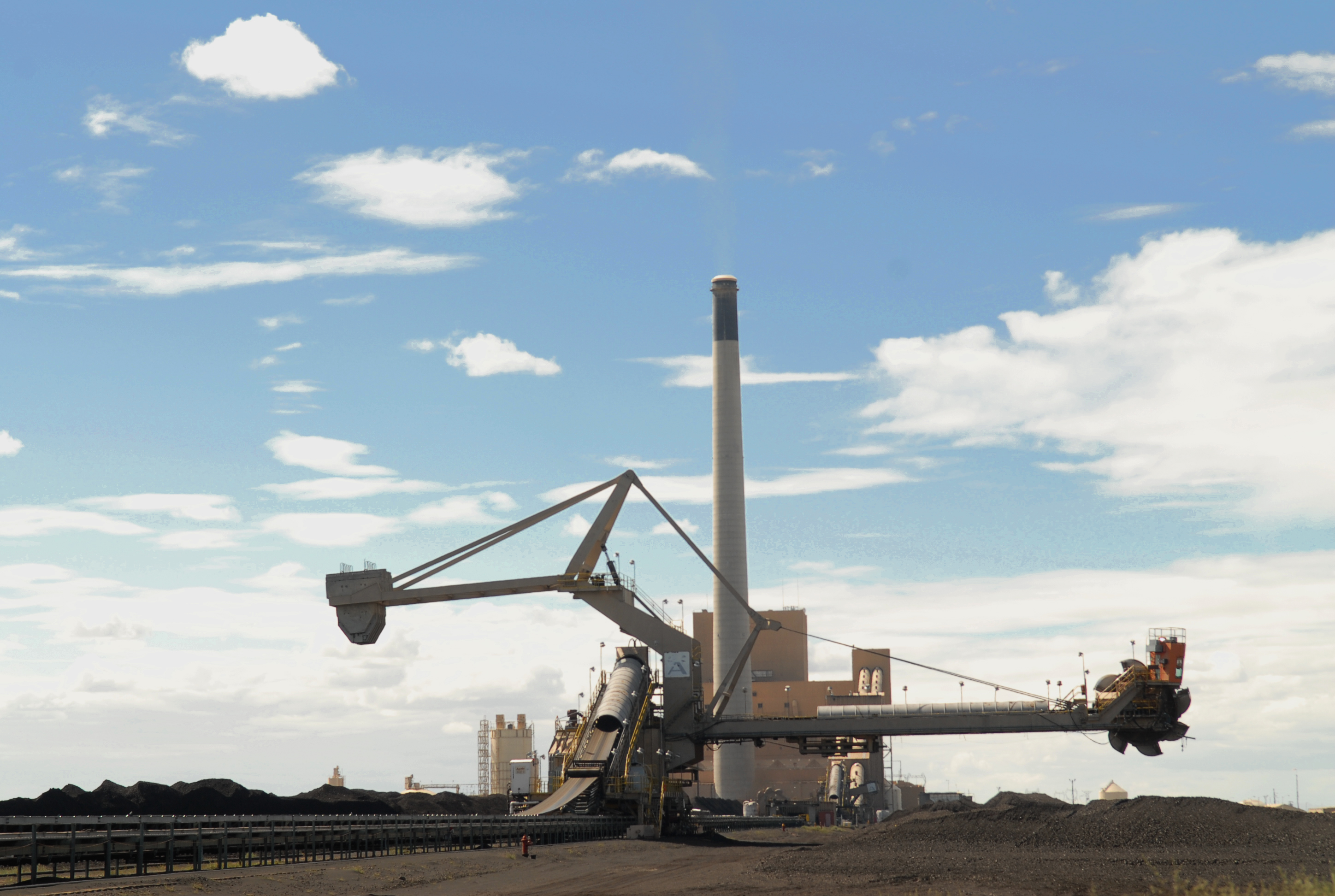
Boardman was the only coal-fired power plant in Oregon; PGE had a 90% ownership share of the plant, and Idaho Power owned the remaining 10%. ��In 2014, a new biofuel was tested when PGE was authorized to temporarily store and process raw biomass (sawdust and wood chips) at the plant and to use torrefied biomass as fuel. The test burns and the raw biomass was removed in 2018.



History of PGE
Electrifying Oregon
Powering Progress
A Thoughtful Transition
History of PGE
Electrifying Oregon
Powering Progress
A Thoughtful Transition