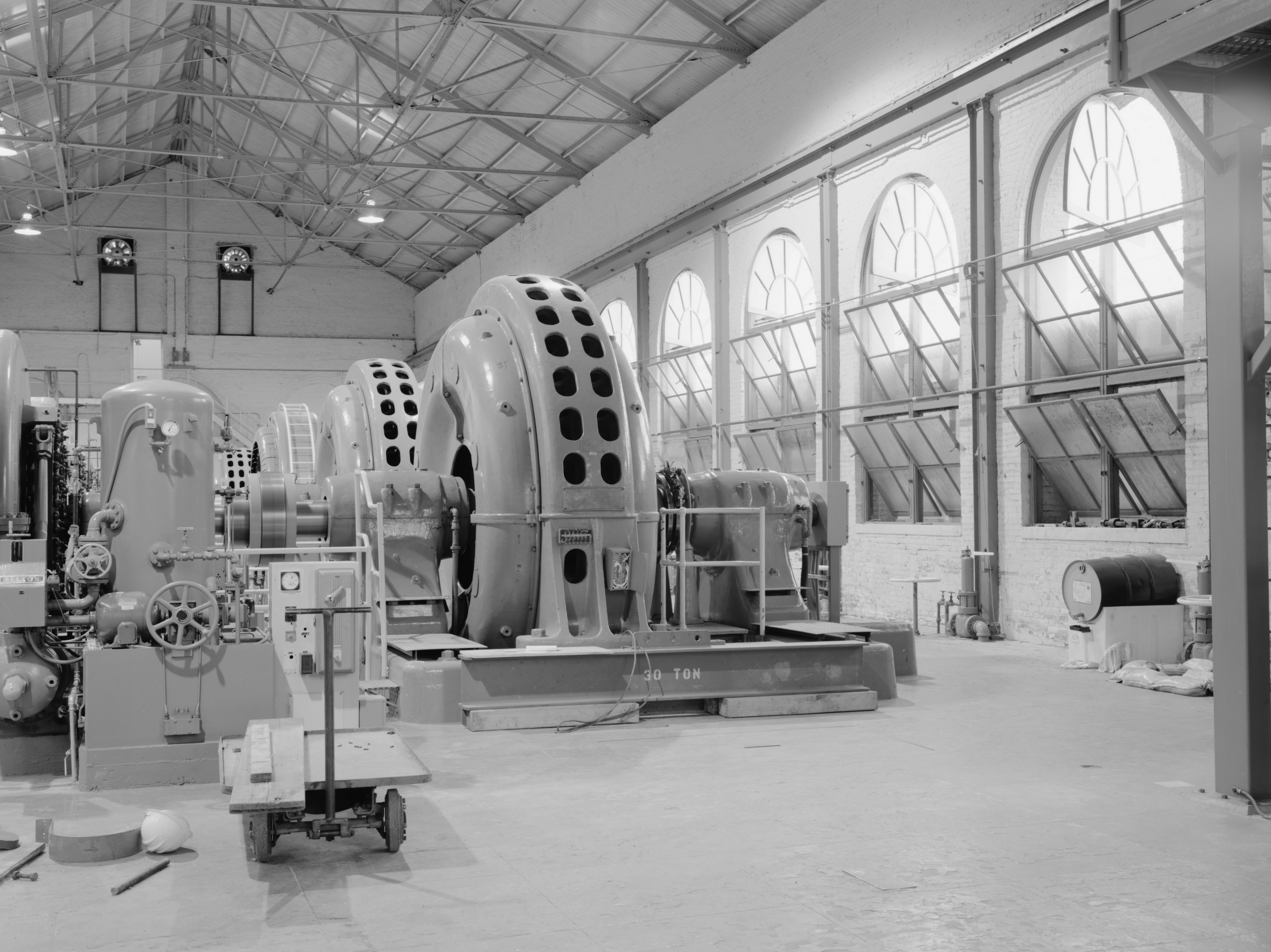
Harnessing the Clackamas
Visual Timeline
The “New” Faraday Powerhouse


The History of Faraday Powerhouse
1904 – Building the First Dam on the Clackamas River
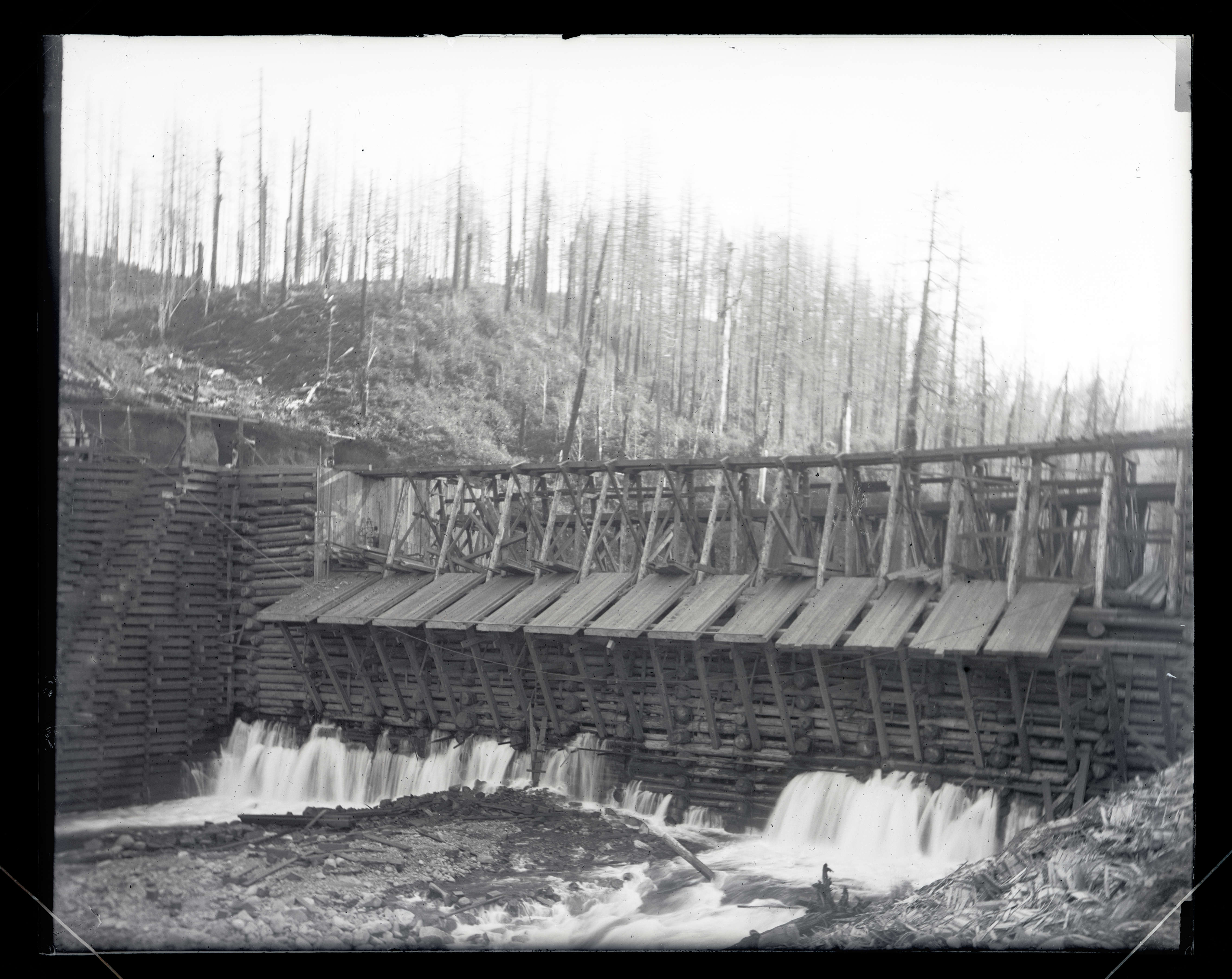

In the early 1900s, a company called Oregon Water Power and Railway Company (OWP) started building the Cazadero Dam on the Clackamas River. This dam was made of wood and was designed to direct water into a man-made channel. This channel ran alongside the river and carried water downstream to the powerhouse where electricity was generated. Today, this channel forms Faraday Lake, which feeds into the powerhouse.
1906 – OWP becomes PRLP
OWP joined a bigger company called Portland Railway Light and Power (PRLP). Later, in 1930, this company became Portland General Electric (PGE), which is the same PGE that operates the powerhouse today.
1907 – Powerhouse Operational
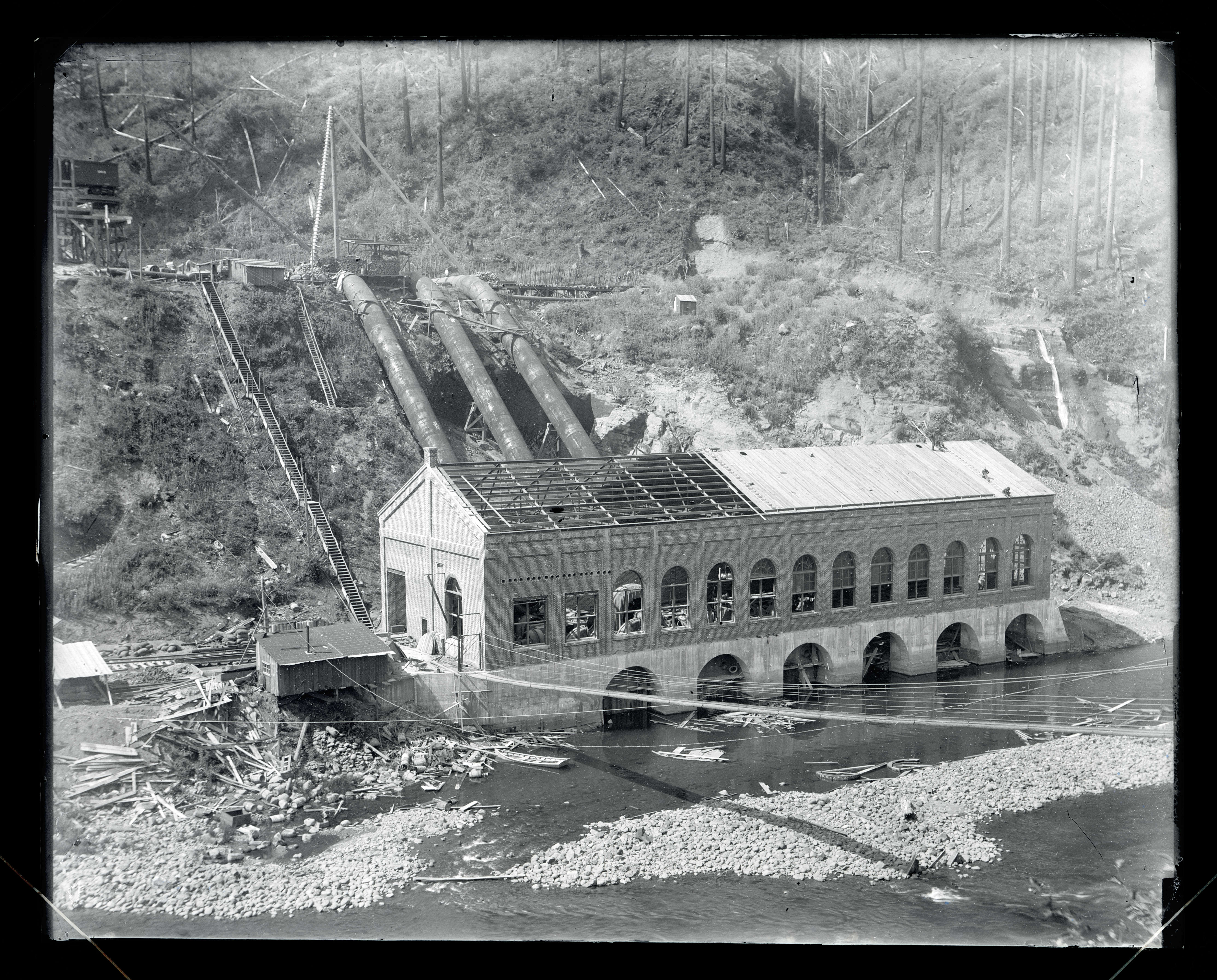
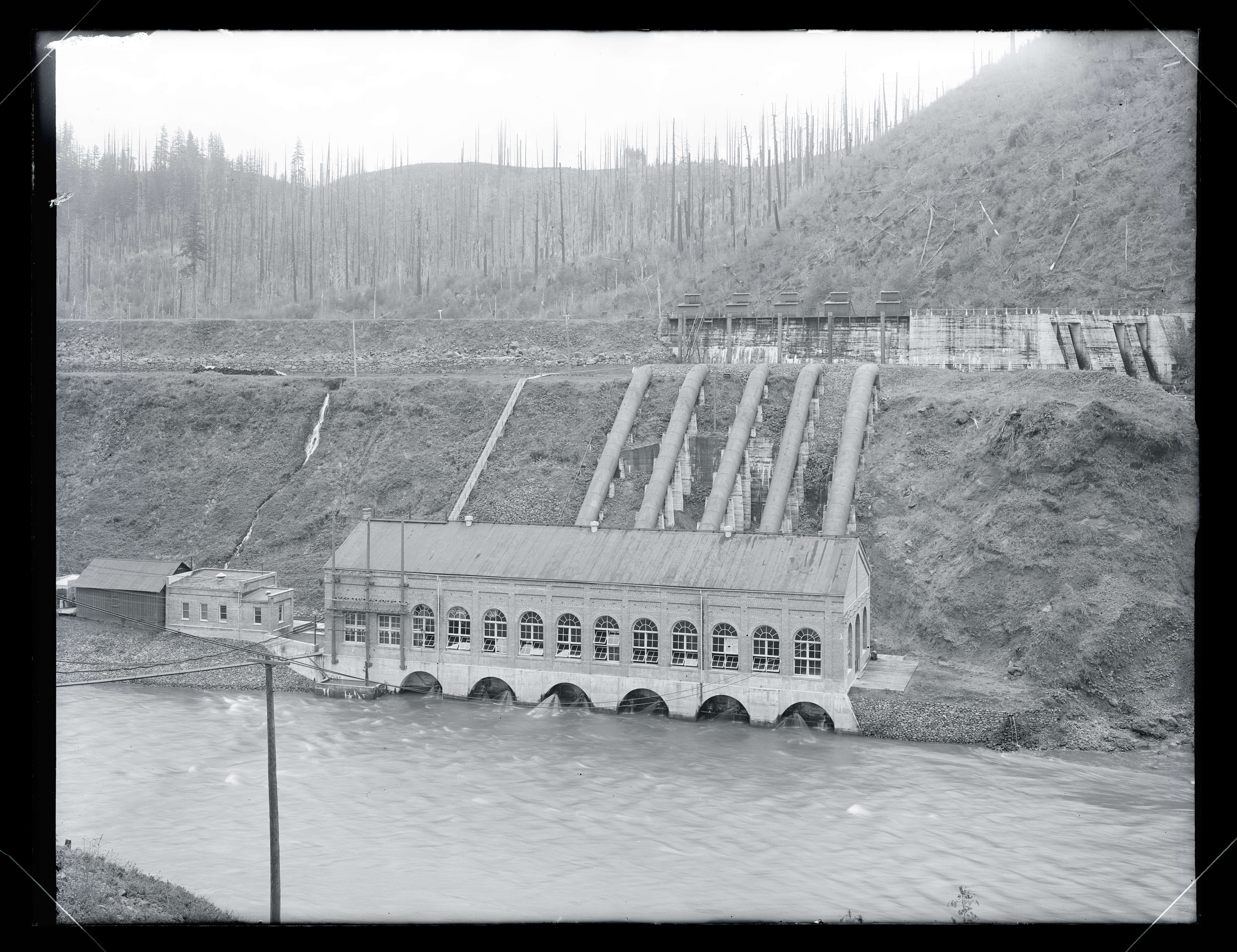
The Cazadero Plant, also known as Station G shortly after construction, was placed into service in late February 1907, immediately doubling the electrical generation capacity of PRLP and surpassing the output of Station B, at Willamette Falls, as the single largest generation plant in the system.



History of PGE
Electrifying Oregon
Powering Progress
A Thoughtful Transition
History of PGE
Electrifying Oregon
Powering Progress
A Thoughtful Transition
Faraday Powerhouse
1907 – Present


1908 – The “Wreck”
On Sunday morning, June 21, 1908, a little over a year after its dedication, the three generation units at Station G (still referred to as Cazadero, outside of the company) were “completely wrecked.”
Flying pieces of hot metal and burning insulation set fire to the building, destroying inflammable parts of the structure. Two operators who were on duty at the time had a miraculous escape from instant death...huge parts for the monster dynamos were hurled through the brick walls of the station and through the roof.
– (Heppner Gazette, 25-Jun-1908, 2:2)


In June 1953, something scary happened at the Faraday Powerhouse. A big crack appeared in the metal casing around Unit No. 3's water turbine and water started rushing in very quickly. Soon, the entire floor where all the power equipment was located had six feet of water. The worker on duty acted fast and shut down the plant, which saved a lot of equipment from being damaged.� �Even so, the generator in Unit No. 5 was completely ruined. Other parts of the powerhouse were damaged too. PGE fixed everything and made the plant safer by replacing all the old metal casings with stronger steel ones that wouldn't crack as easily. ��The powerhouse didn't start working again all at once. They got the first unit running again in August 1953. It took until May 1954 - almost a year later - before all five units were working again.
1953 – The First of Floods to Come


1954 – The Last Name Change
Station G name changes officially from “Cazadero” to “Faraday.”
Oregon Geographic Names reports that “Faraday” was the “station for the Cazadero power plant...on the Clackamas River, named by company Vice President O. B. Coldwell, in honor of Michael Faraday”.
– (McArthur & McArthur, 2003:346)
After taking on extensive flood damage, the facility was repaired and served another 50+ years for PGE.
1964 – More Flood Damage

1966 – Upgraded Diversion Dam
Reconstructed Faraday Diversion Dam following damage from the 1964 flood.

2001 – Relicensing of Clackamas River Hydroelectric Project and Historic Recognition for Faraday Powerhouse
In 2001, PGE needed to renew its license to operate the power plants on the Clackamas River. As part of this process, they had to look at whether any of their buildings were historically significant. ��PGE studied the Faraday Powerhouse and other buildings like the tool house. They found that these buildings were very important to history. These structures helped the Clackamas River valley and the town of Estacada grow and develop. Because of this importance, in June 2003, the Oregon State Historic Preservation Office (SHPO) determined that the Faraday Powerhouse and related buildings were eligible for listing in the National Register of Historic Places.


2018 – Demolition of Historic Faraday Powerhouse
PGE decided to replace the old Faraday Powerhouse, removing everything above its concrete foundation. This was a big deal because the powerhouse was important enough to be on the National Register of Historic Places. The Diversion Dam remains in its original location, however it also has been upgraded over the decades.

The old building was torn down for good reasons: to make a more efficient power plant, to fix safety problems, and to create a reliable source of clean electricity for many years to come. �Since the old powerhouse was historically important, PGE took steps to preserve its history. These projects help people remember and learn about the old powerhouse even though the building itself is gone.
2019 – Faraday Repower Project Begins
PGE began construction project to modernize the Faraday Powerhouse. The historic powerhouse was replaced with a new building and two state-of-the-art turbines, designed to improve reliability and efficiency.


2023 – The New & Improved Faraday Powerhouse
Since coming online in 2023, PGE's modernized Faraday Powerhouse on the Clackamas River has generated more reliable hydropower for PGE customers than ever before. ��This updated power plant helped set a five-year record for electricity generated on the Clackamas River. It now makes enough clean energy to power about 70,000 homes! ��The new powerhouse isn’t just better for making electricity-it’s safer for fish. The new water turbines have improved fish survival on their journey from the Clackamas River to the ocean.