North Fork Powerhouse & Reservoir
1958 - Present
North Fork Hydroelectric Plant
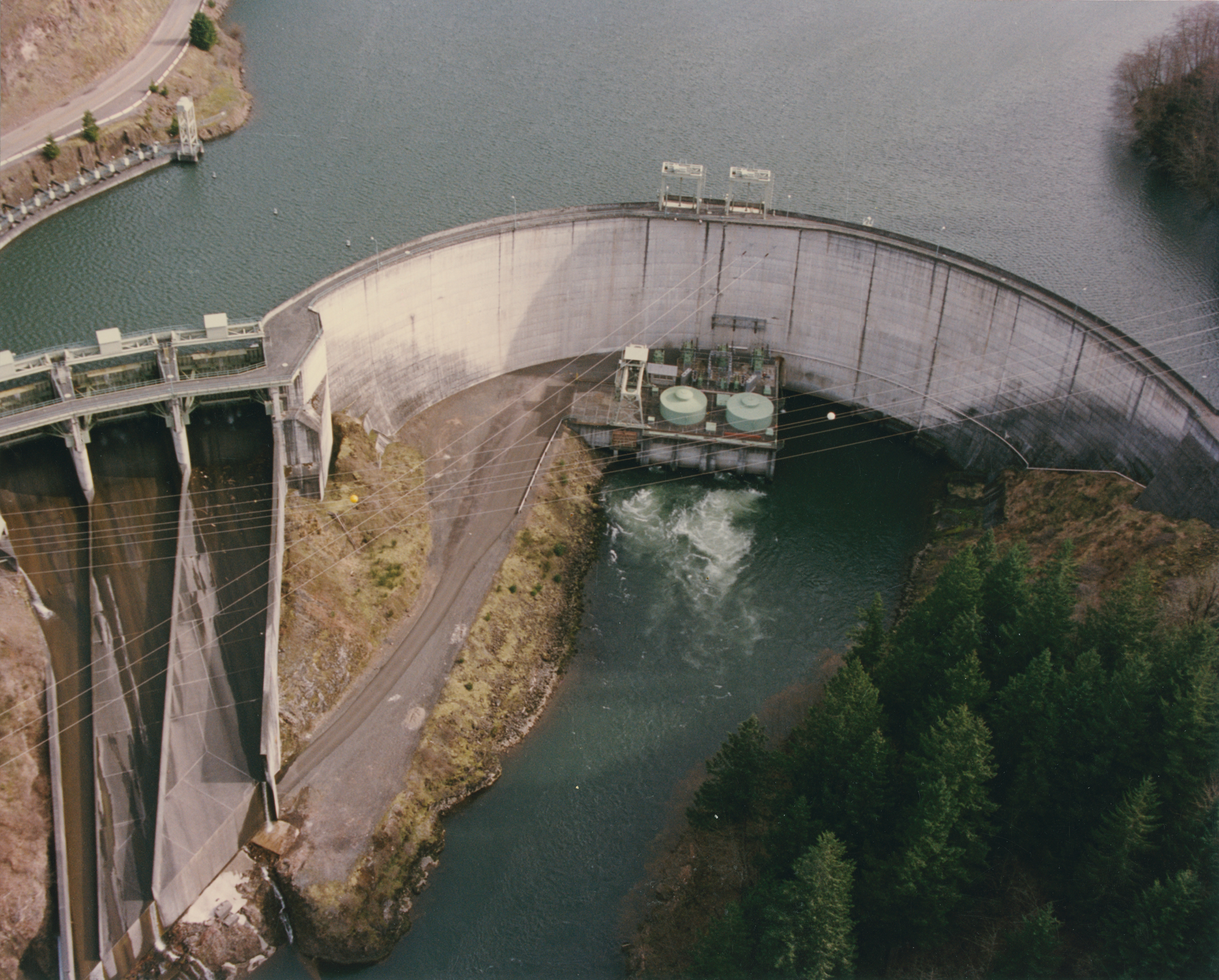
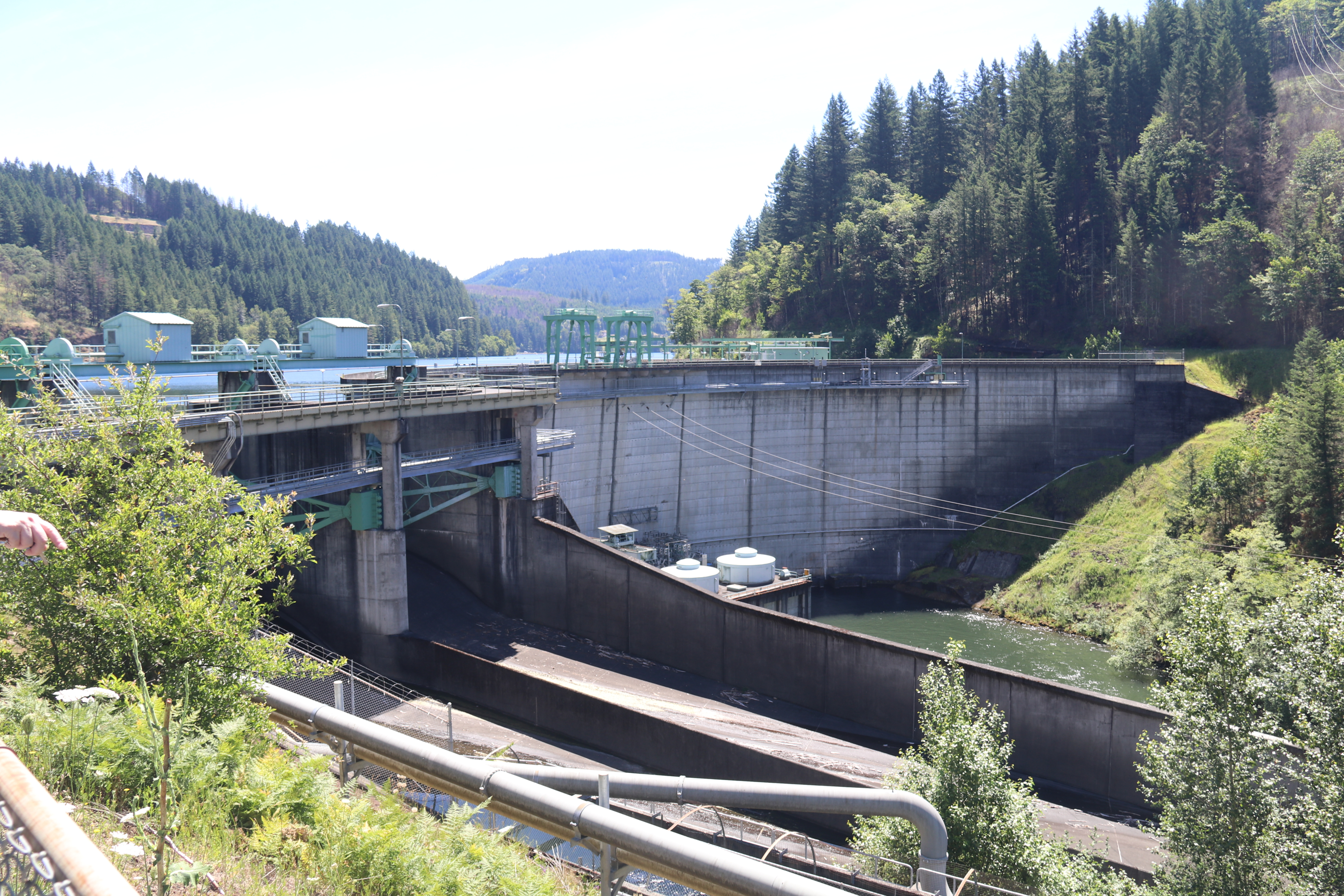
Originally called Upper Dam because it is located upstream from Cazadero (Faraday), Portland Railway Light & Power Company’s first power site, it was renamed North Fork due to its location on the north fork of the Clackamas River. In the winter of 1954, feasibility studies were initiated. Applications for state and federal licenses were made in 1956, but licensing was held up pending a solution for anticipated problems with fish. After reaching an agreement with the Oregon Fish & Game Commission, construction on the North Fork Project began in October 1956. In November 1958, the first generating unit became operational with the second following in December. The largest of the four hydro plants in PGE’s Clackamas system, is operated by remote control from Faraday.
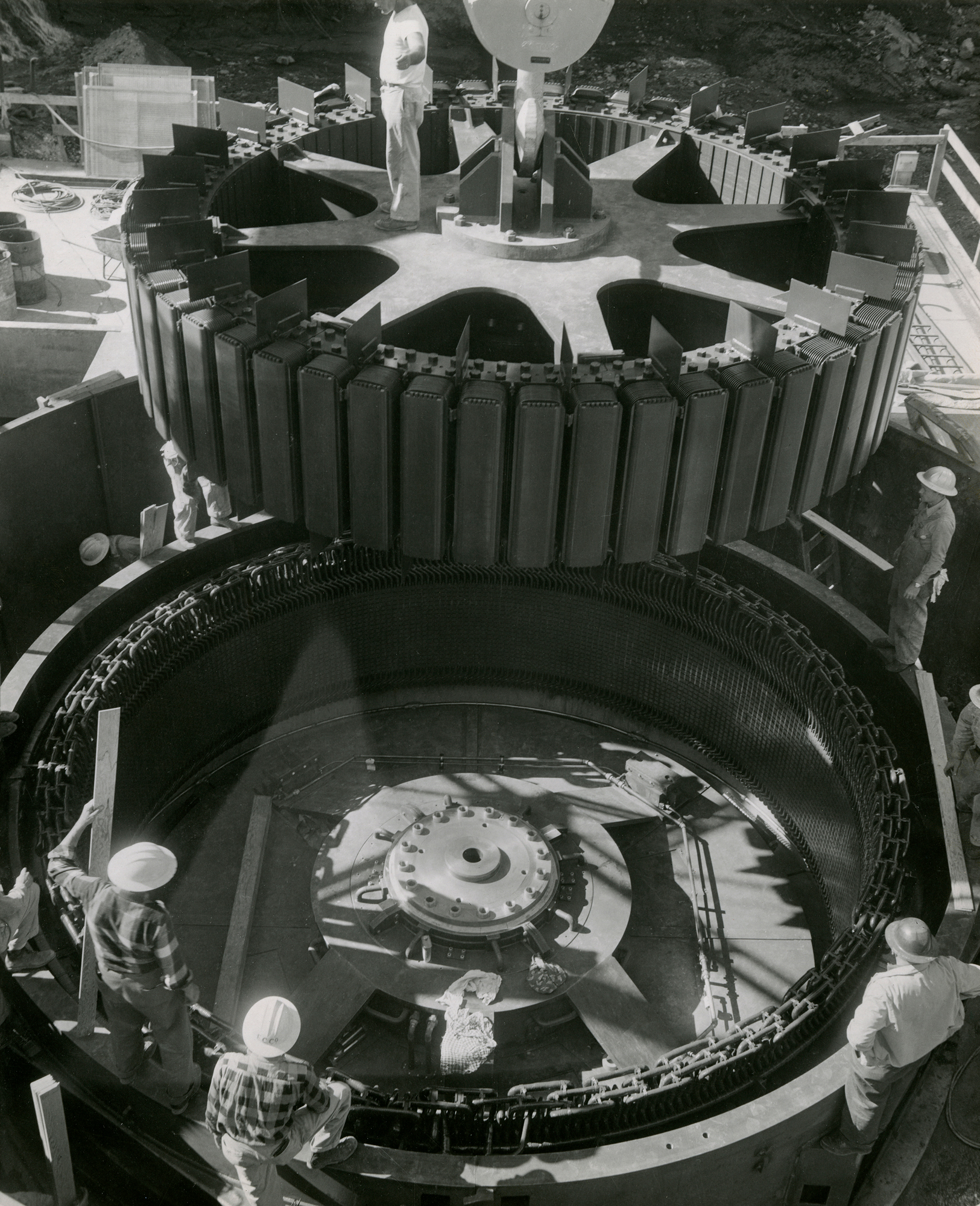
The North Fork Dam was formally dedicated on June 28, 1959, with ceremonies, a tour of the powerhouse and the first Estacada Water Festival. The semi outdoor-type powerhouse is built of reinforced concrete and has two 34,500-hp hydraulic turbine generators. A 115,000-volt single circuit transmission line runs 2.8 miles to the switching station near Faraday and from there a 115,000-volt double circuit transmission line runs 14.7 miles to McLoughlin Substation near Oregon City.
58 MW
Net Capacity
November 1958 - present
Commercial operation
Clackamas River, four miles southeast (upstream) of Estacada
Location
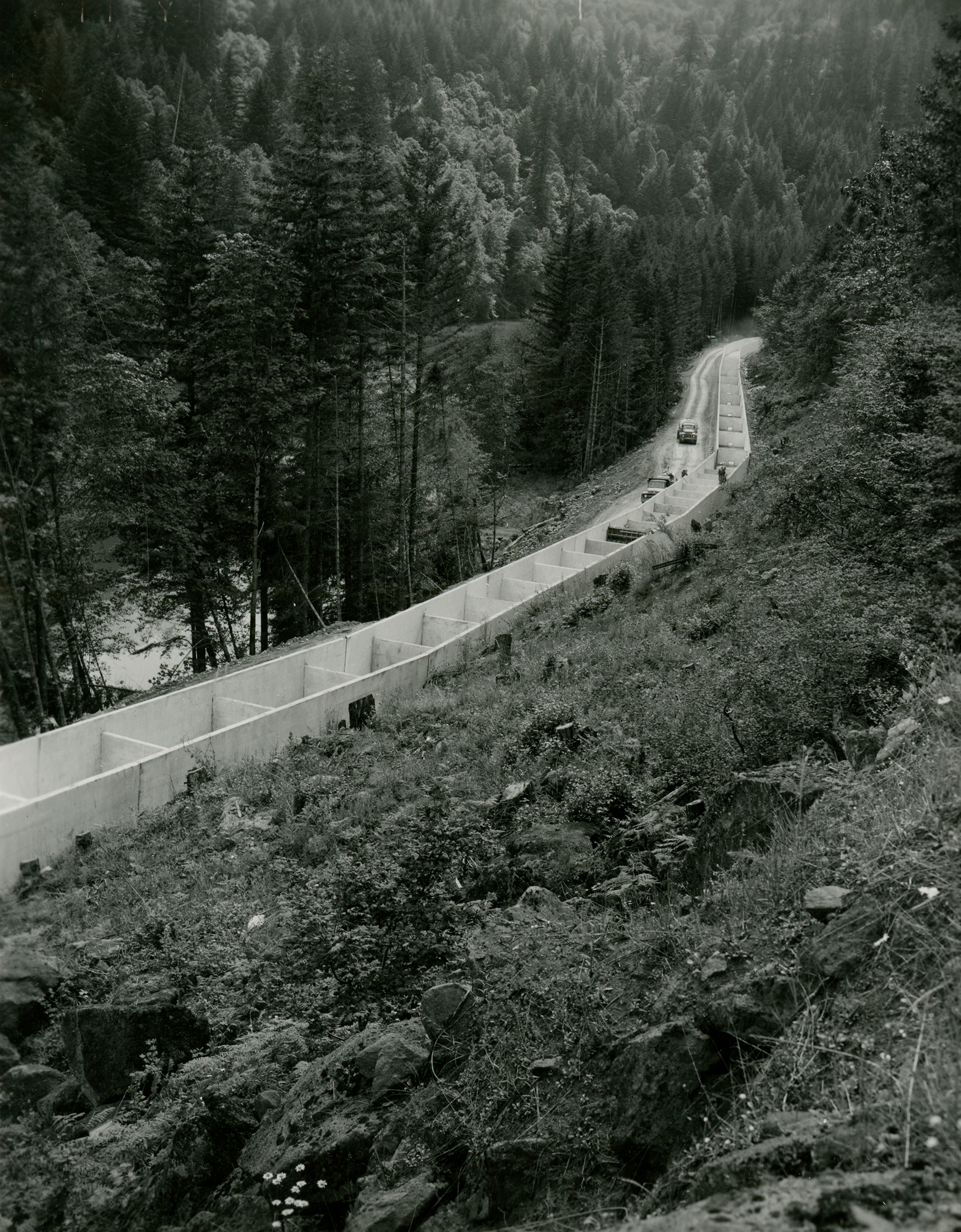
The North Fork fish ladder is a 1.9-mile-long concrete canal about 8 feet wide with 4-5-foot-tall sidewalls. One of the longest operating fish ladders in the world, at various points there are trestles, monitoring and access stations, wire-mesh foot bridges and other support features.
The 375-acre North Fork Reservoir was created in the main channel of the Clackamas River. On the eastern bank, the 16-acre Promontory Park opened in 1965 and included a marina, a small store, camping facilities with showers and restrooms, shelters, picnic tables and fireplaces.
Additional Resources:
North Fork Fish Ladder
(Oregon Encyclopedia)
Originally called Station B, but after extensive modernization it was renamed the T.W. Sullivan Plant on June 29, 1953, in honor of Thomas William Sullivan (Portrait below), PGE’s Chief Engineer. George E. Sullivan, T.W.’s second-oldest child and then senior vice-president of PGE, was master of ceremonies at the dedication event. T.W. Sullivan designed the Willamette Falls Locks, Station A and Station B and was later involved with the construction of Faraday, River Mill and Bull Run facilities. He was on the PGE payroll until his death in 1940.
In 2008, PGE completed a flow control structure at the most upstream point of Willamette Falls and a bypass chute (basically a water slide). Flows entering the plant are managed so fish within the water column are guided past the turbine intakes and into the chute that directs them back into the Willamette River just downstream of the falls. Three inflatable rubber “gates” can be lowered to help fish avoid the rocks below by guiding them to the deep water at the base of the falls for safer passage. Eleven of the plant’s 13 turbines have also been replaced with highly efficient, fish-friendly turbines.
In 1995, Hydro Review Magazine made the T.W. Sullivan Plant the first-ever inductee into its “Hydro Hall of Fame.”
The Low Impact Hydropower Institute Board certified the Willamette Falls Project in 2008 as low impact, renewing its certification in 2012. This designation is based on PGE’s extensive fish protection efforts, including installation of a second fish bypass system at the Sullivan plant and construction of the flow control structure at the apex of Willamette Falls.
18 MW
Net capacity*
December 1895 - present
Commercial operation
Willamette River, West Linn
Location
T.W. Sullivan Powerhouse
Station B
1895-Present
The North Fork Dam was formally dedicated on June 28, 1959, with ceremonies, a tour of the powerhouse and the first Estacada Water Festival. The semi outdoor-type powerhouse is built of reinforced concrete and has two 34,500-hp hydraulic turbine generators. A 115,000-volt single circuit transmission line runs 2.8 miles to the switching station near Faraday and from there a 115,000-volt double circuit transmission line runs 14.7 miles to McLoughlin Substation near Oregon City.
Additional Resources:
PGE Photo Collection
(Oregon Historical Society)
History of PGE
Electrifying Oregon
Powering Progress
A Thoughtful Transition
History of PGE
Electrifying Oregon
Powering Progress
A Thoughtful Transition
History of PGE
Electrifying Oregon
Powering Progress
A Thoughtful Transition
Forever Evolving
Powering the Future
A Thoughtful Transition
Clackamas Project Expansion
Building Reliable Power Plants
Powering Progress
Willamette Falls
Clackamas River Construction
Electrifying Oregon
History of PGE