Three Lynx Village
Three Lynx Village, originally designated as “Camp 8,” was established by the Southern Pacific Railroad as part of its development on the Oak Grove Fork of the Clackamas River and purchased by Portland Railway Light and Power Company (PRLP) in 1911. Camp 8 was used as a worker camp by the Portland Electric Power Company (PEPCO), a successor entity, during the construction of its Oak Grove power plant.
c.1920 - 2022
From Camp to Village
Visual Timeline
Aladdin Houses
Oral History
Three Lynx in Video
Three Lynx Village is an important part of PGE History that goes beyond just electricity generation, as the community became a place of unique significance for generations of people that lived there. Although the company town was home to PGE employees for 100 years, children from neighboring communities within the Mt. Hood National Forest attended the school, making it a focal point of the community and a place that brought everybody together. As part of mitigation to resolve the adverse effects associated with the removal of Three Lynx Village and to preserve the history of the community, PGE developed this short film to showcase the significance of Three Lynx through the stories of people that called it home.
PGE Three Lynx Village
Location
55538 E Highway 244
T5S-R6E-S21 (Mt. Hood National Forest)
Lat. 45.12629
Long. -122.07148
Estacada, Clackamas County, Oregon, 97023
Land Owner
United States Forest Service, Mt. Hood National Forest
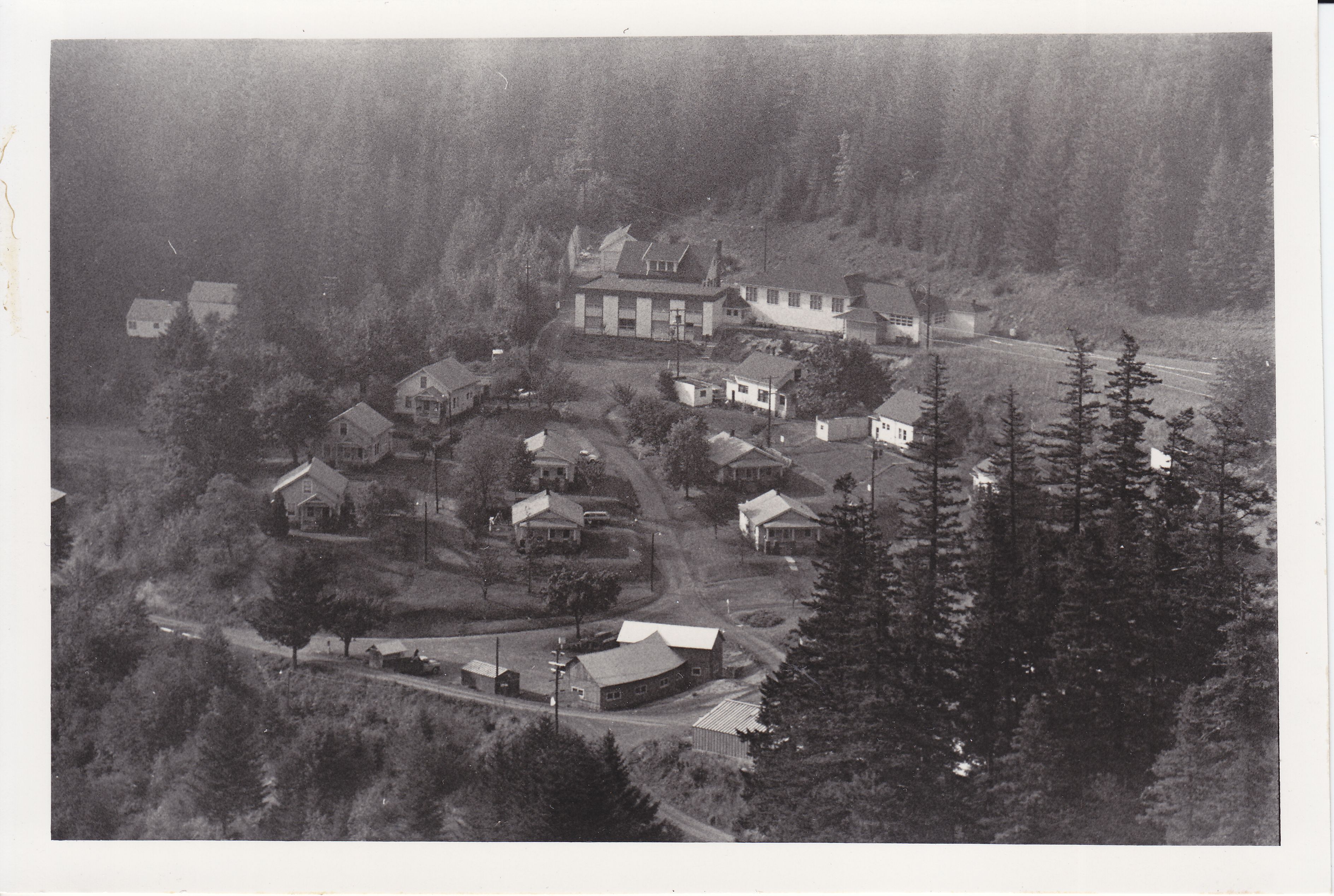
Developed between 1923 – 1924, Three Lynx Village began as a construction camp designated as “Camp 8,” then evolved into a housing complex for company workers in the remote upper Clackamas River basin within the heart of the Mt. Hood National Forest. The community consisted of 17 cottages, garages, recreation facilities and a school. The Oregon State Historic Preservation Office (SHPO) determined the Village was eligible for a National Register of Historic Places listing in 1995 as one of the oldest and longest occupied company towns remaining in Oregon.
Historic Photo- Camp 8, Looking North, February 1923 (PGE Archives)
Historic Photo- Cottages at Three Lynx , April 1930 (PGE Archives)
Three Lynx, not Three Links
The area now known as Three Lynx was historically designated as Camp 8, but for much of its original development period it was referred to as “Three Links” in newspaper articles and other various references. Oregon Geographic Names, the definitive source on Oregon place names, states the following regarding Three Lynx Creek, the natural feature which gives the village its name:
Three Lynx Creek, a tributary of the Clackamas River below Oak Grove Fork, bears a name that has provoked much controversy. Old maps show the name as Three Links, and there is a legend in eastern Clackamas County to the effect that this name was the result of loss, by a surveyor, of three links out of a surveying chain. Ernest P. Rands and William C. Elliot, of Portland, for many years’ civil engineers in Oregon, both informed the complier that there was no truth in the three-links story. They were in the neighborhood of the stream at the time it was named. They are authority for the statement that one of the Austen family, early settlers nearby, named the stream Three Lynx Creek because he saw three bobcats on its banks. The United States Board of Geographic Names has adopted the name Three Lynx.
– (McArthur & McArthur, 2003:951)
An Oasis in the Middle of the Forest
Three Lynx Village is located about 20 miles southeast of Estacada within the Mt. Hood National Forest, in an area often referred to as the “upper Clackamas” or Oak Grove. The village was initially created to house construction workers building the Oak Grove Powerhouse and other facilities on the Clackamas River. Between 1924 and 2020, the town provided inexpensive lodging for PGE employees and their families, acting as a community hub in this remote stretch of Oregon, which included other small communities such as Ripplebrook and the Timber Lake Job Corps. The exact number of people that have lived at Three Lynx Village since its founding in 1924 is unknown. Countless PGE employees, both current and retired, either grew up in the company-owned town, went to school there or lived in the village while working for the company. At the height of its history, Three Lynx boasted 17 cottages, a community kitchen, an inground pool and even a school basketball team rumored to have competed in a state championship.
Figure 1. Three Lynx Village
Figure 2. Three Lynx Village, Vicinity Map
Figure 5. Three Lynx Village, Aerial View
The End of Three Lynx Village, the Community, not the Place
Transitioning from its original development as Camp 8, Three Lynx Village developed as a permanent worker community and continued to provide housing, education and community activities for the residents for nearly eighty years. The simple wood frame homes and related features of the community served PGE, its workers and their families until improvements in roads, communication and operations reduced the demand for housing in the remote area. However, people were living at Three Lynx Village until January 2020, when its final residents moved out. After more than two-thirds of the housing units were destroyed by the Riverside Fire in September 2020, PGE, in cooperation with the Mt. Hood National Forest, removed the five remaining homes and began the process of returning the village to a more natural historic condition. Three Lynx Village will remain as an archaeology site for generations to come and forever be celebrated for the significance to PGE, all that lived there and to Oregon as a whole.
Three Lynx Village Owner
Portland General Electric (PGE), Clackamas River Hydroelectric Project (FERC No. 2195)
Portland, Oregon 97204
From Camp to Villiage
From Camp to Village
Aladdin Houses
From Camp to Villiage
PGE Three Lynx Village
Location
55538 E Highway 244
T5S-R6E-S21 (Mt. Hood National Forest)
Lat. 45.12629
Long. -122.07148
Estacada, Clackamas County, Oregon, 97023
Land Owner
United State Forest Service, Mt. Hood National Forest"
Three Lynx Village Owner
Portland General Electric (PGE), Clackamas River Hydroelectric Project (FERC No. 2195)
Oral History Video
Three Lynx in Video
Three Lynx Village is an aspect of PGE History that goes beyond just electricity generation, as the community became a place of unique significance for many generations that lived there, attended the school or even worked there as teachers, many who never worked for PGE. Although the company town was home to PGE employees for 100 years, children from neighboring communities within the Mt. Hood National Forest attended the school, making it a focal point of the community and a place that brought everybody together. As part of mitigation to resolve the adverse effects associated with the removal of Three Lynx Village and to preserve the history of the community, PGE developed a short film to showcase the significance of Three Lynx through the stories of people that called it home.
History of Village
Developed between 1923 – 1924, Three Lynx Village began as a construction camp designated as “Camp 8”, then evolved into a housing complex for company workers in the upper Clackamas River basin. The community consisted of 17 cottages, garages, recreation facilities, a school and landscape features, all located within the heart of the Mt. Hood National Forest. The Oregon State Historic Preservation Office (SHPO) determined the Village was eligible for National Register of Historic Places listing in 1995 as one of the oldest and longest occupied company towns remaining in Oregon.
Historic Photo- “Cottages at Three Links”
Note School in background, April 30, 1930 (PGE Archives)
Three Lynx, not Three Links
The area now known as Three Lynx was historically designated as Camp 8, but for much of its original development period it was referred to as “Three Links” in various references. Oregon Geographic Names, the definitive source on Oregon place names, states the following regarding Three Lynx Creek, the natural feature which gives the village its name:
Three Lynx Creek, a tributary of the Clackamas River below Oak Grove Fork, bears a name that has provoked much controversy. Old maps show the name as Three Links, and there is a legend in eastern Clackamas County to the effect that this name was the result of loss, by a surveyor, of three links out of a surveying chain. Ernest P. Rands and William C. Elliot, of Portland, for many years’ civil engineers in Oregon, both informed the complier that there was no truth in the three-links story. They were in the neighborhood of the stream at the time it was named. They are authority for the statement that one of the Austen family, early settlers nearby, named the stream Three Lynx Creek because he saw three bobcats on its banks. The United States Board of Geographic Names has adopted the name Three Lynx.
– (McArthur & McArthur, 2003:951)
An Oasis in the Middle of the Forest
Three Lynx is located about 20 miles southeast of Estacada within the Mt. Hood National Forest, in an area often referred to as the “Upper Clackamas” or Oak Grove. Three Lynx was initially created to house construction workers building the Oak Grove Powerhouse and other facilities on the Clackamas River. Between 1924 and 2020, the town provided inexpensive lodging for PGE employees and their families, acting as a community hub in this remote stretch of Oregon, which included other small communities such as Ripplebrook and the Timber Lake Job Corps.
The exact number of people that have lived at the Three Lynx Village since its founding in 1924 is unknown. Countless PGE employees, both current and retired, either grew up in the company-owned town, went to school there or lived in the village while working for the company. At the height of its history, Three Lynx boasted 17 full cabins, a community kitchen, an inground swimming pool and even a school basketball team rumored to have competed in a state championship at the height of the village.
Historic Photo- “Cottages at Three Links”
Note School in background, April 30, 1930 (PGE Archives)
The End of Three Lynx Village, the Community, not the Place
Transitioning from its original, construction-centric development as Camp 8, the Three Lynx Village developed as a permanent worker community and continued to provide housing, education, and social activities for residents of the isolated upper Clackamas drainage for nearly eighty years. The simple wood frame houses and related features of the community served Portland General Electric, its workers, and their families until improvements in transportation, communication and operations reduced the demand for housing in the remote area, causing the community population to decline. Residency at Three Lynx Village continued until January 2020, when it’s final occupants moved out.
After more than two-thirds of the housing units were destroyed by the Riverside Fire in September 2020, PGE, in cooperation with the Mt. Hood National Forest, removed the five remaining housing units and began the process of returning Three Lynx Village to a more natural historic condition within the Mt. Hood National Forest. Three Lynx Village will remain as an archaeology site for generations to come and forever be celebrated for the significance to all that lived there and Oregon as a whole.
Additional Resources:
PGE Three Lynx Village State Level Documentation
Three Lynx Village Oregon Encyclopedia
Additional Resources:
PGE Three Lynx Village State Level Documentation
(Oregon Encyclopedia)
History of Village
Three Lynx Village
Constructing Hydropower on the Clackamas River
The Clackamas River has provided PGE with more than 130 years of innovation and sustainable energy production – enough to power 78,000 homes! The hydropower plants along the Clackamas River are an emissions-free, local source of electricity that draws its energy from the natural power of the regional water cycle. The hydropower facilities here don’t just provide a reliable, clean source of energy, their reservoirs provide Oregonians with a great place for outdoor recreational activities like swimming, boating and fishing, making them a significant part of PGE’s history.
1860s - 1930s
Historic Photo- Camp 8, Looking North, February 1923 (PGE Archives)
Figure 1. Three Lynx Village
Three Lynx Village
Visual Timeline
Visual Timeline
Growth of Three Lynx
Next
History of PGE
Electrifying Oregon
Powering Progress
A Thoughtful Transition
History of PGE
Electrifying Oregon
Powering Progress
A Thoughtful Transition
History of PGE
Electrifying Oregon
Powering Progress
A Thoughtful Transition
Forever Evolving
Powering the Future
A Thoughtful Transition
Clackamas Project Expansion
Building Reliable Power Plants
Powering Progress
Willamette Falls
Clackamas River Construction
Electrifying Oregon
History of PGE
