Trojan Nuclear Power Plant
1976 - 1993
Trojan Nuclear Power Plant
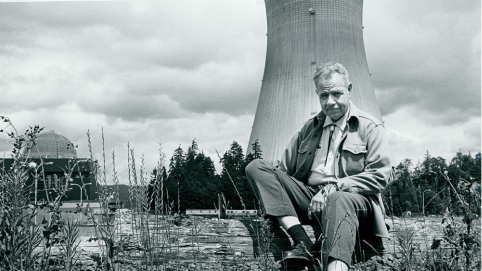
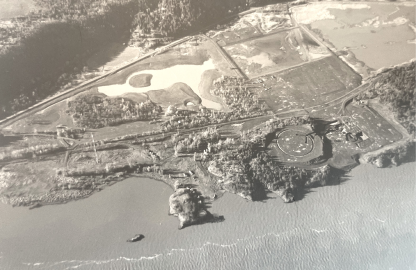
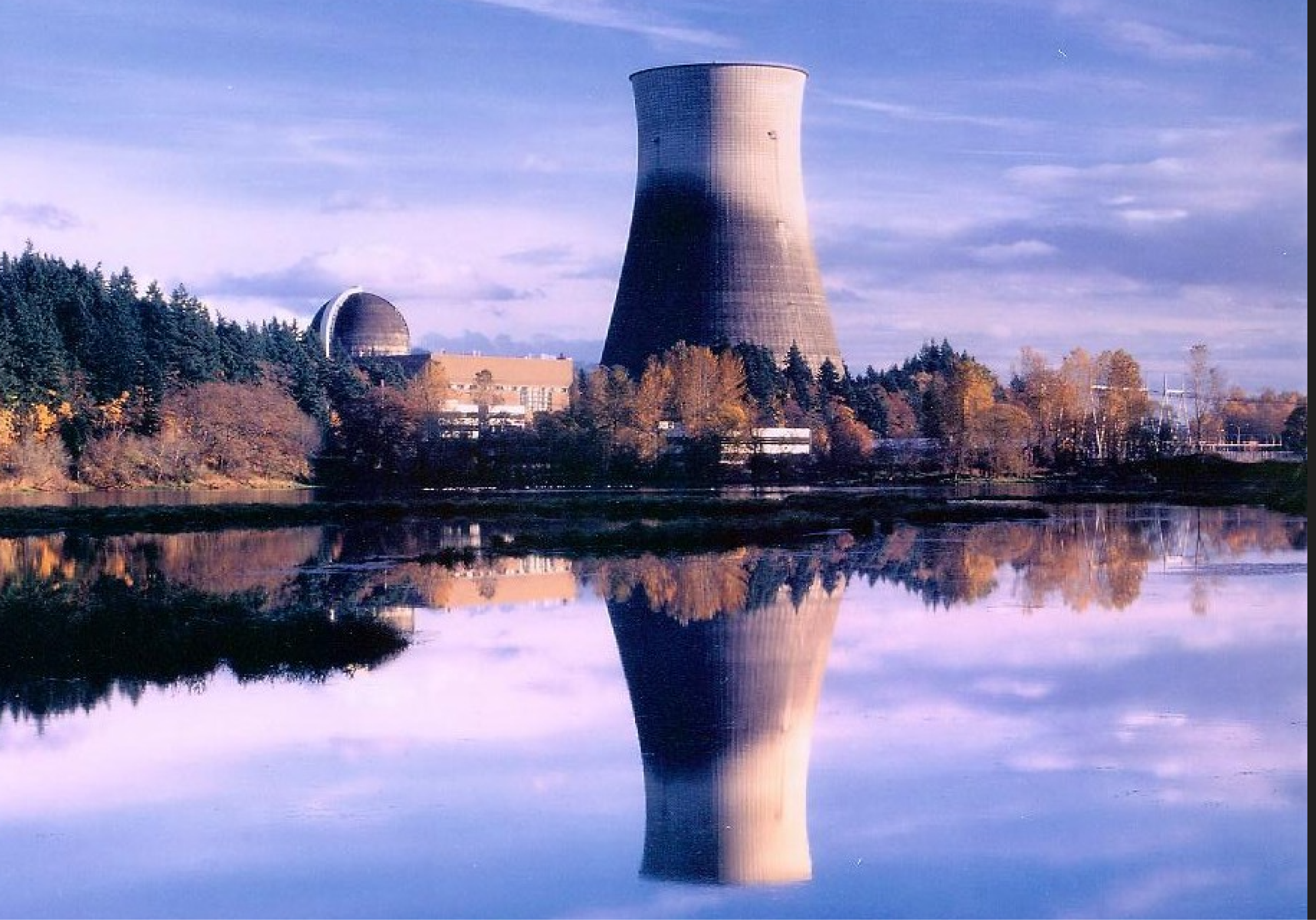
The plant took its name from the Trojan Powder Company, the dynamite, and explosives storage facility on the site during World Wars I and II. PGE chose the site in 1967, and construction began on Feb. 1, 1970. The plant was connected to the grid in December 1975 and commercial operation began on May 20, 1976, under a 35-year license to expire in 2011. At the time, the single 1,130-megawatt unit was the world's largest pressurized water reactor. It cost $460 million to build.
In 1978, following the discovery of an unknown fault, the plant went offline for routine refueling and remained offline for nine months while modifications were made to improve its resistance to earthquakes.
May 1976 to May 1993
Commercial operation
Columbia River, 4 miles from Rainier
Location
Trojan was the first and only commercial nuclear power plant in Oregon, the largest in the United States and the first to be decommissioned.
Additional Resources:
Trojan: The lasting legacy of PGE’s Atomic Age
(Oregon Encyclopedia)
Trojan Nuclear Power Plant
The Beaver Combustion Plant takes its name from the site on which it was built, the Beaver Army Ammunition Depot, a major army shipping point for the Pacific Theater of Operations.
In 1973 stream flows and reservoir levels hit record lows. The threat of a power shortage was enough to make PGE bring the Station L steam plant out of a nine-year retirement for 60 days of emergency service. To ensure there would be more emergency generation on hand in the future, work began on the Beaver Combustion Turbine Plant at Port Westward, 60 miles northwest of Portland on the Columbia River.
After investigating several sites, PGE selected the former Beaver Army Ammunition Depot on the Columbia River near Clatskanie. The Port of St. Helens, who owned the 800-acre site, leased it to PGE for a term of about 93 years. The Beaver Plant itself would take about 125 acres and include a large dock on a deep-water channel suitable for oil delivery by tanker ships, on-site rail facilities and a nearby state highway. These were important because the plant would burn fuel oil brought in by barge along the river and freight cars by the railroad spurs.
Clearing the site began in May of 1973, including the removal of 20 large concrete and earth ammunition storage bunkers, and construction began in September. The six industrial-type combustion gas turbine generating units use a wide variety of oil fuels and were designed for combined-cycle operation, using the high-temperature exhaust gases in heat recovery boilers to produce steam for a turbine generator. The turbine generators were installed in a single 479-foot building, the turbine on each unit directly connected to an air-cooled generator, each unit 140-feet long, 56-feet wide and over 42-feet high.
On Aug. 1, 1974, ahead of schedule, Beaver began commercial operation. In May 1975, PGE added a combined steam-generating turbine to utilize the waste heat exhausted by the gas turbines. The combined cycle generating facility was operational by Oct. 31, 1977, right on schedule. When not in operation, the gas turbines are usually maintained in a standby mode, capable of being brought online in 20 minutes.
Aug 1974 - present
Commercial operation
Columbia River, eight miles north of Clatskanie
Location
Beaver Combustion Plant
Bethel & Beaver Combustion Plants
1974 - Present
Additional Resources:
PGE Three Lynx Village State Level Documentation
Three Lynx Village
(Oregon Encyclopedia)
History of PGE
Electrifying Oregon
Powering Progress
A Thoughtful Transition
History of PGE
Electrifying Oregon
Powering Progress
A Thoughtful Transition
History of PGE
Electrifying Oregon
Powering Progress
A Thoughtful Transition
Forever Evolving
Powering the Future
A Thoughtful Transition
Clackamas Project Expansion
Building Reliable Power Plants
Powering Progress
Willamette Falls
Clackamas River Construction
Electrifying Oregon
History of PGE