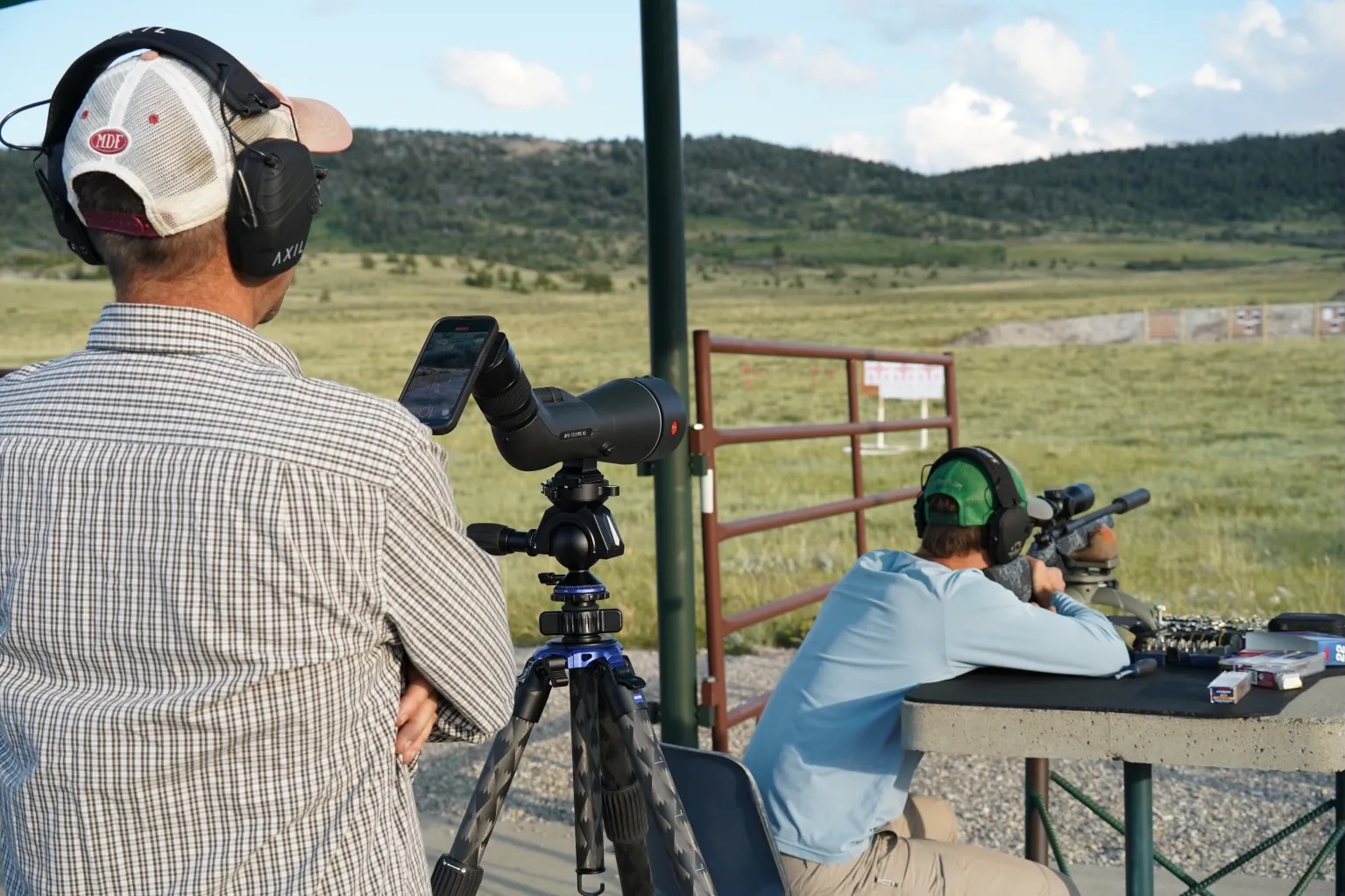

Outdoor Life editors tested thousands of products this year that ranged from the latest fishing reels to exceptionally accurate rifles. �Our gear tests involve structured, objective and subjective testing to provide you with unbiased gear recommendations. Our 2025 Field Tested Awards are given to the best gear from our head-to-head tests, and below, you’ll find in-depth reviews of each product.

Categories


Introducing The Real Grit our retail partner for the 2025 Field Tested Awards. Buying through the links provided helps support Outdoor Life.

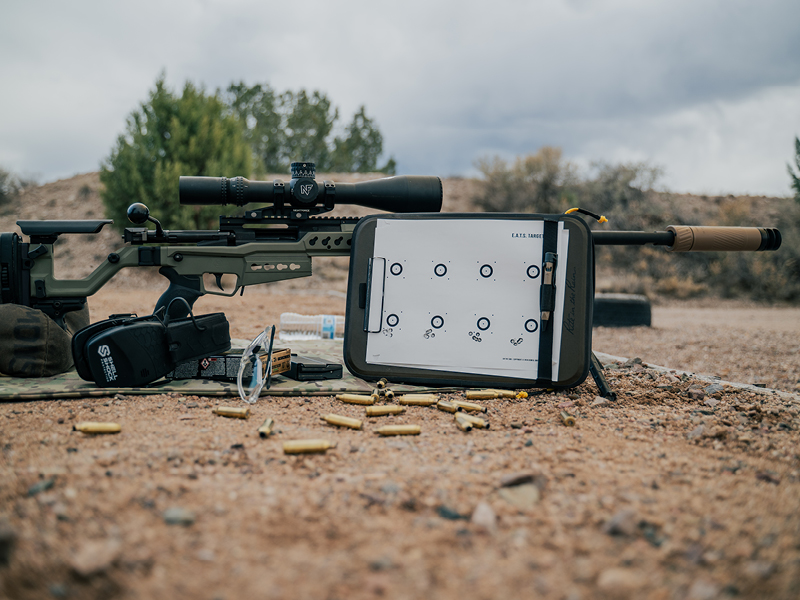

best rifle
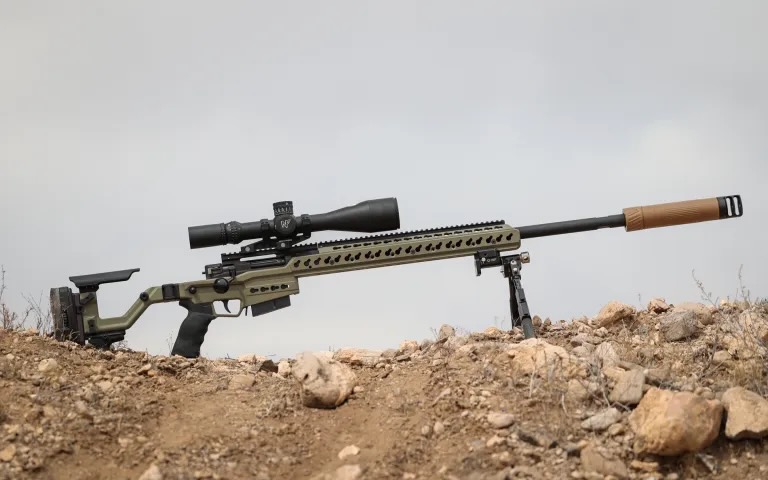
Accuracy International AT-XC
Key Features
Easy to use switch barrel design
Bolts swap for different caliber families
Light, two-stage competition trigger
Highly adjustable folding chassis stock
Runs off AI AWCS magazines
Fore-end has KeySlot and ARCA attachment points
Three-position safety
The Accuracy International AT-XC is a precision switch-barrel rifle that’s built for competition and takes many design cues from the company’s world-renowned sniper rifles. In keeping with AI’s reputation, it was the most accurate rifle of this year’s test.
The rifle looks similar to the AT-X it replaced but incorporates a long list of (mostly) under-the-hood upgrades. The receiver is a quarter pound lighter. The force required to lift the bolt has been reduced. The lugs (the rifle has six) have been beefed up and tweaked for a more balanced layout. The firing pin has a flange that prevents the rifle from being able to fire when out of battery. And so on.
Other things remain the same. Changing barrels only requires the loosening of a single 4mm screw on the side of the receiver. The two-stage competition trigger remains one of the best out there for a light, crisp pull in a bomb-proof design.
The receiver has a 20 MOA Pic rail on top that aligns with the 20 MOA rail on the fore-end. Though you can reconfigure the fore-end to be shorter and lighter if you want to make weight class restrictions in competition.
We got ours chambered in 6mm Creedmoor, a popular choice for long range field-style rifle matches, though we took advantage of its multi-caliber design and tested it in 6.5 Creedmoor as well.
The rifle is so stable, and runs so smoothly, and has such a great trigger that you can’t help but feel like you’re shooting better. The AW magazine system is the slickest out there but, as with the KeySlot system, it’s superior design is also more costly.
While the AT-XC is not a budget rifle, in the world of custom guns (many of which are assembled from off-the-shelf Remington 700 pattern parts) the price isn’t outrageous either.
The point is, the AI AT-XC delivers a lot of value for the price. It is rugged, good looking, a pleasure to shoot, ridiculously accurate, and is a rifle that you can run as hard as you like and it’ll still deliver peak performance. These are the reasons it was our top scoring rifle and overwhelming pick as the Editor’s Choice at this year’s rifle test.
Best Handgun
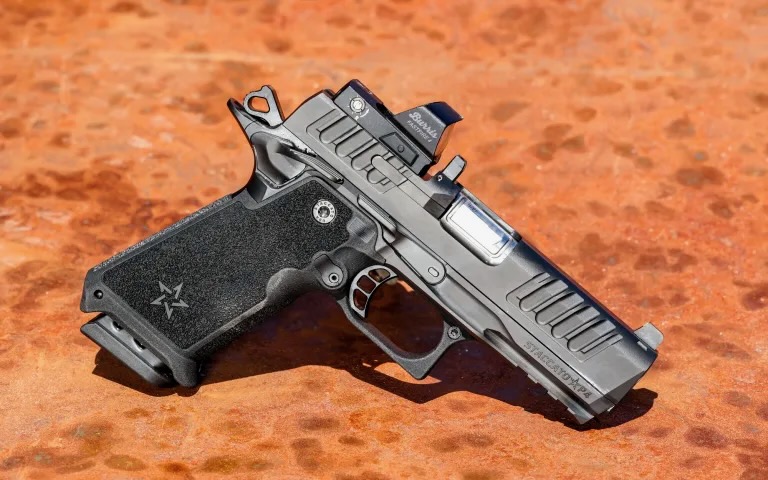
Staccato P4
Key Features
Cartridge: 9mm
Capacity: 18+1 Barrel
Length: 4 inches Weight: 35 ounces (with empty magazine)
Uses Glock pattern magazines
Eliminates grip safety
Price: $2,499
When it comes to building fine production semi-autos, few companies can match Staccato’s track record. Their 2011 double-stack pistols are the top pick for many competitors, military and LE professionals, and shooters who have an eye for the finer things in life.
The Staccato P4 is a new design from the company that incorporates many innovations. Notably, it takes Glock 17/47 pattern magazines, replacing the expensive, and often finicky, legacy 2011 bottleneck mags. It also has an optics mounting system that uses thin shims to attach red dots directly to the slide. This positions the optics lower and, based on our testing, is much more secure. The other big change is ditching the 1911-style grip safety, which is a nice upgrade.�
It shot very well for us, being both fast and accurate. The ambidextrous controls are slick and intuitive and everything on the gun — from the comfortable and secure stippling on the grip, to the crisp trigger, to the simplified recoil system — is well thought out.
The gun is also quite durable. The test team ran it nearly nonstop during the week of our evaluation, putting God knows how many rounds through it, but it never had any failures or stoppages. All this added up to the P4 being our consensus pick for the Editor’s Choice award as overall best handgun of 2025.
�For a more detailed look at this appealing 9mm, check out Senior Staff Writer Tyler Freel’s review. Note that a 4.5-inch barreled variant (called the P4.5) will be launching soon, and if you fancy Staccato’s vibe we also suggest you check out the Staccato P, Staccato C, and Staccato CS, which we also like and recommend.
Best Compound Bow
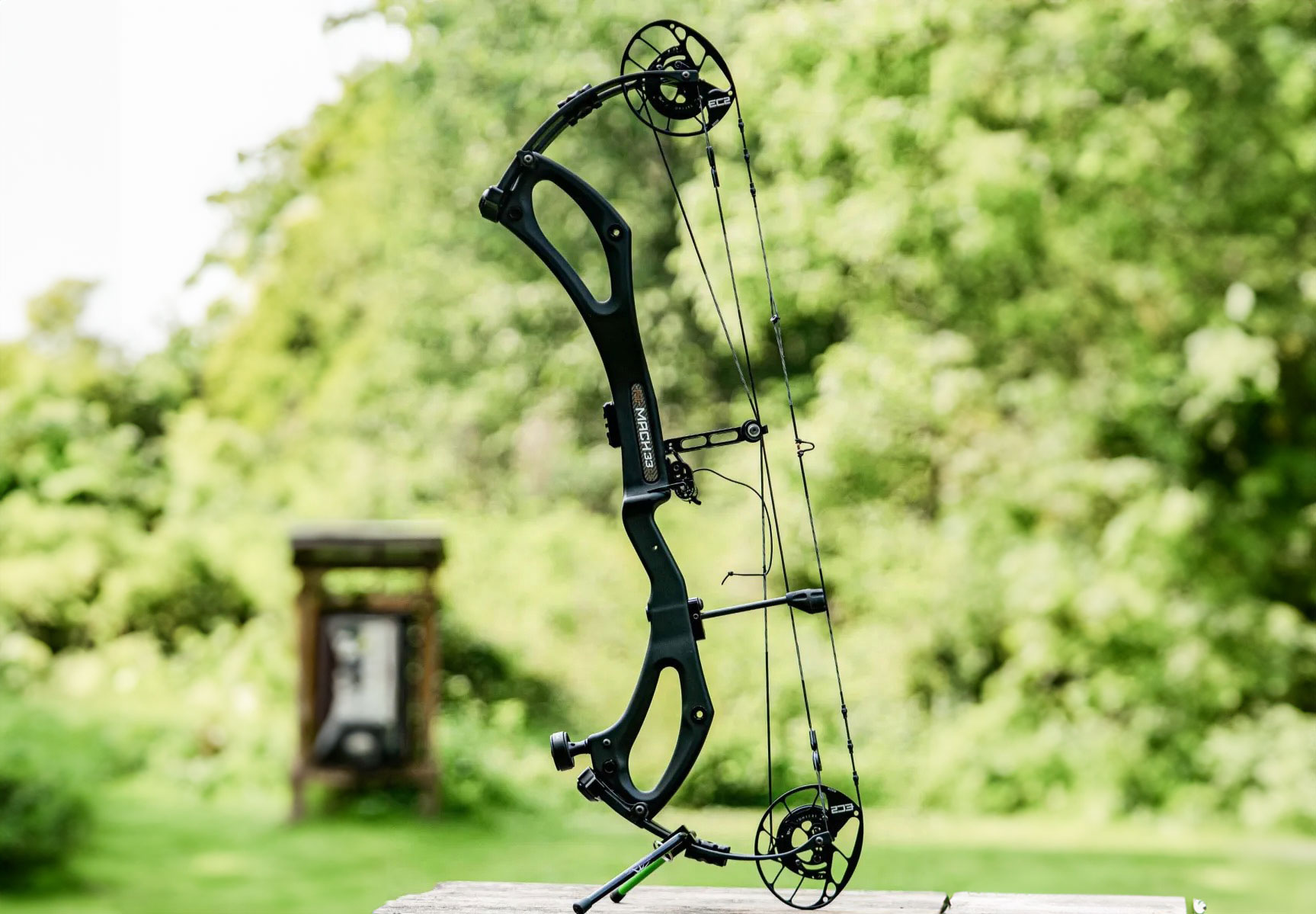
PSE Mach 33�
Key Features
Picatinny sight mount
Hamskea COR and QAD Integrate arrow rest mounts
EZ.220 cam spacers
Dead Frequency Carbon riser
Full Draw Stability: Adds .43-inches of brace height at full draw for reduced torque
When the scoring was finalized and all the groups measured, I asked each tester what bow they would buy with an unlimited budget. They all said the PSE Mach 33. We still had to input the results into the spreadsheet, but it didn’t take a crystal ball to know who would win.
The PSE Mach 33 DS had the lowest score for innovation and a median score for features. Yet, its shooting characteristics pushed it to the top of the five-foot test. The PSE Decree squeaked ahead of the Mach 33 in accuracy and both bows had substantially smaller group averages than the rest of the field.
Last year, the Mach 30 DS blew us away by being a bow that on paper seems unforgiving, but consistently shot small groups. The key to PSE’s two year accuracy winning streak is Full Draw Stability, which increases dynamic brace height. The Mach 33 has a 6.625-inch brace height, but at full draw, its brace height is just over 7 inches. Basically that means the bow is going to hold steadier and be more forgiving.
In addition to Full Draw Stability, the PSE bows seem to have cracked the code on riser-to-limb length ratio, pivot point location, riser rigidity, repeatable grip, and an overall torque-free platform. The result is a bow that is easy to hold on target and doesn’t punish you as much for making small mistakes.
The archers were also more comfortable shooting the Mach 33 versus other bows because of its smooth draw and nice back wall. It was the top scorer in both those categories. The Mach 33 feels much lighter than its actual draw weight. You can see from its draw force curve that it slowly builds up to the peak weight, maintains peak weight through the middle of the draw, and then slowly drops down in draw weight until you hit the wall. You’d typically expect a bow with that type of draw cycle to be slow, but the Mach 33 was still fast at 282 fps with a 395-grain arrow.
My initial tuning and set up of the Mach 33 was very straightforward. The bow shot a bullet hole with a 13/16 inch center shot, even cam timing, and a level nocking point. If you wanted to push tuning beyond a basic paper tune or your arrow spine is less than ideal, you can move the cams using the EZ.220 system. It’s easy to use, but not as simple as the Bowtech, Elite, Darton, or Mathews tuning features.
First, you’ll have to buy a tool and spacer kit (costs $60). Then you’ll press the bow and use the tool to swap the shims. It’s an improvement over previous methods for moving cams that required you to remove the axle, find the e-clip that shot into orbit, and make sure you put everything back together properly.
Carbon bows have crept up in price and they’re all around $2,000 this year. Some manufacturers are charging those high prices and their risers aren’t made in the USA. However, the PSE carbon risers are hand made in the USA, so while they’re expensive, I don’t think the prices are out of line.
The Mach 33 DS is a light carbon bow that’s easy to pack into mountains. It has a smooth draw, so you can easily get it back during a frigid sit in a deer stand. It has very little handshock, which makes it fun to shoot all summer. And it has unbeatable forgiveness, so when your heart is in your throat, you can still drop an arrow right behind the crease at 40 yards. Those are all things the test team wants in a hunting bow and it's why the Mach 33 DS is our 2025 Editor’s Choice winner.
Best Crossbow
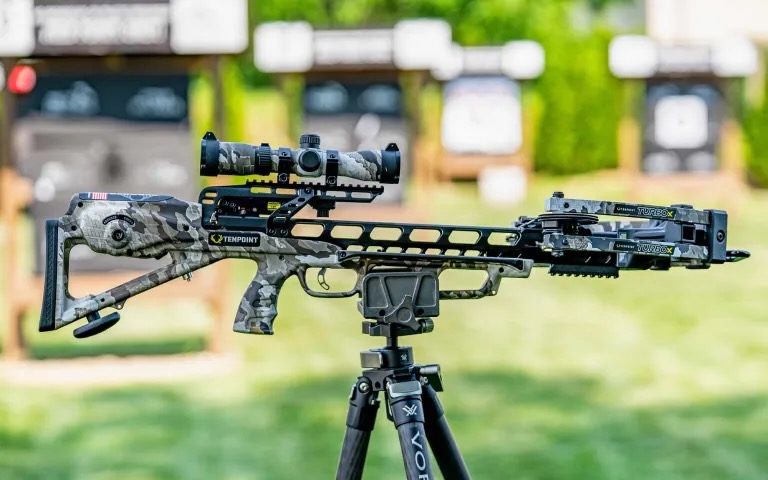
TenPoint Turbo X�
Key Features
Length: 33.25 inches
Width Uncocked: 13 inches
Weight: 6.8 pounds
Price: $1,350�
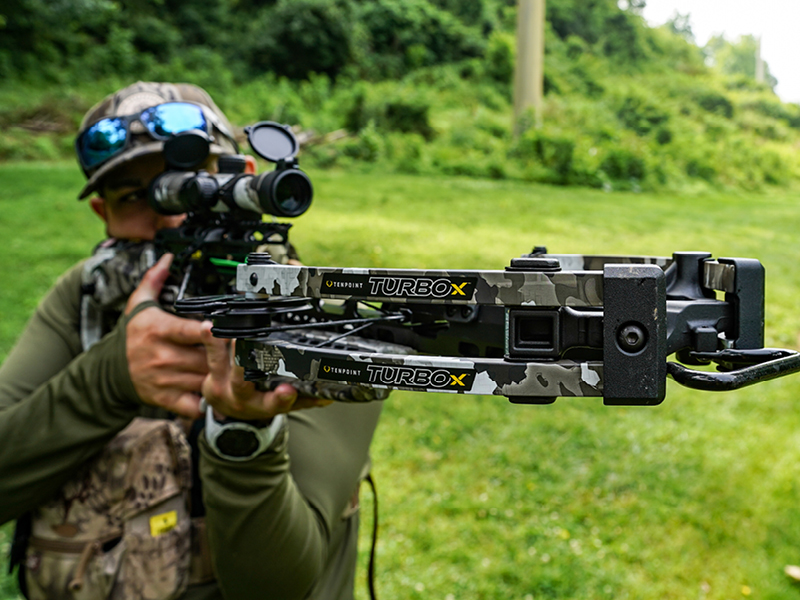
The TenPoint Turbo X was the most accurate crossbow we tested this year. It’s also $870 cheaper than the second most accurate crossbow and $1,200 less than the fastest crossbow. It was one of the easiest to cock and decock and it shot very well in all field positions. When you add up those factors and our score sheets, we couldn’t deny the Turbo X as the 2025 editor’s choice winner.
Turbo X shot a 1.23-inch group average out of four, three-shot groups at 50 yards. While the bench shooting was impressive, the crossbow was far from done showing off. Horner shot the crossbow off-hand extensively and printed several 3-inch groups at 50. He also stretched it out to 85 yards off-hand, and his group was under 8 inches. �
Over the years of testing crossbows, I’ve learned that some are sensitive to shooter input. For example, if you pull the stock tightly into your shoulder on one shot and use a relaxed grip on the next, the arrows hit in different places. The Turbo X maintained the same point of impact for two shooters on the bench, offhand, and off a tripod. �
What about broadheads? We tested that too. At 40 yards, a G5 DeadMeat hit perfectly with the field point. A Muzzy Trocar Crossbow Broadhead, hit about 3-inches low. We also shot a TenPoint Evo-X as well, and it landed more than 8 inches from the field point’s impact point. We were hoping the Turbo X would shoot any fixed blade given its relatively low speed and high-accuracy potential. But if you’re planning on shooting fixed heads, we recommend trying a few different designs to see what flies best.�
The Turbo X uses TenPoint’s ACUslide cocking mechanism, it's also used on the $2,650 Flatline 460. It’s a very easy system to use. You can go from unloaded to ready to fire in under 30 seconds. We think the cocking effort is low enough that a young hunter can crank it back on their own. �
The Turbo X isn’t the fastest crossbow by any means. We chronographed it at 415 fps with a 400-grain arrow and measured its drop from 20 to 40 yards at 6.5 inches. So while it’s about 100 fps slower than the TenPoint TRX 515, it will still give you plenty of forgiveness in range estimation. One benefit of a slower crossbow is that the strings don’t wear out as quickly as their higher fps counterparts.�
The main disadvantage of the Turbo X is that it’s a long crossbow. It won’t be easy to maneuver in a ground blind or through thick brush. Another con is the scope rail isn’t made of metal like we see on more expensive crossbows.
Best Value Crossbow
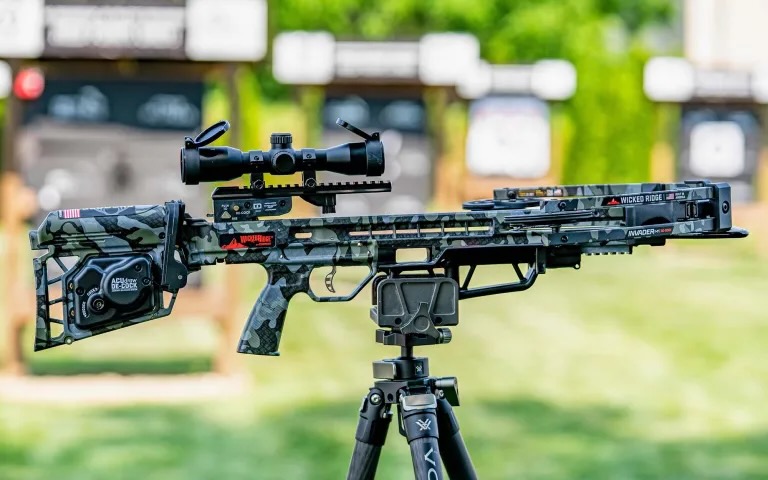
Wicked Ridge M1
Key Features
Length: 32 inches
Width Uncocked: 14 inches
Weight: 5.8 pounds
Price: $900
Throughout our many crossbow tests, we’ve reviewed a bunch of crossbows under $1,000 and usually the main differentiator is their ease of loading and build quality. This year was no different. The top two budget crossbows, the Barnett XP405 and the Wicked Ridge Invader M1, were equally accurate but the Invader M1 was far easier to cock due to its integrated cocking mechanism. The version of the Invader M1 we tested also has the new de-cock feature.
The Invader M1 De-Cock has TenPoint’s ACUdraw De-Cock built into it. It uses a sled, which is stored neatly on the butt stock, to hook onto the string. The cocking handle, stored alongside the forend, inserts into the stock and winds the string back. The bow’s draw weight is 190 pounds, but the force required to turn the handle is only 5 pounds. It was one of the easiest crossbows we tested in terms of cocking effort. Other than the safety clicking on, the whole operation is silent and can be done in a treestand with little movement. De-cocking the crossbow is just as easy and silent.
The Invader M1 De-Cock is an all-around great bow for the money. If you're interested in picking one up though, you'll have to navigate three variations of the Invader M1. The Invader M1 De-Cock with the ACUdraw 50 Sled De-Cock costs $700, but it's a manual cocking crossbow. The mechanism is still integrated into the crossbow, but rather than cranking the string back you'll pull it back with the two attached handles. You'll also manually let the string down. The ACUdraw Crank De-Cock is the version we tested, which costs $900 and has the crank to pull the string back or forward. The standard Invader M1 costs $750 and is the same crossbow we tested minus the de-cocking feature.
Best Riflescope
Leupold VX-5 Gen 2�
Key Features
30mm tube
Multiple illumination/reticle choices
Side parallax from 50 yards to infinity
Locking turrets minimize inadvertent movement
Elegant push-button illumination
Tool-less turret removal
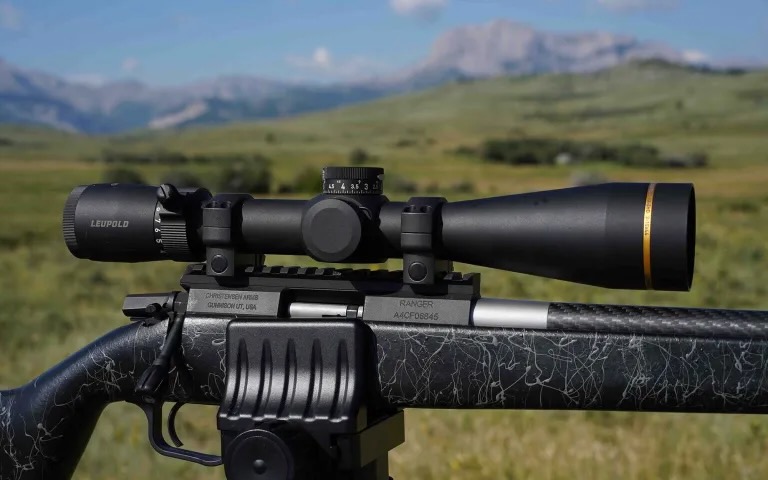
On its surface, the Gen2 version of Leupold’s classic hunting scope, the VX-5HD, basically has cool tool-less turrets and some upgraded coatings. It’s what you can’t see in this scope that makes it one of the most reliable hunting scopes of the year and a worthy heir to Leupold’s original VX-3 line: honest hunting scopes in a bunch of configurations and reticle choices.�
The Gen2 model was released last month, and follows the release of Gen2 turrets on the upgraded VX-6HD earlier in the year. Optically, there’s not a whole lot of updates. Leupold highlights its “Professional-Grade Optical System” which includes very good glass and coatings optimized to resist scratching and to temper glare, but you won’t see a major improvement on the very good Gen1 VX-5HD.�
The new SpeedSet tool-less elevation dial is the most apparent upgrade in the Gen2 line. This is a cool and useful system. Just release a locking lever with your fingertips, lift up the closure, and the whole turret pulls off, simplifying re-zeroing in the field and making turret changes fast and easy. The value proposition of the system is with Leupold’s CDS custom dial system. Order a custom dial for different rifles or bullet weights and swap the turrets in seconds.�
But what made the VX-5HD Gen2 the consensus pick for our Editor’s Choice award is what you can’t see. Leupold has invested heavily in its turret erector system, which includes the springs that keep the internal reticle tube aligned, the gears that move the erector tube with precision, and even the industrial lubricants that keep the whole works moving click after click and year after year. The guts of the VX-5HD Gen2 are very similar to those of Leupold’s Mark 5HD line, used for precision target shooting and military sniping.�
From a users’ standpoint, the scope simply works. It has ample mounting dimensions along its 30mm tube to fit a wide range of receivers. Its controls turn easily but precisely. And its eyebox is forgiving, meaning that shooters don’t have to be perfectly aligned with the exit pupil to see the entire field of view.�
The VX-5HD Gen2 line has one design element that holds it back from being an even better scope. The SpeedSet turret system is limited to two revolutions of elevation. That’s plenty for most hunting situations, yet not enough for long range target shooting beyond 1,000 yards. Because the elevation dial has only 38 MOA of travel, but the scope has 85 MOA of total internal adjustment, users aren’t able to utilize most of the adjustment range.�
On the positive side, though, the system ensures the erector system stays in the middle of the adjustment range, which adds to overall accuracy and precision.
We also note fairly limited reticle choices in the second-plane system. Our test sample came with the versatile FireDot duplex. The VX-5HD Gen2 is also available in TMOA, FireDot Twilight Hunter, Wind-Plex, and HTMR-MIL reticles, most of which are variations on the traditional plex style.
These reticles limit holdover options, though once users get accustomed to dialing their drop, elevation references aren’t as important as they might be on a scope with standard turret demarcations.
We love the 8-step push-button illumination module, and the 50-yards-to-infinity side focus turns with smooth precision. Lastly, the VX-5HD Gen2 is among the lightest hunting scopes in our test, making it a boon companion to just about any mountain rifle. The redesigned scope is also durable enough for just about any hunting rig. At prices ranging from $1,500 to $2,000, depending on model, it’s a pricey scope. But as Mark Copenhaver, tester and notorious skinflint, noted, “If I was buying any of the scopes in this year’s test, this is the one I would buy.”
Best Value Riflescope
Sig Sauer TANGO-SPR 4-16X44MM�
Key Features
30mm tube
MOA-based BDC reticle
Exposed elevation turret, capped windage turret
50-yards-to-infinity side focus
Throw lever
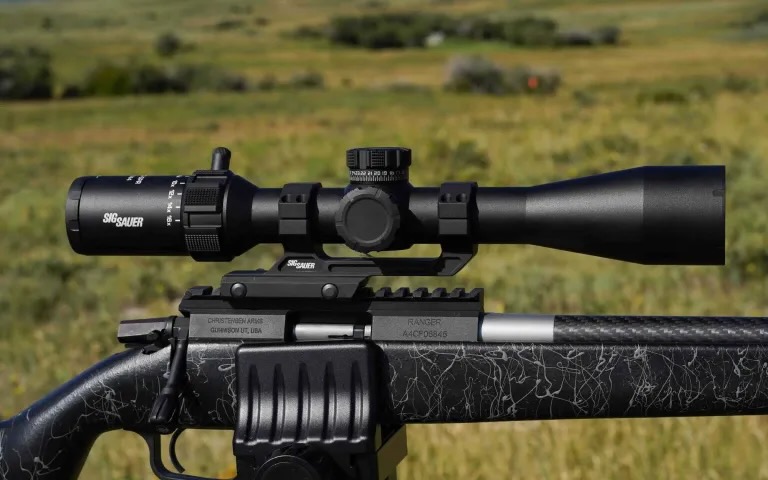
In Outdoor Life’s extensive optics testing, some test teams quibble over which products to bestow with our Great Buy award as the leading bargain in the category. This year there was no quibbling. At under $200, this do-everything, fuss-free scope was our consensus pick for our Great Buy, and it nearly won the overall Editor’s Choice, to boot.
For the price of premium scope rings, you get an non-illuminated scope with exposed turrets that turn with more tactility and precision than we expected, a useful hash-style second-plane reticle, and side focus from 50 yards to infinity. You get handy lay-flat caps that stay out of the way when you’re shooting but are ready to protect your glass when you’re not. You get Sig’s excellent lifetime transferable warranty. You even get a serviceable cantilevered unimount as part of the bargain.
Of course, for $200 there are things you don’t get. There’s no illumination. The TANGO-SPR has dark and glinty Chinese glass, and the field of view is extremely narrow. The turrets move with sharp, wincing clicks.
But those turrets track just fine. We mounted our test sample on a 6mm Creedmoor chassis rifle and ran a PRS-style steel course from 100 yards out to 800 yards both by dialing elevation and windage dope and holding in the reticle. Both turret and reticle references are true to MOA values. How many $200 scopes can achieve that range, then come back to 100 yards and hold their zero? The TANGO-SPR even has a zero stop, which is unheard of at this price.
“This scope was very easy to zero, and having parallax control on a $200 scope is nice,” noted tester Todd Netto. “It even comes with a rail. It’s solid for the price. You won’t confuse its image or its handling with a $2,000 scope, but impressive performance for a price-point rifle scope.”
We’d rather have a capped or locking elevation turret for hunting purposes, but the turrets, tuned to ¼ MOA click values, have clear indexing and aren’t prone to turning easily. We did experience what we’ve come to call a “stingy” eyebox, meaning that shooters had to keep both their eye relief and their head aligned with the narrow exit pupil in order to see the entire field of view. Move your head, even a little bit, and the scope blacks out.
But those are minor quibbles in the face of what is an almost incomprehensible value. How Sig can manage to deliver such a serviceable, competent, and durable scope for $200, covered by Sig’s full warranty, is remarkable, and should put other brands on notice.
Best Binocular
Zeiss SFL 10x50�
Key Features
30mm tube
Open-barrel, dual-hinge design
Right-barrel diopter
Oversized focus wheel
¼-20 tripod adapter
Magnesium housing
Lifetime transferable warranty
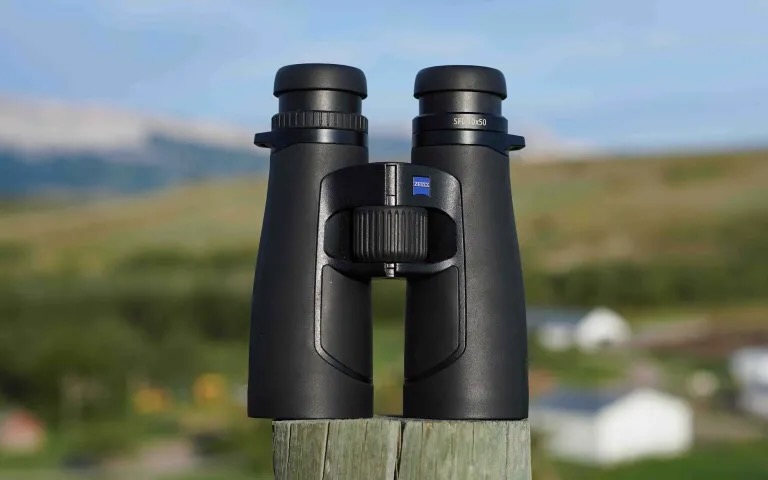
A year after Zeiss introduced its SFL binocular in 8x40 and 10x40 versions, the German brand has achieved a pinnacle accomplishment with 10x50 and 12x50 models in the line, delivering 50mm performance in a 42mm-sized chassis.�
The result is a powerful, bright, and extremely well-balanced binocular that is optimized for hunters and birders who value walk-about size and weight but want a little more optical horsepower than a standard 10x42.�
The combination of excellent glass, a responsive and tactile focus wheel, excellent ergonomics, and what we consider a fair price for a premium optic earned the Zeiss SFL our consensus pick for Editor’s Choice as the top binocular of 2025. While the award goes to the 10x50 SFL, Zeiss’s 12x50 SFL accrued nearly the same score.�
Both binoculars achieve their compact frame and relatively light weight through a redesigned optical prescription that uses thinner, lighter lenses stacked relatively close together in the magnesium chassis. The result is a 6.3-inch binocular that weighs just under 31 ounces. Those dimensions are standard for 10x42 binoculars, but the Zeiss models give users 18 percent more magnification (in the 12x version) and a significantly larger exit pupil in both versions, delivering more light to users’ eyes and contributing to overall image brightness compared to 10x42 binoculars. The 50mm objective lens, with 42 percent more surface area than a 42mm, is similarly capable of delivering significantly more light to the eye.�
Manufactured in Japan, the Zeiss’s glass is excellent, with no observed edge distortion or flaring, and testers noted the vivid color rendition and remarkable image brightness.�
“A do-it-all, take-it-anywhere piece of gear for hunters, wildlife watchers, spectators, etc.,” noted tester Luke Coccoli.�
And tester Ky Idler, who noted some stickiness in one eye cup and some tooling marks in the interior of one barrel, said “The glass is clear. I would not be afraid to glass with this for hours. Zeiss nailed it.”�
The open-barrel build and light weight enables one-hand operation, and the balance is excellent, settling in both hands without feeling forward heavy. The fast-focus wheel is especially useful, even under gloved fingers. In fact the SFL naming convention comes from Zeiss’s term for this control: the very Germanic SmartFocus Concept. The oversized focus wheel turns from close focus of 6 feet to infinity in just 1.4 turns of the wheel.�
The rest of the unit has the features you’d expect: a good tripod mount on the front hinge, right-barrel diopter control, and three-position eyecups. The SFL is covered by a transferable warranty.�
Of the two units we tested, I prefer the 10x50. The wider field of view makes images seem more panoramic, and the 12x50 version has just a little hand-shake unless I lock my elbows in. But for users who stabilize their binos on a tripod or other support, the 12x50 offers just a little bit more reach with the same vibrant, bright image.
With the addition of the 50mm models, Zeiss’s SFL line now includes an 8x30, 10x30, 8x40, 10x40, 8x50, 10x50, and 12x50.�
The 10x50 and 12x50 SFL models retail for $1,799 and $1,999, respectively. It’s an investment, for sure, but we think between the optical performance, ergonomics, and disruptive design, the Zeiss SFL is an heirloom-grade binocular that will produce years of satisfying viewing.
Best Spinning Reel
Daiwa Ballistic MQ LT�
Key Features
Price: $229.99
Gear Ratio: 5.2:1
Weight: 6.9-Ounces
Bearings: 2CRBB + 6BB + 1RB
Line Capacity: 10/250 (Test/Yard)
Drag Weight: 22-Pounds
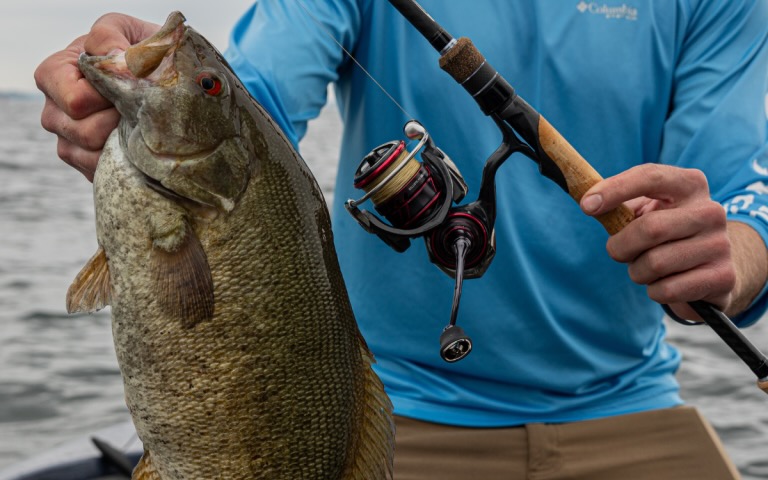
The Daiwa Ballistic MQ LT 2500D is more than deserving of our best overall award. Throughout the summer of battling largemouth, smallmouth, lake trout, and even a 25-pound freshwater striped bass, the high-quality drag never showed even the slightest sign of slipping or failing. The quality of this reel can be felt with each turn of the handle, which fits perfectly in your hand with a well-thought-out handle design.
Coming in at just below 7 ounces, you don't have to worry about the weight of your reel wearing you down throughout a long day on the water. A final piece worth noting with this phenomenal reel is the castability. The first time I reared back and fired out a ¼-ounce swimbait head with a 3.8-inch soft plastic swimbait on the back, I was stunned at just how far along the bluff wall it went. It was almost like I was long lining the bait, but in reality, I had simply cast it out there.
If you're looking for a high-quality reel at a very reasonable price, I wouldn't look any further than the Daiwa Ballistic MQ LT 2500D.
Best Fly Rod for Trout
Scott Centric�
Key Features
9 foot, 4-piece
Fast action
Reduced wells grip
Handcrafted in Colorado
Lifetime warranty to original owner
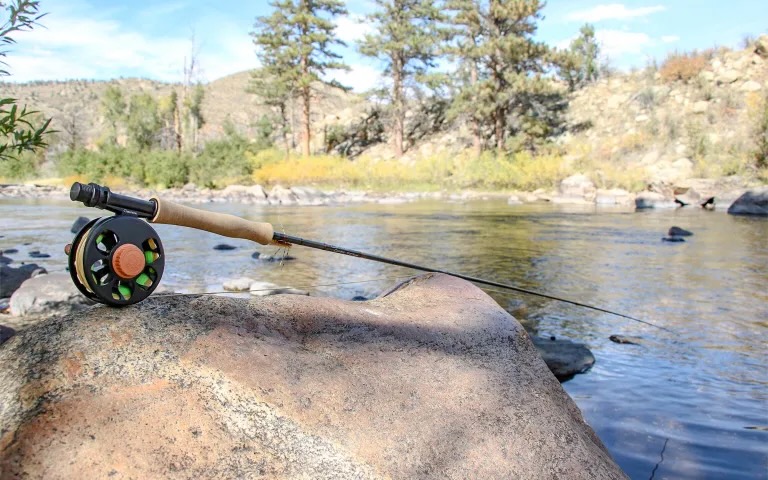
The Scott Centric stood out as the best all-around trout rod in the lineup. It out-casted and out-fished every other rod in the test, with perhaps one exception: the new Orvis Helios. Both fast-action rods are incredibly accurate and responsive, even at long distances, which makes them a joy to cast and fish with. The Centric got the nod in the end because it took less energy for me to cast accurately and mend at distance — perhaps because the Centric’s taper is better suited to my casting stroke. This rod is also about $100 cheaper than the Helios, and Scott offers a lifetime warranty, as opposed to the 25-year warranty offered by Orvis.
To win this category, a rod has to be a “quiver killer.” In other words, it has to be able to do it all and cast it all — from big bobber rigs and streamers to small nymphs and dry flies. The Centric does just that, and this rod is shockingly powerful given how light it is.
The Centric was deadly accurate in the casting test, and I saw this accuracy on the water, too. I had no problem placing flies in tight spots, even when using two- or three-fly rigs under a bobber. A good cast will only get you so far, though, and the Centric’s ability to control drifts at distance is just as important. I found this rod to be a roll-casting machine, and mends were effortless.
Best Swimbait Rod
Shimano Outlier
Key Features
Lengths from 7’4” to 8’
Available in Medium Heavy, Heavy, Extra Heavy, and XX Heavy
Price: $400�
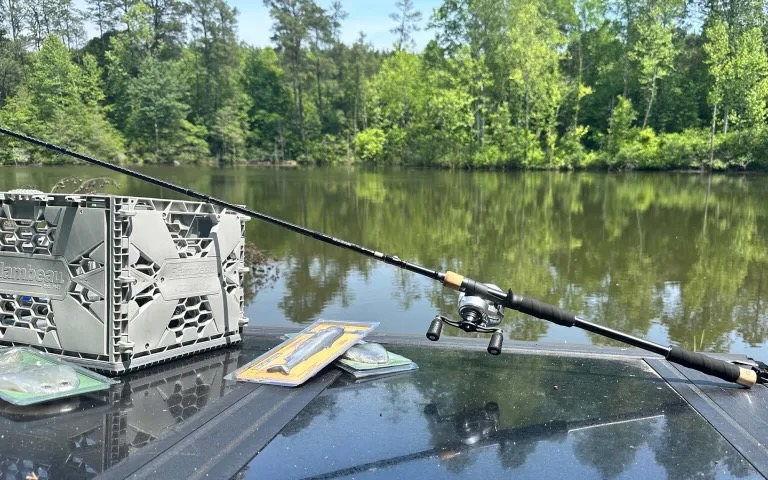
If you’re on a budget you can buy an Okuma Guide Select or Dobbins Fury for around $160. If you want a top of the line rod like a Megabass, Lowdown Customs, or Leviathan you’re looking at spending $400 to $500+. But, if you want a really good rod that costs less than an ultra premium, the Shimano Outlier is the rod for you. Functionally, they’re phenomenal rods that are appropriately spec'd for all types of swimbait fishing. It's the most complete line of factory rods on the market and there are rods that can fish 6-inch Magdrafts up to 12-inch glides.
The heart of the Outlier series is the cross weave blank. That blank construction is something that I’ve come to love in my Megabass Destroyer rods because it adds a ton of versatility to an action. For example, cross weave jig rod will have the sensitivity and hook setting power of a fast action rod, but then bends deep into the rod as you apply more pressure. The cross weave blank is also very stable, so it resists twisting while fighting a fish and making casts with heavy baits.
The split grip has a spiral EVA foam grip that's comfortable and looks cool. The grip lengths vary depending on the rod. My 7-foot 11-inch heavy rod has the goldilocks handle length for me — 21 inches. I can tuck it under my armpit while cranking but it's also not in the way when I need to maneuver.
There are six rods in the Outlier swimbait series, but most people will want the Medium Heavy, Heavy, and Heavy + powers. Those rods are designed to fish the most common sizes of glides and soft baits.
Best Trail Camera
Tactacam Reveal Ultra
Key Features
Price: $200
Cell Network LTE
Up to 4K photo definition
Flash Range: Up to 96 feet
Low-glow or no-glow flash settings
16 gb of internal storage
SD card slot for optional additional storage
Powered by 12 AA batteries
Live video
On-demand photos
GPS�
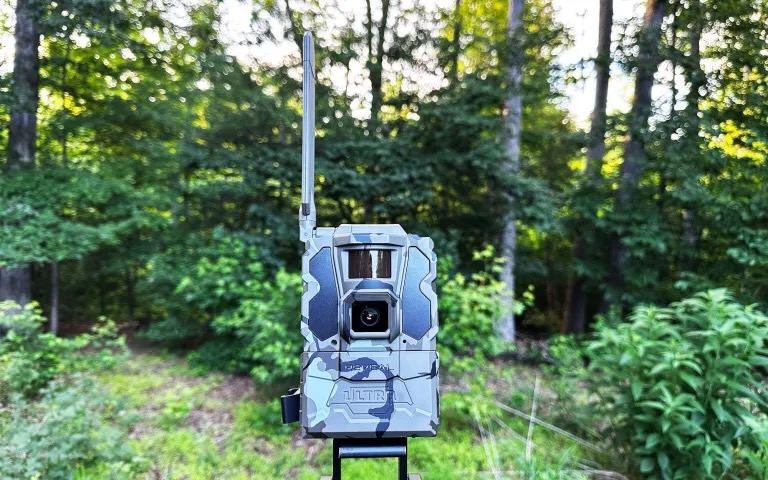
For the third year in a row Tactacam is our editor's choice winner. The new Reveal Ultra has everything we like about last year's winner, the Pro 3.0, and adds on features that serious trail camera users will appreciate. It has GPS, low and no-glow flash, and live video streaming. It maintains the 3.0's fast camera speed, good battery life, and easy-to-use app.�
The Reveal Ultra can toggle between low-glow or no-glow flash. Low-glow flash means there is a visible red light that comes on when the camera is triggered. The low-glow flash is brighter and illuminates a larger area than a no-glow flash. A no-glow flash emits no visible light and is a completely stealth option. It doesn't light up a huge area and is best for photos where the subject is less than 60 feet away — scrapes and trails. No-glow is also a great option if you're using a trail camera for security rather than hunting.�
If you need to find your trail camera you can activate its GPS, which gives you a location update every 6 hours. The GPS function works even if the battery is dead or removed for up to 72 hours. That means if you lost your cameras, it gets stolen, or is moved by someone, you'll be able to recover it.
During the walkthrough test, the Reveal Ultra triggered 100 percent of the time at 10 and 60 feet, but failed to trigger at night at 110 feet. That is above average performance based on past trail camera tests. Between the dozens of Tactacams we have in the field, we routinely see photos of deer captured at 60 feet and beyond.�
The photo quality is excellent both day and night. Subjects are captured as they enter the frame or directly in the center. The images are crisp with no motion blur. The low-glow flash is impressive and it illuminates well beyond 110 feet without over exposing objects up close.
One thing I like about Tactacam is their plans are straightforward and fairly affordable. You can pause your plan and restart it at any time, which is a convenient feature. It's also important to note that if you want to get on-demand photos, download HD photos, or enable live videos you have to get the Xtra plan, which is an additional $9 and covers all your cameras.
There are a few downsides to the Ultra. In video mode, you can't view videos right away. The app displays a thumbnail and you'll need to request the video before viewing it. The live video mode is slower to start up than my Spartan GoLive2. The Reveal app doesn't have a species filter which can make sorting through photos time consuming. It does have filters for custom tags, weather, date, and time.
I currently have three Tactacams on my lease and 30 more on an out of state property. Alex Robinson, OL's editor-in-chief and one of the authors of this article, also runs several Tactacams. That's a large sample size and we've yet to encounter a significant issue. I got to test the Ultra before it was released to the public and on the launch date, it started glitching. I used Tactacam's US-based support line to troubleshoot the issue and quickly spoke to a real human. The customer service representative helped me resolve the issue and I was back in business.�
In our experience, you're not likely to have an issue with a Tactacam, and if you do, they have excellent customer service to help you out.
Best Hunting Knife
White River Knives Small Game Hunter�
Key Features
Blade Steel: S35VN (58-60 HRC) or MagnaCut (62-64 HRC)
Handle Materials: Micarta
Overall Length: 7.25 inches
Blade Length: 2.62 inches
Blade Thickness: .130 inch
Grind: Flat
Kydex Sheath
Made in USA
Price: $160 (S35VN) or $180 (MagnaCut)
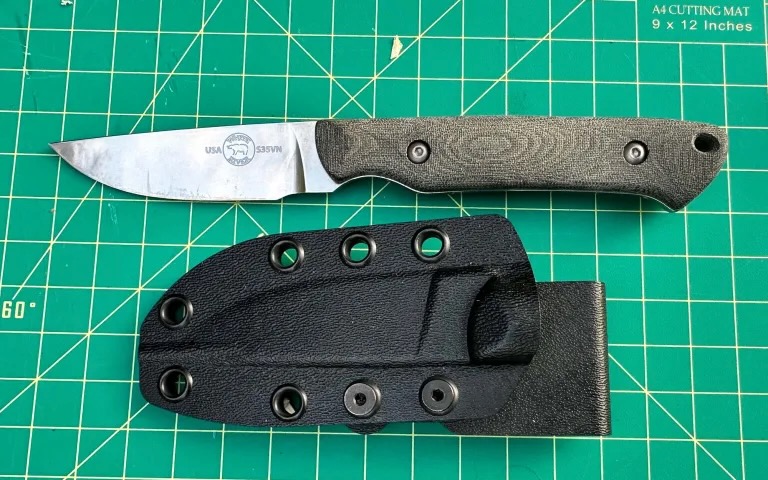
I have five things that I look for in a great hunting knife and of all the knives I tested, this is the one that ticks all those boxes. Its blade shape is perfect for field dressing, deboning, and caping. The knife is small enough to be easy to pack, but it has all the capability you need to process an animal in the field. The grind is slicey, which made it one of the top performers in my cut test. S35VN is a great steel because it has excellent corrosion resistance and strikes a nice balance of edge retention and toughness. The big handle allows a full grip and its coke-bottle shape makes for comfortable ergonomics. Its sculpted grip conforms to your hand with a hammer grip, thumb on the spine, or index finger on the spine. I like the ledge at the front of the handle, which is the perfect spot to place your thumb when using an index-finger-on-the-spine grip.
�While this knife is called the Small Game Hunter, it by no means is limited to squirrels and rabbits. The 2.6-inch blade is all I need for field dressing and quartering a deer. This year, I lent it to a professional deer butcher who cuts up hundreds of animals per year, and he was impressed with this knife's cutting ability and ergonomics. If you like the overall design, but want a larger blade I recommend looking at the 3.5-inch White River Hunter.
Best Hunting Backpack
Stone Glacier Solo 3600�

Key Features
Capacity: 3,600 cubic inch main bag
Weight: 4 pounds, 6 ounces on X Curve Frame
150+ pound load rating
2,500+ cubic inch expandable load shelf
Cordura 500 and Xpac fabric
Made in the USA
Price: $655
I’ve been hunting with Stone Glacier packs for years and haven’t found a system that does a better job balancing light weight with load-hauling capability. A few seasons back I upgraded my old Stone Glacier pack, which was actually a prototype made by Stone Glacier founder Kurt Racicot, to the Solo. I’ve used it to haul deer, elk, and moose out of the mountains and it has been with me everywhere from Africa to Mongolia. (It fits in overhead bins as a carry-on, which is a nice bonus.) �
As with all Stone Glacier packs built on either the XFrame or Krux Evo—you can read about the differences here—it includes an integral load shelf that allows you to strap meat between the frame and 3,600-cubic-inch bag. There are plenty of compression straps on the pack so that you can get a tight fit that snugs the load against you back—where you want it—and prevents it from moving around. The frame is easy to fit to different body sizes and you can purchase the Solo with a variety of belt lengths.
One of the smart design features on the Solo is how the zipper to the main compartment makes an upside down U-shape. This gives good access to the main bag, but in case the zipper fails the bag can still be used by cinching the compression straps across the bag. The way the straps are configured allows the user to easily secure a rifle, tripod, or trekking poles to the outside (I’ve done all three) where they are secure and easy to access.�
The Solo has a decent sized pocket on the top of the bag that you can stuff your lunch and an extra layer of clothing in for easy access. The interior of the main compartment has a sleeve where you can stow a spotting scope or water bottle. Stone Glacier also sell lightweight pockets and sleeves that can be hung on the inside of the main compartment to help keep gear organized.
�I’m sure that someday someone might invent a better ultralight pack for mountain hunting, but right now the Stone Glacier Solo is the best hunting backpack for mountain hunts. —John B. Snow
SEE ALL 2025 FIELD TESTED Gun WINNERS



SEE ALL 2025 FIELD TESTED Archery WINNERS
SEE ALL 2025 FIELD TESTED Optics WINNERS

SEE ALL 2025 FIELD TESTED fishing gear WINNERS

SEE ALL 2025 FIELD TESTED hunting gear WINNERS




Guns
Archery
optics
fishing
hunting
Best Shotgun
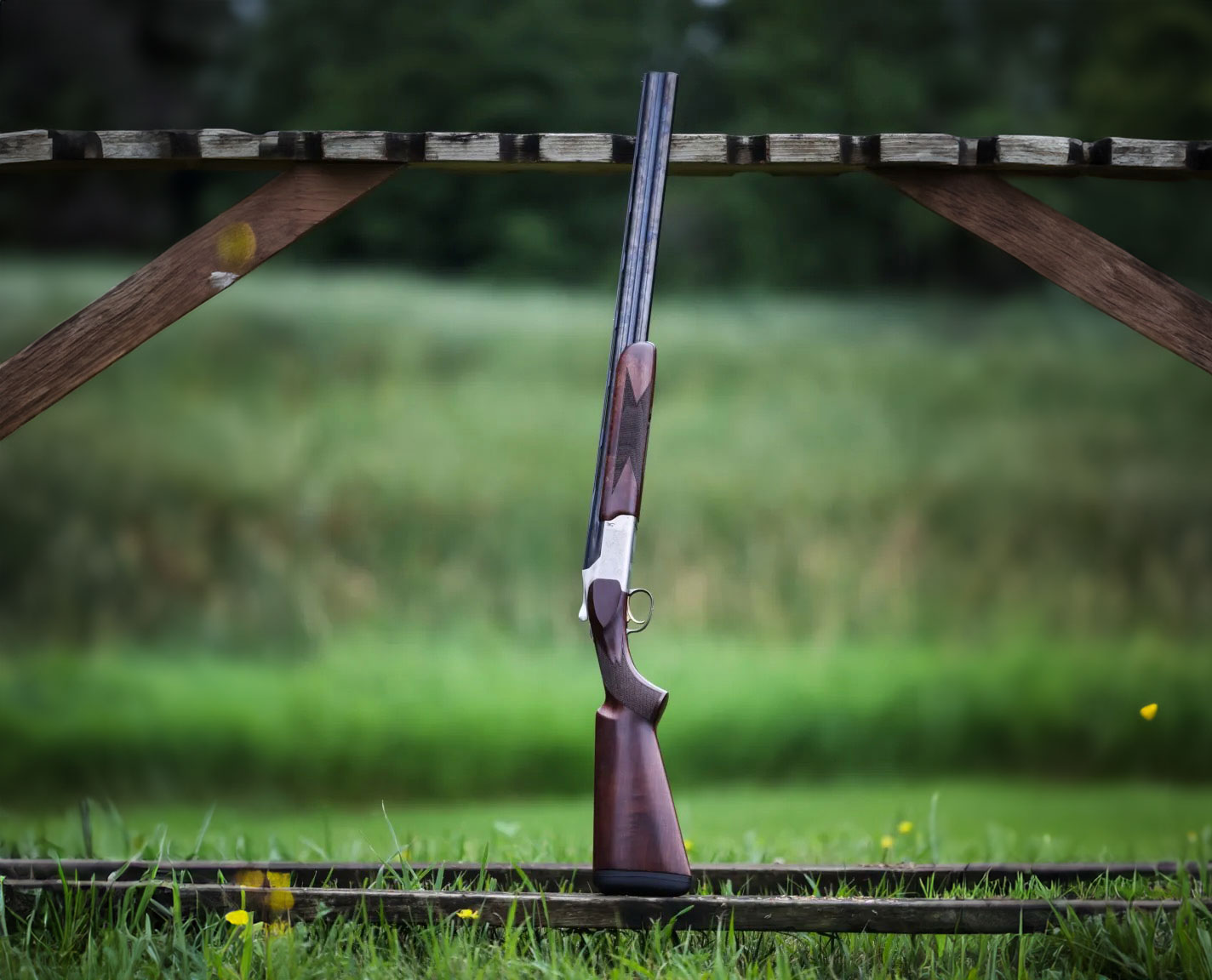
Browning Citori 825 Field�
Key Features
Intended use: Upland bird hunting
Included chokes: IC, M, F (Invector DS, flush)
Barrel finish: Polish blued
Stock: Black walnut, Grade II/III
New Fire Lite 2 mechanical trigger
Inflex II recoil pad
Vector Pro lengthened forcing cones
Made in Japan�
If there’s an over/under with more iterations than the Browning Citori, I can’t think of it. This prolific line expanded once again in 2025 with the introduction of the Model 825, which does honor to the Citori legacy.
The Citori 825 is offered in trap, sporting clays, and field configurations. The 825 Field we tested is geared toward upland bird hunters, a role for which it is admirably suited.
It has nice mechanical triggers, balances well with its 28-inch barrels, and doesn’t bite much thanks to its Inflex 2 recoil pad. At just 7.3 pounds it is light enough for all-day carry — a critical requirement for hunting far-ranging uplands that stretch out to the horizon.
Compared to the Citori 725, another gun we like, it has a modernized look and more elegant and refined components, specifically the top lever and safety/barrel select. The 825’s stock has a softer, more rounded profile, where the 725 lines are more angular and defined. Which looks better is purely a matter of personal taste.
We also liked the 825’s simple adornment, with a grouse on one side and pheasant on the other.
Fans of Browning Citoris are going to love this new model, and hunters who aren’t familiar with them could easily fall under the Browning’s sway if they get a chance to try one out. We were both smitten and impressed by the Citori 825 Field, which is why it earned an Editor’s Choice award as the best shotgun of 2025.