
transportation & Walkable neighbourhoods
Diverse transportation
Key Takeaways
Car-centric design
Key Takeaways


Find an Agent
Follow


According to RE/MAX brokers surveyed for the report, inflation and the rising cost of living have made affordability the top factor that potential buyers in Western Canada are considering when choosing a neighbourhood. This is the case in 83% of regions surveyed including Vancouver and Kelowna, BC, Regina, SK; Winnipeg, MB, and Medicine Hat, AB. The only outlier to this trend is Edmonton, AB, a region that enjoys relative affordability as compared to many other regions across Canada.
Other priority factors buyers are considering when scouting for neighbourhoods include access to green space (a trend noted in 100% of regions surveyed); proximity to preferred schools (in 67% of regions) and proximity to work (in 50% of regions).
As regions that have remained relatively stable over the last couple of years, these priorities have not shifted significantly and in fact, they are expected to remain the same in Vancouver, BC; Kelowna, BC and Regina, SK. Although quality of life is considered satisfactory in regions such as Vancouver, BC, Winnipeg, MB and Medicine Hat, AB, having greater proximity to work, and better access to public transit, bike lanes and/or walking paths, preferred schools and medical services were identified as factors that would boost liveability. Meanwhile, RE/MAX brokers in cities such as, Kelowna, BC and Regina, SK, where many neighbourhoods already capture the spirit of the 15-minute neighbourhood in some capacity, would rank quality of life as very satisfactory.
Western Canada
Click here to read more
Why can’t we just be like Scandinavian countries?

80%
of consumers spend 1-2 hours commuting to work.

Lorem ipsum dolor sit amet, consectetur adipiscing elit, sed do eiusmod tempor incididunt ut labore et dolore magna aliqua. Ut enim ad minim veniam, quis nostrud exercitation ullamco laboris nisi ut aliquip ex ea commodo consequat.
65%
Lorem ipsum dolor sit amet, consectetur adipiscing elit.
Lorem ipsum dolor sit amet, consectetur adipiscing elit, sed do eiusmod tempor incididunt ut labore et dolore magna aliqua. Ut enim ad minim veniam, quis nostrud exercitation ullamco laboris nisi ut aliquip ex ea commodo consequat.
5%
Lorem ipsum dolor sit amet, consectetur adipiscing elit.
Lorem ipsum dolor sit amet, consectetur adipiscing elit, sed do eiusmod tempor incididunt ut labore et dolore magna aliqua. Ut enim ad minim veniam, quis nostrud exercitation ullamco laboris nisi ut aliquip ex ea commodo consequat.
33%
Lorem ipsum dolor sit amet, consectetur adipiscing elit.
Lorem ipsum dolor sit amet, consectetur adipiscing elit, sed do eiusmod tempor incididunt ut labore et dolore magna aliqua. Ut enim ad minim veniam, quis nostrud exercitation ullamco laboris nisi ut aliquip ex ea commodo consequat.
48%
Lorem ipsum dolor sit amet, consectetur adipiscing elit.
Lorem ipsum dolor sit amet, consectetur adipiscing elit, sed do eiusmod tempor incididunt ut labore et dolore magna aliqua. Ut enim ad minim veniam, quis nostrud exercitation ullamco laboris nisi ut aliquip ex ea commodo consequat.
80%
of consumers spend 1-2 hours commuting to work.
Lorem ipsum dolor sit amet, consectetur adipiscing elit, sed do eiusmod tempor incididunt ut labore et dolore magna aliqua. Ut enim ad minim veniam, quis nostrud exercitation ullamco laboris nisi ut aliquip ex ea commodo consequat.

This report includes insights from Area Expert Contributors, including Kathryn Bakos, Director, Climate Finance and Science, Intact Centre on Climate Adaptation; Ken Greenberg, Urban Designer, City Building Advocate, and Author; and Shoshanna Saxe, PhD, P.Eng, Associate Professor, Canada Research Chair in Sustainable Infrastructure, University of Toronto Department of Civil and Mineral Engineering. Insights were supplemented with research from a Leger consumer survey. Leger is the largest Canadian-owned full-service market research firm. An online survey of 1,549 Canadians was completed between April 14-17 using Leger’s online panel. Leger's online panel has approximately 400,000 members nationally and has a retention rate of 90 per cent. A probability sample of the same size would yield a margin of error of +/- 2.5 per cent, 19 times out of 20.
About This Report
Implementing walkable neighbourhoods within small and growing Canadian municipalities would make all necessities accessible within a short walk, bike or public-transportation ride. Ideally, developing cities in this way may help achieve consistent and long-term balance in Canada’s residential housing market. As transportation is key to the accessible city, it’s important that growing municipalities with a population of 60,000 or more build transportation infrastructure that is fast, efficient and, most importantly, diverse.


Implementing walkable cities within small and growing Canadian municipalities would make all necessities accessible within a short walk, bike or public-transportation ride. Ideally, developing cities in this way may help achieve consistent and long-term balance in Canada’s residential housing market. As transportation is key to the accessible city, it’s important that growing municipalities with a population of 60,000 or more build transportation infrastructure that is fast, efficient and, most importantly, diverse.
When evaluating our urban infrastructure and development, we often tend to look toward Scandinavian cities, such as Helsinki or Copenhagen, and ask, “why can’t we just build cities like those, here in Canada?” While these cities are often upheld globally as the gold standard as Saxe notes, in urban planning, we have a lot of work to catch up. In 2022, Statistics Canada released a report suggesting that if Canada’s rate of population growth continues, it will likely double within the next 26 years. According to Saxe, the population boom in Canada gives us an opportunity to build in new ways and learn from international leaders but that will require letting go of what feels like the usual way of doing things, for government policy makers and civil servants, for developers renters and buyers. The key challenge to building differently in Canada is not physical is due to political and normative inertia, change is hard.
Canada’s growing communities are at a tipping point to implement developments that will shape the country’s future and our cities’ sustainability.
Unipurpose zoning
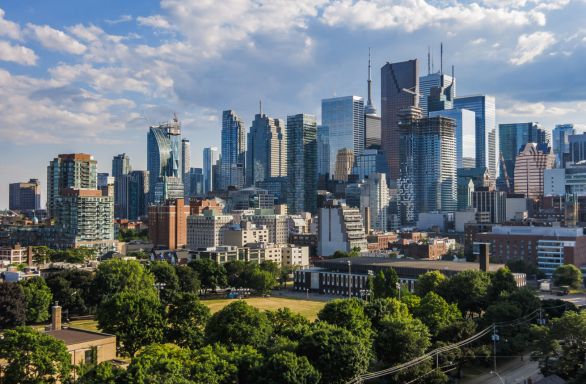
According to RE/MAX brokers, affordability trumps all other factors for homebuyers scouting neighbourhoods in Ontario, in 86% of regions surveyed. The only exception is London, where affordability takes a back seat to amenities such as proximity to preferred schools and childcare options, greater access to outdoor recreation and walkability improvements. The “must haves” identified among Ontario homebuyers include greater access to green space (in 71% of regions surveyed); proximity to work and preferred schools (in 71% of regions) and improvements to public transportation (in 43% of regions). These priorities have shifted significantly in the last two years, thanks to lifestyle changes brought on by the pandemic, alongside high inflation, cost of living and rising interest rates.
In Ontario, quality of life was ranked as "satisfactory" in 50% of regions surveyed including Toronto, Brampton, London and Stratford, or "very satisfactory," as reported in Ottawa, Belleville and Wasaga Beach. Factors that would improve liveability in these regions include greater proximity to work and healthcare services, and improvements to public transit and walkability. Public transit specifically is an important factor in improving accessibility and supporting a shift toward the 15-minute neighbourhood concept, in regions such as Toronto, Ottawa and London. With that being said, consumer appetite to live in inter-connected cities is a strong contributor to making 15-minute neighbourhoods a reality. This is already being applied in Ottawa, London and Brampton, where new developments are designed with the principles of the concept in mind.
Ontario
Click here to read more

According to RE/MAX brokers, affordability, and proximity to preferred schools, grocery stores and green space are the top priorities for buyers when selecting a residential neighbourhood in Montreal, QC. Post-pandemic, these priorities have not shifted, and they’re not expected to soon. The pandemic altered a few trends in the market, however, buyer considerations like accessible transit, affordability and proximity to good schools will always be priorities to buyers in the area. That being said, the "15-minute neighbourhood" concept is achievable within Montreal, but only within the city’s most expensive areas, such as the city centre, where residents already enjoy a high-quality of life with access to good education, safe neighbourhoods and an overall, joi de vivre you can’t find anywhere else in Canada.
Quality of life in Montreal is described as "very satisfactory," especially within the city centre; however, major infrastructure developments are anticipated to improve conditions in the Greater Montreal Area, beyond the city centre. For instance, the new Réseau express métropolitain (REM), which as has been under construction over the past couple of years, will include 26 new stations within Greater Montreal over 67km of track. The project’s construction alone has impacted residential sales further from Montreal’s core, illustrating the value of living close to services like transit. This new light rail development is anticipated to facilitate the 15-minute neighbourhood ideal in Montreal, by making reliable transit options more accessible to residents and ideally, reducing reliance on driving as a primary transportation method.
Montreal
Click here to read more
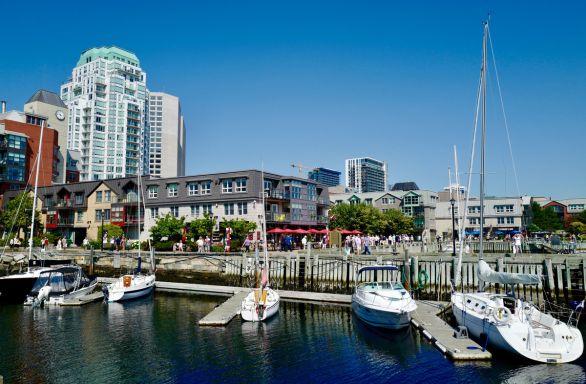
According the RE/MAX brokers, affordability is the most important factor for homebuyers choosing a neighbourhood in St, John's, NL, Charlottetown, PEI and Moncton, NB, due to ongoing pressures of housing demand, as well as economic circumstances. Halifax, NS is outlier to the trend.
Due to the low-density nature of Atlantic Canada, homebuyers prioritize proximity to schools (in 100% of regions surveyed), public transit (in 50% of regions), green space (in 50% of regions), and childcare and grocery stores (in 25% of regions). As such, residents must rely on vehicles as their primary mode of transportation, making driveability between neighbourhoods and everyday necessities a strong consideration for prospective buyers.
Atlantic Canada ranked as "very satisfactory" for quality of life, attributed to the availability of family-friendly amenities, relative affordability as compared to other provinces, and proximity to nature. However, a common pain-point for residents is the long distance between home and work. Thus, closing the gap with improvements to public transportation (something that is already underway in cities like Charlottetown, PEI) is key to boosting local liveability. Due to current infrastructure and the resulting the reliance on cars, implementing neighbourhoods that are a 15-minute drive to amenities and necessities would be more feasible where walking, biking and public transportation are already prioritized.
Artlantic Canada
Click here to read more
About the RE/MAX Network
As one of the leading global real estate franchisors, RE/MAX, LLC is a subsidiary of RE/MAX Holdings (NYSE: RMAX) with more than 140,000 agents in almost 9,000 offices with a presence in more than 110 countries and territories. Nobody in the world sells more real estate than RE/MAX, as measured by residential transaction sides. RE/MAX was founded in 1973 by Dave and Gail Liniger, with an innovative, entrepreneurial culture affording its agents and franchisees the flexibility to operate their businesses with great independence. RE/MAX agents have lived, worked and served in their local communities for decades, raising millions of dollars every year for Children’s Miracle Network Hospitals® and other charities. To learn more about RE/MAX, to search home listings or find an agent in your community, please visit remax.ca. For the latest news from RE/MAX Canada, please visit blog.remax.ca.
As regions that have remained relatively stable over the last couple of years, these priorities have not shifted significantly and in fact, they are expected to remain the same in Vancouver, BC; Kelowna, BC and Regina, SK. Although quality of life is considered satisfactory in regions such as Vancouver, BC, Winnipeg, MB and Medicine Hat, AB, having greater proximity to work, and better access to public transit, bike lanes and/or walking paths, preferred schools and medical services were identified as factors that would boost liveability. Meanwhile, RE/MAX brokers in cities such as, Kelowna, BC and Regina, SK, where many neighbourhoods already capture the spirit of the 15-minute neighbourhood in some capacity, would rank quality of life as very satisfactory.
In Ontario, quality of life was ranked as "satisfactory" in 50% of regions surveyed including Toronto, Brampton, London and Stratford, or "very satisfactory," as reported in Ottawa, Belleville and Wasaga Beach. Factors that would improve liveability in these regions include greater proximity to work and healthcare services, and improvements to public transit and walkability. Public transit specifically is an important factor in improving accessibility and supporting a shift toward the 15-minute neighbourhood concept, in regions such as Toronto, Ottawa and London. With that being said, consumer appetite to live in inter-connected cities is a strong contributor to making 15-minute neighbourhoods a reality. This is already being applied in Ottawa, London and Brampton, where new developments are designed with this concept in mind.
According to RE/MAX brokers, affordability trumps all other factors for homebuyers scouting neighbourhoods in Ontario, in 86% of regions surveyed. The only exception is London, where affordability takes a back seat to amenities such as proximity to preferred schools and childcare options, greater access to outdoor recreation and walkability improvements. The “must haves” identified among Ontario homebuyers include greater access to green space (in 71% of regions surveyed); proximity to work and preferred schools (in 71% of regions) and improvements to public transportation (in 43% of regions). These priorities have shifted significantly in the last two years, thanks to lifestyle changes brought on by the pandemic, alongside high inflation, cost of living and rising interest rates.
Ontario
Click here to read more
Quality of life in Montreal is described as "very satisfactory," especially within the city centre; however, major infrastructure developments are anticipated to improve conditions in the Greater Montreal Area, beyond the city centre. For instance, the new Réseau express métropolitain (REM), which as has been under construction over the past couple of years, will include 26 new stations within Greater Montreal over 67km of track. The project’s construction alone has impacted residential sales further from Montreal’s core, illustrating the value of living close to services like transit. This new light rail development is anticipated to facilitate the 15-minute neighbourhood ideal in Montreal, by making reliable transit options more accessible to residents and ideally, reducing reliance on driving as a primary transportation method.
According to RE/MAX brokers, affordability, and proximity to preferred schools, grocery stores and green space are the top priorities for buyers when selecting a residential neighbourhood in Montreal, QC. Post-pandemic, these priorities have not shifted, and they’re not expected to soon. The pandemic altered a few trends in the market, however, buyer considerations like accessible transit, affordability and proximity to good schools will always be priorities to buyers in the area. That being said, the "15-minute neighbourhood" concept is achievable within Montreal, but only within the city’s most expensive areas, such as the city centre, where residents already enjoy a high-quality of life with access to good education, safe neighbourhoods and an overall, joi de vivre you can’t find anywhere else in Canada.
Montreal
Click here to read more
Atlantic Canada ranked as "very satisfactory" for quality of life, attributed to the availability of family-friendly amenities, relative affordability as compared to other provinces, and proximity to nature. However, a common pain-point for residents is the long distance between home and work. Thus, closing the gap with improvements to public transportation (something that is already underway in cities like Charlottetown, PEI) is key to boosting local liveability. Due to current infrastructure and the resulting the reliance on cars, implementing neighbourhoods that are a 15-minute drive to amenities and necessities would be more feasible where walking, biking and public transportation are already prioritized.
According the RE/MAX brokers, affordability is the most important factor for homebuyers choosing a neighbourhood in Stl, John's, NL, Charlottetown, PEI and Moncton, NB, due to ongoing pressures of housing demand, as well as economic circumstances. Halifax, NS is outlier to the trend.
Due to the low-density nature of Atlantic Canada, homebuyers prioritize proximity to schools (in 100% of regions surveyed), public transit (in 50% of regions), green space (in 50% of regions), and childcare and grocery stores (in 25% of regions). As such, residents must rely on vehicles as their primary mode of transportation, making driveability between neighbourhoods and everyday necessities a strong consideration for prospective buyers.
Atlantic Canada
Click here to read more
Diverse transportation is key
“The idea is, you’re able to meet your daily needs within a 15-minute travel timeframe and it’s reasonably convenient and pleasant,” says interviewee Shoshanna Saxe, an Associate Professor in the University of Toronto’s Department of Civil & Mineral Engineering.
According to Saxe, ideally, in a walkable city, residents in a district can travel to necessities like schools, grocery stores, doctor offices, entertainment, and shopping via a short walk, bike, or public transportation ride and in some cases drive. Our current bias towards cars for transportation is not currently using our lands to develop diverse, convenient and pleasant transportation infrastructure alternatives. If this continues, we risk building more roads and contributing to urban sprawl through status quo development- which is antithetical to the 15-Minute City ideal of dense neighbourhoods with diverse types of housing, transportation methods.
There are varying views on the way in which we use our land most effectively. According to Greenberg, “we don’t have a land-use problem, we have a housing problem.”
Important to note that according to Kathryn Bakos, Director, Climate Finance and Science, Intact Centre; and Shoshanna Saxe, Associate Professor, the University of Toronto's Department of Civil & Mineral Engineering, it’s strongly suggested that in fact we do have a land use problem – especially when it comes to climate and transportation. According to Bakos, “in Ontario – 60 to 80 per cent of natural infrastructure has been replaced by cement. We have a poor relationship between building and nature.”
It’s no secret that Canada lacks sufficient housing inventory, but building just any housing on any available land does not solve the problem. It must be the right kind of inventory. Rather than sprawling beyond our smaller communities’ pre-existing boundaries to build new homes on protected lands where homes are often susceptible to extreme weather conditions (such as the Greenbelt, for example), the objective should be to use land more creatively, more pragmatically, with diverse housing types and transportation solutions.
According to interviewee, Saxe, the issue in cities, often is they’re designed to prioritize car travel as the primary method of transportation. While cities are across Canada integrating more diverse transportation infrastructure, including larger and protected bike lanes, in many Canadian communities, there is little room provided on roadways for diverse transportation infrastructure due to the prioritization of building roads designed for car travel. Likewise, many Canadian cities and communities are opting instead for expansive areas of housing and large, swooping roads to support car transport. Much of this space dedicated to cars could be re-purposed to build-up a more-diverse housing inventory. This plays into a concept identified by what interviewee Saxe called, “unipurpose zoning” (or “monoculture planning”). In order to stop relying so heavily on cars, we need to diversify transportation infrastructure.


If Canada’s rate of population growth continues on its current path, we’ll likely double our population within the next 26 years, according to Statistics Canada.
As of January 1, 2023, Canada's population was estimated at 39,566,248 people, per Statistics Canada figures.
Where is our population headed?
Unipurpose Zoning


According to Saxe, unipurpose zoning is the tendency to build just one type of development, whether that is housing, retail, industrial or otherwise, in one large area. This trend has just recently been addressed, for example, in parts of the Greater Toronto Area, where a loosening of zoning laws is allowing for mixed-used development (i.e., housing and retail in the same space or small retail like neighbourhood coffee shops), but ultimately, we’re still developing unipurpose communities across the country.
By putting our land toward achieving a mix of efficient and sustainable transportation methods, we will open space for housing developments to add supply to Canada’s much-depleted housing inventory, and ideally, creating better housing accessibility. But to implement the 15-Minute City, smaller municipalities need to first minimize unipurpose zoning, then reduce their reliance on cars, before they can diversify their transportation infrastructure.
Our communities are often developed as large swaths of just one thing. We have expansive areas of our cities that are just housing. Even if there’s 30 different types of homes, it’s still just housing.

– Shoshanna Saxe
Car-Centric Design
As mentioned, Canadians – especially those living in smaller, spread-out communities – are often reliant on cars, and this isn’t necessarily always by choice. Canadian cities are designed in a way that makes alternate methods of transportation such as walking, cycling and public transportation, inaccessible, sometimes unpleasant and unsafe.
Often, the perceived solution to transportation woes such as traffic, long-commutes, and safety concerns, is to expand highways; but this is not a sustainable or pragmatic solution and most importantly, because of induced demand, it doesn’t work. Instead, according to the featured experts and interviewees, we should be considering how funds could be re-directed to building an effective and diverse transportation system that includes space for various modes of transportation like large, shaded, and safe walkways; protected bike lanes; and fast and efficient public transit.
Of course, the first step toward redirecting funds to develop new and retrofit existing infrastructure is to change zoning laws to accommodate major changes in cities’ development. In many urban areas across the country, changes are already underway to decrease car reliance and improve walkability and encourage use of diverse transportation methods.

How do Canadians feel about commute times?
According to a Leger survey commissioned by RE/MAX Canada, 7 in 10 Canadians agree that reducing their commuting time to 15 minutes or less for necessary services would improve their quality of life. Traffic volume is currently the biggest pain point when it comes to accessing day-to-day activities in their community with 44% of those surveyed ranking it in their top 3.
Effective transportation
For example, in Brampton, Ont., planning departments created guidelines to include proportionate amounts of outdoor greenspace and mixed commercial developments to minimize roadway size and limit the need for cars to travel to work, schools and shopping. In BC, the new SkyTrain is being implemented between Langley and Surrey – two of the province’s fastest-growing cities – to bring riders fast, frequent, high-capacity rapid transit service, with the ideals of safety, speed, and affordability top-of-mind. These movements in fast-growing Canadian cities so the ways in which planning departments are working to improve their infrastructure to include diverse transportation options and reduce overall reliance on cars.
The Brampton example shows how the 15-Minute City concept is already part of a growing Canadian region’s long-term plan and illustrates how urban design can influence residents’ decisions to drive or choose alternative modes of transportation to reach everyday necessities. Likewise, the SkyTrain development shows how Canada’s growing cities are already implementing new transit developments to further decrease Canadians’ need to drive everywhere, and ultimately encouraging use of diverse transportation methods.
According to Saxe, to encourage regular use, cities should also strive to develop their transit infrastructure as efficiently as possible. Take public transportation, for example. Larger markets often offer multiple transportation systems that operate somewhat differently from one another. This causes major inefficiencies for commuters. The multiple, non-integrated systems of high-speed trains, bike shares, buses, and subways can deter use and encourage reliance on cars. Knowing this, small markets should ensure current and new transit infrastructure is as integrated as possible, efficient and accessible, creating value for residents rather than having them default to their vehicles.
Growing communities should also consider access to transit when developing transportation infrastructure. In fact, 34 per cent of Canadians ranked “lack of available and accessible transit options,” among their top three paint points in their communities, according to Leger. Interestingly, according to Leger, non-drivers are more likely to agree that the 15-Minute City concept is achievable and feasible (58 per cent) compared to drivers (48 per cent). Showing that those who already use active and public transportation options in their communities understand that implementing these infrastructure developments as primary modes of transport is achievable for residents.
Within the walkable community, there are two options: make transportation accessible or make amenities accessible. Saxe puts it succinctly, “you can make it possible for people to go the distance or you can bring everything within the distance.” This means growing communities seeking to build within the walkable concept should build housing developments close to walkways, bike lanes and public transit, so residents don’t need to rely on cars to access transportation methods or nearby services If the system is designed well, with good public transit options available to get to the train to get to the city, for example, no one needs to reply on cars for their commute.
Effective modes of transportation
According to Leger, 35 per cent of respondents agree that reducing commuting time to 15 minutes or less, to access necessities such as work, appointments, childcare, restaurants and entertainment, shopping, etc., would improve quality of life. However, lack of proximity to these, in addition to a shortage of safe, diverse transportation methods, like transit (34 per cent) and bike lanes and walkways (23 per cent) are identified as top pain points for Canadians. Clearly, more transportation and proximity to transportation is needed. But to build this neighbourhood structure, growing communities must ask themselves: will this transportation method be implemented in a safe and feasible way?
Saxe shared the minimum requirements for effective transportation in any community as safe, legal and pleasant. Take a loud, noisy road with no shade or beautification elements (not unlike the open, monotonous streets of many of Canada’s suburbs). These streetscapes don’t promote usage, and they’re not always accessible or ideal for those with mobility challenges. To have active and public transportation-friendly neighbourhoods, we need to implement walking and biking infrastructure, have shady, clear streetscapes (especially during Canadian winters) that are safe to use and have beautification elements like trees. We need to have destination to go to along these streets (shops, services, parks). Without these elements, people are likely to continue choosing cars over walking or cycling to amenities.
Key Takeaways


Build narrower streets and use the land you would have attributed to multi-lane roads to building better active transit (bike lanes), public transit (bus lanes) and or more community space, more housing, and more commercial developments.
1. Car-oriented development is working against sustainable development
One of the most important pieces of advice Saxe offers is that growing communities is to avoid building cul-de-sacs or streets that look like “lollipops on a stick.” Small straight blocks are more walkable, and utilities and streets are cheaper to build and maintain if they go in straight lines. At a minimum, straight(ish) walking and biking connections are needed even is the car roads loop.
2. Build straight, grided streets
Always build bike infrastructure in your transport systems and be ambitious when building. Networked infrastructure like bike lanes and sidewalks gain value exponentially as the network grows.
3. Go fast and big with your transit network
Oversized vehicles require oversized streets. Rather than investing in a fleet of oversized fire trucks, for example, cities can invest in small firetrucks that don’t require oversized streets.
4. Don’t buy oversized public and city vehicles

Diverse transportation is key
“The idea of a 15-Minute City is, you’re able to meet your daily needs within a 15-minute travel timeframe and it’s reasonably convenient and pleasant,” says interviewee Shoshanna Saxe, an Associate Professor in the University of Toronto’s Department of Civil & Mineral Engineering.
According to Saxe, ideally, residents in a district can travel to necessities like schools, grocery stores, doctor offices, entertainment, and shopping via a short walk, bike, or public transportation ride and in some cases drive. Our current bias towards cars for transportation is not currently using our lands to develop diverse, convenient and pleasant transportation infrastructure alternatives. If this continues, we risk building more roads and contributing to urban sprawl through status quo development- which is antithetical to the 15-Minute City ideal of dense neighbourhoods with diverse types of housing, transportation methods.
There are varying views on the way in which we use our land most effectively. According to Greenberg, “we don’t have a land-use problem, we have a housing problem.”
Important to note that according to Kathryn Bakos, Director, Climate Finance and Science, Intact Centre; and Shoshanna Saxe, Associate Professor, the University of Toronto's Department of Civil & Mineral Engineering, it’s strongly suggested that in fact we do have a land use problem – especially when it comes to climate and transportation. According to Bakos, “in Ontario – 60 to 80 per cent of natural infrastructure has been replaced by cement. We have a poor relationship between building and nature.”
It’s no secret that Canada lacks sufficient housing inventory, but building just any housing on any available land does not solve the problem. It must be the right kind of inventory. Rather than sprawling beyond our smaller communities’ pre-existing boundaries to build new homes on protected lands where homes are often susceptible to extreme weather conditions (such as the Greenbelt, for example), the objective should be to use land more creatively, more pragmatically, with diverse housing types and transportation solutions.
According to interviewee, Saxe, the issue in cities, often is they’re designed to prioritize car travel as the primary method of transportation. While cities are across Canada integrating more diverse transportation infrastructure, including larger and protected bike lanes, in many Canadian communities, there is little room provided on roadways for diverse transportation infrastructure due to the prioritization of building roads designed for car travel. Likewise, many Canadian cities and communities are opting instead for expansive areas of housing and large, swooping roads to support car transport. Much of this space dedicated to cars could be re-purposed to build-up a more-diverse housing inventory. This plays into a concept identified by what interviewee Saxe called, “unipurpose zoning” (or “monoculture planning”). In order to stop relying so heavily on cars, we need to diversify transportation infrastructure.
According to Saxe, unipurpose zoning is the tendency to build just one type of development, whether that is housing, retail, industrial or otherwise, in one large area. This trend has just recently been addressed, for example, in parts of the Greater Toronto Area, where a loosening of zoning laws is allowing for mixed-used development (i.e., housing and retail in the same space or small retail like neighbourhood coffee shops), but ultimately, we’re still developing unipurpose communities across the country.
By putting our land toward achieving a mix of efficient and sustainable transportation methods, we will open space for housing developments to add supply to Canada’s much-depleted housing inventory, and ideally, creating better housing accessibility. But to implement the accessible city, smaller municipalities need to first minimize unipurpose zoning, then reduce their reliance on cars, before they can diversify their transportation infrastructure.
Unipurpose Zoning

Where is our population headed?
If Canada’s rate of population growth continues on its current path, we’ll likely double our population within the next 26 years, according to Statistics Canada.
As of January 1, 2023, Canada's population was estimated at 39,566,248 people, per Statistics Canada figures.


How do Canadians feel about commute times?
According to a Leger survey commissioned by RE/MAX Canada, 7 in 10 Canadians agree that reducing their commuting time to 15 minutes or less for necessary services would improve their quality of life. Traffic volume is currently the biggest pain point when it comes to accessing day-to-day activities in their community with 44% of those surveyed ranking it in their top 3.
Look for these elements: basketball court, tennis courts, soccer field, running track, semi-detached housing, different types of buildings (high, medium, low rise), bike lanes, accessible sidewalks, playgrounds, public green spaces. Photography and video by Tom Ryaobi
In addition to loosening zoning laws and reducing red tape, there are opportunities to transform empty buildings, shopping centers, commercial offices and even parking lots into residential neighbourhoods. Here we see a community with a diversity of building types, a focus on transit, and even a multitude of community spaces.
Explore the Walkable Neighbourhood
– Shoshanna Saxe
People will use alternative methods of transportation if it’s safe and legal, at a minimum, but one thing that’s often overlooked is whether the mode of transportation is actually pleasant to use.
We are not missing solutions, what we’re missing is the gumption to use them.

With so many growing communities, Canada is at a pivotal time to reflect on, and learn from, the planning mistakes felt in big cities.
“If you avoid sprawl, you don’t need to end up like too many Canadian cities struggling to cover infrastructure maintenance without enough property tax,” says Saxe. There’s an assumption that small, fast-growing communities are stressed because of their rapid growth; however, there’s a clear opportunity for property tax growth. If cities sprawl out too much, density becomes too low to support infrastructure development and maintenance. And if all cities continue to grow beyond their borders, the cost of society becomes too high. Developing and growing cities have choices to make when it comes to their futures: a low-density city with high-property taxes or a high-density, mixed-use and diverse community with lower property taxes.
What does transportation and accessible communities come down to?
In essence, all this boils down to the notion of greater diversity. There are misconceptions that the 15-Minute City is intended to separate cities into sanctioned “districts,” but the idea is about building cities in a way where necessities are accessible, and residents can afford to live in and move around using a mix of active and public transportation. As such, urban infrastructure is key to influencing how people will live and move around. For instance, according to Saxe, if you build large, sweeping streetscapes, like many of our cities do now, people will primarily drive; if you build large, attractive walkways, protected bike lanes and efficient transit, people will use these amenities more. In the walkable city model, accessibility is key: if necessities aren’t truly accessible for all, the 15-Minute City will not achieve its goal.
Explore the Walkable Neighbourhood
Look for these elements: basketball court, tennis courts, soccer field, running track, semi-detached housing, different types of buildings (high, medium, low rise), bike lanes, accessible sidewalks, playgrounds, public green spaces. Photography and video by Tom Ryaobi
In addition to loosening zoning laws and reducing red tape, there are opportunities to transform empty buildings, shopping centers, commercial offices and even parking lots into residential neighbourhoods. Here we see a community with a diversity of building types, a focus on transit, and even a multitude of community spaces.
For example, in Brampton, Ont., planning departments created guidelines to include proportionate amounts of outdoor greenspace and mixed commercial developments to minimize roadway size and limit the need for cars to travel to work, schools and shopping. In BC, the new SkyTrain is being implemented between Langley and Surrey – two of the province’s fastest-growing cities – to bring riders fast, frequent, high-capacity rapid transit service, with the ideals of safety, speed, and affordability top-of-mind. These movements in fast-growing Canadian cities so the ways in which planning departments are working to improve their infrastructure to include diverse transportation options and reduce overall reliance on cars.
The Brampton example shows how the 15-Minute City concept is already part of a growing Canadian region’s long-term plan and illustrates how urban design can influence residents’ decisions to drive or choose alternative modes of transportation to reach everyday necessities. Likewise, the SkyTrain development shows how Canada’s growing cities are already implementing new transit developments to further decrease Canadians’ need to drive everywhere, and ultimately encouraging use of diverse transportation methods.
According to Saxe, to encourage regular use, cities should also strive to develop their transit infrastructure as efficiently as possible. Take public transportation, for example. Larger markets often offer multiple transportation systems that operate somewhat differently from one another. This causes major inefficiencies for commuters. The multiple, non-integrated systems of high-speed trains, bike shares, buses, and subways can deter use and encourage reliance on cars. Knowing this, small markets should ensure current and new transit infrastructure is as integrated as possible, efficient and accessible, creating value for residents rather than having them default to their vehicles.
Growing communities should also consider access to transit when developing transportation infrastructure. In fact, 34 per cent of Canadians ranked “lack of available and accessible transit options,” among their top three paint points in their communities, according to Leger. Interestingly, according to Leger, non-drivers are more likely to agree that the 15-Minute City concept is achievable and feasible (58 per cent) compared to drivers (48 per cent). Showing that those who already use active and public transportation options in their communities understand that implementing these infrastructure developments as primary modes of transport is achievable for residents.
Within the 15-minute community, there are two options: make transportation accessible or make amenities accessible. Saxe puts it succinctly, “you can make it possible for people to go the distance or you can bring everything within the distance.” This means growing communities seeking to build within the 15-minute concept should build housing developments close to walkways, bike lanes and public transit, so residents don’t need to rely on cars to access transportation methods or nearby services If the system is designed well, with good public transit options available to get to the train to get to the city, for example, no one needs to reply on cars for their commute.
In essence, all this boils down to the notion of greater diversity. There are misconceptions that the 15-Minute City is intended to separate cities into sanctioned “districts,” but the idea is about building cities in a way where necessities are accessible, and residents can afford to live in and move around using a mix of active and public transportation. As such, urban infrastructure is key to influencing how people will live and move around. For instance, according to Saxe, if you build large, sweeping streetscapes, like many of our cities do now, people will primarily drive; if you build large, attractive walkways, protected bike lanes and efficient transit, people will use these amenities more. In the walkable city model, accessibility is key: if necessities aren’t truly accessible for all, the 15-Minute City will not achieve its goal.
What does transportation and accessibility come down to?