
Climate &
the Walkable neighbourhood
Urban Sprawl
Key Takeaways
GHG Emissions
Key Takeaways


Find an Agent
Follow


According to RE/MAX brokers surveyed for the report, inflation and the rising cost of living have made affordability the top factor that potential buyers in Western Canada are considering when choosing a neighbourhood. This is the case in 83% of regions surveyed including Vancouver and Kelowna, BC, Regina, SK; Winnipeg, MB, and Medicine Hat, AB. The only outlier to this trend is Edmonton, AB, a region that enjoys relative affordability as compared to many other regions across Canada.
Other priority factors buyers are considering when scouting for neighbourhoods include access to green space (a trend noted in 100% of regions surveyed); proximity to preferred schools (in 67% of regions) and proximity to work (in 50% of regions).
As regions that have remained relatively stable over the last couple of years, these priorities have not shifted significantly and in fact, they are expected to remain the same in Vancouver, BC; Kelowna, BC and Regina, SK. Although quality of life is considered satisfactory in regions such as Vancouver, BC, Winnipeg, MB and Medicine Hat, AB, having greater proximity to work, and better access to public transit, bike lanes and/or walking paths, preferred schools and medical services were identified as factors that would boost liveability. Meanwhile, RE/MAX brokers in cities such as, Kelowna, BC and Regina, SK, where many neighbourhoods already capture the spirit of the 15-minute neighbourhood in some capacity, would rank quality of life as very satisfactory.
Western Canada
Click here to read more
The Far-Reaching Effects of Urban Sprawl

80%
of consumers spend 1-2 hours commuting to work.

Lorem ipsum dolor sit amet, consectetur adipiscing elit, sed do eiusmod tempor incididunt ut labore et dolore magna aliqua. Ut enim ad minim veniam, quis nostrud exercitation ullamco laboris nisi ut aliquip ex ea commodo consequat.
65%
Lorem ipsum dolor sit amet, consectetur adipiscing elit.
Lorem ipsum dolor sit amet, consectetur adipiscing elit, sed do eiusmod tempor incididunt ut labore et dolore magna aliqua. Ut enim ad minim veniam, quis nostrud exercitation ullamco laboris nisi ut aliquip ex ea commodo consequat.
5%
Lorem ipsum dolor sit amet, consectetur adipiscing elit.
Lorem ipsum dolor sit amet, consectetur adipiscing elit, sed do eiusmod tempor incididunt ut labore et dolore magna aliqua. Ut enim ad minim veniam, quis nostrud exercitation ullamco laboris nisi ut aliquip ex ea commodo consequat.
33%
Lorem ipsum dolor sit amet, consectetur adipiscing elit.
Lorem ipsum dolor sit amet, consectetur adipiscing elit, sed do eiusmod tempor incididunt ut labore et dolore magna aliqua. Ut enim ad minim veniam, quis nostrud exercitation ullamco laboris nisi ut aliquip ex ea commodo consequat.
48%
Lorem ipsum dolor sit amet, consectetur adipiscing elit.
Lorem ipsum dolor sit amet, consectetur adipiscing elit, sed do eiusmod tempor incididunt ut labore et dolore magna aliqua. Ut enim ad minim veniam, quis nostrud exercitation ullamco laboris nisi ut aliquip ex ea commodo consequat.
80%
of consumers spend 1-2 hours commuting to work.
Lorem ipsum dolor sit amet, consectetur adipiscing elit, sed do eiusmod tempor incididunt ut labore et dolore magna aliqua. Ut enim ad minim veniam, quis nostrud exercitation ullamco laboris nisi ut aliquip ex ea commodo consequat.

This report includes insights from Area Expert Contributors, including Kathryn Bakos, Director, Climate Finance and Science, Intact Centre on Climate Adaptation; Ken Greenberg, Urban Designer, City Building Advocate, and Author; and Shoshanna Saxe, PhD, P.Eng, Associate Professor, Canada Research Chair in Sustainable Infrastructure, University of Toronto Department of Civil and Mineral Engineering. Insights were supplemented with research from a Leger consumer survey. Leger is the largest Canadian-owned full-service market research firm. An online survey of 1,549 Canadians was completed between April 14-17 using Leger’s online panel. Leger's online panel has approximately 400,000 members nationally and has a retention rate of 90 per cent. A probability sample of the same size would yield a margin of error of +/- 2.5 per cent, 19 times out of 20.
About This Report
According to Bakos, looking toward the future, the implications of rising costs and lack of housing will continue to drive people out of metropolitan areas. While many may find refuge in newly built subdivisions and developments, existing smaller communities are likely to grapple with the influx of newcomers if walkable neighbourhoods aren't part of the plan.


According to Bakos, looking toward the future, the implications of rising costs and lack of housing will continue to drive people out of metropolitan areas. While many may find refuge in newly built subdivisions and developments, existing smaller communities are likely to grapple with the influx of newcomers if walkable neighbourhoods aren't part of the plan.
Suburban subdivisions have long carried an appeal that attracted homebuyers. From updated infrastructure to affordability, these are some of the primary reasons leading individuals to move, however, new developments often require families to make compromises on several fronts, including community character, everyday amenities, public transportation, education and recreational activities such as restaurants, bars, and entertainment hubs, as well as walking trails, and parks. This isn’t the only area of compromise; homeowners could see impacts to housing price value, mortgage rates, and insurance premiums as well as availability, as a result of residing near flood and wildfire-prone locations. According to the Insurance Bureau of Canada, 10 per cent of homes across Canada are uninsurable due to flood risk.
Now more than ever, homeowners and policy makers need to be vigilant of climate change and extreme weather, as well as consider the financial and social losses they may experience today, and in the future. As housing continues to be built on floodplains and near forested regions without resilience measures put into place, and as sensitive lands such as grasslands and wetlands are destroyed during development, the costs of climate change and extreme weather will be felt by homeowners. “Flooding and wildfires are proving to be single-handedly the greatest costs to Canadians from a financial sense,” says Kathryn Bakos, Director of Climate Finance and Science at the Intact Centre on Climate Adaptation. “As we continue to develop on grasslands and wetlands, disrupting critical ecosystems, climate change will only continue to impact the livelihoods of Canadians."
The good news is that best practices are made available by institutions like the Intact Centre, to ensure new residential communities are designed and built to be more climate resilient. In addition, a range of solutions can be deployed practically and cost-effectively within existing communities to adapt against the impacts of extreme weather events, while available tools can provide homeowners with ways to reduce risks associated with flooding, wildfire (home and community) and extreme heat (home and apartment/condo). These best practices and resources need to be deployed and included in building design, now.
Benefits of Densification
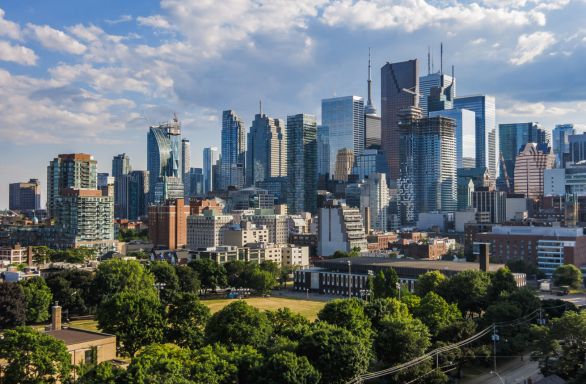
According to RE/MAX brokers, affordability trumps all other factors for homebuyers scouting neighbourhoods in Ontario, in 86% of regions surveyed. The only exception is London, where affordability takes a back seat to amenities such as proximity to preferred schools and childcare options, greater access to outdoor recreation and walkability improvements. The “must haves” identified among Ontario homebuyers include greater access to green space (in 71% of regions surveyed); proximity to work and preferred schools (in 71% of regions) and improvements to public transportation (in 43% of regions). These priorities have shifted significantly in the last two years, thanks to lifestyle changes brought on by the pandemic, alongside high inflation, cost of living and rising interest rates.
In Ontario, quality of life was ranked as "satisfactory" in 50% of regions surveyed including Toronto, Brampton, London and Stratford, or "very satisfactory," as reported in Ottawa, Belleville and Wasaga Beach. Factors that would improve liveability in these regions include greater proximity to work and healthcare services, and improvements to public transit and walkability. Public transit specifically is an important factor in improving accessibility and supporting a shift toward the 15-minute neighbourhood concept, in regions such as Toronto, Ottawa and London. With that being said, consumer appetite to live in inter-connected cities is a strong contributor to making 15-minute neighbourhoods a reality. This is already being applied in Ottawa, London and Brampton, where new developments are designed with the principles of the concept in mind.
Ontario
Click here to read more

According to RE/MAX brokers, affordability, and proximity to preferred schools, grocery stores and green space are the top priorities for buyers when selecting a residential neighbourhood in Montreal, QC. Post-pandemic, these priorities have not shifted, and they’re not expected to soon. The pandemic altered a few trends in the market, however, buyer considerations like accessible transit, affordability and proximity to good schools will always be priorities to buyers in the area. That being said, the "15-minute neighbourhood" concept is achievable within Montreal, but only within the city’s most expensive areas, such as the city centre, where residents already enjoy a high-quality of life with access to good education, safe neighbourhoods and an overall, joi de vivre you can’t find anywhere else in Canada.
Quality of life in Montreal is described as "very satisfactory," especially within the city centre; however, major infrastructure developments are anticipated to improve conditions in the Greater Montreal Area, beyond the city centre. For instance, the new Réseau express métropolitain (REM), which as has been under construction over the past couple of years, will include 26 new stations within Greater Montreal over 67km of track. The project’s construction alone has impacted residential sales further from Montreal’s core, illustrating the value of living close to services like transit. This new light rail development is anticipated to facilitate the 15-minute neighbourhood ideal in Montreal, by making reliable transit options more accessible to residents and ideally, reducing reliance on driving as a primary transportation method.
Montreal
Click here to read more
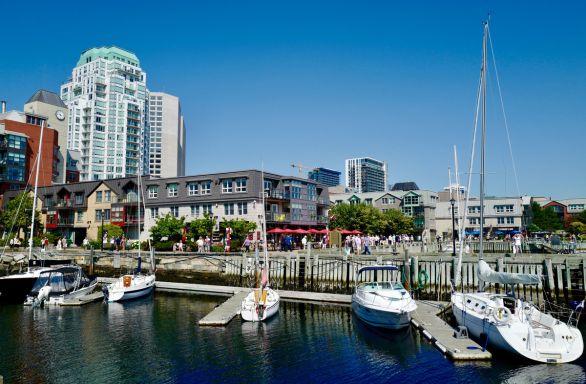
According the RE/MAX brokers, affordability is the most important factor for homebuyers choosing a neighbourhood in St, John's, NL, Charlottetown, PEI and Moncton, NB, due to ongoing pressures of housing demand, as well as economic circumstances. Halifax, NS is outlier to the trend.
Due to the low-density nature of Atlantic Canada, homebuyers prioritize proximity to schools (in 100% of regions surveyed), public transit (in 50% of regions), green space (in 50% of regions), and childcare and grocery stores (in 25% of regions). As such, residents must rely on vehicles as their primary mode of transportation, making driveability between neighbourhoods and everyday necessities a strong consideration for prospective buyers.
Atlantic Canada ranked as "very satisfactory" for quality of life, attributed to the availability of family-friendly amenities, relative affordability as compared to other provinces, and proximity to nature. However, a common pain-point for residents is the long distance between home and work. Thus, closing the gap with improvements to public transportation (something that is already underway in cities like Charlottetown, PEI) is key to boosting local liveability. Due to current infrastructure and the resulting the reliance on cars, implementing neighbourhoods that are a 15-minute drive to amenities and necessities would be more feasible where walking, biking and public transportation are already prioritized.
Artlantic Canada
Click here to read more
About the RE/MAX Network
As one of the leading global real estate franchisors, RE/MAX, LLC is a subsidiary of RE/MAX Holdings (NYSE: RMAX) with more than 140,000 agents in almost 9,000 offices with a presence in more than 110 countries and territories. Nobody in the world sells more real estate than RE/MAX, as measured by residential transaction sides. RE/MAX was founded in 1973 by Dave and Gail Liniger, with an innovative, entrepreneurial culture affording its agents and franchisees the flexibility to operate their businesses with great independence. RE/MAX agents have lived, worked and served in their local communities for decades, raising millions of dollars every year for Children’s Miracle Network Hospitals® and other charities. To learn more about RE/MAX, to search home listings or find an agent in your community, please visit remax.ca. For the latest news from RE/MAX Canada, please visit blog.remax.ca.
As regions that have remained relatively stable over the last couple of years, these priorities have not shifted significantly and in fact, they are expected to remain the same in Vancouver, BC; Kelowna, BC and Regina, SK. Although quality of life is considered satisfactory in regions such as Vancouver, BC, Winnipeg, MB and Medicine Hat, AB, having greater proximity to work, and better access to public transit, bike lanes and/or walking paths, preferred schools and medical services were identified as factors that would boost liveability. Meanwhile, RE/MAX brokers in cities such as, Kelowna, BC and Regina, SK, where many neighbourhoods already capture the spirit of the 15-minute neighbourhood in some capacity, would rank quality of life as very satisfactory.
In Ontario, quality of life was ranked as "satisfactory" in 50% of regions surveyed including Toronto, Brampton, London and Stratford, or "very satisfactory," as reported in Ottawa, Belleville and Wasaga Beach. Factors that would improve liveability in these regions include greater proximity to work and healthcare services, and improvements to public transit and walkability. Public transit specifically is an important factor in improving accessibility and supporting a shift toward the 15-minute neighbourhood concept, in regions such as Toronto, Ottawa and London. With that being said, consumer appetite to live in inter-connected cities is a strong contributor to making 15-minute neighbourhoods a reality. This is already being applied in Ottawa, London and Brampton, where new developments are designed with this concept in mind.
According to RE/MAX brokers, affordability trumps all other factors for homebuyers scouting neighbourhoods in Ontario, in 86% of regions surveyed. The only exception is London, where affordability takes a back seat to amenities such as proximity to preferred schools and childcare options, greater access to outdoor recreation and walkability improvements. The “must haves” identified among Ontario homebuyers include greater access to green space (in 71% of regions surveyed); proximity to work and preferred schools (in 71% of regions) and improvements to public transportation (in 43% of regions). These priorities have shifted significantly in the last two years, thanks to lifestyle changes brought on by the pandemic, alongside high inflation, cost of living and rising interest rates.
Ontario
Click here to read more
Quality of life in Montreal is described as "very satisfactory," especially within the city centre; however, major infrastructure developments are anticipated to improve conditions in the Greater Montreal Area, beyond the city centre. For instance, the new Réseau express métropolitain (REM), which as has been under construction over the past couple of years, will include 26 new stations within Greater Montreal over 67km of track. The project’s construction alone has impacted residential sales further from Montreal’s core, illustrating the value of living close to services like transit. This new light rail development is anticipated to facilitate the 15-minute neighbourhood ideal in Montreal, by making reliable transit options more accessible to residents and ideally, reducing reliance on driving as a primary transportation method.
According to RE/MAX brokers, affordability, and proximity to preferred schools, grocery stores and green space are the top priorities for buyers when selecting a residential neighbourhood in Montreal, QC. Post-pandemic, these priorities have not shifted, and they’re not expected to soon. The pandemic altered a few trends in the market, however, buyer considerations like accessible transit, affordability and proximity to good schools will always be priorities to buyers in the area. That being said, the "15-minute neighbourhood" concept is achievable within Montreal, but only within the city’s most expensive areas, such as the city centre, where residents already enjoy a high-quality of life with access to good education, safe neighbourhoods and an overall, joi de vivre you can’t find anywhere else in Canada.
Montreal
Click here to read more
Atlantic Canada ranked as "very satisfactory" for quality of life, attributed to the availability of family-friendly amenities, relative affordability as compared to other provinces, and proximity to nature. However, a common pain-point for residents is the long distance between home and work. Thus, closing the gap with improvements to public transportation (something that is already underway in cities like Charlottetown, PEI) is key to boosting local liveability. Due to current infrastructure and the resulting the reliance on cars, implementing neighbourhoods that are a 15-minute drive to amenities and necessities would be more feasible where walking, biking and public transportation are already prioritized.
According the RE/MAX brokers, affordability is the most important factor for homebuyers choosing a neighbourhood in Stl, John's, NL, Charlottetown, PEI and Moncton, NB, due to ongoing pressures of housing demand, as well as economic circumstances. Halifax, NS is outlier to the trend.
Due to the low-density nature of Atlantic Canada, homebuyers prioritize proximity to schools (in 100% of regions surveyed), public transit (in 50% of regions), green space (in 50% of regions), and childcare and grocery stores (in 25% of regions). As such, residents must rely on vehicles as their primary mode of transportation, making driveability between neighbourhoods and everyday necessities a strong consideration for prospective buyers.
Atlantic Canada
Click here to read more
Climate Stressors and Financial Costs
The good news is that best practices are made available by institutions like the Intact Centre, to ensure new residential communities are designed and built to be more climate resilient. In addition, a range of solutions can be deployed practically and cost-effectively within existing communities to adapt against the impacts of extreme weather events, while available tools can provide homeowners with ways to reduce risks associated with flooding, wildfire (home and community) and extreme heat (home and apartment/condo). These best practices and resources need to be deployed and included in building design, now.


According to RatesDotCa, home insurance premiums have jumped 64% in Ontario and 140% in Alberta since 2011.
How is climate change impacting your home insurance premiums?
Zoning Constraints and Benefits of Densification
While new homes may be developed in a carbon-efficient manner, leveraging the industry’s most advanced materials, it is suburban households that are known often for producing higher greenhouse gas emissions, due to the need for transportation as a result of how dispersed, sprawled and inefficient suburban communities have become.
As Canada experienced rapid population growth between 2016 and 2022, this prompted an increase in demand for infrastructure and transportation, causing urban sprawl across major cities and suburbs. In turn, this forced many to be car-dependent to commute to and from city center hubs, as well as when seeking day-to-day necessities in the monocultural complexes we have conventionally developed. Suburban communities furthest away from the downtown core of major cities experienced the quickest population growth (8.8 per cent), compared to near-suburbs closer to the downtown core, which grew at 5.8 per cent. All the more reason for fast growing smaller municipalities to heed the lessons of their bigger regions and make density with diverse housing, transportation and infrastructure the driving vision for the short and long-term.
Urban sprawl is now a bigger emitter of carbon in some areas of the country than even heavy industries, like mining and the iron and steel industry. As affordability becomes more squeezed in cities like Vancouver and Calgary, it is more imperative than ever that smaller communities absorbing the net outflow from cities plan and strategize differently so as to keep their housing inventory viable and affordable to existing and new residents.
“While we continue to work towards the diversification of our neighbourhoods, it’s vital that we deploy well-informed resources that can reduce risk of extreme weather events at community level. Unfortunately, today, we do not allocate the necessary budget or attention to the implications that environmental disasters can have on our suburban neighbourhoods and cities,” added Bakos.
Key Takeaways


To improve climate and extreme weather conditions, it’s vital that zoning regulations ensure new and existing communities are designed, built and retrofitted to be more climate resilient. This will encourage developers to create mixed-use complexes that, promote densification, while reducing urban sprawl and increasing climate resilience.
Resilient zoning improvements will enable neighbourhoods to maximize efficiencies within their communities, without having the need to leverage grasslands and wetlands for developments that may be prone to effects of climate catastrophes.
1. Zoning
A significant reason why financial and social costs are so high in regard to extreme weather, and why we will likely continue to experience major insurable and uninsurable losses annually, year over year is due to the lack of climate resilient improvements to grey infrastructures and the continued depletion of green infrastructure.
It’s important to consider green and grey infrastructure together when developing in new areas.
Housing development should not deplete green infrastructure such as grasslands, wetlands, forests, floodplains, etc. The depletion of these sensitive lands decreases a community’s resilience to climate impacts leading to higher climate-related incidences.
Incorporating solutions to make grey infrastructure more resilient should be top of mind. In regards to flooding, towns, homes and businesses should not be built on floodplains and should be equipped with stormwater control structures and storage, proper stormwater and sewage plumbing and piping, etc., which will allow communities to manage high levels of water as a result of natural causes.
2. Functional Green and Grey Infrastructure
By improving hard infrastructure and density, we’re addressing multiple issues that will aid in reducing GHG emissions while also enhancing long-term quality of life for residents.
3. Reducing GHG Emissions
A range of best practices, tools and resources are available from institutional centres such as the Intact Centre at the University of Waterloo and should be deployed within communities to provide homeowners with ways to reduce risks associated with flooding, wildfire and extreme heat.
4. Resources to Inform Homeowners

Climate Stressors and Financial Costs
As a result of current regulatory laws and the rising demand for housing, many new developments are being built on floodplains or near forested regions without resilience measures included in the design. In the short-term, these building strategies could impact housing price value and insurance rates. In the long-term, homeowners could default on mortgages and new and old inventory could become uninsurable. Already, approximately 10 per cent of Canada’s housing supply is uninsurable. In addition, development destroys sensitive lands such as grasslands and wetlands and lest we forget, grasslands and wetlands store nearly 60 per cent of Canada’s carbon emissions.

The reality is, many individuals and families, are finding themselves in smaller communities that are now experiencing migration from bigger cities and globally. One of the largest challenges these smaller communities face is often sustaining the quality of life and amenities that residents crave, while also adjusting to and accommodating a greater volume of neighbours and the amenities that should accompany population growth, such as businesses, school, health care centres, infrastructure and green spaces.
The 15-minute neighbourhood concept reflects what was once a reality: main streets that included mixed-use developments, where low-level buildings had retail stores on the ground floor and residential units above them. This went by the wayside with zoning reform, resulting in “mono” commercial spaces, retail spaces, industrial spaces and residential spaces isolated from one another, eventually forcing larger cities and suburban complexes to sprawl.
Design Constraints and Benefits of Densification

How is climate change impacting your home insurance premiums?
According to RatesDotCa, home insurance premiums have jumped 64% in Ontario and 140% in Alberta since 2011.


61%
of Canadians consider real estate to be a good ling-term investment, according to RE/MAX Canada's Unlocking the Future of Housing Report published in 2021. 57% of Canadians indicated that climate change and environmental risk would impact their property-purchasing decisions in the future.
61%
of Canadians consider real estate to be a good ling-term investment, according to RE/MAX Canada's Unlocking the Future of Housing Report published in 2021. 57% of Canadians indicated that climate change and environmental risk would impact their property-purchasing decisions in the future.
As a result of current regulatory laws and the rising demand for housing, many new developments are being built on floodplains or near forested regions without resilience measures included in the design. In the short-term, these building strategies could impact housing price value and insurance rates. In the long-term, homeowners could default on mortgages and new and old inventory could become uninsurable. Already, approximately 10 per cent of Canada’s housing supply is uninsurable. In addition, development destroys sensitive lands such as grasslands and wetlands and lest we forget, grasslands and wetlands store nearly 60 per cent of Canada’s carbon emissions.
In the decade prior to 2008, Canada averaged around $465 million in damages related to natural disasters. Today, Canada now averages $2 billion in insured damages annually. According to the Insurance Bureau of Canada, 2022 saw losses reach $3.1 billion due to natural disasters, ranking it as the 3rd worst year for insured losses in Canadian history. It Is important to note that uninsured losses, that individuals, businesses and governments tend to pay out of pocket for, are on average 3 to 4 times greater than insured losses on an annual basis. For 2022, that would mean $9 to $12 billion dollars coming out of private and public budgets that could have been allocated to other initiatives such as building hospitals, schools and resilient infrastructure development. As a cautionary note, the upward claims trend in losses is not solely due to escalations in extreme weather events. For example, compounding factors that can affect claims include loss of natural habitats (i.e., wetlands, grasslands, forested areas, etc.) due to development, aging municipal infrastructure and housing construction practices that in the past did not adequately incorporate resilience considerations. Make no mistake though, climate is a primary stressor in financial terms, which will only continue to rise if we do not address the issues around urban sprawl, and its impacts on green and grey infrastructure.
Due to urban sprawl, green infrastructure has been impacted severely by climate change. In southern Ontario, 72 per cent of the original wetlands have been lost to development (e.g., agriculture, urban sprawl and other land conversion). In Alberta, approximately 64 per cent of the original wetlands in settled areas no longer exist. In BC, over 7per cent of the original wetlands disappeared in the lower Fraser Valley and parts of Vancouver Island, and an 85 per cent wetland loss has been documented in the South Okanagan.
Based on a study conducted by the Canadian Climate Institute nearly 96 per cent of the dikes in British Columbia have been assessed as being critically low, therefore making them unable to manage levels of water from lakes, rivers and oceans within the vicinity. The study also highlighted that annual coastal flood damages will continue to rise over the next 30 years. While in a city such as Windsor, Ont., most new housing is being developed on floodplains and accumulating water has nowhere to go, impacting these neighbourhoods and surrounding ones.
According to Bakos, in parallel with the retention and rejuvenation of natural infrastructure such as wetlands and grasslands, governments at all levels need to invest in building and upgrading more comprehensive sewage run-off such as, sewer separation projects - the practice of separating combined pipe systems into separate sewers for sanitary and storm water flows – all the while distributing home flood, wildfire and heat protection information to homeowners to guide them on how to lower the risk of extreme weather impacting their homes. extreme weather impacting their homes.
Managing vulnerable areas via land use planning and moving individuals out of high-risk areas is more effective in the long-term Bakos strongly recommends.
“Right now, approximately ten per cent of Canada’s housing market is at risk of a 1-in-100-year flood event and has been classified as essentially uninsurable. That number will only increase as we continue to build homes in floodplains and if we don’t fix our diversified infrastructure," says Bakos. “Even homes located outside the floodplains are still at risk of flooding. My rule of thumb is that if you live anywhere where it rains, you are at risk of flooding.”
There’s a dire need to allocate funds to the modernization of Canada’s current green and grey infrastructure, including the restoration of grasslands and wetlands. The preservation of natural ecosystems, such as forests, dunes, estuaries, and watersheds are vital to preventing the disruption and costs of future natural disasters.
“In Canada, on average, the cost of a flooded basement is $43,000 to repair damage,” says Bakos. In addition to these costs Canadians seeking to sell their homes in flood prone or high-risk areas automatically have a flood discount applied of 8.2 per cent to the current market price of their homes. “These are financial costs most homeowners may not have anticipated and cold leave families financially strapped.”
Recently, American insurance provider, State Farm, announced that they will no longer be providing home insurance to new applicants within the state of California, due to the annual fires that are worsening year over year, as well as record flooding. This poses the question – will Canadian insurance providers follow in the same direction?
“In order to address the looming concerns of climate change, there needs to be collaboration between the three levels of government and the private sector, as an “all of society” approach is required,” according to Bakos.


2,688 KM
of of street segments and growth have been added to major cities across Canada between 2016 and 2022, including Toronto, Montreal, Vancouver, Ottawa and Edmonton, according to Local Logic.
Major city centres across Canada have grown by 34 per cent, however, the population density has reduced by six per cent, indicating that densification isn’t being practiced and that urban sprawl is occurring. The sprawl could be a major financial pain point for cities and taxpayers, due to the hidden costs often associated with the development of sprawling communities. Most importantly as it relates to housing, sprawl has the potential to make a home less resilient to extreme weather and as a result more susceptible to higher and higher insurance premiums.
Housing diversification will enable urban planners and city developers to leverage the additional space densification affords to restore and build green infrastructure, such as storm drainage ponds, as well as robust sewage systems. It will create better efficiencies when updating and modernizing grey infrastructure, such as city sewage systems, damns as well as plumbing and pipes that mitigate against flooding. Again, with an eye on bringing homes, businesses, schools, medical facilities, stores, transportation and leisure pursuits within a 15-minute commute, we better mitigate against the perils of climate change.
VS.
Green Infrastructure encompasses natural systems such as floodplains, wetlands, and grasslands, in addition to forests and soils.
Green infrastructure
Grey infrastructure encompasses structures such as dams, seawalls, roads, water treatment plants, pipes and plumbing.
Grey infrastructure
Green Infrastructure encompasses natural systems such as floodplains, wetlands, and grasslands, in addition to forests and soils.
What is Green Infrastructure
What is grey Infrastructure
Grey infrastructure encompasses structures such as dams, seawalls, roads, water treatment plants, pipes and plumbing.
Look for these elements: different types of buildings (high, medium, low rise), local community buildings, stores and businesses, public transit, bike lanes, accessible sidewalks. Photography and video by Tom Ryaobi
Rather than sprawling beyond our smaller communities’ preexisting boundaries to build new homes onprotected lands where homes are often susceptible to extreme weather conditions, the objective should be touse land more creatively, more pragmatically, with diverse housing types and transportation solutions.
Explore the Walkable Neighbourhood
Explore the Walkable Neighbourhood
Look for these elements: different types of buildings (high, medium, low rise), local community buildings, stores and businesses, public transit, bike lanes, accessible sidewalks. Photography and video by Tom Ryaobi
Rather than sprawling beyond our smaller communities’ preexisting boundaries to build new homes onprotected lands where homes are often susceptible to extreme weather conditions, the objective should be touse land more creatively, more pragmatically, with diverse housing types and transportation solutions.
While new homes may be developed in a carbon-efficient manner, leveraging the industry’s most advanced materials, it is suburban households that are known often for producing higher greenhouse gas emissions, due to the need for transportation as a result of how dispersed, sprawled and inefficient suburban communities have become.
As Canada experienced rapid population growth between 2016 and 2022, this prompted an increase in demand for infrastructure and transportation, causing urban sprawl across major cities and suburbs. In turn, this forced many to be car-dependent to commute to and from city center hubs, as well as when seeking day-to-day necessities in the monocultural complexes we have conventionally developed. Suburban communities furthest away from the downtown core of major cities experienced the quickest population growth (8.8 per cent), compared to near-suburbs closer to the downtown core, which grew at 5.8 per cent. All the more reason for fast growing smaller municipalities to heed the lessons of their bigger regions and make density with diverse housing, transportation and infrastructure the driving vision for the short and long-term.
Urban sprawl is now a bigger emitter of carbon in some areas of the country than even heavy industries, like mining and the iron and steel industry. As affordability becomes more squeezed in cities like Vancouver and Calgary, it is more imperative than ever that smaller communities absorbing the net outflow from cities plan and strategize differently so as to keep their housing inventory viable and affordable to existing and new residents.
“While we continue to work towards the diversification of our neighbourhoods, it’s vital that we deploy well-informed resources that can reduce risk of extreme weather events at community level. Unfortunately, today, we do not allocate the necessary budget or attention to the implications that environmental disasters can have on our suburban neighbourhoods and cities,” added Bakos.
GHG Emissions in Suburbia and Transportation