Click the cards below to explore personal stories
CLOSE
Theresa Acosta
Tiffany Tucker
Sophie cunningham
The fight for
equity in basketball
THERESA
ACOSTA
Only Latinx head trainer in women’s pro ball.
TIFFANY
TUCKER
Deputy athletic director and activist.
SOPHIE
CUNNINGHAM
Pro-baller and podcast host.
Acosta says she prides herself in elevating women to “get the most out of what there is to aspire to do in life.” For Acosta, that is to help heal, nurture and support her athletes. She encourages all of them to get out of their comfort zone: “Step outside of yourself to do something new every month. We're always on the go. We're always pushing forward, and that directly relates to equity. That's the name of the game: progression.”
For Acosta, every step counts. Moving the needle even an inch helps reach the end goal of sports equity. “Change happens, and whether it’s slow or fast, once you get that ball rolling, it continues to roll and it will continue to progress.”
Community is essential to Acosta’s work and something she thinks about every day. “Visibility is key. I want to be a role model for others to see me in this role and say, ‘If she can do it, I can do it.’ That's a huge honor,” she says.
Acosta takes pride in connecting young people with access to opportunity. For example, she is a founding steering committee member of her alma mater’s Latinx alumni network, and she still works with them today.
But being the only Latinx head athletic trainer in professional women’s basketball also gives Acosta an understanding that her position is part of what makes her such an effective advocate for equity. The relationships she develops extend far beyond the bare minimum of rehabilitation exercises.
In her thirty years’ experience in basketball, Theresa Acosta has always had equity at top of mind. As one of the few women in the sports medicine department of her college, she worked hard to earn herself an athletic scholarship in her sophomore year.
For Acosta, equity is about more than money. “It's not only [about] equal access to financial aid,” she says, “it's also [about] equal access to things like locker rooms, playing fields, tutoring or medical care.”
Now, she offers support to other women who love the game of basketball as much as she does. Through her job as a head athletic trainer in pro ball, Acosta’s able to deliver female athletes the access to medical care that Title IX promises them.
“We're always on the go. We're always pushing forward, and that directly relates to equity.”
Tucker wants her students to have the space they need to be themselves, wholly. “We're women; we're always evolving.” She also wants her students to have the chance to advocate for themselves.
“Equality means having an opportunity to be in the room,” Tucker says. “Equity means having the tools in that room to create or build whatever I need to be successful.” One of those tools is NIL, a policy which allows college athletes to publicize themselves and receive financial compensation. “It gives you an opportunity to empower yourself. You can be heard. It gives you a space to create the narrative that you want, yourself. No one can tell your story like you.”
While Tucker admits there is a lot of work left to do, she is excited for what is to come. “I would like to see the future of women's basketball take over our media airways,” she says. “I want our student athletes to be household names.” For now, she has a message for women in sports: We support you.
“The biggest part of my job is making sure that, as a woman, I'm in the room when large-scale athletic decisions are made,” she says.
Part of her value as an administrator comes from her lived experience. The opportunities she had to not only play women’s basketball at a high level but also coach both men and women students has provided her with an important perspective that she brings to her seat at the table — which now includes membership to the NCAA® Women’s Basketball Rules Committee.
Tucker doesn’t only share her learned experiences and wisdom with athletic leadership, she also mentors younger women athletes. One lesson from her life that she wants to impart on others is to invest in themselves, and, most importantly, be unapologetic about it. That means using all your resources to build yourself up, personally and professionally, so that you can double down on your goal-setting. “Put all the chips in,” she says. “Be fearless about all the goals that you have set out before you.”
To help fight for equity, it’s important to understand what it means. And for Tiffany Tucker, equality means everyone on a team has a pair of shoes to play in. Equity means that every player — regardless of whether their feet are size four or size 11 — have the shoes they need to play like everyone else.
The distinction is an important one, particularly when considering representation. In Tucker’s profession, little things can make all the difference. The retired college player gives the examples of being intentional and strategic “to make sure that little girls actually see people who look like themselves on TV and participate in sport. Name, image and likeness [NIL] is super important for women, and definitely women of color.”
Tucker is the deputy director of athletics and senior woman administrator at a university, and sees it as her responsibility to provide her students with equitable access to whatever they need to be successful. She takes pride watching her students achieve their goals, on and off the court.
“We're women; we're always evolving.”
Now a pro, she recognizes progress has been made toward sport equity. For starters, she credits Title IX as having a huge impact on women players on professional teams, many of whom are currently earning more money than the women who played before them — although still not as much as their male counterparts.
“There’s a lot more work to be done,” Cunningham says, adding that she wants to see women players earn better compensation, enjoy the same travel accommodations as the male athletes and get the exposure they deserve for how well they play — from full stands to social media attention.
Cunningham hopes to help in that effort, herself, by not only coaching and mentoring young girls, but launching a podcast where she speaks to women about what they’ve learned and what they can do better. “I know for a fact that I am not done yet,” she says. “For generations to come, we just have to keep pushing for equality, keep fighting for what we deserve, because we are elite athletes, and we deserve the very best."
This she partly credits to the support of her family, who instilled her with the confidence of being different at a young age, a confidence that helped carry her all the way to professional basketball. “It is so important that women don't put limits on themselves,” she says.
For Cunningham, whose parents, uncles, aunt and sister all played college sports at the Division 1 level, it’s all about outworking and outsmarting her opponent, being the most competitive player on the court: “I compete, I work hard and I do anything it takes for my team to win,” she says.
Cunningham is thankful that the men in her family have always championed women's sports. “They look at us as equals. They see how strong we are, how athletic we are and how bright our future really is.” She feels blessed to come from a household that encouraged her to be herself, because, according to Cunningham, “As a female athlete, you run into inequity every single day in your job.”
Sophie Cunningham is anything but timid. She’s known for playing hard on the court and is as passionate for the game as she is for equity in basketball. “If you put women in a box, we’re going to break it every single time,” she says.
How does she know? She’s been breaking boxes since she was in grade school. The first time she remembers experiencing inequity in sports was at a soccer game in kindergarten. Cunningham remembers hearing parents yell, “She’s too big,” and, “She’s too aggressive,” as she played. Her parents even had to carry her birth certificate around at games just to prove to other parents that she was not older than the boys she was playing with. “But, really, I just think that they were a little mad, just because I was out there killing it,” she says.
Cunningham says it lit a fire within her. “I took it as a motivator. I loved it, because all eyes were on me. I was dominating, even in the guys' leagues.”
“If you put women in a box, we’re goinG to break it every single time.”
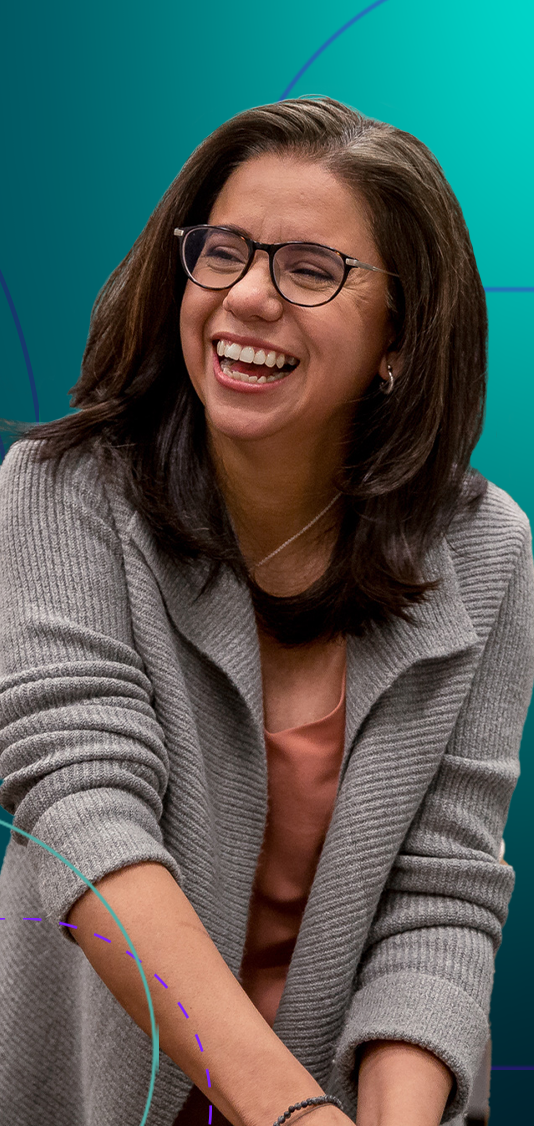


Theresa acosta
head athletic trainer

“Change happens, and whether it’s slow or fast, once you get that ball rolling, it continues to roll, and it will continue to progress.”
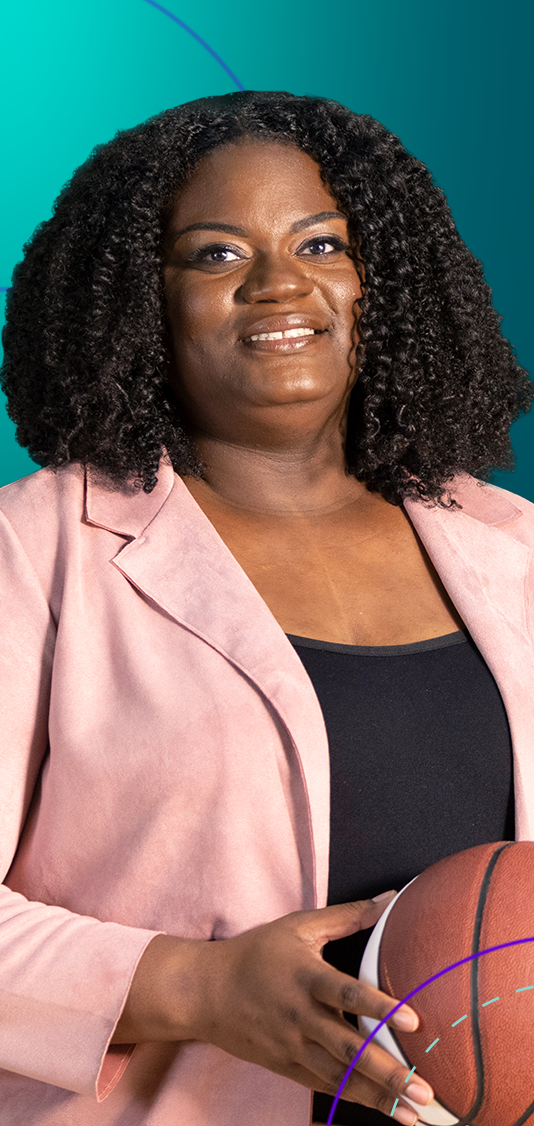
tiffany tucker
deputy athletic Director
“Equality means having an opportunity to be in the room. Equity means having the tools in that room to create or build whatever I need to be successful.”
sophie cunningham
pro-player Guard


“We just have to keep pushing for equality, keep fighting for what we deserve, because we are elite athletes, and we deserve the very best.”
The fight for equity in basketball


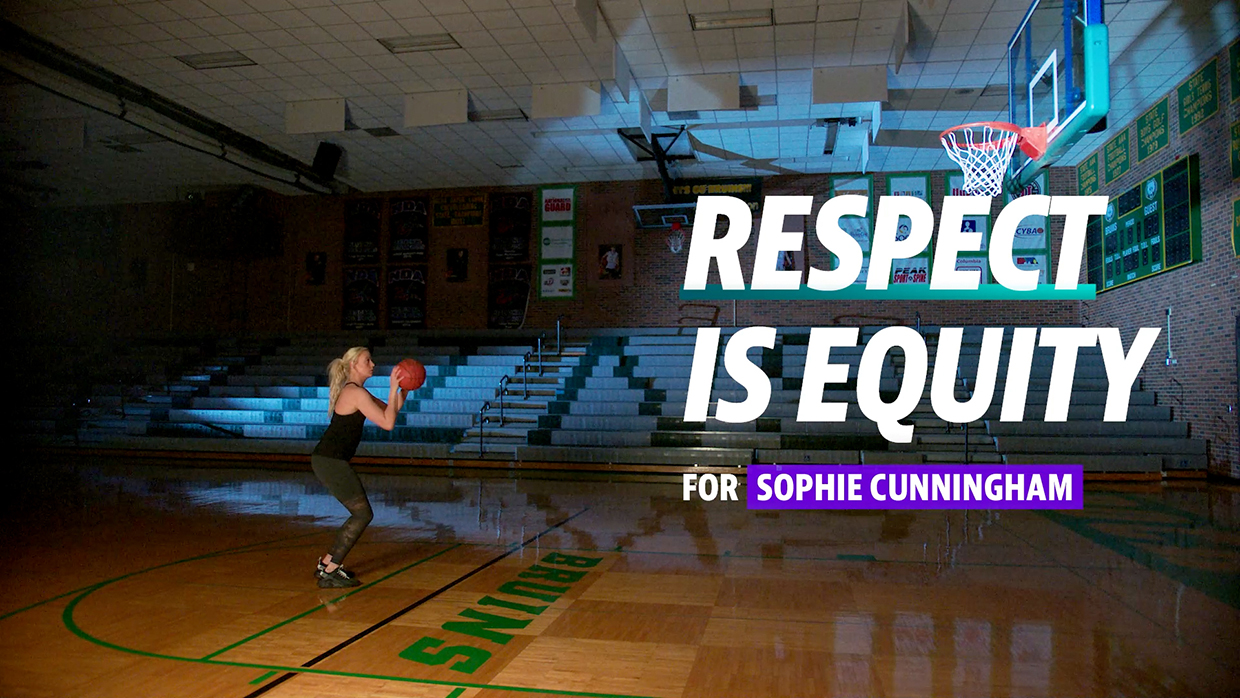


Cunningham hopes to help in that effort, herself, by not only coaching and mentoring young girls, but launching a podcast where she speaks to women about what they’ve learned and what they can do better. “I know for a fact that I am not done yet,” she says. “For generations to come, we just have to keep pushing for equality, keep fighting for what we deserve, because we are elite athletes, and we deserve the very best. "

“If you put women in a box, we’re goinG to break it every single time.”
Now a pro, she recognizes progress has been made toward sport equity. For starters, she credits Title IX as having a huge impact on women players on professional teams, many of whom are currently earning more money than the women who played before them — although still not as much as their male counterparts.
“There’s a lot more work to be done,” Cunningham says, adding that she wants to see women players earn better compensation, enjoy the same travel accommodations as the male athletes and get the exposure they deserve for how well they play — from full stands to social media attention.
For Cunningham, whose parents, uncles, aunt and sister all played college sports at the Division 1 level, it’s all about outworking and outsmarting her opponent, being the most competitive player on the court: “I compete, I work hard and I do anything it takes for my team to win,” she says.
Cunningham is thankful that the men in her family have always championed women's sports. “They look at us as equals. They see how strong we are, how athletic we are and how bright our future really is.” She feels blessed to come from a household that encouraged her to be herself, because, according to Cunningham, “As a female athlete, you run into inequity every single day in your job.”

“We just have to keep pushing for equality, keep fighting for what we deserve, because we are elite athletes, and we deserve the very best.”
Cunningham remembers hearing parents yell, “She’s too big,” and, “She’s too aggressive,” as she played. Her parents even had to carry her birth certificate around at games just to prove to other parents that she was not older than the boys she was playing with. “But, really, I just think that they were a little mad, just because I was out there killing it,” she says.
Cunningham says it lit a fire within her. “I took it as a motivator. I loved it, because all eyes were on me. I was dominating, even in the guys' leagues.”
This she partly credits to the support of her family, who instilled her with the confidence of being different at a young age, a confidence that helped carry her all the way to professional basketball. “It is so important that women don't put limits on themselves,” she says.
Sophie Cunningham is anything but timid. She’s known for playing hard on the court and is as passionate for the game as she is for equity in basketball. “If you put women in a box, we’re going to break it every single time,” she says.
How does she know? She’s been breaking boxes since she was in grade school. The first time she remembers experiencing inequity in sports was at a soccer game in kindergarten.
sophie cunningham
pro-player Guard

“We're women; we're always evolving.”
While Tucker admits there is a lot of work left to do, she is excited for what is to come. “I would like to see the future of women's basketball take over our media airways,” she says. “I want our student athletes to be household names.” For now, she has a message for women in sports: We support you.
“Equality means having an opportunity to be in the room,” Tucker says. “Equity means having the tools in that room to create or build whatever I need to be successful.” One of those tools is NIL, a policy which allows college athletes to publicize themselves and receive financial compensation. “It gives you an opportunity to empower yourself. You can be heard. It gives you a space to create the narrative that you want, yourself. No one can tell your story like you.”
Tucker wants her students to have the space they need to be themselves, wholly. “We're women; we're always evolving.” She also wants her students to have the chance to advocate for themselves.
Part of her value as an administrator comes from her lived experience. The opportunities she had to not only play women’s basketball at a high level but also coach both men and women students has provided her with an important perspective that she brings to her seat at the table — which now includes membership to the NCAA® Women’s Basketball Rules Committee.
Tucker doesn’t only share her learned experiences and wisdom with athletic leadership, she also mentors younger women athletes. One lesson from her life that she wants to impart on others is to invest in themselves, and, most importantly, be unapologetic about it. That means using all your resources to build yourself up, personally and professionally, so that you can double down on your goal-setting. “Put all the chips in,” she says. “Be fearless about all the goals that you have set out before you.”

“Equality means having an opportunity to be in the room. Equity means having the tools in that room to create or build whatever I need to be successful.”
The distinction is an important one, particularly when considering representation. In Tucker’s profession, little things can make all the difference. The retired college player gives the examples of being intentional and strategic “to make sure that little girls actually see people who look like themselves on TV and participate in sport. Name, image and likeness [NIL] is super important for women, and definitely women of color.”
Tucker is the deputy director of athletics and senior woman administrator at a university, and sees it as her responsibility to provide her students with equitable access to whatever they need to be successful. She takes pride watching her students achieve their goals, on and off the court. “The biggest part of my job is making sure that, as a woman, I'm in the room when large-scale athletic decisions are made,” she says.
To help fight for equity, it’s important to understand what it means. And for Tiffany Tucker, equality means everyone on a team has a pair of shoes to play in. Equity means that every player — regardless of whether their feet are size four or size 11 — have the shoes they need to play like everyone else.
tiffany tucker
deputy athletic Director
For Acosta, every step counts. Moving the needle even an inch helps reach the end goal of sports equity. “Change happens, and whether it’s slow or fast, once you get that ball rolling, it continues to roll and it will continue to progress.”

“We're always on the go. We're always pushing forward, and that directly relates to equity.”
But being the only Latinx head athletic trainer in professional women’s basketball also gives Acosta an understanding that her position is part of what makes her such an effective advocate for equity. The relationships she develops extend far beyond the bare minimum of rehabilitation exercises.
Acosta says she prides herself in elevating women to “get the most out of what there is to aspire to do in life.” For Acosta, that is to help heal, nurture and support her athletes. She encourages all of them to get out of their comfort zone: “Step outside of yourself to do something new every month. We're always on the go. We're always pushing forward, and that directly relates to equity. That's the name of the game: progression.”
“Change happens,
and whether it’s slow or fast, once you get that ball rolling, it continues to roll, and it will continue to progress.”
Acosta takes pride in connecting young people with access to opportunity. For example, she is a founding steering committee member of her alma mater’s Latinx alumni network, and she still works with them today.
Now, she offers support to other women who love the game of basketball as much as she does. Through her job as a head athletic trainer in pro ball, Acosta’s able to deliver female athletes the access to medical care that Title IX promises them.
Community is essential to Acosta’s work and something she thinks about every day. “Visibility is key. I want to be a role model for others to see me in this role and say, ‘If she can do it, I can do it.’ That's a huge honor,” she says.
In her thirty years’ experience in basketball, Theresa Acosta has always had equity at top of mind. As one of the few women in the sports medicine department of her college, she worked hard to earn herself an athletic scholarship in her sophomore year.
For Acosta, equity is about more than money. “It's not only [about] equal access to financial aid,” she says, “it's also [about] equal access to things like locker rooms, playing fields, tutoring or medical care.”
Theresa acosta
head athletic trainer
CLOSE
Choose another story below
Sophie cunningham
Tiffany Tucker
Theresa Acosta
Pro-baller and podcast host.
Deputy athletic director and activist.
Only Latinx head trainer in women’s pro ball.
Click the cards below to explore personal stories.

The fight for
equity in basketball


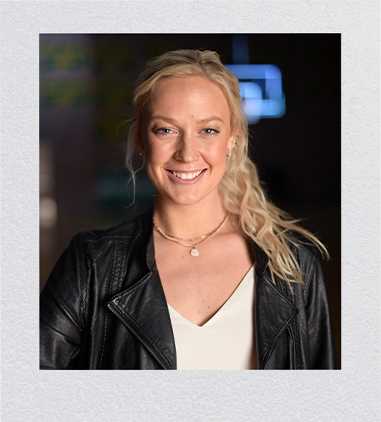


The retired college player gives the examples of being intentional and strategic “to make sure that little girls actually see people who look like themselves on TV and participate in sport. Name, image and likeness [NIL] is super important for women, and definitely women of color.”
Tucker is the deputy director of athletics and senior woman administrator at a university, and sees it as her responsibility to provide her students with equitable access to whatever they need to be successful. She takes pride watching her students achieve their goals, on and off the court. “The biggest part of my job is making sure that, as a woman, I'm in the room when large-scale athletic decisions are made,” she says.

THERESA Acosta
TIFFANY tucker
SOPHIE CUNNINGHAM