
Israel-Iran Military Escalation to Continue
Seerist Deep-dive
SCroll down to explore
Current Status & Progression of the Conflict
The new wave of attacks came just hours after the Israeli military bombed the Iranian capital Tehran on 15 June in an attack that killed the intelligence chief of Iran’s Islamic Revolutionary Guards Corps, his deputy and two other generals. At least 13 people have been killed and 380 have been injured in Israel since the start of the conflict, and the death toll from Israel’s attacks on Iran exceeds 220.
US media on 15 June have reported claims from officials that US President Donald Trump rejected a plan by Israel to kill Iran’s Supreme Leader Ayatollah Ali Khamenei, citing that Iran has not killed any US citizens. Trump has urged Iran and Israel to “make a deal” but indicated that they might need to “fight it out” first.
Iranian Foreign Minister Abbas Araghchi on 14 June confirmed that the round of Iran-US nuclear negotiations that were scheduled to take place on 15 June were cancelled, and he labelled the negotiations “useless” given the ongoing military escalation.
IRAN-ISRAEL
Iran on 15 and 16 June launched a new wave of ballistic missile attacks on Israel – including Tel Aviv and Haifa – that killed at least eight people.
13 June
14 June
15 June
16 June
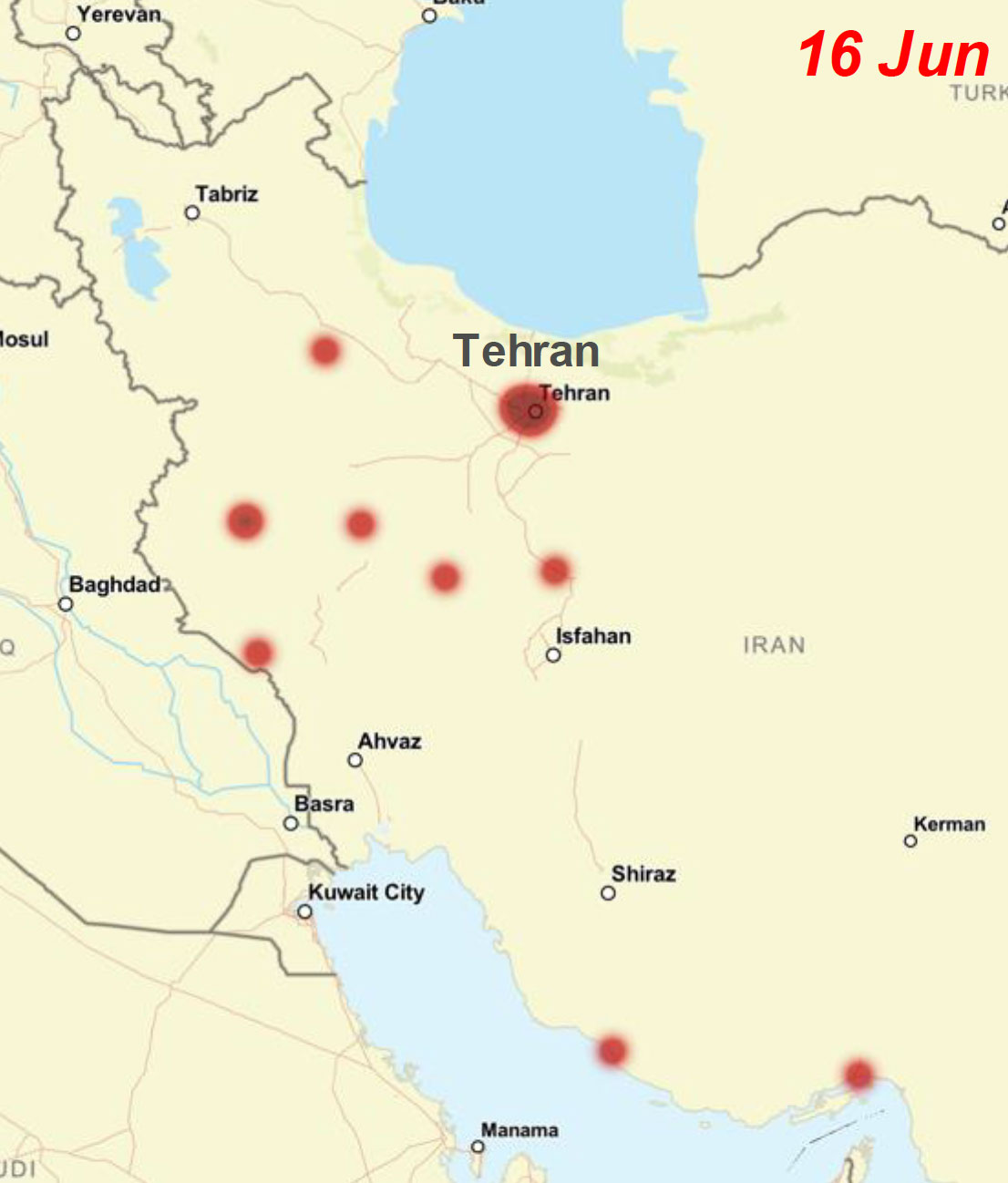


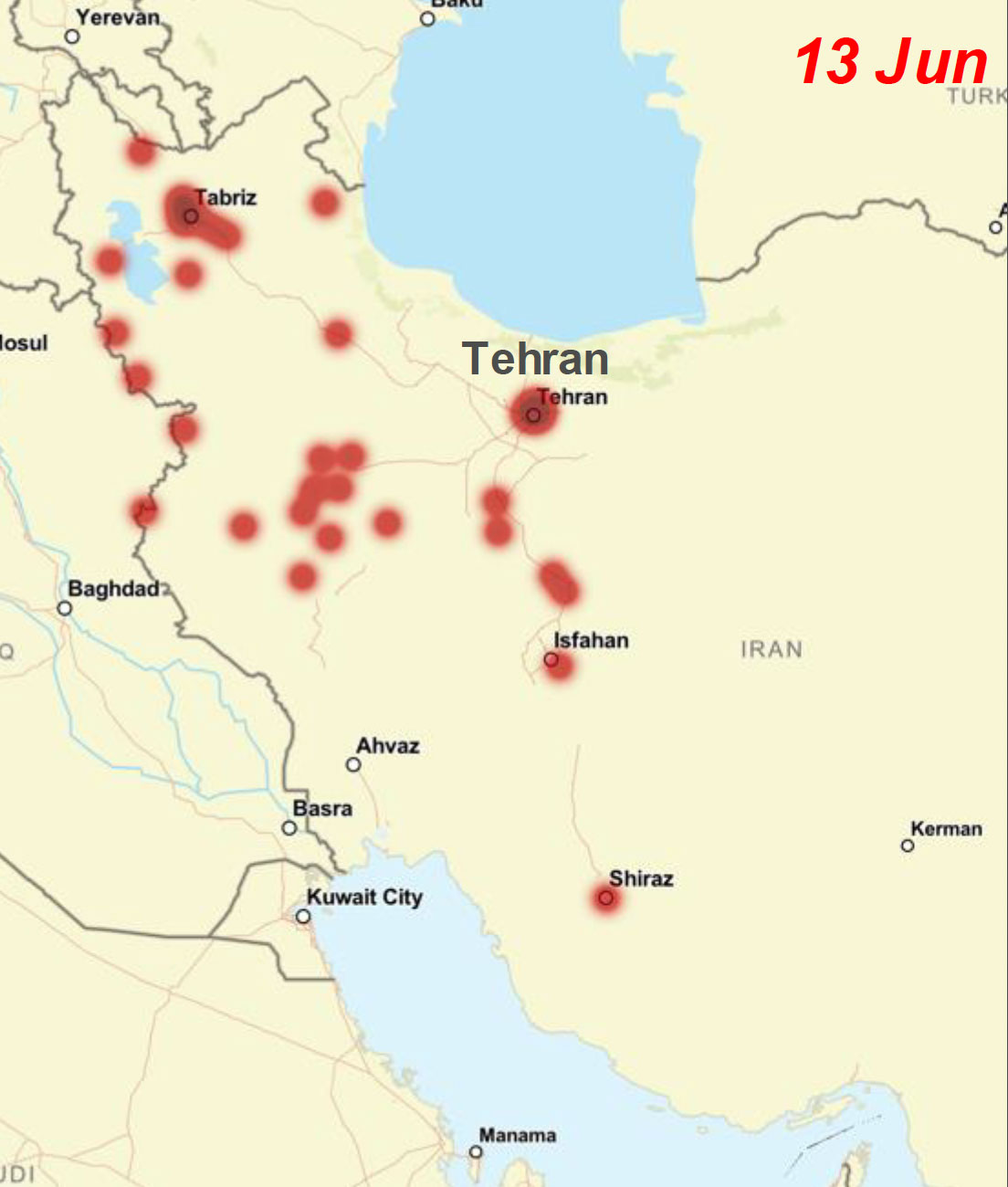
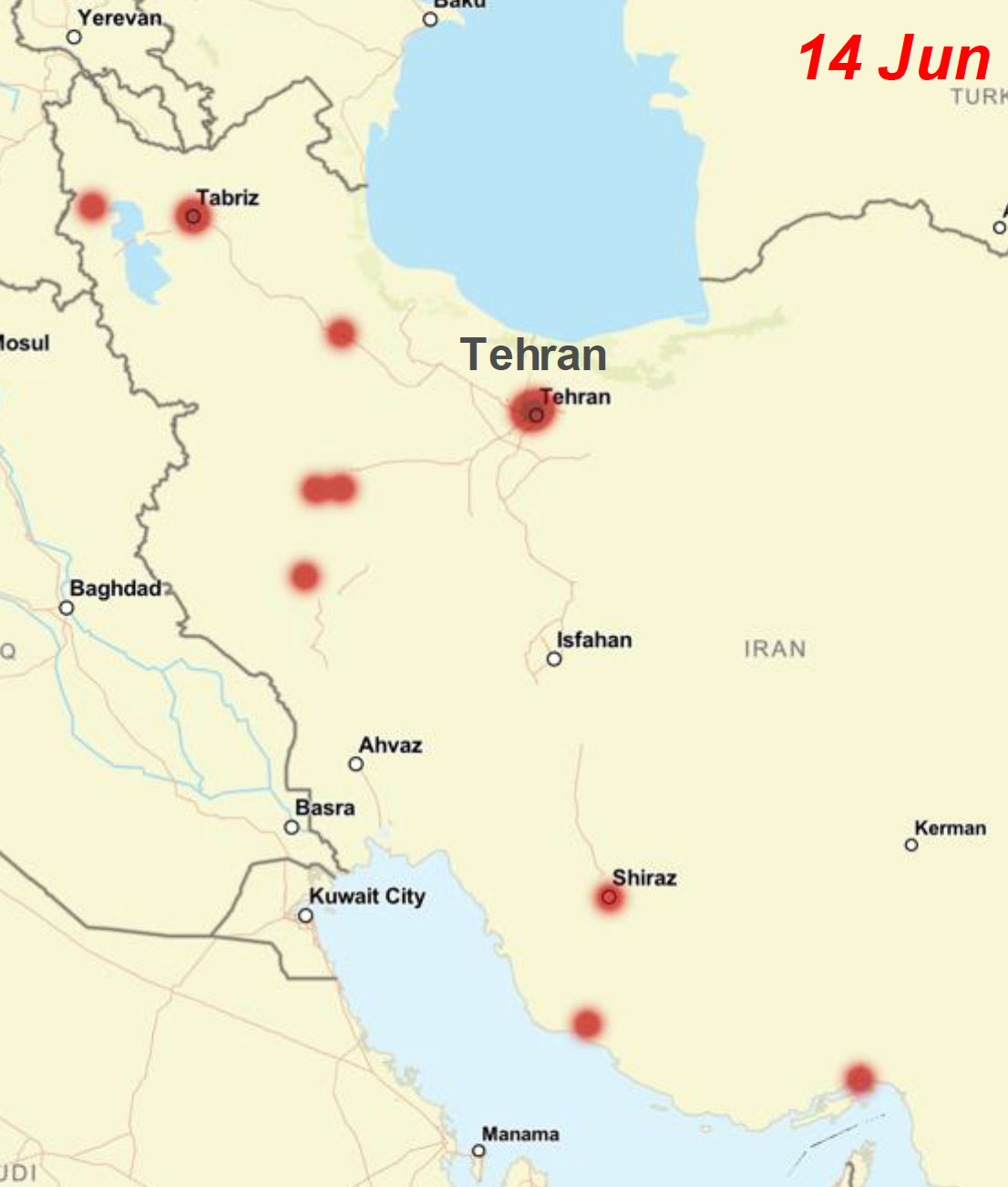
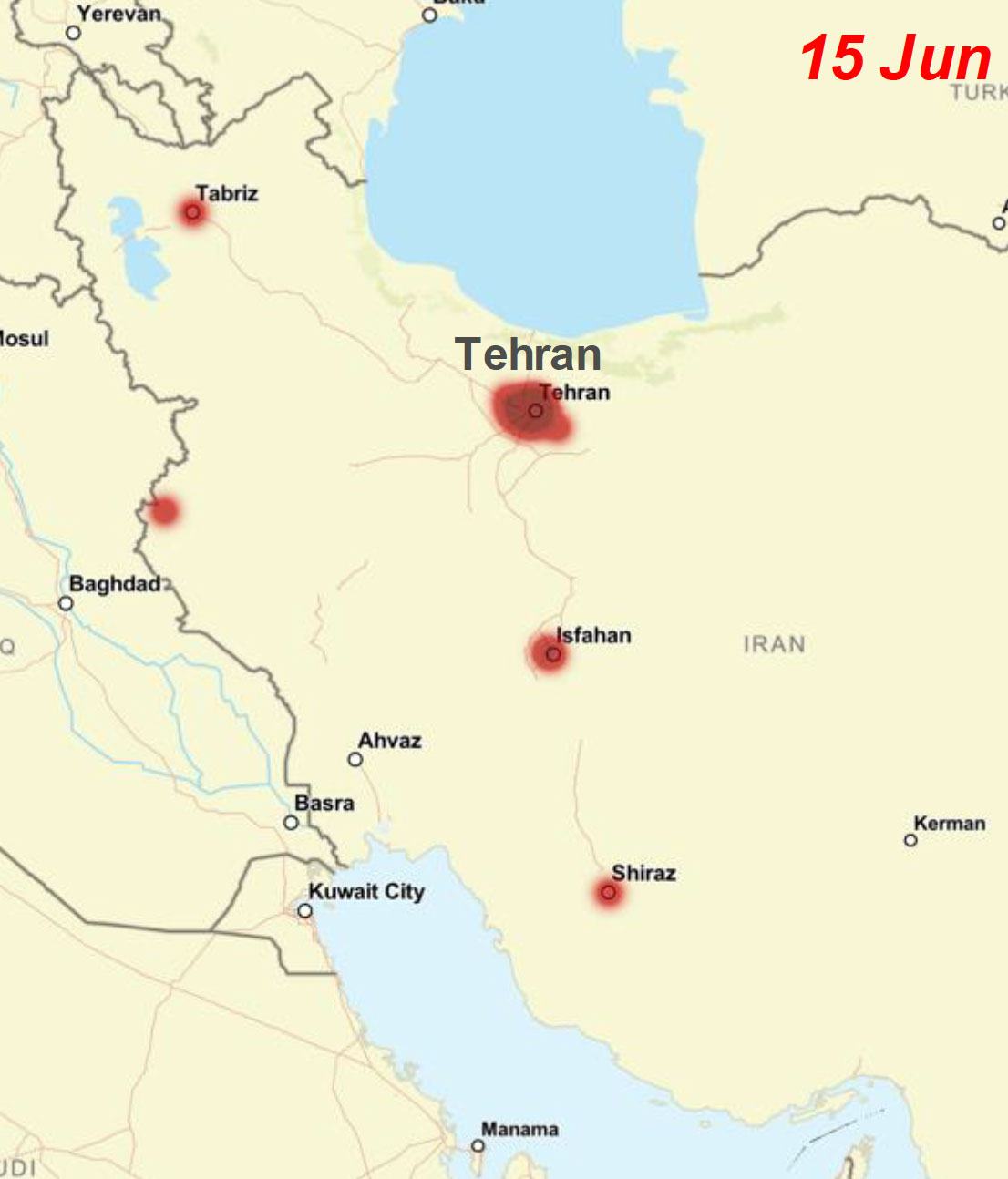
Depicted above are Seerist’s Verified ‘War’ Events, denoting the progression of Israeli strike locations across Iran. Tehran remains a significant focus of Israeli operations. Other locations include well known nuclear sites like Isfahan and military bases, particularly missile launch locations in the western portion of the country and in the border area that fall within the range limitations needed to strike Israeli territory.
Outlook
Israel and Iran will continue to trade cross-border attacks in the coming days in line with our most likely scenario for the conflict. The conflict has significant potential for further escalation, but a spillover that involves military action from other countries in the Middle East remains unlikely.
(Control Risks Analysis)
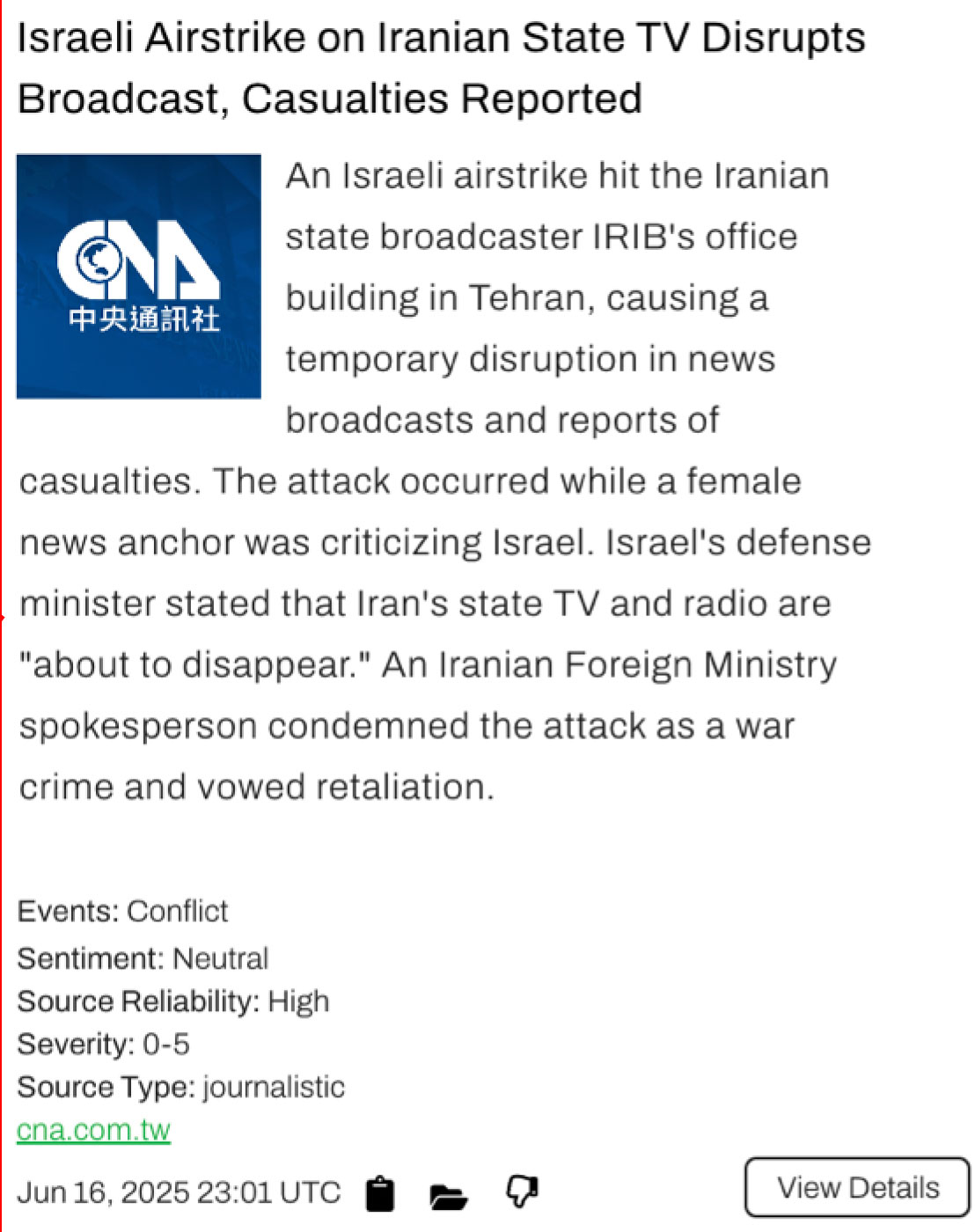
EventsAI coverage of high reliability news sources of the 16 June Israeli strike on Iranian state broadcaster
Control Risks Analysis
Iran War and Overall Security Risk Rating Change
Developments in the Israel-Iran conflict continue to fall within the parameters of our most likely scenario: Israel is likely to continue operations, prompting retaliatory attacks from Iran.
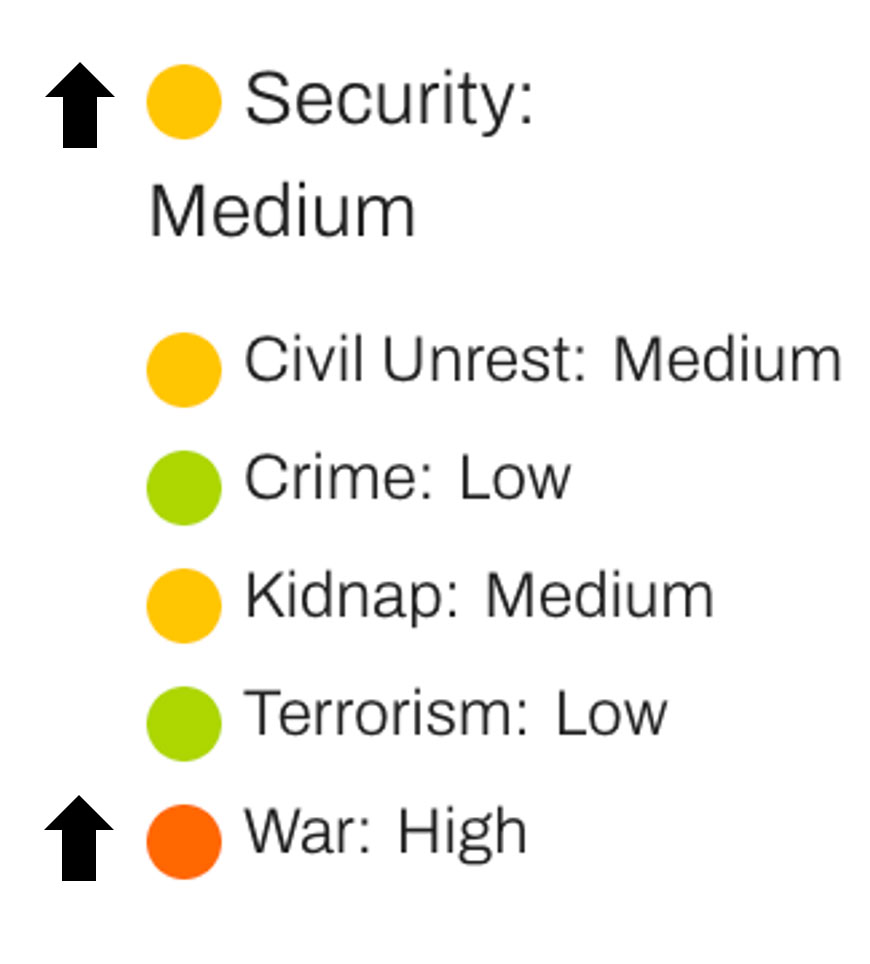
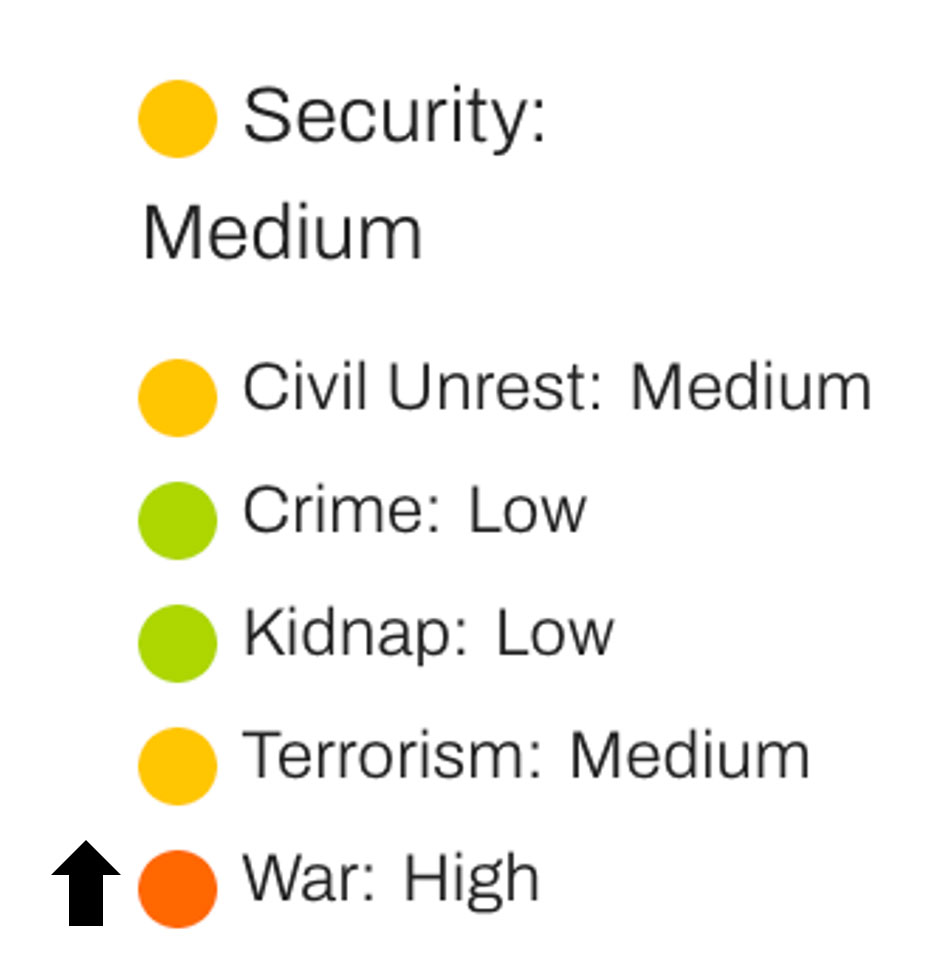
Israel has expanded its targeting beyond nuclear and military sites, attacking economic sites and increasingly causing damage in civilian areas. We have therefore raised our war risk rating for Iran to HIGH and our security risk rating to MEDIUM. (Control Risks Analysis)
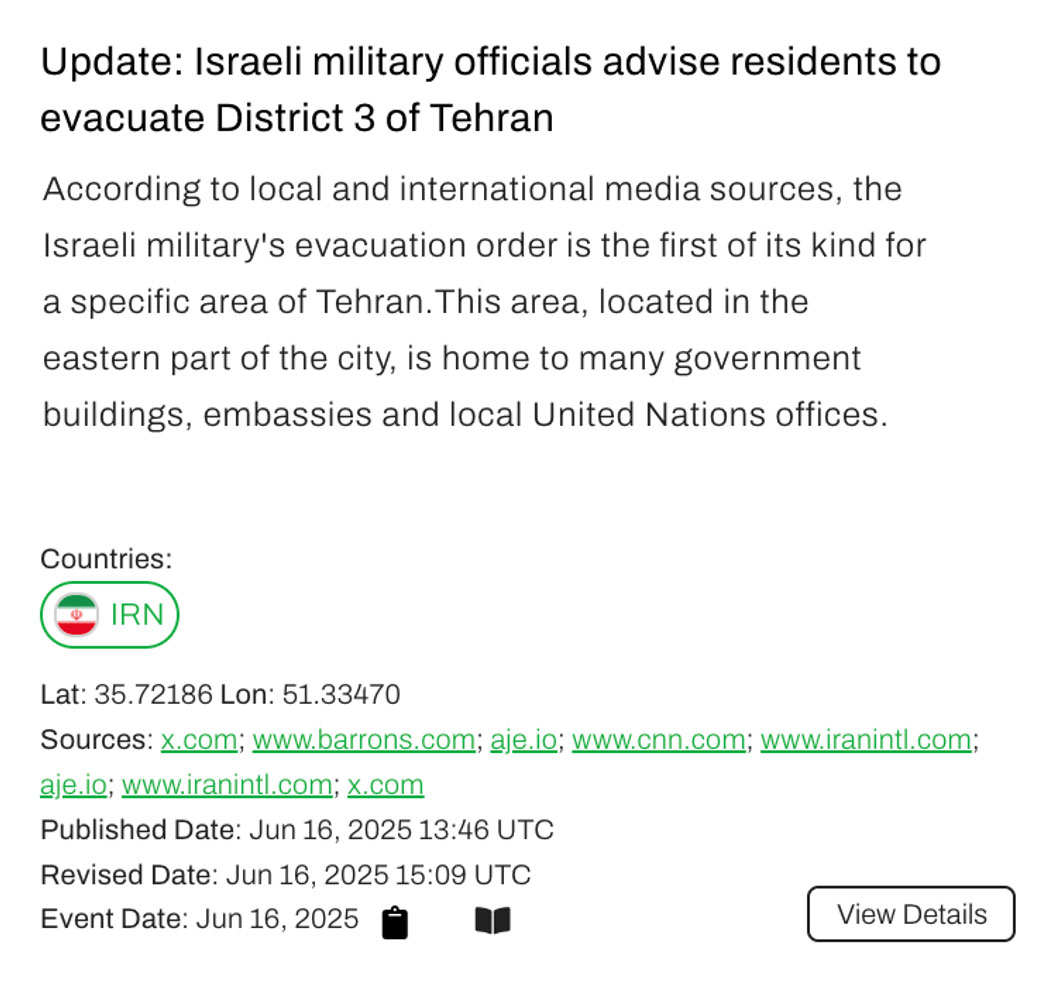
Breaking Event 1/2
Breaking Event 2/2
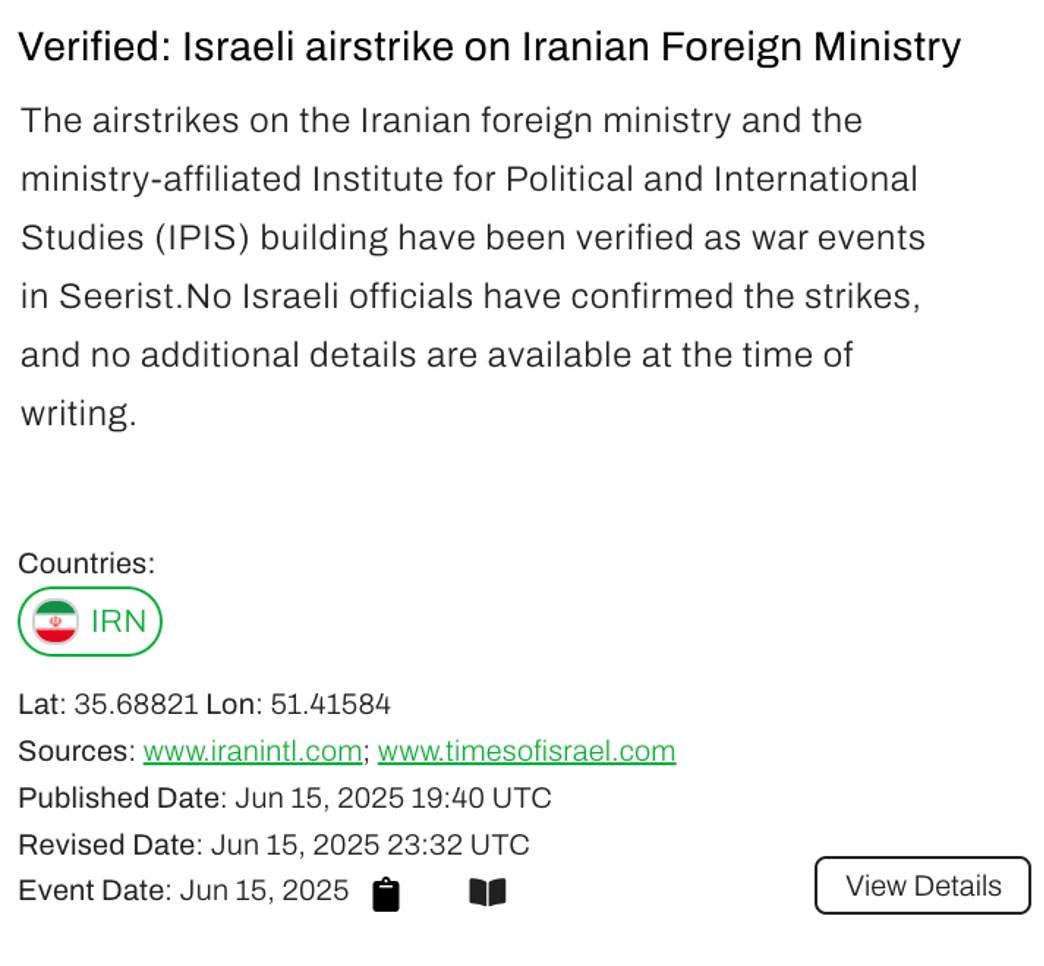


Expanded targets�During the early afternoon (local time) of 16 June, the Israel Defence Forces (IDF) claimed to have “complete operational control” of the skies above the Iranian capital Tehran. The IDF also claimed to have destroyed one third of Iran missile launchers. Israeli targets in Iran on 15-16 June included the Iranian Ministry of Foreign Affairs building; an industrial area in Dieselabad, Kermanshah; suspected ballistic missile sites in Parchin, Tehran province; a refuelling aircraft at the Mashhad airport; and the headquarters of the Iranian Revolutionary Guard Corps (IRGC). In addition, reports emerged of five car bombs detonating across Tehran, with Iran blaming Israel; Israeli authorities have denied any involvement in such detonations.
�As on the night of 14-15 June, the targeted sites again included economic assets, indicating that Israeli targeting will continue to move beyond its initial focus on nuclear and military sites. �According to the Iranian health ministry, IDF strikes have killed 224 people in Iran since 13 June, including dozens of civilians. (Control Risks Analysis)�
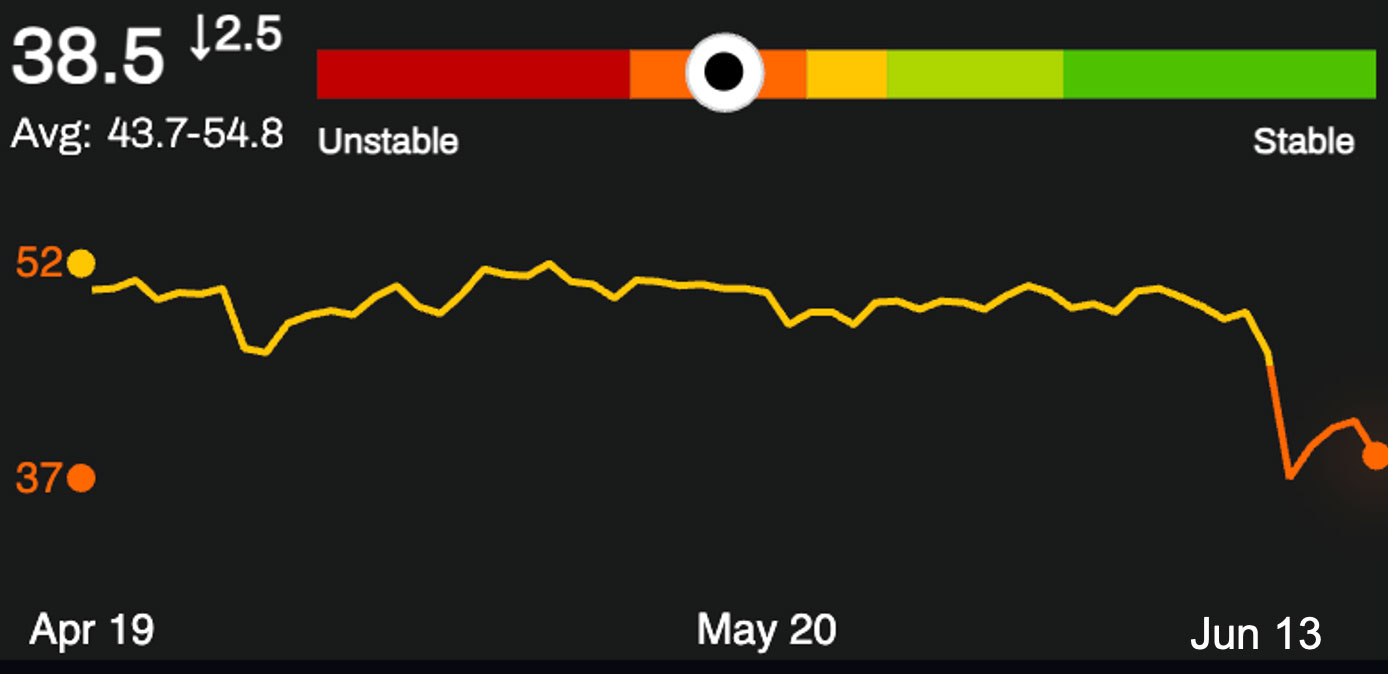
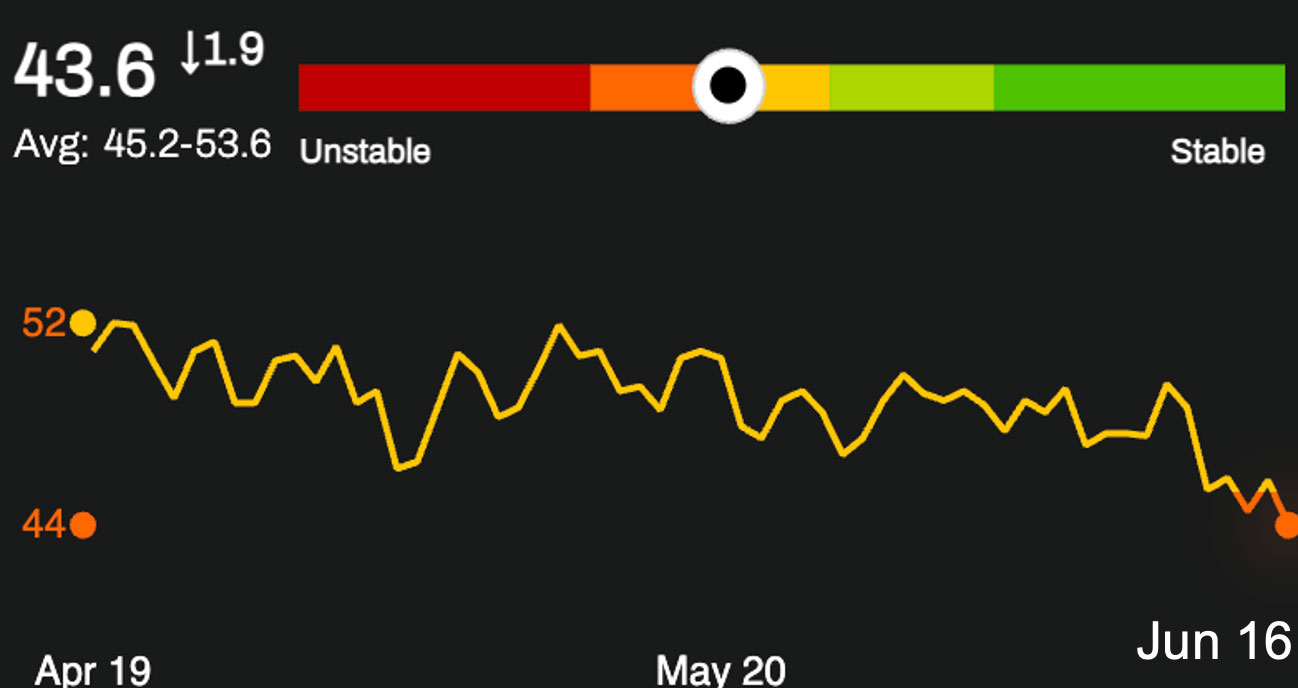
Seerist’s PulseAI stability model rating for Iran remains below average levels and continues trending downward toward an unstable rating.�
Israel War Risk Rating Change Amid Material Damage
We are raising our war risk rating for Israel from MEDIUM to HIGH in light of the material risks and extensive disruption caused by Iranian cross-border attacks. Interception capabilities, while generally effective, will remain unable to intercept all projectiles; and even where interceptions occur, falling debris will continue to cause damage. As Israel continues to target Iran’s missile launching capabilities over the coming weeks, a reduction in Iran’s capabilities will put downward pressure on the war risk. The IDF indicated on 16 June that it had destroyed more than 120 missile launchers in Iran, which it assessed amounts to a third of Iran’s launchers. (Control Risks Analysis)��
Seerist’s PulseAI stability model rating for Israel remains below average levels.�
Iran’s indiscriminate targeting of densely populated areas in central and northern Israel since 13 June has resulted in significant material damage and limited casualties. Densely populated areas of Israel have faced intense cross-border targeting from Iran in the context of escalating tensions between the two countries since Israel launched Operation Rising Lion on 13 June. According to the Israeli military, Iran has fired 370 ballistic missiles at Israel. The Israel Defence Forces (IDF) on 15 June indicated that most missiles are intercepted, with interception success rates reportedly similar to those observed in Iranian cross-border attacks in April and October 2024.
Notwithstanding Israel’s robust interception capabilities, Iran’s intense targeting of densely populated areas has meant that occasional direct hits can result in significant material damage and casualties – there have been at least 24 confirmed deaths in Israel as a result of Iranian targeting since 13 June. (Control Risks Analysis)�
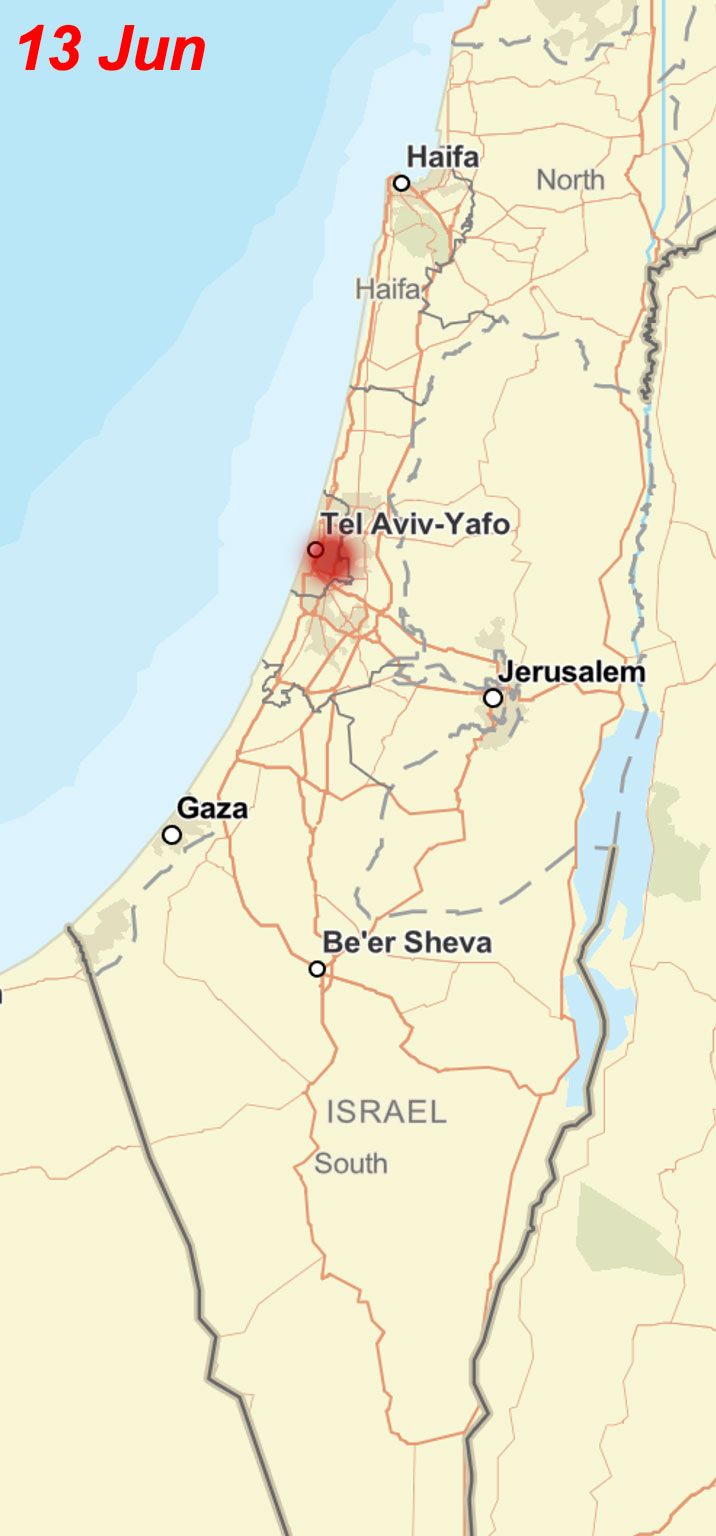
13 June
14 June
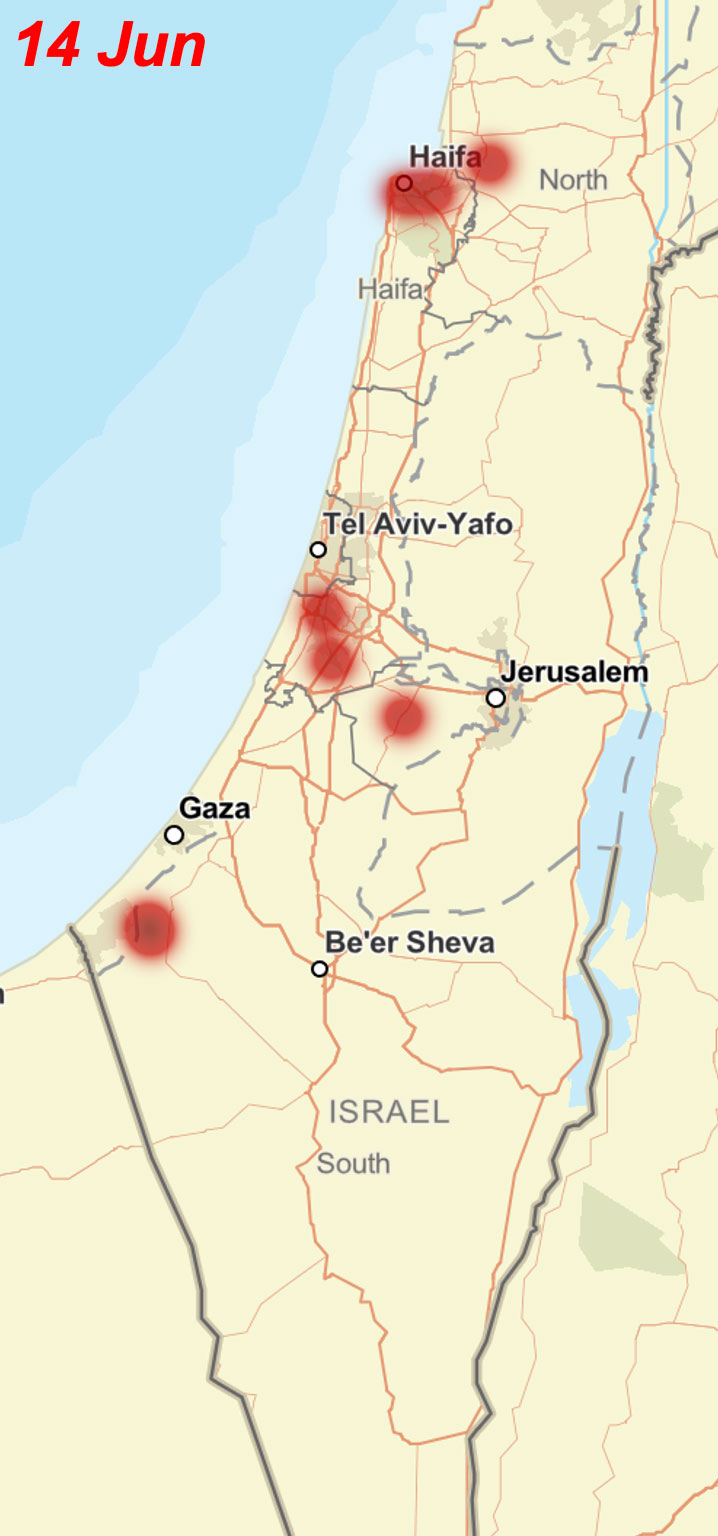
15 June
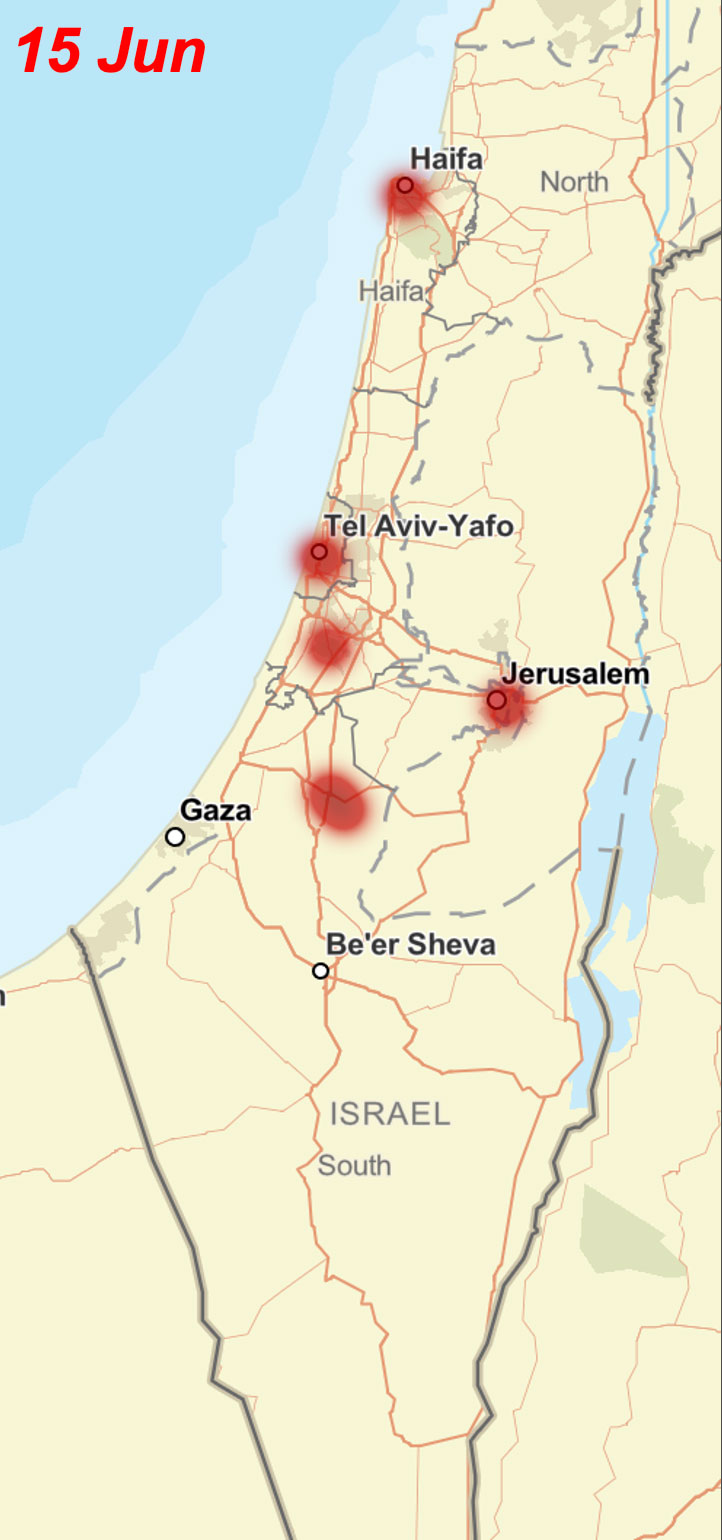
16 June
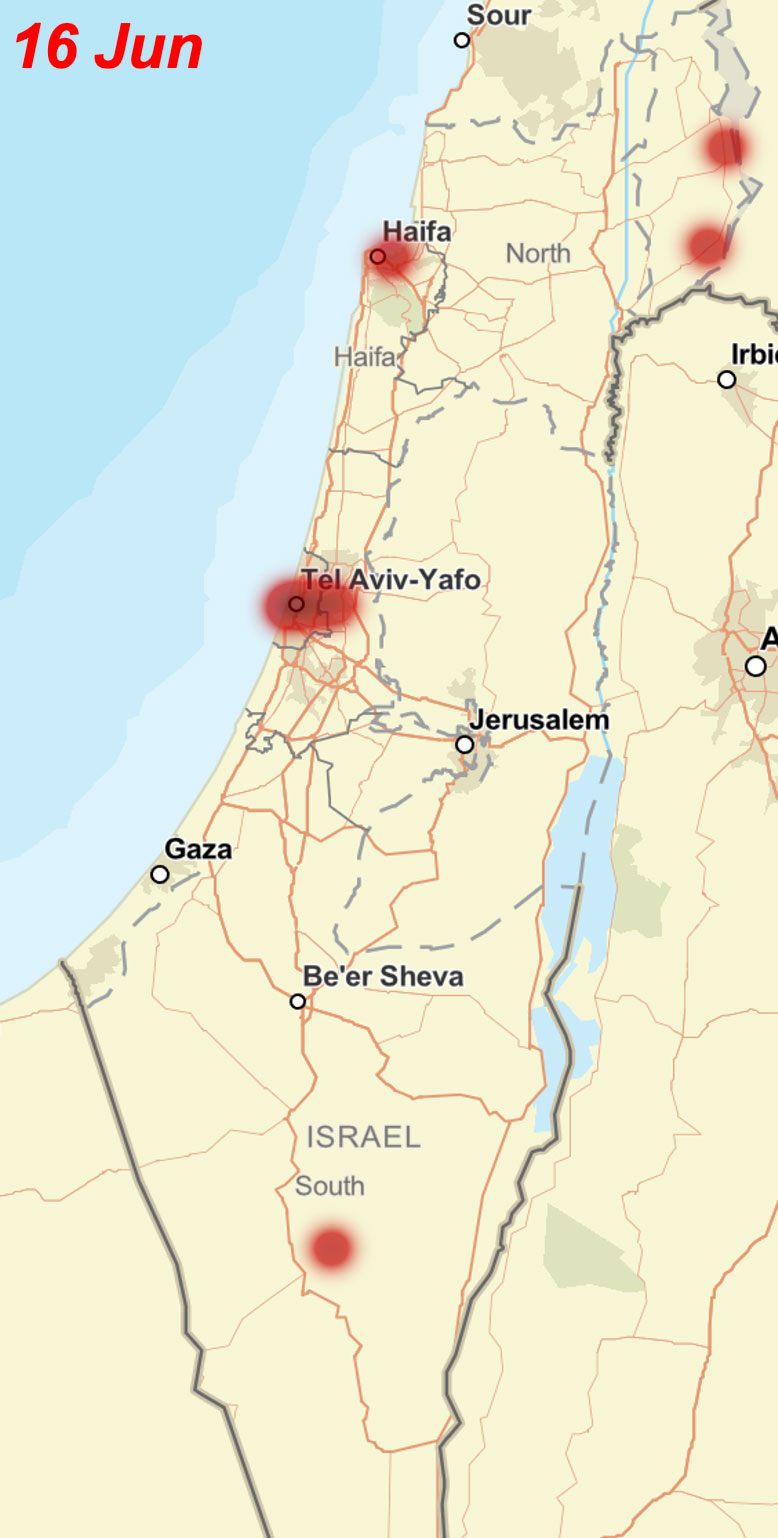


Depicted below are Seerist’s Verified ‘War’ Events, denoting the progression of Iranian strike locations across Israel.�
Regional Impacts
Even as the conflict is concerning for the Gulf Arab states and affects the wider regional security environment, the security of each nation state is not yet under threat.
�According to US media reports, Israel has requested US support to attack Iran’s nuclear enrichment site at Fordow. So far, the US has been reluctant to supply more than political cover to Israel for Operation Rising Lion; however, the Trump administration’s intentions regarding potential US involvement in the coming days remain unclear.
�Iran has explicitly threatened US military assets within the Gulf Arab region; however, the Iranian government has not made credible threats against the security of the Gulf Arab states. This is likely driven by a desire to keep the region as an ally amid Israeli aggression. (Control Risks Analysis)�
IN FOCUS
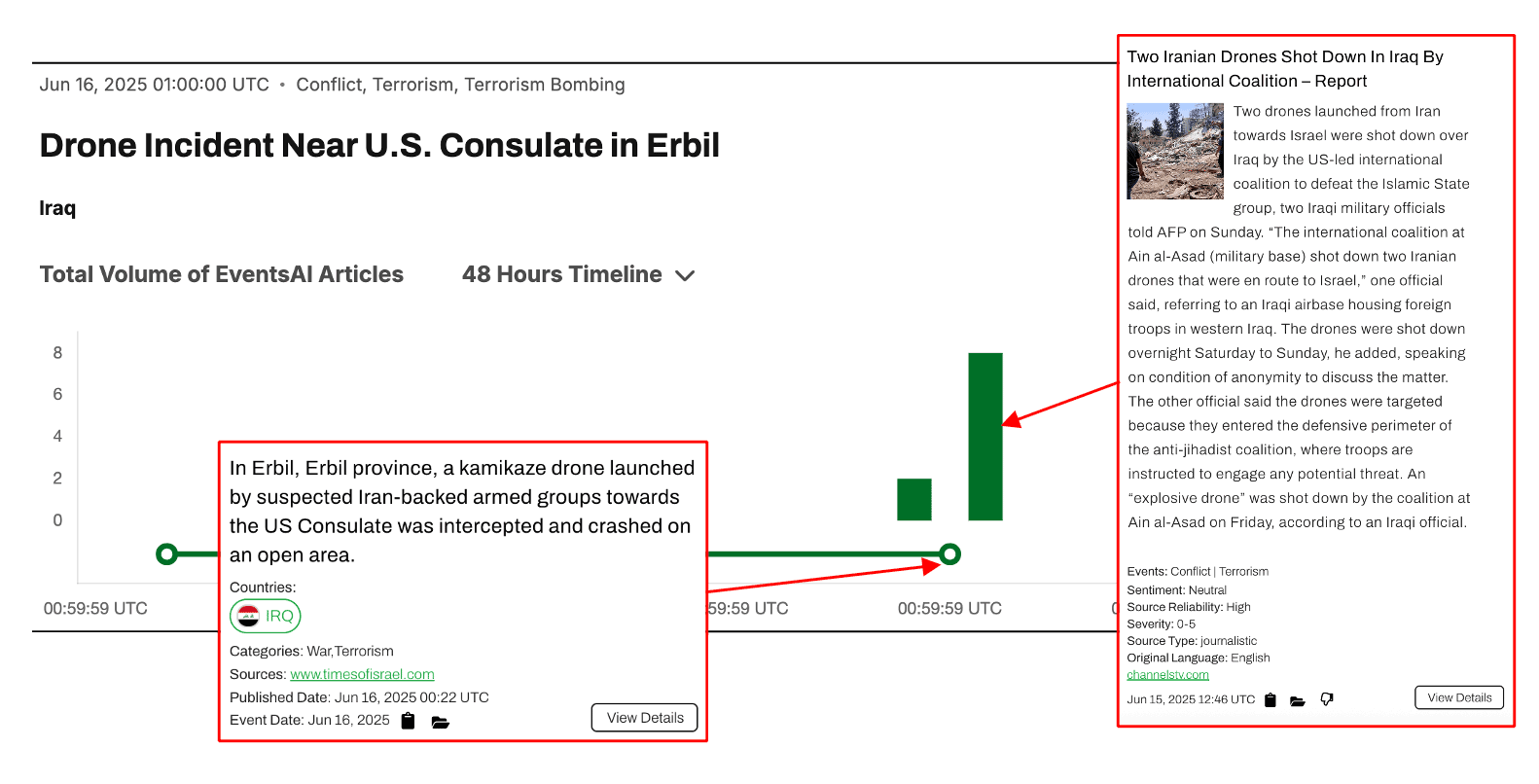
Tracking accelerating stories over time via DiscoverAI with comprehensive human-curated and EventsAI-driven content seen below�
The AP news agency reported on 14 June that US-led coalition forces at Ain al-Assad Airbase (Anbar province, Iraq) had intercepted three drones flying in the vicinity. No casualties or damage were reported. Such incidents are relatively common in Iraq, and Iran-backed paramilitary groups in Iraq have so far refrained from direct actions in response to the Israel-Iran war. However, they continue to warn of their involvement should the US become actively involved. For now, their role serves primarily as a deterrent tool for Tehran – held in reserve unless Iran’s ability to carry out cross-border missile strikes is degraded or the regime perceives an existential threat, or in the event of direct US intervention. (Control Risks Analysis)�
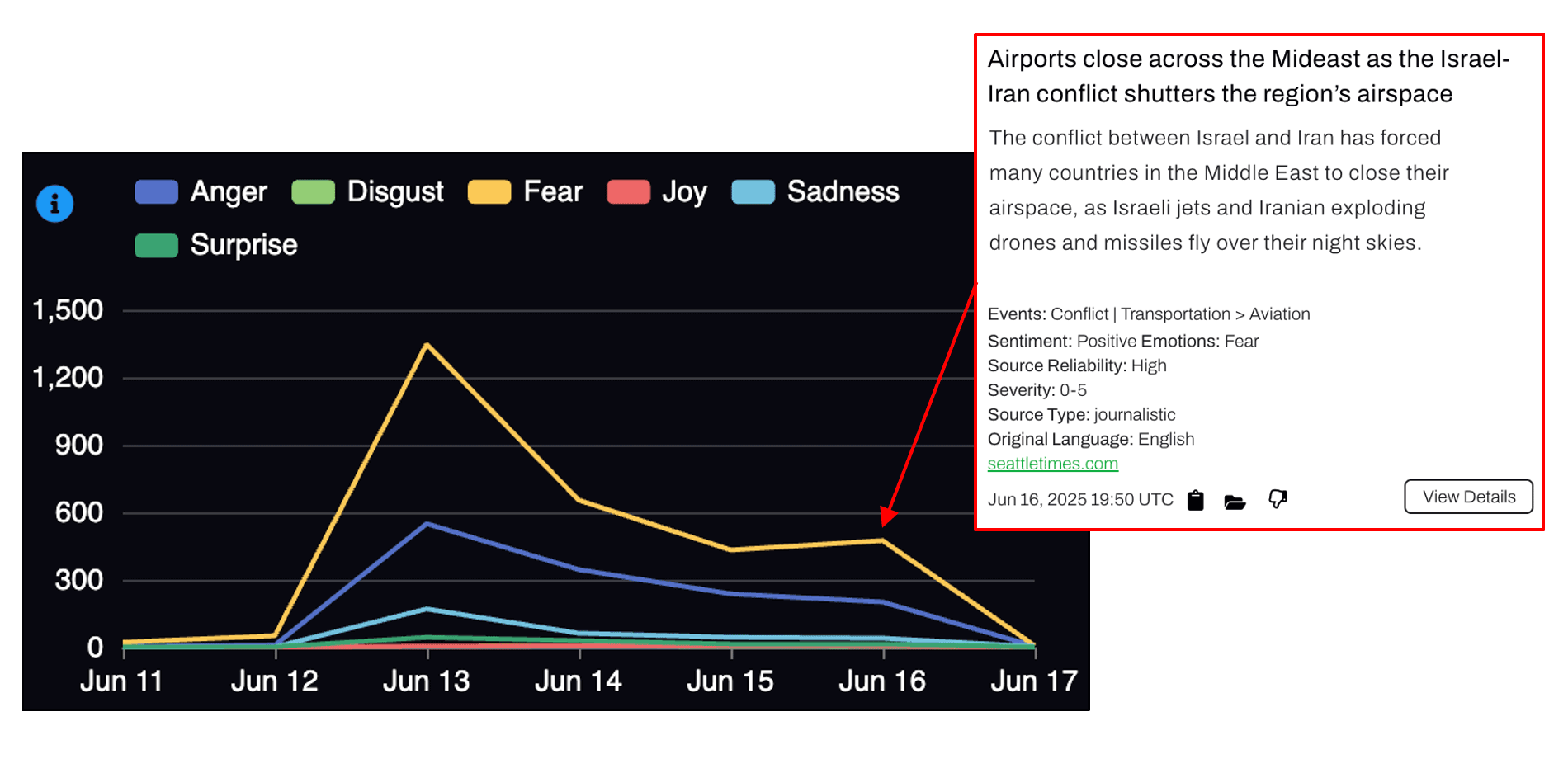
Iranian and Israeli airspace remains closed. Jordanian airspace is highly restricted to air traffic amid the attacks. Regional airspace is unlikely to re-open without interruption due to the ongoing targeting and potential for further escalation in the coming days. Iraqi airspace remains closed with the exception of Basra International Airport, which reopened on 15 June. Carriers travelling in the Gulf have diverted their flights over Saudi Arabia to account for the airspace closures and maintain operational continuity. However, ongoing cross-border strikes will continue to disrupt aviation operations, triggering flight delays and cancellations. (Control Risks Analysis)�
Fear and anger remain prominent across EventsAI news and social sentiment and emotions models�
EventsAI
Verified Event
EventsAI

Explore Now

Learn more about delivering the trustworthy insights you need, right when you need them.
Discover Seerist Today
The foresight to get ahead of what may come.

The insights with the most impact.

Accelerate speed to decision.