Escalating tensions: The strongly worded statement by SAF spokesperson Nabil Abdallah said that RSF troops had deployed without coordination with the SAF, in violation of “the directives of the central and state security committees.” The army warned the RSF to abide by existing security protocols. The current dispute stems from plans to regularise the RSF by integrating the paramilitary organisation into the SAF command structures, a move heavily resisted by the RSF.
The civilian Forces for Freedom and Change (FFC) coalition on 13 April urged the security forces to avoid any escalation and blamed “remnants of the former regime” of former president Omar al-Bashir (1989-2019) for stirring up tensions to derail the transition to a civilian-led government. Several other groups including the current holdout groups to the December 2022 framework agreement such as the Sudan Revolutionary Front (SRF) and international diplomats urged the RSF and SAF to negotiate their differences and avoid armed conflict.
Escalating tensions: The strongly worded statement by SAF spokesperson Nabil Abdallah said that RSF troops had deployed without coordination with the SAF, in violation of “the directives of the central and state security committees.” The army warned the RSF to abide by existing security protocols. The current dispute stems from plans to regularise the RSF by integrating the paramilitary organisation into the SAF command structures, a move heavily resisted by the RSF.
The civilian Forces for Freedom and Change (FFC) coalition on 13 April urged the security forces to avoid any escalation and blamed “remnants of the former regime” of former president Omar al-Bashir (1989-2019) for stirring up tensions to derail the transition to a civilian-led government. Several other groups including the current holdout groups to the December 2022 framework agreement such as the Sudan Revolutionary Front (SRF) and international diplomats urged the RSF and SAF to negotiate their differences and avoid armed conflict.
31 December 2021 – 6 January 2022
Click arrow to jump down to next section
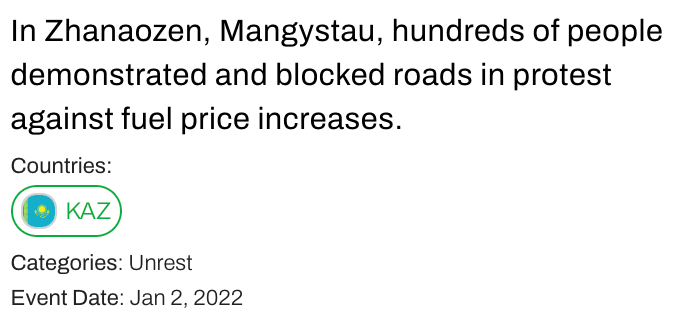
Country Risk Analysis Gives 4 Day Warning of Kazakhstan Emergency
SITUATION REPORT

BRIEF
Alerts from Seerist about a decline in stability in Kazakhstan preceded the outbreak of protests, giving security teams time to prepare. As the situation deteriorated, Verified Events and Risk Ratings kept the team up to date on security and civil unrest risks.
TIMELINE
Seerist’s PulseAI score starts to drop from a high.
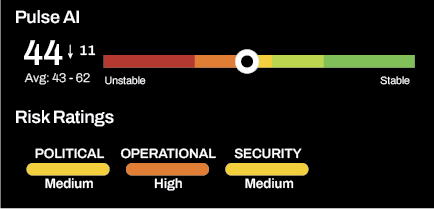
Seerist’s PulseAI score for Kazakhstan started dropping 48 hours before protests began in the western city of Zhanaozen.
31 DECEMBER 2021
Protests begin, PulseAI reaches bottom of 60-day average range.
When the protests started, the score had dropped 14 points. Using machine learning to continually update risk assessments, PulseAI measured a decline in stability that signaled these protests – against the government’s decision to end fuel price caps – were the most significant in years.
This notification of dropping stability from PulseAI corresponded with a human-derived alert verifying the size, scale and impact of the protests in Zhanaozen.
2 JANUARY 2022
Deadly protests trigger four Hotspots
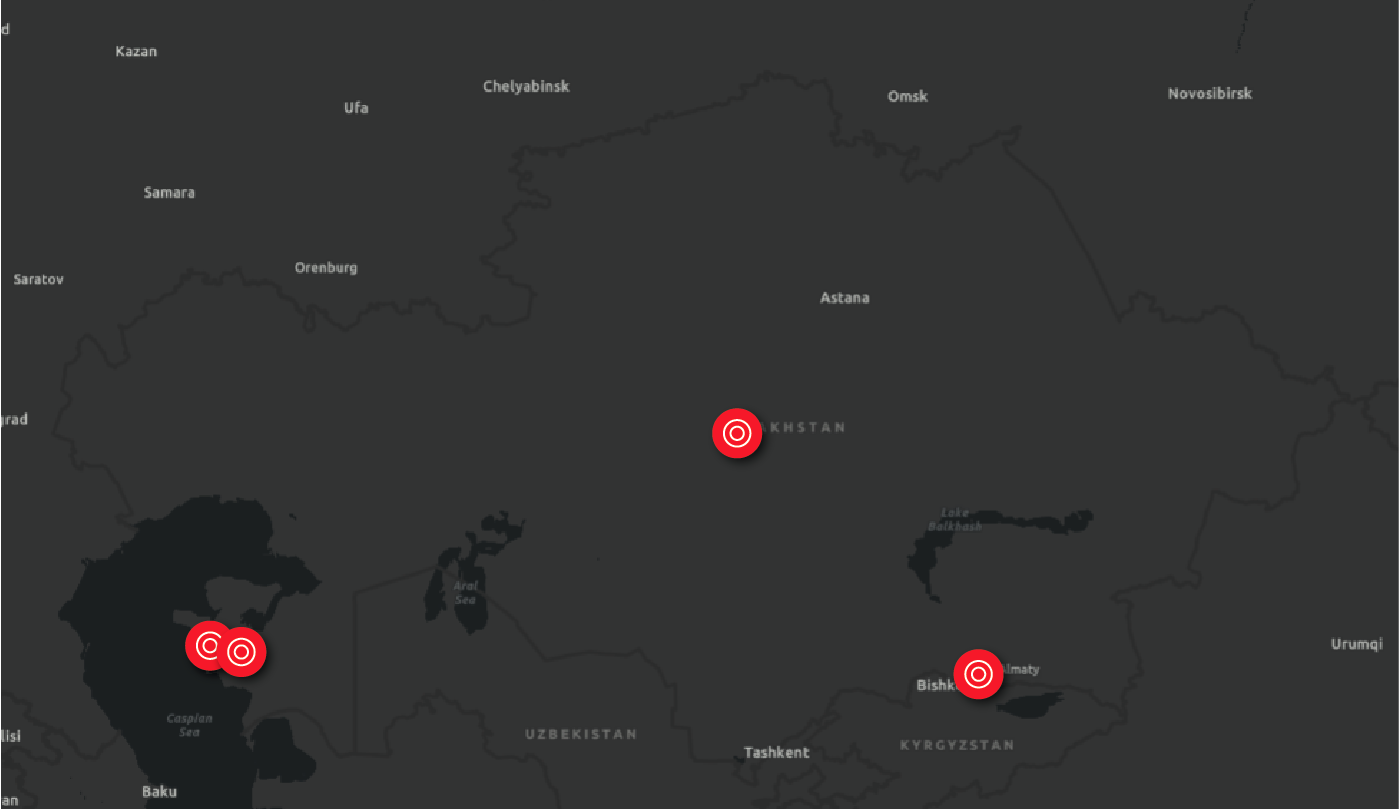
On 4 January, the government pledged to bring back fuel price caps, but PulseAI alerted users to continued unrest, dropping another 8 points from its average range in the region. Four Hotspots – machine learning-driven indicators of abnormal activity – were triggered in central and southwest Kazakhstan and near Almaty, allowing Seerist users to track the spread of unrest.
4 JANUARY 2022
State of Emergency declared.
The Security and Civil Unrest Risk Ratings for the whole of Kazakhstan were increased from ‘Low’ to ‘Medium’.
5 JANUARY 2022
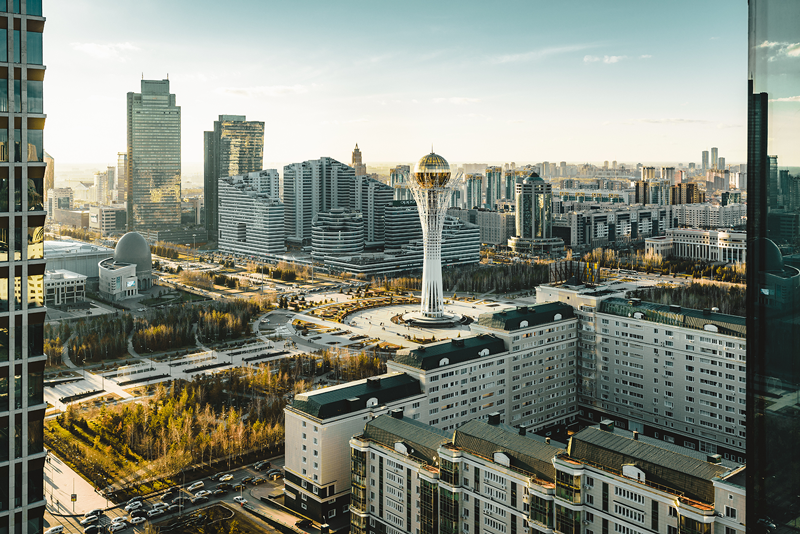
Russian-led forces deploy to Kazakhstan.
On January 6, as Russian-led forces deployed to Kazakhstan to try and control the situation, PulseAI recovered one point and forecast a short-term rise in stability.
6 JANUARY 2022
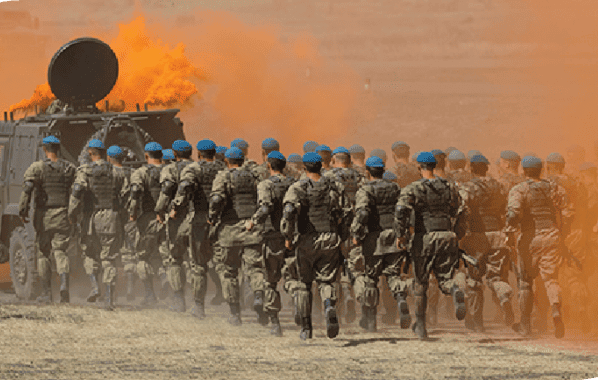
The deployment of CSTO [Collective Security Treaty Organization] troops and Kazakhstani forces’ use of lethal force against protesters – confirmed through video footage and reports from the ground on 5 and 6 January–are likely to reduce protesters’ willingness to take to the streets. We consider a stabilization in the security environment in the next week increasingly likely as a result. However, in the coming days, the situation will remain confused and volatile, and operators should expect continuing violence linked to the forceful security force response to protest activity.

Request a demo
Request a demo to see how Seerist can support your security and intelligence efforts.
Explore Seerist Today