ophia Bush is busy. It’s a Monday afternoon in late September and the actor, activist, angel investor,
and podcast host is apologizing for being late for our Zoom interview. “I’m sorry for the confusion;
I thought we were on at 12:15 and then I started doing laundry. And I was like, ‘Well now I’m late!,’” she
says as she throws up her hands in mock exasperation.
So Bush is busy in the moment — because now we know she’s a star who does her own wash — but also busy in the larger scheme of life. On the day we talk, the SAG-AFTRA strike has been going on for more than two months, but if you think Sophia Bush is sitting idle waiting for her next acting job, well, think again. Fully recovered from an illness that shut her down for months and fresh from a “massive family reunion” that took her to Italy, Bush has been in go mode ever since returning to the States.
Just two days before our interview, the former One Tree Hill star, 41, was on stage at Global Citizen Festival in New York City’s Central Park to help announce the launch of the American Climate Corps; days later she penned an op-ed for the Daily Beast skewering the GOP debate for letting its candidates remain quiet about abortion. (“One of the Republican Party’s top missions is to take women's reproductive autonomy away, and yet the seven GOP presidential candidates on stage at the Reagan Library were barely asked to address their radical stance,” she wrote.) And in early October, she launched season three of her podcast, Work in Progress With Sophia Bush, premiering with a two-part interview with former White House Press Secretary Jen Psaki and a follow-up episode with Matthew McConaughey.
Oh, and then there’s her angel investing. Bush, along with her best friend and business partner, Nia Linder Batts, is a partner in Union Heritage Ventures; together, the two are translating their advocacy for women and girls’ reproductive rights and period poverty into dollars-in-hands investments in innovative femtech companies like Aunt Flow and OYA.


The actor, activist and podcast host is advocating for women’s health innovation using her voice and investment dollars.
SOPHIA
BUSH
by ERIKA JANES | photographs by WESTON WELLS
Is on the Side of the Angels

“
“
As far back as I can remember, there have been opportunities to support other people. And it's always felt like a must for me, not a maybe.
SOPHIA BUSH
“
“
The perspectives we bring are different from more traditional
investors, and that difference is our strong suit.
SOPHIA BUSH
“
“
I get that for a lot of people, the interconnectedness of all of these things feels very overwhelming. But for me, it feels very obvious. And it also feels like a personal calling, because I care about how all of these puzzle pieces fit together [and] try to talk about as many of them as I can.
SOPHIA BUSH
Money Talks


THE CURIOSITY CONNECTION
Creative Direction
+ Design
Laura Kavanaugh
Jennifer Ciminillo
Styling
Kevin Michael Ericson
Hair
Anthony Campbell
Makeup
Vincent Oquendo
September 23, the date Bush was on stage joyfully championing the Biden Administration’s action on climate change, also happened to be the 20th anniversary of One Tree Hill, the TV show that ran from 2003 to 2012 and made her a star. Unable to properly herald the occasion thanks to the SAG-AFTRA strike restrictions, Bush instead promoted the day with an Instagram post that championed “20 years of female friendships being the ultimate love stories” and shouted out her other podcast, Drama Queens, with her OTH co-stars Hilarie Burton Morgan and Bethany Joy Lenz. She also thanked “the #fanfam who have encouraged us to find and use our voices onscreen and off.”
S
If there’s a connecting thread to everything Bush is doing these days, and what drives her to use her voice, you could say it’s a passion for storytelling driven by curiosity and an inherent call to use her voice for good. As a college student at the University of Southern California, Bush initially studied for her BFA in theater before transferring into the university’s Annenberg School for Journalism and Communications. As it turned out, acting won out in the end — sort of — when she was cast on OTH in her junior year. Still, she calls her time at Annenberg “transformative” and credits the hybrid course of study with giving her “the training and the wherewithal” to do what she does now, which is to tell people’s stories in her day job as an actor, of course, but also to use her voice as an advocate, a writer of op-eds, an interviewer of people she admires as a podcast host, and an investor in companies whose stories deserve to be told.
“As my parents tell it, I’ve always been this way,” she says of her inclination to activism. “I actually asked them a few years ago when this started, in their memory, and they said from the minute I was talking.”
In elementary school in California, Bush started a beach clean-up club (“it turns out no kids want to do that on the weekends, so my mom took me to the beach by myself”); by junior high, she was organizing student protests. “As far back as I can remember, there have been opportunities to support other people,” she says. “And it's always felt like a must for me, not a maybe.”
Today, the winding path, the multiple jobs, the quest for innovation — it all makes sense. Far from latching on to one anchor cause that would make sense for her personal and professional brand, Bush views the numerous causes she cares about, from climate change to period poverty, as parts of a whole.
“For me, it's impossible to look at the world and not see how connected these issues are,” she explains. “Our society is an enormous governing body; it is an enormous organism in which every system is connected. The people on the forefront of environmental crises, and the people who are often the most at risk in communities without stable access to healthy environments, are women and people of color. So it's impossible to analyze environmental justice without looking at gender inequity and racial inequity. [And] it's impossible to look at gender inequity and racial inequity without becoming passionate about financial inequity and the systems that have kept people out of the classes that are able to build wealth.”
She continues, “I get that for a lot of people, the interconnectedness of all of these things feels very overwhelming. But for me, it feels very obvious. And it also feels like a personal calling, because I care about how all of these puzzle pieces fit together [and] try to talk about as many of them as I can.”
Bush likens it to a book club of sorts, if every book was a cause. And while every cause won’t resonate with every one of her roughly 6 million social media followers, she reasons that the more issues she’s able to highlight and connect the dots on, the more she can inspire people to find what they’re passionate about.
“A lot of people say, ‘I just don't do politics.’ I'm like, ‘Well, honey, politics is doing you, me, and everybody else, every day,’” she says. “So for me, it feels important that we see it and figure out ways to participate in it for good.”
Beyond activism, angel investing is another way Bush has been an advocate for positive change. As early as 2009, she began educating herself about the start-up landscape and taking sage advice from a friend who brought her into her first deal.
“He told me to start thinking about my instincts in terms of being an investor and a storyteller about business,” she says. “It was great advice. And that shift really enabled me to apply my skills, passion for innovation and for social causes, and my creative brain to the world of finance.”
Today, with Linder Batts and the team at Union Heritage Ventures, and as strategic advisors to the First Women’s Bank, she’s been able to help spur innovation in the femtech space. While VC funding for femtech has tripled since 2015, the space is still vastly under-researched. Bush and Linder Batts aim to change that. So far this year they have invested in Aunt Flow, a company dedicated to eradicating period poverty by offering free period products and high-capacity dispensers in schools and businesses, and OYA Femtech Apparel, which makes high-performance activewear designed for feminine health.
“Both of these companies are solving a huge problem for women, and doing so while asking questions that, somehow, haven't been asked before,” Bush explains. “Why aren’t women’s health needs designed around, and provided for? For Aunt Flow, [founder] Claire Coder asked why we provide toilet paper and paper towels in bathrooms but not period products. They are all items that exist to respond to bodily functions. And now she is helping lawmakers across the country pass bills requiring care products. Mitch [Gilbert] founded OYA in response to repeat vaginal infections as a collegiate athlete, when she learned that dyes and materials used to make women’s fitness gear are often toxic. Both of their products have enormous potential to do well and do good. And that’s a sweet spot for us as investors.”
Beyond the innovation of the companies they’re investing in, Bush and Linder Batts are innovators themselves in the angel investing space — and not just because they’re women writing the checks. “The perspectives we bring are different from more traditional investors, and that difference is our strong suit,” Bush says.
As Linder Batts tells it, Bush’s greatest strength is that “she’s a data nerd, and when she encounters data that unearths inequity she gets really fired up and it gets everyone else around her fired up.”
She continues, “we’ve been best friends, collaborators, conspirators for nearly 15 years now — we’ve both cycled through different versions of ourselves, but the through-line has always been equity in all its forms, and often telling the story of injustices in innovative ways.” In fact, their shared activism has grown alongside their friendship. “Early in our careers we did a lot of fundraising for issues and causes, and then that progressed to political candidates, and now we’re doing the work of addressing inequity in systems like finance. But it always comes back to our first love, which is storytelling.”
There it is again — that familiar word — and Bush invokes it as she elaborates on why the pair is doing what they do. “To begin to take up space in traditionally male and non-diverse environments is exciting to us,” she says. “If we want to see more women founders and more women in venture, we need to be there ourselves. And so many of the founders we meet and work with have these hybrid entrepreneurial/activist mindsets, as well. They want to change the world in some way. They are coming up with great companies and products, of course. And they have a mission. To be able to help them tell their stories is so exciting.”
Given her history of advocacy and investing, Bush didn’t exactly need more skin in the game when it comes to women’s health, but her passion became even more pronounced — and personal — after what happened to her this past summer. Across the pond, Bush made her West End stage debut in the thriller 2:22 A Ghost Story in May, but had to leave the cast in July after contracting a virus that she couldn’t shake.
“It was incredibly hard and wildly humbling,” she says. “Getting so sick and experiencing essentially a full-body shut-down because of a post-viral complication was really sobering for me.”
Bush spent three months recovering and feels “thankful and privileged” that she’s back to a baseline of health, but the experience changed her.
“It's not healthy to be at work 14 to 16 hours a day, which is what my industry does,” she says. “I don't know how it's going to change, but I know that people are certainly trying to figure out if there's a way to shift that for performers and crews.”
It's not lost on her that even having health insurance and access to healthcare as a union member is a privilege. “I was able to come home and see amazing specialists, and go to the appointments I needed to, and pick up the medication I needed to be on. This is how it should be for everyone.”
Which brings us back to advocacy. “I look at my own experiences with being a human trying to stay healthy in the world,” she says. “Nobody should have to choose between their health and paying their rent, or their child's health and a car payment for the car they need to get their kid to school. And it was really wild to come home and be dealing with everything while we were striking and just watch and [think], ‘Oh my God, it's all so connected, these battles that we're fighting.”
Hitting Home


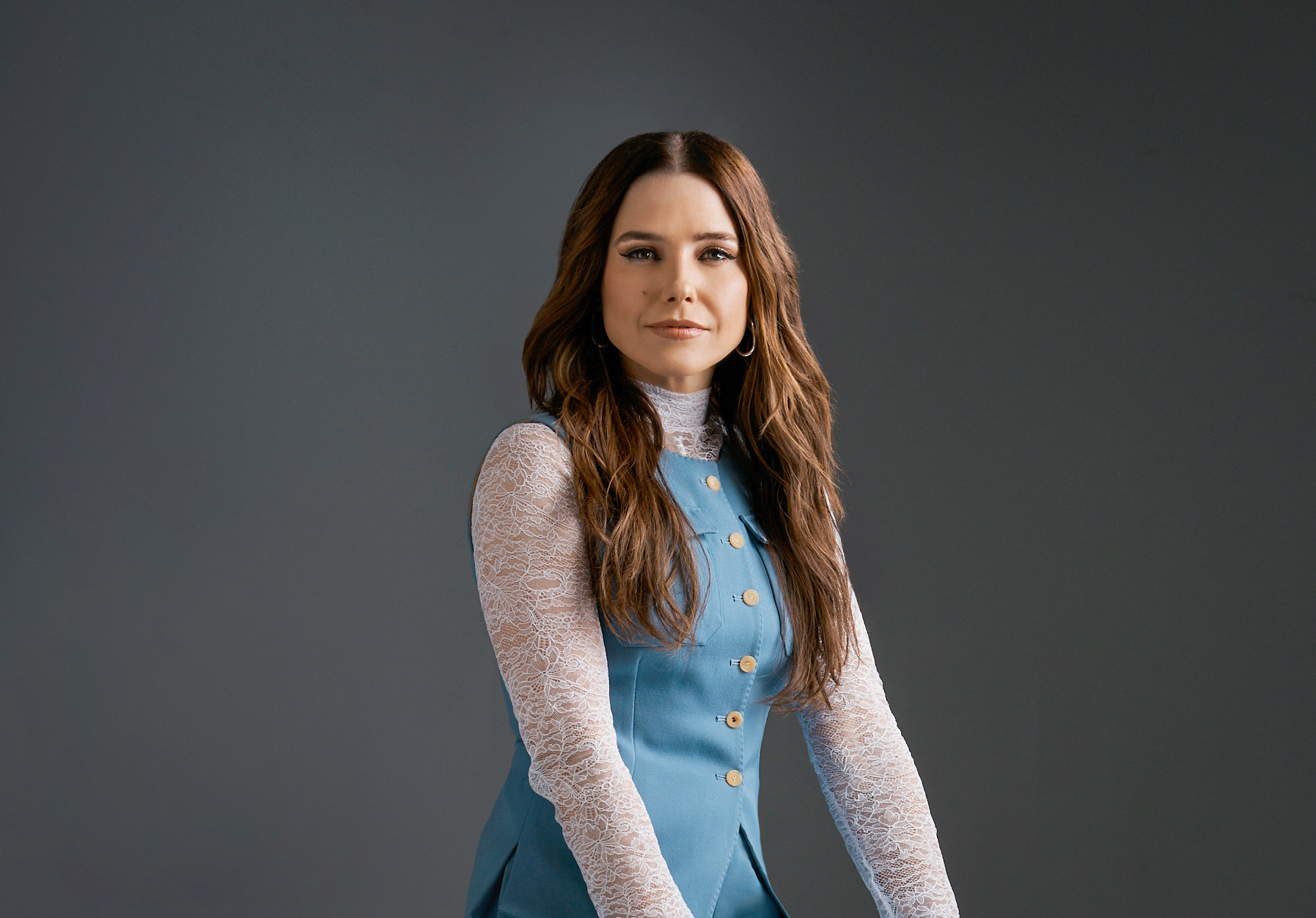


credits
Photographs
Weston Wells
Video
Reshma Gopaldas
Allie O’Connell
Article
Erika Janes


SOPHIA BUSH

Return to Innovation
& Advocacy Issue
Return to Innovation
& Advocacy Issue