Six Ways the Charleston Area Brings American History to Life
Sponsored Content by
Three and a half centuries on, the Lowcountry still thrives in its own history.
The historic United States Custom House from Charleston Harbor. Credit: Unsplash


Charleston, South Carolina announces itself in the tiniest details. Church steeples above the rooflines; rows of historic homes in pinks, blues, and ochres; wrought-iron gates opening onto verdant secret gardens; and cobblestone streets that still run down to the water’s edge. ��For all its charms, the history beneath it all runs deep. The Charleston area began as a colonial settlement, became a center of Revolutionary-era politics, and was where the Civil War opened fire. It has worked as a bustling port for more than three centuries, and it was among the earliest American places to organize around preserving its own architecture. In fact, many traditions that began generations ago are still practiced by the people who inherited them. ��What distinguishes the region now is how actively it reexamines its own past, rethinking how the history is told, who tells it, and why it still matters today. That work is not confined to museums. Instead, it happens at the dining table, in the gardens, along the storefronts, and in the hands of people who still make things the way their families always have. Here are six places where visitors can experience authentic American history in Charleston.
The Old Exchange and Provost Dungeon.
SpiritLine Cruises connects visitors to historic Fort Sumter.
Explore
1/4


Fort Sumter National Monument from the water.
Next
Next

Previous
Previous

1. Fort Sumter & the Old Exchange
At 4:30 a.m. on April 12, 1861, Confederate batteries ringing Charleston Harbor opened fire on Fort Sumter. The shelling ran nearly 36 hours without killing a soul, though the war it began would take more than 620,000 lives.


1. Fort Sumter & the Old Exchange
Visitors still reach Sumter the way its garrison did—by water. Across the channel, Fort Moultrie on Sullivan’s Island traces its origins to the Patriot victory over the Royal Navy in 1776.
2/4


1. Fort Sumter & the Old Exchange
During the American Revolution, British forces transformed the Exchange’s lower level into the Provost Dungeon, a military prison. Today, costumed docents guide visitors through the space, recounting its history and legends.


4/4


2. The Gibbes Museum
It also teaches what to look for outside: the architecture, the gardens, the church steeples, the public monuments, and the ornamental ironwork, including gates forged by master blacksmith Philip Simmons.
Explore
4/4


The Gibbes Museum of Art, a neoclassical landmark in downtown Charleston.

2. The Gibbes Museum
The museum opened in 1905, and its collection spans four centuries, from colonial portraiture and decorative arts through the Charleston Renaissance to contemporary installations.
Explore
2/4


Period furniture and decorative arts on view at the Gibbes Museum of Art.

2. The Gibbes Museum
Before photography, a face worth keeping had to be painted small enough to carry. The Gibbes Museum of Art’s celebrated portrait miniatures are those likenesses of people with no other way to be remembered.
1/4


Miniature portraits displayed at the Gibbes Museum of Art.
Next
Next
Previous
Previous
Explore
Explore
Explore

3. Lowcountry Cuisine
Whatever the mood, Charleston has a flavor to match. From refined fine dining to beloved fried fare, the city is known for its fresh ingredients, time-honored recipes, and inventive takes on classic Southern dishes.
4/4


Explore
When dining, Charleston's coastal flavors are on display.

3. Lowcountry Cuisine
Three hundred years of recipes have been passed down through generations here, and the rest of the flavors are recognizable on sight: fresh oysters, shrimp and grits, she-crab soup, and whatever else came off the boat that morning.
2/4


Explore
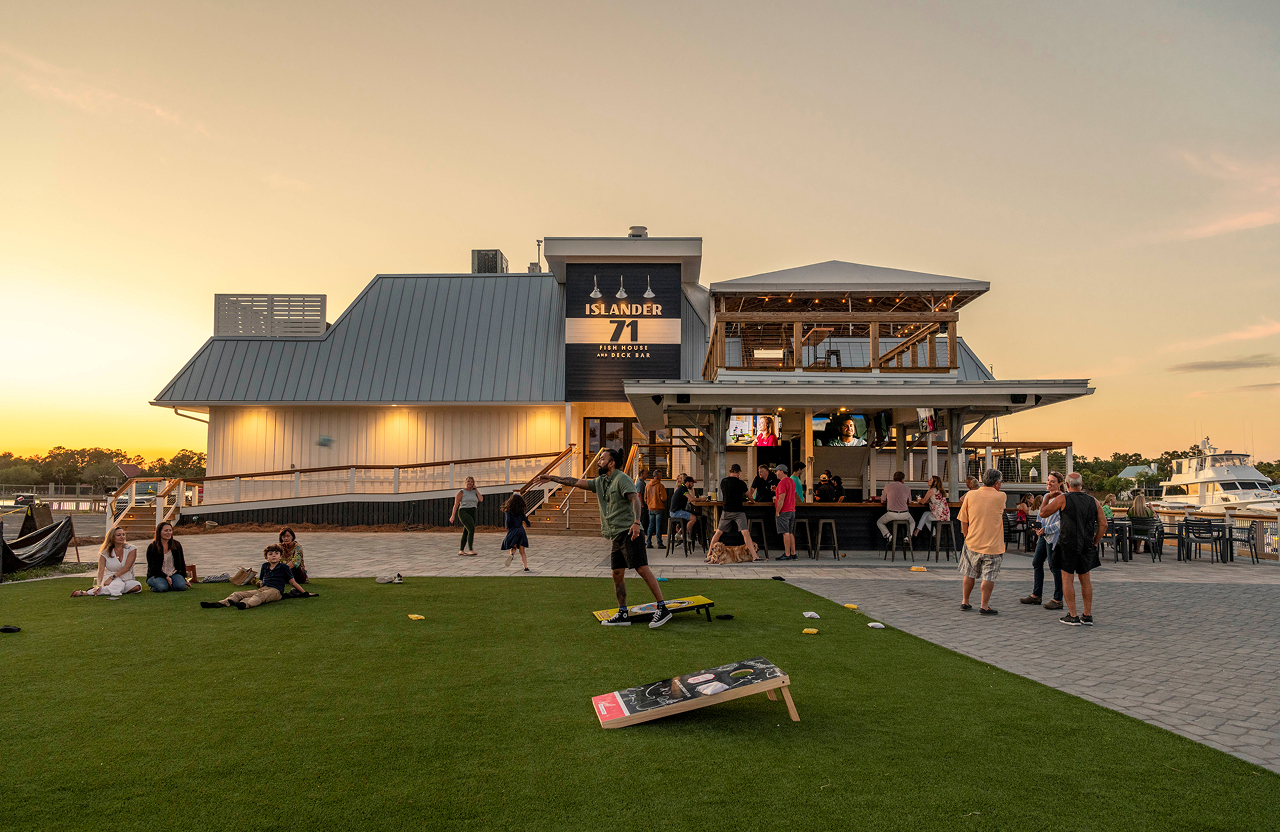
Freshly harvested oysters served at Islander 71.

3. Lowcountry Cuisine
Gullah Geechee foodways helped shape Lowcountry cuisine, working alongside African, Caribbean, European, and regional traditions. Together, they influenced the ingredients, techniques, and flavors that define the region today.
Explore
1/4


A classic Lowcountry favorite: shrimp and grits topped with bacon and green onions.
Next
Next
Previous
Previous

Location
4. Explore Outdoors at Boone Hall
Beyond its iconic views and rich history, Boone Hall's 1936 mansion gained fame as a filming location for The Notebook. Combined with year-round blooms, seasonal activities, and a deep connection to the Lowcountry's past, it's a must-visit.
Explore
4/4


Boone Hall is a must-visit year-round.

4. Explore Outdoors at Boone Hall
The property dates to 1681 and remains a working farm, with tractor tours of its fields, woods, and waterways. A butterfly-wing garden showcases Charleston-bred Noisette roses, while guided mansion tours explore the site's architecture and history.
Explore
2/4


Boone Hall Plantation & Gardens still functions as a working farm today.

4. Explore Outdoors at Boone Hall
In 1743, someone at Boone Hall had the foresight to plant live oaks in two rows along the approach. The branches took roughly two centuries to meet overhead, and the moss-draped corridor they form is now the first thing visitors see.
Explore
1/4


The iconic Avenue of Oaks at Boone Hall Plantation & Gardens.
Next
Next
Previous
Previous

5. Magnolia Plantation & Gardens
Surrounded by 400 acres of protected wetlands, Magnolia also examines its history through preserved cabins, the From Slavery to Freedom tour, and the stories of those who shaped the property over three centuries.
4/4


Explore
Four preserved cabins offer insight into the lives and enduring legacy of enslaved African Americans.

5. Magnolia Plantation & Gardens
The property traces back to the late 17th century, and its Romantic-style gardens took shape in the 1840s: winding paths, reflecting ponds, footbridges, and loose plantings arranged to look like nature that simply happened.
2/4


Explore
The historic Long White Bridge at Magnolia Plantation & Gardens.

5. Magnolia Plantation & Gardens
Magnolia has received tourists since 1871, when steamboats brought them up the Ashley River to see the camellias and azaleas. One of the country’s oldest attractions, it still absorbs three generations at once without strain.
Explore
1/4


Seasonal blooms at Magnolia Plantation & Gardens, one of the oldest public gardens in America.
Next
Next
Previous
Previous

6. Shopping Handcrafted
Whether visitors leave with a purchase or not, the vibrant 18th- and 19th-century architecture enriches the experience, with rare books, period furnishings, artisan fashions, and other distinctive finds along the way.
Explore
4/4


6. Shopping Handcrafted
The Charleston City Market traces its roots to 1788; its sheds went up in the early 19th century, and the Greek Revival Market Hall was completed in 1841. Alongside the baskets are artwork, jewelry, food products, and home goods.
Explore
2/4


Visitors explore the vendor-filled aisles of Charleston City Market.

6. Shopping Handcrafted
The coiling technique behind a Charleston sweetgrass basket is older than the market where many are sold. Weavers work in public spaces such as the City Market and Visitor Center, so buying one often means meeting the person who made it.
Explore
1/4


Corey Alston and his daughter display handmade sweetgrass baskets, continuing a family tradition.
Next
Next
Previous
Previous
You Might Also Like
Touring Charleston’s Historic Past
December 1, 2025
Five Historic Places to Experience Charleston, South Carolina’s Captivating Past
October 15, 2024
Explore African American History and Culture Firsthand in Charleston
November 7, 2022
Explore Five Stunning Hotels with History in Charleston
September 15, 2021
Learn More
Experience the Charleston Area's History for Yourself
The Charleston area’s story runs across the harbor, inside museums, along waterfront streets, aboard historic ships, around dining tables, and through traditions still practiced daily. No single landmark or era holds it. The region answers how its history is told, and why it still matters, by letting people experience it directly. Whether exploring centuries-old sites, tracing cultural traditions, or discovering living history in unexpected places, visitors find the past woven into the fabric of everyday life.
Historic menswear retailer Ben Silver on Charleston's iconic King Street.


1. Fort Sumter & the Old Exchange
Downtown, the Old Exchange and Provost Dungeon traces Charleston’s colonial, Revolutionary, and founding-era history, from the Constitution’s ratification in 1788 to George Washington’s 1791 visit.
3/4


Explore
The Old Exchange and Provost Dungeon from outside.


2. The Gibbes Museum
At the Mary Jackson Modern and Contemporary Gallery, the museum celebrates Lowcountry heritage through works by regional artists. For more than 40 years, exhibitions have explored Southern landscapes, the human figure, and more.
Explore
3/4


The Mary Jackson Modern and Contemporary Gallery showcases works by native artists.
3. Lowcountry Cuisine
Visitors can eat their way through it at 82 Queen, at Magnolias, at oyster roasts on the water at Islander 71, and on culinary tours, in markets, and at cooking demonstrations that keep the techniques in circulation.
3/4


Explore
Dine on fresh seafood with waterfront views at local spots like Islander 71.


4. Explore Outdoors at Boone Hall
The fuller history here, including the generations who lived and worked this land, is interpreted in the Black History in America exhibit housed in nine original cabins. Beyond the exhibits, the landscape also offers a window into history.
Explore
3/4


Listed on the National Register of Historic Places, Boone Hall is steeped in history.


5. Magnolia Plantation & Gardens
There is more ground than one visit covers, including the historic garden paths, the River Walk, Magnolia House, the nature trails, and the Audubon Swamp Garden, enough range for families to balance sightseeing with time outdoors.
3/4


Explore
Stroll beneath centuries-old live oaks along the scenic river walk.


6. Shopping Handcrafted
Nearby, King Street’s historic storefronts house antique dealers, galleries, boutiques, jewelers, and retailers, including the century-old Croghan’s Jewel Box. A locally made find brings a piece of that tradition home.
Explore
3/4


Croghan’s Jewel Box storefront along Charleston’s historic King Street.