By Michael Blanding
features
Return to Table of Contents
winter 2025
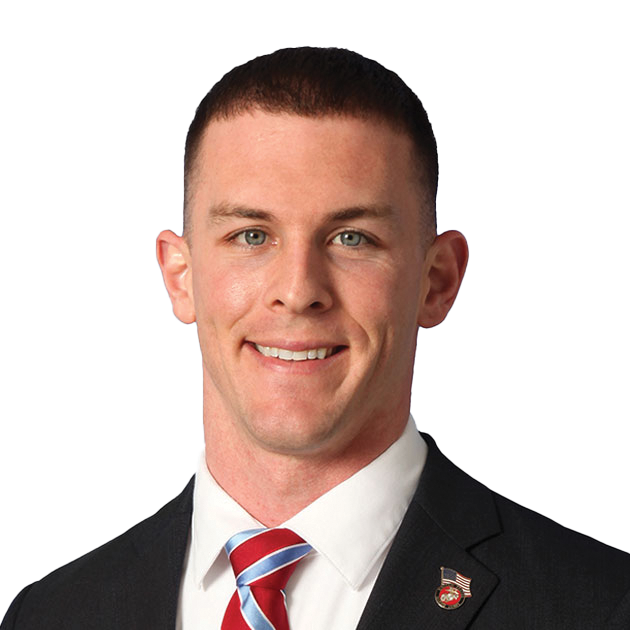
Nicholas Hasenfus, JD ’15, spent four years in the Marine Corps, including as a platoon sergeant and noncommissioned officer in Iraq and Afghanistan, experiences which make him passionate about providing pro bono legal services to service members, military veterans, and their families. A partner at Holland & Knight, Hasenfus spends many hours on pro bono veterans work and volunteering with organizations such as Veterans Legal Services, the Legal Services Corporation, and the Boston Bar Association.
How can the transition from military to civilian life lead to legal problems for some veterans?
A lot of times people might be completely fine when they are in the military because it is so structured. Then after their service ends, problems can start to crop up. About 45% of the enlisted members, many who have not received a college degree, are under 30, so it may be the first time they are living on their own. Veterans typically have higher rates of homelessness, physical disabilities, and mental health conditions.
What are the most common legal issues veterans face?
Two key areas we focus on are veteran benefits and discharge upgrades. This includes helping veterans file claims with the Veterans Administration (VA) for service-connected disability benefits. Many people wrongly assume that veterans receive free health care for their whole lives. That’s not the case. We assist them in obtaining disability compensation for conditions that either originated during or were aggravated by their military service.
Also, veterans receive a characterization of service upon separation from active duty. A discharge upgrade is the process through which they can seek to change this status. Federal guidelines provide a path for veterans to modify that characterization, particularly if they received less favorable terms due to being openly gay during “Don’t Ask, Don’t Tell,” or for conduct related to self-medicating post-traumatic stress disorder (PTSD) symptoms.
How does the culture of the military impact veterans’ ability to navigate the legal system?
There’s a culture in the military of not reporting on mental or physical health conditions, because you are told to be tough, or you don’t want to miss out on deployment or a promotion. This can lead to challenges later if the veteran is trying to claim benefits through the VA or provide evidence of conditions that could be used in a discharge upgrade, because there aren’t medical records or other markers in the veteran’s records to help prove a condition was present during their service. When you are 19, you aren’t necessarily thinking, “I need to make sure something is in my medical record.” That’s especially the case with military sexual trauma, which often goes unreported.
Can you share some examples of cases that illustrate the unique circumstances veterans face?
One case I handled recently involved a veteran who died through suicide and his widow, also a veteran, who was trying to receive certain benefits available to a surviving spouse of a veteran who died based on a condition from military service. We argued the veteran’s death was due to PTSD from military service. The claim was initially denied, but we were able to appeal the decision and get the benefits for the widow. It took several years, which can make the representation really challenging. In another matter, I defended a Vietnam War veteran, a prisoner of war, from a no-fault eviction. The landlord was requiring that the veteran and his family leave the apartment immediately, which was before the veteran’s daughter could complete the school year. The landlord was also seeking monetary damages. We were able to ensure that the veteran and his family remained at the apartment until the end of the school year, obtained a full refund of the veteran’s security deposit, and assisted him in using VA benefits to purchase his first home.
Photograph courtesy of Nicholas Hasenfus