By Michael Fisch
features
Return to Table of Contents
winter 2025
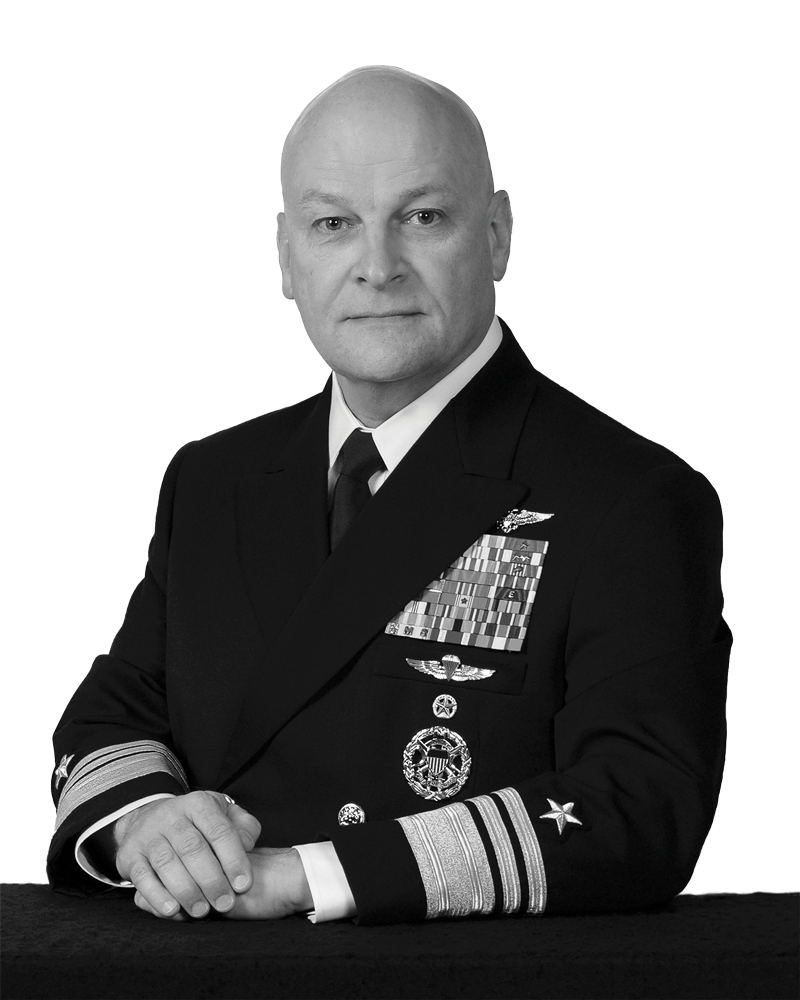
Retired U.S. Navy Vice Admiral Mike Dumont, JD ’92, has served as an attorney, a combat aviator in the U.S. Army and U.S. Navy, and as a senior executive in the U.S. government.
Prior to his retirement from the military, he served as deputy commander of the U.S. Northern Command and as vice commander of North American Aerospace Defense Command (2018–2021).
Among other senior assignments, he served as senior policy advisor to the Commander of U.S. European Command and the NATO Supreme Allied Commander for Europe, chief of staff of U.S. forces in Pakistan, and as the deputy chief of staff of NATO’s operational forces in Afghanistan.
The nation is facing some challenges in terms of recruiting young people to serve in the military. Is that a concern for you?
It should be concerning to all Americans. Recent studies indicate that half of our prime recruiting age population, 17- to 24-year-olds, are ineligible to serve in the military, either because of obesity, behavioral health issues, medication history, poor academic performance, or drug or alcohol abuse. That is something the nation has to wrestle with, because the health issues alone of having half of your population be ineligible for military service has an important national as well as economic security consequence for the nation.
Have you been surprised by the national conversation in recent years about pulling out of NATO or drastically reducing funding for it?
I was surprised by it and very disappointed. Much of this is the result of a disinformation campaign that’s been fueled by Russia and their anti-NATO partners. They have teed up these issues to sow distrust and reduce support for the NATO alliance. I think the Russians fueled this effort on social media and through various advocacy organizations, and people who lack critical thinking skills are falling for it. NATO member nations have to spend at least 2% of their GDP on defense to ensure the Alliance’s readiness. But that can be very difficult for many countries facing a challenging economic environment.
For Americans to be threatening to reduce NATO funding or to secede from NATO is ridiculous. The NATO alliance defends the U.S. and other NATO nations. It’s a sad commentary that we have Americans who are either unable or unwilling to assess what it would mean to the international order if the U.S. withdrew from NATO.
Has your Suffolk Law preparation been important in your work life?
Throughout my many years of service in government, I’ve engaged in a multitude of negotiations, including international negotiations over missile defense with the Russians and negotiations to interdict the flow of illicit arms. I negotiated the release of a U.S. soldier held captive during the war in Afghanistan, and with foreign governments for increased contributions in Afghanistan. My legal training came in very handy. Thankfully, I picked up those skills at Suffolk, and in the Suffolk Prosecutors Clinic. So yes, my Suffolk Law education was instrumental throughout my career.
What advice do you have for students who hope to be in high-responsibility positions like yours?
I’m always wary of giving advice! But here is something that may be helpful to Suffolk Law students: We did an internal study in the Pentagon some years ago to identify the attributes that made for extraordinarily successful American military leaders. We looked at the most successful admirals and generals since the Second World War. While no one attribute stood out, we did find one characteristic that we believe played a role. At some point early in their careers, most took on an assignment completely outside of their typical career path and their personal comfort zone. They developed an ability to adapt to ambiguous and complex environments. Their skills were sharply enhanced such that they were on a completely different plane than their peers. Our most personal and professional growth comes from taking on those challenging positions, so we shouldn’t shy away from them when they come along.
Photograph courtesy of Mike Dumont