By Alyssa Giaccobe
features
Return to Table of Contents
winter 2025
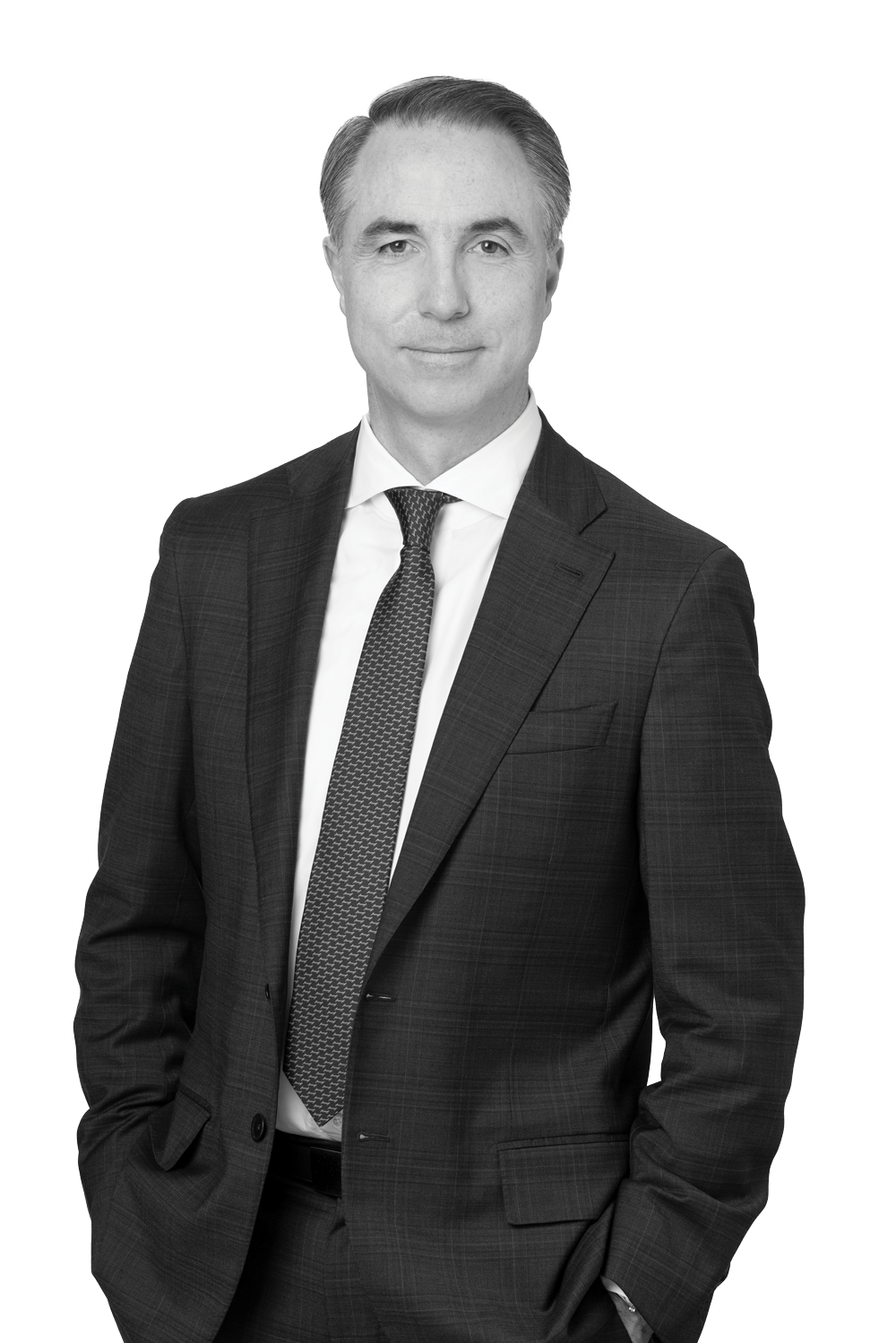
Timothy Mungovan, JD ’94, is the chair of Proskauer Rose LLP, a New York-based international law firm with gross revenue of $1.2 billion in 2023 (according to Law.com). Mungovan spent six years as chair of the firm’s Litigation Department, while practicing securities and commercial litigation, and then was elected to the firm’s seven-person Executive Committee in January 2023. A year later, he was elected chair of the firm and now oversees more than 800 attorneys across 11 global offices. It’s been a welcome—if busy—challenge. But as Mungovan puts it, law is all he’s ever wanted to do.
You started a term as firm chair at Proskauer this spring. How has that changed your day to day?
The biggest change is that I work with clients less, but I don’t see that as a long-term change. I expect to maintain a piece of my practice. But my ability to take on new significant matters right now is really limited. The other big change is that I have very little free time. Not that litigators ever have much control over their schedule, but I would say that now I have even less control.
As chair of the firm, does that mean you’re in charge of everybody?
I don’t view it that way. The chair of the firm, under the terms of the partnership agreement, presides over the executive committee, and the executive committee manages the firm. But as a practical matter, the firm needs to be led. I have a managing partner on the executive committee with me, and together we manage the firm, and we do it mostly through consensus and talking with people and making judgments where we think judgments need to be made. The number of decisions that I’ve made by myself in a vacuum, I could probably count on one hand.
Were your hands in other departments in that same way before stepping into this role?
Yes, very much so. I was the chair of the Litigation Department for Proskauer from 2017 until January of 2023. After that, I was elected to the executive committee. Prior to 2017, I was the co-head of our Commercial Litigation Practice Group. From 2017 to 2024, I was the firm’s lead litigator for our largest client, the Oversight Board for Puerto Rico. And that was in many respects both a practicing responsibility and a leadership responsibility, because I had scores of lawyers, partners, associates, and paralegals across multiple departments working with me.
What were your law school years like?
To be blunt, I had no money. I was in a relationship with a young woman who is now my wife. My parents said that I could live at home in Wellesley. Living there, I took the train to law school every day. I treated it like a job. I was a young law student down on the train platform with a lot of the older guys going to their jobs. Every now and then, somebody would ask me, “Hey, what do you do?” Several of them were lawyers. And of course they’d want to talk to me about the law and what they were doing. I grew up very rapidly as a result of interacting with adults in an adult world every day. I developed an ease and comfort that I think helped me in the beginning.
Do you have any advice for law students hoping to be where you are someday?
What I say to the many people for whom I’ve served as a mentor is that you have to have an extraordinary focus and intensity of purpose to be exceptional at being a lawyer. I did not want to do anything else. I never wanted to go golfing. I never wanted to go out and party. If I wasn’t working, I was with my wife and nothing else interested me for years, until I had kids. If you feel that way, then give yourself to it. If you don’t feel that way, that doesn’t mean you can’t be successful in this profession. But you should examine why. Is it the type of law that you are practicing? If you’re not feeling an extraordinary sense of purpose and focus, find the thing that will give you that.
Photograph courtesy of Timothy Mungovan