alumni news
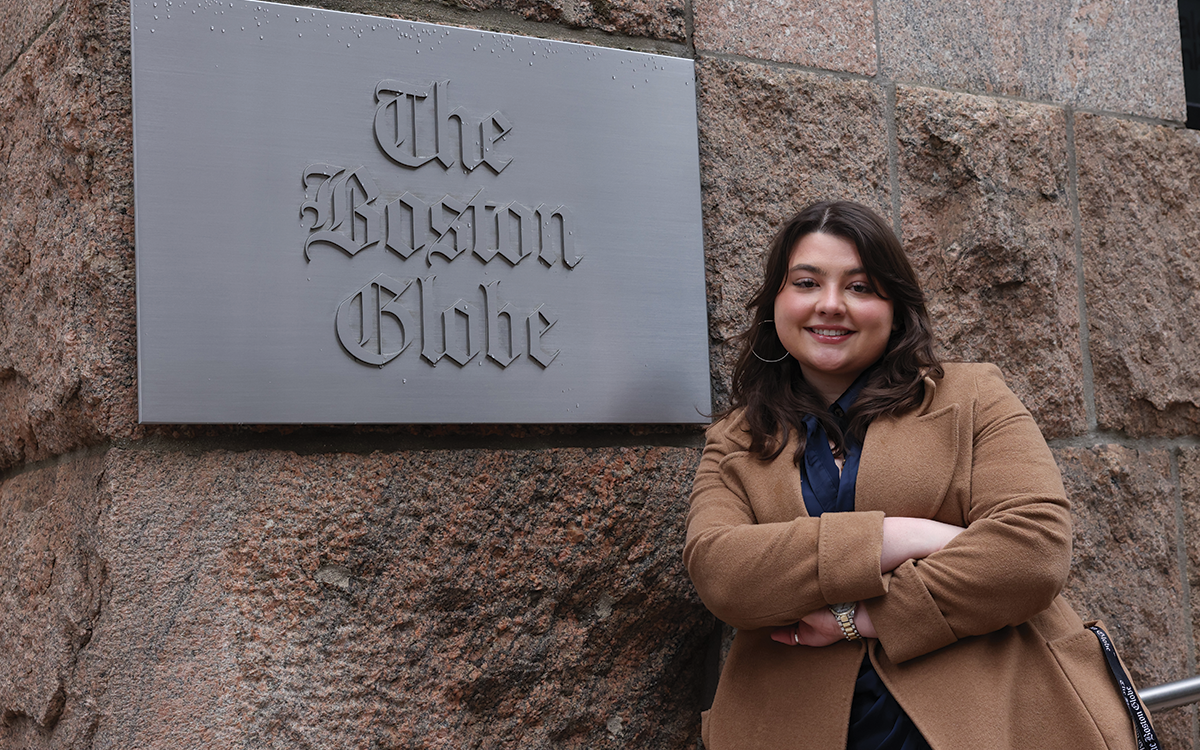
Alexa Gagosz, BA ’18, got her start reporting on international news and politics as editor of The Suffolk Journal. Now she’s a Rhode Island business and features writer for The Boston Globe, where she’s also my colleague in food reporting. She’s particularly well-known for her coverage of the blossoming Providence dining scene.
How did you begin to cover food at The Boston Globe?
I cover all things that fall under business. We launched the Rhode Island food and dining section in June 2022, which I spearheaded with my boss, Lylah Alphonse. Stories about a new business opening, especially when places were closing because of COVID, did exceptionally well. We launched the section with a newsletter, The Food Club, which is the highlight of my week.
What are your favorite Rhode Island and Boston restaurants?
Oberlin, known for crudo and handmade pastas, is one of the best restaurants in Providence. It’s no shocker that it’s up for a James Beard Award in the Outstanding Restaurant category.
You can also usually catch me enjoying whatever Nikhil Naiker—a young and promising chef with a residency at Courtland Club in Providence’s Federal Hill neighborhood—is cooking up. He’s a changemaker and has developed a menu that ties his roots from Fiji into New England dishes and turns them on their head.
In Boston, I’m a big believer in everything Comfort Kitchen in Dorchester does—from their intentional menu to the way they emphasize producers of color in their beverage program.
How has the food scene evolved since you started reporting?
In Providence, I think the food scene has always been excellent; it just didn’t have the spotlight on it like Portland or Boston did. In fact, I think it’s better in Providence than in Boston. The commercial rates are lower, and farms and fishermen are 20 minutes up the road. The scene wasn’t missing anything other than someone who saw its potential as a national standout. It is one of the best food cities in the country, but people still need to know that such a robust industry exists.
Another thing I notice is that my generation is keen to spend a little more to get a little more. We’re more focused on sustainability, better sourcing practices, and how a chef and owner treat their staff.
Operators have to be more in tune with these realities and the demands of these consumers. Many are. For example, The Shipwright’s Daughter in Mystic, Connecticut, lists the boat the fish they are serving was caught on. They also list the farms they work with. That means they are better community actors, which is what a restaurant should be.
The Shipwright’s Daughter is so good! I was just there before seeing Jerry Seinfeld at Foxwoods. Why do your food stories resonate with audiences? What’s the secret sauce?
The secret sauce is the tagline of my newsletter: “Because everyone’s got to eat.” It doesn’t matter how much money you make, what social class you come from, your race or gender, what political party you’re affiliated with, or if you practice a religion. Everyone has to eat.
When you break bread together, you become part of a community. I break bread with my readers—like you do!—by sharing the stories of restaurants, chefs, farmers, and fishers. They are small businesses, but they are critical figures, if not backbones, of our communities.
What’s the role of journalism today?
I truly believe in the craft. I believe journalism can be many things. It’s meant to hold officials accountable. It’s meant to be a community service. It’s meant to inform the public. It’s meant to cut through the noise, even in today’s world, where a lot of people learn to attack the press. The press is more critical than ever before. It’s what holds up our democracy.
Return to Table of Contents
spring 2025
Photograph by Michael J. Clarke
By Kara Baskin